- Yes
- No
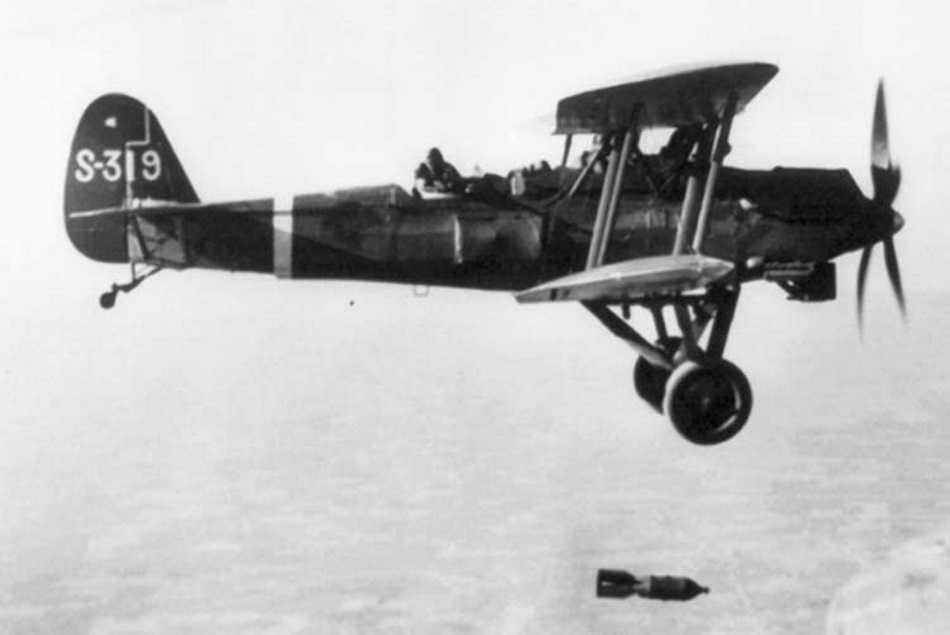
Yokosuka B3Y1 (九二式艦上攻撃機)
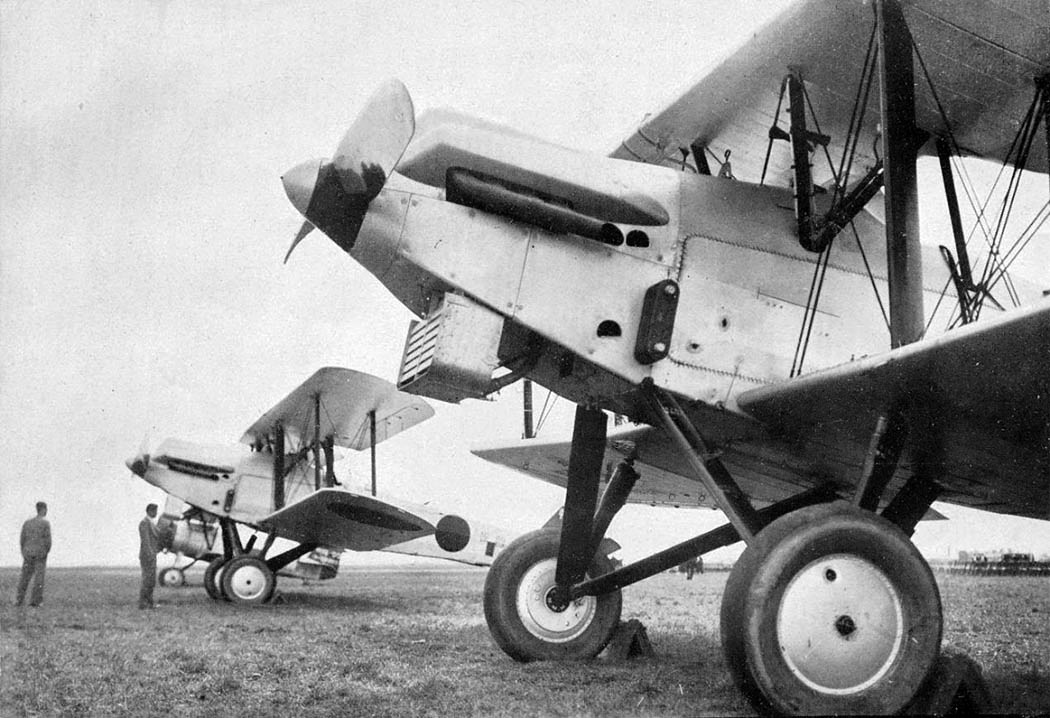
The Yoksuka B3Y1 is a Japanese torpedo-bomber that was developed at the end of 1932 for the 7-Shi competition, where it competed with the Aichi AB-8, Mitsubishi 3MT10, and Nakajima B3N planes. From 1932 to 1936, 128-129 Yoksuka B3Y1 planes were produced. In conclusion, I want to point out that due to the lack of data, the suggestion is general regarding the B3Y1, but it will also mention the differences between early production and late production Yokosuka B3Y1 (suggestion moderators, please don’t take offense, this is a general suggestion about the B3Y1, not its specific variants).
History
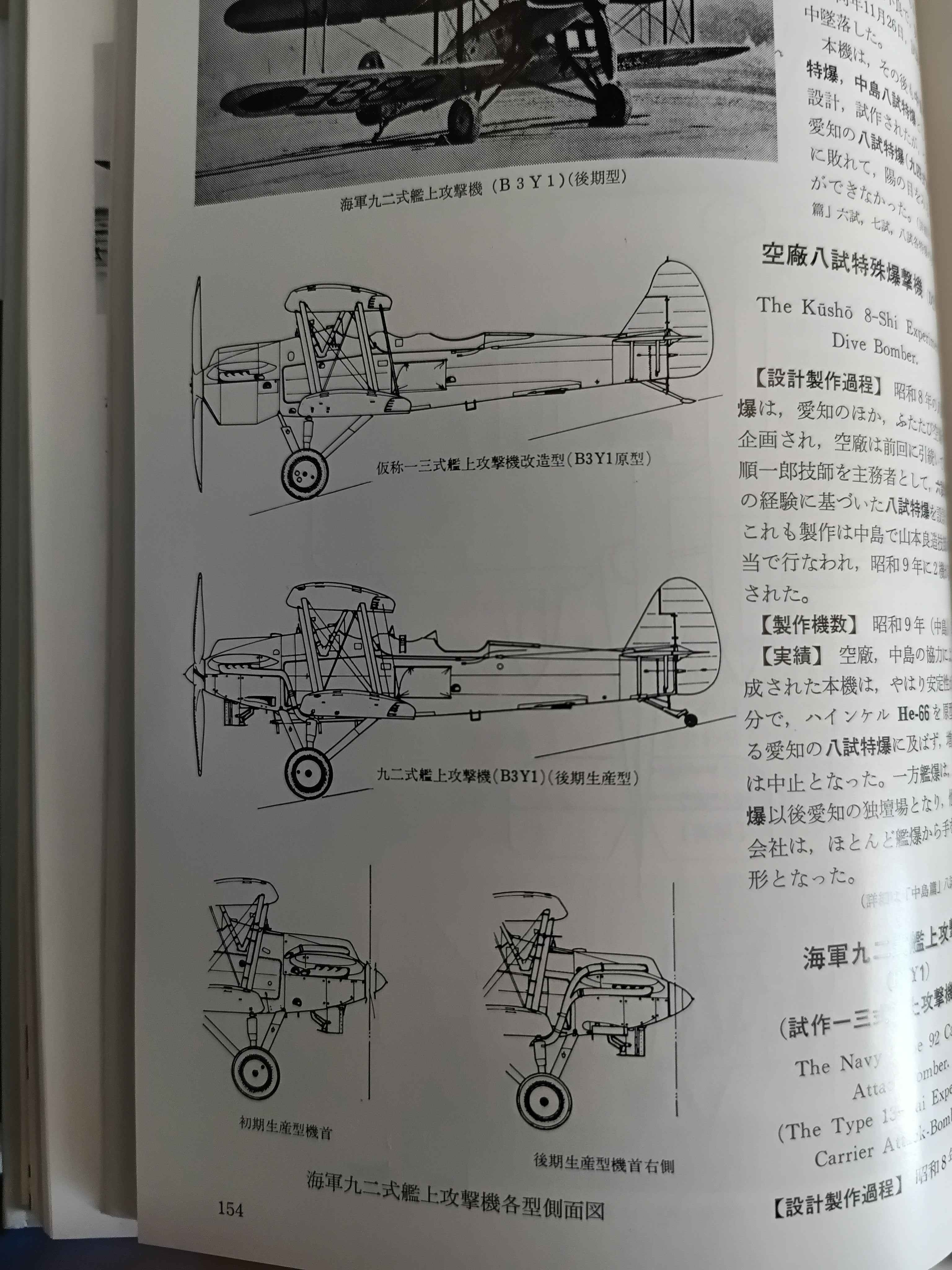
In April 1932, the command of the Japanese Navy issued the 7-Shi competition specification, aimed at developing a domestically designed carrier-based torpedo bomber. The requirements were sent to the Mitsubishi and Nakajima factories, where they were not received with enthusiasm. The new aircraft was supposed to replace the recently introduced Mitsubishi B2M, so at Nakajima and Mitsubishi, it made little sense. The Japanese Navy command decided it was worth also asking the Naval Air Technology Laboratory (Yokosuka) to develop a carrier-based aircraft according to the same requirements as a backup option. By mid-1932, Aichi also joined the competition. At the Naval Air Technology Laboratory (Yokosuka), since they were a backup option, they decided to take the safest route and modify an existing carrier-based bomber design. They chose the Mitsubishi B1M, which was liked by crews compared to the newer Mitsubishi B2M1. The project was led by engineer Tamefumi Suzuki, and the engines were to be supplied by Hiro factories. The future Yokosuka B3Y was a heavily modified Mitsubishi B1M design (although from the outside, the planes looked very similar). The Yokosuka B3Y prototype was ready by the end of 1932 and went for navy tests along with the Aichi AB-8, Mitsubishi 3MT10, and Nakajima B3N. In the tests, the Mitsubishi 3MT10 turned out to be slower than its predecessors (B1M3 and B2M1), the Aichi AB-8 crashed during testing (and also had poor performance), and the same happened with the Nakajima B3N. It turned out that out of the four tested planes, the Yokosuka B3Y, although it had engine problems, proved to be the best candidate to replace the Mitsubishi B2M1. After testing, the Hiro 91 engine that powered the Yokosuka B3Y was sent to the Aichi factories, where it was modified by engineer Tokuichiro Gomei, which allowed the Yokosuka B3Y to enter service in August 1933 as the Navy Type 92 Carrier Attack Bomber (九二式艦上攻撃機) or Yokosuka B3Y1. B3Y1 planes were initially produced at Aichi (75 planes) and Watanabe (23 planes), and later at Hiro (about 30 planes). Only the first prototype was produced at Yokosuka. The planes produced at the Hiro factories had modified engines and engine cowlings and were equipped with four-blade propellers instead of the previously used two-blade ones. The Yokosuka B3Y1 planes were deployed on the aircraft carriers Hōshō and Ryujo and took part in the early stages of the Sino-Japanese War. After the introduction of Nakajima B5N1 planes in 1937, Yokosuka B3Y1 planes were quickly withdrawn from service.
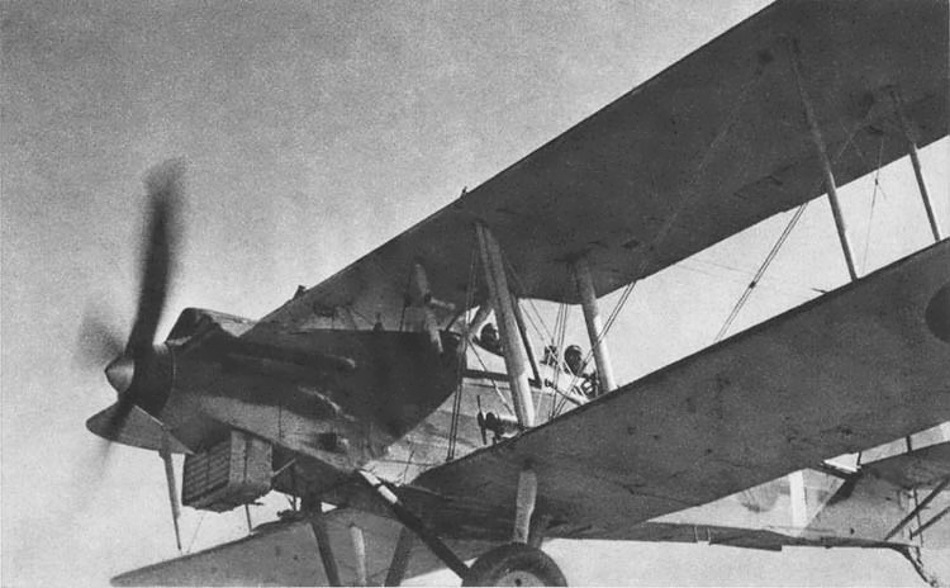
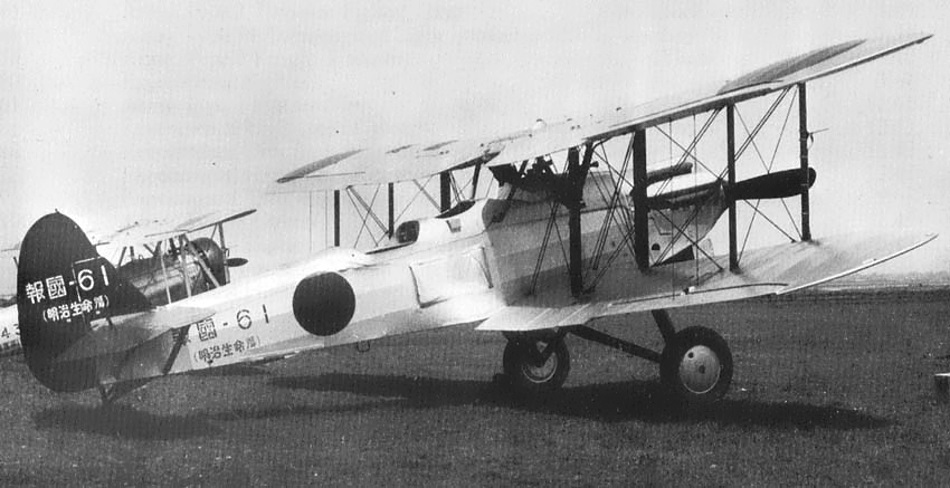
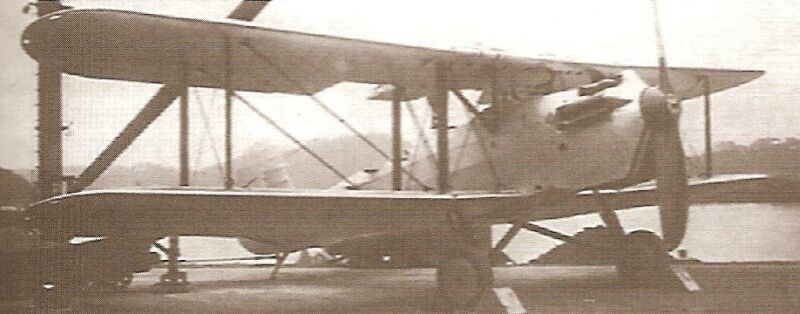
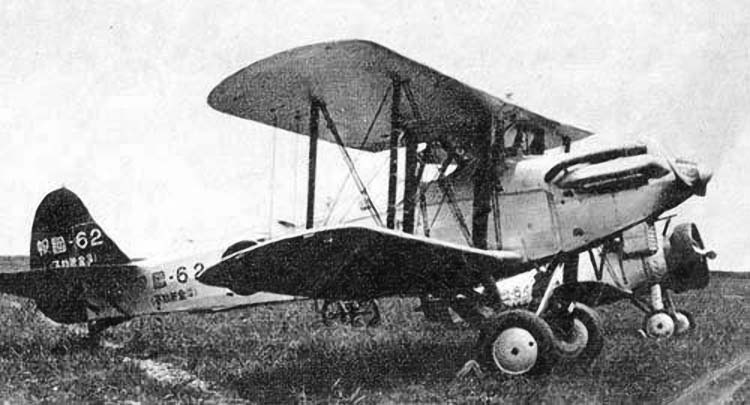
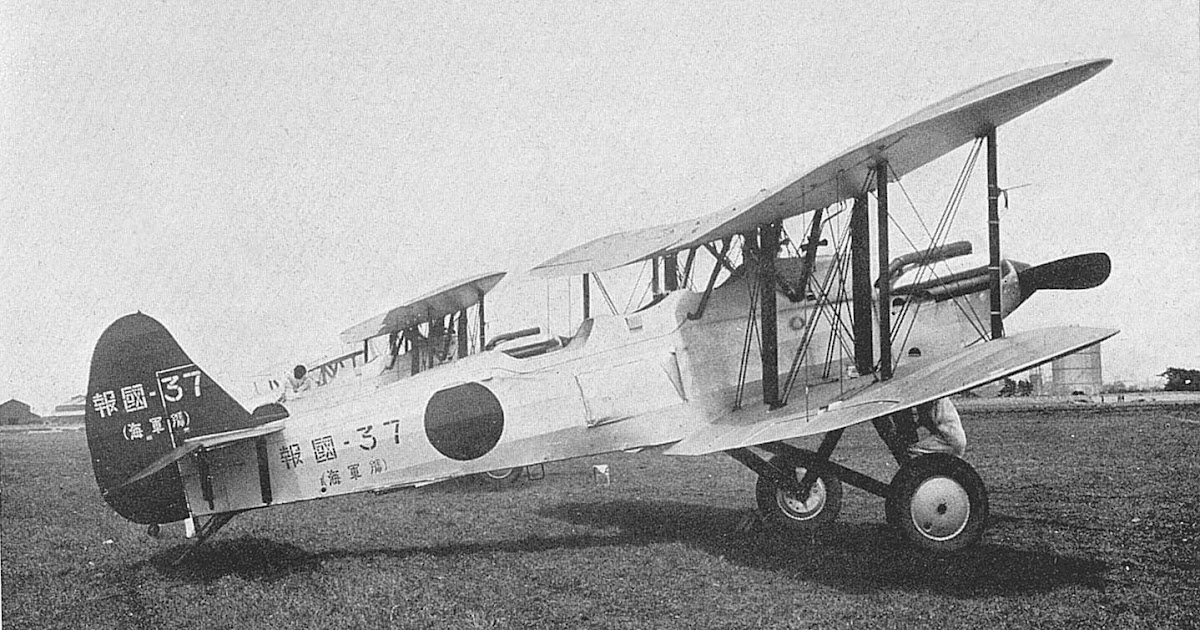
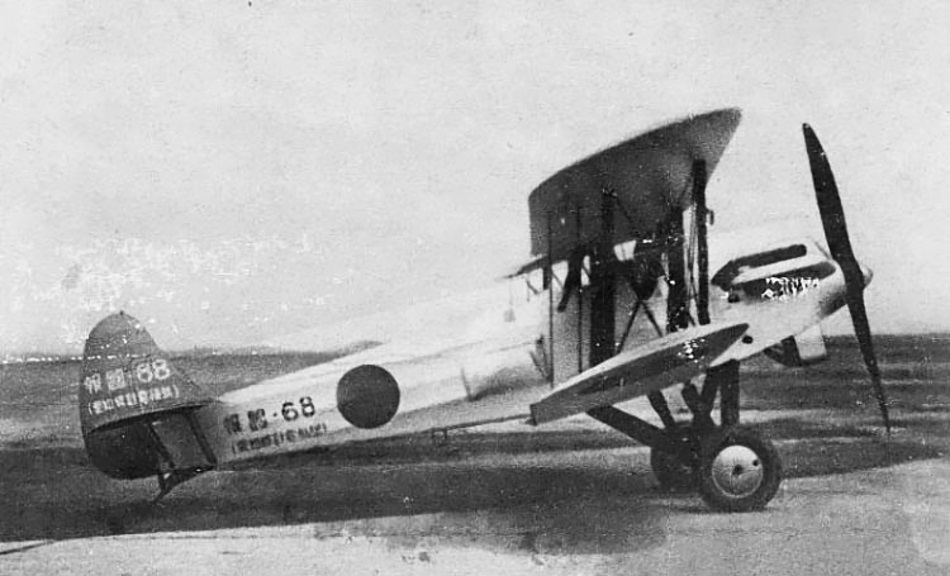
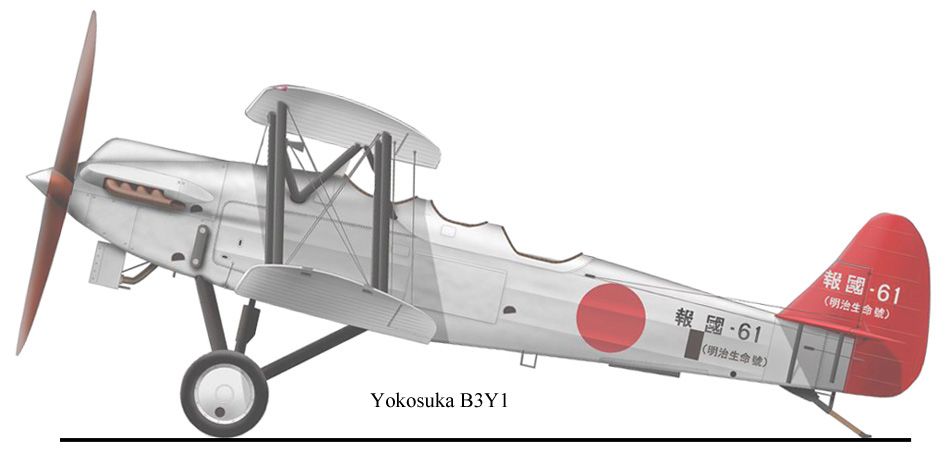
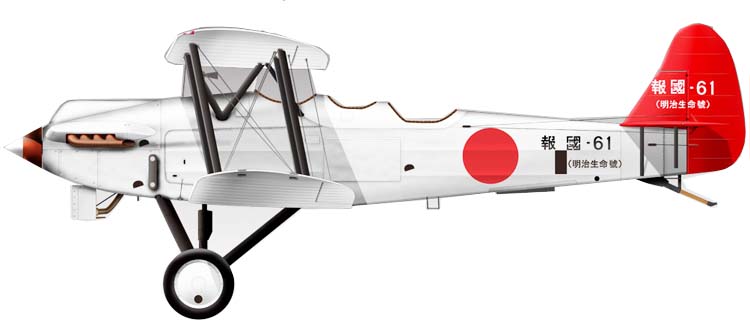
The art of Yokosuka B3Y1
Construction description
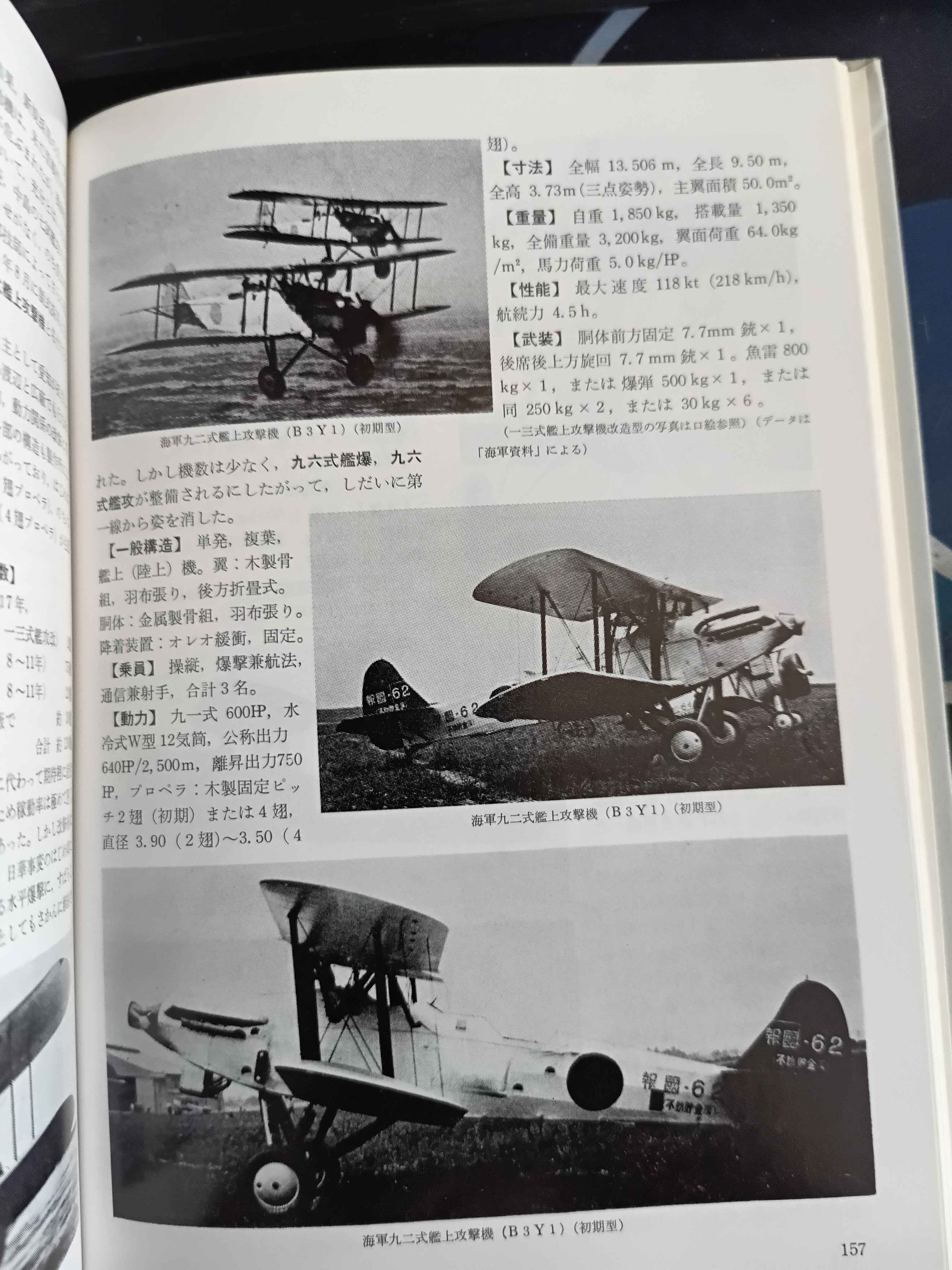
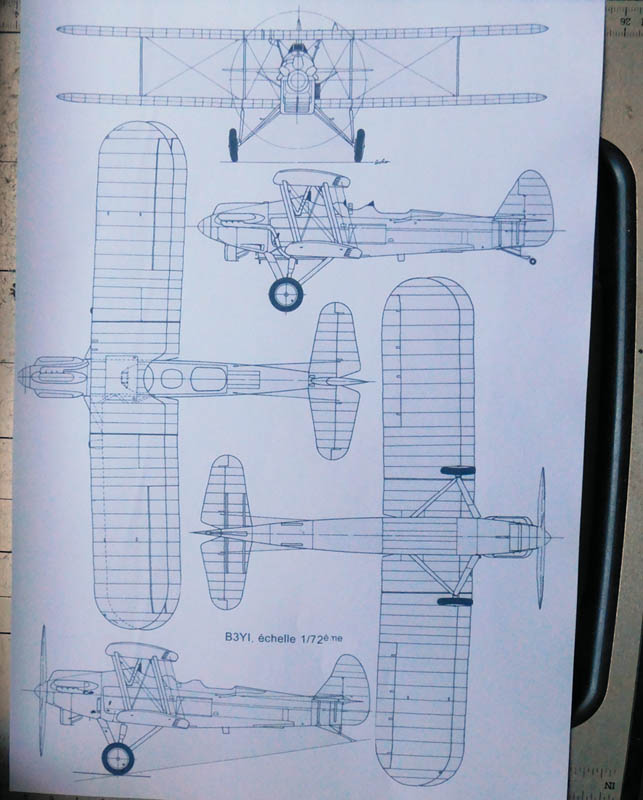
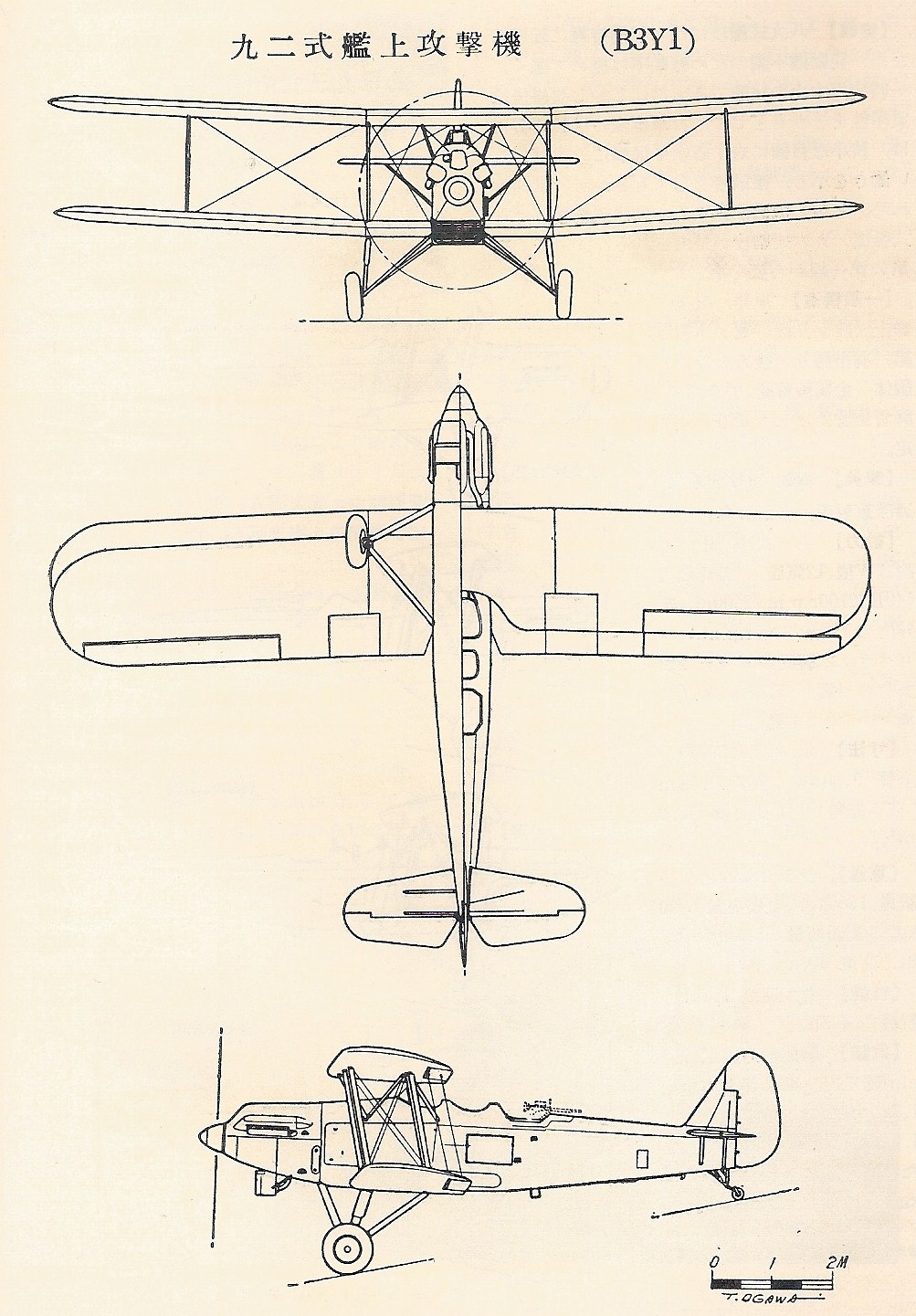
The Yokosuka B3Y1 was a carrier-based bomber in a biplane layout with a metal structure covered in fabric. The airplane’s wings were wooden and covered with fabric. The Yokosuka B3Y1 had fixed landing gear. The fuselage had space for a pilot, a bombardier-navigator, and a radio operator-rear gunner. The Yokosuka B3Y1 was powered by a Hiro Type 91 model 2 liquid-cooled twelve-cylinder V engine producing 552 kW (750 HP) for takeoff, which turned a two-blade wooden propeller with a diameter of 3900 mm or a four-blade propeller with a diameter of 3500 mm (This is information for the curious). The plane’s armament included a Type 92 7.7 mm machine gun in the front part of the fuselage and one Type 92 7.7 mm machine gun in a rotating rear gunner position. The Yokosuka B3Y1 could carry one 800 kg torpedo, or one bomb of 800 or 500 kg, or two bombs of 250 kg, or six bombs of 30 kg.

General characteristics
- Crew: 3
- Length: 9,50 m
- Wingspan: 13,506 m
- Height: 3,73 m
- Wing area: 50 m2
- Empty weight: 1850 kg
- Gross weight: 3200 kg
- Maximum Take-off Weight: ?
- Powerplant: 1 × Hiro Type 91 model 2 liquid-cooled twelve-cylinder V engine producing 552 kW (750 HP) for takeoff
- Propellers: Two-blade wooden propeller with a fixed pitch and a diameter of 3,900 mm
Performance
- Maximum speed: 218 km/h
- Cruising speed: 160 km/h (?)
- Range: 1570 km
- Maximum Range: ?
- Service ceiling: 6000 m
- Climb Rate: ?
- Rate of climb: ?
Armament
- Guns:
- 1 x Type 92 7.7mm fixed machine guns in the nose
- 1 x Type 92 7.7mm mobile machine gun on the back
- Bombs
- 1 x 800 kg bomb under the fuselage
- 1 x 500 kg bomb under the fuselage
- 2 x 250 kg bombs under the fuselage
- 6 x 30 kg bombs under the fuselage
- 1 x Torpedo Type 91 under the fuselage
Summary
The Yokosuka B3Y1 is an interesting plane for Japan in War Thunder. This plane works great as a low-level bomber (similar to the Po-2 or Swordfish), and it has a very good bomb load. It’s a perfect addition when the Japanese tech tree is expanded to include planes from the early '30s. I encourage you to discuss in the comments and to share your own knowledge on this subject.
Finally, I apologize for the linguistic and logical errors because unfortunately English is not my main language and I had to use google translator.
Internet sources
九二式艦上攻撃機 - Wikipedia
Kugisho B3Y - Wikipedia
Jokosuka B3Y1 : Jokosuka
Уголок неба ¦ Yokosuka B3Y
Book sources
- Japońskie Samoloty Marynarki 1912-45 część II (Japanese naval aircraft 1912-45 part II) page 30-31
- 日本航空機辞典 1910年(明治43年)~1945年(昭和20年) 上巻 (Encyclopedia of Japanese Aircraft 1910 (Meiji 43) – 1945 (Showa 20), Volume 1) page 176-177
- 野沢正『日本航空機総集 愛知・空技廠篇』出版協同社 (Masaru Nozawa, ‘Comprehensive Collection of Japanese Aircraft: Aichi and the Air Technical Arsenal Edition’, ), page 154-157

Thank you for reading the suggestion, see you in the next one. Good luck pilots