- Yes
- No
[Would you like to see this in-game?]
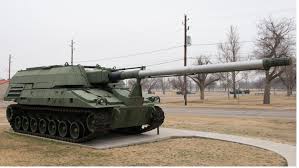
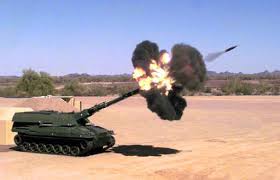
Introduction
The XM2001 Crusader was the U.S. Army’s next-generation SPH. It was developed between December 1994 and May 2002 by United Defense LP as the main contractor and General Dynamics Land Systems as the major subcontractor. This vehicle aimed to replace both the M109A6 Paladin and the M992 Field Artillery Ammunition Support Vehicle as a single system. A functional prototype was finished and delivered in early 2000. It underwent extensive live-fire testing at Yuma Proving Ground in Arizona, firing over 4,000 rounds before the program ended. The surviving prototype is now on permanent display at the U.S. Army Field Artillery Museum at Fort Sill, Oklahoma. An official museum placard there outlines its confirmed specifications. The program was canceled in May 2002 by Secretary of Defense Donald Rumsfeld, who noted it was “a system originally designed for a different strategic context, i.e. high intensity warfare against Soviet forces in Europe, than currently exists.” (CRS Report RS21218, Congressional Research Service, 25 June 2002)
Vehicle History
The U.S. Army started working to improve its 155mm self-propelled artillery in the late 1970s. From 1987 onward, these efforts focused on what would later be known as the XM2001. The formal Program Definition and Risk Reduction (PDRR) contract was awarded in December 1994 for $1 billion. The initial goal was to procure 1,138 vehicles, later revised in 1999 to 480. Approximately $2 billion was spent through FY2002 out of an estimated total program cost of at least $11 billion. (CRS Report RS21218) The U.S. Army Basis of Issue Plan (BOIP), dated 10 November 1994, describes the XM2001 as a one-for-one replacement for the M109 series (LIN: H57642). It set an issue basis of 18 howitzers per Crusader battalion across three batteries of six vehicles each. Program Manager Colonel Russell Hrdy stated that deploying three Crusaders provided the same firepower as deploying six M109A5/6 Paladins: 40 tons and a 3-man crew compared to 60 tons and 8 crewmen for two Paladins. (CRS Report RS21218)
Specifications
Sources: GlobalSecurity.org XM2001 specification table (derived from official program documentation); U.S. Army Field Artillery Museum official placard, Fort Sill, Oklahoma
General
Crew: 3 (can operate with 2 in emergencies)
Combat weight (not to exceed): 50 US tons (~45,360 kg)
Curb weight: 39.8 US tons (~36,105 kg)
Length overall (gun forward): 12.9 m
Hull length: 7.5 m
Width: 3.5 m
Height to turret top: 2.9 m
Ground clearance: 437 mm
Mobility
Engine: Honeywell LV100-5 gas turbine, 1,500 hp
Transmission: Allison 5060-3
Suspension: GDLS 3870 Phase 3 torsion bar
Power-to-weight ratio: 30 hp/ton
Maximum road speed: 67 km/h (Fort Sill placard: 42 mph)
Maximum cross-country speed: 39 km/h
Cruising range: 402 km
Gradient: 60%
Side slope: 40%
Vertical obstacle: 0.81 m
Trench crossing: 2.49 m
Fording depth: 1.27 m
Armament
Main gun: 155 mm, 56-caliber XM297E2 howitzer
Secondary: 1× .50 caliber M2 HMG, 1× 7.62mm coaxial MG
Elevation: -3° to +75°
Turret traverse: ±20°
Elevation rate: 13°/sec
Traverse rate: 10°/sec
Muzzle velocity: 958 m/s
Shell weight: 43 kg
Maximum range: 40 km (M549 projectile at Zone 6)
On-board ammunition: 48 × 155mm projectiles + 208 MACS charges
Burst rate of fire: 10–12 rounds/minute (first 3–5 minutes)
Sustained rate of fire: 3–6 rounds/minute
MRSI capability: up to 8 rounds simultaneous impact
Into action time from movement: 30 seconds
Recoil force: 760 kN maximum
Recoil length: 710 mm
Protection
Armor: Modular composite panels, frontal hull and roof
Automatic fire suppression system
NBC/CBRN protection (BOIP: AN/VDR-2, CAM, AN/UDR-130)
Night vision equipment
Crew compartment fully isolated from ammunition
Fire Control
Digital AFATDS-linked fire control system
Fully automated ammunition handling—loading, fuze-setting, and propellant charge selection all done without crew intervention
Electric gun control system
Additional Technical Notes
The XM297E2 main gun includes Integral Midwall Cooling (IMC), a coolant jacket with isopropyl glycol running through the barrel wall. Heat exchangers in the turret help maintain high rates of fire by managing thermal expansion, which can reduce accuracy and barrel life. The chamber and bore are chrome-lined to minimize wear and erosion.
The crew compartment is physically separated from the ammunition storage and autoloading system by armored walls. An automated system handles all ammunition tasks remotely. This design improves survivability, as confirmed in the program’s BOIP documentation.
The LV100-5 turbine engine was chosen in September 2000 to match the M1 Abrams fleet, which simplifies logistics. The Army aimed to buy 3,600 LV100-5 engines for both programs.
Compatible ammunition includes: M107 HE, M549 HE-RAP, M795 HE, M483A1 DPICM, M864 DPICM-BB, M712 Copperhead, M982 Excalibur, SADARM, white phosphorus, smoke, and illumination rounds.
Sources
[1] U.S. Army Basis of Issue Plan — XM2001 Crusader SPH, 10 November 1994, via Federation of American Scientists military document archive: XM2001 CRUSADER SPH Basis of Issue Plan - BOIP
[2] CRS Report RS21218 — Crusader XM2001 Self-Propelled Howitzer: Background and Issues for Congress, Edward F. Bruner & Steve Bowman, Congressional Research Service, 25 June 2002: Crusader XM2001 Self-Propelled Howitzer: Background and Issues for Congress - EveryCRSReport.com
[3] XM2001 Self-Propelled Howitzer specification table, GlobalSecurity.org (derived from official program documentation): Crusader - Specifications
[4] U.S. Army Field Artillery Museum official placard — XM2001 Crusader, Fort Sill, Comanche County, Oklahoma, via Historical Marker Database: https://www.hmdb.org/m.asp?m=216960