Export model T-72s BTW…
1 Like
@CAS_is_Bаlаnced Do everybody a favor and bring something constructive next time. Otherwise, stay silent.
@LegitRussianBias I’ll answer point by point, and leave out the Irbis-K introduction date last because that one has a lot to unpack.
First off, the Thales Catherine.
Yes, the Catherine FC and XP are different. The FC entered service around ~2002. The XP is as you said an updated version of it with more mature tech. It was introduced around ~2005-2006. So by the time Russia signed the import contract in 2005, both were ready. It’s impossible to say which of the two they imported the most without MoD documents but it’s safe to assume they imported both.
👍 Mea Culpa
The number increase is for sure because the commander can take over the Irbis sight to scan. Which as you also found, is better than the Agat.
Irbis:
Gonna be quite long, sorry in advance.
I know exactly where the 2012 date comes from: it comes from statements by the engineering teams at TVM 2012 saying they hoped Irbis would enter production by 2012-2013. That was an intention, not reality. At that time Irbis was still heavily dependent on imported components(microelectronics and detector technology) despite parts of the core allegedly being fully Russian, so it was never truly production-ready as wanted(100% homemade).
After the 2014 sanctions, this became a major problem. Import substitution forced a redesign of the system, which delayed the project significantly. This is precisely why Russia moved to the Sosna-U as a stopgap solution instead of Irbis. The Sosna-U was already available and tested, even if degraded after losing French Catherine cores.
Trials for Irbis were only completed around ~2016, with plans to begin serial production around 2017-18. But even then, procurement was chaotic and limited. Irbis wasn’t just a new sight, it required building a domestic detector and electronics supply chain almost from scratch. This is very complex, and requires a lot of funding. Even more complex in a country like Russia with crippling fund embezzlement.
If Irbis had really been mass-produced from 2016 onward, we would expect to see it widely installed on tanks before 2022. Instead, what we actually observed from captured and destroyed Russian tanks in Ukraine during the opening months is the opposite: the vast majority still used Sosna-U, not Irbis. Irbis only starts appearing in noticeable numbers after 2022, because full sanctions forced Russia to either deploy whatever domestic alternative it had, or go at it without thermal.
Here’s an article linked to industry sources talking about the Irbis 2016 trial, and talking about the Irbis quality. While it does say the sight can identify at 3.2km, this is absolutely a mixup from the author with recognition(or incorrect translation RU->ENG which is very, VERY common) because 3.2km ID would put it above the non-teleconverter Catherine despite having a lower resolution stated in the very same article.(320x256 px for Irbis, both Catherine FC and X are afaik 754x576.)
Sadly, many articles about it are now gone because Russia did a vast OPSEC campaign of their hardware specification posted on Russian websites after the start of the war in Ukraine. Most information I have dates from ~2020 and an industry contact I had during that time at Uralvagonzavod.
3 Likes
Do you have a source for this?
Because it’s not Russian
I tried to find it again for an hour to no avail. It is a different feed mechanism though as it is single feed system and not a dual feed system like the rest of the 2A42’s in service. It also does not help that there is not a single document (at least to my knowledge) that supports that the BMPT has ever been fielded or even trialed with APFDS.
2 Likes
This wouldn’t make it unable to fire APFSDS
Because barely any stock of 3UBR11 exists, most 2A42 equipped vehicles to this day use full caliber AP for lightly armored targets and I really doubt they would want to change this for the BMPT specifically
It might, we don’t really know
I do know that 2A42’s should be able to fire NATO APFSDS, not only russian ones
I haven’t heard this before, what’s the reason?
Uhm my wording looked a bit messed up there, I changed it, I think you might have mistunderstood me.
But: A belgium company, Nexter (now a part of KNDS) developed an APFSDS round specifically to be used by 2A42 autocannons, and supposedly saw trials with 2A72 cannons, but idk if it’s compantible with it.
Source
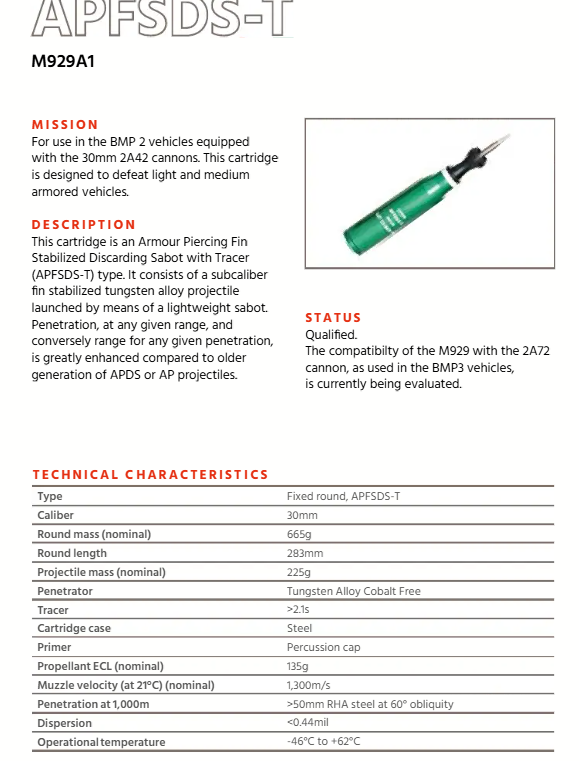
From Nexter arrowtech 2022 catalogue (primary)
And apparently it’s used by ukraine or going to be used, I forgot
1 Like
Great, thank you for the rewording. I still think that the lack of two ammo feeds shouldn’t prohibit 3UBR11 from being used. In the sense that an APFSDS belt should still technically be able to be loaded and fired from without two different ammo feeds, as the size of the ammo should stay the same as say 3UBR8 APDS.
This isn’t true, 3UBR11 is slightly longer than 3UBR8
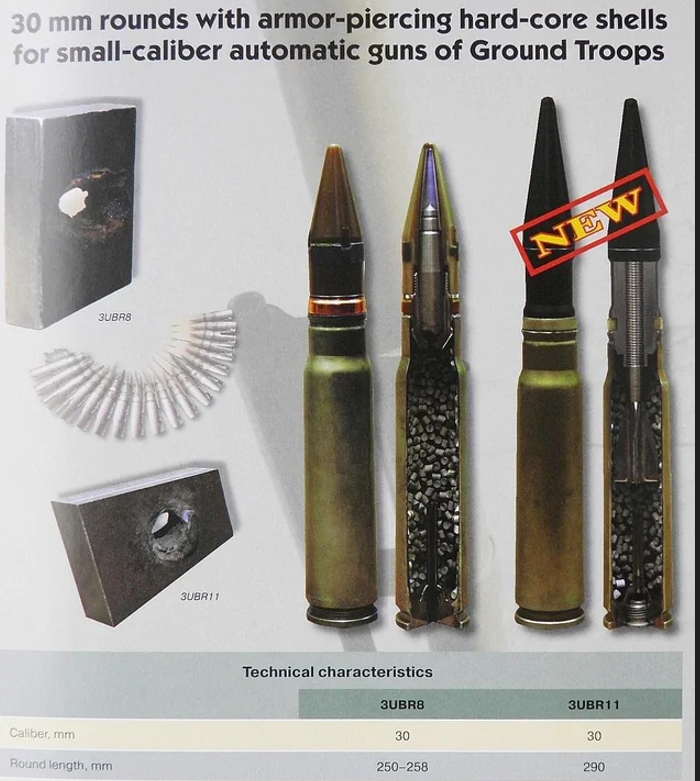
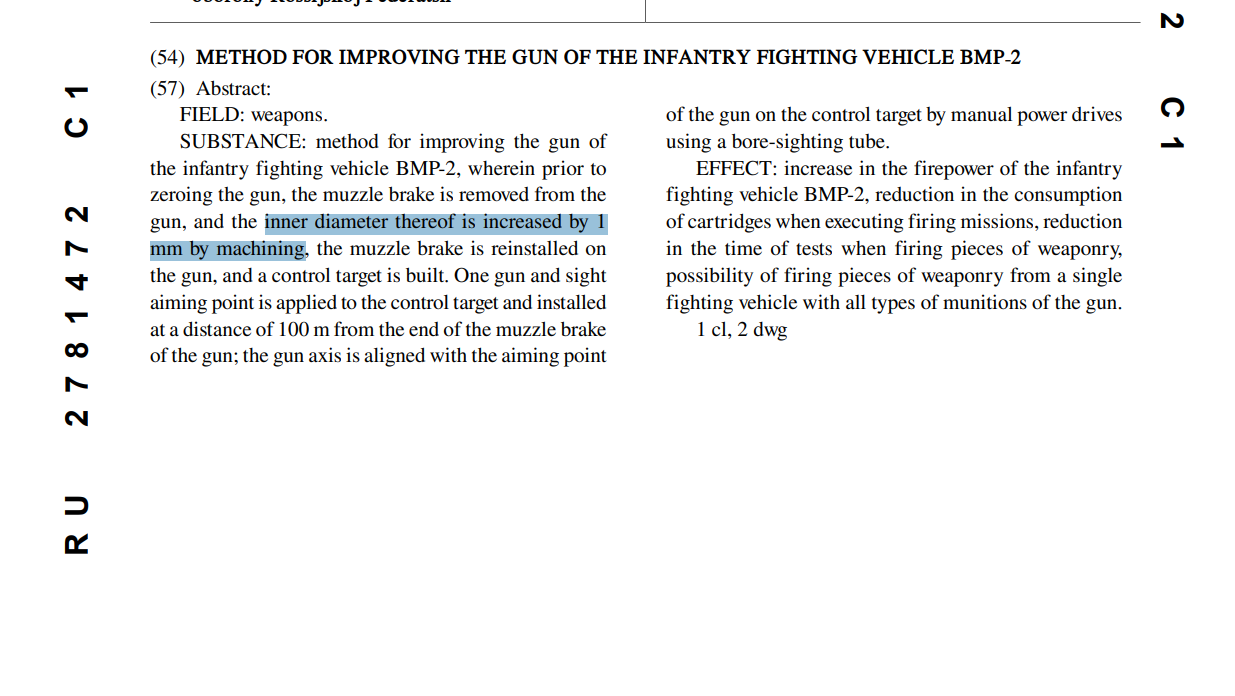
And in order for vehicles that fire 3UBR8 to be accurate, an adjustement of the barrel needs to be made thinner on the inside, the same or some other restriction would likely also apply to 3UBR11
unfortunately there is still very little information on 3UBR11 itself
I still think what you’re saying is true about dual ammo feed, but don’t really have any proof for it, would just be kinda dumb if they didn’t allow it to be used, and there would be workarounds anyway
1 Like
Yeah, my main point was about diameter since i was talking about the feed requirement (e.g. ammo casing is larger in diameter so it cant fit into the usual position of one belt), I should have specified
I’ve heard of that yes, just any standard 2A42 can’t fire APDS or APFSDS accurately because of that, but can technically still fire it, which is what’s important for wether or not it can be added to the game
1 Like
It requires a removal of the muzzle brake, relining the barrel by 1mm, and then reapplying the brake. The Belgians who made the M929 ammunition for them suggest using a newer four chamber muzzle brake with the APFSDS so that the discarding petals from the sabot don’t cause internal strikes to the barrel or brake. It also should be noted M929 is 3mm longer than 3UBR11 as well.
1 Like
Oh yeah the only good auto cannon outside Russian TT
Not the only one, the 25mm oerlikon KBA which is basically a more accurate 30mm 2s42, the giat m811 is also pretty decent it’s a better 2s72.