I mean if you use the t58 hesh as for a example it’s probably why it’s not as good as we want it to be other people would complain
I really miss the old days… (2022)
4 Likes
I do wonder though, why is it gaijin have such a difference of opinion (allowed by player vote ofc) on HESH vs APHE type weapons.
APHE majorly overperforms compared to how it should, originally for balance etc but we all know how it arguably is too powerful compared to other ammo types.
HESH now has to be “realistic” even though gaijin cant really implement it properly and cant have any artificial buff etc to make it worth while. No vote to ask players if its in need of modification.
1 Like
HESH actually doesn’t look that bad, it’s just APHE is so ridiculously broken that not using it is foolish.
Shootings slow as snails Tiger IIs in the side is probably not the best example, however.
I doubt HESH has enough pen to deal with K2Hs from the front but he did kill some Tiger Is from the front. It didn’t really do those weird Hit moments where the round just failed to do any damage, as it was pretty consistently wiping out turret crew.
From what I’ve seen, HESH is far from what it was described, at least 90mm one.
Again, the Tiger I is the perfect target. It has flat armor so all the spalling is produced horizontally.
Hit a tank with sloped armor, which is 99% of tanks and the spalling is directed into a the floor, killing the hull crew at best.
It makes no difference, if you hit a Panthers hull with 90mm or 183mm HESH.
Neither will kill or damage the crew in the turret or disable the tank to stop it from firing back.
So you pretty much have to hit a turret roof or the tank from the side to cause any critical damage.
But a lot of tanks also have sideskirts, so this leaves only the turret side as target.
Which isn’t enough to main HESH as primary round and which severely limits the effectiveness of vehicles who fire nothing but HESH.
I mean 75mm HESH for a Cromwell would be a lot better than firing solid shot with 100mm pen but that’s pretty much it.
2 Likes
Isn’t that how HESH should work against sloped armor, sending most of the spall perpendicular to the plate it hit ?
If above is true, then bigger HESH round could get an imaginary buff to make them one shot easier, not like APHE isn’t doing fictional post-pen damage for years.
Well, not much you can do about that.
They could do something - HESH should smash through thin armour such as side-skirts, not pancaking and detonating until it strikes something solid enough to make it do so.
In the 76mm HESH tests even a 76mm round smashed through 14mm plate without detonating - also smashed through the front plate reinforced to 25mm thick - the surrounding 19mm armour was insufficiently strong to support the reinforced section!!
2 Likes
So then just return HESH postpen to 1.69 levels where it was HE that could pen things. Then both HESH and APHE can nuke what they hit. We have ERA now to curb the fantasies of the old “HESH-slinging slasher” Vickers Mk.1 that was 7.0 back then, now that that and its Centurion Mk.10 brother are 8.0.
It’s really that damn simple. Top tier has long since moved on, so un-nerfing HESH would not break anything, and it would finally allow the derp guns to disassemble everything without requiring a totally new armor physics system be added just for a few tanks.
1 Like
Whatever shit gaijin comes up with explosive power does not simply disappear
Also most he shells are technically not he shells
Because we learned from the German ww1 grenades high explosive has pretty bad performance on its own
(In the open the blast wave loses effectiveness pretty quickly so flying shrapnel is used to get way higher effectiveness)
So most “he” shells are technically he frag
Which also partly explains why hesh has more he filler than normal he/he-frag
So hesh should overpressure a lot more than he or heat.
4 Likes
All HE rounds, HESH included, are completely missing their kinetic component of their armor penetration.
There was a reason why German 128mm HE could pen 188mm of steel plate - 90% of the shell mass is a blunt-nosed AP-like slug carrying the large HE filler inside. Fuse sensitivities of rounds, both HE and APHE alike, could be adjusted on the fly by tank crews (like the one instance of a Jagdtiger lengthening an APHE fuse to kill a Sherman through a house), therefore if the game really wanted to truly equalize things, they would treat all HE and HESH rounds with the same formulas as AP rounds.
Another example that would give certain older players Vietnam War flashbacks - apparently due to sheer kinetic force of impact, HVAR rockets were capable of penetrating up to 175mm of steel plate, not the 36mm they do ingame. Why? It’s a steel telephone pole impacting your tank at the speed of sound. Thus in a certain sense, perhaps 2016 HVARs were more correct than what they are now.
2 Likes
This looks like a regular HE design, not a blunt nose AP like youre describing, also keep in mind that SAP are a thing in the game and due to the way that gaijing calculates SAP this round would have pretty poor penetration due to the High He ratio.

Now compare it with the soviet 130mm SAP or the 5" SP common which are both classed in game as SAP
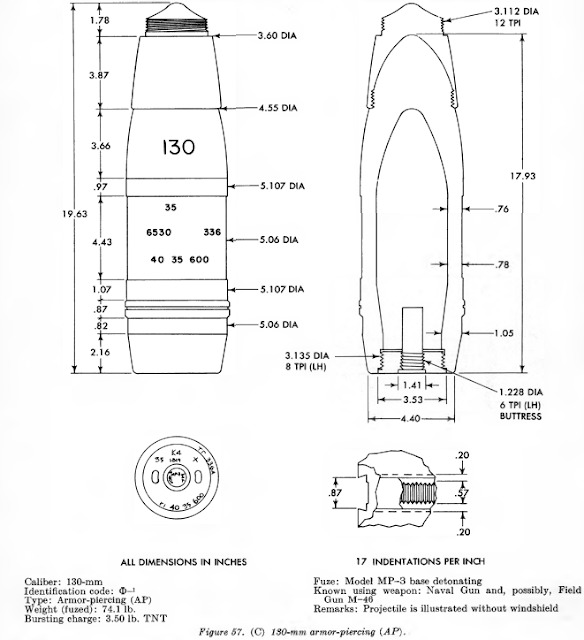
I am referring to just ordinary HE, not HE vs SAP.
All HE rounds are missing most of their kinetic penetration component across the board. That German example is one of the few numbers I know of specifically, and I believe Russian 122mm OF-471 hit something like 150mm or so under similar conditions.
I’d let players decide on fuse sensitivity - if they want max pen on HE rounds they remove the instant fuse and use only the base fuse.
Sure, however, an he with a delay fuze would be classed in game as SAP in order to calculate the penetration, keep in mind that the game doesnt really use Historical penetration charts.
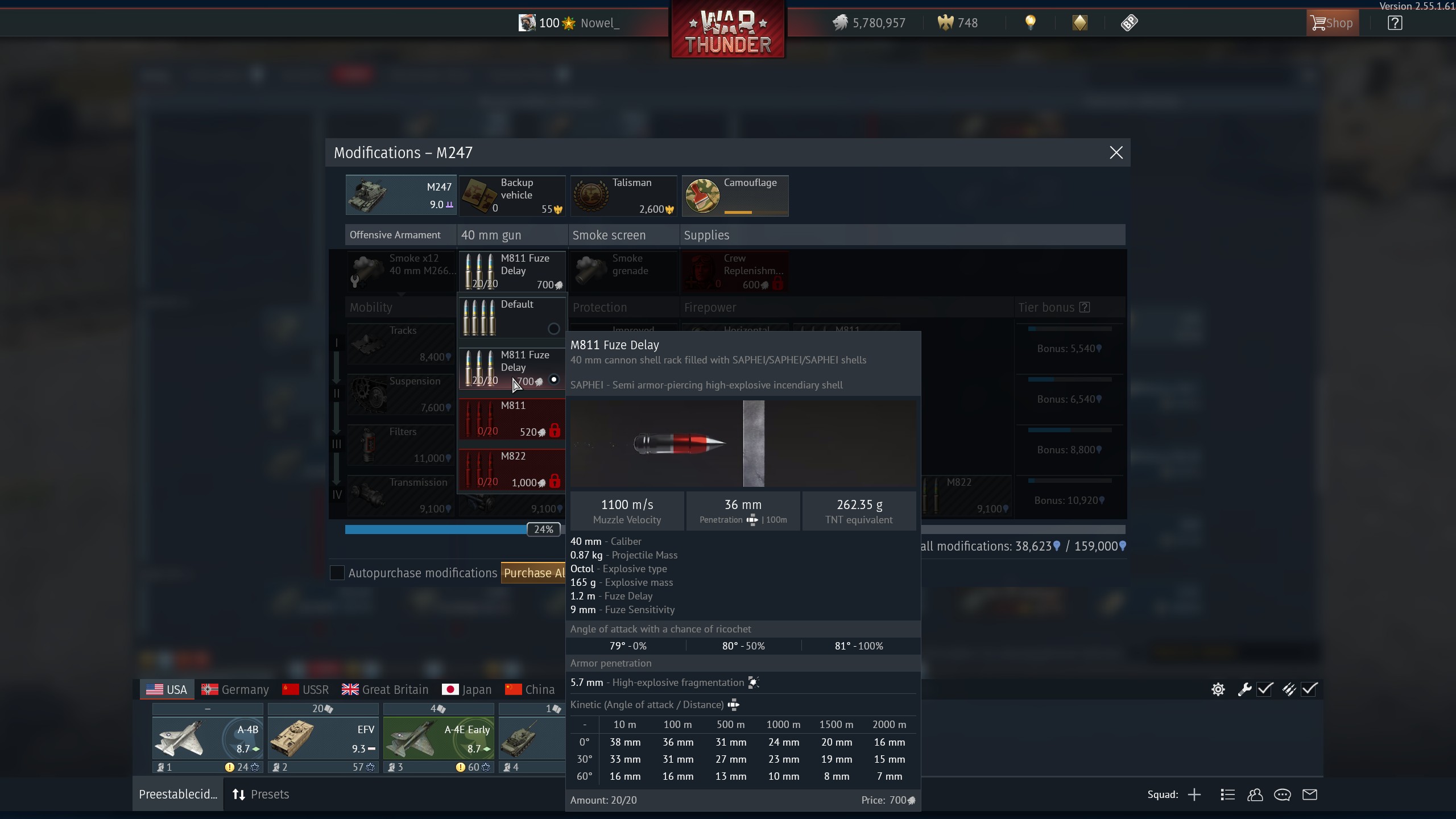
Yes, I am aware just how stupid the formulas are for calculating even SAP pen. Realistic numbers for all rounds of that type would be considerably higher, I’d imagine.
1 Like
So any mods gonna ask the devs to fix something thats been broken for years or nah?
4 Likes
Clearly it’s not a priority, but all large-caliber HE rounds are almost completely missing the kinetic portion of their armor penetration. Even HESH rounds are still well over 50% steel by mass, and that amount of steel flying over the speed of sound doesn’t just go splat or poof upon impact.
Even though from a realistic standpoint, HESH would only have its best effectiveness in the early MBT era before ERA becomes commonplace…exactly like it should be. Most of the problem vehicles of years past that once almost rapid-fired the stuff have been uptiered since years ago. So now the only platforms within reach of WW2-era or early postwar stuff that has no ability to handle it end up seeing 1) 90mm HESH that can barely hurt them and 2) derp gun HESH that should immolate anything as better HE.
4 Likes
The kinetic part is way overblown in this thread. Yes, it is has mass, but the shell is DESIGNED to flatten on impact. Its like trying to pen armor with hollow point. Not happening unless the armor is absurdly thin (<20mm).
The problem isn’t the kinetics, its that the shell should be performing, at minimum, as well as a HE round. It literally lists an explosive filler. A Chieftan has over 6kg HE but in many cases a 6kg explosive HE round would be better. A FV4005 should be hitting like the largest arty pieces in the game. Even if they are going to downplay the effectiveness of the spalling, the HE and overpressure effects would make hesh at least somewhat lethal.
Since i made this thread, HESH can overpressure, but again its far less effective per kg explosive mass than HE. Directed, intentional nerf.
1 Like
Mostly because of incompetence.