So no matter what an armor package can’t be more aimed at chemical than KE protection? I don’t think the modifier should be -0.2 if it’s actually negative that’s crazy. But I can see a world where an armor package isn’t aimed at KE protection as it doesn’t face true threats.
I’ve been saying this since the dawn of time and no one cares. I’ve seen people claim it needs to be 800mm KE… Which again. People don’t understand engines don’t perform well as armor. But people would rather beguile themselves into believing that thin composite can equal very thick KE values over what someone else’s is telling them based on real life data.
I only have a few scattered documents and images to go on, so this is still a rough picture. My earlier comments were aimed mainly at the Merkava Simans 1–3. In War Thunder, those tanks are vulnerable even to short-rod Soviet rounds such as the 3BM15. Chinese documentation, however, indicates that the Siman 3—whose protection is broadly comparable to the earlier models—is essentially immune to the 3BM42 from the front, which is why I think Gaijin has seriously underestimated how much protection the transmission and engine block actually provide.
The same pattern shows up with the Achzarit heavy APC: protection tests rated it capable of stopping the 3BM42 head-on. Yet its successor, the Namer (based on the Merkava Siman 4), is far weaker in-game despite using more modern armour. Basic logic suggests Israeli armour should at least hold up against the Soviet 3BM42; instead, it is completely vulnerable.
The Merkava’s large, tall hull creates several problems:
- The hull’s structural steel accounts for a large share of its weight—over 30 tonnes—leaving the tank heavy even before additional armour is fitted.
- Its size means there is a larger area to protect.
- The original design mainly focused on protection against RPGs in Lebanon and Palestine, rather than facing American, Soviet or German tank-fired APFSDS head-on.
The latest Merkava 4 has Trophy, which further improves its protection. Overall, though, I don’t think its frontal armour can reliably stop rounds such as 3BM60, M829A3 or DM53.
There’s also the combat example from August 12, 2006: of 24 Merkavas from Israel’s 401st Armoured Brigade, 11 were reportedly penetrated or destroyed by Hezbollah’s Kornet anti-tank missiles, with eight of the 44 crew members killed.
My overall view is that the Merkava 4 offers less protection against APFSDS than the Leopard 2, Abrams or T-90, but gives its crew a better chance of surviving after a penetration. So I think its protection in the game is broadly realistic.
1 Like
Some people might wonder why tanks like the T-90 and T-80 are so much lighter than the Merkava yet still offer such good protection. Their low profile means a smaller frontal area to protect. The same armour weight can be concentrated over a smaller area, giving better protection.
But the trade-off is clear too. The cramped interior means poor ergonomics, with ammunition, fuel and crew packed close together. Once the armour is penetrated, the crew’s chances of survival are much lower.
1 Like
I think most players have experienced this. Soviet tanks are harder to hit or penetrate, but once a round gets through, things get dangerous fast. The Merkava is easier to penetrate, but the crew has a better chance of surviving.
This thread is slowly going off topic, haha.
Modern tank design is pretty interesting. There are five layers of protection:
- Don’t get spotted.
- If spotted, don’t get hit.
- If hit, don’t get penetrated.
- If penetrated, don’t get destroyed.
- If destroyed, keep the crew alive.
It seems Soviet/Russian and Chinese designs put more emphasis on the earlier layers, while American and German designs put more emphasis on the later ones.
1 Like
Do you have a source on this? Modern tanks use lighter alloy materials for weight reduction.
Correct, but being larger does not mean you’re guaranteed to be heavier. Weight savings are employed by Israeli designers.
False. While HEAT was a primary concern, the sharp angles of the turret were a design choice directly picked to make the target unappealing for an enemy tank to shoot at. T-72 tanks were still common in hostile militaries, and they could easily meet on the battlefield in wars at the time.
At the time of the Merkava Siman 4’s design and initial production, Israel’s doctrine still primarily involved tank combat. Not only that, but its neighbors, who remain potentially hostile, are equipped with Leclercs and Abrams tanks with relatively modern shells. There is no reason for Israel to forgo APFSDS protection, especially when they even offer SLERA kits geared even more to it.
The Merkava Siman 4A has vastly inferior protection to even the Merkava Mk.4B. The Merkava Siman 4A is not in War Thunder, and nothing shares its protection package.
Aside from the fact that this reasoning is flawed, since the tank was born in a time when Israel’s doctrine still called for tank-on-tank combat as a primary focus, other tanks like the Achzarit, built atop captured T-54/55 tanks, received slap-on packages capable of resisting 3BM42. Israeli MBTs like the Merkava are built from the ground up with integrated protection that should prove superior. Again, I should also mention that reinforced Engines and Transmissions do mangle APFSDS rounds, as shown by Chinese documentation stating the Merkava Mk.3 could stop 3BM42 with that alone.
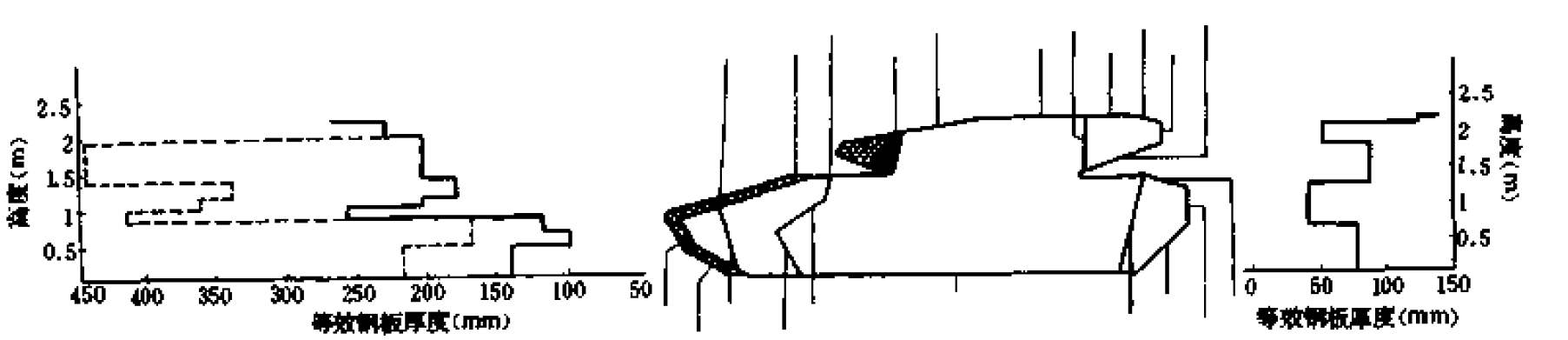
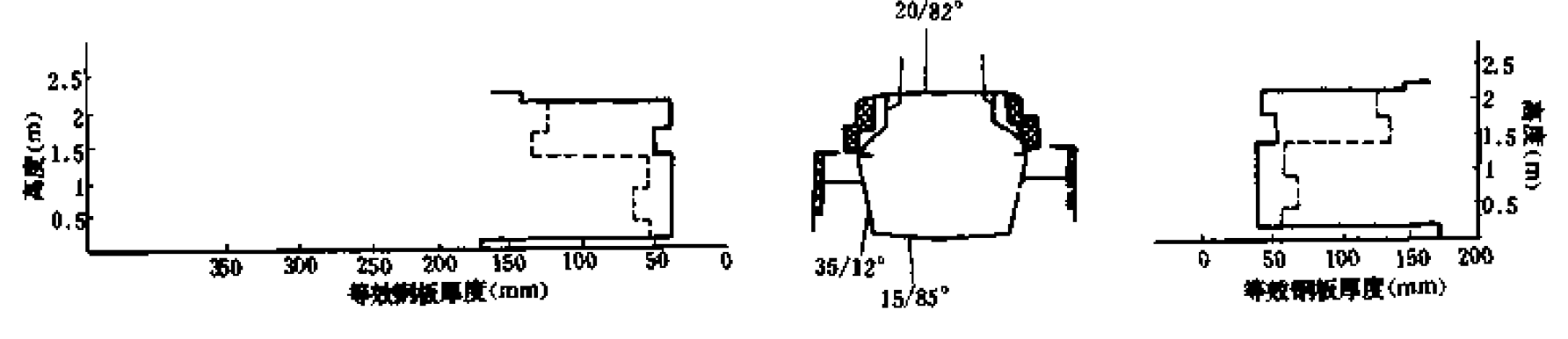
Furthermore, Gaijin has already accepted the Mk4’s protection issues as true. They have yet to implement the fix.
Merkava 4 (all) armor values too low and mislabeled. // Gaijin.net // Issues
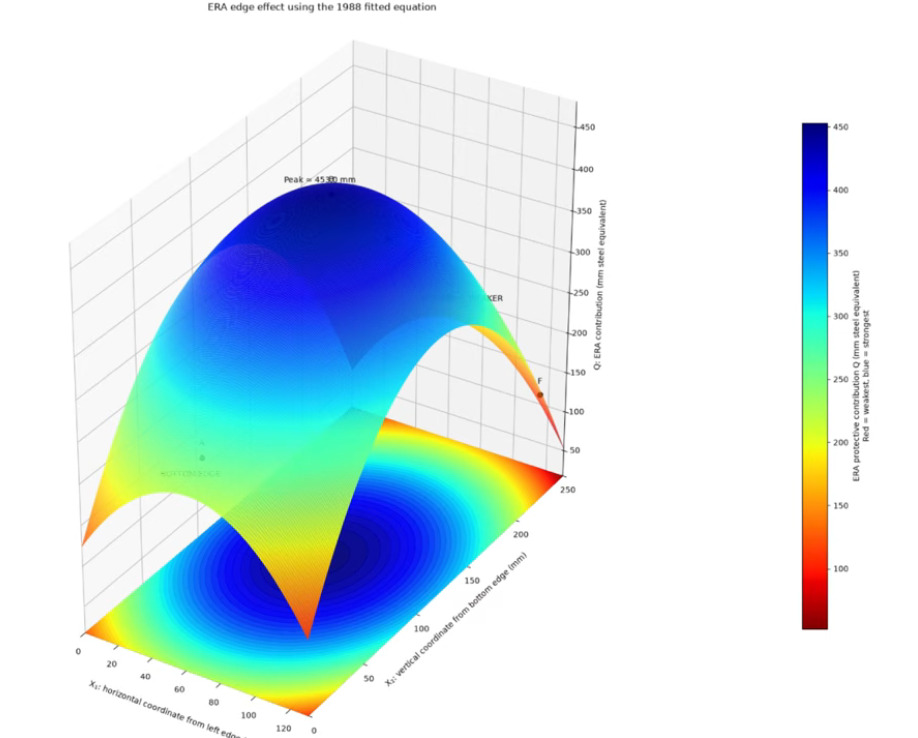
Russian ERA does the heavy lifting. It has little to do with their actual composites as many of their tanks still retain 1980s arrays. Furthermore, ERA is poorly modeled in-game and should be completely reworked.
ERA protection heavily relies on how close to the center a projectile hits the plate and at what angle.
Russian tanks are not significantly more cramped in most positions compared to NATO tanks. Most people look at only the loader position and see space, but for gunners, commanders, and drivers, it’s often similar.
1 Like
Happy to discuss this. I could be wrong too, since a lot of the sources are of questionable reliability.
Still, I really like the Merkava 4. It just looks so damn cool.
I have the documentation for every claim I make. I also know several Israeli tank crewmembers.
I meant the sources I found myself, wasn’t questioning yours. Feel free to correct me if I’ve got something wrong. It would be interesting to hear what the actual crews think too.
Which one specifically?
I meant the crews’ views on the Merkava’s protection and survivability. For example, do they think how easily it gets penetrated in the game is reasonable? I’m interested in their experience with the tank, not classified armour figures.
They do not. Especially against Chemical. APFSDS is divided, but it’s agreed that it’s underperforming. Some people say it would be roughly 3BM60 level to match the stronger MBTs while others say it could stop DM53 to an extent. SLERA is a highly classified armor package, but it does have a special kinetic-only-focused alternative array that isn’t adopted, as it’s unnecessary for the current fighting. It would be nice to see it in War Thunder, though.
Got it, thanks for explaining. Maybe I was too quick to say its in-game protection was broadly realistic.
I’d like to see more accurate protection for the Merkava too. But if that kinetic-focused armour package wasn’t actually fitted, I’d prefer it as a separate variant or modification. The current versions should reflect what they actually carry as closely as possible.
It would be nice, though I cannot remember the name of the KE package at this time.
Very logical. That was your first mistake in regards to that tank. It never bodes well on the forums…
Size and Geometry works wonders. Why is the IS-4M lighter than the Tiger II but with far better protection in all aspects… 200mm vs 80mm side and rear armor is a major difference this is without taking LOS into account… T-44 vs T-34-85 protection… Size and geometry matters!