What can save American top tier air?

“Lobbying” xD

1 Like

one of my biggest questions about these standard missiles is regarding the mass of the mk-72 booster, i had seen that brochure you sent before and i didn’t understand why the mass was so low at 680kg, when i made my attempt on modelling the SM-2 BLK IV i assumed the booster mass was 740kg, and the entire stack 1496kg, i got these estimates from this brochure, it has the values of 705.7kg for the SM-2 MR (upper stage only) and the SM-2 AEGIS ER has a mass of 1451kg (1451kg - 705kg = ~746kg), so thats where i got the mass value of 746kg for the mk-72, the SM-2 BLK IVA has an extra 45.3kg of weight compared to the SM-2 ER, and the blk IV was what i was aiming for so i added that extra weight to the upper stage, i know the SM-6 is heavier than these missiles but there’s more info around for the SM-2 family, this navy website has some small inconsistencies with the weight on that brochure, which is annoying

i assumed 467kg of fuel at around 268 ISP for the booster (kinda optimistic imo), i’ll explain why that isp is so high inside the SM-3 section, i have no idea how accurate most of this attempt is

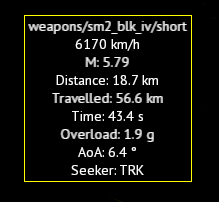
i modelled the first stage around known boost/sustainer burn times and thrust ratios for the RIM-66B, the burn time i used this video, it shows the upper stage burning for at least 34 seconds and at most 38 seconds(i used a total burn time of 36.2s), all that together the claimed top speed of mach 3.5 and max range of 166km for the upper stage, the CxK value i used was 1.25, it was based off the RIM-24 gaijin modelled and added to the game, that has a CxK of 1.4, at first i tried to keep the same value but i couldn’t achieve some criterias without very high ISPs so i decided to lower the drag a little bit.

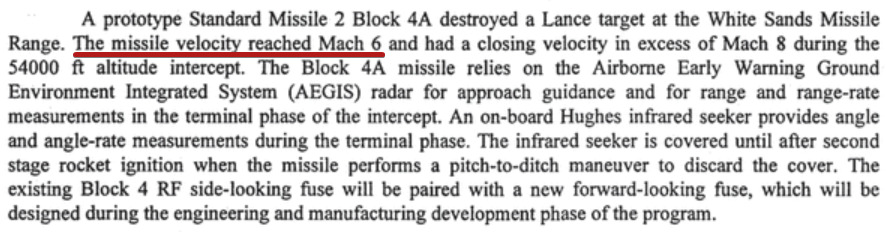
my final goal for the full stack was to achieve a speed of at least mach 6 in a normal flight (not going 90° up), that number comes from this document

Spoiler
image

source: Recent Events in Guidance, Navigation and Control by Michael Polites, Darin Groll, and Johnny Evers
image

some more brochures and general info i found about the standard missile family

SM-2/3

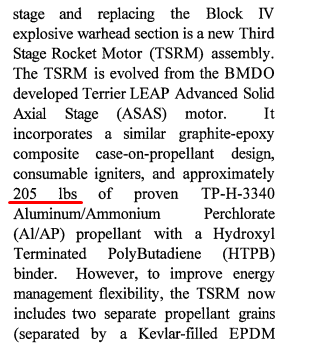
i unfortunately found a document stating the mass of the third stage motor used in the SM-3 only and another convenient document stating the entire mass of the SM-3 stack, so i was left with a mass value for the rest of the missile that is shared with the SM-2/6
image

AEGIS LEAP Intercept (ALI)/STANDARD Missile Three (SM-3)
this states the fuel mass for the third stage is is ~93kg

this other document was my source for the entire fuel mass of the SM-3 stack

image

Hazard Assessment Testing of the SM-3 Block IA Missile

that would leave the MK-72 + MK-104 stack with 841kg of propellant, the upper stage alone was getting too fast on it’s own and the full stack wasn’t getting to mach 6, so i didn’t know what to do to make this balance better and achieve both goals, the 1st stage ended up with an ISP too high, and has you could see despite getting optimistic values for both stages i still couldn’t get the mach 6 objective

more brochures and documents

SM-2 BLK IIIA brochure

SM-2 BLK IVA brochure

HIGH PERFORMANCE BOOST PROPULSION FOR THE NAVY THEATER MISSILE DEFENSE - this one talks about what would become the 21 inches 2nd stage for the SM-3 BLK II, but it still has some good general info
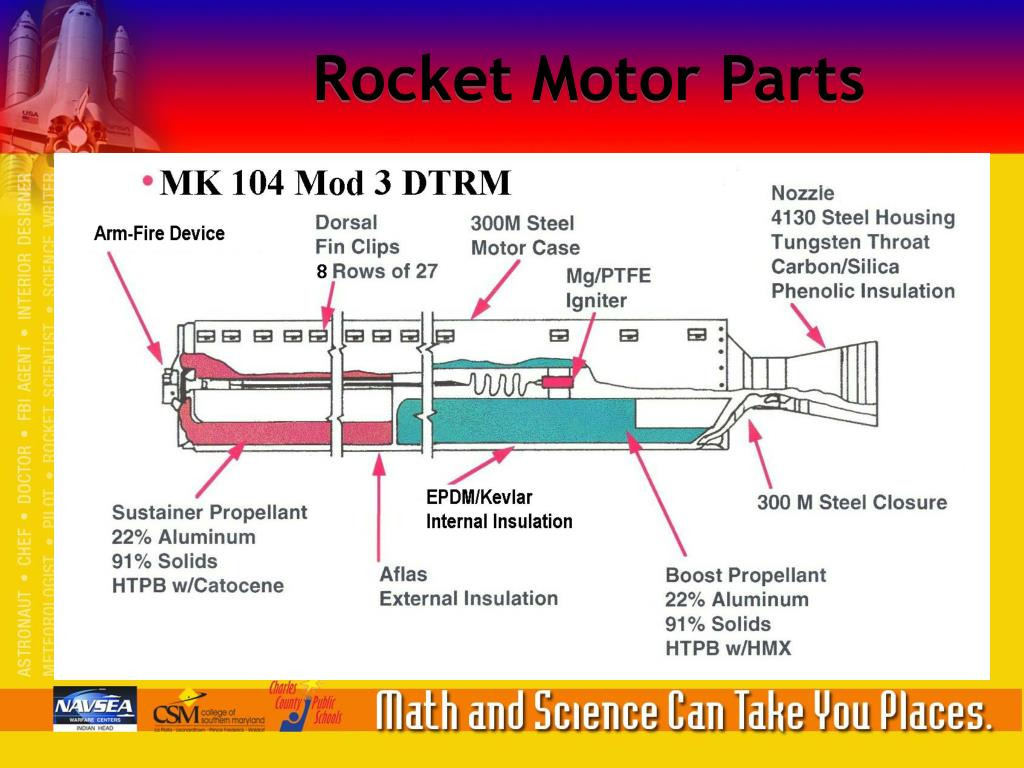

source for the images: 5th Grade Career Activity Lesson

2 Likes

I used 3300 lbs total and 1500 lbs booster, assuming 60% of the booster weight is fuel. At least when subtracting the booster weight, you get around the 1800-1900 lbs figure for the AIM-174. But I guess all these values are only approximate.

I also used a CxK of 1.4 or 1.405, don’t remember rn. Engine Isp could probably bumped to about 240s (vs 224s I used now) like what the AMRAAM uses rn in-game.

In any case, the booster does provide quite a bit of energy, even with my sorta lowball estimate.

1 Like

irl sure, but ingame its insanely good

Awacs and Datalink will save the US top tier

Hopefully with AWACS and Link 16, 120D finally gets it two way data link

1 Like

that what i hope too , i think many people forget the real strength of the US Armed forced and that is not its individual Machines but the intregration and connectivity between them.

1 Like

Wowza, good source finding and modeling mate

1 Like

Even if you add two-way datalink and Link-16. You are still going to have the issue “My missile no longer listens to my radar”

The one good benefit though would me that you wouldn’t need to worry about mid-course with AWACS

Meta will be firing long range AAM at shiny slow AWACS half a map away to nerf US planes

I can see it now. R-37 into their cockpit ezpz

1 Like

Won’t link 16 also help with mid course guidance?

This makes me wonder, how do AWACS even survive IRL?

If you have an awacs. Yeah. But it also can jump from other ally link 16 capable aircraft. Problem is, not everyone on your team is link capable, and it’s not an even distribution of where people point their radars. It’s where you have Link-16 capable AWACS show up.

That’s why I believe even if you added full two-way datalink capability, the whole “pitbulls at 16km away” kinda negates a lot of it’s strength.

Having escorts helps. They also have ECM, being a flying radar/command centre and all.

So they could also implement AWACS with ECM and a very powerful jammer in game as well, along with that, it could be placed far away

The next immediate problem being home-on-jam that all/most ARH in game as of today has xD

I guess placing them far away would help but that’d only delay the inevitable with current missiles. Eventual missiles will easily cover that massive distance in like 2-3 mins.

They’ll have to make AWACS basically IR kills only by making their ECM ridiculously powerful that no ARH can kill it. I know, kinda skirts realism but if the goal is for USA or any jets with less than 180° FoR radars to not struggle as much then this is (or should be, if I were a dev) the way

Home on jam isnt as simple as it gets jammed and homes in irl. But ecm just happens to be extremely classified.

Isn’t it, though? Sure, we’ve progressed way beyond simple noise jamming, but missile tech has caught up just as fast. HOJ is admittedly a bit of a “one-size-fits-all” description that I used to basically say, “Whatever flavour of jamming you use, it’ll still get you”, at least, when we’re talking about massive targets like an AWACS.

Also, the underlying science behind ECM isn’t really classified. The physics and core concepts are public knowledge; it’s just the highly specific ways individual countries choose to augment, program, and implement them that are heavily guarded secrets.

HOJ has its counters

If we limit ourselves to War Thunder for a moment. My guess is that HoJ simply wont be added, but at the same time, ECM wont be anywhere near as good as it is IRL and will have limitations, probably a minimum effective range too (get close enough and you effectively ‘burn through’ the ECM)

It would be a way to make ECM relevant but not too OP, especially for aircraft that have extremely effective and diverse sets of ECM like the Typhoon

this is a bit of a moot point isnt it?