- Yes
- No

Introduction
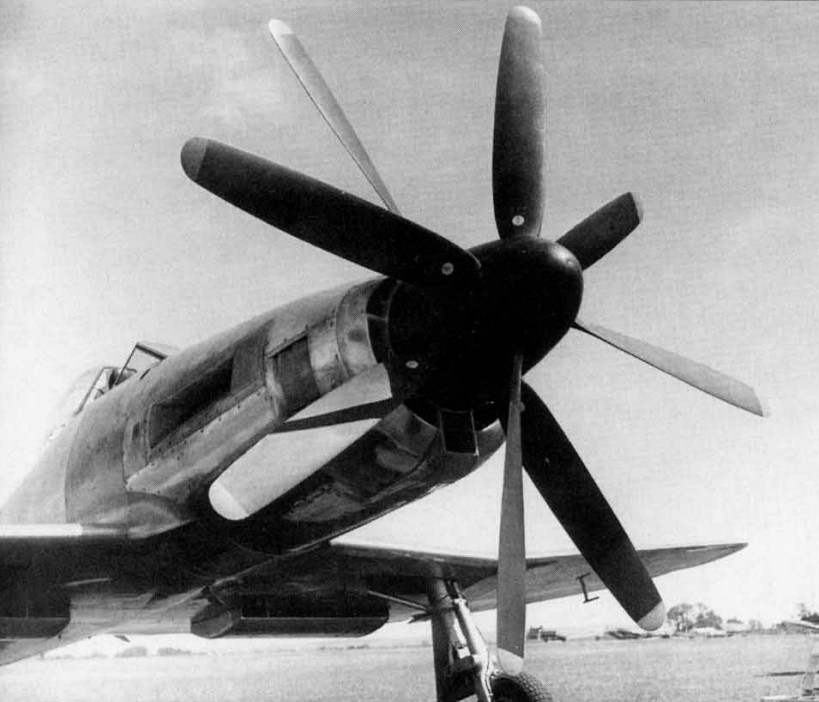
The Westland Wyvern has its origins in early 1944, as a response to the Admiralty’s desire for a modern single-seat strike-fighter capable of carrying bombs, rockets, and torpedoes, replacing the problematic and underperforming Blackburn Firebrand. Under Technical Director Edward W. Petter, Westland created several concepts before settling on a front-engined, low-wing monoplane layout with contra-rotating propellers driven by the new Rolls-Royce Eagle 22 piston engine, projected to produce 4,000hp. The design was formalised as Specification N.11/44, and the first prototype (TS371) flew on 16 December 1946. The Wyvern incorporated folding wings, a wide-track undercarriage, and the first eight-bladed contra-rotating propeller system developed in Britain
Development proved lengthy and problematic. Early prototypes revealed aerodynamic and engine-propeller control issues, worsened by the cancellation of the Eagle engine programme in favour of gas-turbine work. As a result, only seven TF Mk.1 piston-engined aircraft were completed by mid-1949, and attention shifted to turbo-prop powerplants. Under Specification N.12/45, Westland produced three TF Mk.2 prototypes: one with the Rolls-Royce Clyde turboprop (first flight 18 January 1949) and two with the Armstrong Siddeley Python (first flights March and August 1949). The Clyde was soon cancelled, leaving the Python as the only viable engine for the rest of the TF Mk.2 aircraft. Persistent issues, predominantly around the handling, required major redesigns, including a taller fin, dihedral tailplane, modified wings, revised cowling, and improved propeller control systems, all of which postponed service entry further and further.
The definitive production model became the Wyvern S Mk.4, powered by the Python 3 engine. Four production batches were ordered, with additional conversions of earlier TF Mk.2s. Continued engine-control troubles meant that the S Mk.4 did not receive clearance even for land-based operations until late 1952, and it was not fully cleared for carrier operations until April 1954 following introduction of an improved inertia control unit (ICU/ECU).
Although its operational career was short, the Wyvern served effectively with four Fleet Air Arm squadrons. No. 813 Squadron became the first to equip with the type in May 1953, followed by 827 and later 830 and 831 Squadrons. Wyverns operated from carriers such as HMS Albion, Eagle, and Ark Royal. The aircraft saw its most notable combat during the Suez Crisis in October 1956, where nine Wyverns of 830 NAS conducted bombing, strafing, and reconnaissance missions against Egyptian targets. The final frontline unit, 813 Squadron, retired the type in March 1958.
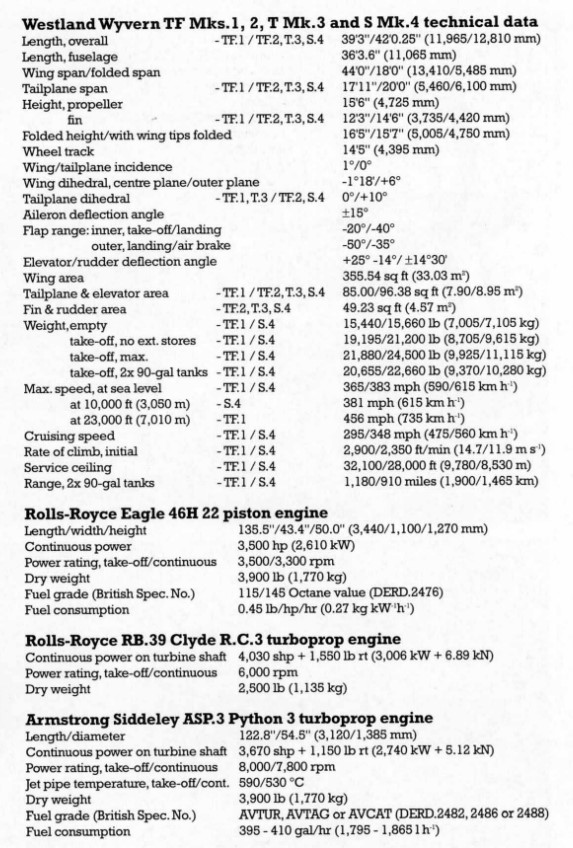
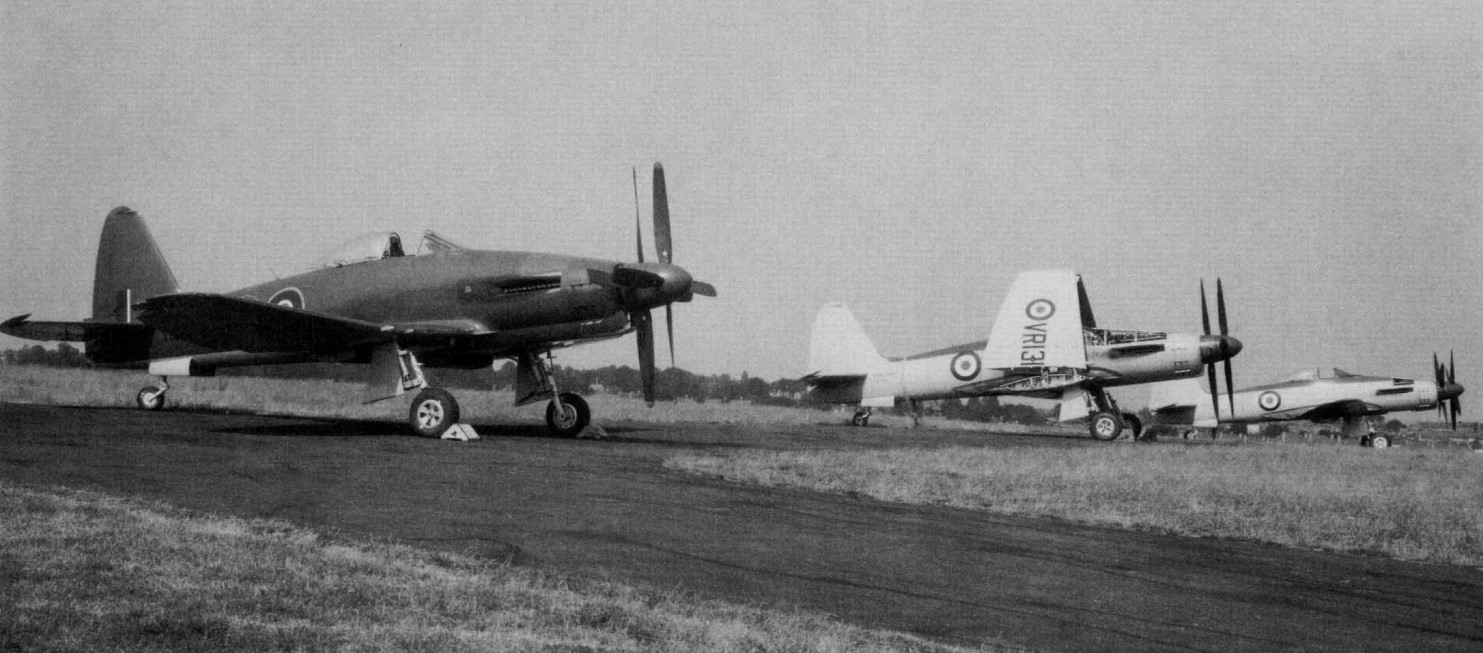
This suggestion is for the Wyvern TF (Torpedo-Fighter) Mk.1, or TF.1. This is the earliest of the anticipated production standard Wyvern airframes, although it ended up substantially different to the later Wyverns, as it is powered by the purely piston Rolls Royce Eagle 22 engine, as oppose to the gas-turbine turbo-props of the later aircraft. This engine delivers a respectable 3,500hp, which is comparable but slightly lower than the Python 3 turbo-prop, and it lacks the residual thrust generated by the pseudo-jet exhausts of the turbo-prop. This overall it would be considerably less powerful than the Wyvern S4 in-game, and could therefore sit in the tree at a lower BR, offering a slightly different playstyle in air battles and slotting in to different lineups as a strike-fighter in ground RB.
Regardless, the Wyvern is an iconic strike-fighter of the Fleet Air Arm, and it would be good to see more representation for the airframe outside of the single premium variant we currently have.
Specifications

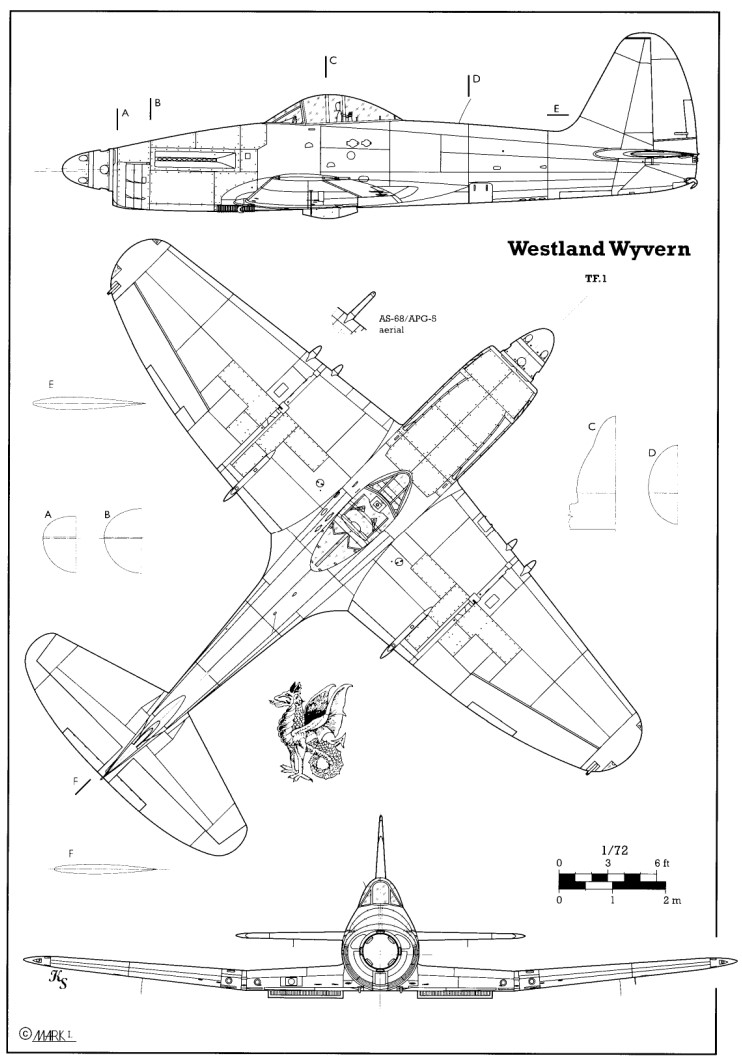
Images
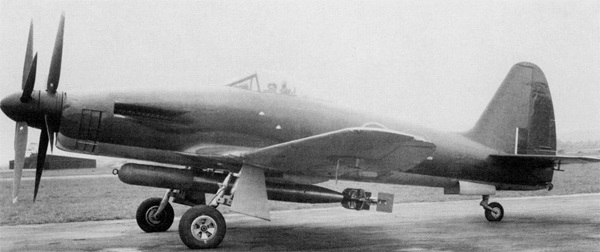
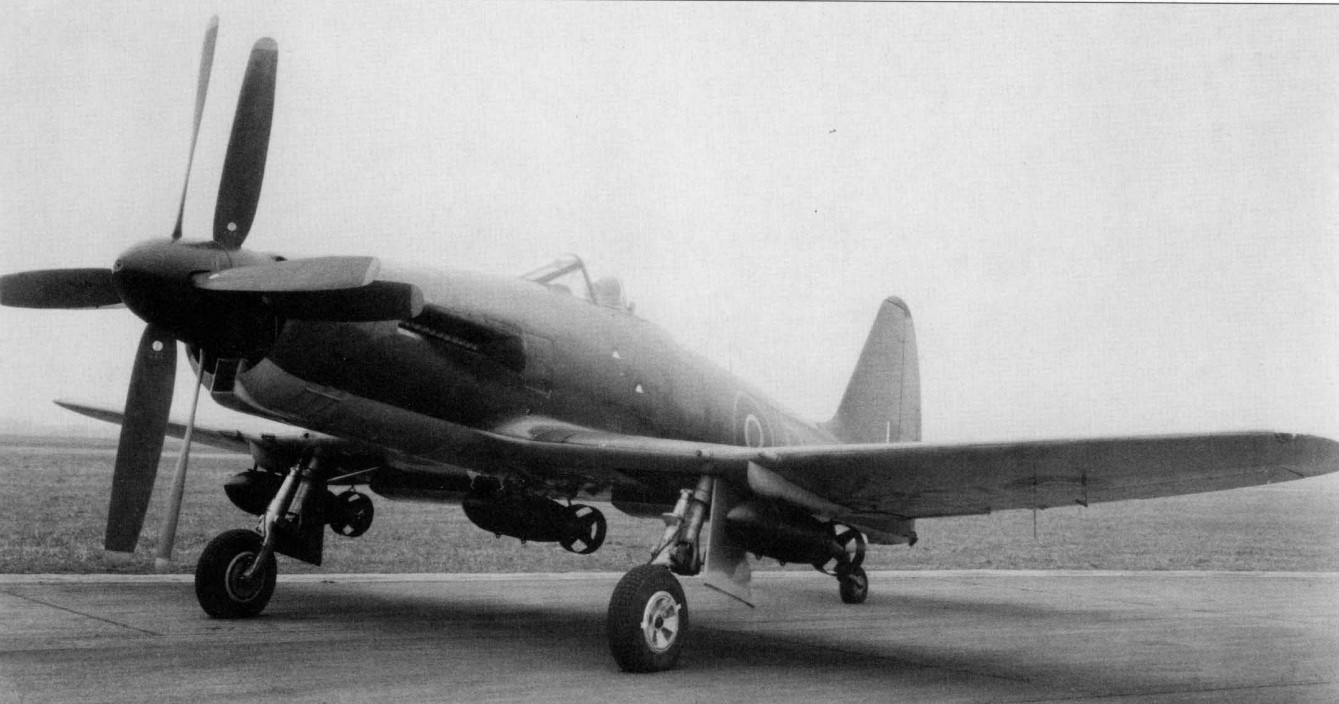
Sources
Spoiler
Westland Wyvern TF Mks,1, 2, T Mk3, S Mk4, Michal Ovcacik and Karel Susa, 4+ Publications, 2003
Propeller Twilight: The Last Generation of British Piston Engine Fighters, Tony Butler, Crecy Publishing, 2023
The Westland Wyvern; Outdated Monster - - Military Matters
Wyvern Pilots Notes