- Yes
- No
Hello everyone and welcome to this new suggestion.
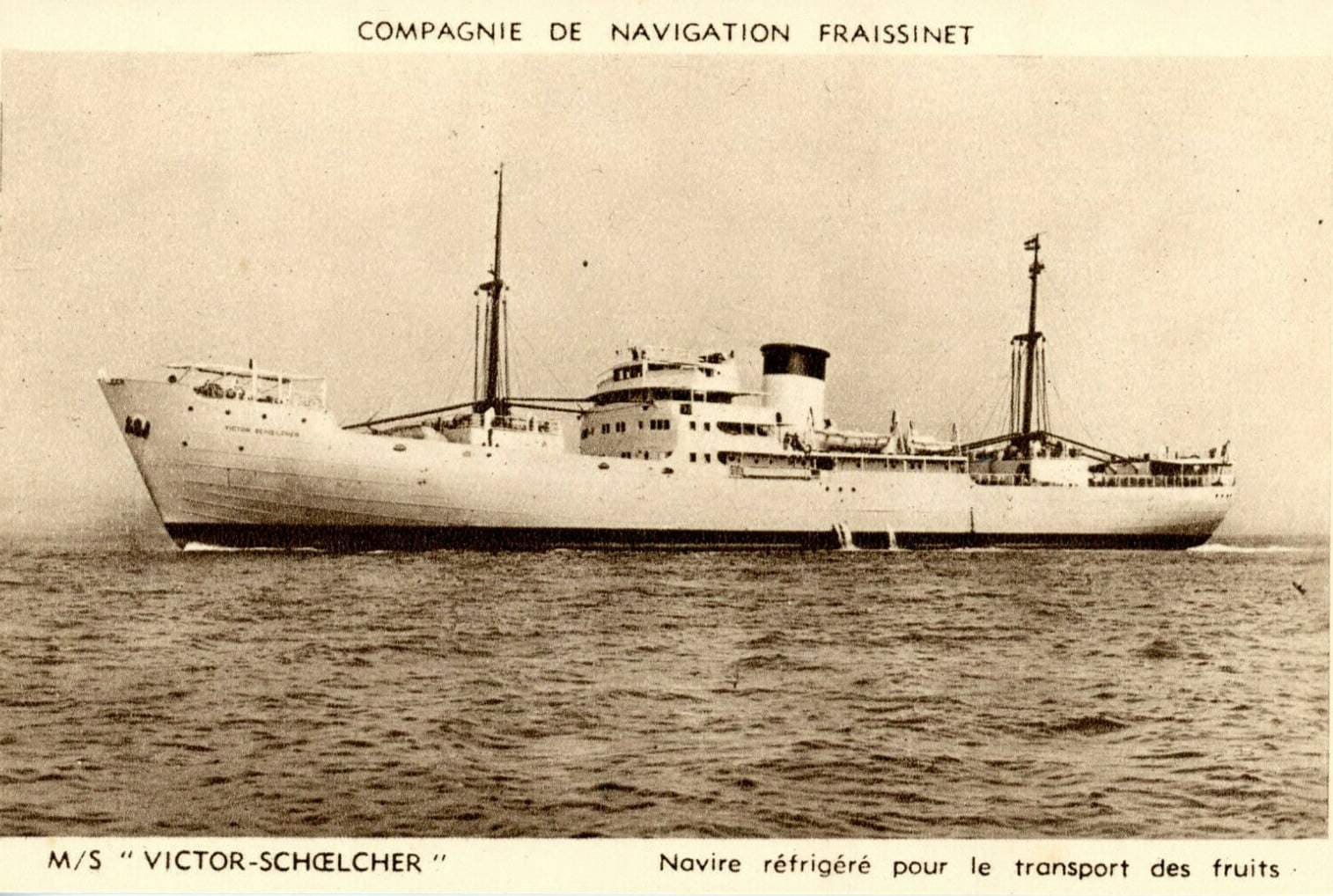
Today I’m presenting a new auxiliary cruiser of the French Navy from the beginning of World War II, the Victor Schoelcher, also known as the X7 cruiser.
At the start of World War II, the French Navy was one of the most modern and powerful in the world. However, it had a problem: it lacked sufficient combat units to effectively defend all of its territories, which at the time were particularly numerous. Therefore, as soon as Germany’s first hostile intentions began to emerge, ships were requisitioned into what became known as the Auxiliary Fleet. These ships were passenger and cargo vessels, freighters, or small ferries, and they all received military armament and new crews, allowing them to support the existing fleet. The Victor Schoelcher was one of these ships.
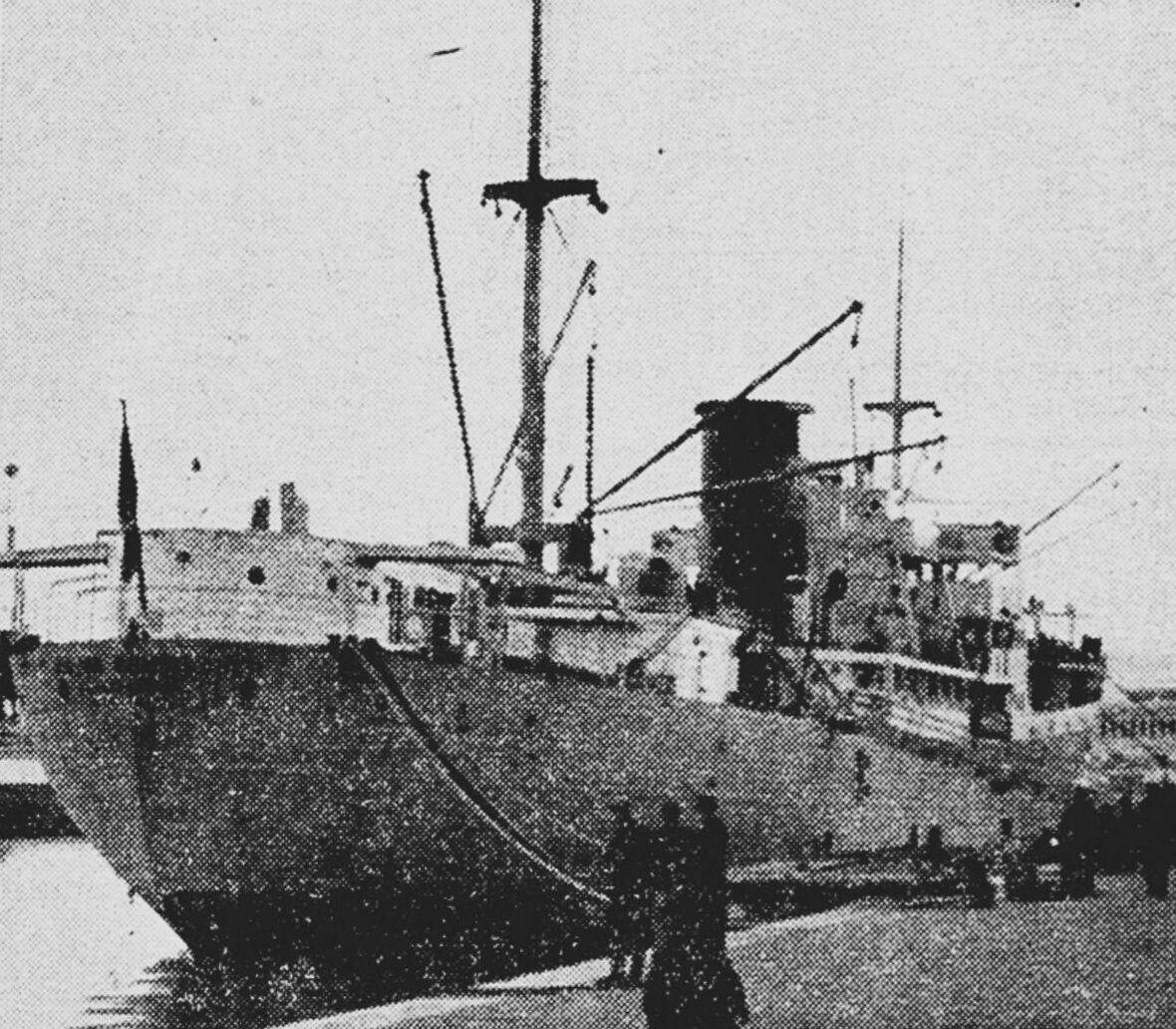
Built in La Seyne-sur-Marne in 1938, the Victor Schoelcher was a cargo ship, specifically a banana boat. Chartered by the SGTM (Société Générale du Transport Maritime), it operated routes between mainland France and the French West Indies. In 1939, it was acquired by the Fraissinet transport company, but a few months later, mobilization began, and the ship was ordered to Le Havre. Once in Le Havre, the Victor Schoelcher was designated the auxiliary cruiser X7 and modified to receive armament. Assigned to the 4th Auxiliary Cruiser Division, the ship carried out several boarding operations against small vessels before being sent to Dunkirk to evacuate several thousand soldiers and participated in the evacuation of gold from Belgian and Polish banks. However, it was decommissioned in 1941 following the surrender of the French government.
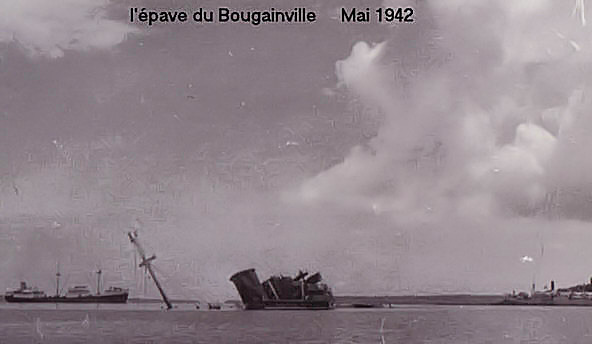
However, this was not the end of the ship’s story. Indeed, at the end of 1941, the Vichy regime requisitioned it and rearmed it, this time under the name Bougainville (in homage to the aviso of the same name sunk that same year). Sent to the Indian Ocean, it broke through the blockade of Djibouti and reached the port of Diego Suarez on the island of Madagascar. In May 1942, during Operation Ironclad, British forces targeted the island. The Bougainville was then hit by two torpedoes and sank in the harbor, marking the end of the ship’s story.
The ship was named in honor of Victor Schoelcher, a French journalist and politician (elected to represent the islands of Guadeloupe and Martinique in the Senate), who was particularly committed to the fight against slavery.
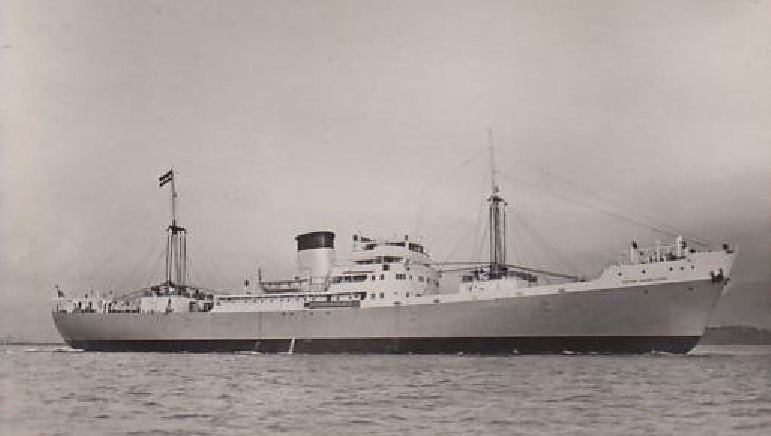
Characteristics
Length : 114.48 m
Width : 15.89 m
Draft : 5.95 m
Mass : 5600 tons
The ship is powered by two MAN diesel engines with a unit power of 2600 hp, allowing the ship to reach a maximum speed of 17 knots.
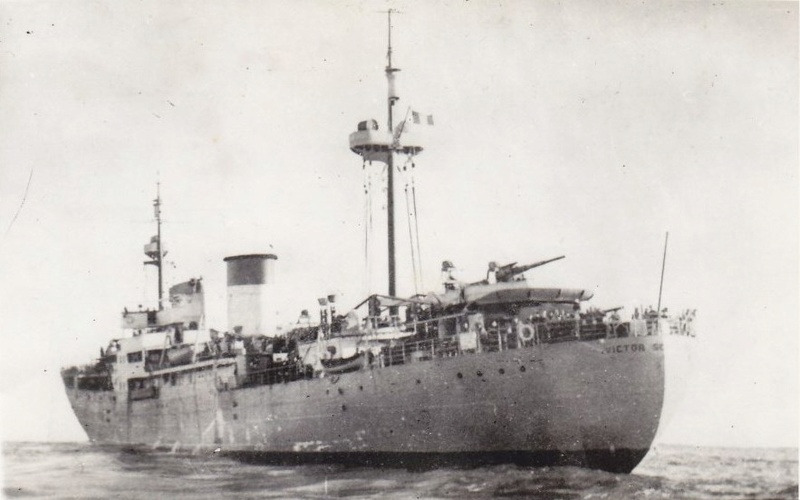
Weapons
The ship’s armament is particularly similar to that found on other auxiliary cruisers, centered on several 138.6 mm guns mounted on carriages and accompanied by anti-aircraft guns and a few machine guns.
- 7 x 138 Mle 1927/29 mm guns
- 2 x 75 mm guns
- 2 x 13.2 mm Hotchkiss machine guns
This armament allows it to engage all types of light or lightly armored targets but does not allow it to engage larger vessels such as light cruisers.
In the game, this ship would be an interesting addition, providing a medium-tonnage vessel with relatively low speed but an effective arsenal capable of damaging numerous ships and aircraft. It would make a unique ship in the French tech tree and thus complement it in an original way.
Sources
- Les paquebots et cargos armés en guerre
- * VICTOR SCHOELCHER (1939/1940 et 1941/1942)
- Mémorial des officiers de marine
- Mémorial national des marins morts pour la France - Bougainville
- Archives maritimes: Djoliba, navire bananier de la compagnie Fraissinet
- Bougainville (croiseur auxiliaire) — Wikipédia
- Brest, 18 juin 1940. Sauver l’or de la France Ont été évoqués ce matin au monument aux morts puis en mairie l’appel du 18 juin et quelques personnalités brestoises qui se sont engagés très… | Yves Coativy
- Document sans nom
- WRECKSITE - VICTOR SCHOELCHER CARGO SHIP (EX-LATER CRUISER (AUXILIARY)) 1942-1942
- Mémorial des officiers de marine