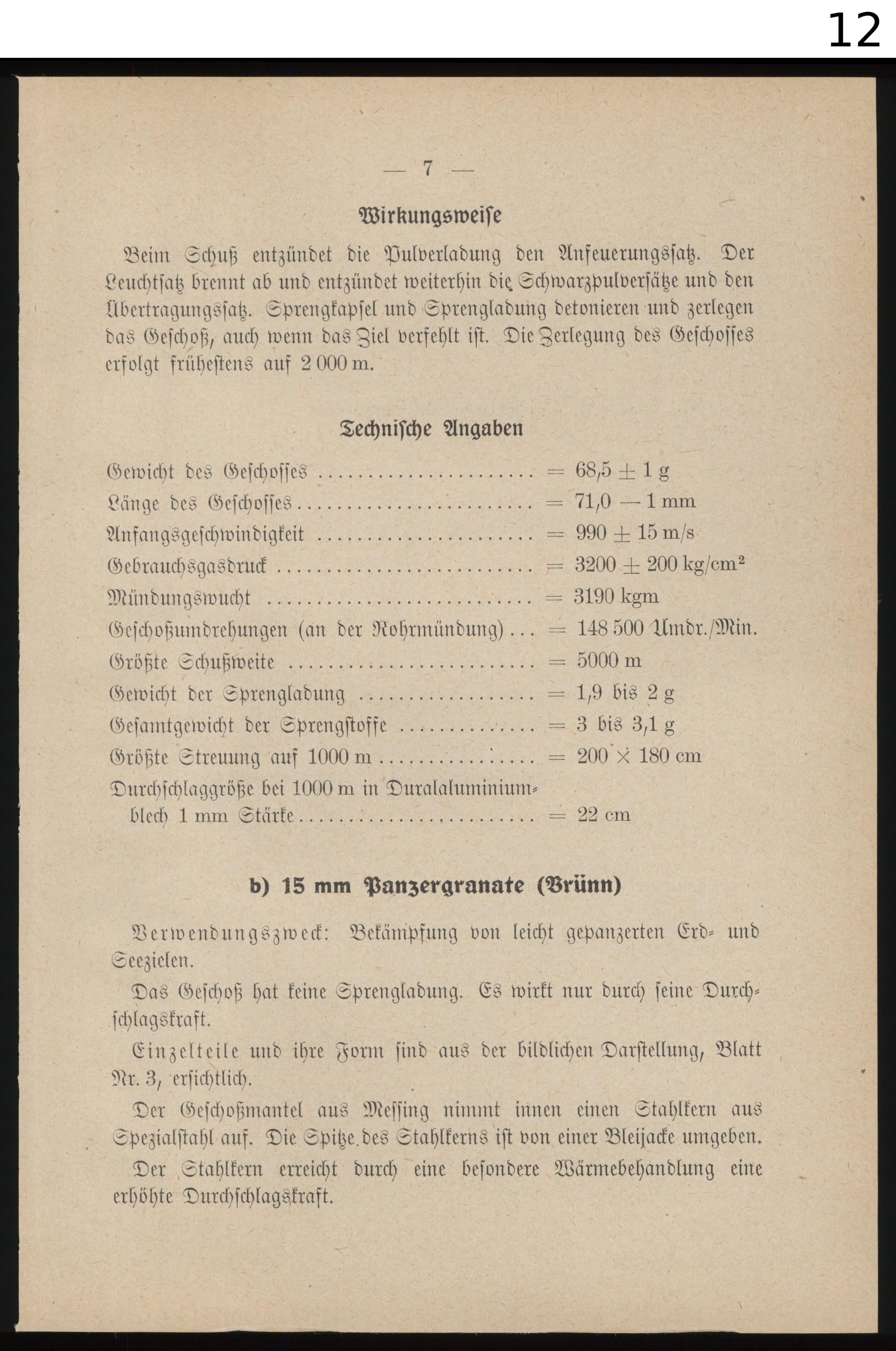
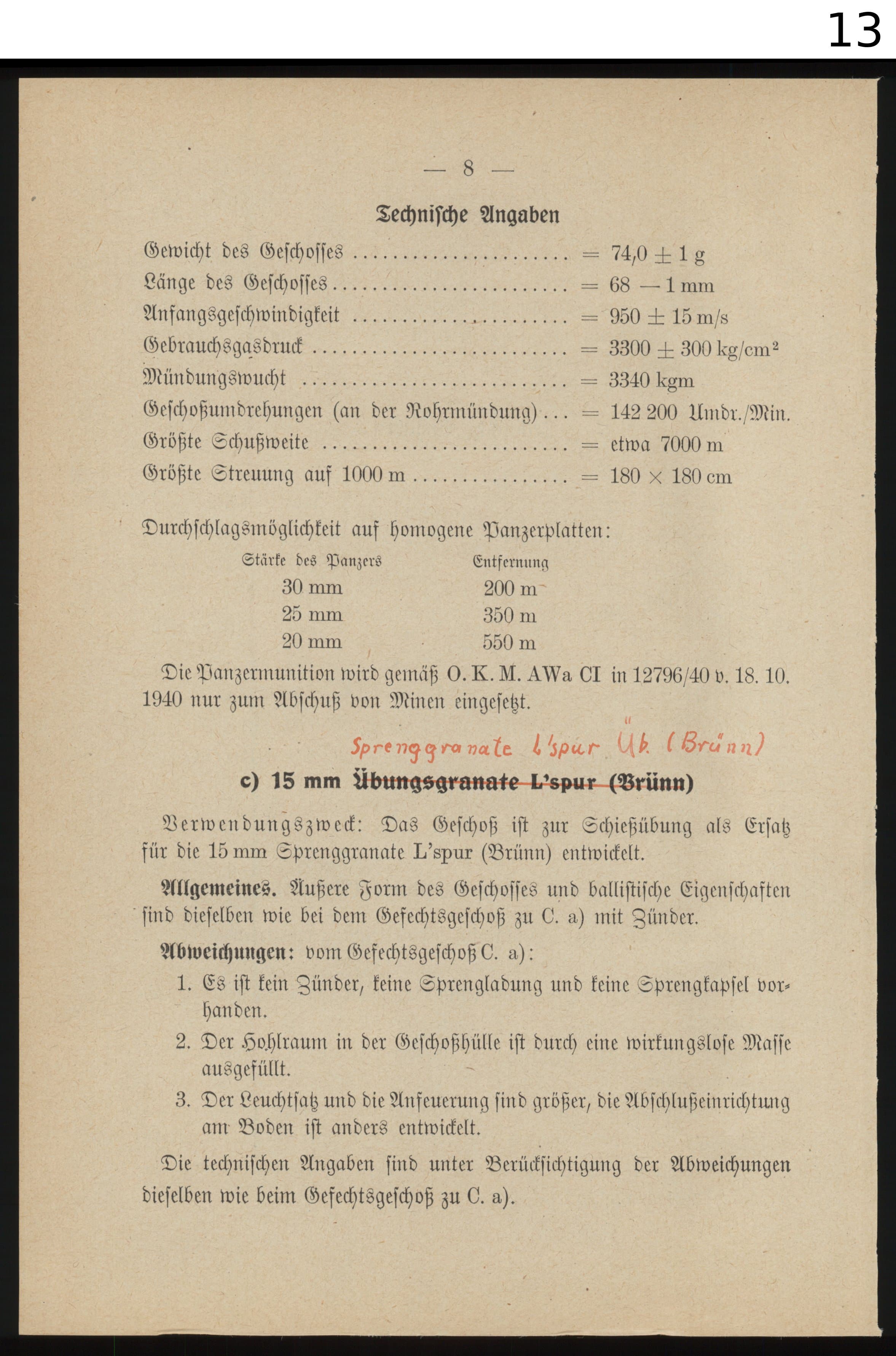
Perhaps, but I’m guessing they prioritized ballistics with the manufacturing means and resources they had, plus it would have been milder on the barrels reducing the wear and increasing barrel life. German rounds tend to be incredibly optimized with the trade-off that they cost more and/or requires more sophisticated manufacturing methods, while many other countries were satisfied with economical “good enough” rounds. Also to consider is that Germany gained a lot of experience from actively fighting, so they could tweak their designs with war-time expedience. Other countries, like Czechoslovakia, were either annexed or fell so fast that they didn’t have time to design, produce and field new ammunition types before it was over.
Lots of interwar technologies and designs met the same fate.
I think the original Czech offering might have been a tungsten core, but the British seem to only use steel cored ammo. That’s actually pretty close, core weight is given as 769-770 grains, projectile weight as 1160 +/- 10 grains. A lighter core might also explain why they have the muzzle velocity at 920m/s.
That’s gratifying to hear. I wasn’t sure how accurate my model would be but it seems it came pretty close, maybe a bit on the larger side but close enough. Thanks for bringing this to my attention!
I also checked what the core would’ve have weighed if it was made of tungsten and it came out as a whopping ~122 grams. I can see why tungsten is such a desirable metal.
Where I wrote “tungsten” I should have put “tungsten steel” which is unfortunately just a descriptor for a whole range of alloys. So maybe not quite that heavy, but still likely heavier than a hard steel core.
It would depend a bit based on the ammunition feeding, but I’d imagine a BR of 2.0, maybe 1.7 if it uses particularly short magazines.
The AEC AA and Crusader AA Mk.II could both have some historical issues to address that could justify lower BRs. In the case of the AEC, I could see it being 3.0.
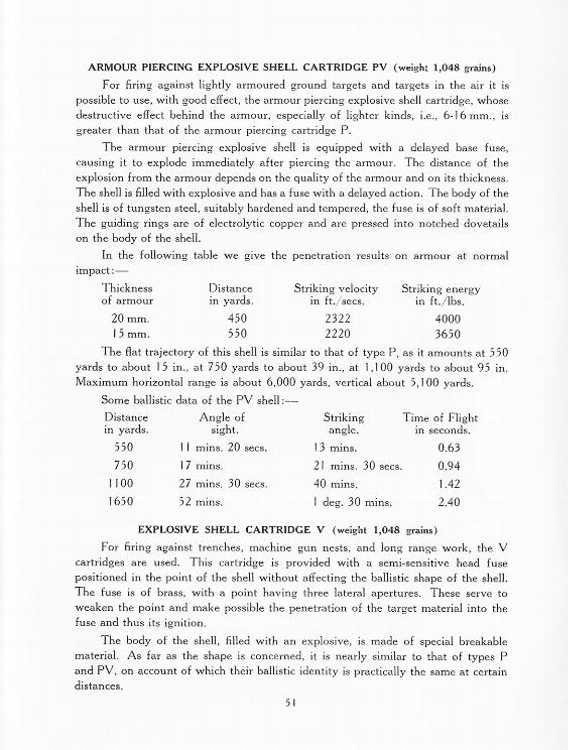
BSA hadn’t been making ammunition for 4 decades at that point, the P, PL, PV, V, and PLV are going to be of Czechoslovakian origin, which would probably be hard to get after 1938. BSA had some to demonstrate the guns and put in their sales brochure, but that’s about all.
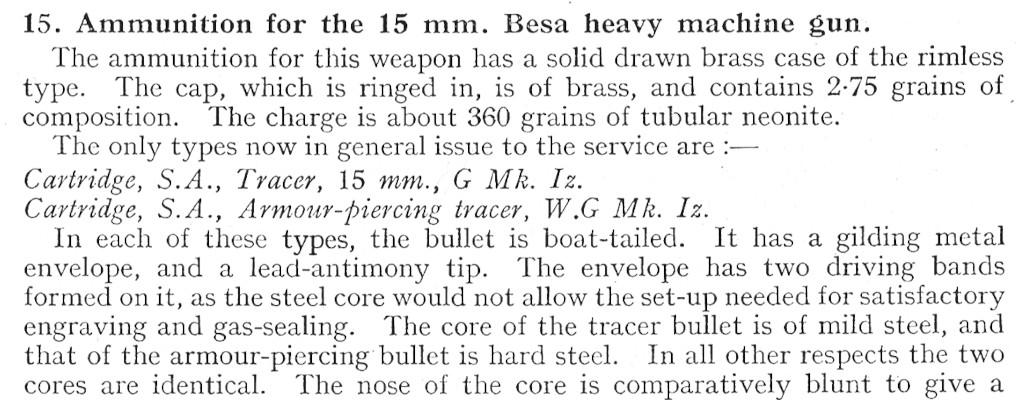
I have yet to see anything that indicates the British made anything other than Tracer and APT in 15mm for general use.
But yeah, Gaijin can do as they want including giving the BESA the 15 x 101mm German cartridges so it has HEI or Tungsten Carbide AP or whatever, I just won’t think it’s a good idea.
That’s entirely fair and I agree. I only suggest these because that’s the status quo really. Gaijin love their time travelling or experimental ammo on service vehicles that never received it, or they simply withhold actual service rounds for “balance”.