- Yes
- No

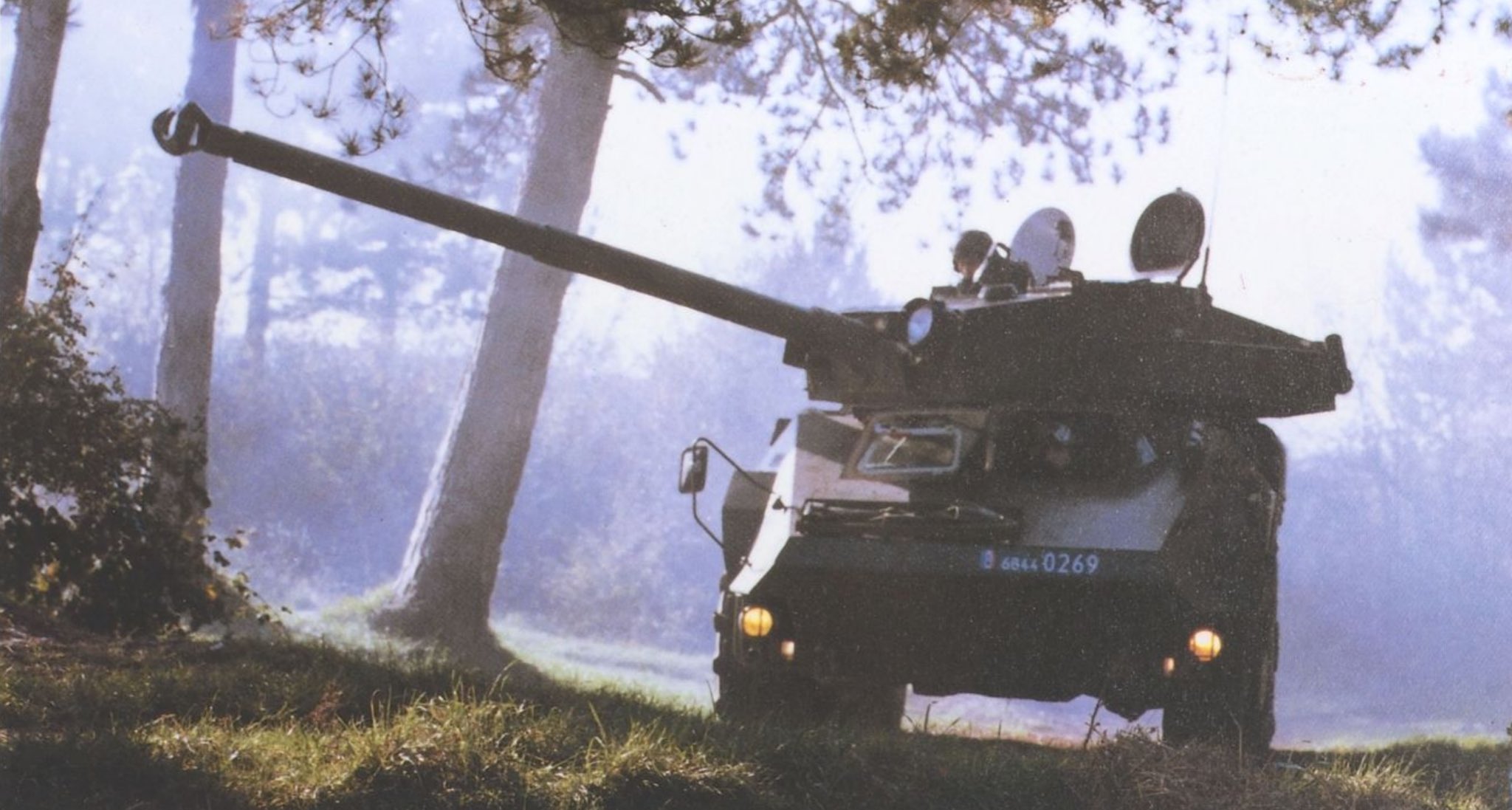
TL;DR: French 6x6 armoured car, armed with a 90mm cannon in a TS 90 turret. I’m very surprised there’s no suggestion for this yet
History
In the late 1960s, France sought a wheeled, amphibious APC to complement the tracked AMX-10, and issued its official requirements in 1970. Both Panhard and Saviem began development of prototypes in 1972–1973. In 1974, Saviem’s 4x4 VAB (Véhicule de l’Avant Blindé) APC was chosen for production, and 4,000 vehicles were ordered at first. The VAB is a (primarily) 4x4 APC, which has spawned a large number of variants and derivatives. Over 5000 were produced in total, and they remain in service to this day with the French Army and over two dozen other countries.
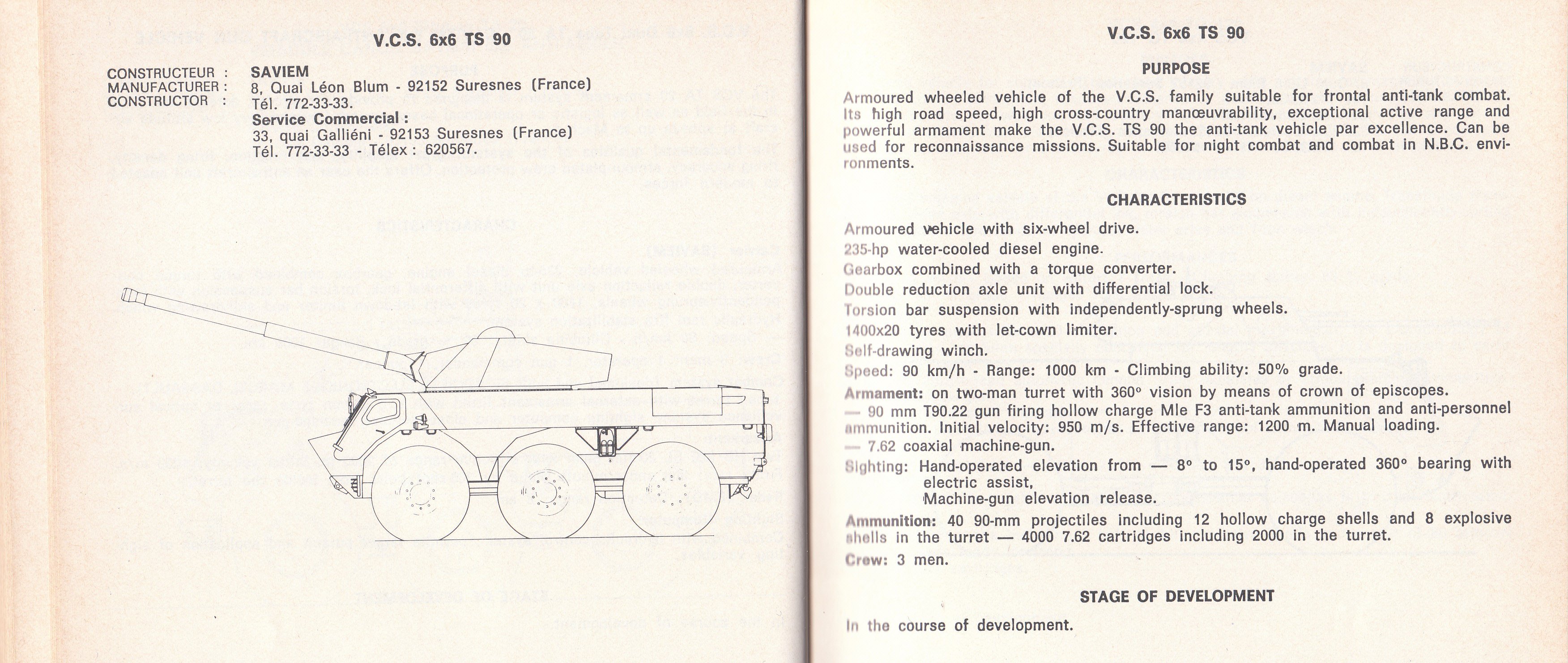
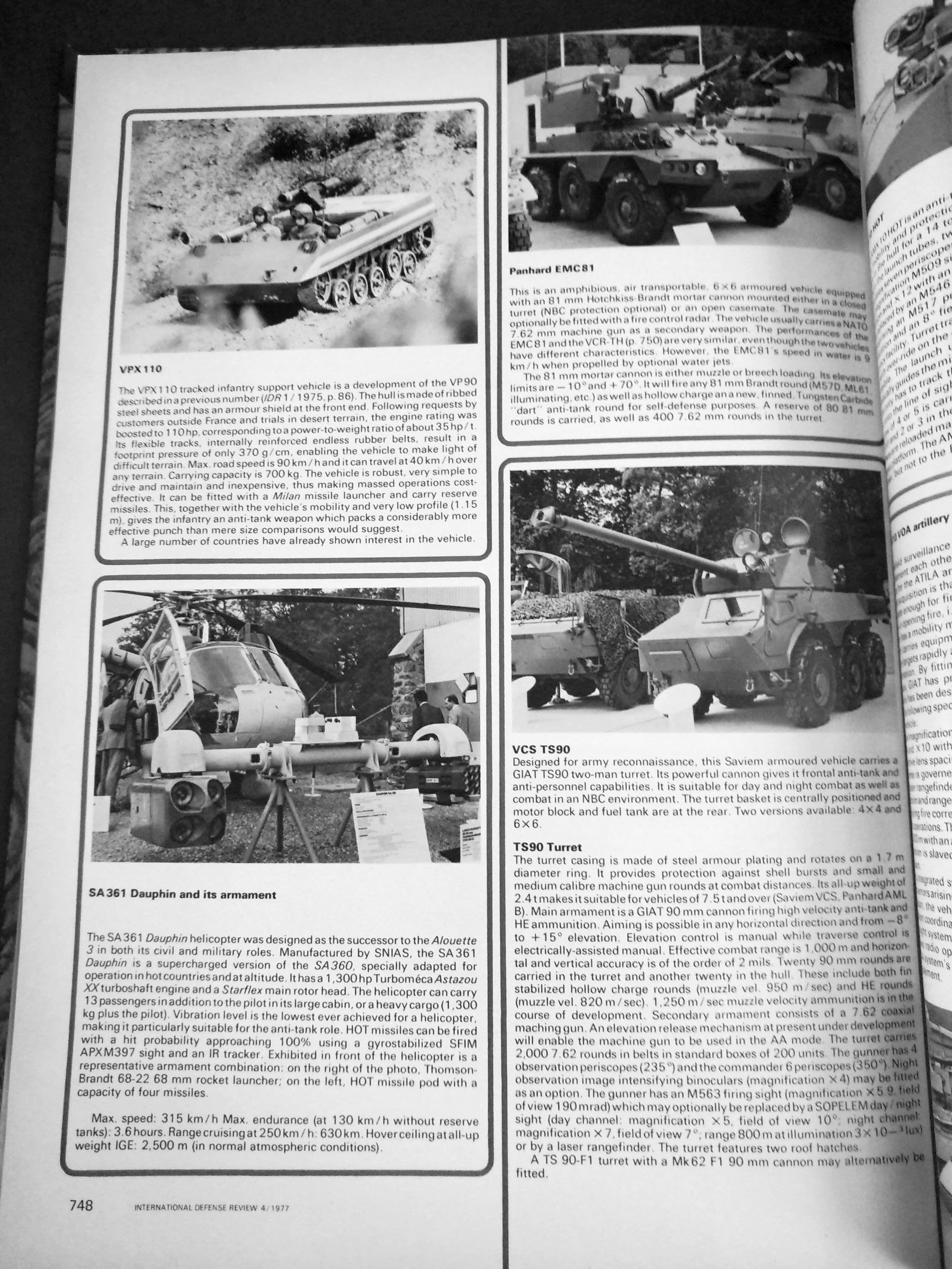
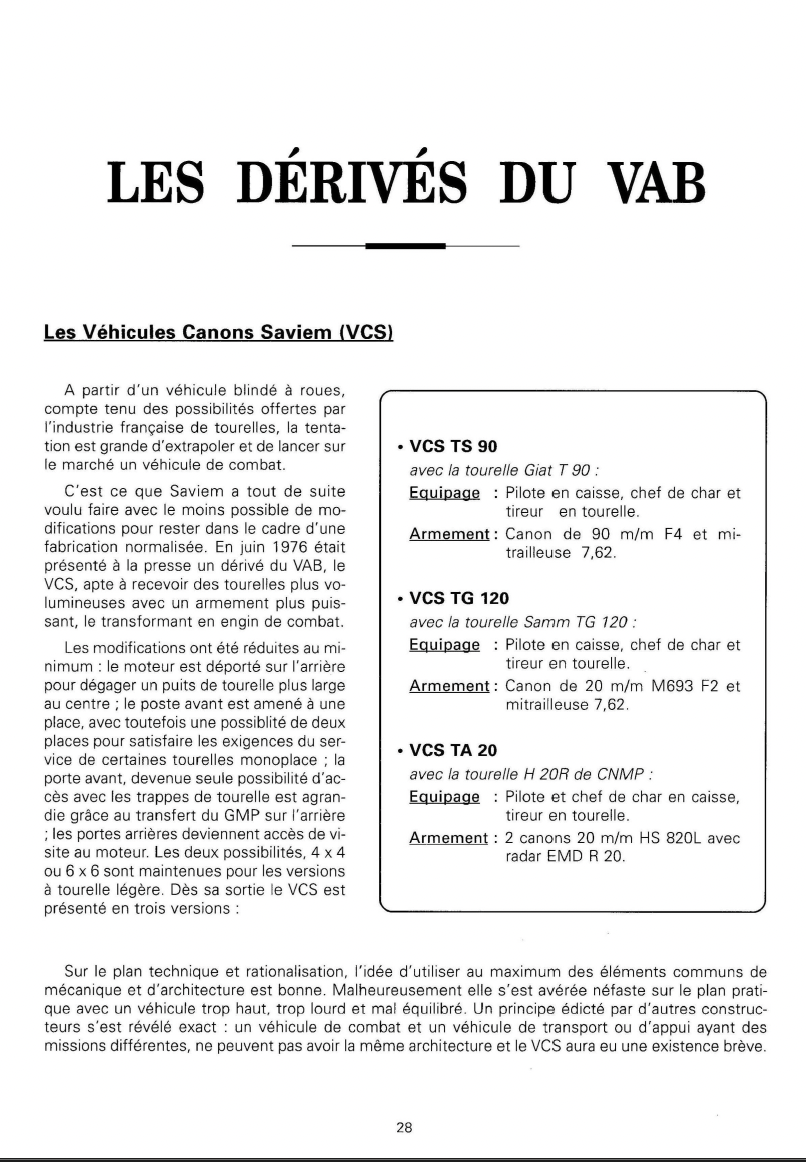
In 1977, at Satory VI, Saviem unveiled their newest design, the VCS (Véhicules Canons Saviem). This was a new family of 4x4 and 6x6 vehicles, designed as combat vehicles, and based heavily on the VAB. Their 6x6 design was fitted with an early version of the TS 90 turret. It was primarily designed for export, but didn’t see any sales. In 1978, Saviem was officially merged into Renault, and in 1979, at Satory VII, Renault unveiled the first VBC 90 (Véhicule Blindé de Combat) prototype.
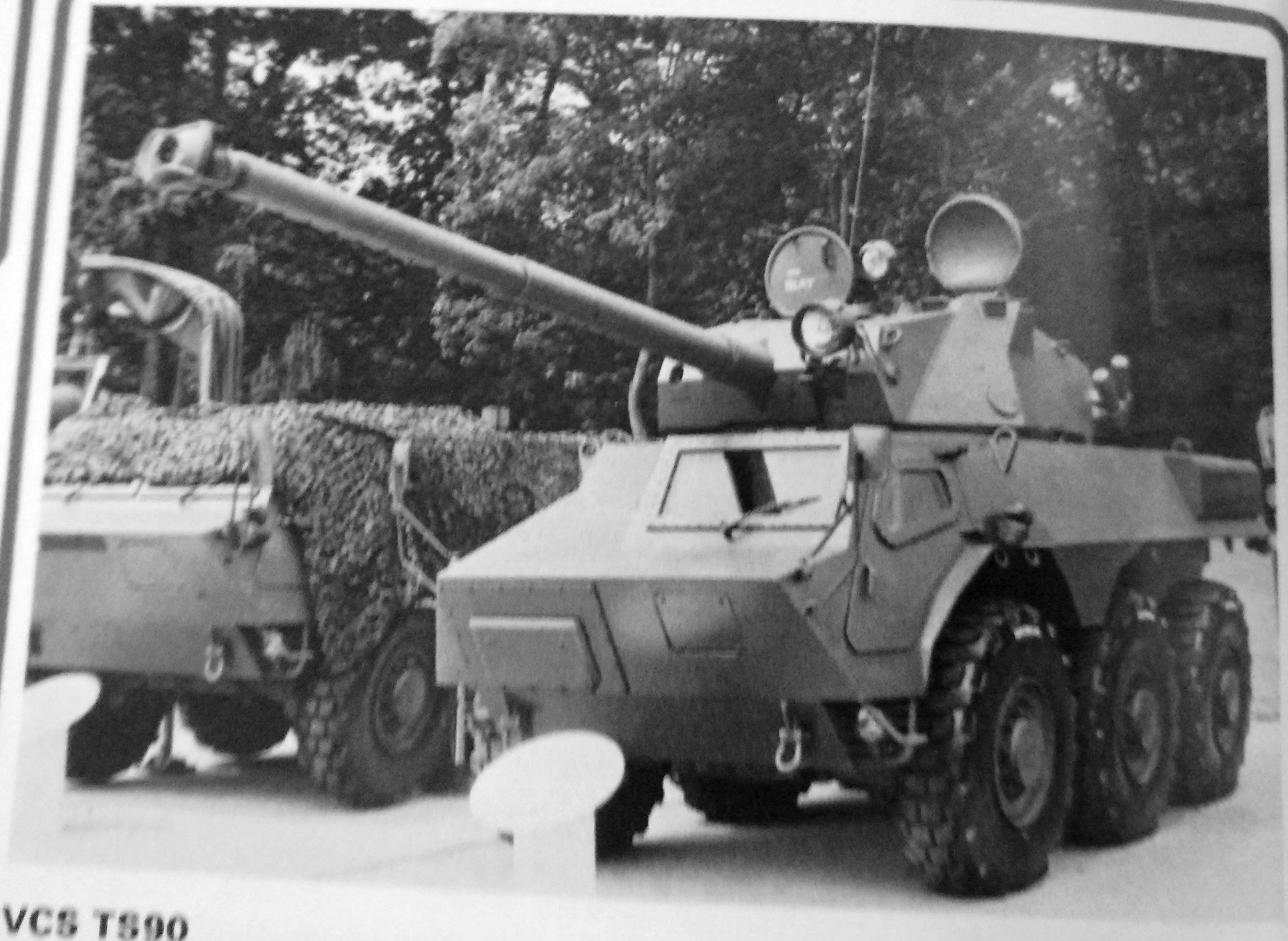
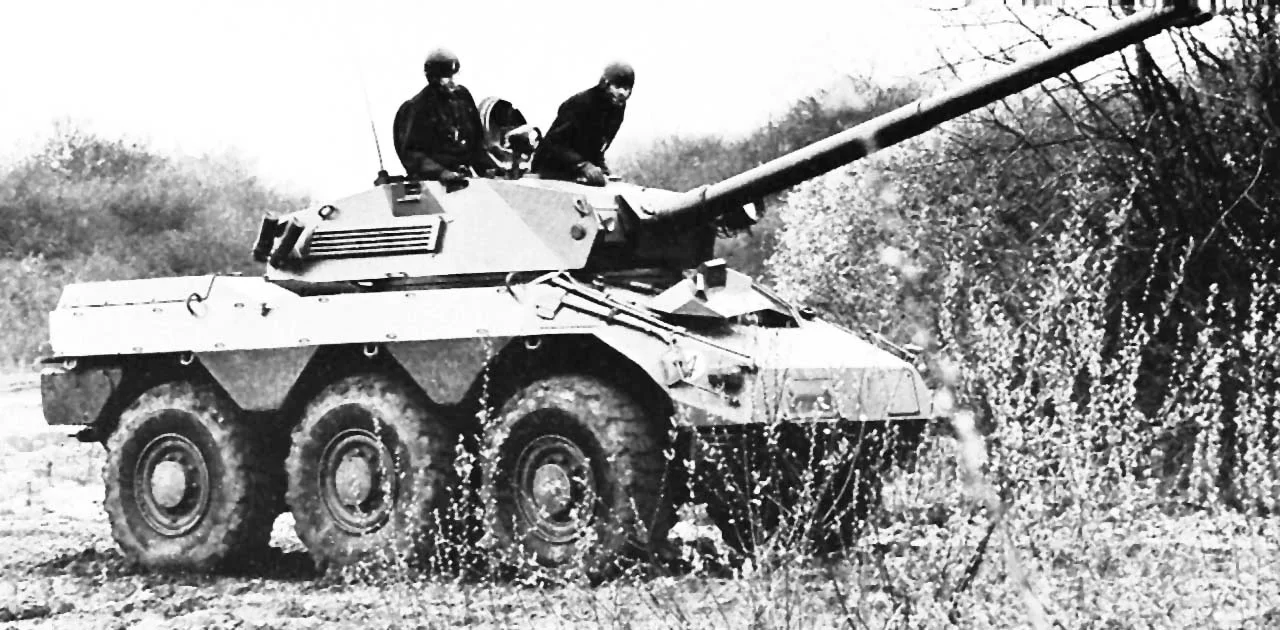
VCS (TS 90) on display at Satory VI in 1977
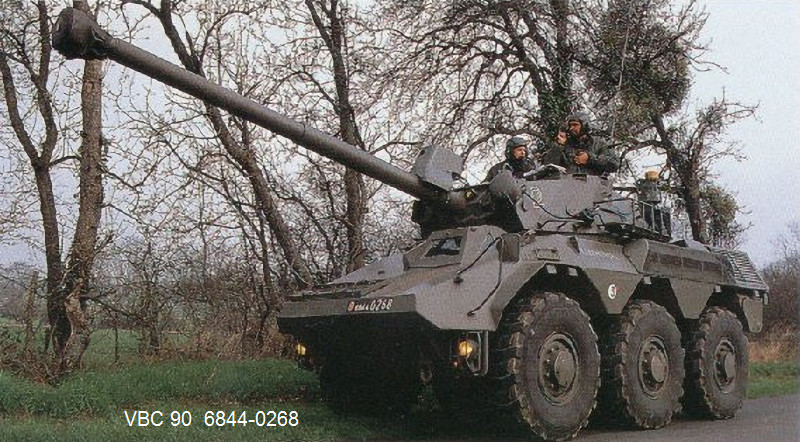
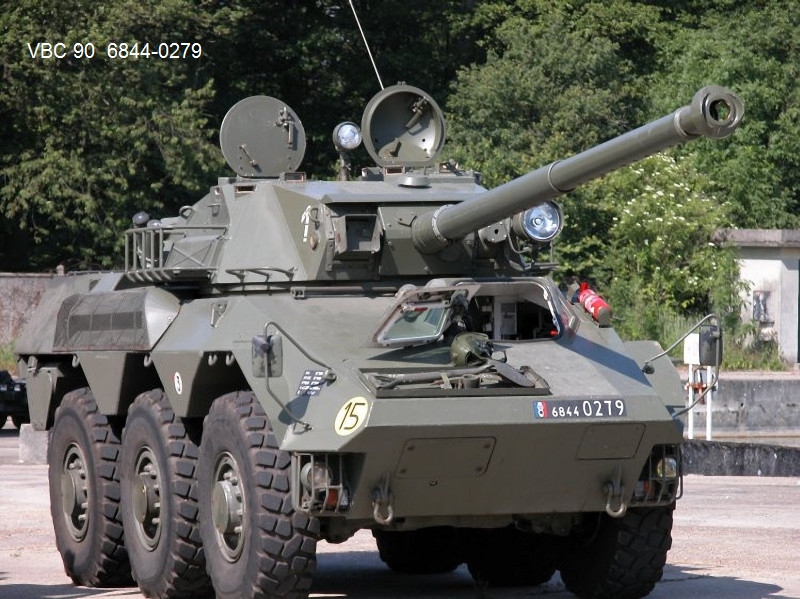
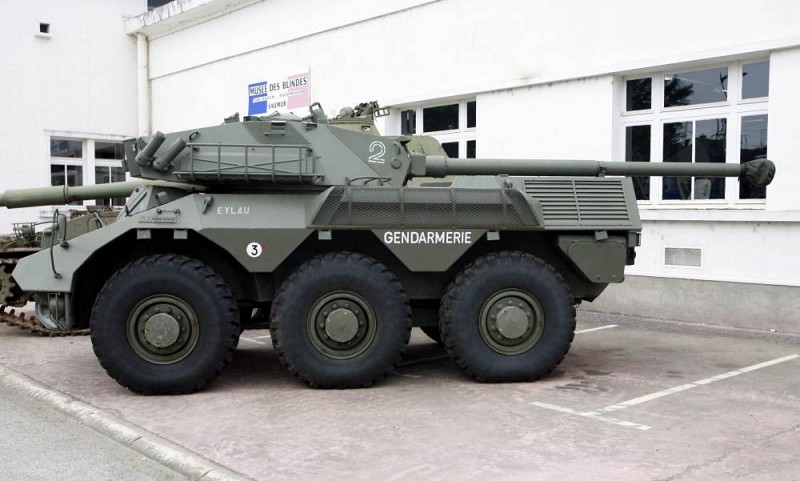
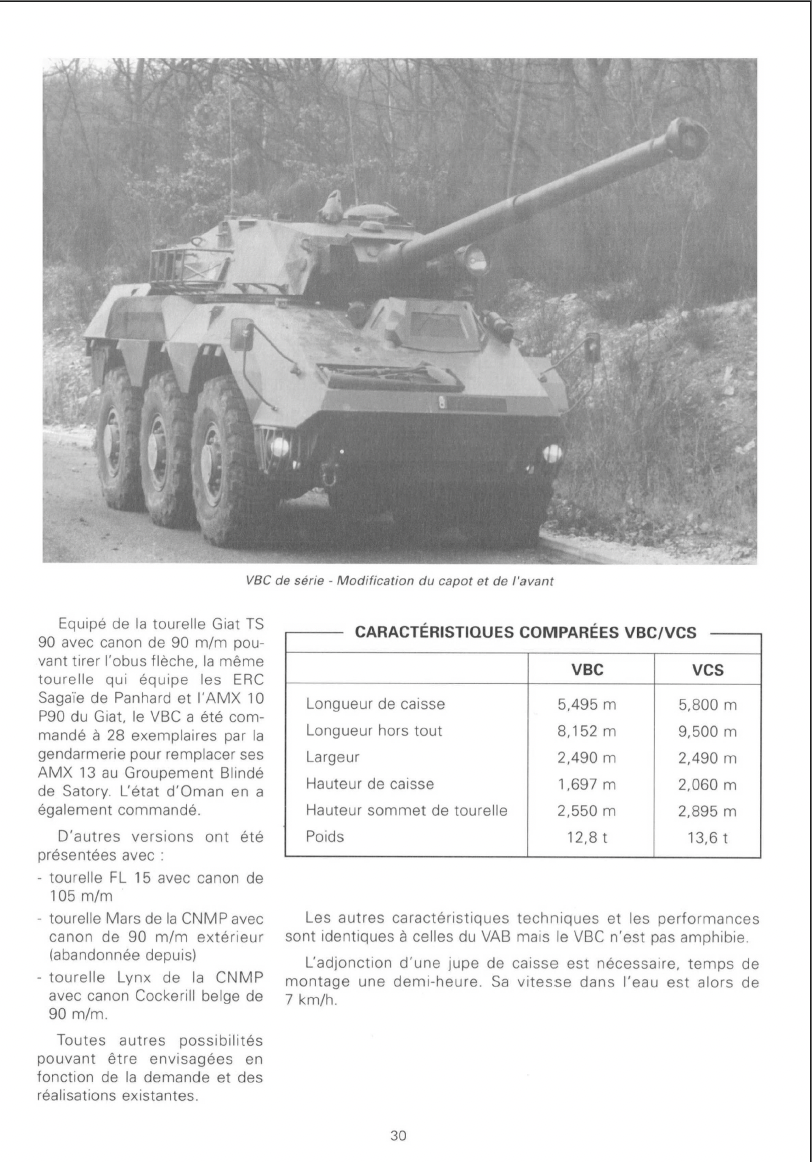
The VBC 90 was fitted with the TS 90 turret but featured an improved hull front, much closer to the 6x6 VAB design. France quickly took interest in the vehicle, and the Mobile Gendarmerie ordered 28 VBC 90s. The first production VBC 90 was produced in 1981, and first deliveries began in 1983. The variant delivered to the Gendarmerie is sometimes referred to as the VBC 90 G. In 1984–1985, six VBC 90s were delivered to Oman. Both variants used the SOPTAC 11 FCS, fitted with a laser rangefinder, although a number of alternatives were marketed. Multiple different turrets were also tested on prototypes, including the stabilised TTB190, as well as a MECAR KEWS, and a Lynx turret housing a 90mm Cockerill cannon. None of these progressed past the testing phase, however.
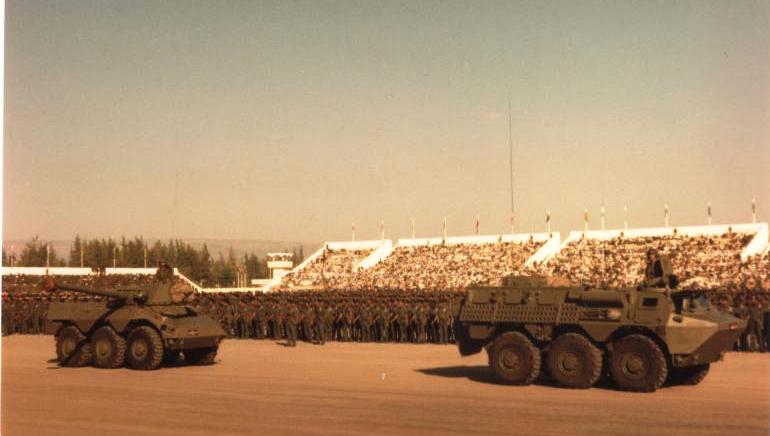
Omani VBC 90 on parade in 1981, following behind a VAB
The VBC 90 Gs saw service with the Gendarmerie up until the early 2000s, when they were put into storage, and officially retired by 2010. In 2014, Lebanon was looking to obtain France’s VBC 90 Gs, along with another $3 billion USD worth of defence equipment, but the deal fell through after relations between Lebanon and Saudi Arabia (who were providing the grant) soured. Oman’s VBC 90s had all been retired by 2016.
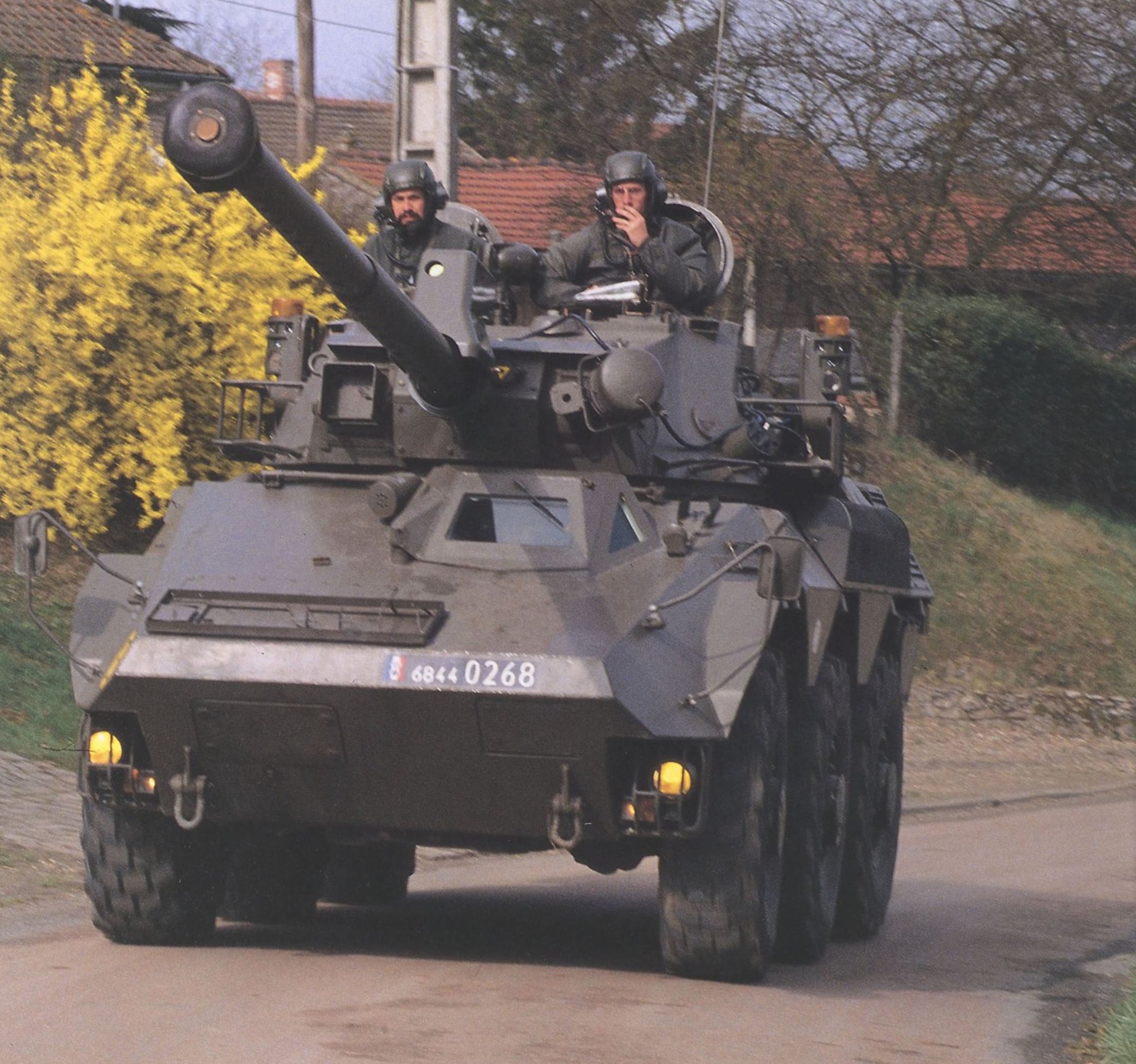
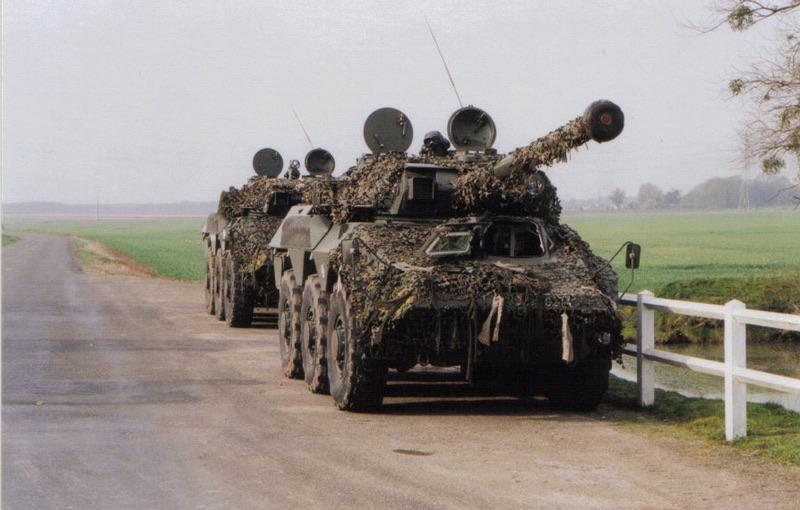
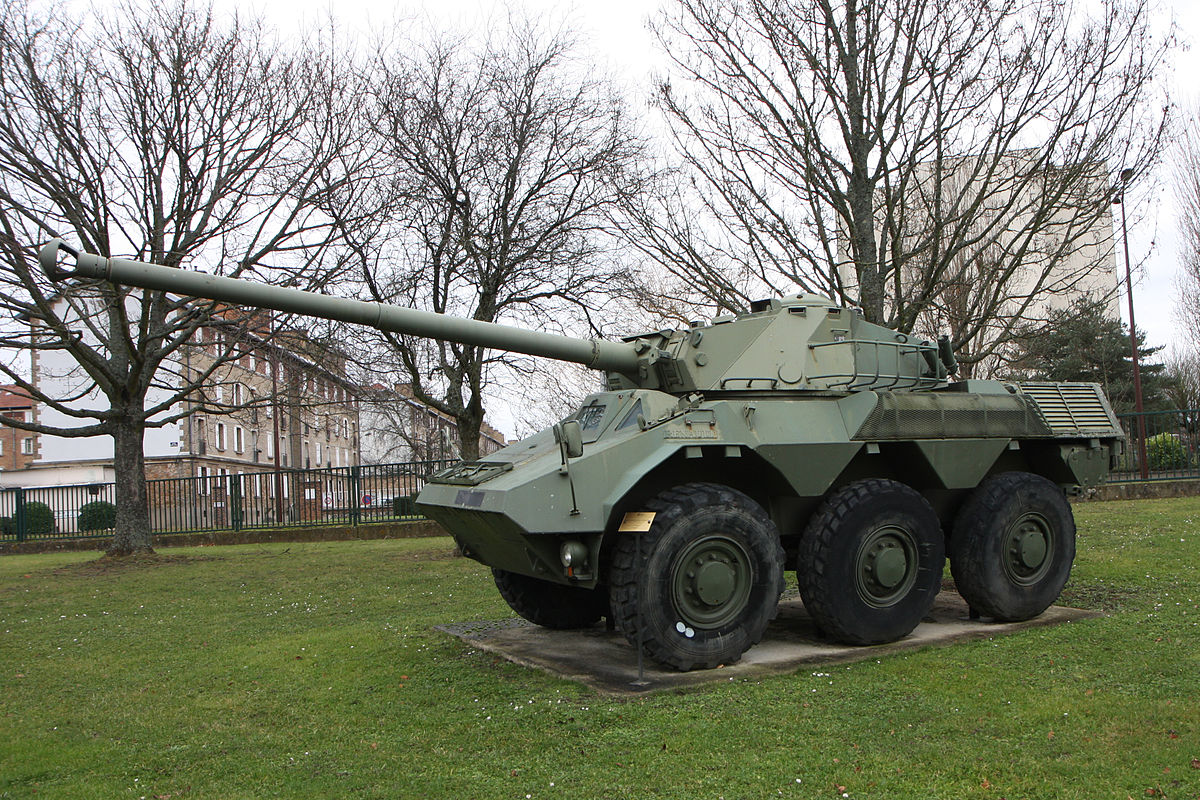
VBC 90 G in service with the French Gendarmerie
Characteristics
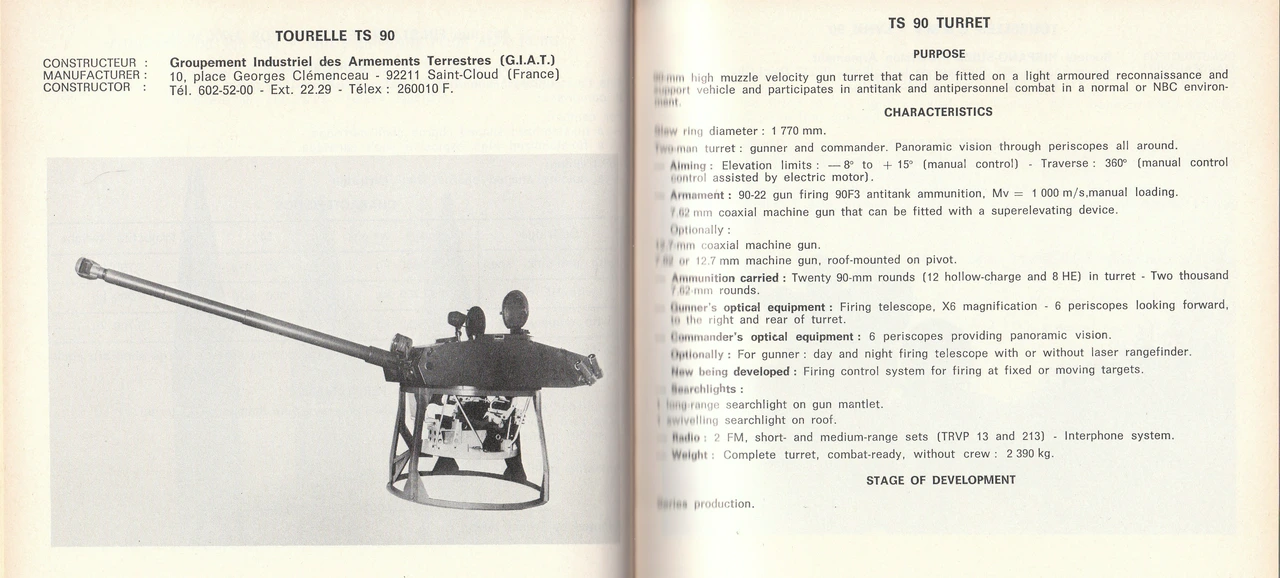
The VBC 90 was fitted with the TS 90 turret, armed with the high-velocity CN 90 F4 90mm cannon. This is the same turret and cannon as the MARS 15 in-game, and would perform identically. The cannon can fire APFSDS, HEAT-FS, and HE rounds: OFL 90 F1 APFSDS penetrates 277mm @ 0° @ 10m and OCC 90 F2 HEAT-FS penetrates 350mm @ 0° @ 10m. The VBC 90 carried 20 rounds of ammunition in two ready racks (4 in the turret basket, 16 in the turret bustle), and 25 rounds in the hull. It also carried a coaxial 7.62mm with 4000 rounds of ammunition, 2000 of which were stored in the turret.
The turret could traverse 360° at 20°/s, and the gun could elevate +15°/-8° at 15°/s. The gunner was equipped with a GIAT M563 sight, with a fixed magnification of x5.9. An optional night vision sight was available, but it doesn’t appear to have been fitted on the production VBC 90s. The VBC 90s that entered service did, however, have a SOPTAC 11 fire control system, integrating a CILAS TCV 107 laser rangefinder. Two smoke grenade launchers were fitted on either side of the turret (4 total).
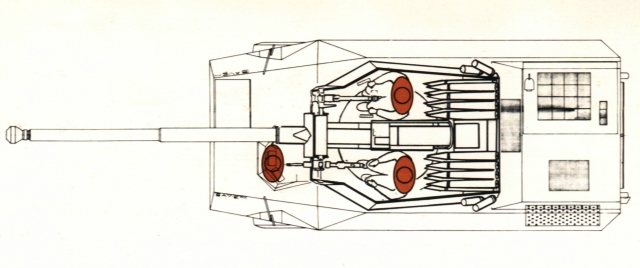
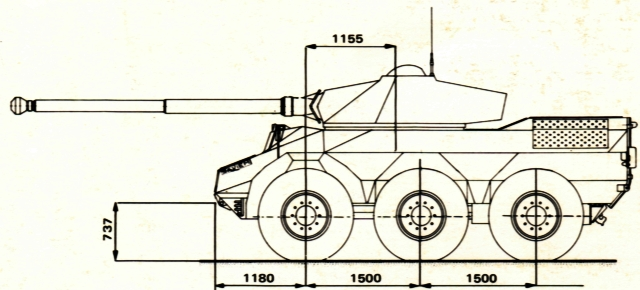
Top-down view of the internal layout of the VBC 90
The VBC 90 was thinly armoured. The hull is all-welded steel, capable of resisting only small arms fire. The driver has three bulletproof windows on the front hull. It is likely to have similar armour thickness to the VAB and its derivatives, at around 8mm all around. The TS 90 turret is equally thinly armoured, with 12mm of armour at the front, and 10mm at the sides, rear, and on the roof.
The VBC 90 was fitted with either a Renault MIDS 06.20.45 diesel engine or MAN D.2356 HM 72 diesel engine, both producing 220hp at 2200rpm. This was connected to a Renault Transfluid 376 transmission, with 5 forward gears and 1 reverse gear. The vehicle weighed 13.5t, giving it a power-to-weight ratio of 16.3hp/t, and enabling it to reach a top speed of 92km/h.
Conclusion
The VBC 90 is a relatively well-known French wheeled light tank, and one that is unfortunately still absent from the game. The turret for this vehicle already exists on the MARS 15, and as such, would be a rather easy vehicle to implement. It would likely fit at a BR of 8.0–8.3, with identical firepower to the MARS 15, but a larger profile and worse mobility (other than top speed).
Specifications
Armament
- 90mm CN 90 F4
- Ammunition
- 45 rounds
- OFL 90 F1 APFSDS
- 277mm at 0° at 10m
- OCC 90 F2 HEAT-FS
- 350mm at 0° at 10m
- OE 90 F1 HE
- OFUM 90 F1 Smoke
- Ammunition
- Coaxial 7.62mm
- 4000 rounds
Armour
- Hull
- Likely 8mm all around; resists only small arms fire
- Turret
- Front: 12mm
- Sides: 10mm
- Rear: 10mm
Mobility
- Speed
- 92km/h
- Weight
- 13.5t
- Engine power
- 220hp, 16.3hp/t
Other
- Crew
- 3
- Smoke grenades
- 4 launchers
Images
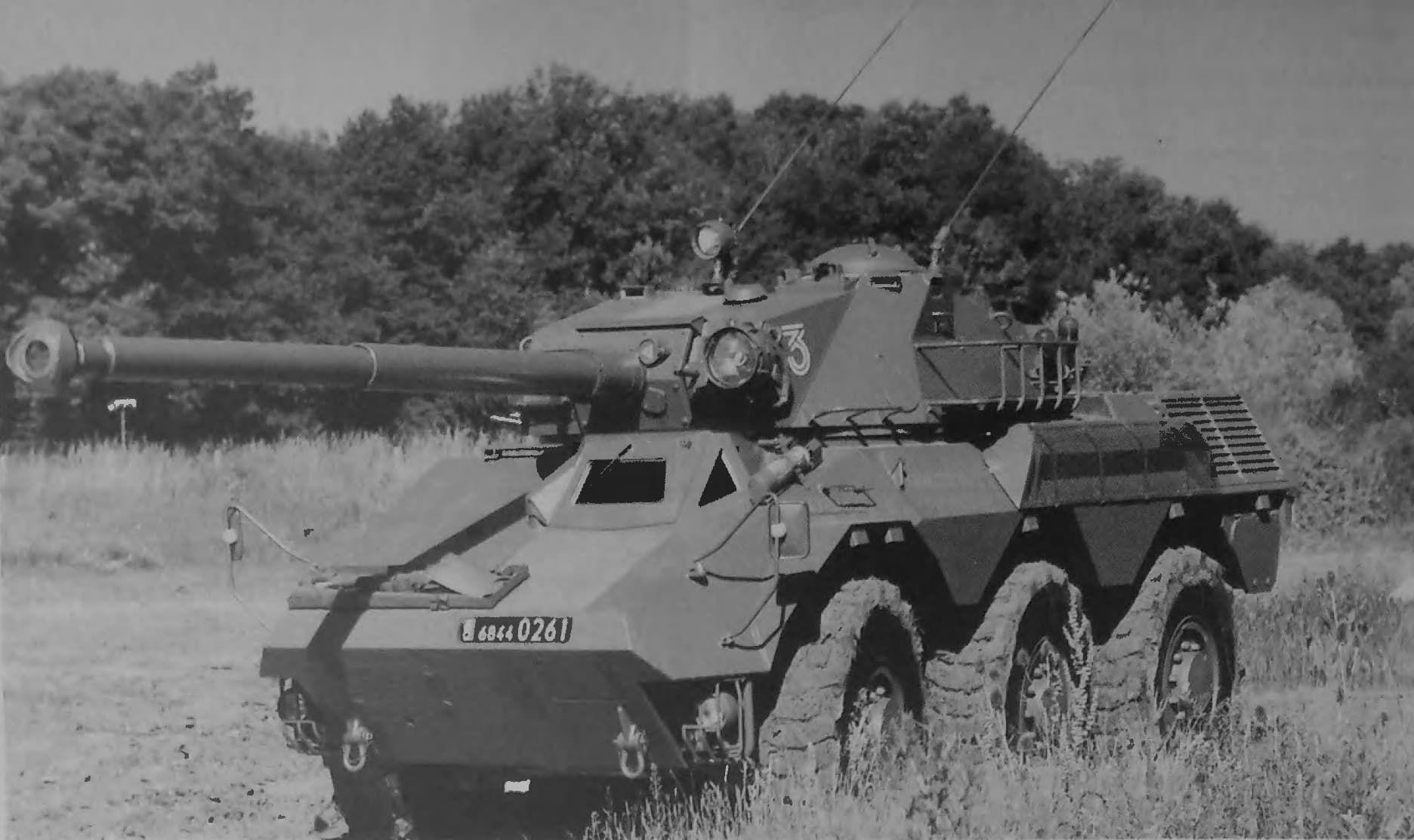
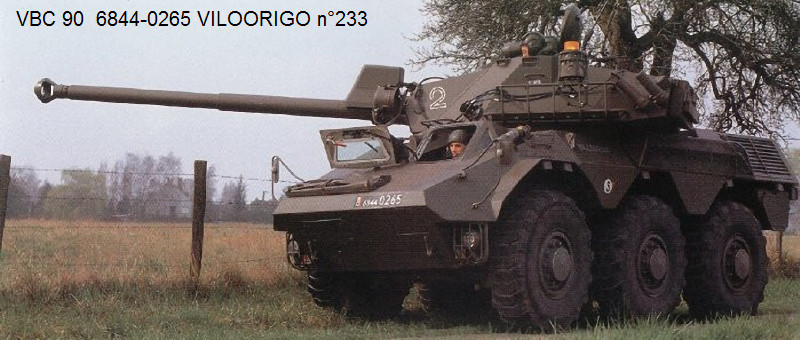
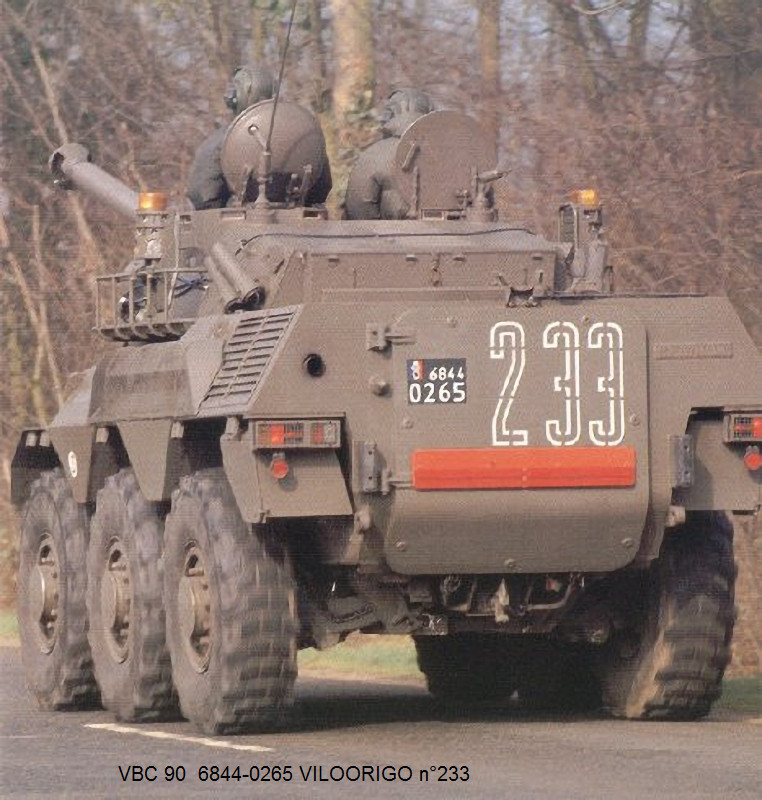

Sources
Spoiler
Janes Light Tanks And Armoured Cars 1984. Christopher F. Foss. pp. 40–42
Jane’s Armour and Artillery 1979–80. Christopher F. Foss. pp. 196–198
Jane’s Armour and Artillery 1991–92. Christopher F. Foss. pp. 203–205

Lebanese armed forces to purchase French VBC 90 armoured and CAESAR 15