
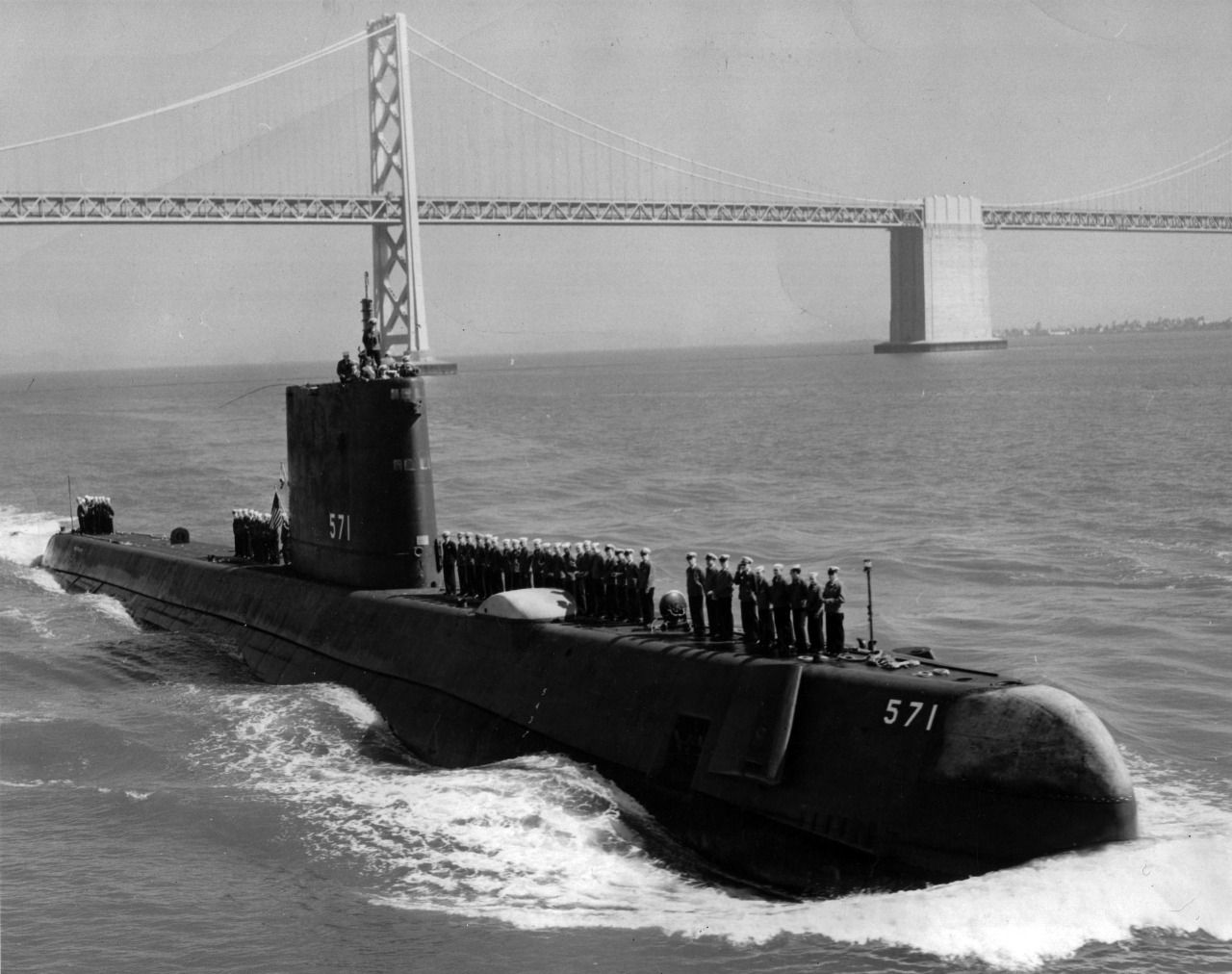
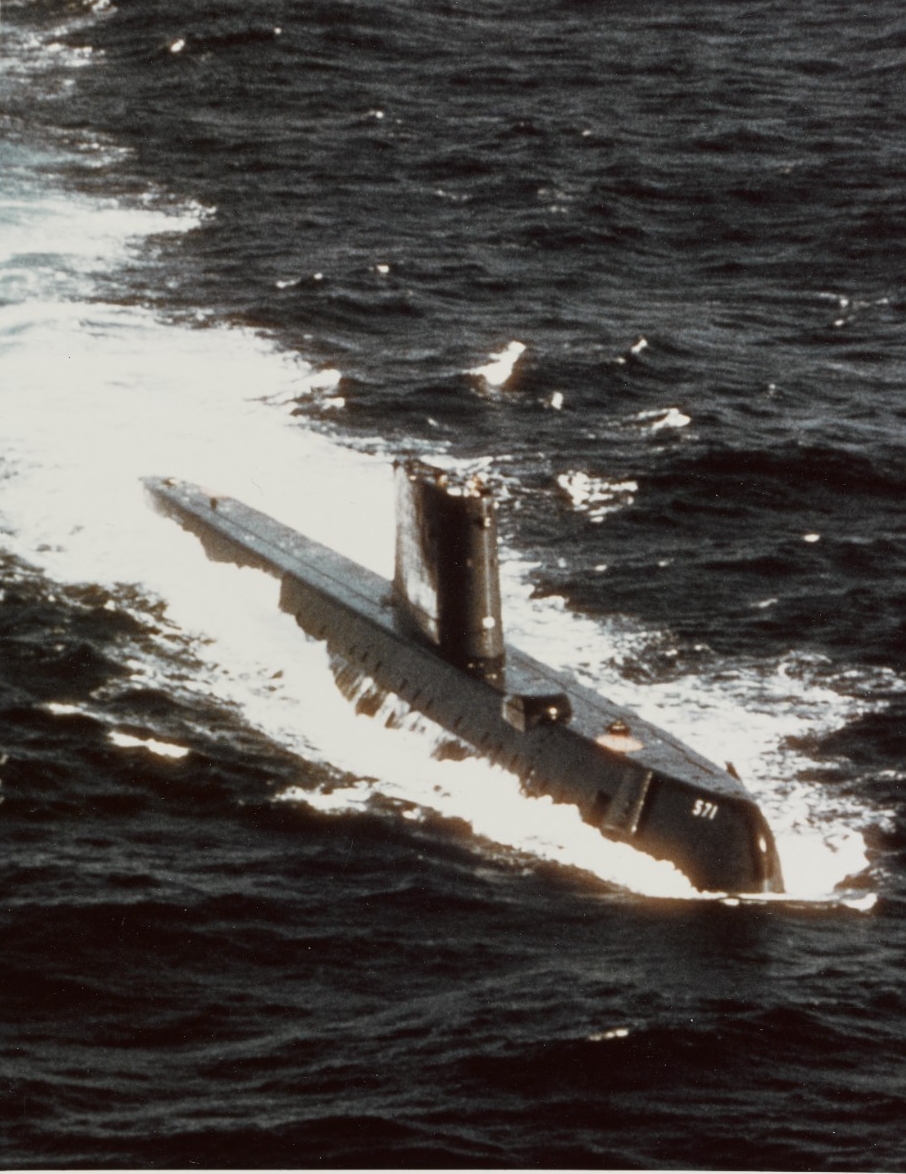
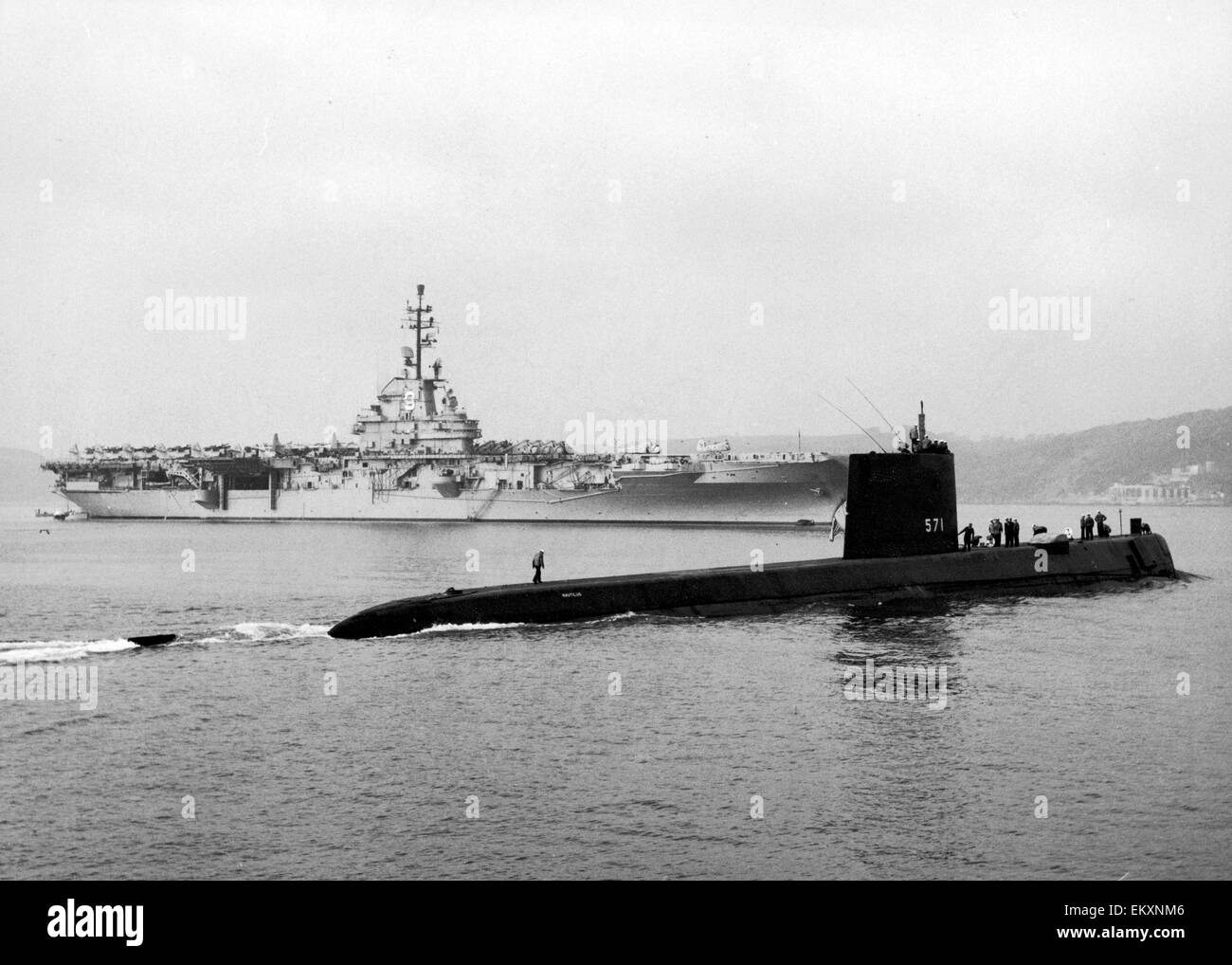
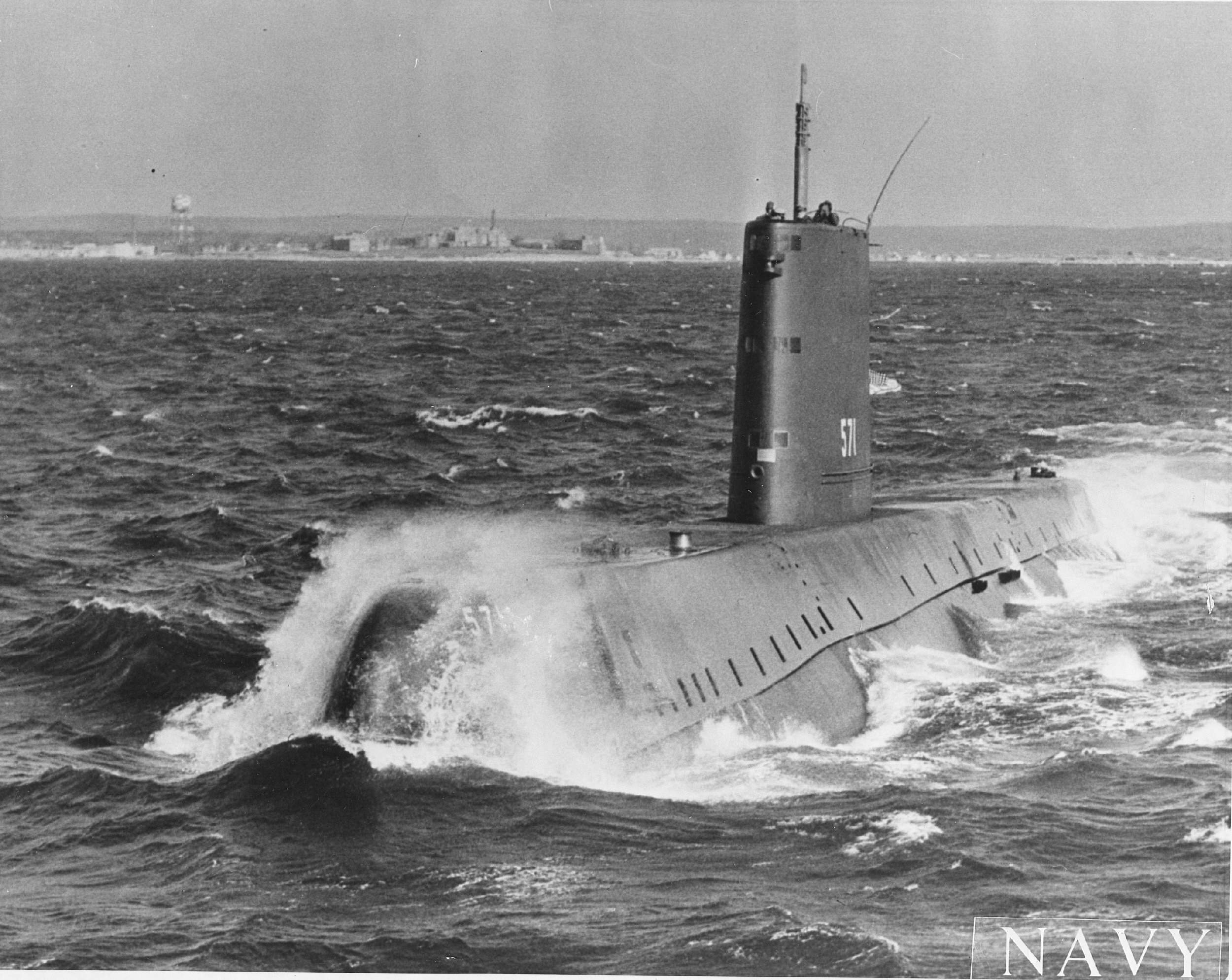
USS Nautilus was the world’s first nuclear submarine and was laid down in 1952. The submarine was in service from 1954 to 1980; after she was mothballed, she was turned into a museum ship and is currently located in Groton, Connecticut. While you may see that it’s a nuclear submarine, there’s more than meets the eye to the Nautilus.
The Nautilus gets its name from the submarine featured in the book 2000 Leagues Under the Sea; during her service, it was primarily used for trials and as a testbed. She participated in numerous training exercises, as well as participated in the Cuban missile crisis as part of the blockade. The Nautilus was powered by a STR nuclear reactor that powered 2 steam-driven propeller shafts.
Detailed history
WIP
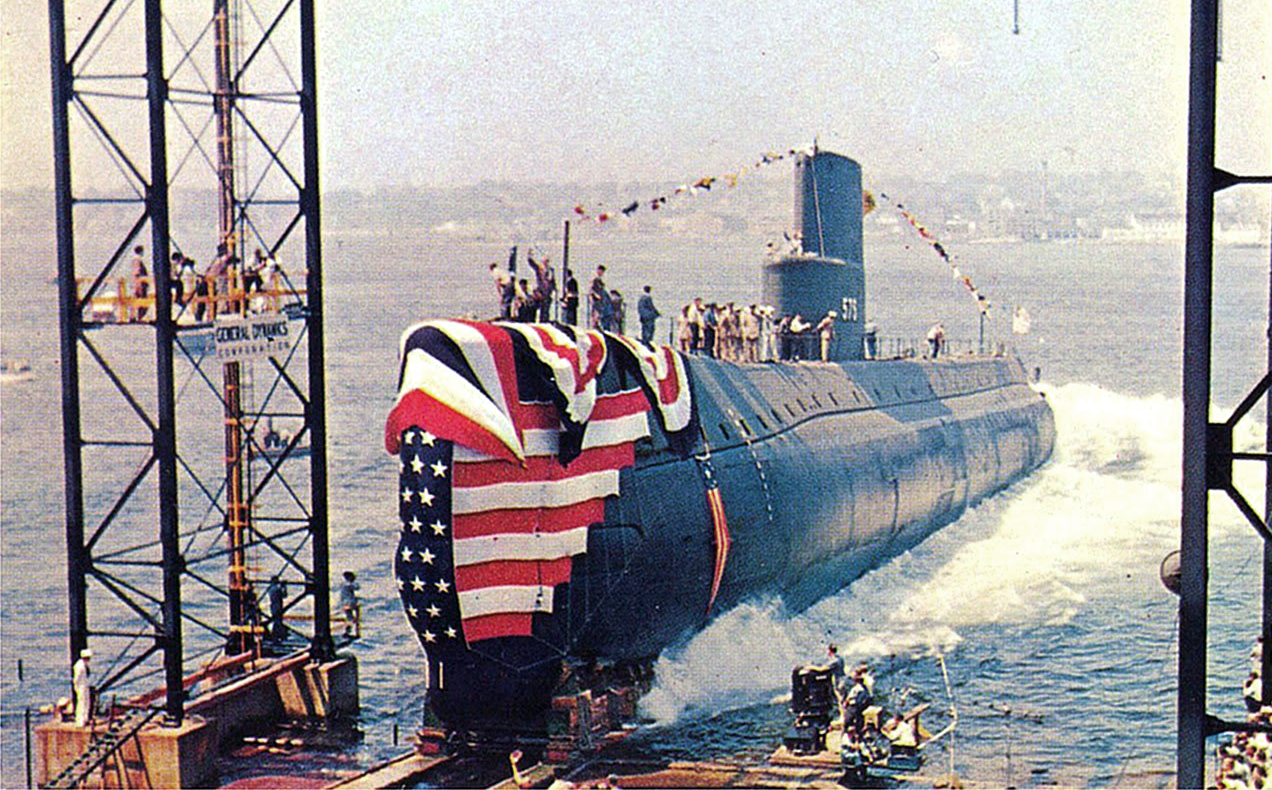
The history of the USS Nautilus (SSN-571) began in the early 1950s as the brainchild of Admiral Hyman G. Rickover, who envisioned a submarine that could operate entirely independent of the Earth’s atmosphere. Authorized by Congress in 1951, her keel was laid by President Harry S. Truman at the Electric Boat Shipyard in Groton, Connecticut. On January 21, 1954, First Lady Mamie Eisenhower christened the vessel, marking the official birth of the nuclear navy. When she finally signaled “Underway on nuclear power” on January 17, 1955, she effectively rendered every other submarine in the world obsolete by proving that atomic energy could provide near-limitless underwater endurance.
Throughout her early sea trials in the mid-1950s, the Nautilus shattered every existing record for submerged speed and distance. Unlike the diesel-electric “fleet boats” of World War II, which were essentially surface ships that could hide underwater for short bursts, the Nautilus was a true submersible. In 1955, she completed a submerged run of 1,213 miles from New London to San Juan, Puerto Rico, in just under ninety hours. This period of her history was defined by constant testing, as the Navy sought to understand the tactical advantages of a vessel that never needed to surface to recharge batteries or run air-consuming engines.
The most iconic chapter of her history occurred in August 1958 during a top-secret mission known as Operation Sunshine. Under the command of William R. Anderson, the Nautilus attempted the first-ever submerged transit of the North Pole. Navigating beneath the massive Arctic ice pack was a harrowing technical challenge that required new inertial navigation systems, as standard compasses were useless so close to the pole. On August 3, 1958, she successfully reached the geographic North Pole, proving the Arctic was a viable strategic transit route for the U.S. Navy and earning the ship the first-ever peacetime Presidential Unit Citation.
During the early 1960s, the Nautilus transitioned from a record-breaking pioneer into a seasoned fleet asset. While newer and faster nuclear submarines like the Skipjack-class were beginning to enter service, the Nautilus remained a vital tool for developing anti-submarine warfare (ASW) tactics. In the autumn of 1962, she was deployed to the Atlantic as part of the naval quarantine during the Cuban Missile Crisis. Her presence helped enforce the blockade against Soviet shipments, demonstrating that nuclear-powered stealth was not just a scientific marvel, but a practical instrument of high-stakes Cold War diplomacy.
As the 1960s gave way to the 1970s, the Nautilus continued to serve as a “workhorse” for Submarine Squadron 10, frequently participating in NATO exercises and sonar trials. However, the age of her S2W reactor and the inherent “noisy” vibrations of her early hull design began to show. Engineers used the Nautilus as a living laboratory to identify these acoustic flaws, enabling the development of the much quieter Sturgeon and Los Angeles-class submarines that followed. Despite being surpassed in technology, she celebrated her 300,000th mile in 1966, continuing to log thousands of hours in the Mediterranean and Atlantic.
After a distinguished career spanning over 25 years and totaling more than 500,000 miles, the Nautilus was officially decommissioned in March 1980. She was designated a National Historic Landmark in 1982. Eventually, she was towed back to her birthplace in Groton, where she was meticulously restored and converted into a museum ship. Today, she serves as the centerpiece of the Submarine Force Library and Museum, allowing the public to walk the same narrow corridors where the era of nuclear propulsion first began.
SPECIFICATIONS
Length: 320 ft
Beam: 28 ft
Draft: 26 ft
Power: 13,400 hp
Top Speed: 23 Knots
Surface: 23 Knots
Submerged: A minimum of 20 Knots (exact speed unknown)
Test depth: 700 meters
Range: Limited by provisions for crew, expected range is about 20 years.
Crew: 11 officers, 105 enlisted
Sensors:
- BQR-4 passive sonar system
In reality, towards the end of her service, her sonar became ineffective at speeds greater than 4 knots due to the vibration of the hull and superstructure, However, this issue was not present in its early service) - Radar (type unknown, Most likely an air or surface search radar)
Weaponry:
6 torpedo tubes
Capacity: 24
Late torpedo
MK48 (1980+)
Guidance: internal or wire-guided
Range: (official) More than 5 miles
Warhead: Explosive type unknown 647 Lbs
Speed: (official) greater than 28 knots
Detonation:
Surface targets: proxy fuse underneath the keel
Submerged targets: proxy fuse
Early Torpedo
MK-14 (WW2-1980)
Guidance: Gyroscopic
Range: About 4100 meters at high-speed setting/8200 meters at low-speed setting
Warhead: Torpex 643 Lbs
Speed: (max) 46 knots, (low-speed setting) 31 knots
Detonation:
Surface targets: impact/magnetic
Submerged targets: impact/magnetic



Sources
https://ussnautilus.org/
USS Nautilus (SSN-571) - Wikipedia (measurements mainly)
Mark 48 torpedo - Wikipedia
The USS Nautilus (SSN-571) - Osprey.
Mark 14 torpedo - Wikipedia
- Yes
- No