Would you wish to see this in-game?
- Yes
- No
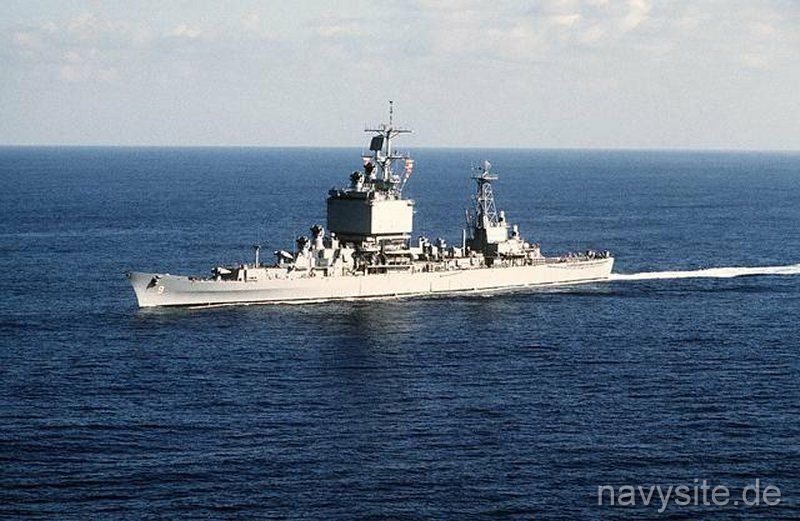
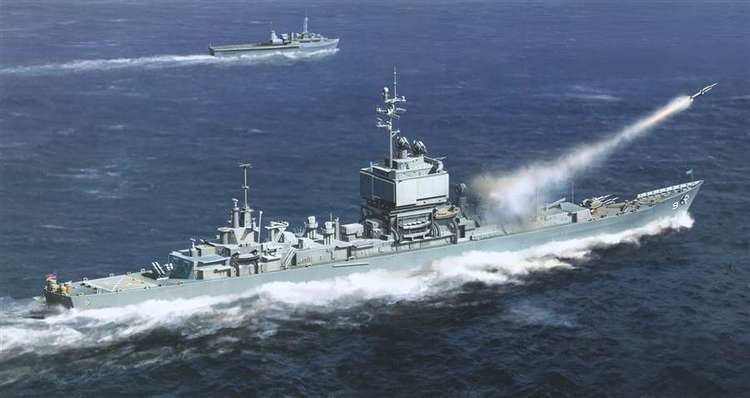
So… the USS Long Beach (CGN-9) was a groundbreaking nuclear-powered guided missile cruiser, commissioned on September 9, 1961, and built by Bethlehem Steel at the Fore River Shipyard in Quincy, Massachusetts. As the first U.S. Navy surface ship to use nuclear propulsion, it was designed for long-range fleet air defence, anti-submarine warfare (ASW), and surface engagements during the Cold War and It also have an Helicopter which can be use as attacking threat. It served until its decommissioning on May 1, 1995, and was scrapped in 2012 after preservation efforts failed.
History of Usage
- Vietnam War (1967-1968): Participated in Operation Sea Dragon, providing gunfire support with 5-inch guns and anti-air cover.
- Cold War Operations: Escorted nuclear carriers (e.g., USS Enterprise), conducted ASW patrols, and tested advanced radar/missile systems against Soviet threats.
- Modernizations:
- 1960s: Equipped with RIM-2 Terrier and RIM-8 Talos missiles.
- 1970s: Talos replaced by RIM-66 Standard SM-1MR; third 5-inch gun removed.
- 1980s: Added RGM-84 Harpoon, BGM-109 Tomahawk, and 20mm Phalanx CIWS.
- 1989: Received New Threat Upgrade (NTU), enhancing radar, fire control, and missile performance for modern threats.
- Significance: Proved nuclear propulsion’s viability, influenced later cruiser designs, and served as a testbed for missile and radar technologies.
The USS Long Beach was a blue-water warship, designed for extended missions without refueling, excelling in air defense, surface strikes, and ASW. The 1989 NTU configuration optimized it for multi-role operations against aircraft, ships, submarines, and land targets, reflecting the Navy’s shift toward versatile missile-centric warfare.
Life of the USS Long Beach (Please Read it full history)
The USS Long Beach (CGN-9) remains one of the most groundbreaking warships ever built for the United States Navy. As the world’s first nuclear-powered surface combatant and the first large U.S. warship designed from the keel up with guided missiles as its primary armament, she embodied the post-World War II convergence of atomic propulsion technology and missile-centric warfare. Her service life spanned over three decades, from the height of the Cold War through major conflicts in Vietnam and the Persian Gulf, during which she underwent extensive refueling, modernizations, and weapon upgrades to remain relevant against evolving threats.
Origins, Design, and Construction
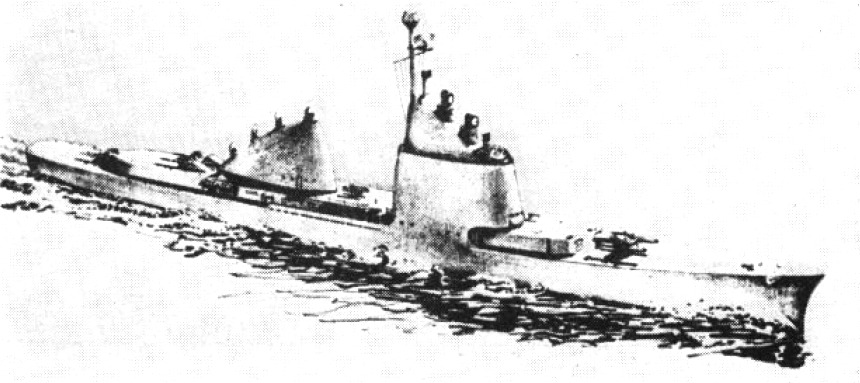
The origins of USS Long Beach trace back to the mid-1950s, when the U.S. Navy, inspired by the success of nuclear-powered submarines like USS Nautilus, sought to apply similar propulsion to surface ships for extended range and endurance without frequent refueling. Initially conceived around long-range cruise missiles such as Regulus or even Polaris, the design evolved into a guided-missile cruiser focused on fleet air defense amid rising Soviet anti-carrier capabilities.
She was originally ordered on October 15, 1956, as CLGN-160 (light cruiser, guided missile, nuclear). Reclassified CGN-160 in early 1957 and then CGN-9 on July 1, 1957, her keel was laid down on December 2, 1957, at Bethlehem Steel Company’s Fore River Shipyard in Quincy, Massachusetts—a historic yard responsible for many major U.S. warships. Launched on July 14, 1959, and sponsored by Mrs. Craig Hosmer (wife of California Congressman Craig Hosmer), she was commissioned on September 9, 1961, under Captain Eugene Parks Wilkinson, who had previously commanded USS Nautilus.
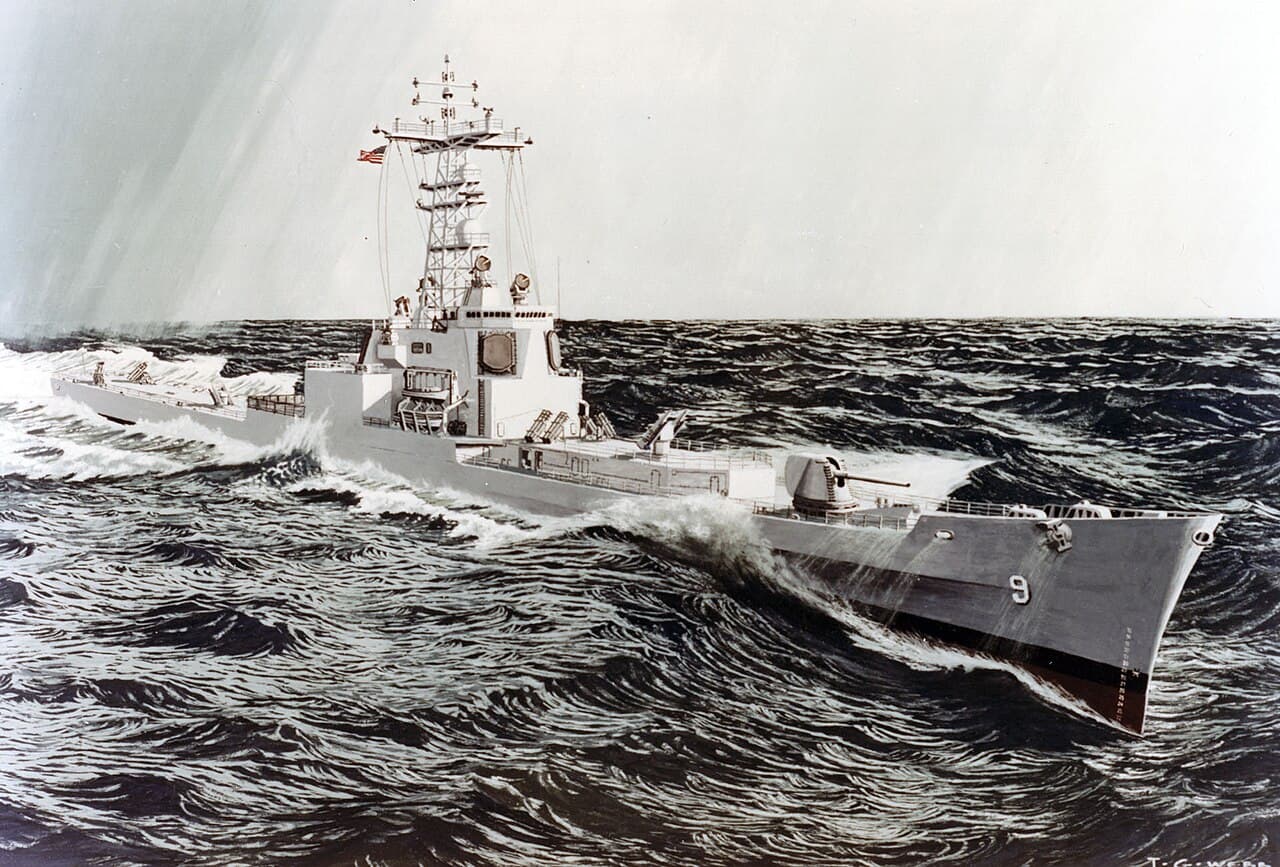
At 721 feet long, with a beam of about 73 feet and draft of 30 feet 7 inches, she displaced around 15,540 tons standard (up to 17,500 tons full load in later years). Two Westinghouse C1W pressurized-water nuclear reactors powered geared turbines producing 80,000 shaft horsepower, driving two propellers for speeds over 30 knots and virtually unlimited range (limited only by food, munitions, and crew endurance). Her innovative design featured the SCANFAR phased-array radar system (AN/SPS-32 for search and AN/SPS-33 for tracking), integrated with the Naval Tactical Data System—pioneering technology later influential in the Aegis system.
Initial armament prioritized missiles: two twin Mk 10 launchers forward for Terrier surface-to-air missiles (120 rounds total), one twin Mk 12 launcher aft for Talos long-range SAMs (52 rounds), an ASROC anti-submarine rocket launcher, and Mk 46 torpedoes from triple mounts. At President Kennedy’s direction after a 1962 review, twin 5-inch/38 caliber guns were added for close-in defense. Crew complement was approximately 1,160 officers and enlisted personnel.
Assigned to the Atlantic Fleet and homeported at Norfolk, Virginia, she conducted shakedown cruises, missile qualifications, and fleet exercises in the Caribbean and Atlantic from late 1961 onward.
Early Operations and Historic Achievements (1960s)
Long Beach quickly demonstrated the strategic value of nuclear propulsion. After Philadelphia Naval Shipyard work in 1962–1963 for equipment upgrades, she deployed to the Mediterranean with the Sixth Fleet for peacekeeping operations, returning to Norfolk in December 1963.
In May 1964, she joined Task Force One with nuclear carrier USS Enterprise (CVN-65) and nuclear frigate USS Bainbridge (DLGN-25) for Operation Sea Orbit—a groundbreaking 65-day, over 30,000-nautical-mile circumnavigation without any refueling or logistical resupply. Departing Gibraltar on July 31, 1964, under Rear Admiral Bernard M. Strean, the group visited ports in Africa, Asia (including Karachi, Pakistan), Australia (Melbourne), New Zealand (Wellington), and South America (Rio de Janeiro, Brazil), before concluding in October 1964. This voyage showcased the mobility and self-sufficiency of all-nuclear surface forces, drawing parallels to the Great White Fleet’s 1907–1909 global cruise.
Transferred to the Pacific Fleet in early 1966, with homeport shift to Naval Station Long Beach, California (arriving March 15 after a February 28 transit), she began supporting Vietnam War operations. She conducted multiple deployments to the Gulf of Tonkin, serving on the PIRAZ (Positive Identification Radar Advisory Zone) station to provide air defense, vector fighters, and sanitize returning U.S. strike aircraft from North Vietnamese threats. She also supported search-and-rescue helicopter operations.
During these tours, Long Beach achieved notable combat firsts. On May 23, 1968, her Talos missile system downed a North Vietnamese MiG-21 (some sources note MiG-17) at approximately 65 nautical miles—the longest-range surface-to-air missile kill by a U.S. ship at the time and the first ship-launched SAM kill in the Vietnam War. In June 1968, she claimed another MiG at around 61 miles. She directed additional fighter kills and received a Navy Unit Commendation for these actions. These incidents were initially classified.
In 1970, she returned stateside for her first major nuclear refueling and extended overhaul at Mare Island Naval Shipyard (beginning March 1970, completing late 1971), resetting reactor cores and addressing operational wear.
Mid-Life Refits and Enhanced Capabilities (1970s–1980s)
To counter advancing threats and replace aging systems, Long Beach received phased modernizations.
- 1970–1971 Refueling/Overhaul (Mare Island): Core replacement extended nuclear endurance; major maintenance restored full capability.
- 1979–1983 Major Conversion (Puget Sound Naval Shipyard): Phase I started in early 1979; Phase II ran from October 6, 1980, to March 26, 1983. This extensive work removed the original SCANFAR phased-array radars (due to maintenance issues and obsolescence), replacing them with modern sensors including AN/SPS-48 3D air search radar and AN/SPS-49. Flagship facilities were enhanced. Weapons upgrades included transition to RIM-67 Standard SM-2ER missiles for improved range and multi-target engagement, addition of Harpoon anti-ship missile quad canisters, installation of Phalanx CIWS mounts for close-in defense against missiles and aircraft, and electronic warfare improvements (e.g., AN/SLQ-32 suite, decoy launchers).
- 1985 Focused Overhaul (Puget Sound): Removed the obsolete Talos launcher from the fantail, installing two four-cell Armored Box Launchers for Tomahawk cruise missiles (eight total), granting land-attack capability for the first time.
These upgrades transformed her from an experimental prototype into a multi-mission platform suited for carrier battle group protection, anti-submarine warfare, surface strikes, and command functions. She continued Pacific and Western Pacific deployments, including humanitarian efforts such as rescuing Vietnamese boat people in 1980, and routine carrier escort duties.
Final Deployments and Gulf War Service (1990s)
Long Beach participated in Operation Desert Shield/Desert Storm (1990–1991) in the Persian Gulf, leveraging her nuclear endurance for prolonged operations far from bases while providing air defense coverage and supporting coalition forces.
Plans for a comprehensive Aegis Combat System installation in the early 1990s—requiring major superstructure reconstruction—were considered but ultimately canceled amid post-Cold War defense reductions, high costs of maintaining nuclear cruisers (including specialized crew and refueling), and the Navy’s shift toward conventional Ticonderoga-class Aegis cruisers.
Decommissioning and Enduring Legacy
With reactor cores approaching exhaustion and no third full refueling scheduled, Long Beach transited to Norfolk, Virginia, in May 1994. A deactivation ceremony took place on July 2, 1994. She was formally decommissioned on May 1, 1995, after 33 years, 7 months, and 22 days of commissioned service, and stricken from the Naval Vessel Register the same day.
Defueled and dismantled under the Navy’s Ship-Submarine Recycling Program at Puget Sound Naval Shipyard in Bremerton, Washington, her scrapping was completed in the early 2010s.
USS Long Beach pioneered nuclear surface propulsion, advanced phased-array radars, and missile-primary armament—technologies that shaped future designs like Aegis-equipped ships. As the sole member of her class (due to high costs and complexities), she validated nuclear-powered cruisers through decades of service in the Cold War, Vietnam, and the Gulf. Her motto, “Strike Hard, Strike Home,” aptly captured her innovative and combat-proven legacy.
Source:
https://www.energy.gov/sites/default/files/2021-07/2020%20United%20States%20Naval%20Nuclear%20Propulsion%20Program%20v3.pdf
(Page 57)
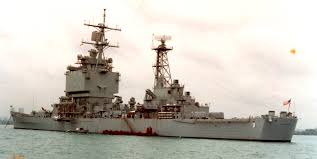
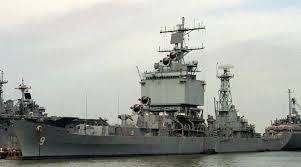
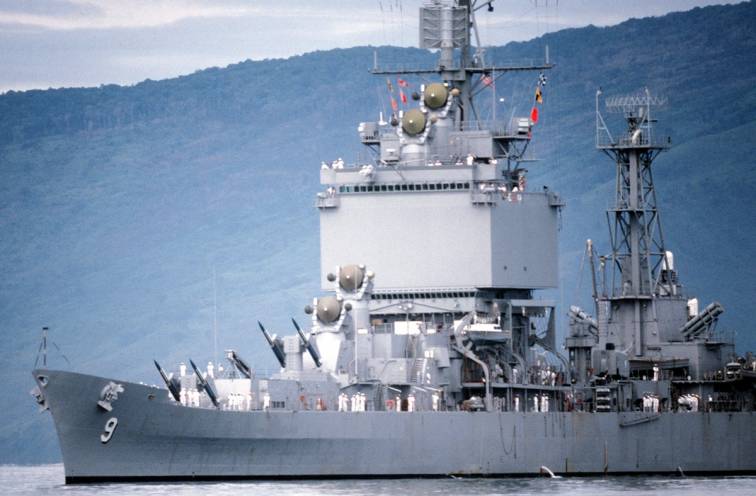
USS Long Beach (CGN 9)
USS Long Beach CGN 9 guided missile cruiser - US Navy
1989 Upgrades
The 1989 configuration represents the USS Long Beach at its most advanced, with upgraded radar, fire control, and missile systems. Below are the detailed specifications, focusing on armament, shells, missiles, and their performance characteristics.
Ship Hull Information
- Displacement: 15,540 tons (standard); 17,100 tons (full load).
- Dimensions: Length 721.2 ft (219.8 m), Beam 73.2 ft (22.3 m), Draft 30.8 ft (9.4 m).
- Propulsion: 2x C1W nuclear reactors, 2x geared steam turbines, 80,000 shp (60 MW), 2 shafts.
- Speed: ~30-35 knots (56-65 km/h; exact classified, potentially higher).
- Range: Virtually unlimited (nuclear propulsion); limited by crew supplies (~60-90 days).
- Crew: ~960 (79 officers, 880 enlisted).
- Armor: Light steel plating (~25-50 mm on magazines, reactors); ~10-20 mm aluminum/steel superstructure.
Armament
1. Guns
- 2x 5-inch/38 caliber Mk 12 guns (single mounts, fore and aft):
- Shell Types:
- HC (High Capacity, HE): 55 lb (24.9 kg) total weight, ~7.6 kg TNT or Composition B filler. Used for surface targets and shore bombardment.
- AAC (Anti-Aircraft Common): 55 lb, ~7.6 kg HE with VT proximity fuze for anti-aircraft roles.
- Illumination: Star shells for night targeting, no HE.
- WP (White Phosphorus): ~7 kg phosphorus for smoke/incendiary effects.
- Penetration/Damage: HC shell penetrates ~50-70 mm steel at 5 km; blast and fragmentation damage (lethal radius ~15-20 m). AAC effective against aircraft within ~7 nm.
- Muzzle Velocity: ~2,600 ft/s (792 m/s).
- Range: 9 nm (17 km) for surface targets; 7 nm (13 km) for AA.
- Rate of Fire: 15-20 rounds/min per gun.
- Ammo Capacity: ~500-600 rounds per gun.
- Traverse/Elevation: ~25°/s traverse, -15° to +85° elevation.
- Shell Types:
- 2x 20mm Phalanx CIWS (Block 0, installed 1980s):
- Ammunition: 20mm M61 Vulcan, tungsten APDS (armor-piercing discarding sabot).
- HE Content: Minimal; ~0.1 kg HE equivalent per round.
- Damage: Designed to shred missiles/aircraft; ~1-2 hits to destroy light aircraft, 10-20 for missiles.
- Rate of Fire: 3,000-4,500 rounds/min.
- Range: ~2 nm (3.7 km).
- Ammo Capacity: ~1,550 rounds per mount.
- Speed: ~3,000 ft/s (914 m/s).
- Traverse/Elevation: ~100°/s, -25° to +85°.
2. Surface-to-Air Missiles (SAM)
- 2x Mk 10 twin-arm launchers (RIM-67 Standard SM-2ER):
- Missile: RIM-67 Standard SM-2ER (Extended Range).
- HE Content: 137 lb (62 kg) blast-fragmentation warhead.
- Damage: Lethal against aircraft (~50-100 m kill radius); limited anti-surface capability (can damage light ships).
- Speed: Mach 3.5 (~1,200 m/s). Very fast
- Range: 90 nm (167 km) max; effective ~40-70 nm depending on target.
- Guidance: Semi-active radar homing (SARH) with inertial guidance, AN/SPS-48 radar. Basically like Fox 1 missles.
- Ammo Capacity: ~80 missiles per launcher (160 total).
- Reload Time: ~10-15 seconds per salvo.
- 2x Mk 26 twin-arm launchers (RIM-66 Standard SM-2MR):
- Missile: RIM-66 Standard SM-2MR (Medium Range).
- HE Content: 115 lb (52 kg) blast-fragmentation warhead.
- Damage: Effective against aircraft (~40-80 m kill radius); minimal anti-surface use.
- Speed: Mach 3.5 (~1,200 m/s).
- Range: 40 nm (74 km) max; effective ~20-30 nm.
- Guidance: SARH with AN/SPG-55 or AN/SPQ-9 radar.
- Ammo Capacity: ~40-60 missiles per launcher (~100-120 total).
- Reload Time: ~8-12 seconds per salvo.
3. Surface-to-Surface Missiles (SSM)
- 2x Mk 141 quad Harpoon launchers (RGM-84 Harpoon):
- Missile: RGM-84 Harpoon (Block IC).
- HE Content: 488 lb (221 kg) high-explosive fragmentation warhead.
- Damage: Disables destroyers or smaller ships with 1-2 hits; critical damage to cruisers with multiple hits. Lethal radius ~20-30 m.
- Speed: Mach 0.85 (~290 m/s).
- Range: 75 nm (140 km).
- Guidance: Active radar homing with inertial navigation; sea-skimming (~3-5 m altitude).
- Ammo Capacity: 8 missiles (2x quad launchers).
- Reload: Manual, ~30-60 seconds.
- 2x armored box launchers (BGM-109 Tomahawk):
- Missile: BGM-109 Tomahawk (Anti-Ship Missile, TASM variant).
- HE Content: 1,000 lb (450 kg) conventional HE warhead.
- Damage: Single hit can sink destroyers or heavily damage cruisers; lethal radius ~30-50 m.
- Speed: Mach 0.74 (~250 m/s).
- Range: 250 nm (460 km).
- Guidance: Inertial navigation with active radar homing; sea-skimming.
- Ammo Capacity: 8-16 missiles (2x 4-8 launchers).
- Reload: Manual, ~60-120 seconds.
4. Anti-Submarine Warfare (ASW)
- 2x Mk 16 octuple ASROC launchers (RUR-5 ASROC):
- Payload: Mk 46 torpedo (44 kg HE warhead) or depth charge.
- HE Content: 96.8 lb (44 kg) HE for Mk 46 torpedo.
- Damage: Lethal to submarines within ~50-100 m; depth charge effective within ~20-30 m.
- Speed: ~Mach 0.9 (~300 m/s) for rocket delivery.
- Range: 10 nm (19 km).
- Guidance: Ballistic trajectory with inertial guidance; torpedo uses active/passive sonar.
- Ammo Capacity: 24-48 rounds total.
- Reload Time: ~10-15 seconds per salvo.
- 2x triple Mk 32 torpedo tubes:
- Torpedo: Mk 46 lightweight torpedo.
- HE Content: 96.8 lb (44 kg) HE warhead.
- Damage: Single hit typically fatal to submarines.
- Speed: 40 knots (~74 km/h).
- Range: 6 nm (11 km).
- Guidance: Active/passive sonar homing.
- Ammo Capacity: 12-18 torpedoes total.
Sensors and Electronics
- Radar:
- AN/SPS-48E 3D air search radar: ~220 nm (407 km) range.
- AN/SPS-49(V)5 2D air search radar: ~256 nm (474 km).
- AN/SPG-55B fire control radar: For Standard missiles.
- AN/SPQ-9A surface search radar: For gunfire/navigation.
- Sonar: AN/SQS-23 bow-mounted sonar (~10-20 nm, ASW).
- Countermeasures:
- AN/SLQ-32(V)3 ECM suite (radar/missile jamming).
- Mk 36 SRBOC (6x chaff/flare launchers per side).
- AN/SLQ-25 Nixie (towed torpedo decoy).
- Fire Control: Mk 77 missile control, Mk 74 gun control, NTU-enhanced for multi-target tracking.
Performance
- Speed and Maneuverability: 30-35 knots max; nuclear reactors enable sustained high-speed operations. Turning radius ~800-1,000 m.
- Traverse and Elevation:
- 5-inch guns: ~25°/s traverse, -15° to +85° elevation.
- Phalanx CIWS: ~100°/s traverse, -25° to +85°.
- Missile launchers: Mk 10/Mk 26, ~20-30°/s traverse, ~10-15s reload cycle.
- Engine Power: 80,000 shp (60 MW) from 2x C1W nuclear reactors.
- Damage Resistance: Light armor (25-50 mm critical areas); large size and compartmentalization enhance survivability against single hits.
Sources and More information
USS Long Beach (CGN-9) - Wikipedia
CGN 9 LONG BEACH - Navy Ships
CGN-9 Long Beach
USA 5"/38 (12.7 cm) Mark 12 - NavWeaps
https://www.history.navy.mil/our-collections/photography/us-navy-ships/alphabetical-listing/l/uss-long-beach--cgn-9-0.html
USS Long Beach (CGN-9) Nuclear-Powered Guided Missile Cruiser Warship
USS Long Beach (CGN 9) World Cruise Book 1989-90 -
CGN 9 Long Beach
https://www.hullnumber.com/CGN-9
Photos