- Yes
- No
Hi everyone and welcome to this new suggestion
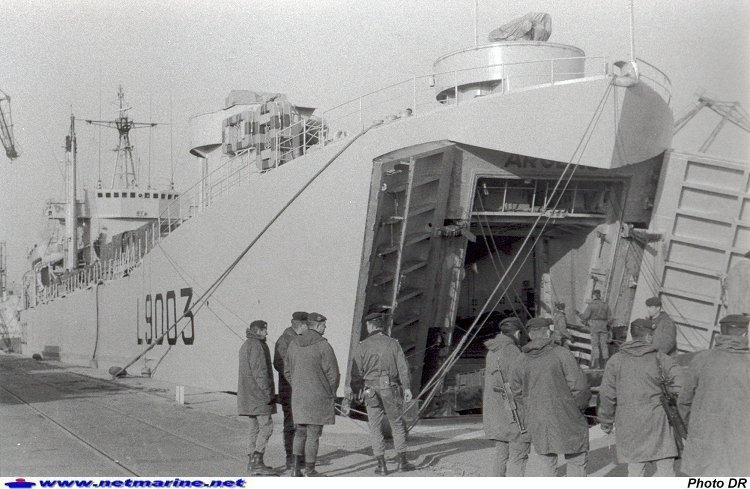
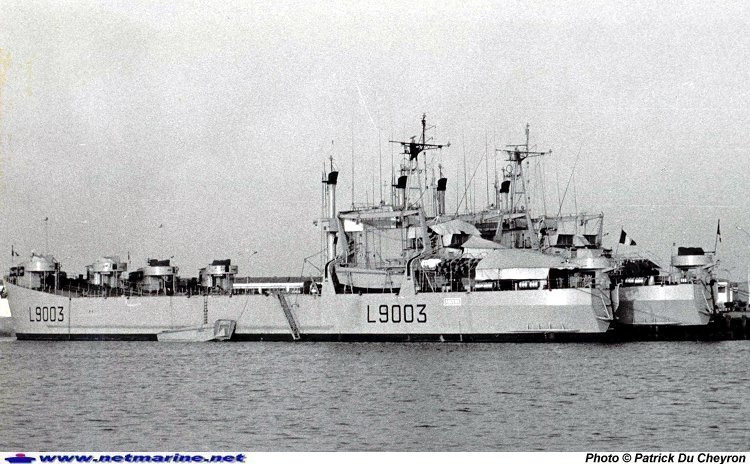
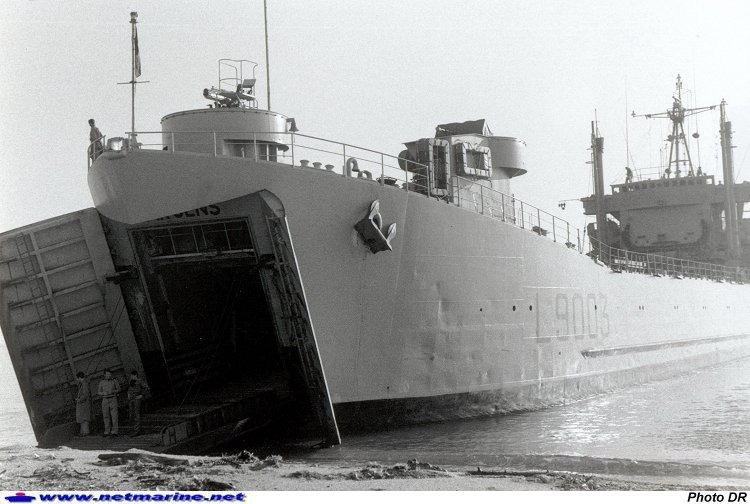
Today I’m presenting a rather unique ship, the Argens, call sign L9003, a Trieux-class landing ship.
The Trieux class was a group of landing and vehicle transport ships built for the French Navy. Comprising five vessels, this class served France for nearly twenty-five years, supporting amphibious operations, logistics, and overseas deployments.
The Argens was laid down at the Nantes shipyards on April 1, 1959, and entered service with the French Navy in 1960. Designed to transport troops, vehicles, and equipment directly onto shore, these ships played an important role in France’s overseas military operations during the period.
Shortly after entering service, the Argens was deployed to North Africa, where it carried out various transport and landing missions. During the Algerian War, the ship was used to move troops and equipment, notably transporting French Foreign Legion units to Algeria. In addition to military transport, the Argens also took part in repatriation operations. In 1960, alongside other ships of the same class, it helped evacuate approximately 17,500 French civilians back to mainland France during the final stages of the conflict. In 1964, the ship was reassigned to the CEP (Centre d’Expérimentation du Pacifique), the organization responsible for testing France’s nuclear weapons in French Polynesia. The Argens sailed to the Pacific and remained deployed there until 1967. During this period, the ship carried out a variety of logistical missions, transporting personnel, equipment, and construction materials needed to establish and support the testing facilities. Its ability to beach its bow directly on shore allowed heavy equipment to be unloaded easily, making the vessel particularly useful and highly valued in these operations.
After its Pacific service, the Argens returned to France and was based in Toulon. From there, it participated in training exercises in the Mediterranean and several deployments in the Indian Ocean. One of its final major operational missions took place in Lebanon in 1984, during a period of French military presence in the region.
The Argens was decommissioned in 1984, after 25 years of service and more than 450,000 nautical miles traveled. Following its retirement from active duty, the ship was used as a breakwater at Saint-Mandrier before eventually being scrapped.
The vessel takes its name from the Argens River, a coastal river located in the Saint-Raphaël region in southern France.
Characteristics
Length : 102.10 m
Width : 15.50 m
Draft : 3.20 m
Mass :
* Min : 1750.00 tons
* Max : 4225.00 tons
2 x SEMT-Pielstick 1.8V16PA diesel engines (2000 hp / 1472 kW) Speed: 11.5 knots (21 km/h), max.
Range: 18,500 NM (34,260 km) at 10 knots (18 km/h)
Complement: 74
The vessel is powered by two 1000 hp SEMT-Pielstick 1.8V16PA diesel engines (2000hp in total, allowing it to reach a maximum speed of 11.5 knots. At its cruising speed of 10 knots, the vessel can cover a distance of 18,500 nautical miles.
The crew consists of 74 members.
Equipment
The ship has fairly decent radar equipment for its time, having access to various models of navigation radar.
-
Decca RM1226 navigation radar
-
DRVN-31 navigation radar
-
DRBN-32 navigation radar
Weapons
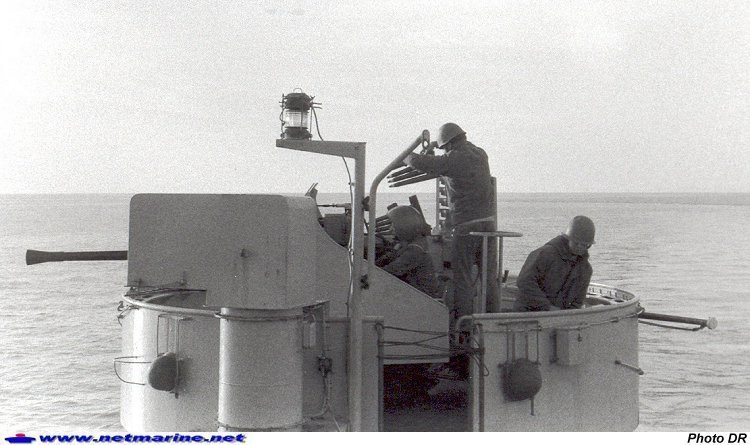
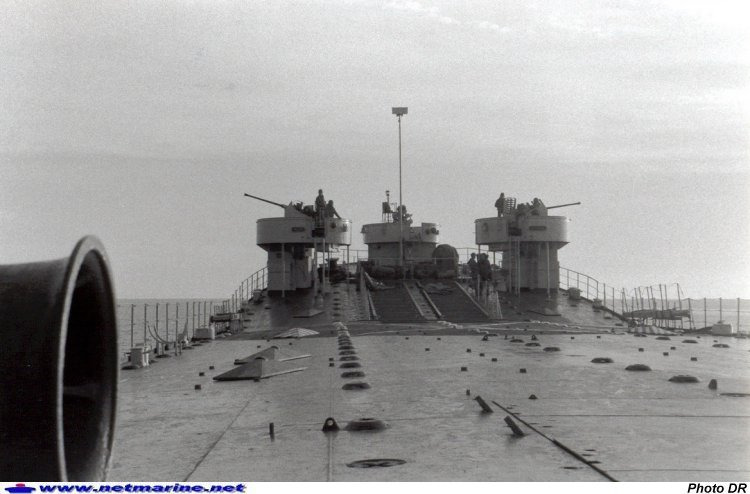
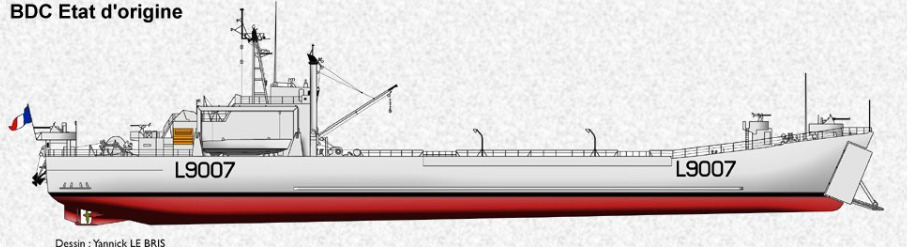
The ship’s armament is very interesting for a ship of this role; indeed, the Argens has access to a good number of cannons of different calibers, allowing it to defend itself effectively during transport missions and to protect ground troops during landings. The ship will notably receive new weapons during its 1966 upgrade, enabling it to provide more substantial covering fire.
Before 1966
- 2 x 40mm Bofors canon (one front, one rear)
- 4 x 20mm Oerlikon canon (around the bridge)
After 1966
- 1 x 120mm mortar (front)
- 3 x 40mm Bofors canons (two front, one rear)
- 4 x 20mm Oerlikon canons (around the bridge)
In-game, this ship would be a very interesting addition to the French tech tree, providing a ship of a respectable size with decent armament, allowing it to engage all types of targets effectively while remaining relatively easy to counter due to its large size.