- Yes - In the Tech Tree.
- Yes - Event/BP.
- Yes - Premium.
- No - I would not like to see HMAS Bataan in game.
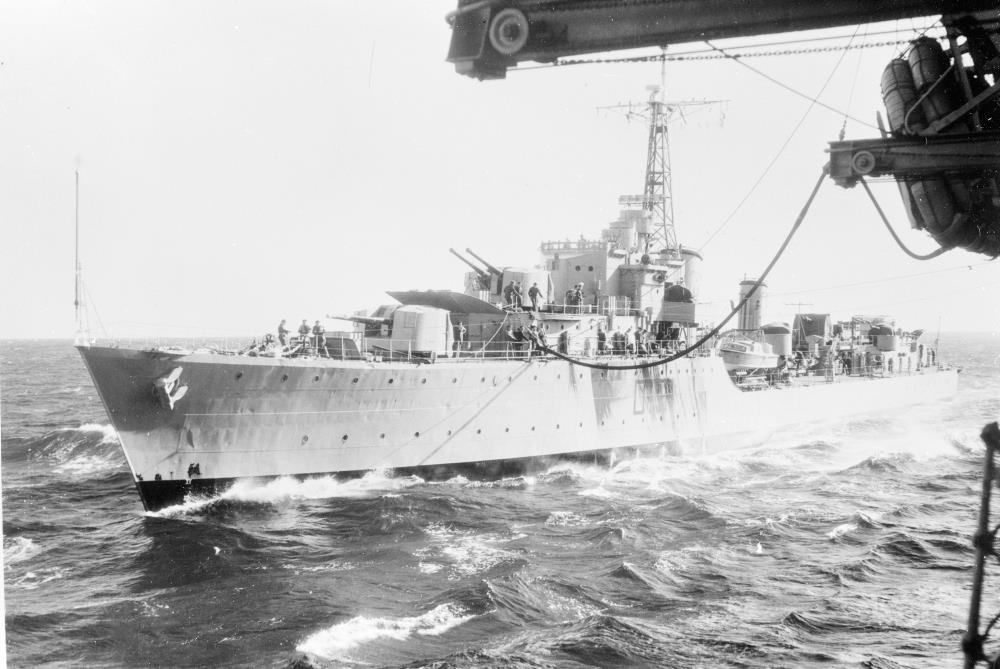
Description:
HMAS Bataan was the last of three Tribal-class Destroyers operated by the Royal Australian Navy to be built. She would be built for and see service in the Second World War, but would not see active hostilities. She would however see combat during the Korean War, continuing service into the Cold War.
She would be originally named the Chingilli, being changed to the Kurnai before she was laid down. She would be again renamed before her launch to Bataan in recognition of the close ties between the RAN and the USN, mostly in reciprocation for the US naming a cruiser USS Canberra, after the HMAS Canberra that was sunk during the Battle of Savo Island.
The Tribal-class were selected by the Australian Admiralty as to replace their aging V-class Destroyers during fleet operations, as that design was severely outdated and limited in capability. A Flotilla of ships (eight) were ordered, however five would be cancelled due to the RANs acceptance of War Emergency Destroyers on loan from Britain. The first vessel, the HMAS Arunta, would be laid down in November 1939, and the final, HMAS Bataan, in February 1942.
This suggestion is for her fit as she commissioned in 1945.

History:
Although all of the planned ships would be ordered on the 20th of December 1939, due to severe material shortage and a low priority. She would only be laid down on the 18th of February 1942 by the Cockatoo Docks and Engineering Co, Sydney. Her building would take even longer, launching on the 15th of January 1944. Finally fitting out and commissioning on the 25th of May 1945.
Unlike her two earlier sisters, she would complete with wartime lessons and modifications to the standard Tribal-class, notably commissioning with 6x1 40mm Bofors in addition to the quad Pom-Pom, a lattice main mast, and the rear mast being moved forwards and shrunk, appearing similar to that of the Battle-class Destroyers then being built by the RN. Her sensor fit and her habitability in a jungle environment was also improved over the base British Design.
Upon finally commissioning she would proceed to the Philippines, and then onto Japan for the Japanese surrender ceremony on the 2nd of September. She would remain in this area evacuating allied POWs, and acting as the Australian Squadron representative until the 18th of November, where she would return to Australia.
She would return to Japan in September 1946, as part of a tour in the Far East. She would perform four of these tours from September 1946 until mid 1949. When not on tour during this time, she would be in Australian Water. She would sail for another tour in June 1950, but would be prevented from finishing this by the outbreak of the Korean War.
She would arrive at Okinawa on the 1st of July, joining Task Force 96.1, for escort duties in the Korean Straits. On the 13th of July she would join Task Force 90 for an amphibious landing at Pohang Dong, only detaching on the 21st. She would then join a blockading force of the Korean west coast, along with HMS Belfast and Charity, during this time she would duel with a coastal battery. She would leave this area on the 29th of August, but would resume on the 1st of September.
She would operate around the west coast for a while, acting as a patrol against air-attack, screening fleets for fast attack boats, blockade duties, participating in land bombardments, as well as supporting landings. This would last on and off through the entirety of September, October, and part of November 1950.
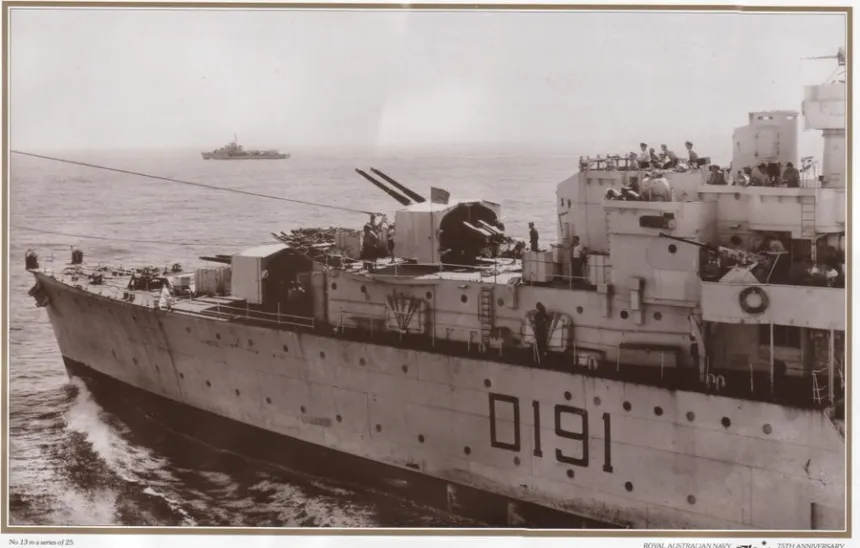
By December she had joined her sister HMAS Warramunga, as well as the HMCS Cayuga, Athabaskan, Sioux, and the USS Forest B Royal, at the Yalu River Approaches. These vessels would assist in the evacuation of Chinnampo off Choda Island. During the approach to the islands, two of these destroyers would run aground, with the remaining ships reaching port on the 5th of December, finishing the evacuation later that day before proceding to Inchon.
She would continue operating off Korea on inshore patrol, fire support, and fleet screening for commonwealth and USN forces. She would meet the USS Bataan during this time. This would last until the 29th of May 1951, where she would sail to Hong Kong, then onto Sydney for refit. During this refit, she would have her systems modernised, her Pom-Pom removed for a dual 40mm Bofors ‘Utility’ Mount, as well as a general boiler and engine clean. This would finish in January 1952.
She would sail for a second tour of Korea on the 8th of January 1952, relieving the HMAS Murchison out of Kure on the 4th of February, joining Task Force 95.12.1 with HMS Mounts Bay, relieving HMS Charity for the Sokto and Chodo area. Upon arrival she would continue in a similar way to her previous operations, patrolling, screening the fleet, and fire support for ground troops.
She would duel with more coastal artillery on the 13th of February, leading to a single hit in the Captains cabin. This would not go unpunished, and the battery would be silenced with 543 rounds of 4.7" ammunition as well as 75 4" rounds.
The Bataan would join the screen for the USS Bairoko on the 7th of March as part of Task Force 95.11. this would last until the 13th. More patrols of this type would be done throughout March, April, and May. During this time she would operate within four different Task Forces, assist locals in removing a smallpox outbreak at Taeyonpyong Do, policing 400 fishing vessels in the Haiju Gulf, bombard eight different enemy positions, and recover lost American aircraft.
More patrols would continue until the 31st of August 1952, where she would depart for home. She would visit Singapore in November 1953, but would remain in the Australia Station for the remainder of her service.
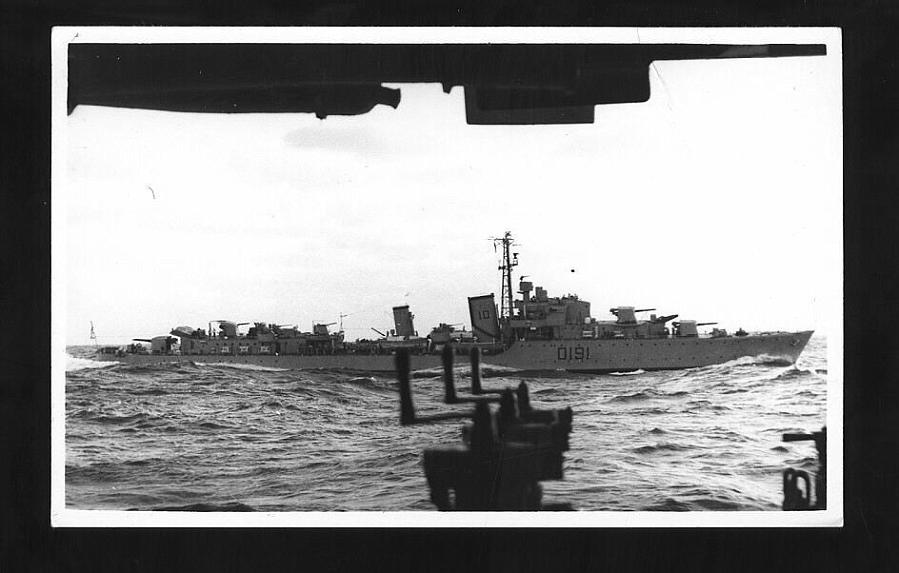
However this was not uneventful, she would join the HMAS Vengeance in support of the London-Christchurch Air Race. She would experience extremely heavy seas, with a high wind speed of Force 12, and a 9-12m sea. She and the Vengeance would collide during replenishment operations off the Cocos Islands, this would not stop the pair of vessels visiting Manus Island, Rabaul, and the Solomon Islands.
She was considered for conversion to an ASW Destroyer, like her sisters in 1954, but this work would not go through due to budget shortfalls. She would pay off on the 18th of October 1954, being sold for scrap on the 2nd of May 1958, having steamed 279,395 nmi (517,439 km) throughout her commission.
| General Characteristics: | |||||
|---|---|---|---|---|---|
| Name: HMAS Bataan | |||||
| Country: Australia | |||||
| Type: Destroyer | |||||
| Class name: Tribal class | |||||
| Year of commission: 1942 | |||||
| Refit: 1945 | |||||
| ----------------------------------------------------------------------------------------------------------------------------------------- | |||||
| Dimensions: | |||||
| Length: 377 ft 1 in (114.94 m) | |||||
| Beam: 36 ft 4.75 in (11.0 m) | |||||
| Draught: 9 ft (2.7 m) | |||||
| Displacement: 1,787t | |||||
| ----------------------------------------------------------------------------------------------------------------------------------------- | |||||
| Propulsion: | |||||
| Powerplant: 3 oil fired boilers, 2 geared turbines creating 44,000 shp (33,000kW) across two shafts | |||||
| Speed: 36.5kt | |||||
| Endurance: 5,700nmi @ 15kt | |||||
| ----------------------------------------------------------------------------------------------------------------------------------------- | |||||
| Armament & sensors: | |||||
| Compliment: 267 | |||||
| Primary armament: 3x2 QF 4.7-inch Mk XII on mount CP Mk XIX | |||||
| Secondary armament: 1x2 QF 4-inch Mk XVI, 6x1 40mm Bofors, 1x4 QF-2pdr (pom-pom) | |||||
| Tertiary armament: 1x4 21" torpedoes, 2x1 DCT, 30DC, one DC rail | |||||
| Radar: SC-1, SG-1, SG-4, Type 285P, Type 253P | |||||
| Sonar: Type 128 ASDIC |
Sources
A.Cooper. (2010) HMAS Bataan, 1952, An Australian Warship in the Korean War.
Gillett, R. (1983). Australian and New Zealand Warships 1914-1945 (pp.144-146)
N. Friedman (2006). British Destroyers and Frigates, The Second World War and After. (pp.27-28)
https://seapower.navy.gov.au/history/units/hmas-bataan
HMAS Bataan - Wikipedia
HMAS Bataan (I 91) of the Royal Australian Navy - Australian Destroyer of the Tribal class - Allied Warships of WWII - uboat.net
HMAS Bataan - Naval Historical Society of Australia
https://naval-encyclopedia.com/ww2/uk/tribal-class-destroyer.php