- Yes - In the Tech Tree.
- Yes - Event/BP.
- Yes - Premium.
- No - I would not like to see HMNZS Hickelton in game.

Description:
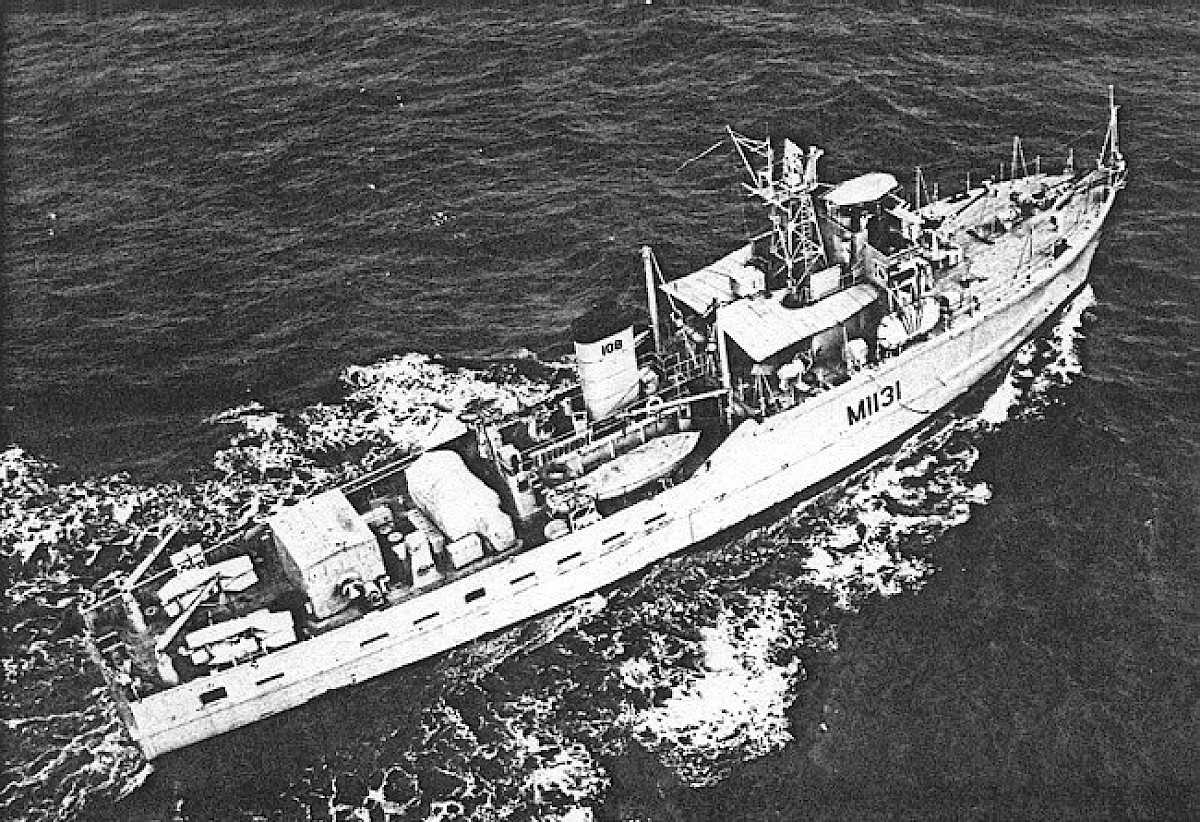
HMNZS Hickelton was one of many Ton-class minesweepers built for the Royal Navy during the early phase of the Cold War. She would be a vessel of lasts, being the last vessel loaned to the RNZN from the RN, being the last RNZN vessel to have fired her gun in anger, and being the last RNZN vessel to have their running costs paid for by another country.
She would also be the shortest commissioned RNZN Ship, only serving for a single year before being returned to the RN. She, along with her sister, Santon, were the only RNZN vessel to never visit New Zealand.
History:
As HMS Hickelton:
Built by John I. Thornycroft & Co, Southampton, England, she was laid down on the 11th January 1954, launching on the 26th January 1955, and finishing her fitting out and commissioning on the 23rd July 1955.
Upon finishing working up, she would join the 108th mine sweeping squadron out of Malta, on the 9th September 1955, arriving on the 20th the same month. During this time she would participate in multiple exercises, and as with the other Ton-class, would be a test-bed of sorts for newer mine clearing techniques.
On the 17th of November 1955, she would participate in the ‘Cyprus Patrols’ during the Cyprus emergency. She would return back to Malta after her first patrol, however she would partake in another patrol from May-July 1956, then a third from November to December, and a fourth from February to March 1957.
She would have the same routine of two month long patrols with a few months ‘off’ in regular duty for the entirety of 1958, participating in two more patrols. In February of 1959, when she was only four years old, she paid off at Malta, to allow her crew to man the HMS Burniston, another Ton-class minesweeper.
She was put into reserve in Singapore, sailing in early 1960.
As HMNZS Hickelton:
In 1965, as the Indonesian Confrontation continued, New Zealand offered military assistance to the Malaysian government. For this role the Royal Navy proposed that NZ could man the two minesweepers then at reserve in Singapore, for use as anti-infiltration patrol. The Royal Navy would pay for the ships running costs, provided the NZ Government pay for the men’s wages and travel costs.
This was agreed and HMS Hickelton and Santon were selected, commissioning into the Royal New Zealand Navy as HMNZS Hickelton and Santon. However although the ships had been selected, they were minesweepers, and had to be refitted into the ‘Gunboat’ role they would now serve.
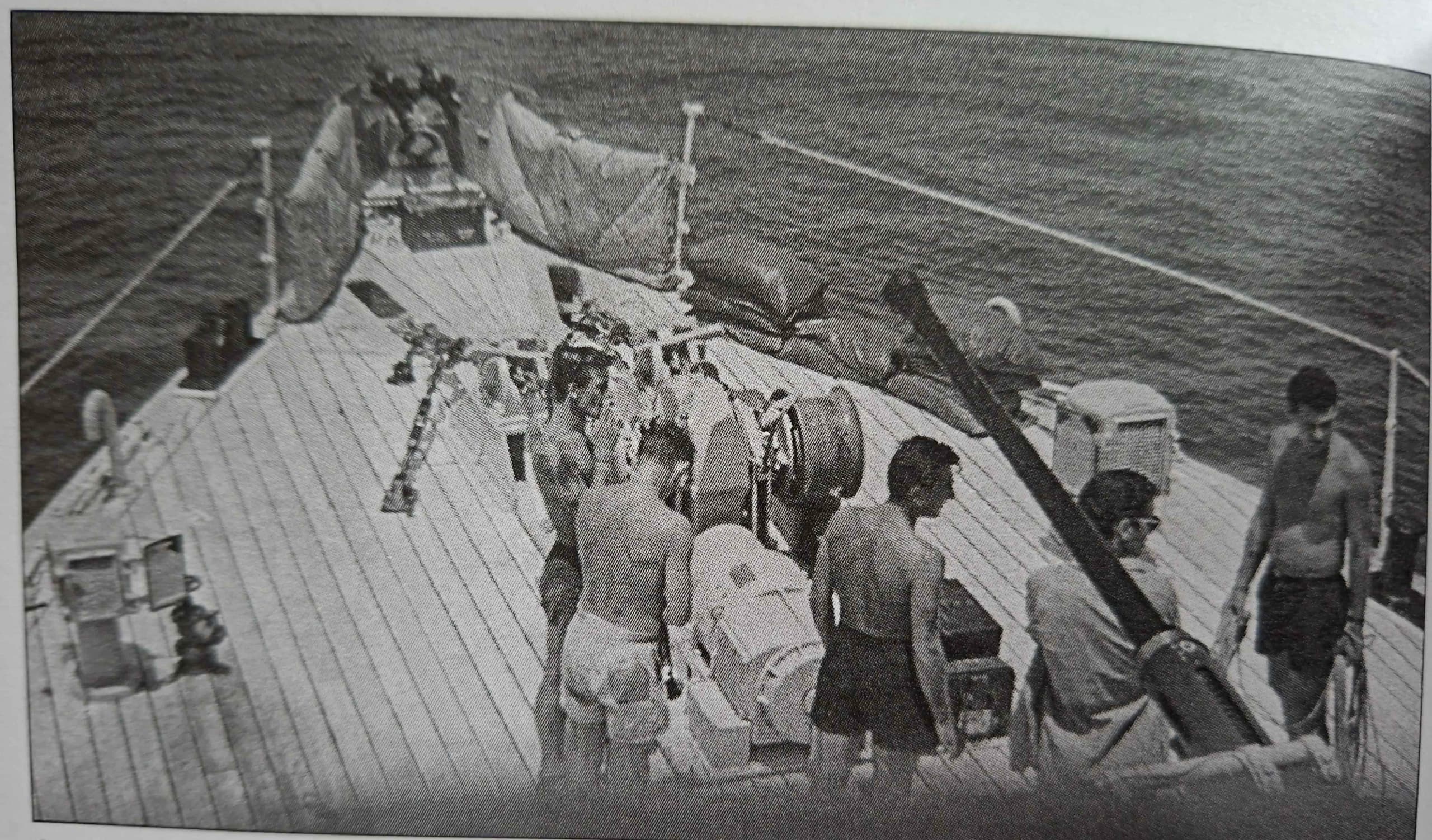
She would gain flare launchers, initially a single mortar type, however this was proved dangerous and was replaced by twin 2" Mk.5 launchers. She would also gain three twin .303 Vickers GO mounts saved from scrap, two would be mounted either side of the bridge, and one on the bow mounted to the bullring. Her Machine gun armament was further improved by the fitting of three Bren gun mounts to the bridge. IR Spotlights were fitted, and IR sights were mounted to the 40mm and 20mm mounts. Extra ammunition lockers for this enhanced armament were also added.
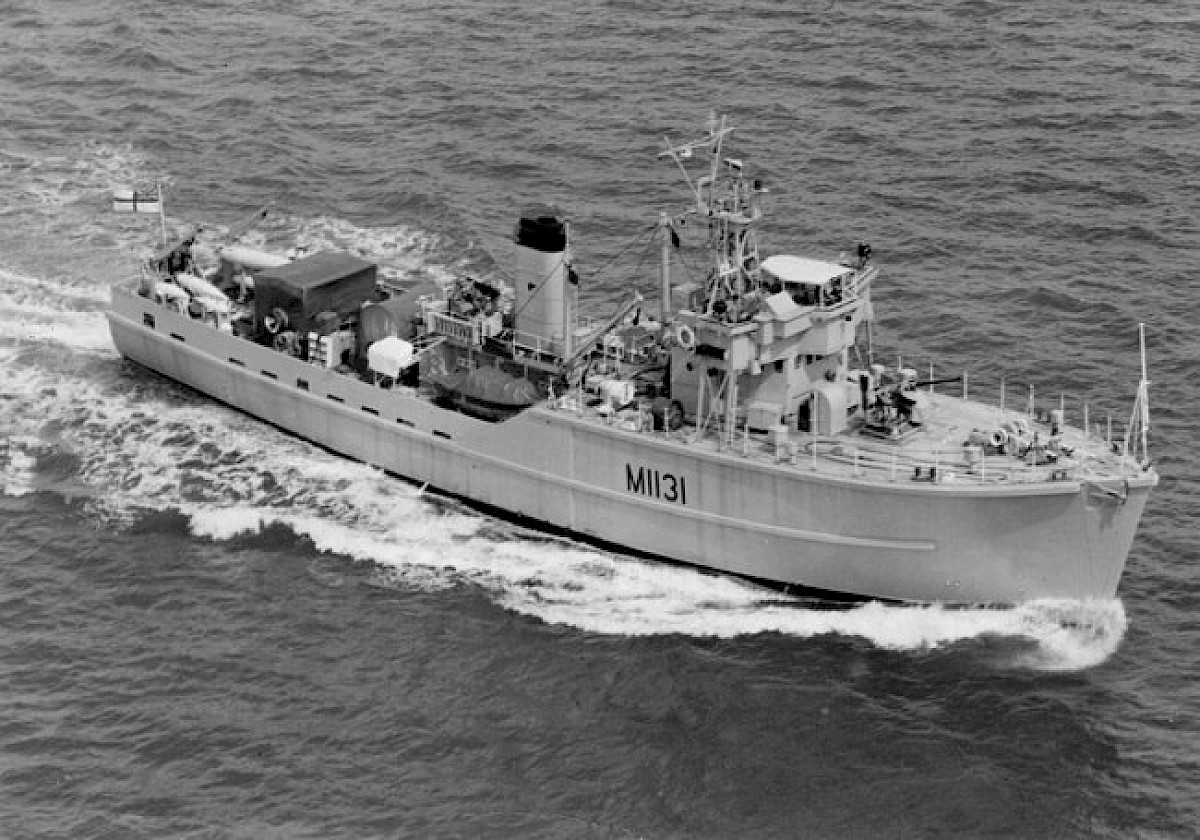
Personal arms for the crew were also issued, initially the Lee-Enfield was used, however, one SLt. Warren convinced the RNAD that no one aboard the NZ ships knew the inner workings of the Enfield and if they were issued, it would endanger lives. Modern L1A1 SLRs were issued. A Vauxhall Velox was purchased to run officers and men about in Singapore during trips ashore, It was a brilliant white colour and hence named the “Taj Mahal.”
She commissioned into the RNZN on the 10th of April 1965, and joined the RN’s 11th Mine-sweeping Squadron of the Inshore Patrol (Far East). This squadron now contained RN, RAN, and RNZN vessels. They were to patrol the Malaysian coastline for insurgents from Indonesia. During this time armour plate was fitted, being 0.5" of aluminum to the Bridge, Wheelhouse and along the waist. Standard steel armour plate was not used as the ship’s hull needed to remain non-magnetic, and had to be light enough to not affect stability.
HMNZS Hickelton steamed 58,000 nmi, carrying out 173 patrols, with 20 incidents. Each patrol was two weeks long, and included three patrolling areas. The most famous of these incidents occurred on 9:30 on the morning of the 28th June 1966, while approaching the Singapore Straits. A small 7m boat was spotted three miles north, and Hickelton moved to intercept. While Hickelton was 180m away from this boat, three men in military uniform and a boatman were observed, and Cmdr Wright ordered Approach ‘Stations’.
As the small boat approached within 18m of Hickelton it repeatably ignored instructions to stop, but because it could not outrun the ship, it repeatedly turned back on itself to avoid controntation. As ten minutes of chasing had led exactly nowhere, Hickelton decided to fire a warning shot across its bow, this was ignored, however further shots were taken to immobilise the small craft. One of the Indonesians lifted a heavy MG from 40m and fired. In response all guns were ordered to open fire, leading to withering fire from the Bofors, Oerlikon, and the .303 MGs on the small boat. Only a single bullet hit the Hickelton, on the bridge above the port Vickers mount.
During this action the Radioman was ordered to signal the Fleet commander, “Have engaged armed sampan vicinity Horsburgh Light; request medical assistance”, (As Hickelton had no medical staff aboard), however the radioman in their haste did not signal the ‘medical’ part of that message. And as such the frigate HMS Plymouth moved south to assist. Aircraft from HMS Eagle were also launched. This action was the last time the RNZN fired their guns in anger.
Her time with the 11th Mine-sweeping squadron was short, with Indonesia stopping their confrontation policy in August 1966. As this was the sole reason she was commissioned into the RNZN, she was returned to the RN reserve. Setting sail for England in October, and arriving in Portsmouth in early December. She would be sold to Argentina in 1967, and scrapped in 1996.
| General Characteristics | |||||
|---|---|---|---|---|---|
| Name: HMNZS Hickleton | |||||
| Country: New Zealand | |||||
| Type: Minesweeper | |||||
| Class name: Ton | |||||
| Year of commision: 1965 | |||||
| Refit: 1966 | |||||
| ----------------------------------------------------------------------------------------------------------------------------------------- | |||||
| Dimensions: | |||||
| Length: 152ft (46m) | |||||
| Beam: 28ft (8.5m) | |||||
| Draught: 8ft (2.4m) | |||||
| Displacement: 440t | |||||
| ----------------------------------------------------------------------------------------------------------------------------------------- | |||||
| Propulsion: | |||||
| Powerplant: 2x Mirrlees Deisels@ 2500hp (2,200kW) ea | |||||
| Speed: 15kt (28kp/h) | |||||
| Endurance: 2,300nmi @ 13kt | |||||
| ----------------------------------------------------------------------------------------------------------------------------------------- | |||||
| Armament & sensors: | |||||
| Compliment: 32 | |||||
| Primary armament: 1x1 40mm Bofors | |||||
| Secondary armament: 1x2 20mm Oerlikon, 2x3 .303 Vickers GO | |||||
| Tertiary armament: - 3x1 .303 Bren | |||||
| Sensors: IR sights and IR Spotlights, Type 975 surface search radar | |||||
| ----------------------------------------------------------------------------------------------------------------------------------------- | |||||
| Armour: | |||||
| Bridge: 0.5" aluminium | |||||
| Wheelhouse: 0.5" aluminium | |||||
| Waist: 0.5" aluminium |
More Photos:

Sources
HMNZS Hickleton and Santon - Minesweepers — National Museum of the Royal New Zealand Navy
HMNZS Hickleton - Wikipedia
HMS Hickleton | TON Class Association
https://navymuseum.co.nz/explore/by-themes/post-war-1970/hickleton-confrontation/
McDougall, R. J. (1989). New Zealand Naval Vessels (pp. 83-84)
Wright, Gerry (2006) A Kiwi on our Funnel: The story of HMNZ Ships Hickleton and Santon.
Worth, Jack (1986). British Warships Since 1945: Part 4: Minesweepers. (p.96)