- Yes
- No
- (independent) BeNeLux tree
- France: BeNeLux subtree
- other
- no/negative
- 1x 57 mm + 1x 37 mm + 2x Colt MG
- 1x 57 mm + 2x 450 mm torpedo tubes
- other (please comment)
- no/negative
TL;DR: Netta, a Belgian WWI slip boat active on Lake Tanganyika, armed with a 57 mm gun, a 37 mm pom-pom, two Colt machine guns, and later torpedoes.
History
History
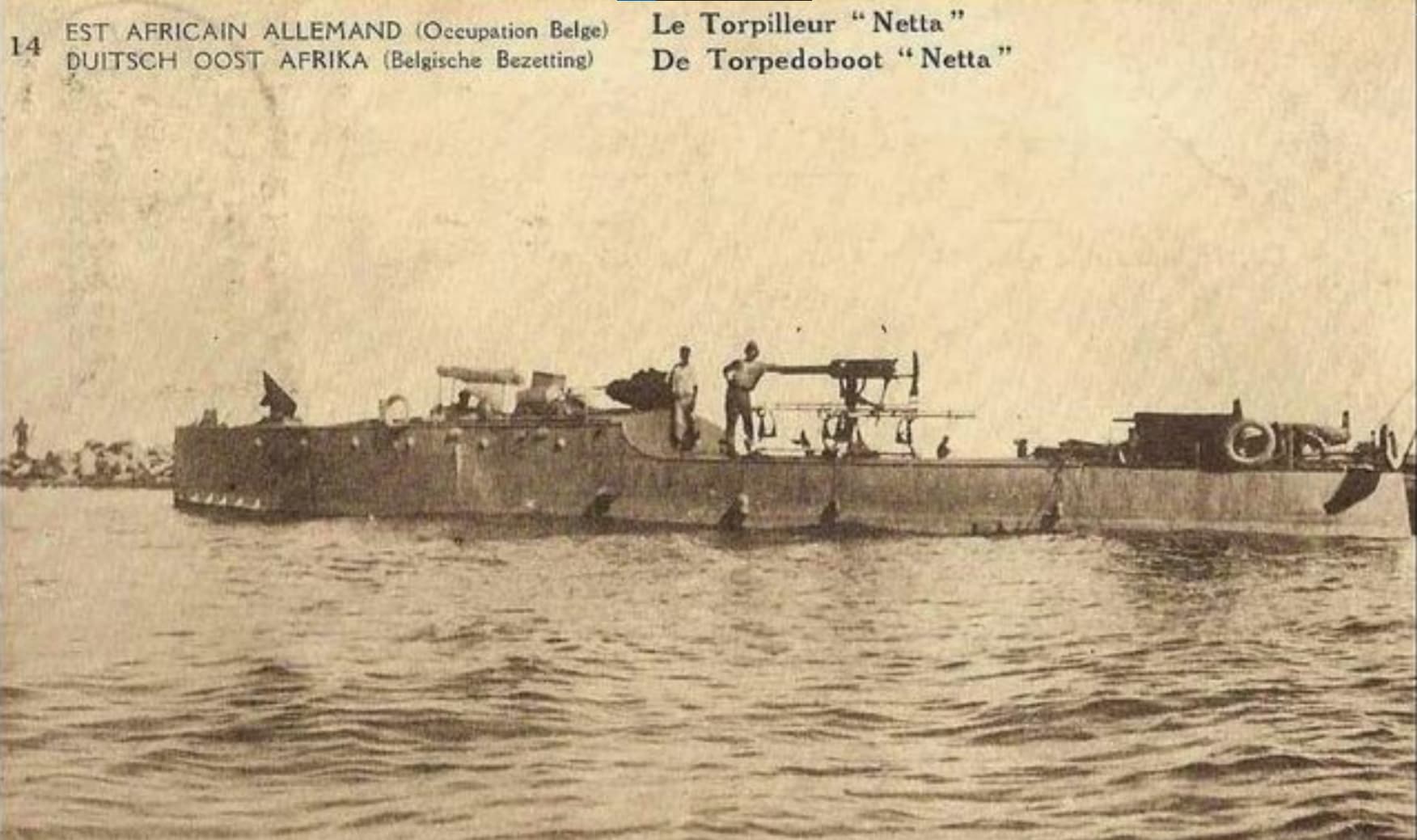
The Netta was conceived in 1914 and launched on 22 December 1915 (Royal Army Museum, Brussels). Displacing about 16 tons and measuring 18 meters long, it was powered by three 100 hp Mesnay engines, allowing speeds of 18–19 knots.
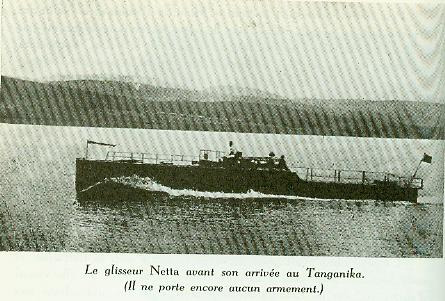
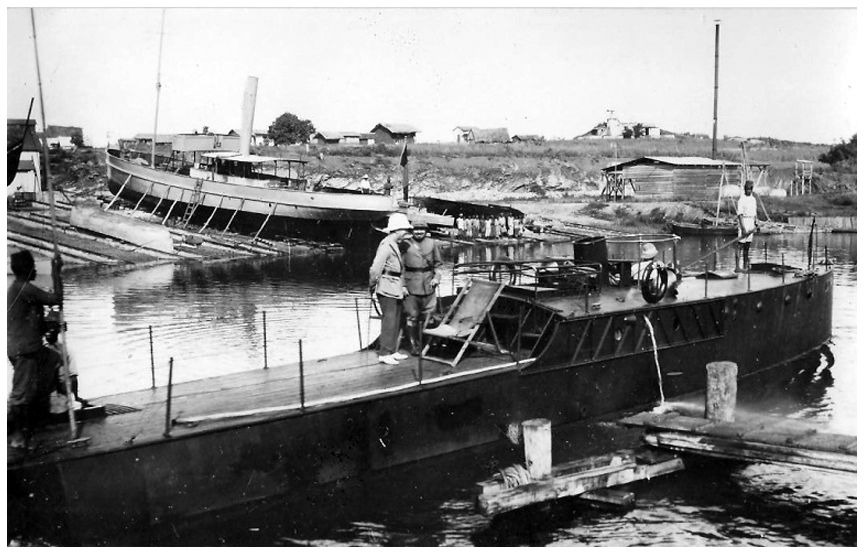
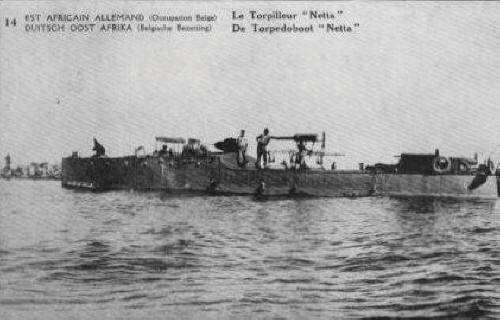
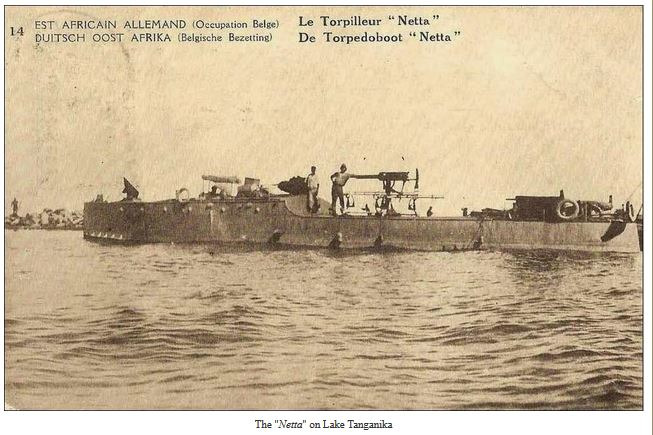
Arriving at lake TanganyikaInitially too lightly built for several heavy armaments, it was modified as seen in the picture above with a wooden deck to mount additional weapons. Its final configuration included a 57 mm Maxim gun, a 37 mm pom-pom gun, two Colt machine guns, and later two 450 mm Whitehead torpedo tubes (Marine Belge, n.d.).
The Netta, under Lieutenants Wauthier and Lenaers, participated in numerous patrols and engagements. On 26 December 1915, alongside the British motorboats Mimi and Toutou, and the Belgian Mosselbak, it forced the German gunboat Kingani to surrender. In 1916, the Netta sank the German vessel Wami at Bukele. Later missions saw it bombard German positions, capture enemy dhows carrying supplies, and escort Belgian forces along contested shores.
One of its most notable actions was its confrontation with the German gunboat Graf von Götzen (later salvaged as MV Liemba). Although sources vary, Belgian reports claim that during July 1916, the Netta engaged the Götzen and contributed to its temporary scuttling (Royal Army Museum Archives, 1916). Regardless, the Netta became a symbol of Belgian naval participation in the East African Campaign.
Battle for Lake Tanganyika
The Battle for Lake Tanganyika (1915–1916) was a unique inland naval campaign during WWI. The Allies—Belgium and Britain—faced German dominance on the lake, where vessels like Kingani, Hedwig von Wissmann, and Graf von Götzen supported German land operations. With the arrival of British motor launches Mimi and Toutou, and Belgian boats including Netta, the balance shifted. The Allied flotilla captured Kingani, destroyed Hedwig von Wissmann, and eventually neutralized Götzen, securing Allied control of the lake (Anderson, 2006; Wikipedia, 2023).
The Netta was central in these operations, proving that improvised naval craft, in cooperation with Allied units, could decisively shape the outcome of the campaign.
Specifications
Dimensions: 18 m length
Displacement: ~16 tons
Propulsion: 3x Mesnay engines, 300 hp total
Speed: 18–19 knotsCrew: ~10–12 + native auxiliaries
Gunboat variant
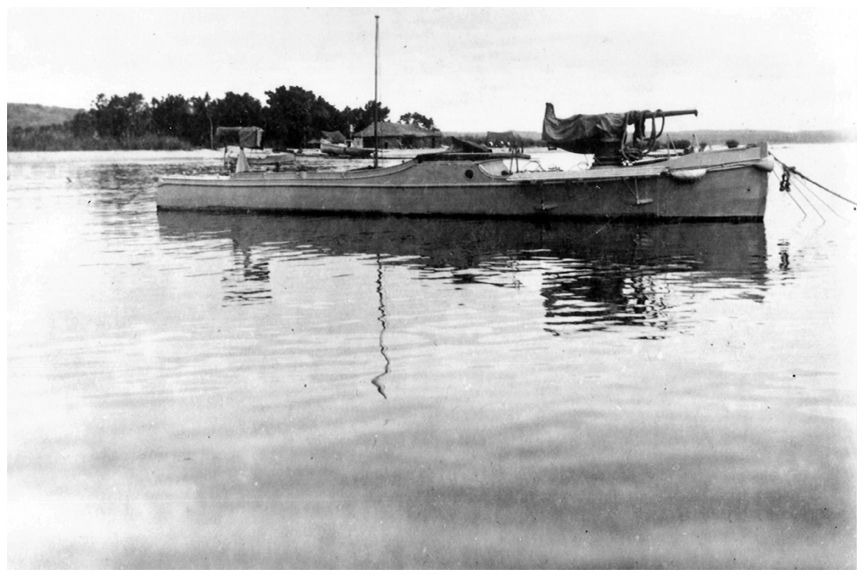
Armament (initial) Gun 1 × 57 mm Maxim gun Secondary 1 × 37 mm pom-pom gun Machine guns 2 × Colt MGs Mid-life torpedo upgrade
Note the different placement of the 57 mm gun, it’s now mid-ship instead. The torpedos are located at the aft and the cols are positioned near the mid-ship.
Armament (later) Gun 1 × 57 mm Maxim gun Torpedoes 2 × 450 mm Whitehead torpedo tubes Machine guns 2 × Colt MGs
Place in War Thunder
Regarding nations
BeNeLux
Given its Belgian origin, the Netta would be a fitting addition to a BeNeLux tree or the French BeNeLux subtree. As a unique WWI-era fast attack craft with torpedoes, it would provide early-rank gameplay variety.
Pictures and Diagrams
Pictures
Sources
Sources
- Anderson, D. (2006). Histories of the Hanged: The Dirty War in Kenya and the End of Empire. New York: W.W. Norton & Company.
- Marine Belge. (n.d.). Netta. Retrieved from https://marinebelge.be/netta.html
- Navypedia. (n.d.). Netta slip boat. Retrieved from https://navypedia.org/ships/belgium/be_dd_netta.htm
- Royal Army Museum Brussels. (1916). Netta mission reports [Archival documents].
- Wikipedia contributors. (2023). Battle for Lake Tanganyika. In Wikipedia. Retrieved August 25, 2025, from https://en.wikipedia.org/wiki/Battle_for_Lake_Tanganyika