- Yes
- No
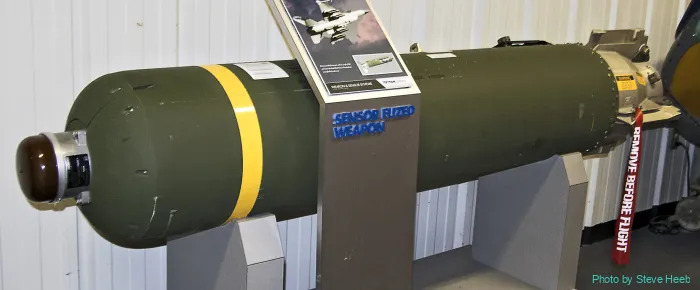
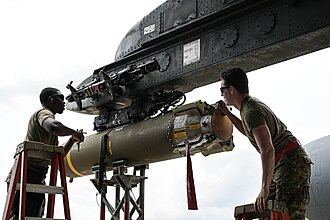
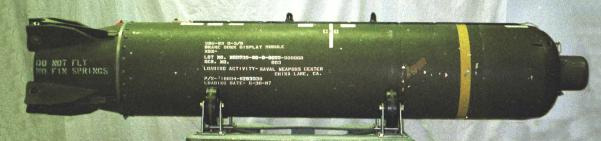
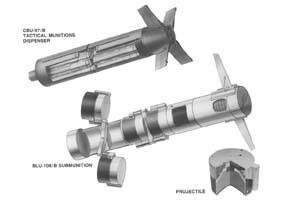
The sensor fuzed weapon is a family of cluster bombs in use by the United States military utilizing the BLU-108 Sensor Fuzed Weapon submunition. There are 2 primary variants of the sensor fuzed weapon: the CBU-97 and the CBU-105. The CBU-97 consists of 10 BLU-108 submunitions inside of the SUU-64/B Tactical Munitions Dispenser. The CBU-105 uses the same SUU-64/B TMD, but with the addition of the WCMD (Wind Corrected Munitions Dispenser) tail kit.
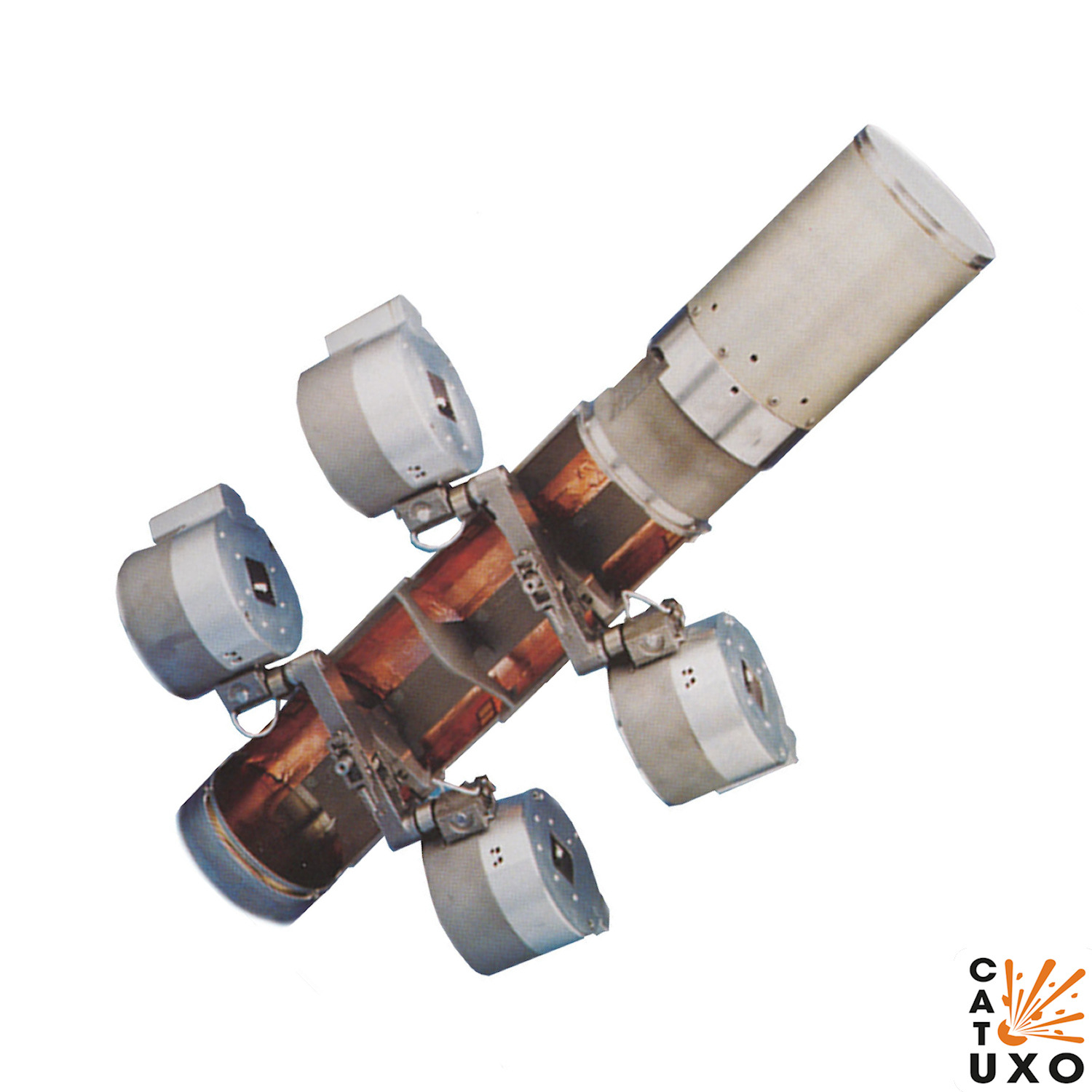
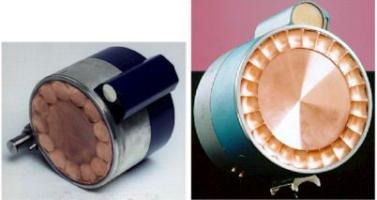
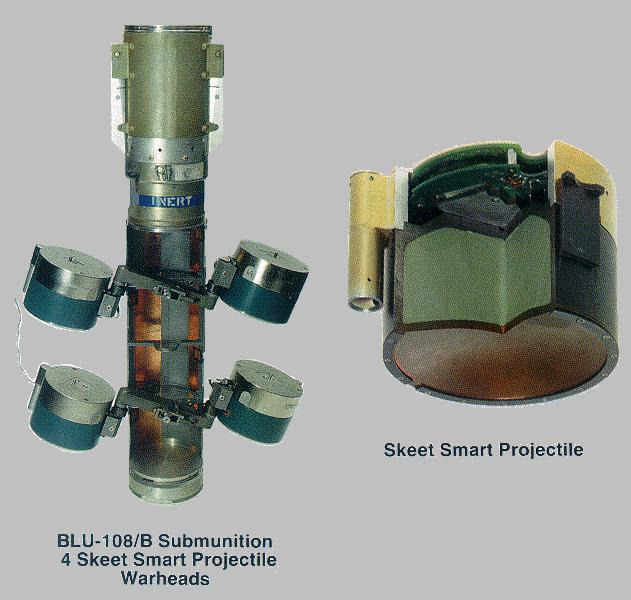
The sensor fuzed weapon is a bit of a unique case, in that each bomb carries 10 submunitions, and each submunition carries a further 4 submunitions, called “smart skeets”, for a total of 40 per bomb. The SUU-64/B releases the BLU-108s in two rings of five, which spread outward from the center in a flower pattern. Each BLU-108 then releases its four skeets in a plus pattern, with one plus at the tip of each “petal." Each skeet is capable of destroying targets ranging from unarmored trucks and personnel to heavily armored main battle tanks.
The SFW has been in production since 1992 and was first deployed in 1999, although it was not used in combat then. Its combat debut came during the 2003 invasion of Iraq, where it proved highly effective. A total of 88 CBU-105s were dropped, mostly by B-52s. The most well known strike came on April 2, 2003, when six CBU-105s were dropped on a column of Iraqi tanks, stopping the entire movement. As U.S. Air Force Col. James Knox put it, “The entire first third of the Iraqi tank column was decimated. The Iraqis in the back of the tank column immediately stopped and surrendered to the Marines.”
What is the BLU-108?
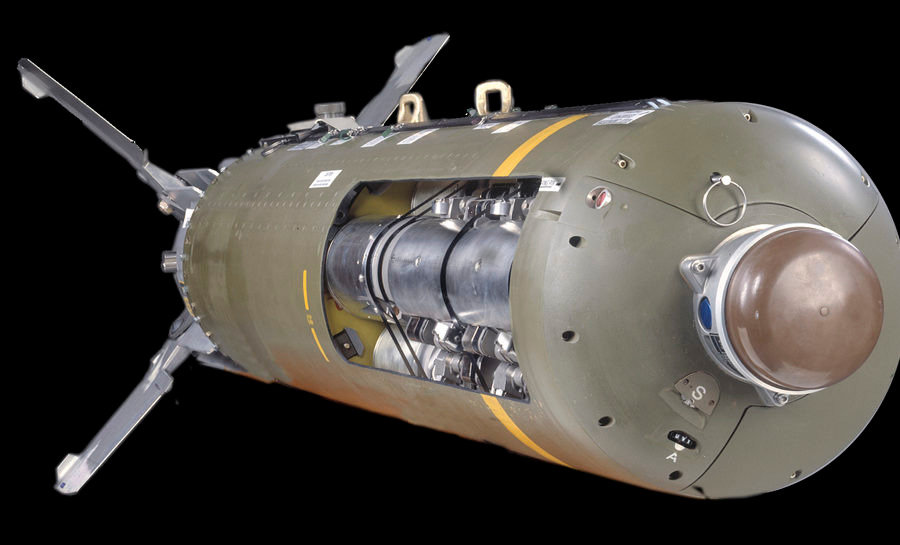
The BLU-108 is a guided submunition designed for use with already existing cluster munition dispensers, as well as the AGM-154. It was developed for more precise strikes against armored targets where a normal cluster bomb might be largely ineffective. It was designed to have a low dud rate and it had multiple safeties integrated to prevent it from littering battlefields with UXO (unexploded ordnance).
The BLU-108 was designed to be effective against a wide variety of targets - from unarmored trucks and personnel, to lightly armored IFVs and APCs, to heavily armored main battle tanks. However, its primary usage was against large columns of enemy armor. A test of 27 trials conducted from 1993 to 1997 at Eglin AFB (as well as other unnamed locations) showed that a single CBU-97 dispenser averaged 5.1 hits across 3.3 armored vehicles in a mixed column containing tanks, IFVs, trucks, and self propelled howitzers, with an estimate that approximately one half of the vehicles in the coverage area of the entire sensor fuzed weapon would be damaged at least to the extent of an A-kill (defined as damage to at least one critical component compelling the vehicle to be removed from the line of march and repaired).
How it works
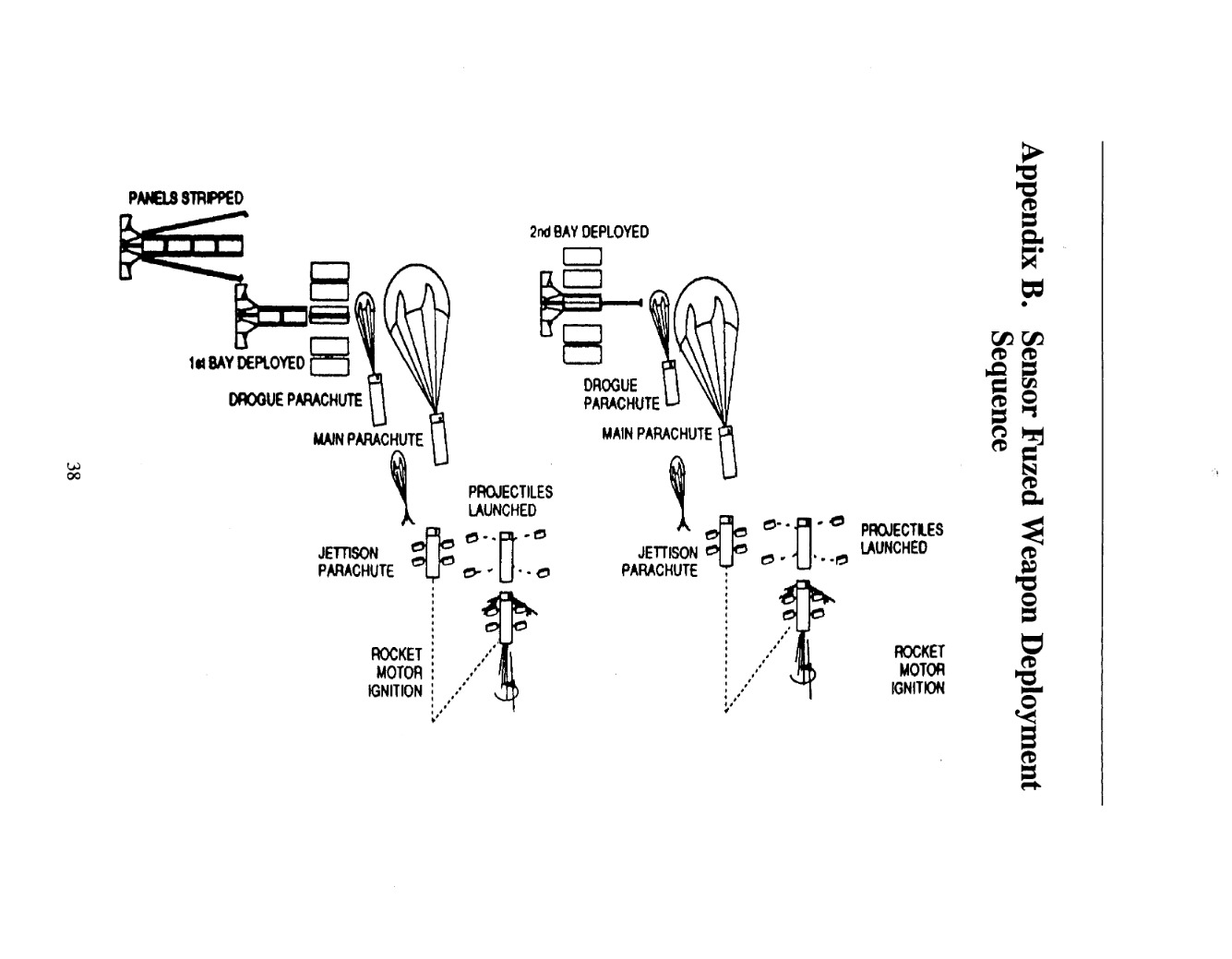
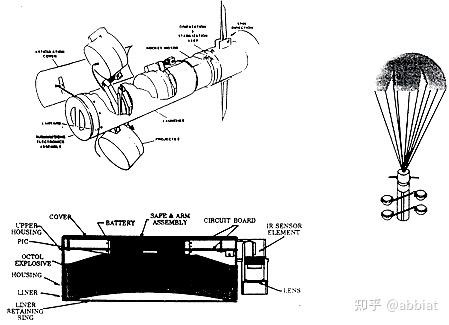
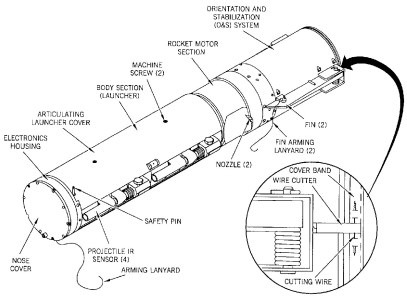
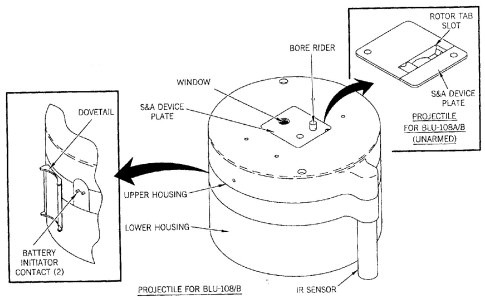
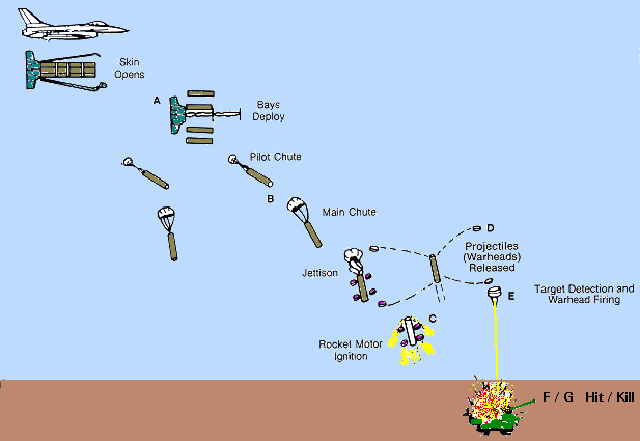
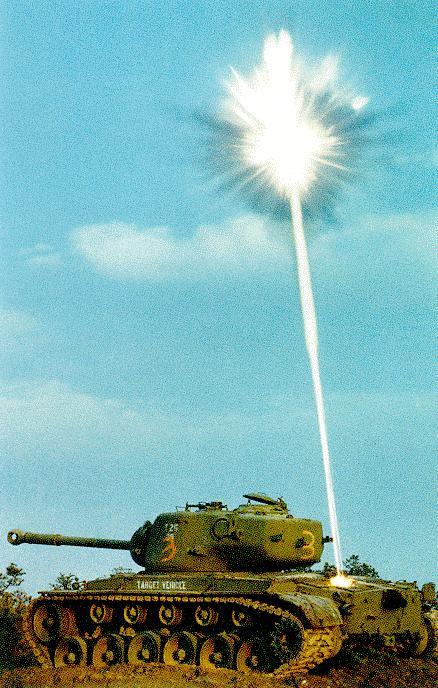
Each CBU-97 and CBU-105 contains a radar altimeter. When the dispenser reaches a preset altitude, it releases the BLU-108 submunitions, first the five in the front, then the five in the back. Each submunition deploys a small parachute to orient it vertically, followed by a drogue chute to slow its descent. Each submunition also has its own radar altimeter, which triggers a rocket motor to fire at a preset altitude. This motor gives the BLU-108 both vertical and rotational momentum, allowing it to release its four skeets in pairs to cover four quadrants, for a total coverage area of 820 feet. Each skeet contains a laser and an IR sensor. When the laser detects a sharp increase in terrain height due to a vehicle, it checks that spot against the IR sensor looking for a heat signature. If it also detects a heat signature, it detonates, sending an EFP in its direction. The warhead also has a fragmentation ring to improve effectiveness against soft targets. If the skeet does not find a target, it will detonate either 8 seconds after arming, or when it comes within 15 meters of the ground. If both of these safeties fail to operate, its internal battery dies within minutes, making it unable to detonate.
Platforms
- F-15E/EX
- F-16
- F/A-18
- F-35
- F-111
- A-10
- B-52
- B-1
Specifications
CBU-97
- Dimensions: 2.31m length x 39.75cm diameter
- Weight: 420kg
- Submunition count: 10x BLU-108
- Dispersal pattern: flower pattern
- Release altitude: variable
CBU-105
- Dimensions: 2.34m length x 40.6cm diameter
- Weight: 427kg
- Submunition count: 10x BLU-108
- Dispersal pattern: flower pattern
- Release altitude: variable
BLU-108
- Dimensions: 78.8cm long x 13.3cm diameter
- Weight: 29.5kg
- Submunition count: 4x Smart skeets
- Dispersal pattern: plus pattern
- Coverage area: 250m
- Smart skeet:
- Dimensions: 9.5cm long x 12.7cm diameter
- Weight: 3.4kg
- Explosive mass: 945g Octol
- TNT equivalent: 1,503g
- Coverage area: 50m
- EFP penetration: ~110mm


I used Wikipedia only for finding other sources - none of this information comes from Wikipedia
Wikipedia - BLU-108
Wikipedia - CBU-97 Sensor Fuzed Weapon
US Designation systems - BLU-108/B
US Designation Systems - SUU-64/B
US Designation Systems - Lockheed Martin WCMD (Wind Corrected Munitions Dispenser)
Audit report - Acquisition of the Sensor Fuzed Weapon
Textron BLU-108 datasheet
Global security - BLU-108
Liquisearch - CBU-97 Sensor Fuzed Weapon
Ares Armament Research - US CBU-97/CBU-105 ‘Sensor Fuzed Weapon’ cluster munition
CNN - Sensor fuzed weapons aid combat in Iraq
AF.mil - B-52 crews use ‘smart-guided’ cluster bomb
RAND - To Find, and Not to Yield pg. 36-37, 92-94