I mean you already have RWRs in-game that have accurate ranging capability, still not geolocation or obtaining 3D coordinates of targets.
2 Likes
only pilot interviews and articles, you’d have to look though
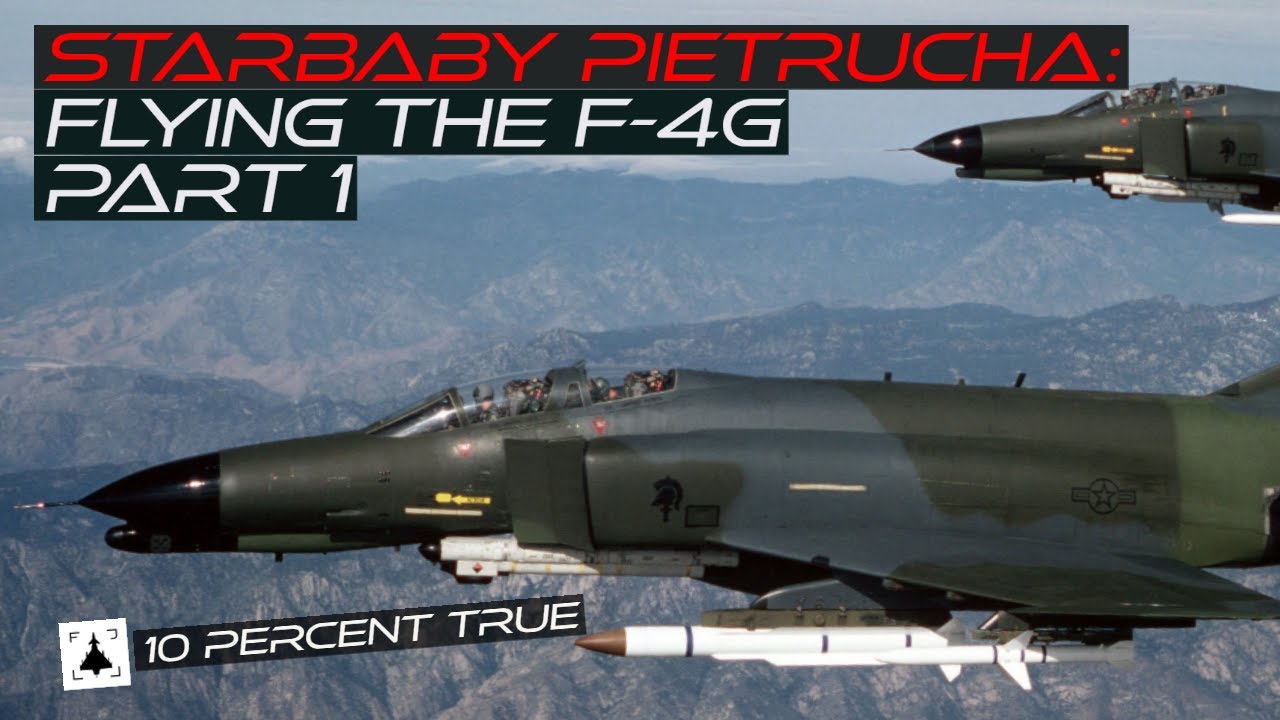
1 Like
what do you consider geolocation? if you have range and bearing for a target then you can find its position
You can find its position relative to your platform, that does not by necessity entail an accurate gps designation for said position. Su 25 can identify range and bearing for radar installations. It does not generate a GPS position for them. Su 24 likewise. These systems, like Phantom, require emissions to be consistent or are loosing munitions without positioning information.
Not quite, how I was explained is that modern RWRs without geolocation capability function similar to how it would be like if you had line-of-sight to an enemy SAM with your targeting pod, but if there’s a building blocking the line-of-sight, the target point would be on the building. But RWRs with geolocation would have the target point behind the building directly on the location of the enemy SAM.
soviet RWR are nowhere near as accurate, they just go off radar power and are not precise in bearing
It’d really suck for your argument if these aircraft carried ELINT pods explicitly for this purpose which have proven highly reliable. But if you don’t count their requiring emissions to be present for these pods to provide bearing and ranging information to a weapon during deployment (simplified), then you’re going to grasp why phantom does not fall into the category outlined by direct. Especially given both the ELINT systems of Sukhois and the ELINT system of Phantom make no distinction for anything greater than range or bearing.
but what would be the building to the RWR? it directly detects the emitter
every single RWR requires emissions to be present to provide range, its effectively impossible to get accurate ranging off a single ping. they both probably had INS for their respective systems too, they still knew where a radar was even if it did turn off after ranging
At times your ability to gather only the bare minimum of a statement is impressive.
Yes, emissions are necessary to collate a sound report of bearing and range. For the weapons these platforms carry (phantom, su 25 etc), the missile is cued from that information. It does not retain a marked point in space outside of this collated information, that consists of bearing and range. The platform may take account of variables impacting the platform’s closure rate or bearing adjustments, but it is not effectively a point marked in space. It is a relative position.
The step of collating positional information for a GPS designation starts the same way, in the most basic implementation. From this point, the position of the aircraft (assuming it is known) can be compared to the position of the target (known), and utilised to derive a GPS position (heavily simplified). This position is no longer relative, but fixed. Depending on complexity (@Macron-Spokesman would need to contribute in this case), information around that positional mark can be cross referenced for a more precise targeting solution, or the deployment of semi autonomous munitions.
Functionally, these systems are very similar. One goes the extra step of converting the positional information from pretty basic but functional units (relative position) to a form of information that can be shared, manipulated to some extent, and be used to cross reference other resources etc (gps fixed position)
This is correct, and usually this can be used to cue targeting pods or radars to obtain more accurate information for employment of weapons.
so you are saying you need to know the fighter’s own position? in that case, the fighter’s own INS systems paired with LORAN can do this to a sufficient level of accuracy without GPS. I dont know the extent to which an F-4G could directly share this information aircraft to aircraft, but they were used to support aircraft with less capable RWR when those aircraft were using HARM, for example the Hornet.
i agree completely that modern systems have better integrated functionality with other aircraft due to advances in datalink technology and they are far more accurate (allowing for use of weapons that previously couldn’t have been used as effectively, such as Rafale’s AASM), but they were able to do all this stuff albeit less precisely and it worked since HARM’s just need an emitter within their seekers limits to score a kill, or they can force SAM’s to stop emitting which is what SEAD is.
that was only necessary for certain types of weapons like GBU’s, dedicated ARM’s allowed them to overcome the less refined locating technology of the time
It’s called a Radio and bearing indicators e.g. “dirt, 030 degrees”
I’m gonna have to leave it to @Macron-Spokesman to explain to you the distinctions of why they did not do the same stuff, lest I say something very impolite. I haven’t the patience for Americanisms at the moment.
shiver me timbers
all thats really changed is how quick and accurate it is and being able to directly communicate that information to an aircrafts computers through modern datalink. whether you like it or not they were used to find the positions of enemy SAM sites even if they couldnt destroy them at the time
The answer is, obviously, NO.
Not because it shouldn’t be implemented, but because it’s gonna be halfa$$ implemented, where SPECTRA’s angular accuracy allows for ~400m error (CEP ~200m) at 20km distance (that’s roughly one grid square, or more on a ground battle map), depending on the band its picking up. The problem, I have, is GJ is gonna make it hit with a pinpoint accuracy, which simply isn’t possible, with the current equipment on the Rafale and this is why NO. Should GJ model CEP accurately (unlike MICA, Rafale, etc) then, sure, but the track record so far is abysmal.
1 Like
Rafale’s should get 1000kg AASM
1 Like
Back at it with your AI calculations?
Won’t happen until F4.1 standard is added sadly.
I’m still waiting for any of your corrections, but all I get is empty talk.
You’ve already been explained to by others why no one should bother correcting the AI math.
| Frequency band | Wavelength (λ) | Likely baseline used | Estimated 1‑σ accuracy (azimuth) | Notes |
|---|---|---|---|---|
| UHF (0.3–0.5 GHz) | 1.0–0.6 m | 1–2 m (to avoid ambiguities) | ~5°–10° | Very coarse, early warning only |
| L‑band (1–2 GHz) | 0.30–0.15 m | 2–3 m | ~1.5°–4° | Long‑range surveillance radars |
| S‑band (2–4 GHz) | 0.15–0.075 m | 2–3 m (or up to 5 m) | ~0.7°–2° | Fire‑control radars |
| C‑band (4–8 GHz) | 0.075–0.0375 m | 3 m (intake rims) | ~0.3°–0.8° | Many SAM tracking radars |
| G‑band (4–6 GHz) | 0.075–0.05 m | 3 m | ~0.4°–0.7° | Sub‑band of C; e.g., older SAM radars |
| X‑band (8–12 GHz) | 0.0375–0.025 m | 3 m | ~0.15°–0.4° | Fighter radars, SAM terminal |
| Ku/J‑band (12–18 GHz) | 0.025–0.0167 m | 3 m | ~0.1°–0.3° | Missile seekers, some track radars |
Ok, correct away. I don’t know what I’m doing anyway. :D
(and I’ve been generous on SPECTRA’s front antennas displacement, while completely ignoring elevation)