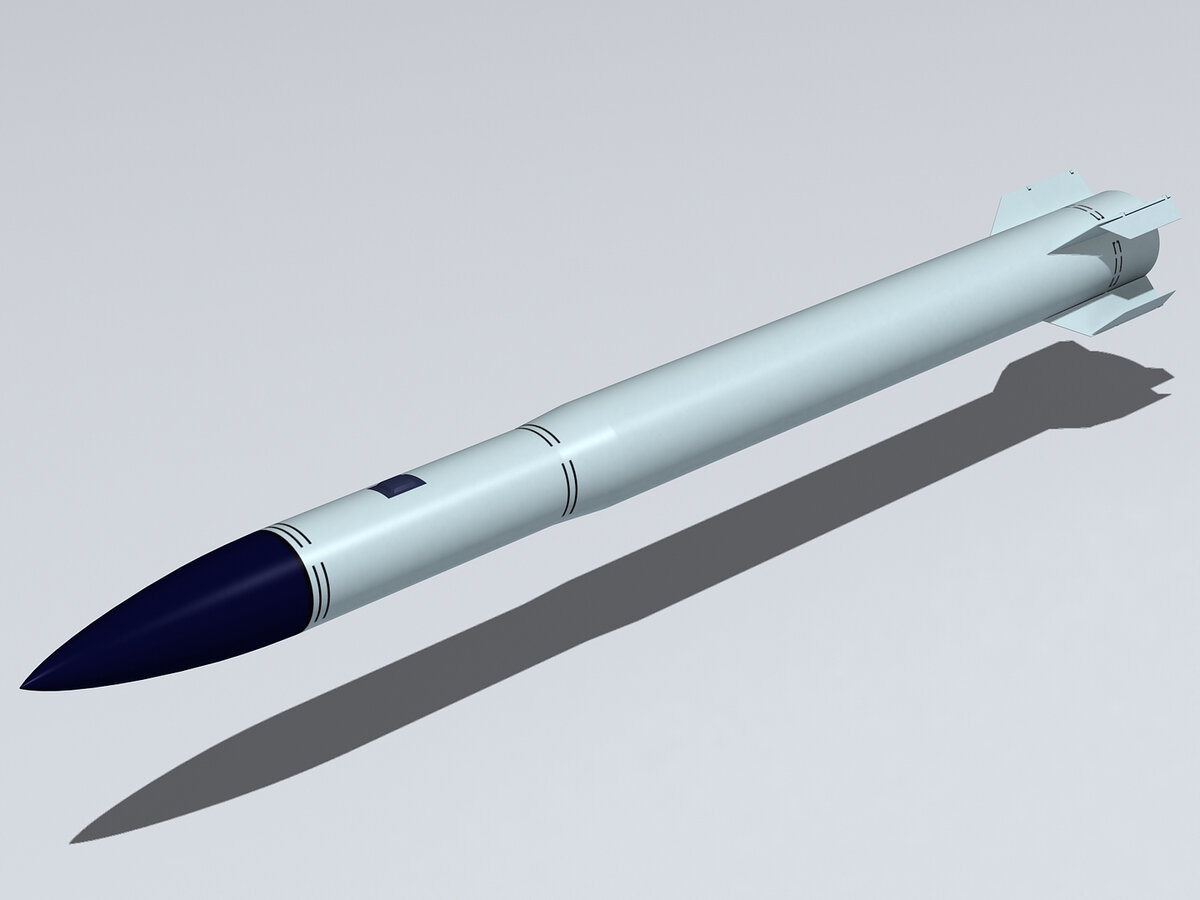
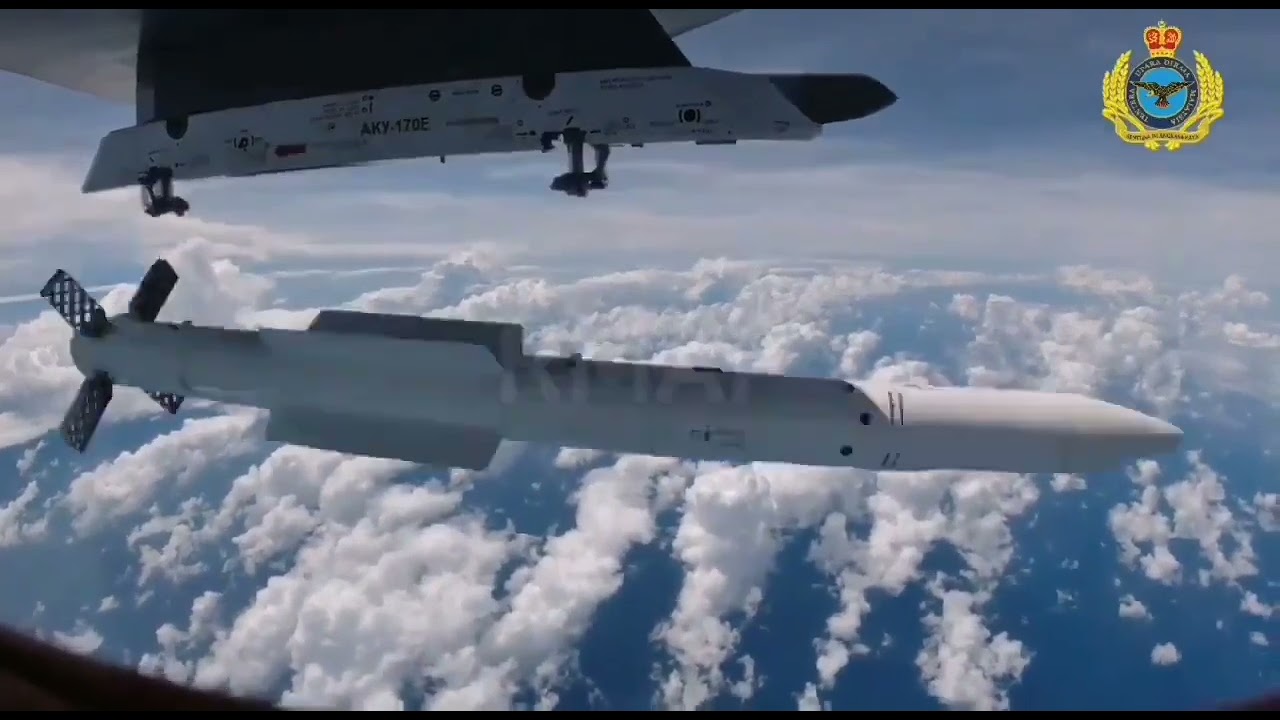
grid fins significantly reduced drag at high supersonic, equal in subsonic and only briefly does it have significantly higher drag in transonic region. They offer significantly improved stability and AoA over traditional fins but also a much larger radar cross section.
To be honest, that sound hard to believe. If grid fin are that good then they should be more popular with SAM. From USA SAM such as SM-2, SM-6, ESSM to the Russian SAM such as 9N96, 48N6, 40N6, to the China SAM such as HQ-9 , HQ-12 all use conventional planar fin instead of grid fin.
We already know grid fins to be superior for high supersonic drag. A more powerful missile would benefit more from grid fins than from conventional, this is a step back in performance for the R-77M to enhance its niche use in the Su-57.The R-77M using a lower RCS fin design is a by-product of Russia’s shift towards stealth fighters. Nothing more.
If that was the case, how come R-33 and R-37 on Mig-31 still use planar fin instead of grid fin?. These missiles surely spend much longer time in supersonic regime and Mig-31 is not designed for stealth by any mean
You can’t do that with lattice handlebars. Moreover, the rockets have gas-dynamic control, which is much more efficient than any rudder. Therefore, they make as few protruding parts as possible.
Oka ballistic missile
No, you saw how shockwaves interact, lowering speed and increasing pressure. Increasing drag overall. You saw aswell the dependency on the shockwave angle relationship to mach with the chord gap ratio. Its just math. You can do it, airflow will be considerably restricted under certain speeds. M2.3.
No dude. put this louadout and you’ll waste all fuel crossing transonic region.
And the missile doesn’t spends alot of time at high mach numbers (>M4-5) aswell. Even if you can do it, it will lose speed and it will slow down fast due to the shockwaves inside the fins. The parasitic drag which you can clearly see is so damn high. I don’t think you see how a drag coef 5x the amount really affects stuff.
And yet as you saw on my older post. The Lift to drag ratio is considerably higher unedr 20° AoA. bleeding less speed on the turn. Drag coefficient is lower overall.
The only advantage is at really high altitudes where planes don’t really fly and speeds the missiles don’t reach. The advantage is a considerabl lower hinge moment, reducing the size of actuators. Accuracy and control is just shit you just made up. Accuracy is on the guidance, control depends on the regime.
And look at the shockwaves here
Have you seen how obliqe shockwaves slow the mach number of the airflow? Same thing. And if you’ve ever taken a course in fluid mechanics, lower airspeed has a higher pressure. What happens if you have a higher pressure area? Lower airpressure don’t flow into it but the opposite. The faster airflow will just flow around it, giving the overall higher drag. DO you know the pressure at the tip of a pitot tube? and what happens to the air around it? tell me.
You are like a kid covering his ears when he hears stuff he doesn’t like. Willing to die on a hill that is not even a hill. At this point its you taking a number, M1.3, without any meaning behind it, taking it as godspell and jumping right to an erroneous conclusion. That numbers makes no sense unless you give values to the chord/gap as you saw above and from what I can see, on the document provided that variable is everywhere. A Gap >> chord will mean that number is smaller. The sketches introduce that variable, allowing you to hopefully think. It’s not just a binary thing where if grid fins, >mach 1.3 good, <MAch 1.3 bad. It’s alot more, that even with simple quick hand drawn sketches you can make more of it.
Good comment on how said grid fins interact with lower altitudes.
Reminds me of why SpaceX chose to use grid fins for the very low altitude descent stage as the grid fins have more effect than planar fins during descent due to the vastly higher amount of total drag the fins impart.
To that same end, its why the fins are located so high on the falcon as well, given their imparted drag adds to the vertical stability of the booster during powered descent.
That doesn’t seem to be the case in newer RU aircraft manuals when equipped with such load outs…
I don’t think these numbers are accurate at all.
Must you mislead people? The grid fin requires less AoA for similar torquing moment not only on the actuator but on the missile itself. The planar fin is less efficient in this regard and has much higher instability / inaccuracy for a medium range missile.
It is not something I made up, it is the very basis from which they chose the design scheme of the missile. Read the documents given.
You have already done this in regards to several topics discussed and purposefully misled people with graphs showing the ratios and not the range of motion necessary for the same movement / action on the missile itself. Avoid this subversive type of discourse.
Perhaps the person we should be having this discussion with is @k_stepanovich do you think that the grid fins of the R-77 have 5x higher drag coefficient than a similar sized planar fin?
Ofc, you dont like them. Dimensions are very very close to those of the r77 except for the lower part. And guess what? The planar fin used had the edge perpendicular to the airflow, and they forgot that they are sweptback. Which reduces the shock.
Talk about misleading lol. Where did I ever say that? What you quote is the LIFT TO DRAG RATIO, NOT THE HINGE MOMENT. Do you know the difference? I also say, along with what I quote hinge moment is lower on grid fins
HERE SEE
Do you even understand the charts? That L/D chart has Cl as axis, not angle. And then again I repeat, L/D is superior to grid fins under 17° at M2.5.
What? You don’t like being challenged on baseless numbers? You call what you don’t believe nor like misleading.
And I’m still waiting the answer for this which would show YOU what happens when you have a higher pressure against a fluid flow.
Perhaps, something on that order, 3-6x from what I can see at 0°. Then keeping that numerical difference at 0° as AoA increases
The problem is in the starting area. Where the grid shows itself worse. And SAM needs speed.
Well, the swing of the handlebar.
what exactly do you mean by " starting area"?. Grid fin can be folded flat into the body, which probably take even less space. And I don’t think space is as much of an issue for SAM as compared to AAM
And you don’t want to calculate the size of the grid for such a huge rockets is also important here.
But then even small SAM doesn’t use grid fin. It like R-77 is literally the only anti air missile with grid fin
The dimensions are not accurate, nor the fin indicative of what the R-77 would need to do the same job instead of the grid fins. The document itself is misleading.
Yes, I am pointing out why the specific information you chose to cover is misleading without context. You’re still trying to avoid this.
I understand what you are posting, that’s why I’m calling you out for it. You already know that not only is the model wrong, the planar fin used for comparison isn’t indicative of what the R-77 would need to do a similar job. The grid fin does not produce 5x the drag coefficient of its planar fin counterpart as you so plainly claimed. Especially not when considering necessary hinge moments in comparison to the planar fin. You’re also now ignoring the other greatly beneficial features mentioned.
I am not aware of being challenged in any capacity… rather that you are posting baseless numbers.
Unfortunately it is nearly impossible to discuss Russian or Soviet equipment without the constant disbelief and denial of others. No need to delve into the philosophy as to why here… let us instead focus on the underperformance of the missile currently instead of aiding any derailment.
Low speed, transonic regions, what have you.
A cheap method for good range, maneuverability, and high kill probability towards end of kinematic limit. AMRAAM doesn’t bother with long battery life because it can’t hit maneuvering targets at the end of its’ current 80s lifespan anyway.
tsk tsk, dont be toxic Mig boi, thats only for DMs. Must keep the loosely professional facade up.
As far as the planar fin to lattice fin argument goes, its pretty plain that lattice has a very few advantages that get is used occasionally, mostly on ballistic missiles. Not on any of the competent BVRAAMs that modern nations use. This has been talked to death, yet you refuse to cede your point or provide data from any of your “testing”.