Did you look at the trash sources they used in that report? And no, I wouldn’t consider that they properly reported it.
USAF claims the missile also has a computer capable of optimizing the flight path of the missile to squeeze out every last bit of potential energy against whatever target, so the missile isn’t just AIM-120C with added electrolytes. It does have a better flight computer to allow it to perform intercepts at longer distances with less energy loss.
2 Likes
These their absolutely Fantastic just look at those angles
11 Likes
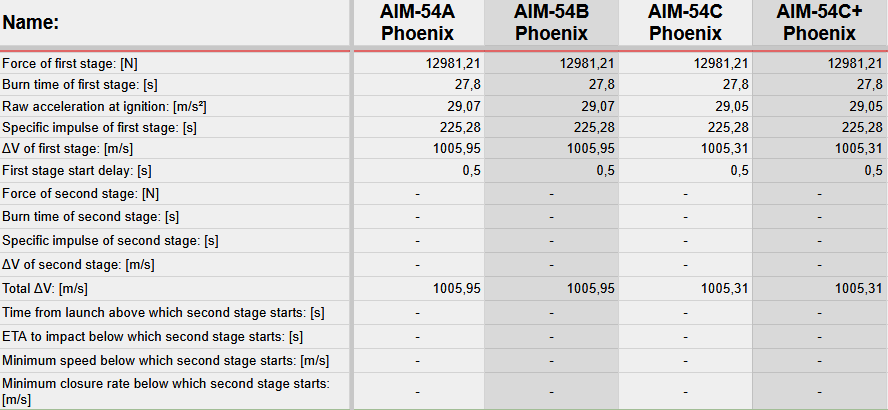
How did you calculate the thrust of the Mk 47 motor & how does that calculation match up with how it currently performs in-game?
The thrust is given in Newtons, and with time you have impulse. Then you combine it with mass loss due to propellant.
Same as like… everything? Its just rocket equation
In game its integrated over ticks obviously but it should be pretty much exactly same minus precision
If you’re referring to the data I put in the first post, it is a bit outdated now. Ideally, for the context of WT, I would use the values that are used in the files for better reference rather than estimated values for IRL.
Screenshot from the Guided weapons Google sheet:
Is there any possible way we can report the performance of the Phoenix now? I know some stuff like the explosive mass and proxy range just got reported to make it worse for no reason, but stuff like the 2x increase in how much it has to lead. Can we report that? It’s very clearly a horrible change and negatively effects the missile, but how in the world can we report it? I’m looking to get these reverted:
Also I’d like to see it get the better seeker via a distance + speedgate, chaff rejection, and real all aspect capability. And we will need the extreme loft angles it’s known for. Of course they’ve changed all of this stuff that seems impossible to get info on, so if someone could help me with the information gathering or ingame testing that would be much appreciated.
1 Like
The manoeuvrability and proportional navigation modifier changes are good, it allows the missile to manoeuvre more if it needs to, but if it’s sent in the correct direction in the first place it won’t need to manoeuvre as much.
While I think the loft angle is too low and the zero lift drag is a bit too high, it’s a bit hard to prove it without actual time to target test records (and even with those, my report on the massive underperformance of the as37 armat is still left to dry). In game, you can mitigate the problem by manually lofting (i.e, pitching up) to 30º or more before launching the missile.
The only really bad change in that list is seeker turn on range from target, because the game against fox 3 missiles right now is to notch and chaff before the missile hits you, and the slower the missile is going at terminal velocity vs the bigger the distance it activates, the more time the enemy has to notch - so right now the phoenix gives the biggest warning time compared to other fox 3 missiles (and due to game design, i suspect).
1 Like
I agree with the maneuverability but the proportional navigation being the highest of any active radar homing missile (iirc) ingame hurts more than it helps.
See, the maneuvering buffs would help make the Phoenix not being able to be out pulled for sub 40km shots, because it could use it’s high energy to fully cash in what it needs to connect to the target (not more not less, which makes rolling ineffective). The proportional navigation nerfs this by making the Phoenix preemptively pull even harder than it has to, completely negating the maneuverability buffs, which is why it’s a bad change. Also, this highly nerfs it’s long range performance as not only does the extra AOA, mass, and fin AoA, make it very slightly worse in energy retention, but now instead of leading the target by X km, it has to expend even more energy, around 50% more if that’s how the values work. This combined with the thrust nerfs in power and duration completely nuke it’s performance against targets who even slightly turn, which is obviously inaccurate based on the data we have accumulated.
So they look good on paper but in practice they just make the missile worse, which is why little people could figure out why the missile sucks more than before. I want to change that I’m just not sure how the devs proved it besides making stuff up like they regularly do.
The problem is Gaijin will always min-max stuff (until its Russian which always reaches peak performance well within regular operating conditions) So we have many AIM-54 Phoenix shots, but Gaijin will force them into the context of just barely hitting the target with 0 seconds of battery left instead of actually putting in the work.
2 Likes
The proportional navigation modifier doesn’t mean the missile leads X km. It’s a bit hard to explain, but it actually represents how aggressively the missile tries to correct for a change in bearing to the target; PN = 1 means the missile just points and curves the targets current position (pursuit curve), as PN increases the more the missile tries to force a straight line to the target. Low PN means the missile follows a longer, less efficient trajectory that requires more speed and g force to catch up with the target at the end phase. High PN values have the disadvantage that it can cause the missile to overreact to back and forth oscilations of the target’s movement, but 6 isn’t a overly high value and those overcorrections can be tuned out with the PID values.
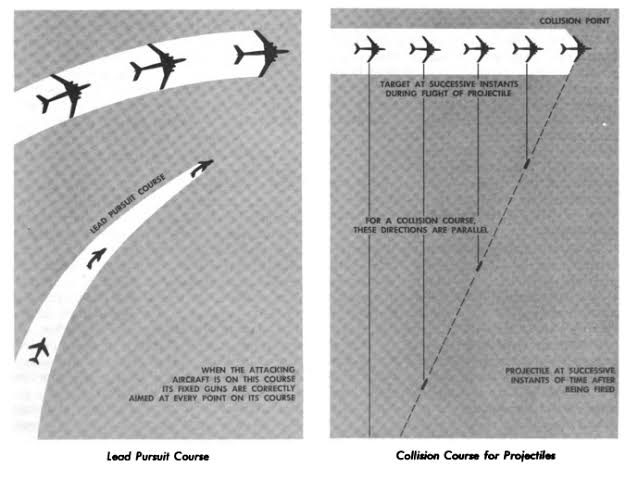
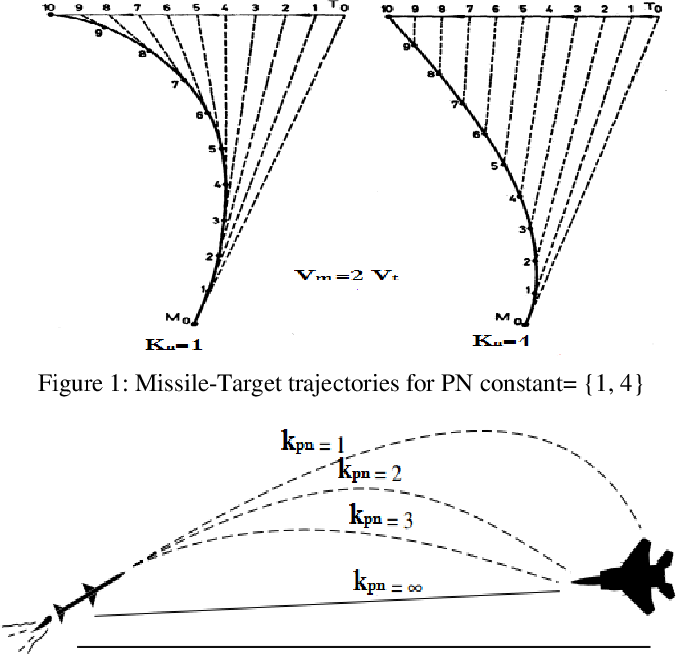
So, no, the missile didn’t get it’s performance nuked against targets that slightly turn, those targets used to be able to simply outturn the missile now they do have to notch it. From what i have seen, besides the longer warning time time given by the longer seeker activation distance, the other game relevant nerf the missile had was the altitude adjusted thrust curve, which made the missile slower below 6000 meters or so - once again giving more time for the target to react. Even at high altitude the phoenix will take longer to a accelerate than it’s rivals, Still, overall the missile is better than what it was.
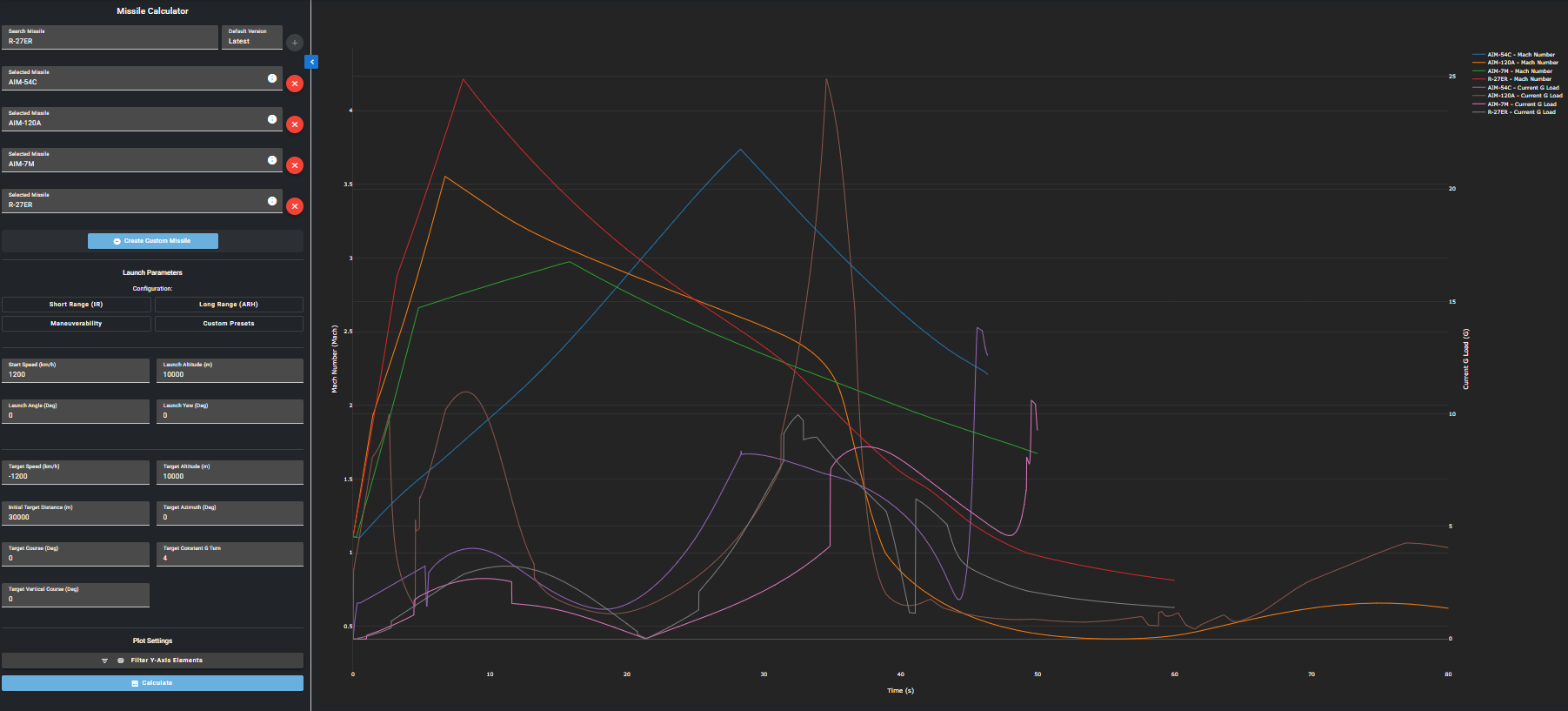
The recent changes to the sparrows show that gaijin is fine with significantly reducing lift induced drag for missiles (note how the aim-7m barely loses any speed when it pulls 8G’s or so at the 40 second mark compared to the phoenix and r-27er when they pull about the same), so if they applied the same criteria to the phoenix they would be significantly improved.
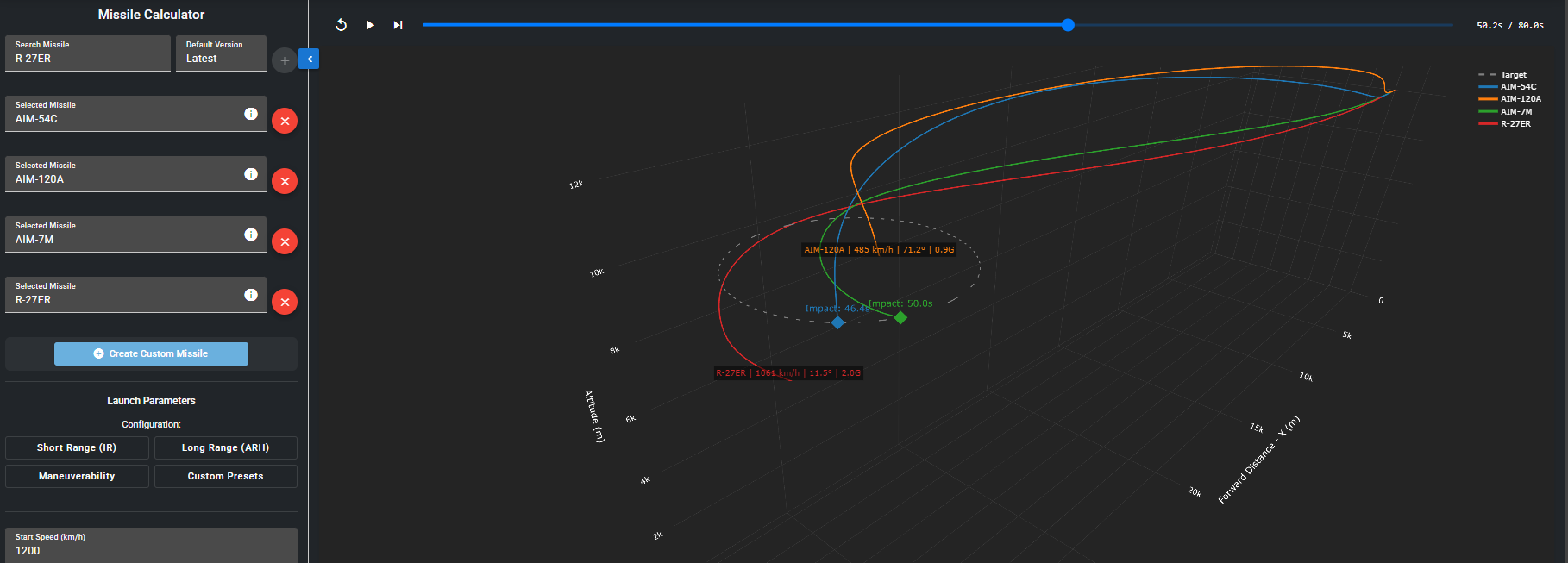
The other thing that would make the phoenix (and every other fox 3 in the game) significantly more lethal would be to allow it to revert to datalink guidance if if lost tracking from it’s seeker - right now, once the missile’s seeker locks on target it’s completely pointless to maintain radar lock because the missile will ignore cues from the radar and only revert back to IOG if target is lost. If it reverted back to DL, that would force the enemy to notch both the Missile AND the f-14’s radar at the same time so the longer distance for the missile seeker’s activation wouldn’t be as much of a problem, but for some reason gaijin decided that only SARH missiles with IOG (r-27er and aim-7p, for example) deserve to have that ability.
Right now, the best workaround to the notching problem might be to fire two phoenixes at the same target from 2 different heading so that the enemy notching one missile leaves them vulnerable to the other, but positioning is everything.
3 Likes
Thats how DL works right now. The issue is just that the missile bites onto chaff, therefore having a valid track itself and now falling back to DL/IOG.
If someone notches at altitude without chaff, it should not work as the missile reaquires through DL.
That might have changed since I tested it in a controlled environment, but ingame it feels like this still.
Note this is not pheonix specific, but as you said in your comment you are adressing all ARH, this argument is still valid, albeit maybe a little off topic.
Thanks for the perfect explanations and graphs and I’ll hold the L on this one. I gravely misunderstood. I still wonder what’s causing the extreme energy loss.
Yeah we need this too.
1 Like
Straightforward this:
If you look at the whole post , he has a spreadsheet …Somewhere it says Simplified ballistic coefficient. From what i understand that’s the value that kills the missile.
And it’s not that it can’t go 5 mach, it can … with wrong parameters that don’t match the value of the real launches were performed.
Very simplified example.
Below is how it achieves the known values and for speed and for known altitude it should loft in reality, however in game it has parameters outside of the known launch parameters a Tomcat could have , for example it is well above its max altitude ceiling already. And the reported launches were from around 1,6 mach at 12-14km altitude.
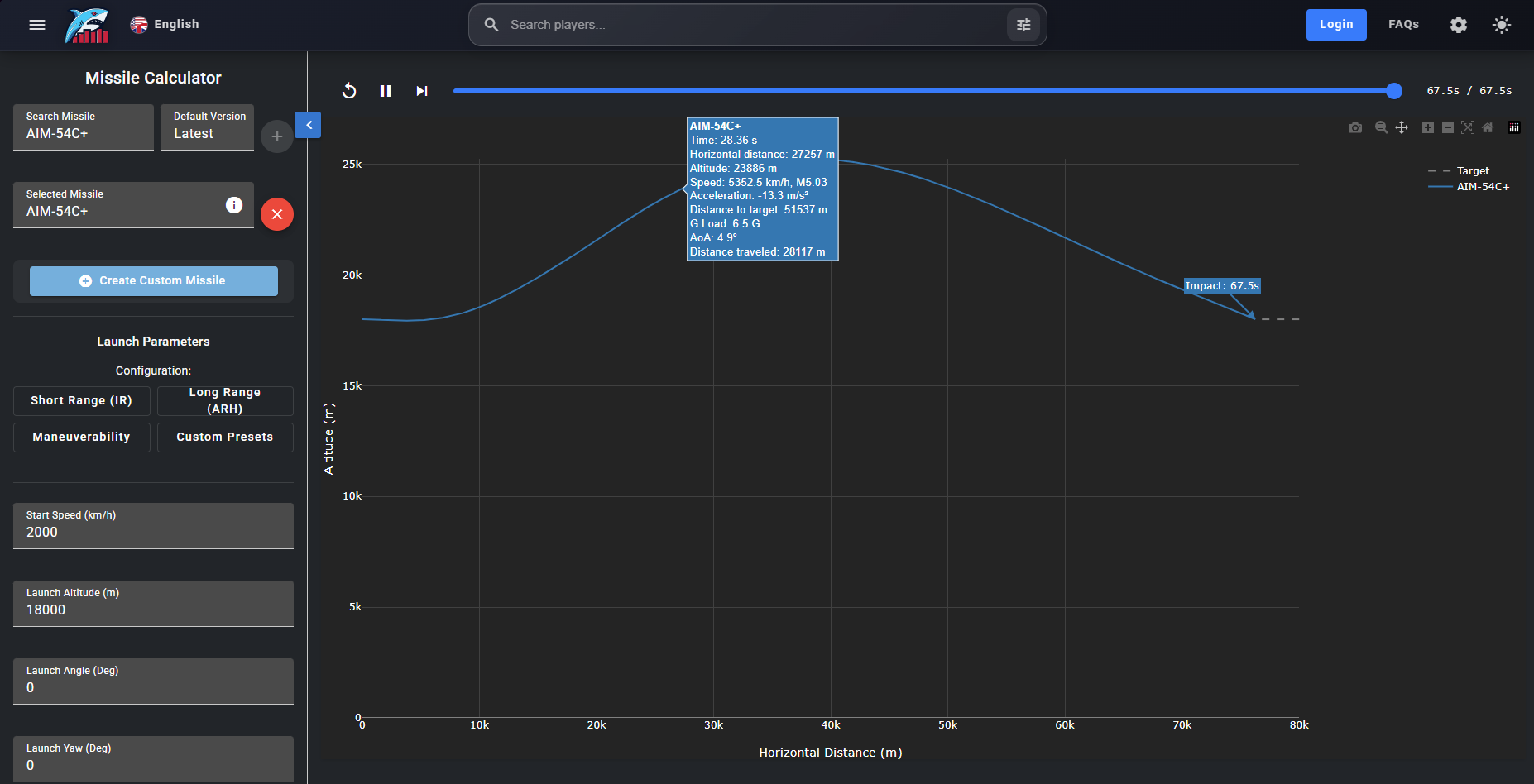

Here i took the reported launch parameters in statshark. It didn’t loft even to the minimum reported altitude the missile lofted in tests (24km) and ofc it didn’t even get to those speeds.

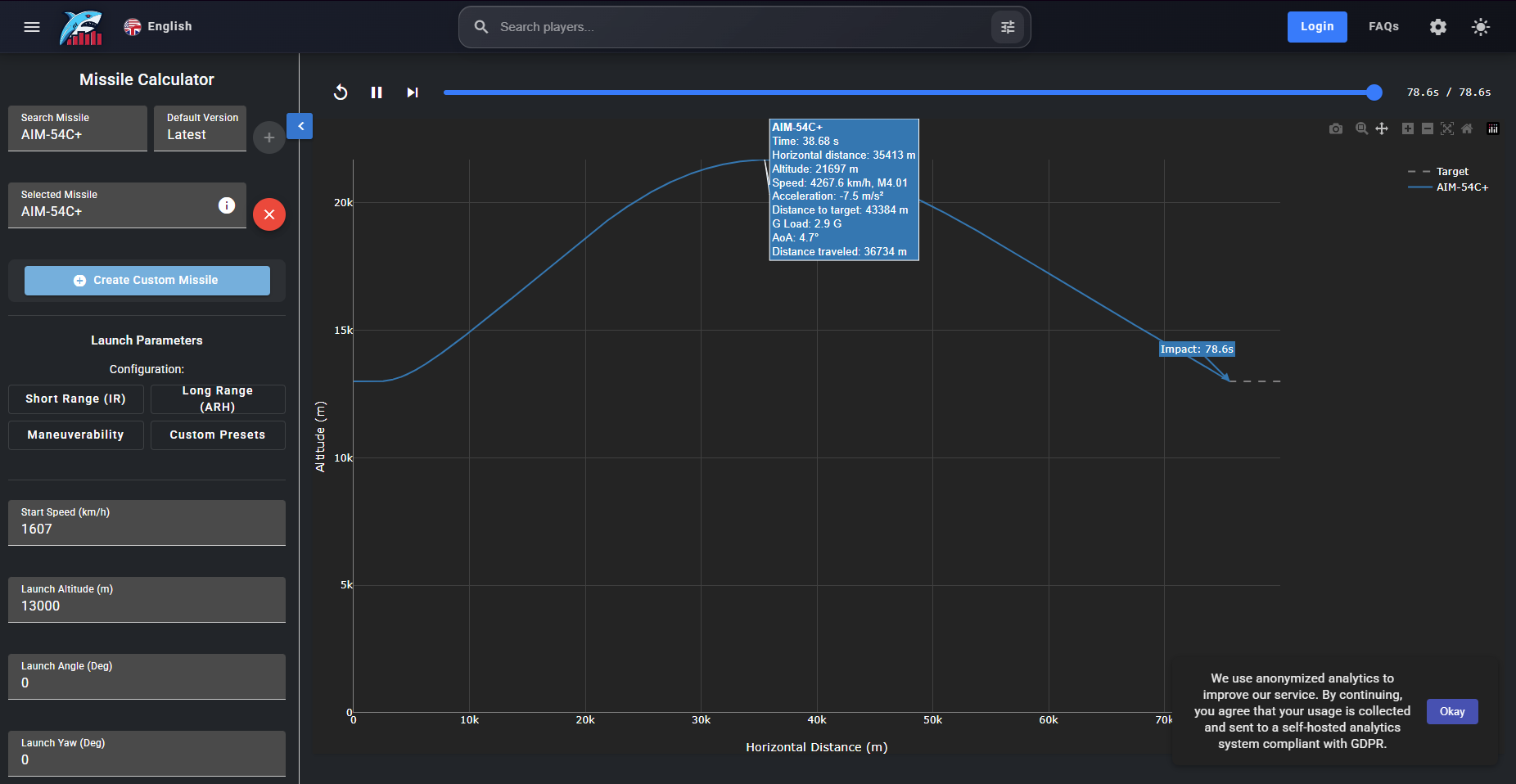
The reason i say it should be simplified ballistic coefficient is that the missile CAN do those altitudes and speeds. Just in unrealistic for the Tomcat parameters. That thing shouldn’t be possible , however, because F-14 was the ONLY user of this missile.
It should be able to hit those thresholds between the Tomcats achievable parameters , not MiG 25s…
My example is pretty simplistic, if you dig more you will find more. And it’s not 1:1 accurate ofc. I’m not good in using statshark like this.
What i’m sure about is they have some value wrong (possibly the one mentioned, the others don’t make sense) and that the performance of the missile should match approximately the F-14s capabilities and launching parameters/envelops(it doesn’t even have to be 1:1 , because even in the real tests the reports varied…there are others things in play at RL) .
4 Likes
One thing that I have not seen talked about which could be a topic in the future of this game is the Aim54s ability to home in to jammers and if Gajin is looking to add things like ECM the aim54 should be able to guide into whatever is jamming but there hasn’t been a lot in information about that.
Also is there good sources for the smokeless motor to keep reporting that bug?
5 Likes
correct me if im wrong here but shouldn’t these missiles be lofting even if you are up high and the target is far away and just on the deck still?
Depends on elevation angle to the target. If you take the inverse sine of slant range and vertical displacement in degrees and it is greater than -5° the missile will loft in that regard in the case of the Phoenix.
2 Likes
head on aspect 20km shot on su27sm at 5k meters of altitude, the aim54c reached mach 2.1 and only managed to pull a maximum of 9.9gs and missed of course.
im fairly sure a matra r511 wouldve fared better than this. but sure the phoenix was “buffed”
also i took some time too look at the missiles in the map and the sheer drag they have is comical, they loose speed INSANELY fast once the motor burns out. its crazy considering one of the advantages large missiles have is that theyre slower to accelerate but also slow to decelerate.
8 Likes
You are coping, R511 is the worst missile. That one is soo slow that radar seeker can’t aquire targets in rear aspect, because from the POV of missile, enemy is notching.
i was being knowingly hyperbolic. but im pretty sure anything better than an aim7e2 including the aim7 wouldve hit this shot
1 Like