Expand
Development
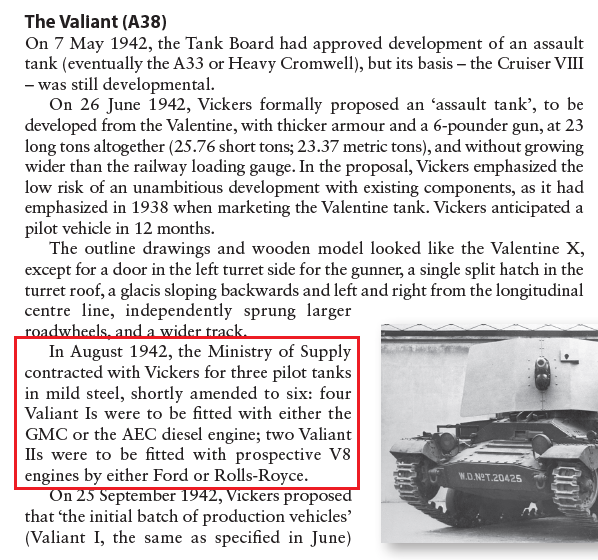
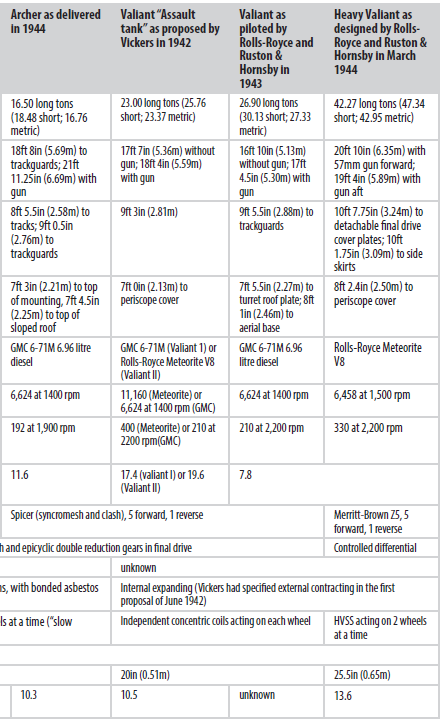
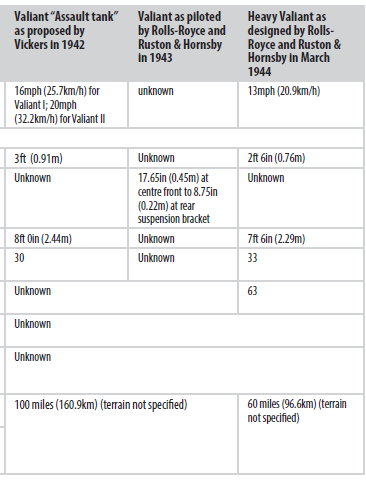
Specification A38 was created in August 1942. Vickers was tasked with developing an infantry assault tank to replace the Matilda II, using as many components from the Valentine as possible. The tank would need to have 114mm of frontal armour and a weight of no more than 27 tonnes. Quite the big ask.
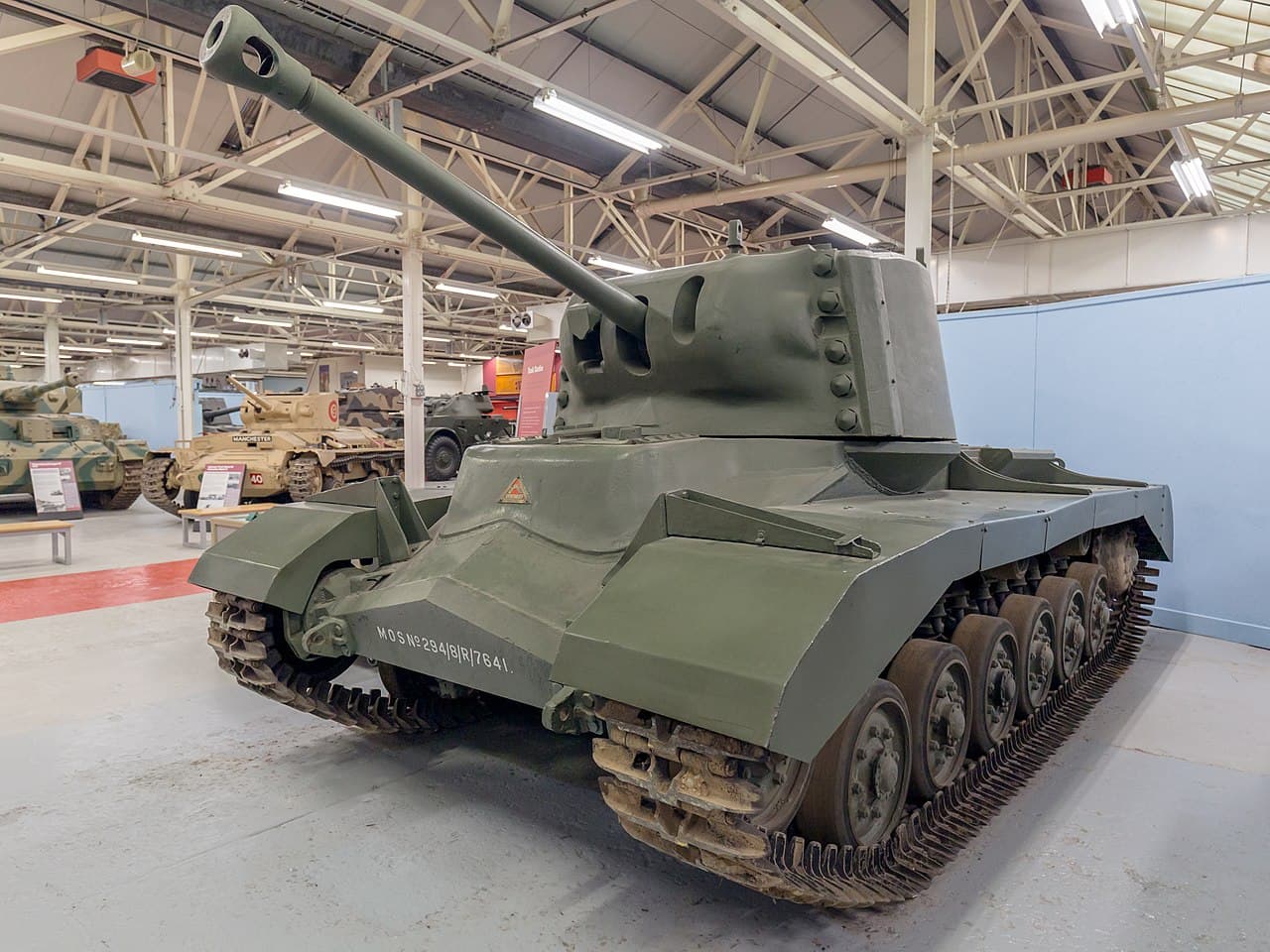
Vickers designed a quite unusual tank to meet the quite unusual requirements. To save weight, the vehicle was extremely compact, featuring a welded two-man turret and overall layout similar to the Valentine. The vehicle was intended to feature a 400hp Meteorite engine and had an innovative pike-nosed hull. The suspension was taken from the Vanguard, another Valentine-based project, which was more compact than the Valentine’s suspension system. The Valiant would be fitted with a 6-pounder, providing greatly improved anti-infantry capabilities over the more common 2-pounder in service.
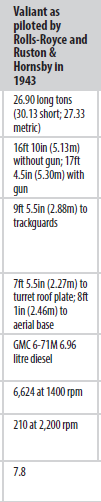
In February 1943 after review of the first pilot by the Tank Board, the requirements for the Valiant were changed. Based on experience with the Valentine IX, a three-man turret was specified and a 75mm gun was required. Four pilot Mk I vehicles were to be produced, two each with the AEC A189 and GMC 6004, both fitted with 6-pounders. Then, two Mk IIs would be produced with the Meteorite or Ford GAA and 75mm, this becoming the production standard. Vickers at this point lacked the resources to continue development of the Valiant, and the project was passed on to Rolls-Royce, who shortly passed to Ruston and Hornsby. Both companies would modify the design, with Rolls-Royce increasing floor armour and R&H developing the new turret as well as adding a large vertical bulge to the front plate- this latter addition would result in both decreased protection and increased weight compared to the Vickers design!
The initial Vickers Valiant design
Trials and Tribulations
Finally, it was time for the Valiant to begin suspension trials. The problem- it was May 1945. The war in Europe was already over, thousands of Shermans were available and well-proven in the Pacific, and the role of assault tank was expected to be filled by the Black Prince or Centurion, even the established Churchill had long made the Valiant obsolete. There was no serious expectation of the Valiant entering service, but its suspension system was still worth experimenting with.
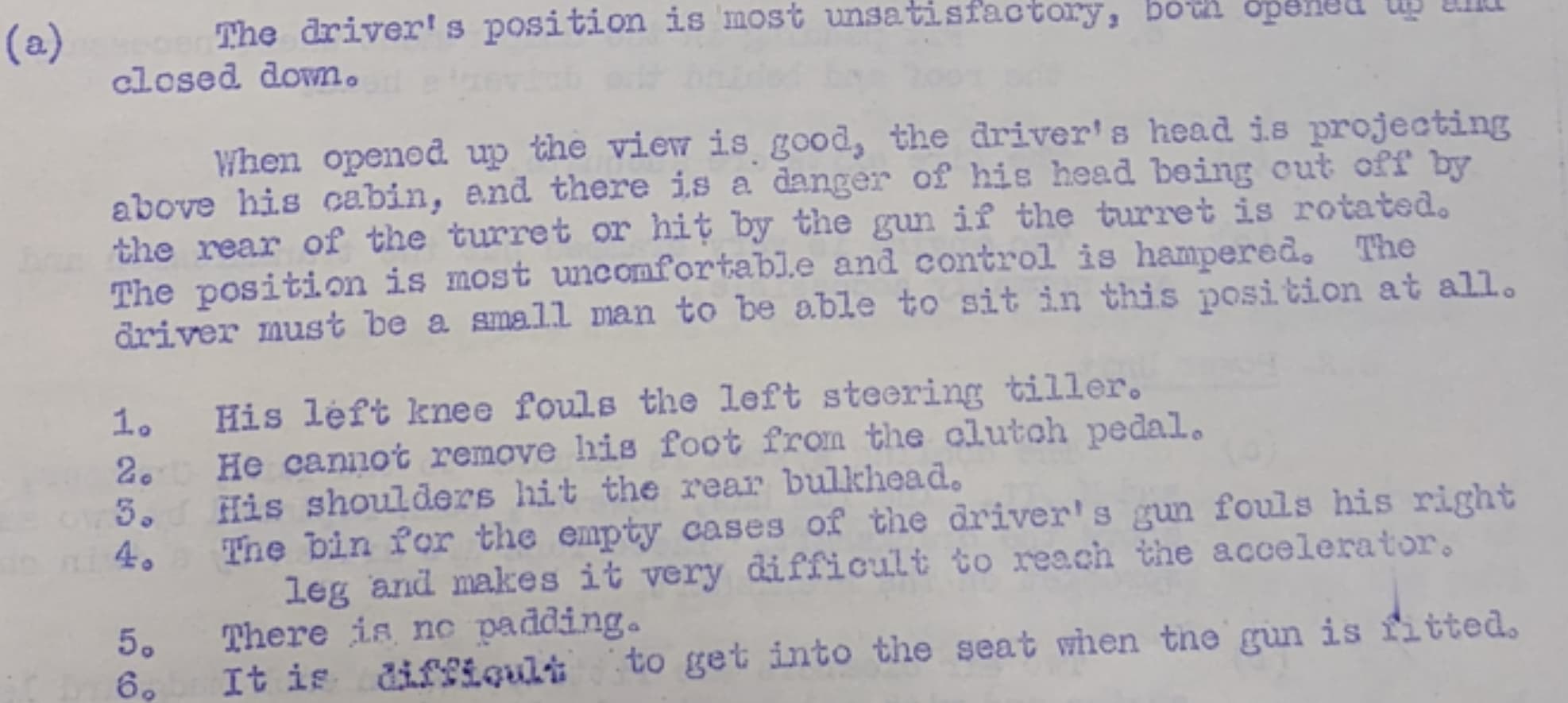
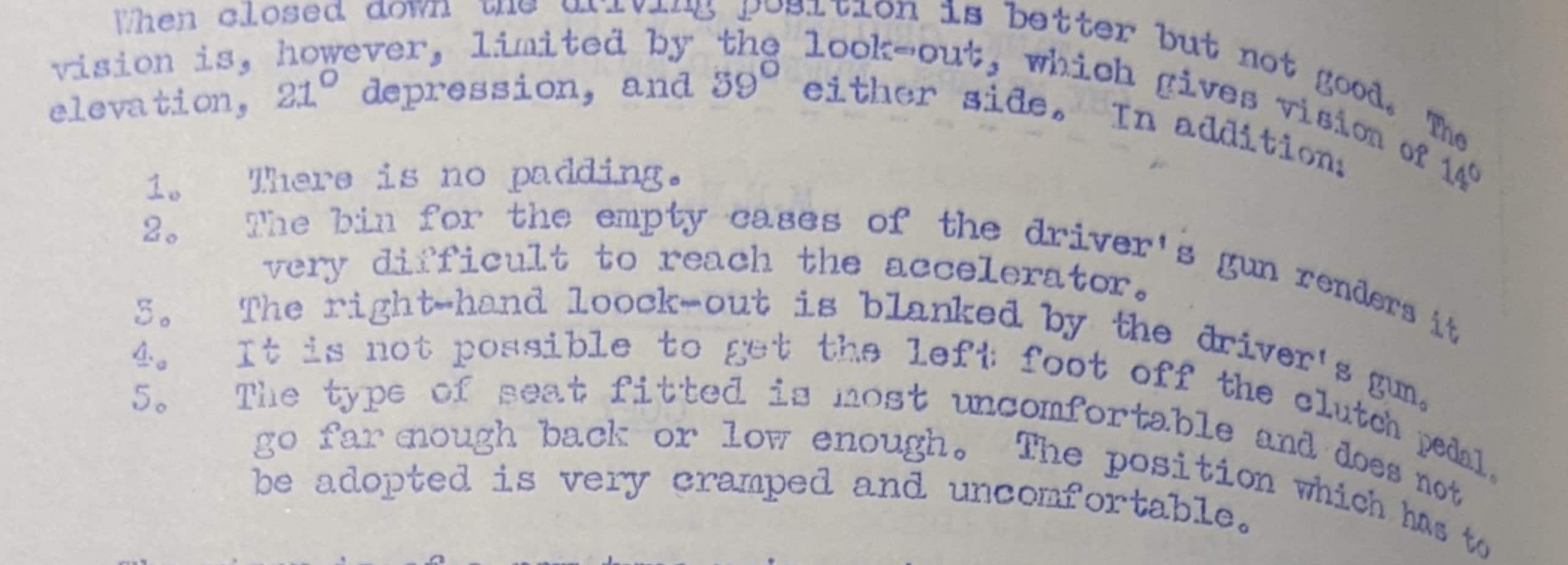
Cross-country trials were scheduled for 7th May. However, they were cancelled before they even began. After only 13 miles (21km) travel on roads the driver was too fatigued to continue due to the extremely cramped compartment and excessively stiff controls. Additionally, the position of the footbrake was found to pose a significant risk of serious injury, where the driver could potentially find their foot pinned between the brake and floor. There was also a risk of breaking the driver’s wrist when shifting into fifth gear due to insufficient tolerances. The Valiant was towed back to the FVPE in shame and never drove again.
Beyond the safety issues, a number of issues were identified with the Valiant. It had a mere 24cm (9.6in) of ground clearance, insufficient for cross-country travel. The vehicle was significantly underpowered, struggling with even slight inclines. The suspension had exposed lubrications points which were likely to receive damage in any rough terrain. The final drive was entirely inaccessible for maintenance.
The tank was transferred the School of Tank Technology, legend has it as an example of how not to design a tank. The vehicle was later transferred to the Tank Museum, where it currently resides.
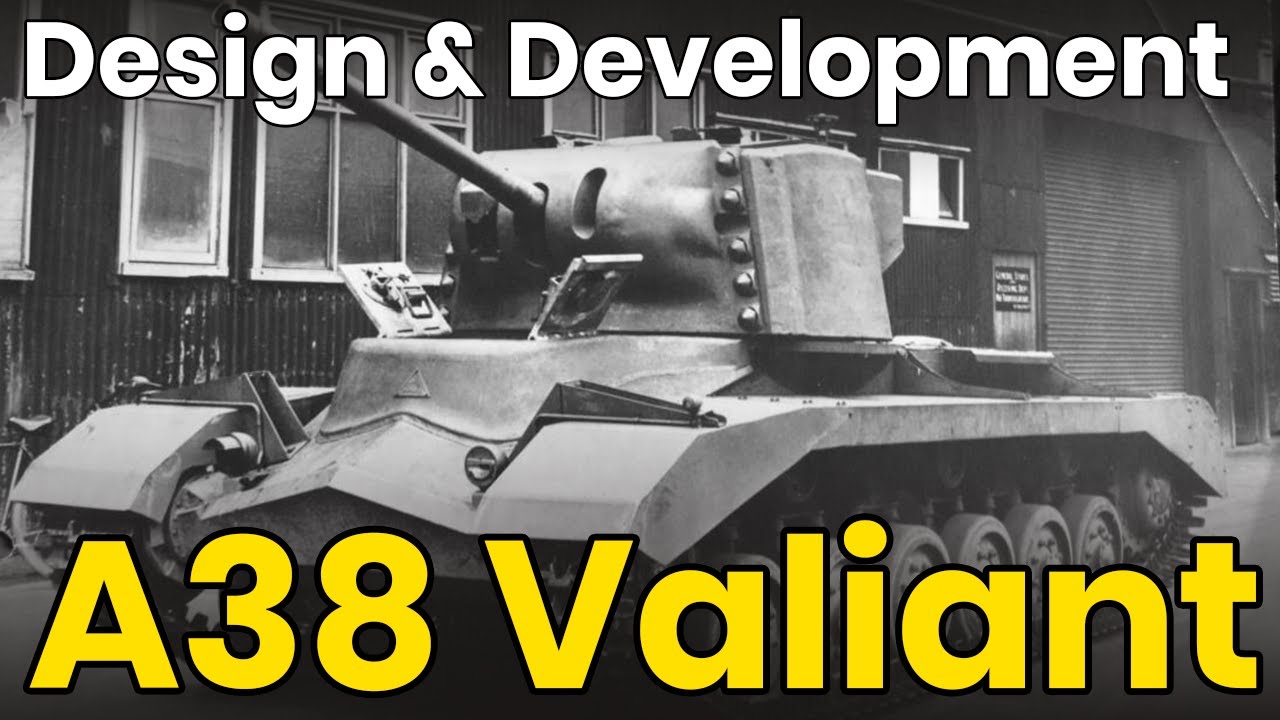
The A38 prototype in 1944, shortly after construction
Another view of the Valiant
So… was the Valiant that bad? Opinion
No. Not really. Intended as a lightweight heavy tank, the Valiant had a tough role to fill, and it delivered surprisingly well. To provide more armour than a Tiger at half the weight, of course it needed to be small. And of course a vehicle that small would be cramped. The drivetrain had been designed for a vehicle half its weight, so naturally it was heavy. The poor layout of the driver’s compartment was in part due to the vehicle’s innovative pike-nose construction, which would have further improved protection. The vehicle was slow and underpowered, sure… but it was a British infantry tank- that’s nothing unusual. The ground clearance and exposed lubricant nipples were faults, but ones that could be simple to resolve. In short, while the Valiant certainly had a number of problems, none were issues that were particularly unusual and couldn’t have been resolved with a couple more prototype iterations. The Valiant was outdated and obsolete, yes, but to call it the “worst tank ever” is an exaggeration.
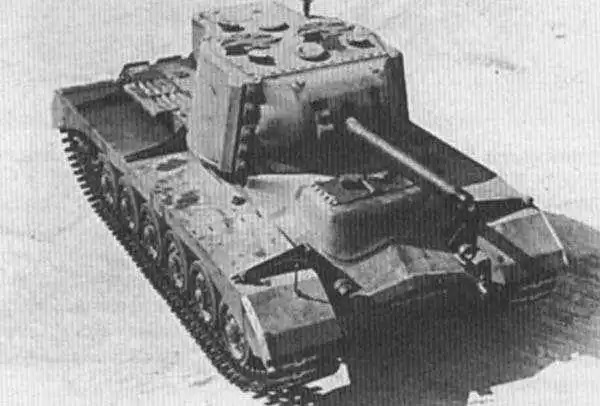
“worst tank ever” when ridiculous designs like this existed