History
With the end of the European war in sight, on 2 January 1945 the Army Ground Forces Equipment Review Board was convened. In its report of 20 June 1945, it recommended the development of a heavy assault tank weighing about 68 tons with a five‑man crew, as well as a superheavy tank for research purposes.
Interest in heavily armed and armored vehicles was stimulated by the appearance of the Soviet heavy tank IS‑3 in early 1945. Its 122 mm gun and highly sloped armor had a profound influence on post‑war American tank development.
After the war, the Stilwell Board (November 1945 – January 1946) agreed on the need to develop light, medium, and heavy tanks, but abandoned the experimental superheavy tank and tank destroyer requirements.
Due to various issues, development of a heavy tank only began in 1948, when studies at Detroit Arsenal showed that the T34 concept, which had not satisfied either the Army or the Marine Corps, could be optimized by:
- shortening the hull;
- using armor with greater angles of inclination;
- installing a lighter 120 mm gun.
Such optimization was expected to meet the requirements for firepower, protection, and mobility. Ordnance Committee Minutes (OCM) 32530 of 1 December 1948 outlined the characteristics of the proposed vehicle, and it was designated Heavy Tank T43. It should be noted that the T43 with these characteristics never progressed beyond a mock‑up, and the features listed below were never realized in metal.
The T43 inherited the 80‑inch (203 cm) turret ring diameter from the T34, but the crew was to be reduced to four men instead of six – eliminating the second loader and assistant driver. The tank now had seven road wheels per side instead of eight on the T34. The ground contact length consequently decreased to 178 inches (452 cm). The vehicle was to be powered by a Continental AV‑1790 gasoline engine rated at 810 hp, one variant of which had powered the T34. A turbocharged version developing 1040 hp was also considered.
The hull resembled that of the T32E1. The upper glacis thickness was 5 inches (127 mm) with a slope of 58° from vertical, compared to 54° on the T32E1 at the same thickness. The driver was to be seated on the left side of the vehicle’s longitudinal axis, as on the T34 and T32E1. Overall, the hull was conventional for tanks of that era.
The turret was narrow and resembled that of the T42 medium tank. It featured a low gun mounting relative to turret height and a rangefinder located close to the turret front. In addition to the rangefinder, the fire control system included a telescopic sight, a ballistic computer, and a panoramic sight. On the mock‑up turret roof, a standard US tank commander’s cupola of the period is visible. The armament was to be diverse:
- a 120 mm gun, lighter than the T53;
- a coaxial .50 caliber machine gun;
- remotely controlled machine guns, one in a blister on each side of the turret;
- an anti‑aircraft .50 caliber machine gun on the turret roof.
With only one loader, some mechanization of ammunition handling was required.
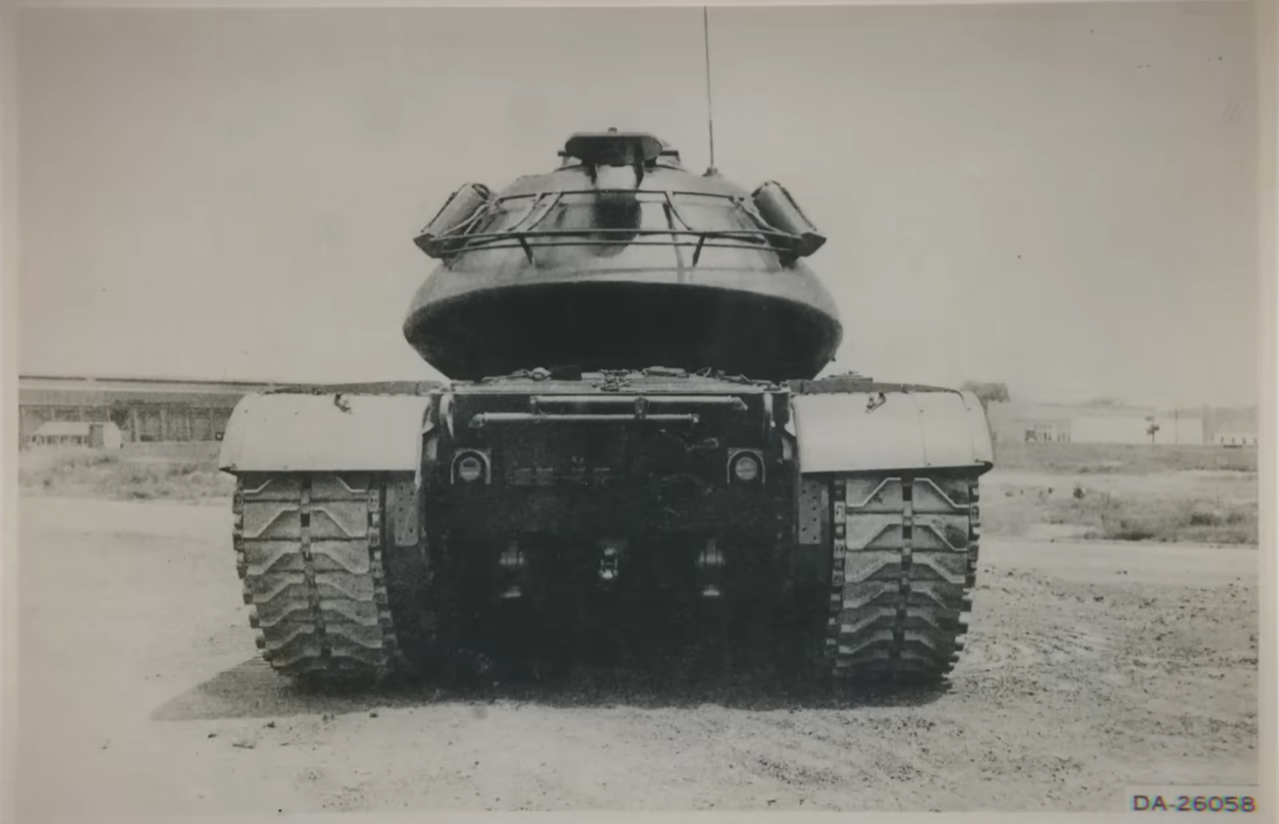
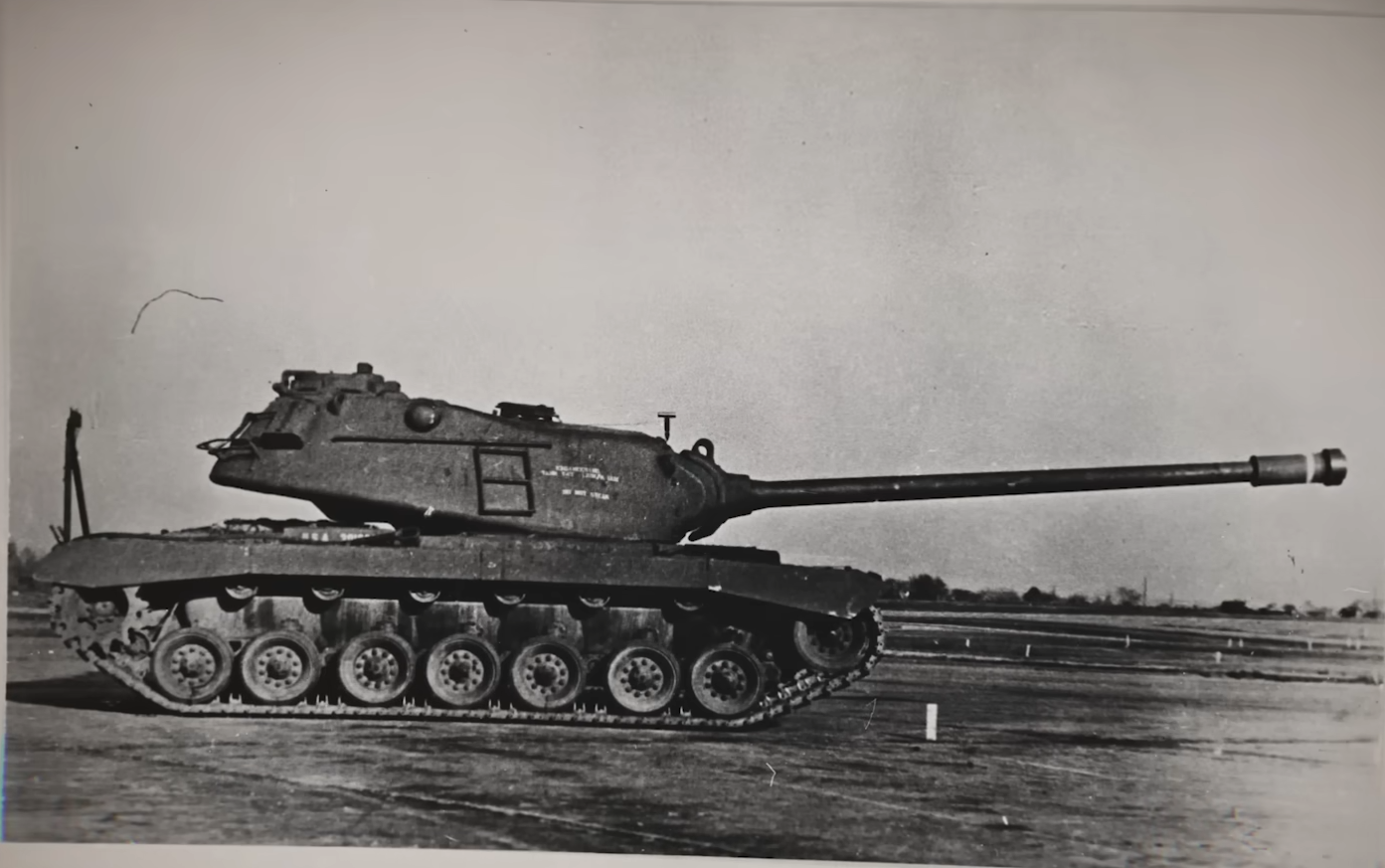
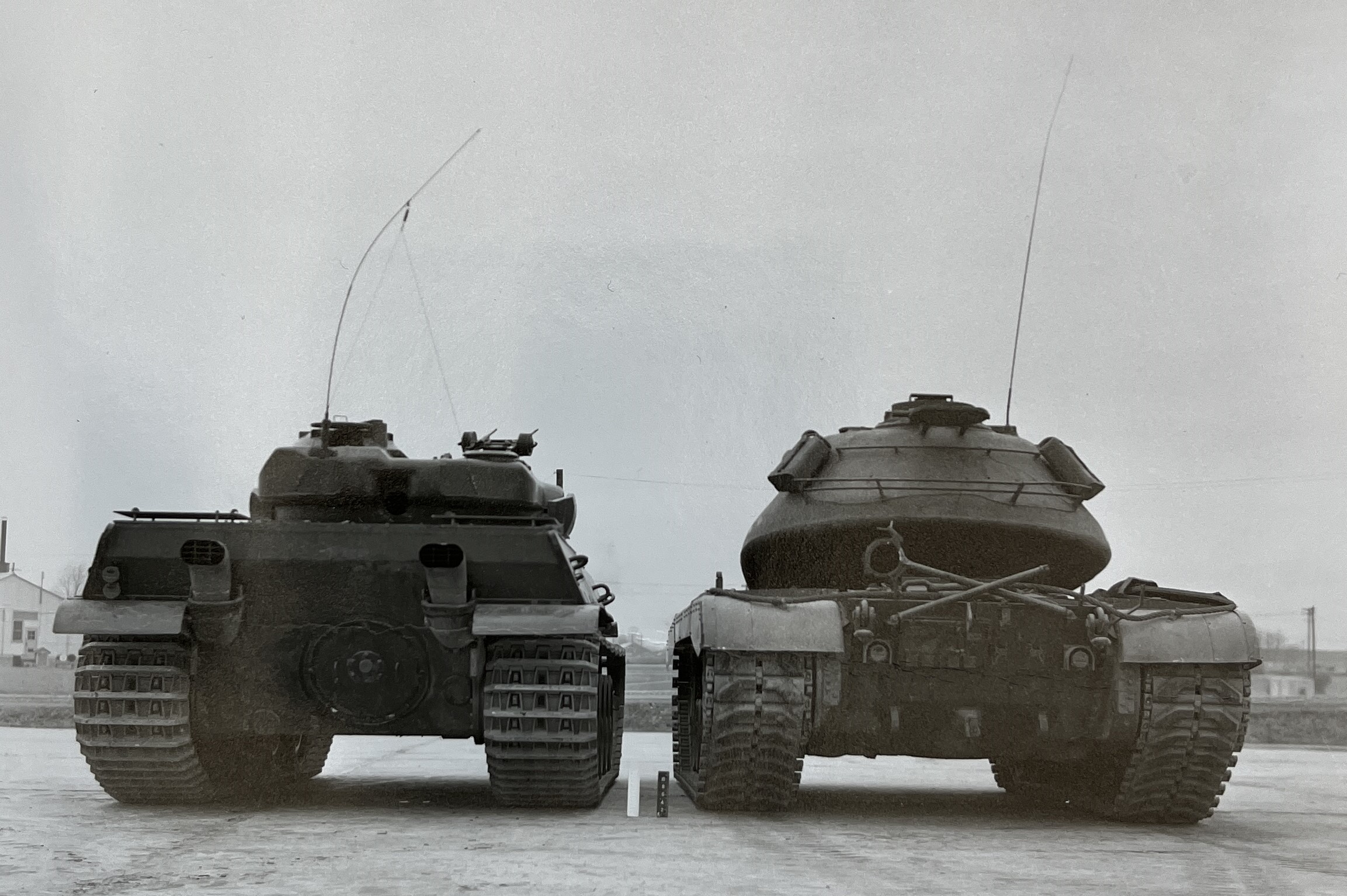
As mentioned earlier, all of the above remained unbuilt, because further development drastically changed the tank’s appearance. The hull and turret were now of elliptical shape; studies showed this would provide the least weight for the required protection. Mock‑ups reflecting this concept were built and reviewed at conferences at Detroit Arsenal in October and December 1949. As a result, the characteristics of the T43 were revised and published in OCM 33333 of 24 April 1950.
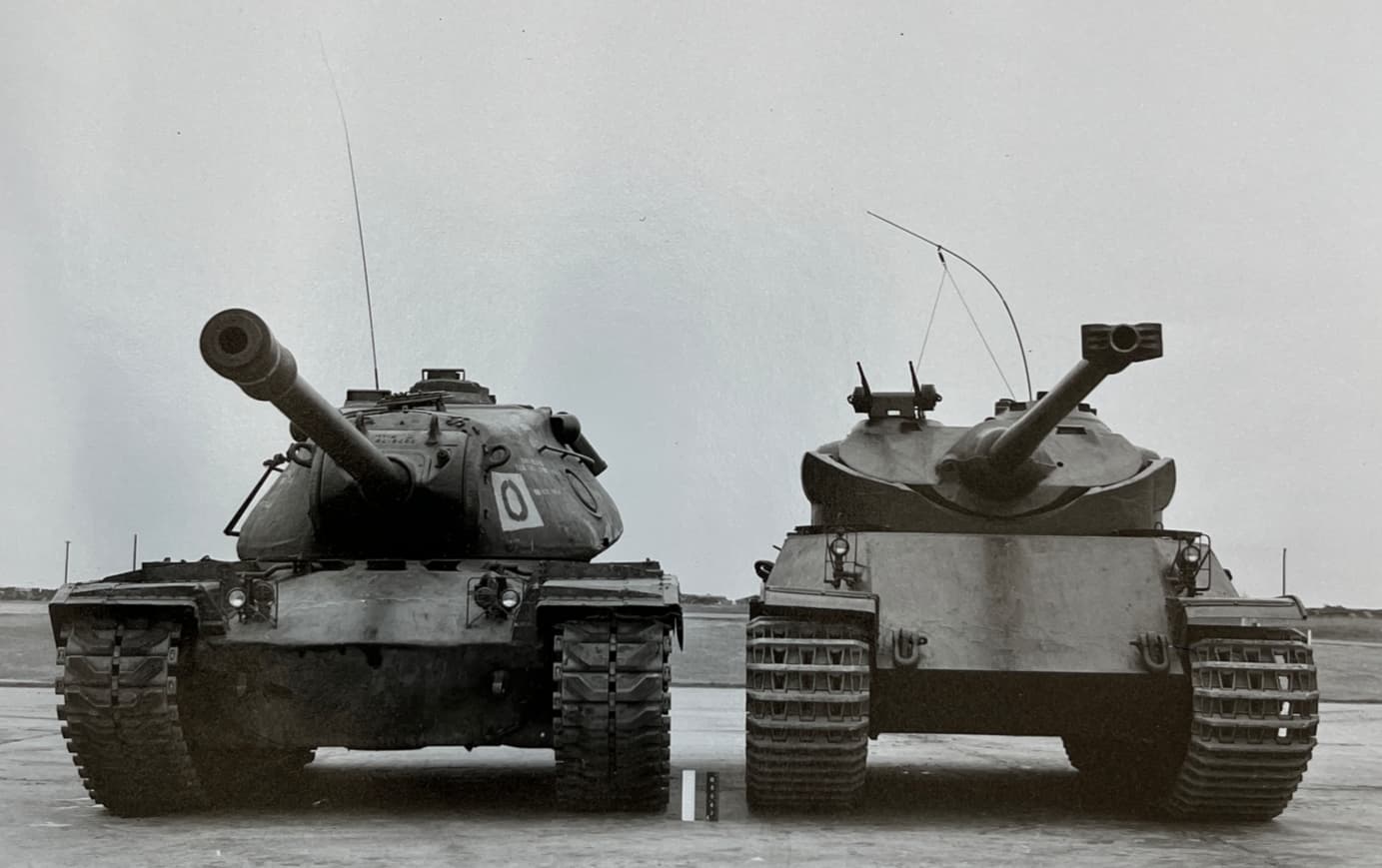
The changes were not limited to the hull and turret shape. The turret ring diameter was increased to 85 inches (216 cm). A second loader was restored to the crew, since mechanized ammunition handling was deferred to a separate project. Two coaxial machine guns were now paired with the 120 mm gun, and they could be either .30 or .50 caliber. The remotely controlled blister machine guns on the turret sides were eliminated. The turret itself became more elongated and received a large bustle, into which the gunner and commander were moved. This placement of the gunner made the telescopic sight unusable; now the gunner used the rangefinder as the primary sighting device and a periscopic sight as backup. In approximately this form, the tank reached metal construction.
On 7 November 1950, OCM 33476 abolished the classification of tanks into light, medium, and heavy, introducing designation by gun caliber – thus the T43 became the 120mm Gun Tank T43 .
With the outbreak of the Korean War in June 1950, the T43 project existed only as a mock‑up. In the face of an acute shortage of modern tanks, it was decided to follow the precedent of 1940–41 and rush the tank into production without lengthy testing. In December 1950, Chrysler received an order for 80 T43s, later expanded to 300 vehicles, including six prototypes.
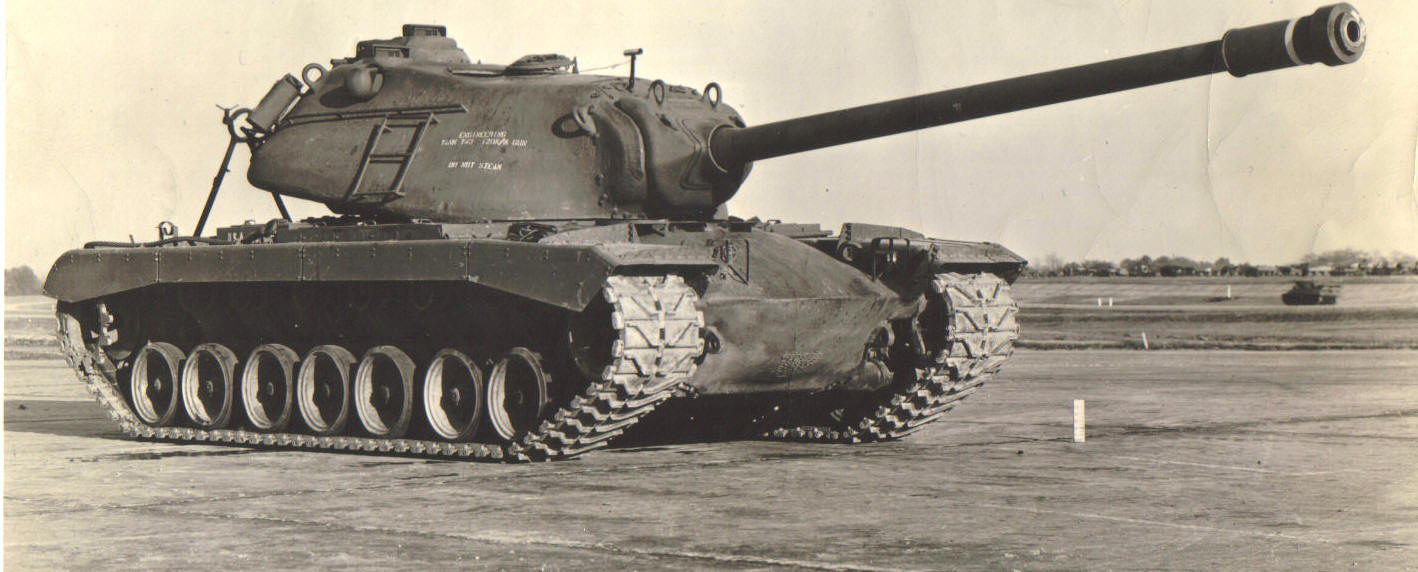
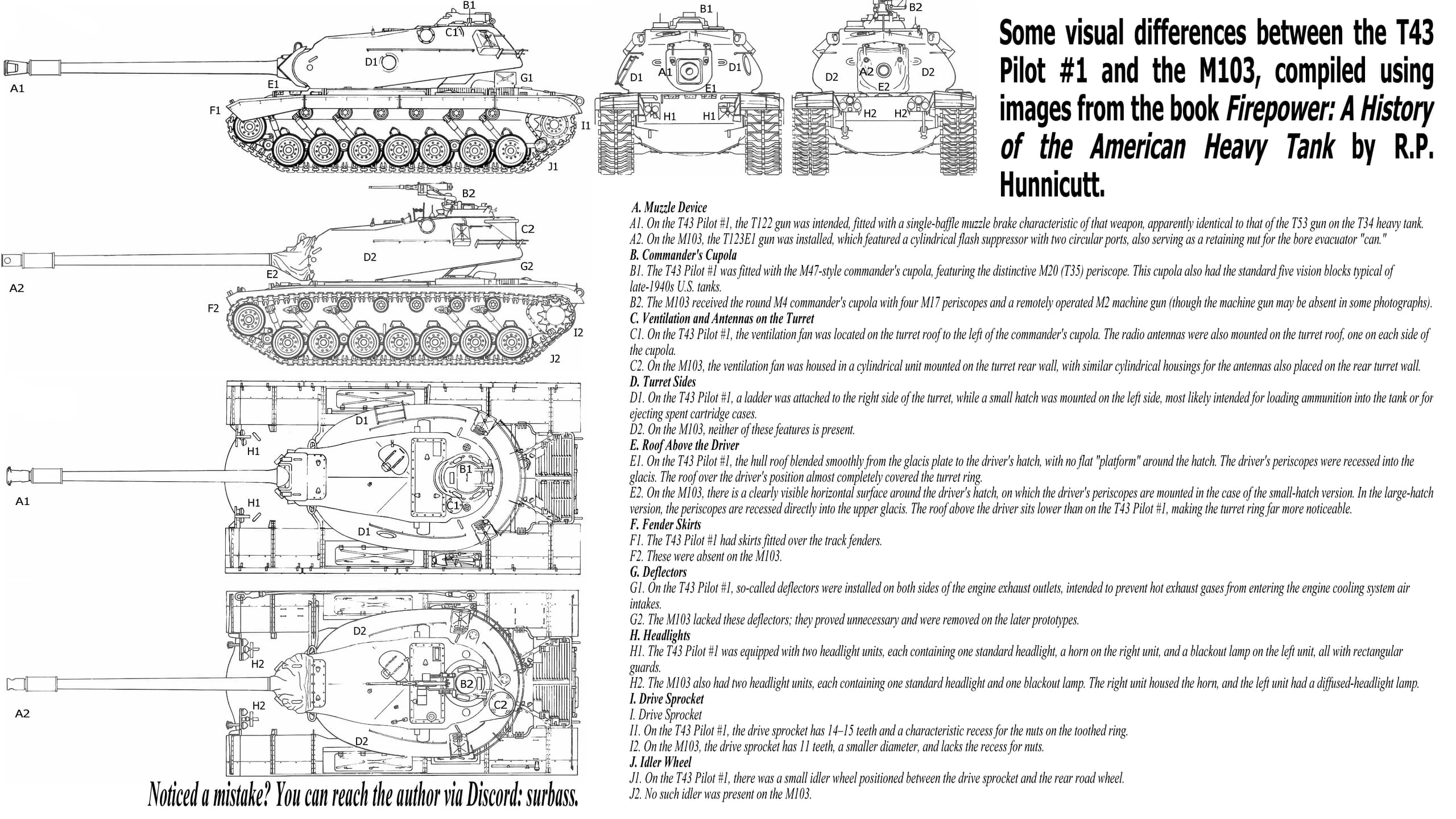
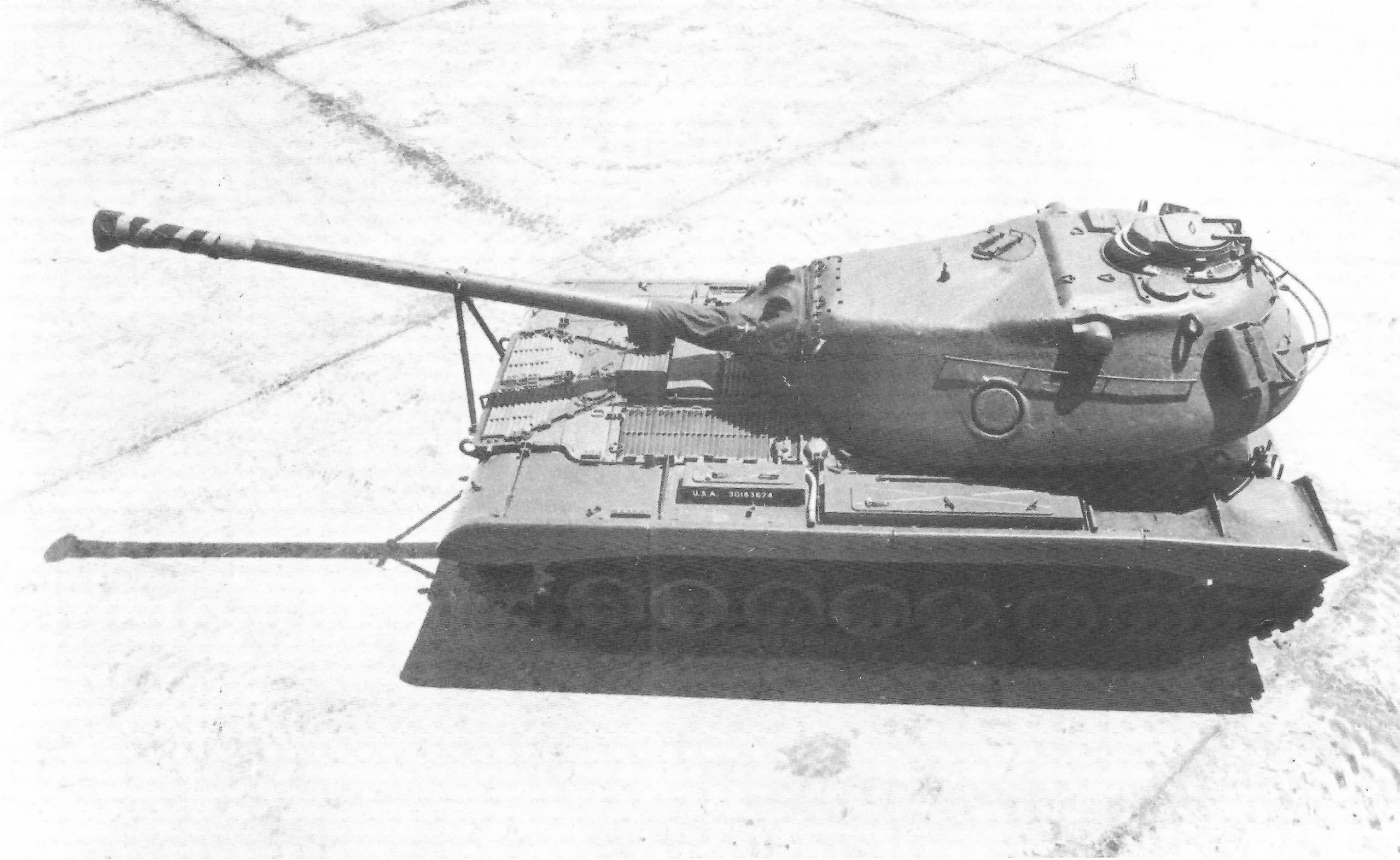
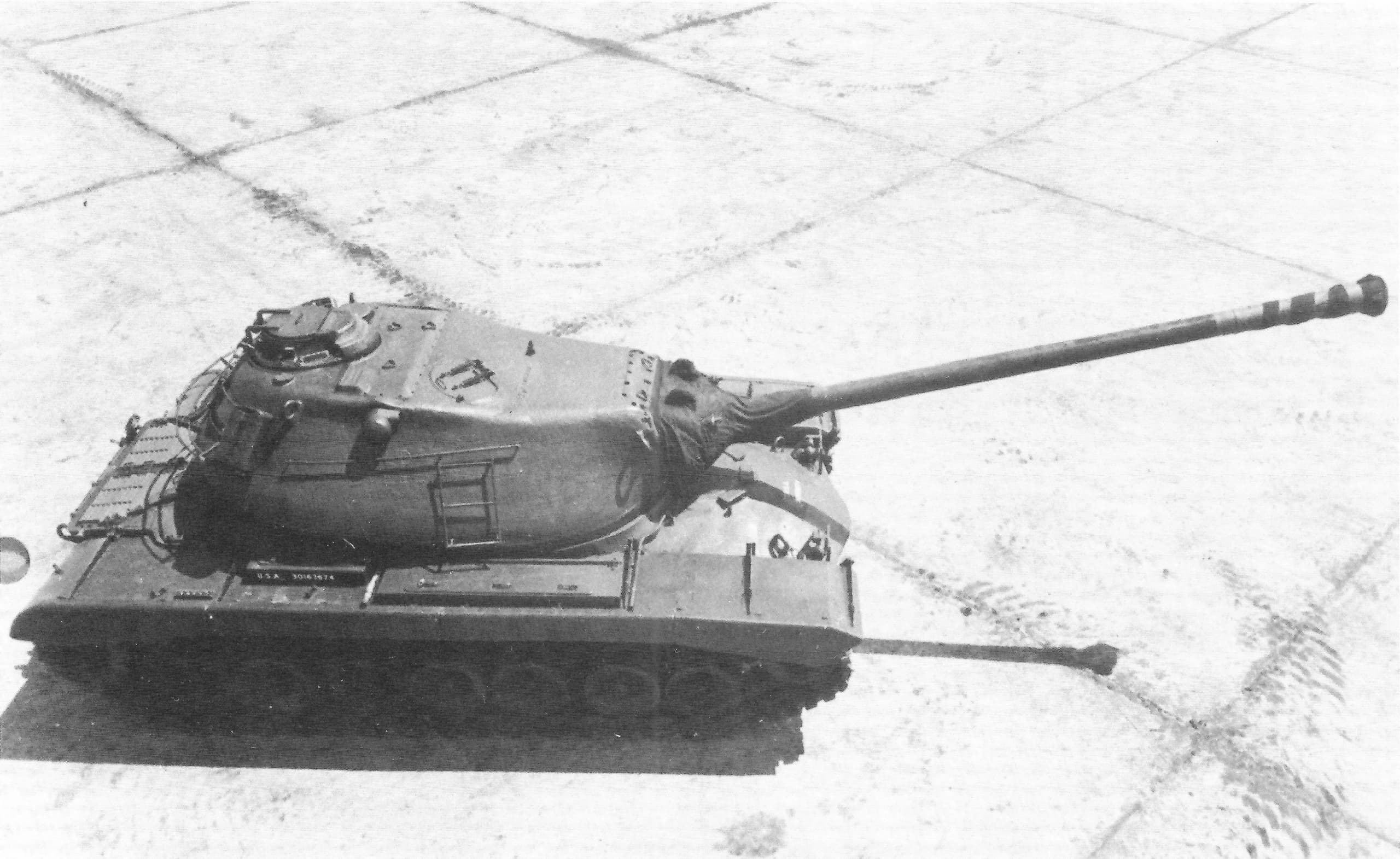
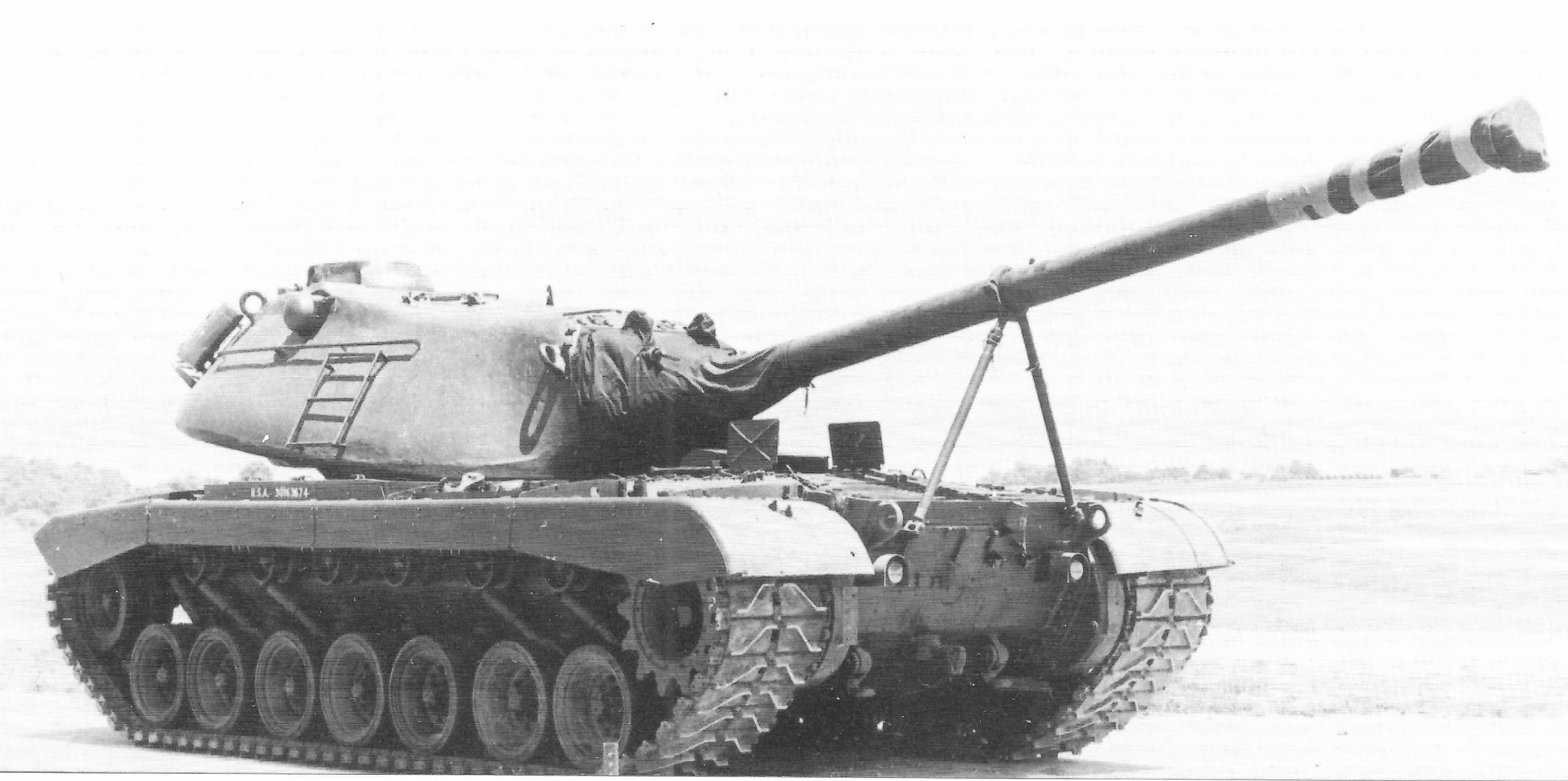
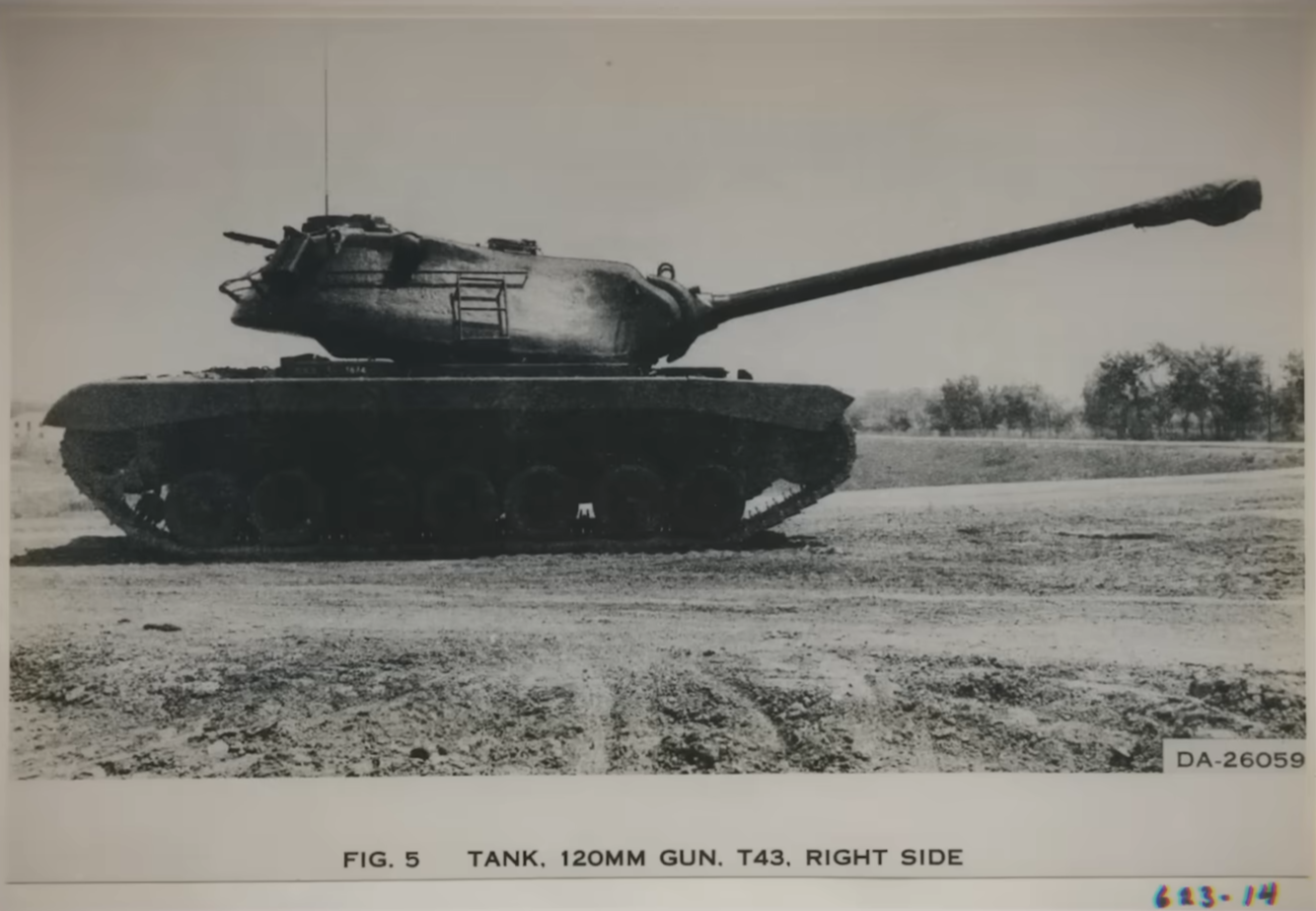
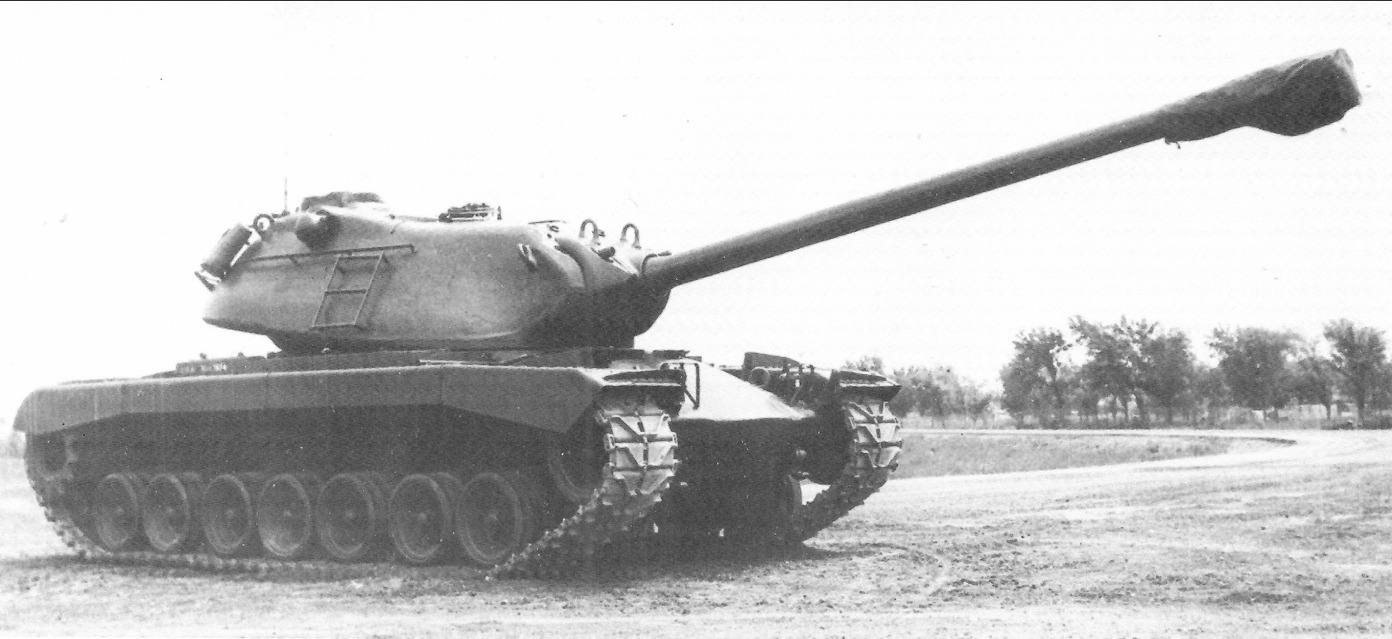
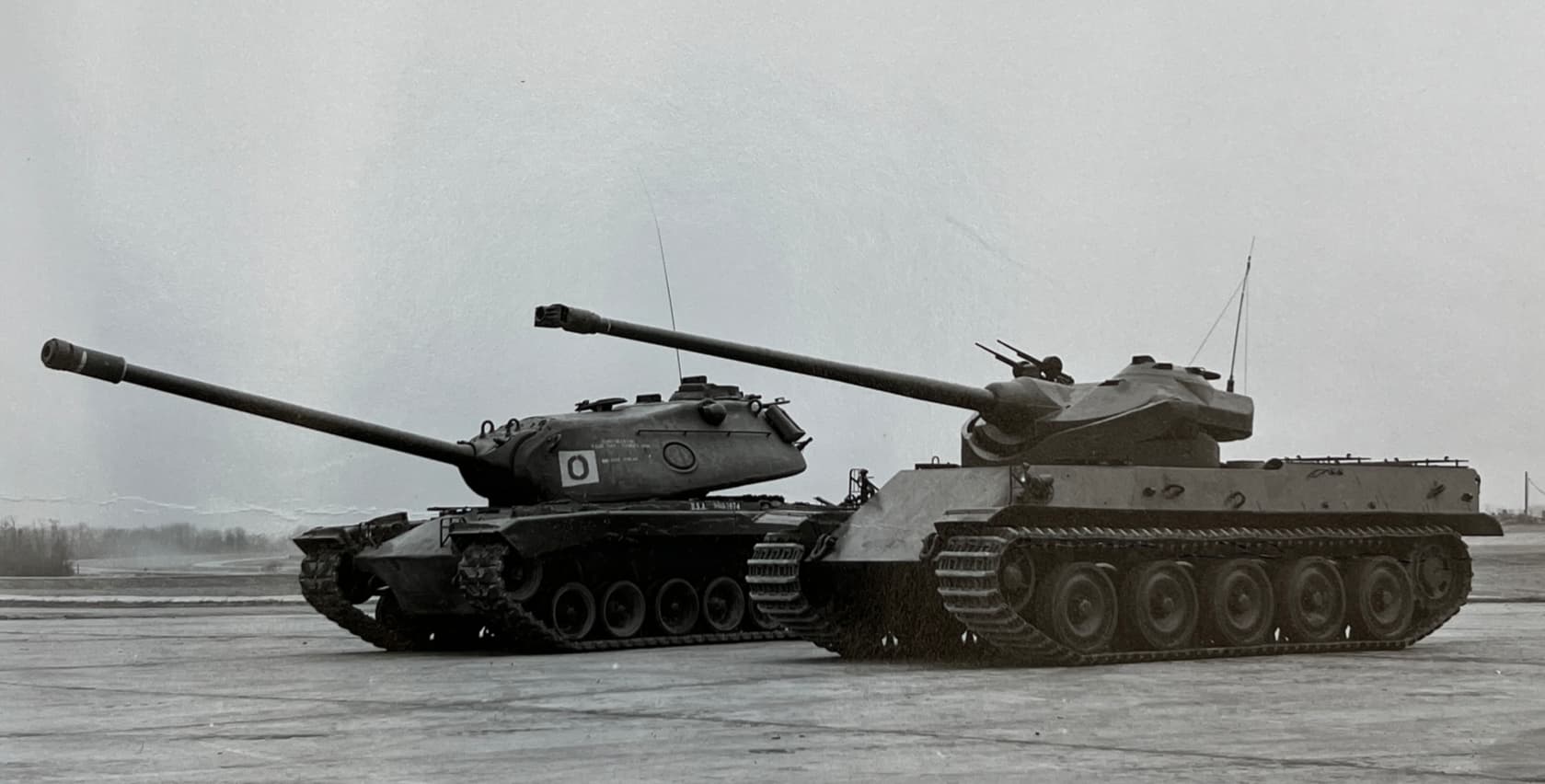
The first T43 prototype arrived at Aberdeen Proving Ground in June 1951. Its main distinction from later prototypes and production vehicles was to be the T122 gun, which ballistically matched the T53 but was about 500 kg lighter. Visually, the T122 barrel strongly resembled the T53 with an ejector, though there is a high probability that the actual T122 barrel was never fitted to this tank, because photographs of the first prototype show on the muzzle what appears to be a counterweight rather than an ejector and muzzle brake. Also, no rifling is visible in this “tube”. However, by this stage of T43 development, the T122 was no longer planned as the main armament, so live‑fire testing was not required. The primary armament was to be the T123 gun in the concentric T140 mount. The T123 featured increased maximum powder pressure to 48,000 psi compared to 38,000 psi in the T122 and T53. Eventually, a conventional mount with four recoil cylinders was developed for the gun, later designated T154. The gun for this mount received the designation T123E1, which also featured a quick‑change barrel. This combination of gun and mount was used on subsequent prototypes and production vehicles.
Besides the gun, the T43 had two coaxial .50 caliber machine guns, later replaced by .30 caliber guns on subsequent prototypes and production vehicles. A pistol port was present on the left turret side of the T43, which was definitely eliminated by the third prototype. Overall, testing of this prototype influenced the final appearance of the production vehicles.