- Yes
- No
 T-VI (28th Guards “Тигр”)
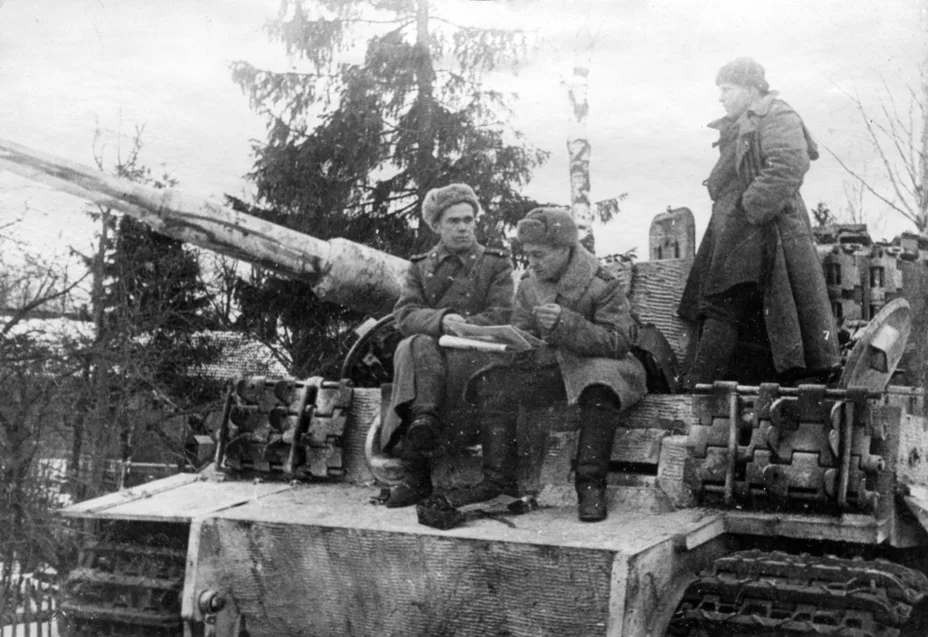
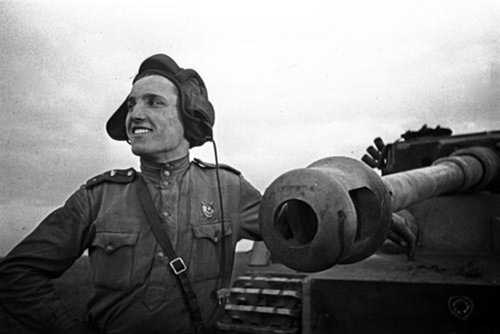
Soviet personnel cataloging captured German armor between late 1944 and early 1945.
Summary of the 28th Guards “Тигр”
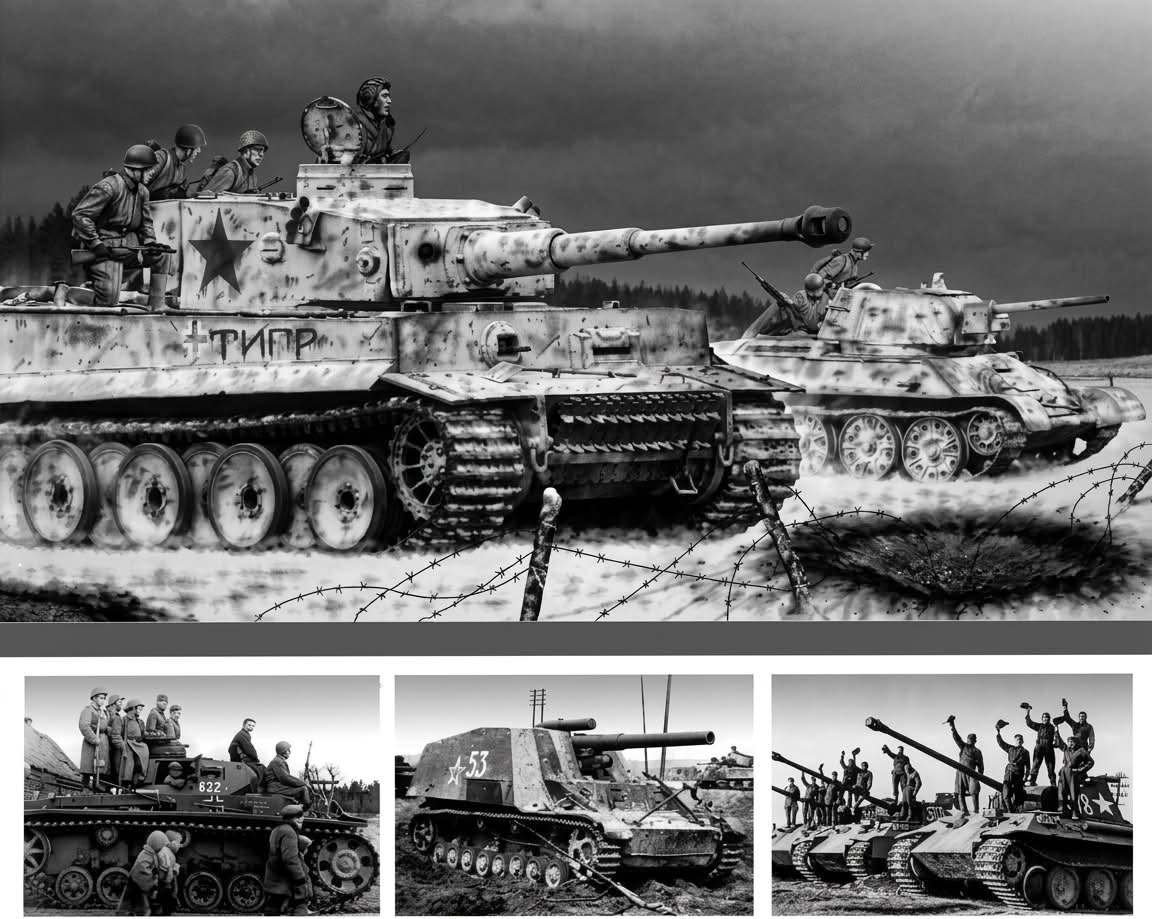
The first confirmed Soviet crew to operate a Tiger tank in combat was led by Lieutenant N. I. Revyakin of the 28th Guards Tank Brigade. The vehicle, originally belonging to the 501st Heavy Tank Battalion, became immobilized in a swamp, forcing its crew to abandon it. The following day, the captured tank was transferred to the 28th Brigade.
Owing to his extensive frontline experience and numerous decorations, Revyakin was appointed as its commander. He had previously been awarded two Orders of the Patriotic War (First Class) and one Order of the Red Star. On January 5th, the Tiger entered combat under Soviet colors, bearing a red star on its turret along with the name “Tiger.”/“Тигр”
The tank’s service life under Soviet use closely mirrored its time in German service, as it suffered from frequent mechanical issues. Maintenance proved difficult, particularly due to the lack of spare parts. At a later date, the 28th Guards Tank Brigade captured and operated a second Tiger tank as well.
History of Tigers under the Red Banner
The Red Army acquired several Tiger tanks from German units such as the 502nd Heavy Tank Battalion after the first captures in January 1943. However, from that point until the end of the war in Europe in May 1945, there were only a handful of cases in which Tiger tanks served with the Red Army in full working condition.
There were several reasons for this. First, the German Army rarely abandoned Tigers that could still be recovered. If a tank could not be withdrawn or repaired on the spot, German crews usually destroyed it themselves. Second, Tigers were produced in relatively small numbers. Additionally, to minimize casualties, Soviet forces generally preferred to completely destroy enemy Tiger tanks rather than merely disable them. Destroying a Tiger was also seen as a significant achievement, often worthy of a medal.
Because of these factors, a captured Tiger was first documented fighting on the Soviet side. The first such case involved Lieutenant N.I. Revyakin of the 28th Guards Tank Brigade. On December 27, a Tiger from the 501st Heavy Tank Battalion became bogged down in a swamp. Its crew abandoned the vehicle without sabotaging it, allowing the Red Army to capture it intact. The tank was added to the brigade’s order of battle the following day. Due to his extensive combat experience and his awards-two Orders of the Patriotic War, First Class, and the Order of the Red Star-Lieutenant Revyakin was appointed commander of the captured Tiger. The brigade later captured another Tiger as well.
On January 5, the Tiger, marked with a red star and nicknamed “Тигр” (“Tiger”), officially entered combat. Its service with the 28th Guards Tank Brigade closely mirrored its time in German use: frequent mechanical problems and constant repairs, made even more difficult by the complete lack of spare parts.
Another notable incident occurred on January 17, 1944, when Lieutenant A. S. Mnatsakanov of the 220th Tank Brigade captured a serviceable Tiger while commanding a T-34. Using the captured vehicle, Mnatsakanov and his crew destroyed an enemy armored column. For this action, he was awarded the title Hero of the Soviet Union. As the situation at the front evolved in the spring of 1944, further battles resulted in additional Tigers falling into Soviet hands.
On March 6, 1944, the 61st Guards Tank Brigade captured two Tigers in Volochisk. On March 23, the brigade seized a total of 13 Tiger and Panther tanks in Gusyatin, followed by another Tiger on March 25. These vehicles were not left unused; an entry dated April 7, 1944, shows that three Tigers were operational within the brigade, although they remained in service for only a short time. These tanks most likely originated from the 503rd Heavy Tank Battalion.
Some captured Tigers were sent to rear-area workshops for repair, though the exact locations remain unknown. In the spring of 1944, the Red Army’s Armored Vehicle Directorate received complaints about shortages of optical equipment, particularly gun sights, needed to refurbish captured heavy tanks. This suggests that several Tigers were repaired and later returned to frontline units. The only unit known with certainty to have received such repaired Tigers was the 51st Independent Motorized Regiment. This unusual formation fielded 10 T-34s alongside 5 Tiger tanks and 2 Panthers, all of them captured and restored vehicles.
Before the Lvov-Sandomierz Offensive, the regiment’s Tiger strength had dropped to four tanks, with reports indicating that one or two required repairs. During the fighting on July 21, 1944, the regiment lost six T-34-85s, while the enemy lost two Tiger tanks, three self-propelled guns, and two armored personnel carriers. It is highly likely that the destroyed Tigers were enemy vehicles, not the regiment’s own captured tanks. Between July 20 and 22, the regiment claimed seven Tiger tanks destroyed, while losing seven T-34-85s. After being reinforced, the regiment reported nine T-34-85s and four Tigers by July 28. Three of these Tigers were still operational but required moderate maintenance, a condition that remained unchanged as of August 19.
Later, the regiment was transferred to NKVD control for operations against the National Organization of Ukraine, at which point the Tiger tanks were removed from its inventory.
Overall, no fewer than ten captured Tiger tanks are known to have served with the Red Army at various times and in different units during the war.
Proof of usage by the Red Army
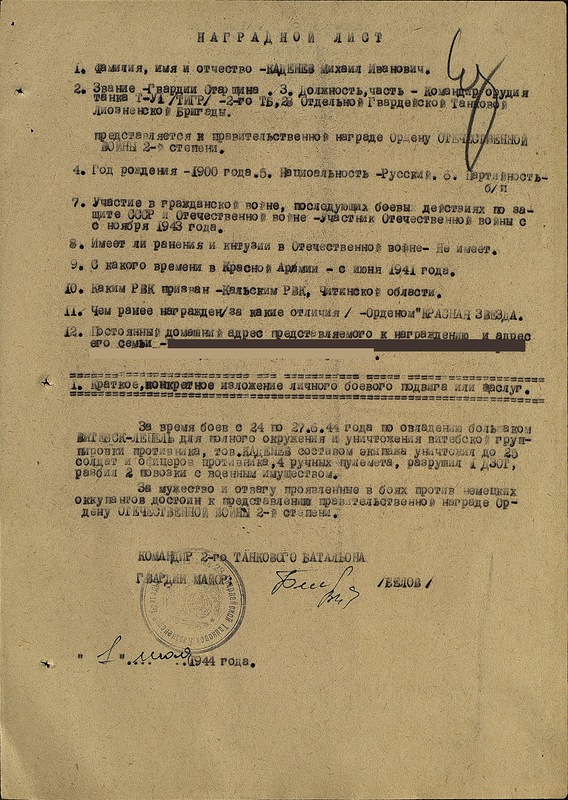
Award Recommendation Sheet (Наградной лист)
Award Sheet Translation
- Name: Kadenev, Mikhail Ivanovich
- Rank: Guards Sergeant Major (Gvardii Starshina)
- Position/Unit: Gun Commander of a T-VI “Tiger” tank, 2nd Tank Battalion, 28th Separate Guards Tank Liozno Brigade.
- Year of Birth: 1900
- Nationality: Russian
- Party Affiliation: Non-party
- Military Service: In the Red Army since June 1941; in the “Great Patriotic War” since November 1943.
- Previous Awards: Order of the Red Star.
During the fighting from June 24 to June 27, 1944, while breaking through heavily fortified enemy defenses and encircling the Vitebsk enemy grouping, Comrade Kadyrov, operating his tank, destroyed up to 20 enemy soldiers and officers, 4 field guns, and 4 machine-gun positions.
For his courage and bravery displayed in combat against the German invaders, Comrade Kadyrov is worthy of being awarded the Order of the Patriotic War, 2nd Class.
Commander of the 2nd Tank Battalion
Guards Major - [signature]
July 4, 1944
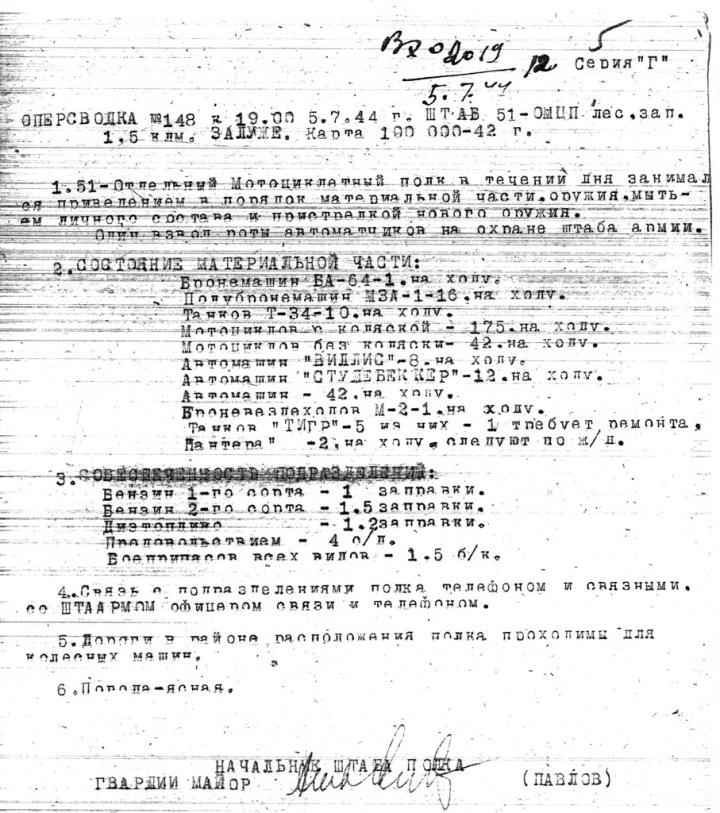
Operational Report No. 148 (Оперсводка)
Operational Report No. 148 Translation
- The 51st Separate Motorized Regiment spent the day restoring order and reorganizing its material assets, weapons, and vehicles.
The regiment continues to guard the rear area of the army.
2. Status of equipment
- BA-64 armored cars: 1 - in repair
- M3A1 armored cars: 16 - operational
- T-34 tanks: 10 - operational
- Motorcycles with sidecars: 175 - operational
- Gas generator trucks: 42 - operational
- “Studebaker” trucks: 12 - operational
- “Willis” vehicles: 8 - operational
- Other trucks: 42 - operational
- Captured armored vehicles:
- “Tiger” tanks: 5 - 1 requires repair
- “Panther” tanks: 2 - operational
3. Fuel supply
- 1st grade gasoline - 1 full refuel
- 2nd grade gasoline - 1.5 refuels
- Diesel fuel - 1.3 refuels
- Lubricants - 4 tons
- Auto grease - 1.5 barrels
4. Communications
Communication with subordinate units is maintained by telephone and messengers.
Communication with higher headquarters is by telephone.
5. Roads
Roads in the regiment’s area are suitable for wheeled transport.
6. Losses
None.
Chief of Staff of the Regiment
Guards Major Pavlov - [signature]
Specifications
Armament:
Main Gun: 8.8 cm KwK 36 L/56
- Armor Piercing:
-
- Pzgr.
-
- PzGr 39
- High-Explosive/HEAT
-
- Sprgr. L/4.5
-
- Hl.Gr 39
- Secondary: x2 7.92 mm MG 34 machine guns (1 Coaxial, 1 Hull)
- The Early H 1 also has S-Mine launchers on the hull corners.
Armor:
- Front Hull: 100mm
- Side Hull: 80mm
- Rear Hull: 80mm
- Turret Front: 100mm
- Turret Sides: 80mm
- Turret Rear: 80mm
Mobility:
- Engine: Maybach HL 210 P45 V12
- Weight: 57 tons
- Max Speed: 45.4 km/h (Road), 18–22 km/h (Off-road)
- Power-to-Weight Ratio: 11.4 hp/ton
- Operational Range: 110–195 km
How it would look in War Thunder
T-VI could serve in the Soviet tech tree as a battle pass reward or premium at the battlerating of 5.7, it would sport its own red star decal and inscription “Тигр” to keep German and Soviet tankers from mistaking it as a German vehicle.
Sources
The use of captured German tanks and self-propelled guns in the Red Army at the final stage of the war and in the post-war period
https://wot.17173.com/content/01112022/161127681.shtml
Tank Archives: Captured Tiger Hero
vojnoví i povojnoví užívatelia : Germany (DEU)
https://forum.axishistory.com/viewtopic.php?t=160691
Вс рф и Танки: истории из жизни, советы, новости, юмор — Горячее, страница 9 | Пикабу
https://smolbattle.ru/threads/Выставки-трофейной-техники.61701/
Tiger I - Wikipedia