- Yes
- No
 T-IV (G) - Stalingrad’s Rebuttal
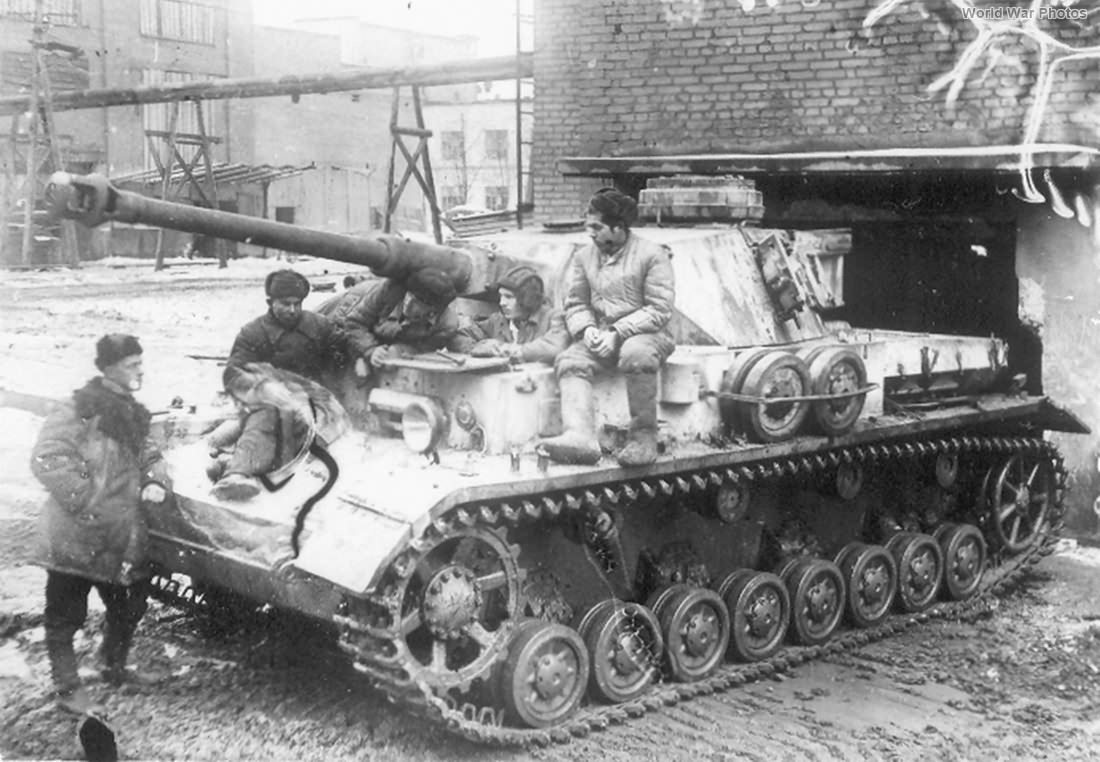
Here is a Panzer IV Ausf. G, actively deployed during the defense of Stalingrad in 1943. Captured intact by Soviet forces, the tank was quickly turned against its former owners and pressed into operational service with the Red Army.
History
When the Red Army trapped the German 6th Army inside Stalingrad during the winter of 1942, the frozen battlefield was left covered in abandoned armor. A lot of these panzers weren’t actually destroyed they had just run out of fuel, thrown a track, or suffered minor mechanical breakdowns. For Soviet recovery crews working in the freezing cold under constant mortar fire, those abandoned tanks were gold mines.
Among the vehicles dragged back behind Soviet lines was a Panzer IV Ausf. G. Equipped with the long-barreled 75mm KwK 40 gun, it was a massive prize. Soviet crews loved the German optics, and the high-velocity 75mm gave them a weapon that could punch right through heavy fortifications.
Soviet engineers and mechanics immediately got to work getting it running. Since factory spare parts were nonexistent, they scavenged gearboxes, road wheels, and engine components from other wrecked Panzers scattered across the steppe. Once it was mechanically sound, they slapped massive Soviet red stars over the Balkenkreuz crosses on the turret and hull to try and keep their own anti-tank gunners from blowing them to pieces on sight.
Driving a captured German tank into battle was a nervous experience for the crew. Beyond learning how to operate unfamiliar German controls and radios on the fly, silhouette recognition was a constant danger. To a Soviet infantryman hiding in a ruined cellar, a Panzer IV coming down the street looked like the enemy, red stars or not.
Despite the risks, this tank was thrown right back into the fight during the final weeks of the battle in early 1943. Its long 75mm gun proved deadly in the ruined streets, tearing through barricaded buildings, German machine-gun nests, and concrete strongpoints along the Volga.
However, keeping a captured Panzer IV running on the front line was rarely a long-term solution. Ammunition was scarce, replacement parts were hard to find, and most captured “fours” eventually wound up reassigned to rear-area guard details or army headquarters protection. Veterans who served on these captured panzers remembered them looking intimidating, even if they often rolled around with only a handful of live shells left in the racks.
To a Soviet driver used to wrestling with the heavy, unforgiving controls of a T-34, the Panzer IV was surprisingly plush inside. Tankers praised the spacious interior, comfortable seating, and how effortlessly the steering levers moved. The side hatches were another huge plus if the tank caught fire, getting out was fast and straightforward, provided extra armor skirts weren’t blocking the way. Soviet crews were also deeply impressed bythe tank’s reverse gear. During later engagements like the Sandomierz bridgehead, retreating under fire meant simply slamming into reverse and backing out of danger at speeds no Soviet tank of the era could match, keeping their heavy frontal armor facing the enemy the entire time.
Still, living with a captured German tank came with its own set of daily headaches. Because the transmission sat right up front next to the driver, a constant stream of scorching hot air blew directly onto the driver’s right side, practically baking him throughout his shift while the gears whined loudly. Refueling was another mess: the fuel cap was wedged under the top section of the left track and designed for specialized German nozzles the Red Army didn’t carry, forcing crews to pour gasoline straight from handheld buckets through crude funnels. The leaf-spring suspension was also quite stiff, and despite the easy steering, the Panzer IV lacked the nimble cross-country agility that made the T-34 so effective in deep mud.
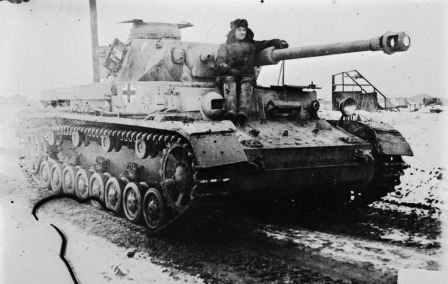
Specification
General
- Origin: Germany
- Crew 4
Armament
- Primary Gun: 75mm KwK40 L/48
- Reload Rate: 6 seconds
- Ammo Capacity: 87 rounds
- Depression/Elevation: -10° / +20°
- Main Shells
- PzGr 39
- Alternative Shells:
- Hl.Gr 38B
- PzGr 40
- Sprgr. 34
- Secondary:
- x2 7.92mm MG34 machine guns (coaxial and hull).
Mobility
- Engine: Tatra 928 producing 375 horsepower (giving it roughly 25% more horsepower than a stock German Panzer IV).
- Power-to-Weight Ratio: 25.0 hp/ton, resulting in much snappier acceleration and agility.
- Top Speed: 39 km/h forward, 8 km/h reverse
- Weight: 15.00 tons.
Armor & Survivability
- Hull Armor:
- Front Plate: 50mm
- Front Glacis: 20mm
- Lower Glacis: 50mm
- Sides: 30mm
- Rear: 20mm
- Roof: 10mm
- Turret Armor:
- Front: 50mm
- Mantlet: 50mm
- Sides: 30mm
- Rear: 30mm
- Roof: 16-25mm
- Cupola: 95mm