- Yes
- No

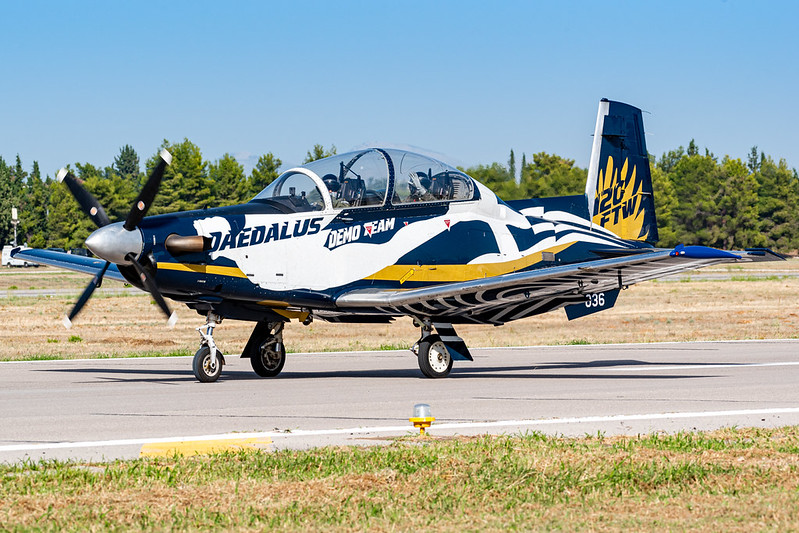
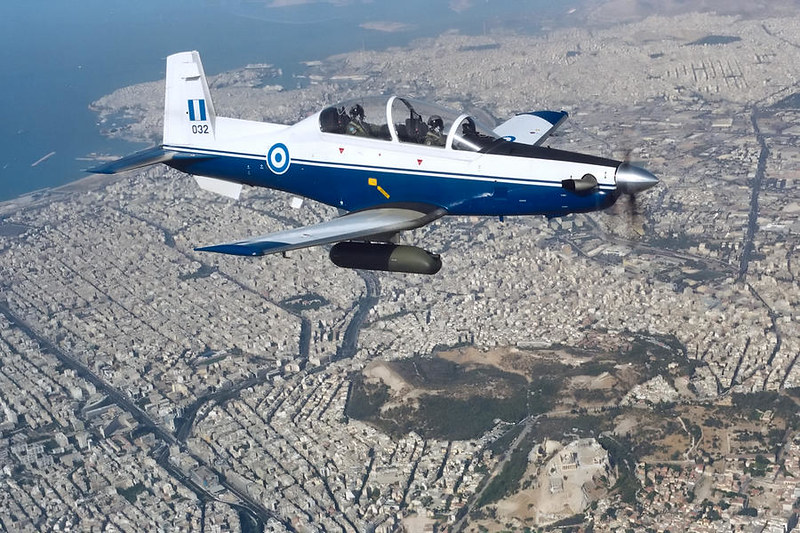
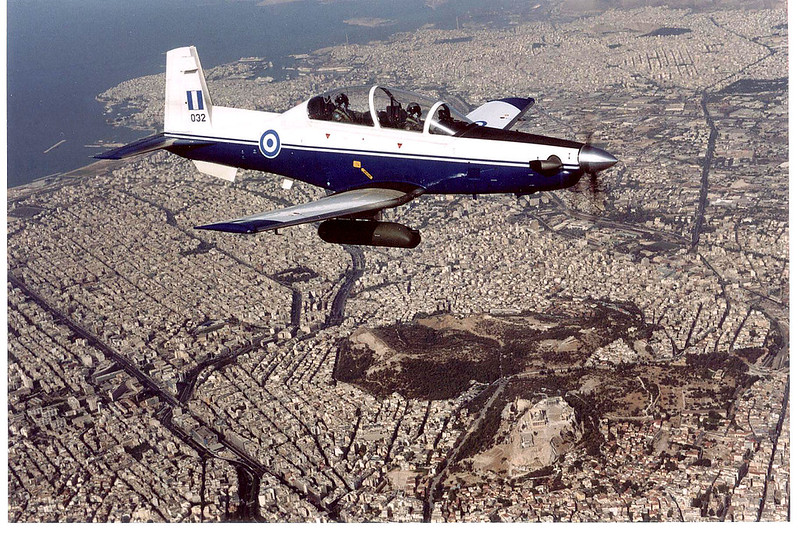
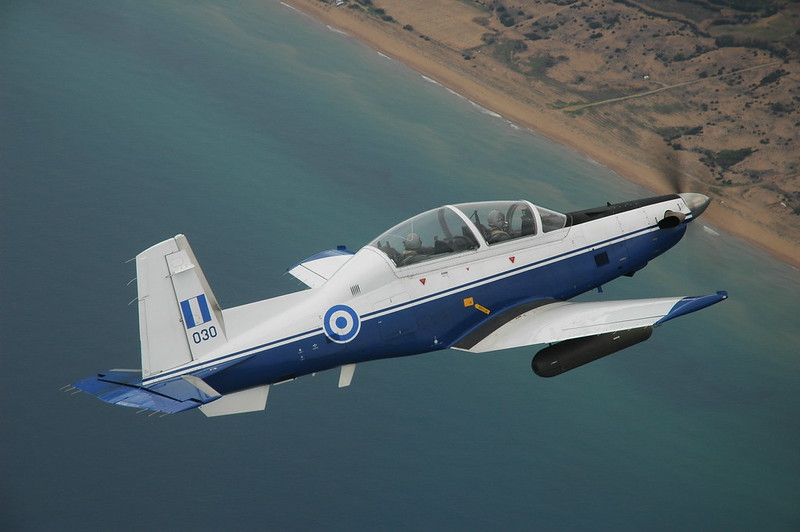
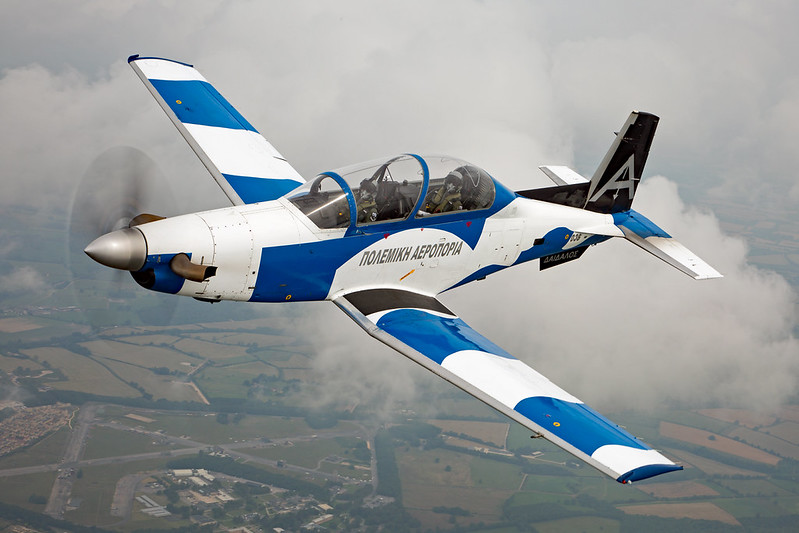
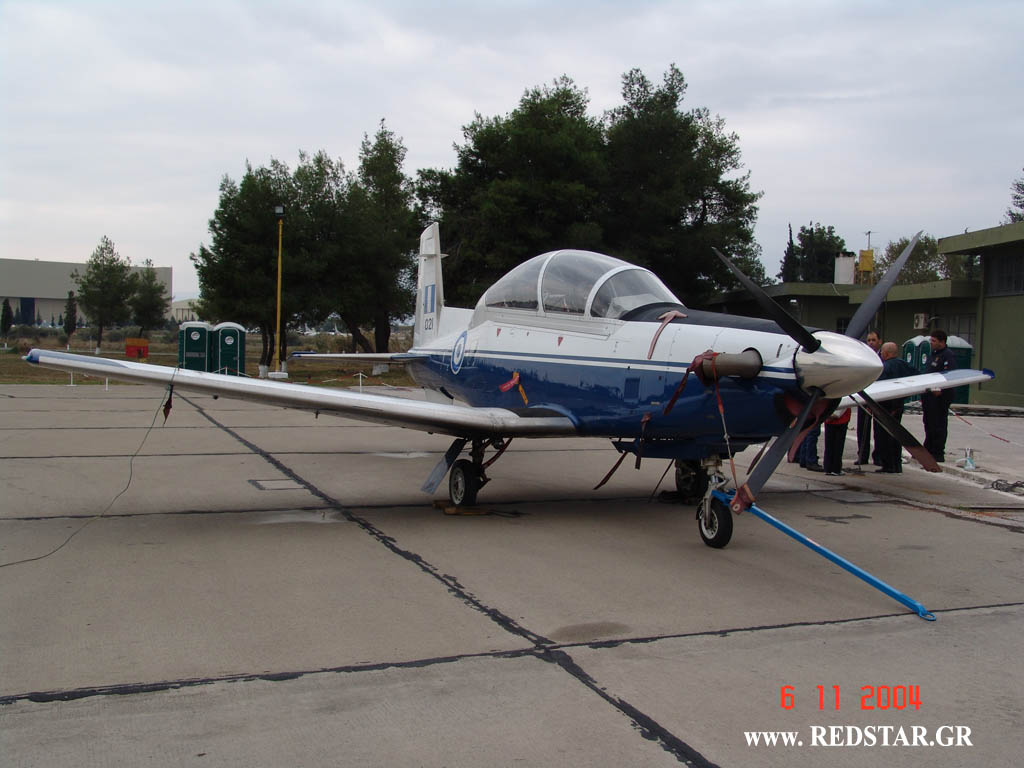
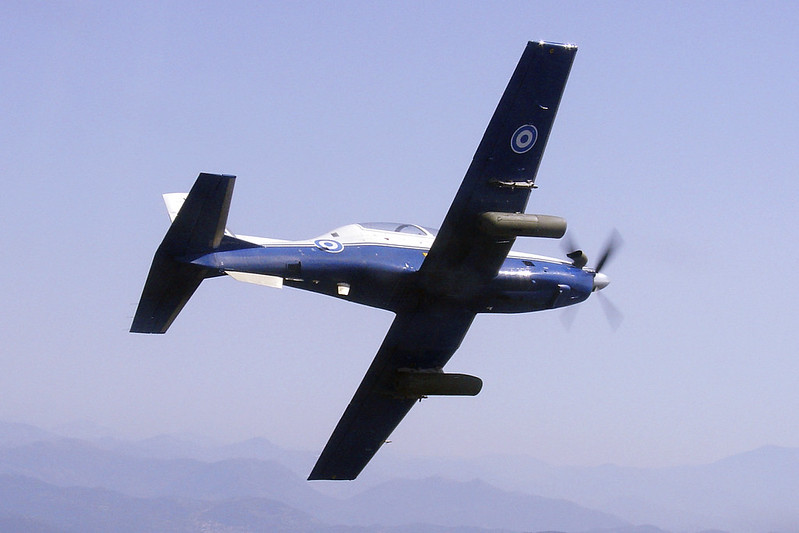
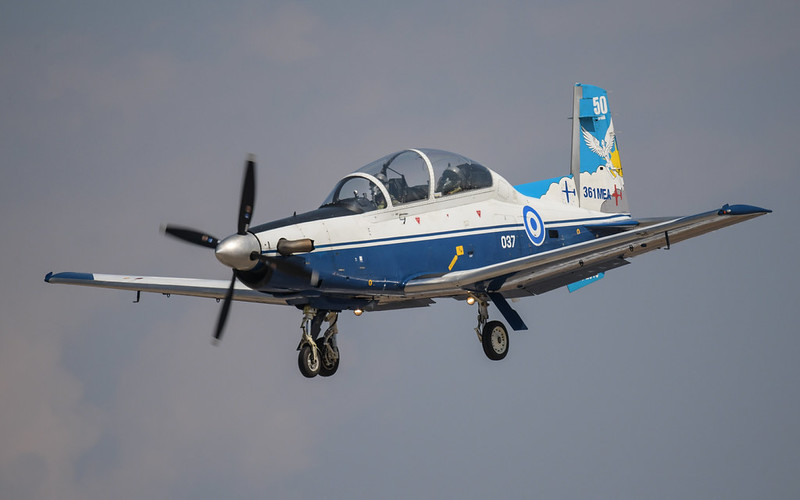
The T-6A NTA Texan II is a unique to Greece armed variant of the legendary trainer. This unique configuration gives the ability to carry gun pods, bombs and rockets transforming it to a light attacker.
The T-6A Texan II
The Beechcraft T-6A Texan II is a single-engine tandem-seat turboprop primary trainer developed from the Swiss Pilatus PC-9. It was selected in 1995 as the winner of the U.S. Joint Primary Aircraft Training System (JPATS) competition to replace the aging Air Force T-37 Tweet and Navy T-34C Mentor. Raytheon (later Hawker Beechcraft/Textron Aviation) modified the design with a stronger airframe, pressurized cockpit, Martin-Baker ejection seats, and a more powerful Pratt & Whitney Canada PT6A-68 engine. The first production aircraft flew on 15 July 1998, and the type entered service with the U.S. Air Force in 2001 (initial operating capability) and the Navy in 2003.
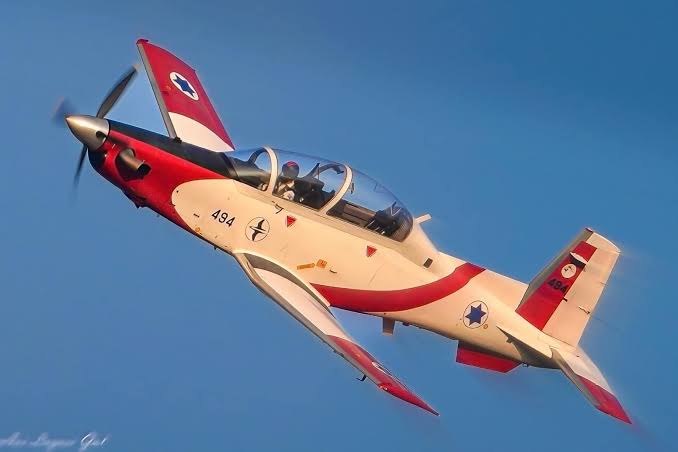
Named in honor of the classic World War II-era North American T-6 Texan, the modern T-6A has become the standard primary trainer for both U.S. services and has also been exported to countries including Greece, Canada, Israel, and others. Hundreds have been built, and the aircraft continues in widespread use for basic flight training.
The T-6A Texan II in Greek Service
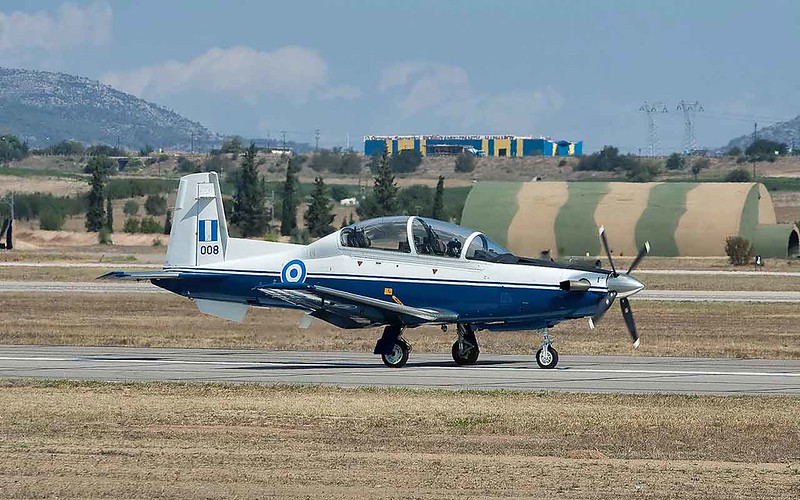
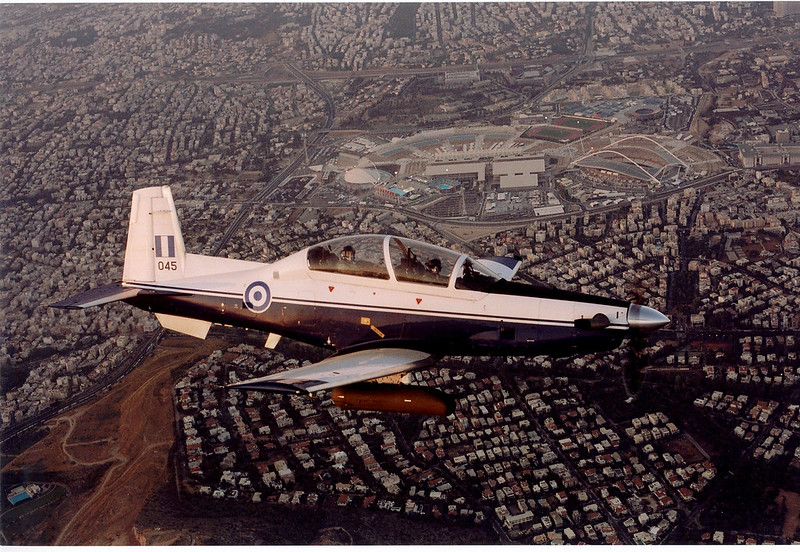
The Hellenic Air Force selected the T-6A Texan II in October 1998 to replace its aging Cessna T-37 Tweet trainers and ordered 45 aircraft (plus associated ground training systems) in a deal valued at over $200 million. Deliveries began in July 2000 to the 361 Air Training Squadron at Kalamata Air Base (120 Air Training Wing), with the first student pilot training starting in September 2001. The fleet consists of 25 standard T-6A trainers for basic flight instruction and 20 armed T-6A NTA (New Trainer Aircraft) variants equipped with underwing hardpoints, a weapons sighting system, and the ability to carry gun pods, rocket pods, practice bombs, and external fuel tanks for weapons training and limited light-attack roles.
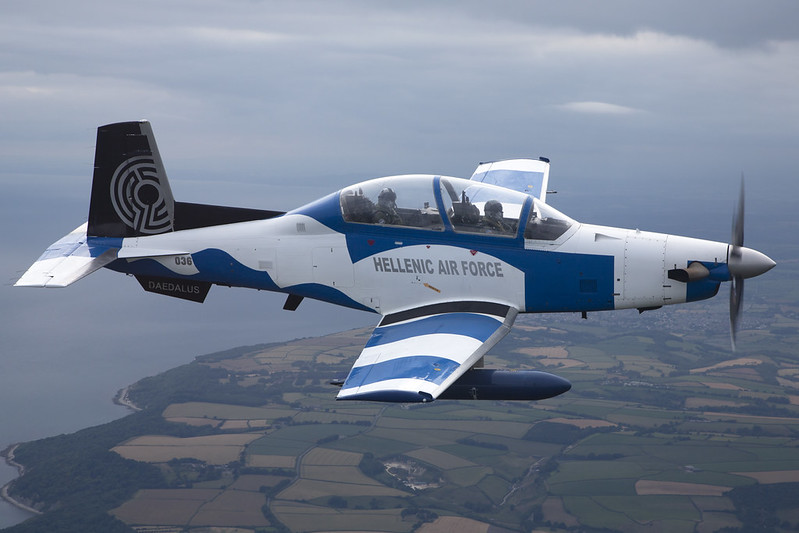
Based at Kalamata, the aircraft remain the primary basic trainer for Hellenic Air Force Academy cadets (following initial T-41 flights), providing up to around 110 flying hours plus simulator time. The type also supports the HAF’s Daedalus aerobatic display team. As of the mid-2020s the fleet of roughly 43–45 aircraft continues in active service for pilot training, with the armed NTAs offering secondary utility for low-threat missions
Daedalus
Even if Daedalus uses a T-6A i would like to include them :)
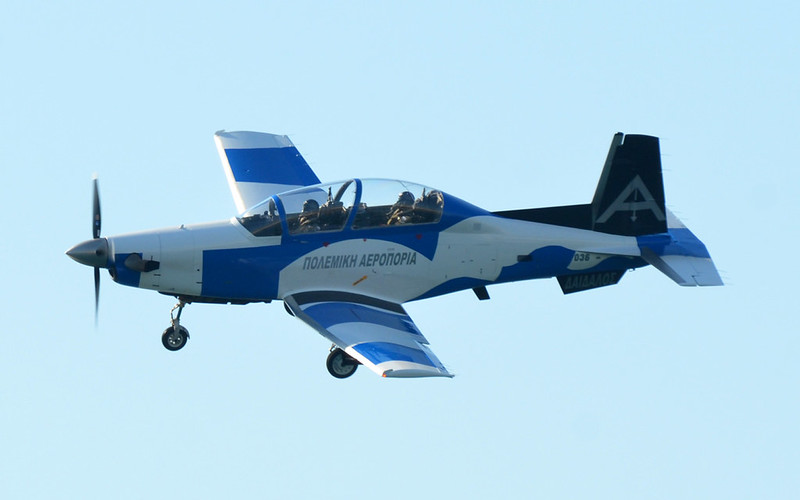
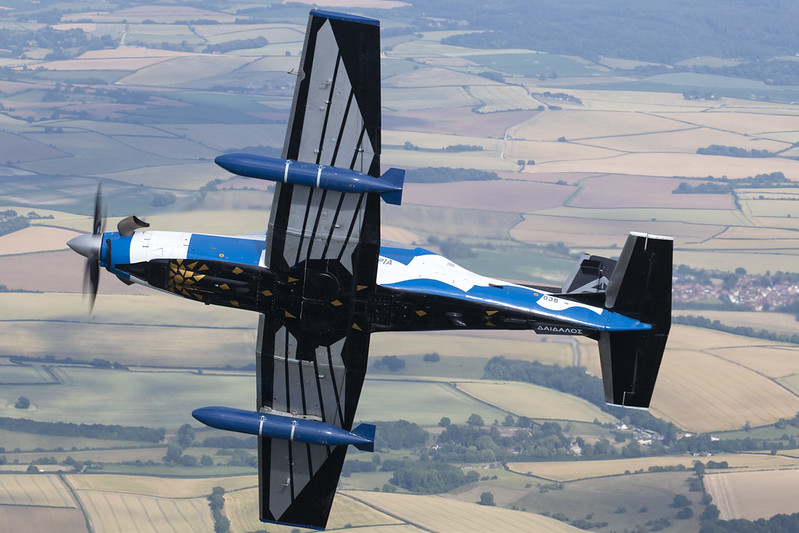
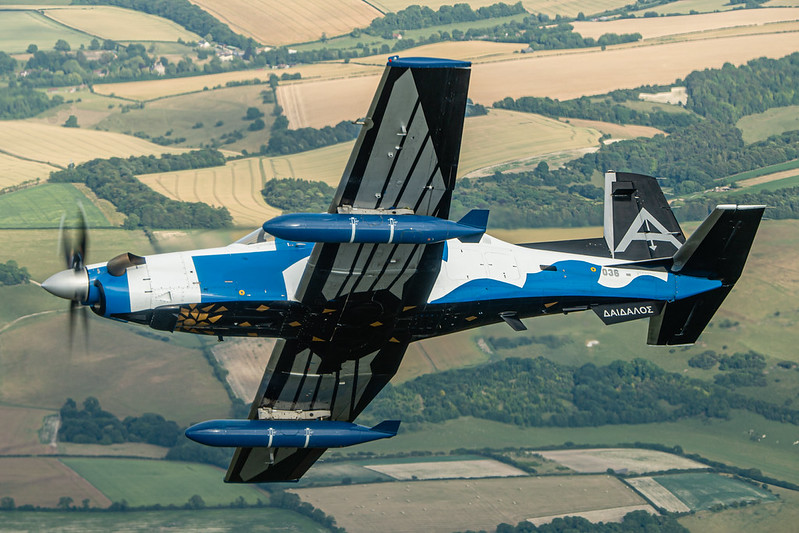
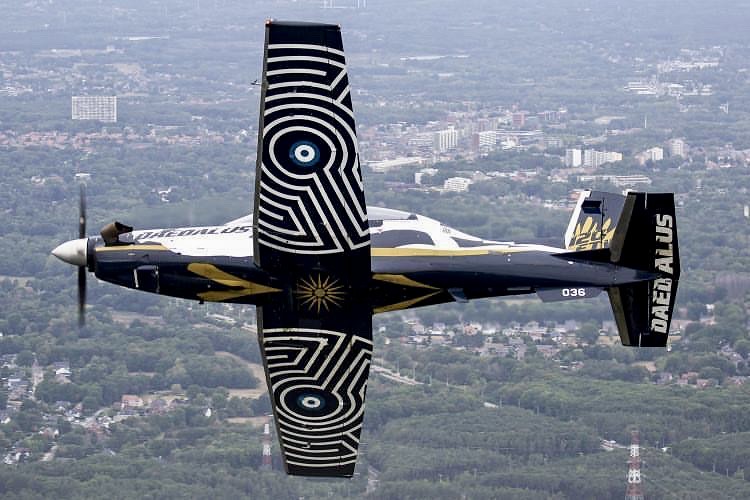
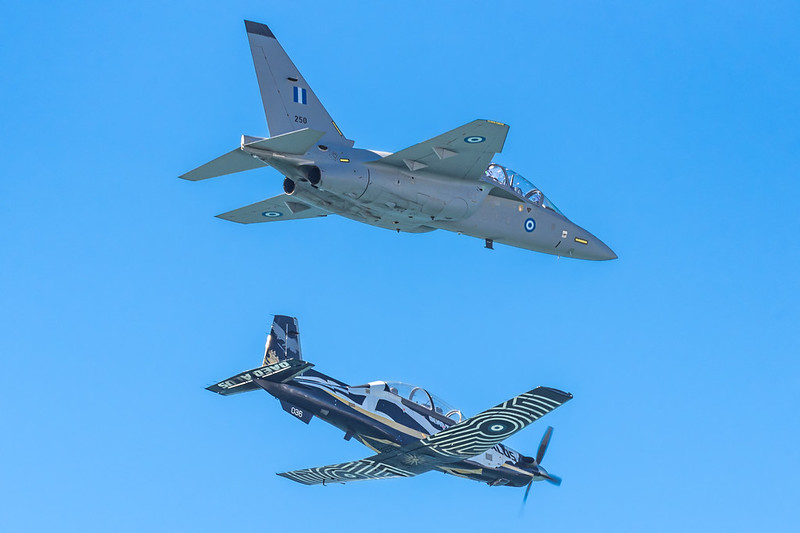
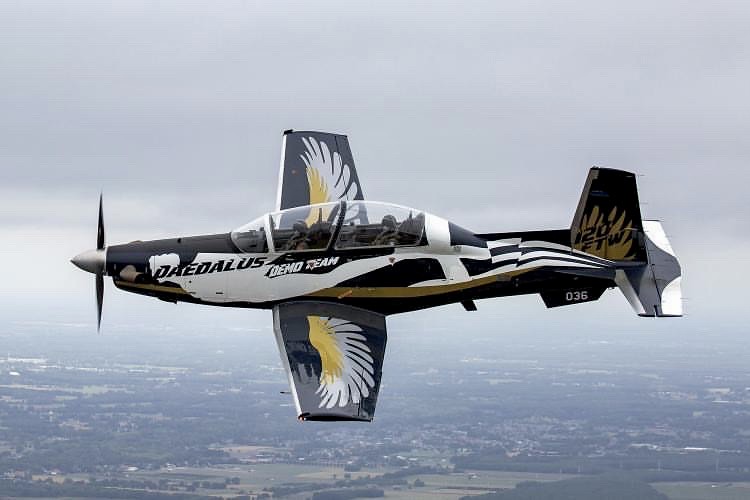
The Hellenic Air Force’s single-aircraft aerobatic display team “Daedalus” (Ομάδα Αεροπορικών Επιδείξεων Μεμονωμένου Αεροσκάφους T-6A “Δαίδαλος”) was formed in 2005 for the first international airshow “Archangelos.” It revived the HAF’s aerobatic tradition after nearly four decades, following earlier teams such as the “Karé ton Asson,” “Acro Team,” “Elliniki Floga,” and “Nea Elliniki Floga.” The team flies the T-6A Texan II trainer and is based at the 120 Air Training Wing in Kalamata. Its mission is to promote aviation awareness in Greek society, boost the morale of the Armed Forces, and showcase the professionalism of HAF personnel to the public.
The team was established with assistance from U.S. Air Force instructors from the West Coast and East Coast Demo Teams. Five pilots from the 361 Air Training Squadron received specialized training (approximately 20.8 flying hours), with two selected as primary display pilots. The first public performance took place on 18 September 2005 at Tanagra during the Archangelos airshow. Displays consist of a High Show (minimum cloud base 4,500 ft AGL) or Flat/Low Show (minimum 2,500 ft AGL), both requiring at least 5 km visibility, and include manoeuvres such as Cuban eights, eight-point rolls, Texas Sidewinder, tight 360° turns, opposing rolls, and high-speed photo passes. A display involves the pilot, a ground safety observer with authority to stop the routine, a narrator, and technical support personnel.
Armament
The T-6A Texan II (especially the Greek T-6A NTA armed variant) is a basic turboprop trainer with a limited but useful light-attack / weapons-training capability. Greece bought 45 aircraft (first deliveries July 2000), of which 25 are standard T-6A trainers and 20 are the T-6A NTA (New/Multi-Role Trainer Aircraft) version with weapons provisions. They operate from the 120 Air Training Wing at Kalamata.
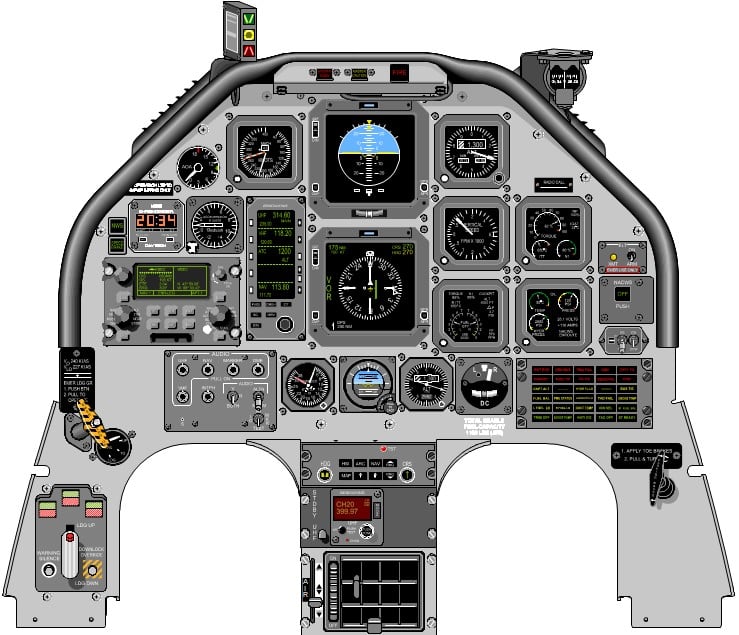
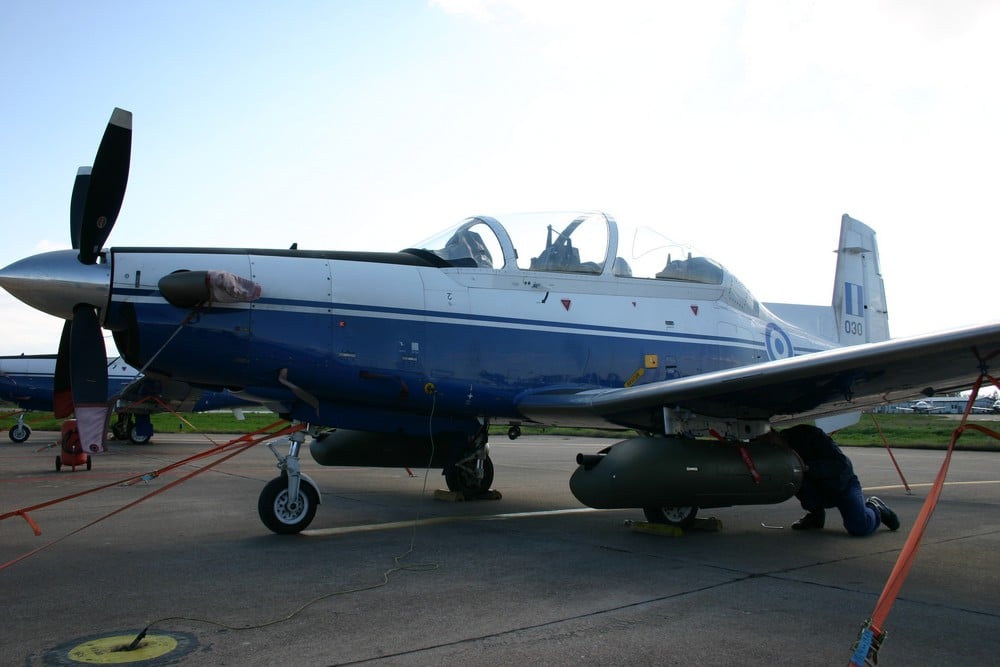
The main Armament is HMP-400 gun pods but also has the ability to carry bombs and rockets. To happen this a gunsight is installed in the cockpit.
Before and After
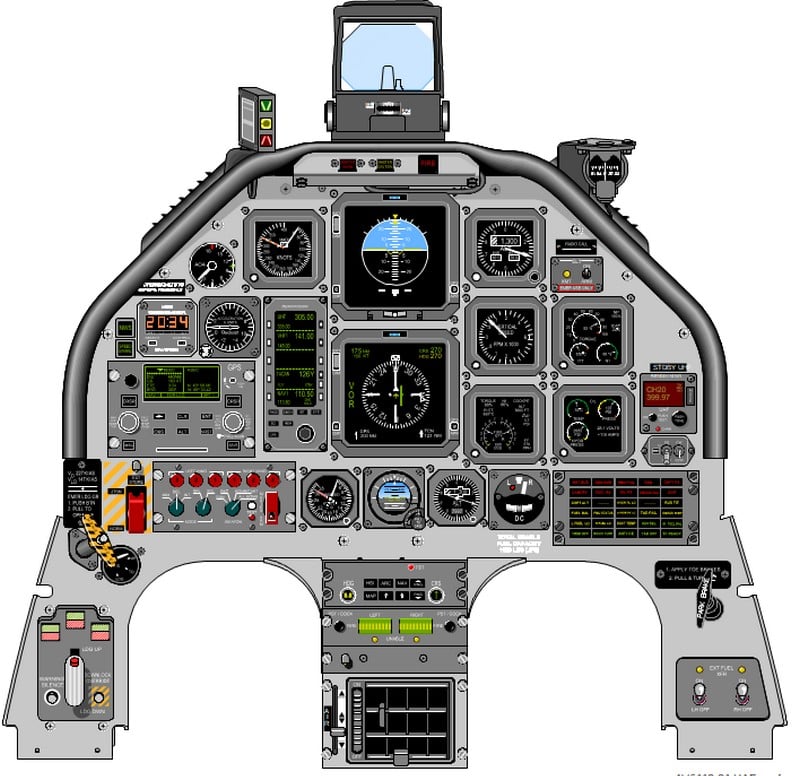
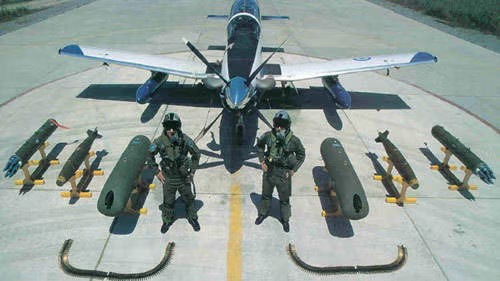
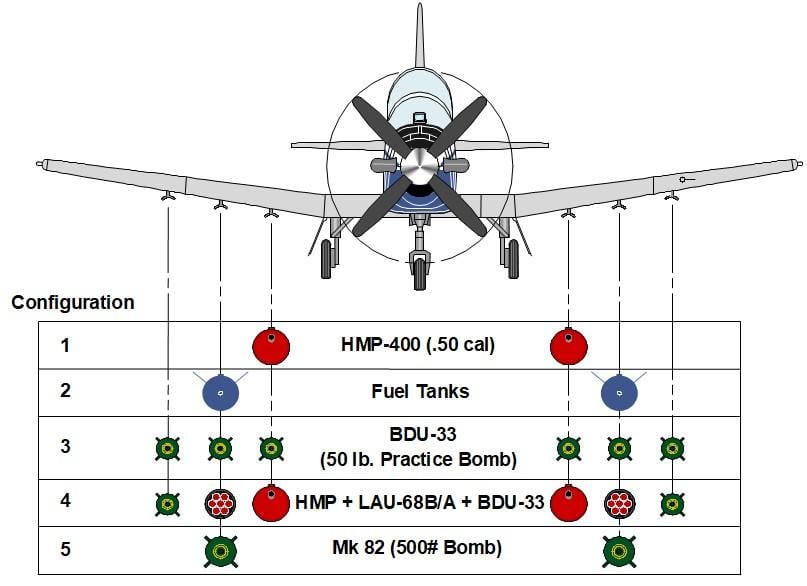
- Gun pods: FN Herstal HMP-400 12.7 mm (.50 cal) machine-gun pods, ~200–400 rounds per pod depending on configuration.
- Rocket pods: LAU-68 (or similar) 7-round 2.75-inch (70 mm) rocket launchers.
- Bombs: Mk 82 500 lb (227 kg) general-purpose bombs; BDU-33 practice bombs (25 lb / ~11 kg).
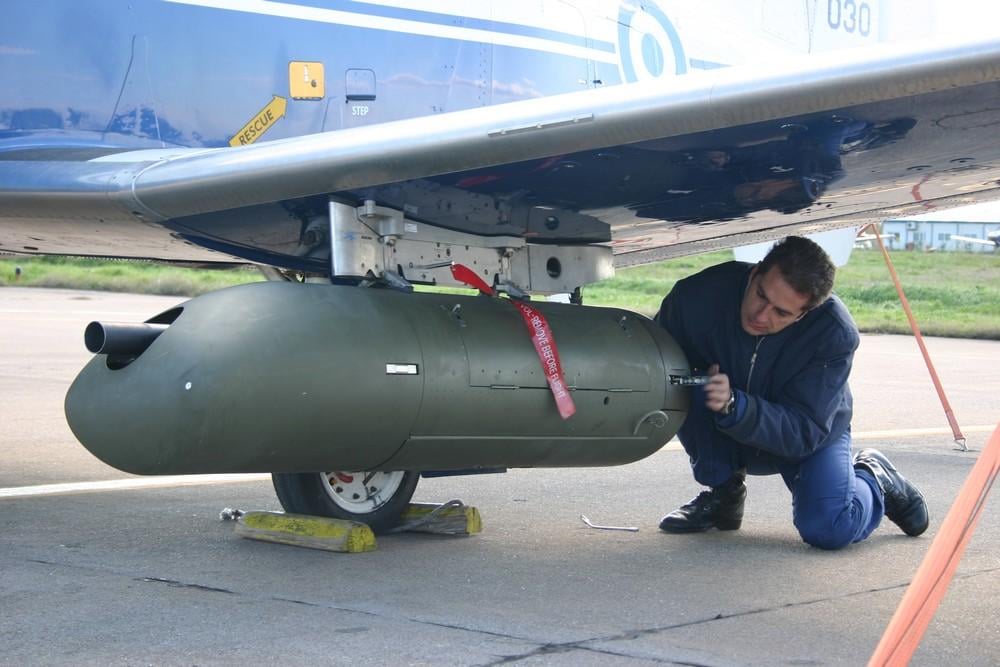
- External fuel tanks: ~248-litre (or similar) drop tanks for extended range (when fitted, weapons are generally not carried)
Specifications
Spoiler
Parameter Value Crew 2 (instructor + student; tandem seating, instructor seat slightly raised) Length 10.16 m (33 ft 4 in) Wingspan 10.19 m (33 ft 5 in) Height ≈ 3.25–3.26 m (10 ft 8 in) Wing area ≈ 16.5 m² Empty weight ≈ 2,087–2,135 kg Max take-off weight ≈ 2,858–2,948 kg Powerplant 1 × Pratt & Whitney Canada PT6A-68 turboprop, flat-rated 1,100 hp (820 kW) Propeller 4-blade Hartzell (constant-speed, fully feathering) Ejection seats Martin-Baker Mk US16LA (zero-zero) Cockpit Pressurized, bird-resistant canopy (up to ~270 kt), digital displays Max speed 586 km/h (316 kt / 364 mph) Cruise speed ≈ 500–515 km/h Service ceiling 9,500 m / 31,000 ft Range ≈ 1,575–1,700 km (≈ 850–900 nmi) Rate of climb > 3,300 ft/min (initial) G limits +7.0 / –3.5 g
Extra Photos


Sources
Spoiler
- https://defencereview.gr/amina/toyrkika-uav-sto-aigaio-ta-t-6a-texan-ii-nta-i-idanik/
- Τα T-6A NTA της Πολεμικής Αεροπορίας σε ρόλο κυνηγών - Δούρειος Ίππος
- https://www.haf.gr/demoteam/omada-aeroporikon-epideikseon-memonomenou-aeroskafous-t-6a-daidalos/
- https://www.haf.gr/arsenal/t-6a-texan-ii/
- ÁÌÕÍÁ & ÄÉÐËÙÌÁÔÉÁ 18. ÅêðáéäåõôéêÜ áåñïóêÜöç
- https://defencereview.gr/amina/t-6a-texan-ii-nta-se-rolo-kynigoy-toyrkikon-uav-lysi/
- T-6A Texan II Εκπαιδευτικό αεροσκάφος
- https://www.airspeedmedia.net/post/pilot-training-in-greece-kalamata-air-base
- https://www.naval-technology.com/projects/t6a-texan-ii/?cf-view