Flakpanzer 341 had a full mock up with a turret that could rotate Ostwind 2 had what? A gun configuration that would be impossible no real documents of it being real and existing with all evidence being from sketchy post war accounts and eye witnesses what are incredibly untrustworthy
1 Like
VTV stands for:
Velitelství tankového vojska
(Tank Troops Command or Armoured Troops Command)
So yes, unless you want a letter from Hitler himself signed and with a video selfie with 3 fingers infront of his head, it is official, produced by the Czechoslovak Tank Troops Command.
This makes it a primary source, comtemporary, and by a qualified person.
that’s what I said. It was vertical at first, in the coastal defenses, and then for the Ostwind they decided to put it horizontaly, as I said.
Just look at the picture and you’ll understand.
It was far more advanced than a wooden mockup. since a prototype was built and sent to trails.
Edit: If I’m not clear, I use the source used by tank encyclopedia and wikipedia: the VTV (Tank Troop Command) report of October 1947.
1 Like
It’s one of those situations where it depends on who you ask.
I reached out to Hillary Doyle some time ago to ask him about the Ostwind II/Zestorer 45. He said, according to the Ostbau Papers in his possession, neither vehicle reached the prototype stage. He pointed out that the Ostwind II would have required a much larger turret (the one in-game is actually too small), something that, by January 1945, German industry was completely incapable of producing due to the effectiveness of the Allied Bombing Campaign. As far as the 45 goes, he said it only ever reached the test-mule Mobelwagen trials.
That said, I really don’t care that the II is in-game. I’ve long been of the opinion that War Thunder is a game at the end of the day, so if a vehicle wasn’t built IRL but had finalized plans and/or enough info to model it, go right ahead and add it. There’s really no logical reason not to add something to a video game because it wasn’t built. Just as long as we don’t start inventing our own tanks, as a certain other game does.
2 Likes
The existence of T-34-88 was confirmed by Soviet source after its captured. It is the Soviet report stated that the T-34-85, 73rd Tank Battalion got from 174th Evacuation Company, was in fact a “T-34-88” with an 88 mm gun.
T-34-88 in Soviet Service
On 8th May 1945, Army Group Courland surrendered to the Red Army. They handed over all the operational and non-operational AFVs in the Stende Station, Latvia.
The 51st Army of the Red Army accepted the equipment handed over after 9th May 1945. The 174th Evacuation Company of the 51st Army repainted the T-34-88 and gave it a new tactical number of “К20.”.
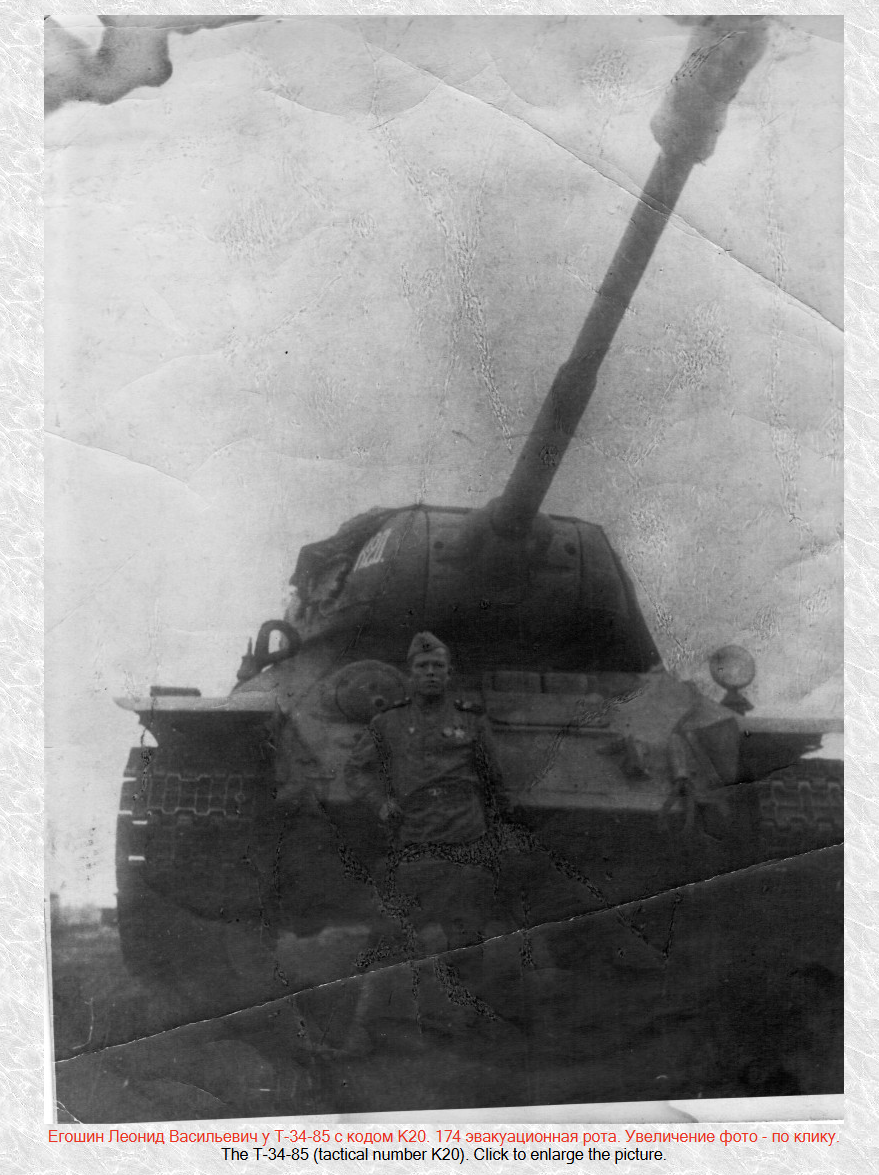
“Yegoshin Leonid Vasilyevich at the T-34-85 with code K20. 174th evacuation company.” Source:https://wio.ru/tank/t-34gal18.htm
Source: 51-я армия - страница клуба "Память" Воронежского госуниверситета
Source: Сборник боевых документов/27/27 — Викитека
According to the AFVs registry of the 73rd Tank Battalion, the battalion was formed from the “73rd Guards Tank Regiment IS”. The IS in the “73rd Guards Tank Regiment IS” indicates that the regiment was supposed to be equipped with IS tanks in its authorised strength.

On 1st September 1945, not long after its formation, the 73rd Tank Battalion only had five operational T-34-85s.
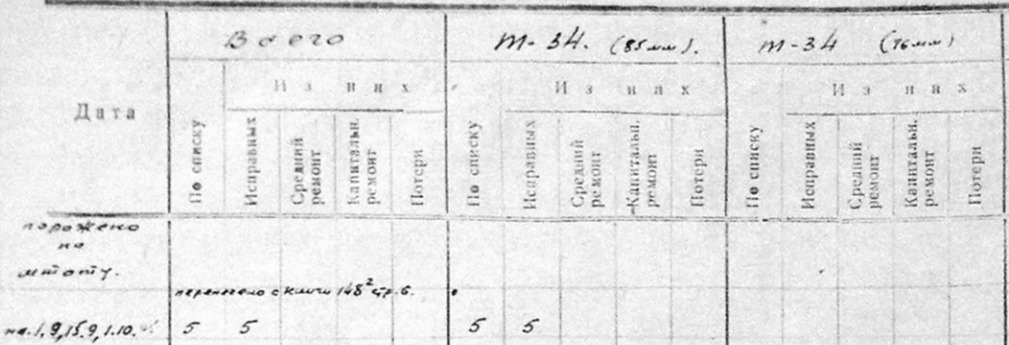
By 1st December 1945, the 73rd Tank Battalion received 16 T-34-85s from a factory(с. з-да) and two T-34-76 and a T-34-85 from 174th Evacuation Company {Rus.174-й эвакуационной роты (из 174-й э. роты)}. All T-34s from the Evacuation Company were marked as required medium repair (Средний ремонт).
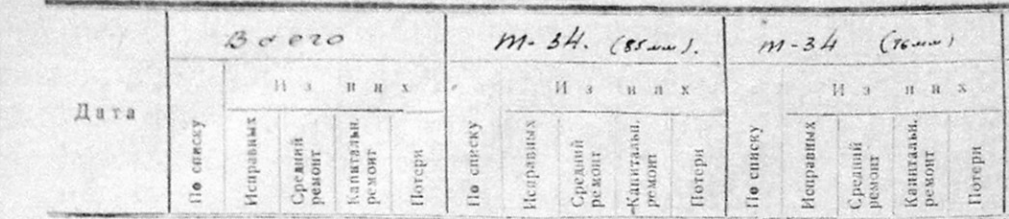

By 1st January 1946, the 73rd Tank Battalion received 11 additional T-34-85s as replenishment.
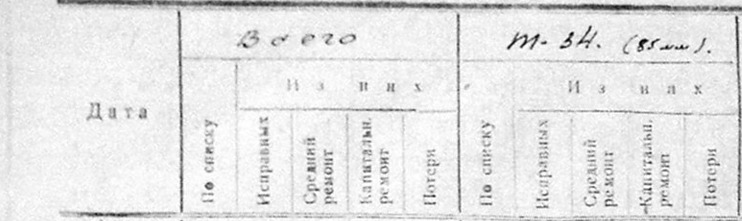

From 1st to 15th March 1946, three out of 33 T-34-85s were sent for Капитальн. ремонт (Eng: major repair). On 15th May 1946, one of them was discovered to be a “T-34-88”.
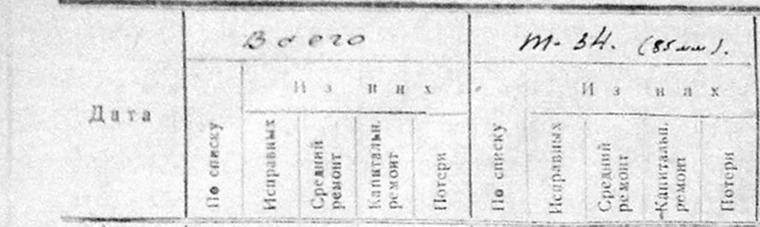
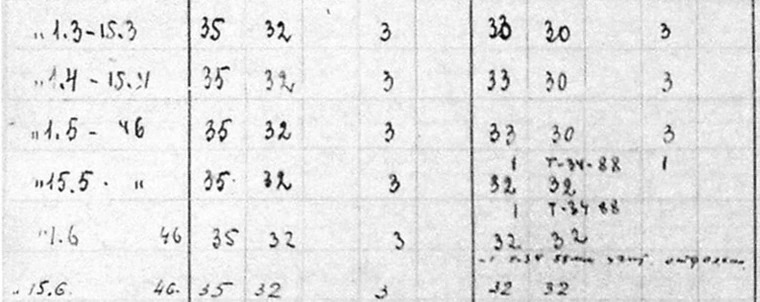
On 15th June 1946, a new column titled “t-34 88 mm” (the lower case of “t” is written as “m” in italics Cyrillic alphabet) was added. A ”T-34 88 mm…” was removed from the column of “t-34 (85 mm)” and moved to the column of “t-34 88 mm”. On 1st September, 1946, the T-34-88 and two T-34-76s were sent to Plant No. 27 of Leningrad for restoration.

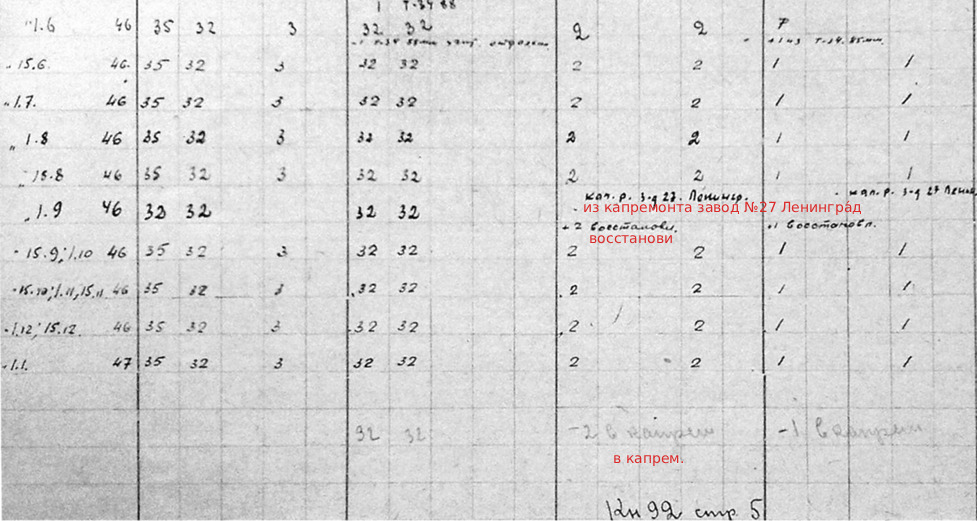
Source: Советские танки Гитлера - Page 115
For your most concerned problem:
- Can the converted gun actually fire, the answer is yes. The German telegram OP posted stated that
“Es wurde daraufhin durch die Arus in der Pz.-Werkstatt-Kp. 926 in Libau ein Einbau- und Schießversuch durchgeführt, der erfolgreich verlaufen ist.
Die restlichen Geschütze befinden sich auf dem Wege nach Libau.”
English translation:
“An installation and firing test was then carried out by the Armament Command (Arus) at Panzer Workshop Company 926 in Libau, and it was successful.
The remaining guns are on the way to Libau.”
- Can the T-34-88 able to move with its own power. The answer is also yes, as the newsreel shown that it was parked in the captured slot instead of the scrapped slot, and later unknowingly handed over to 73rd Tank Battalion as an T-34-85.
3 Likes
Doesn’t make me change my name about the addition, but tahnk you for enlighting me about it’s IRL state.
Do you have any info about what it was shooting ?
Probably the PzGr. with less propellant, since it is an already smaller gun, and thinner. So what could be the actual velocity of the shell, and by this it’s penetration ?
As per the result of the test fire report. The standard 88 Flak shell as per 85/88 Flak able to.
There is a last month stockpile inventory of Army Group Kurland.
You can find what 88 Flak ammo was available to the T-34-88 and SU-88.
According to “File 83. Records of the Oberquartiermeister (Senior Quartermaster) of Army Group Courland:
Organizational charts/strength overviews of the supply and logistics units of Army Group Courland, as well as of the subordinate Army High Commands (AOKs) and other formations. ”, 85 mm ammunition was not in any German unit or stockpile inventory . It is very likely that the Germans in Courland did not even use any captured Soviet 85 mm AA guns in their original configuration.
Given that, replacing the guns on SU-88 and T-34-88 with the captured 85 mm 52-K gun would be more logistically improbable than replacing them with 88 mm guns.
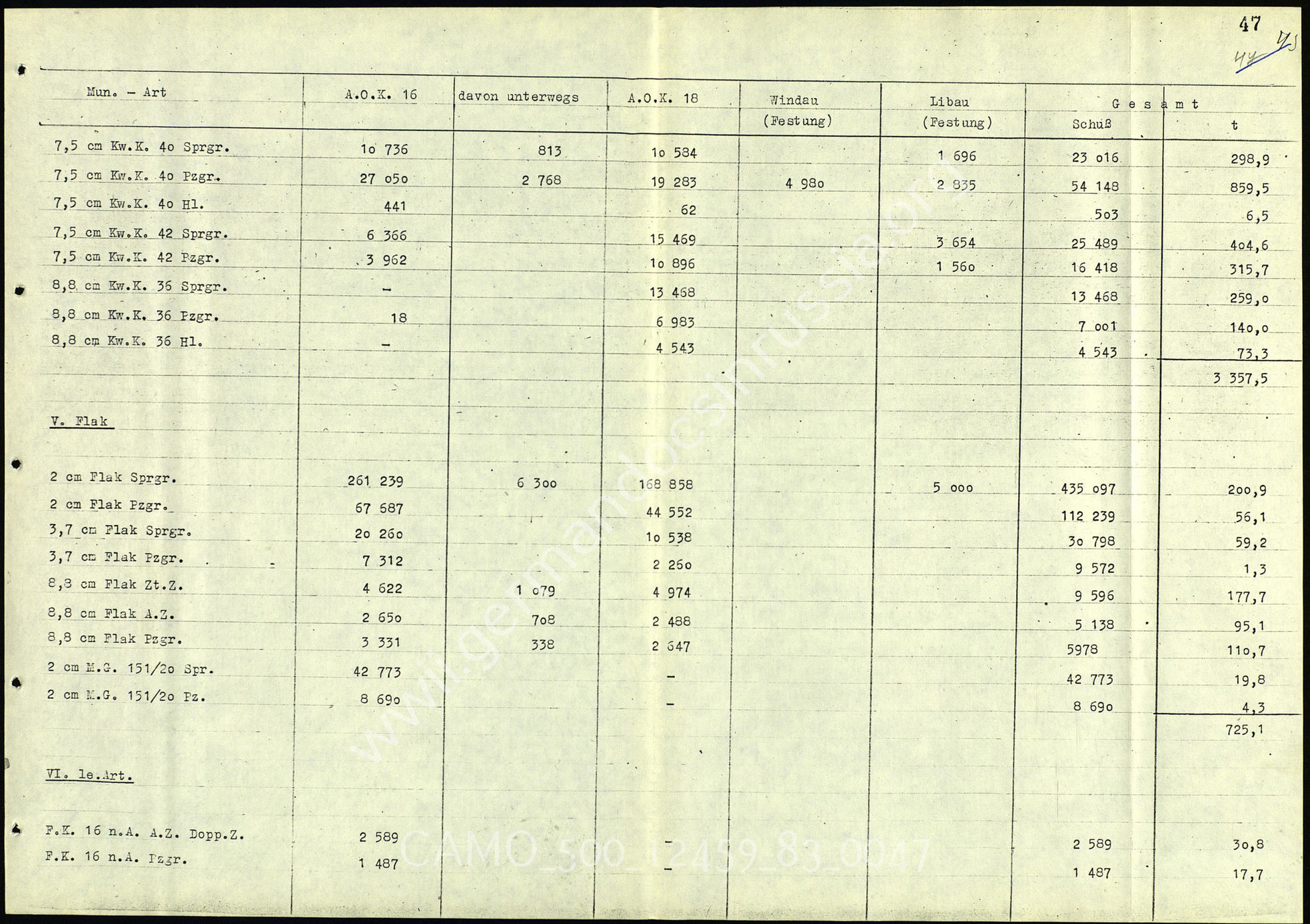
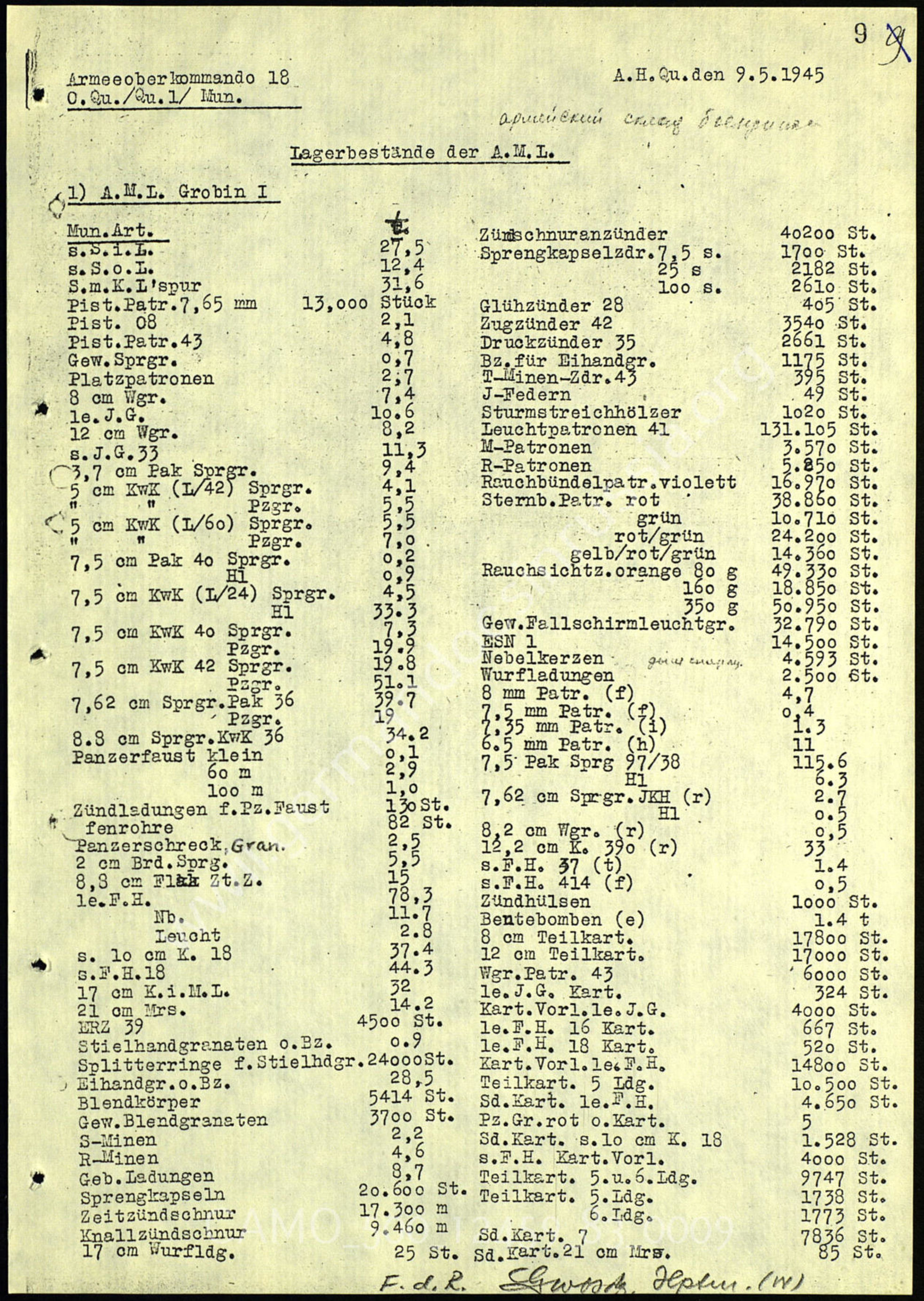
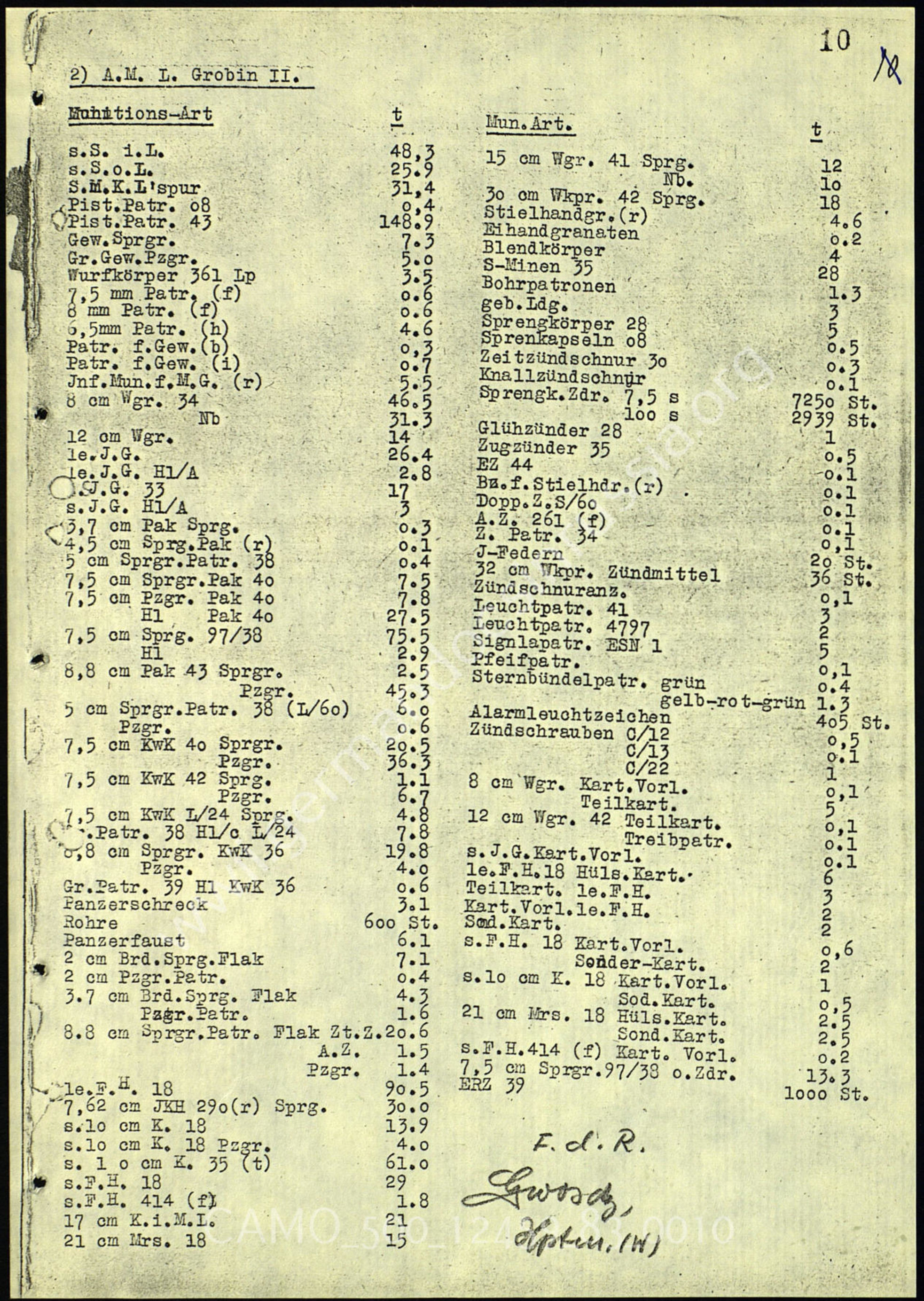

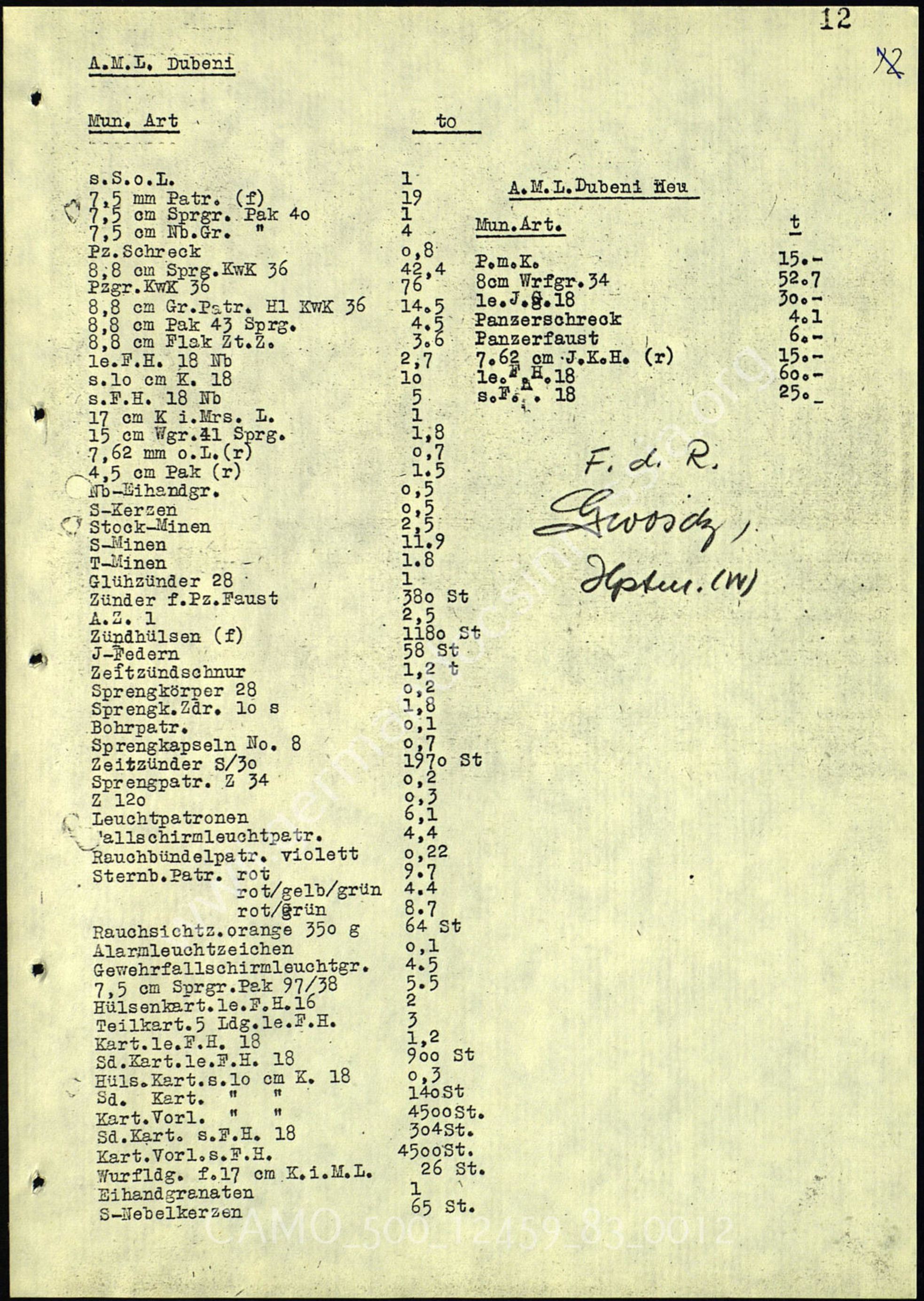
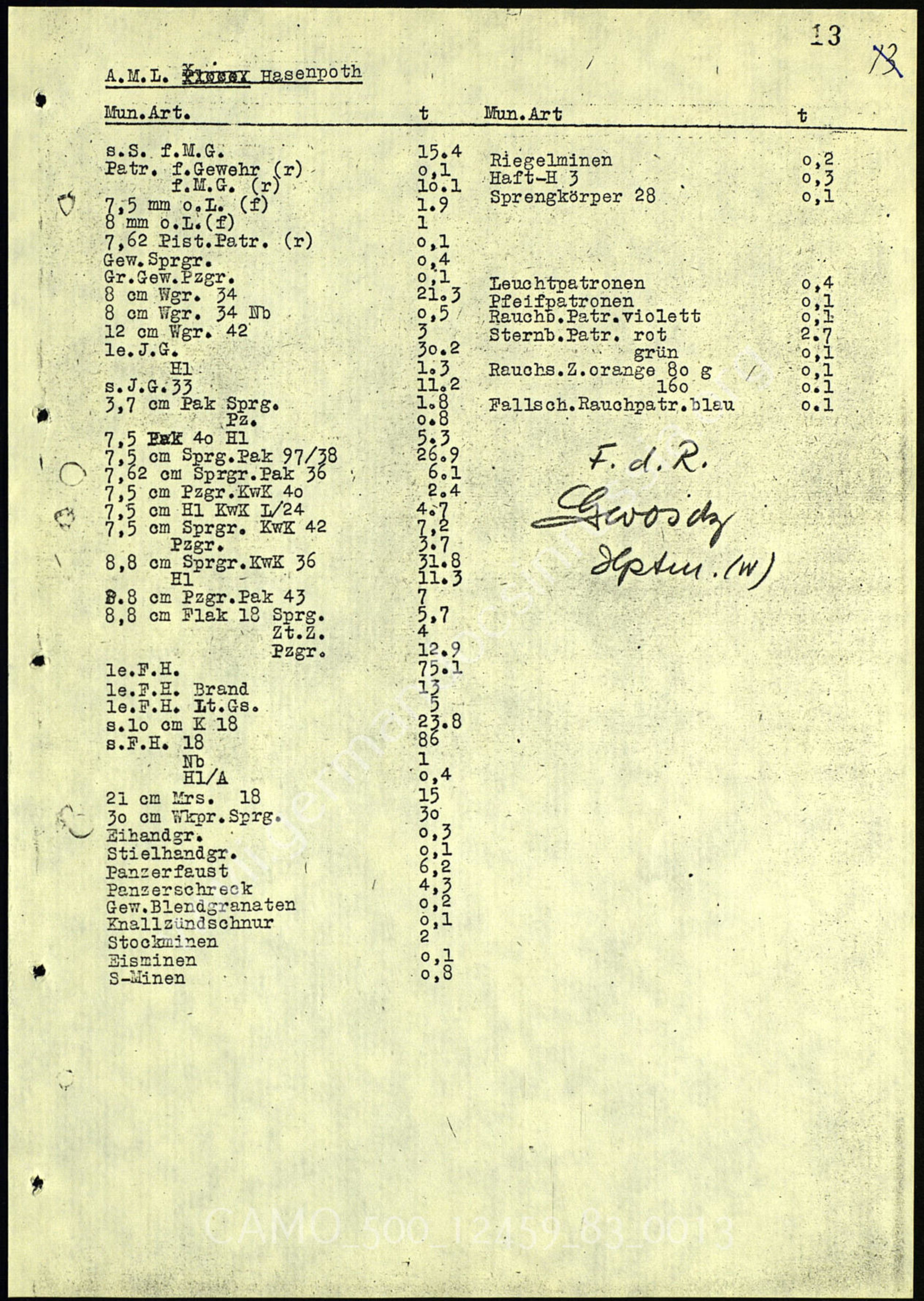
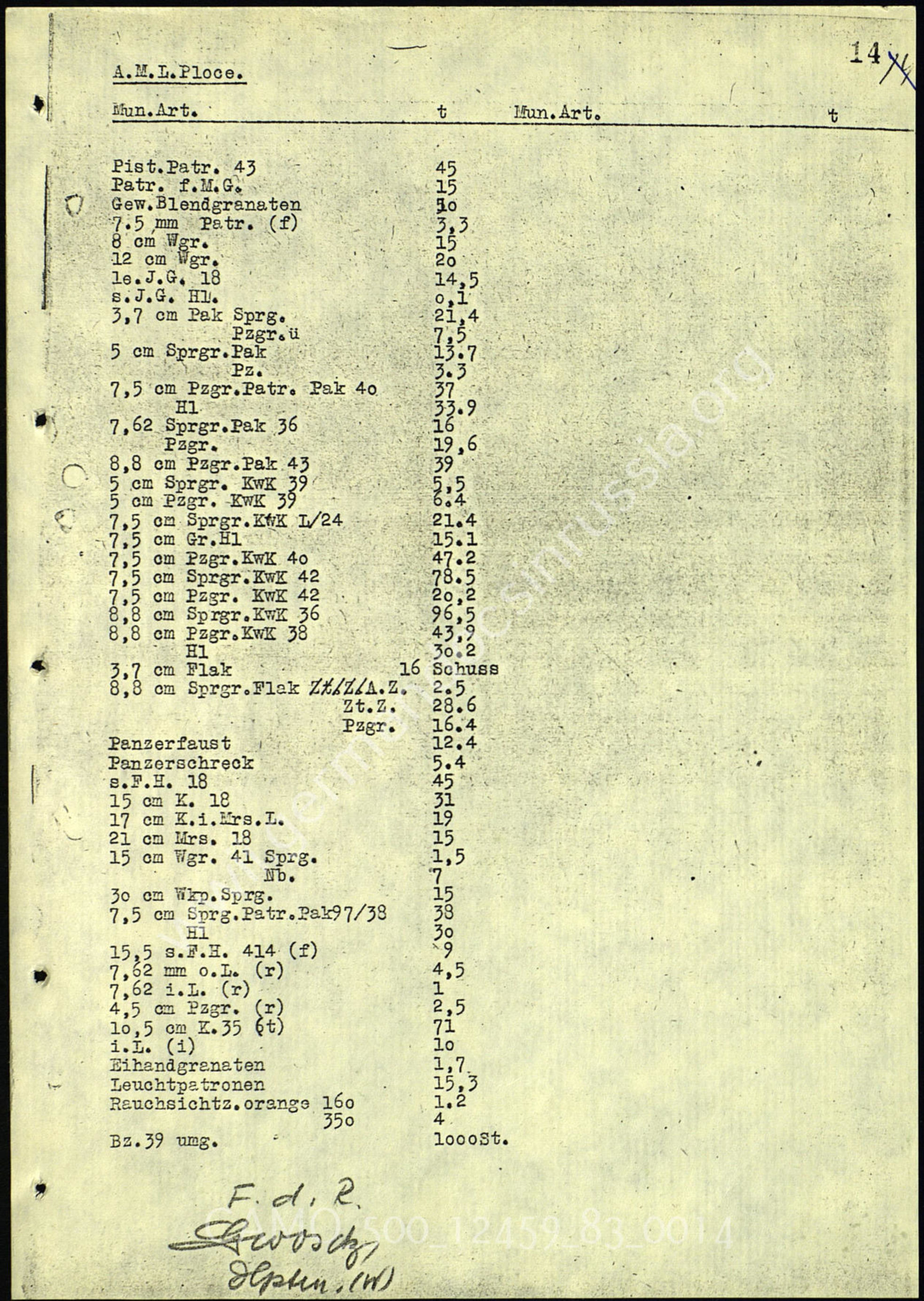
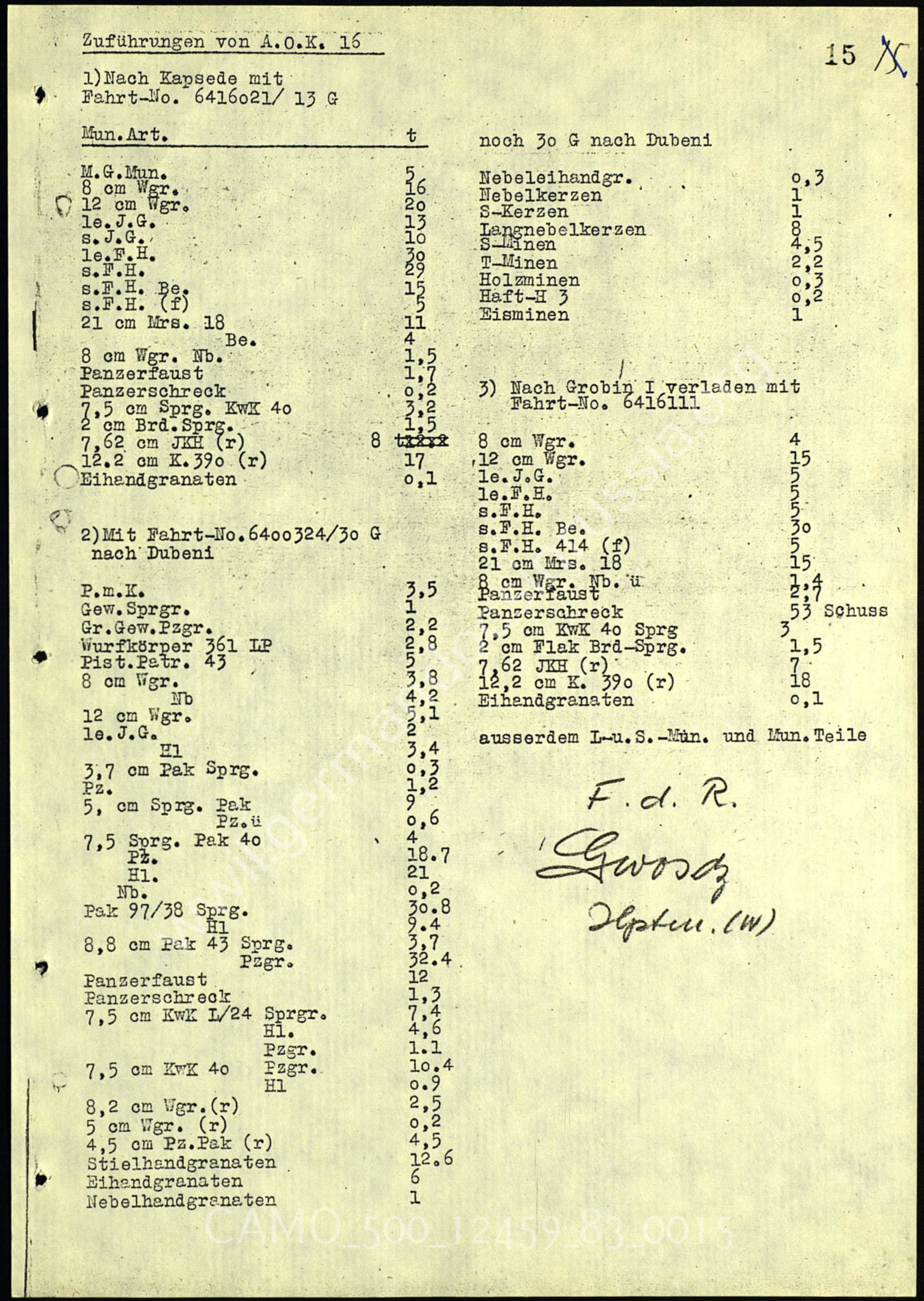
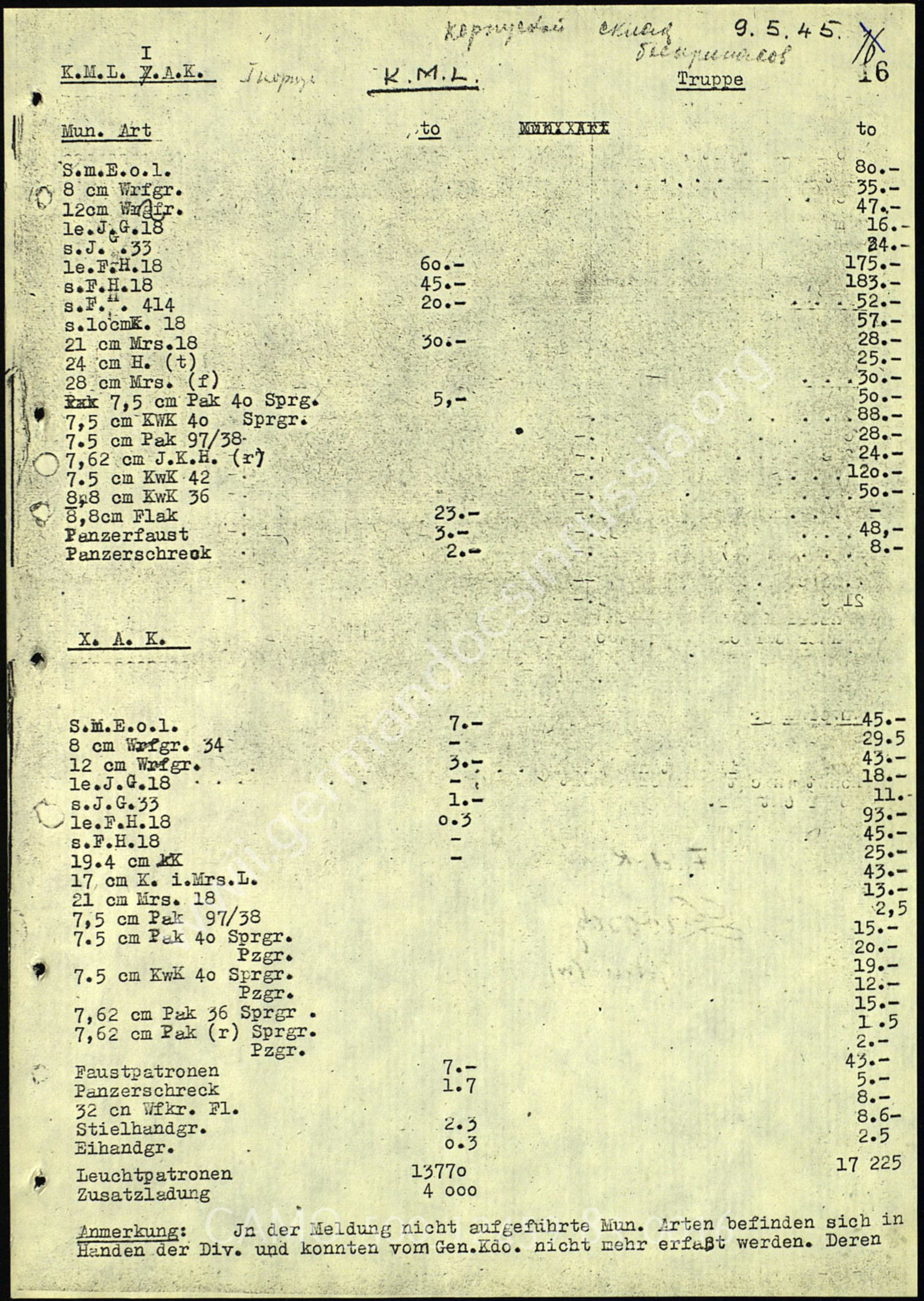
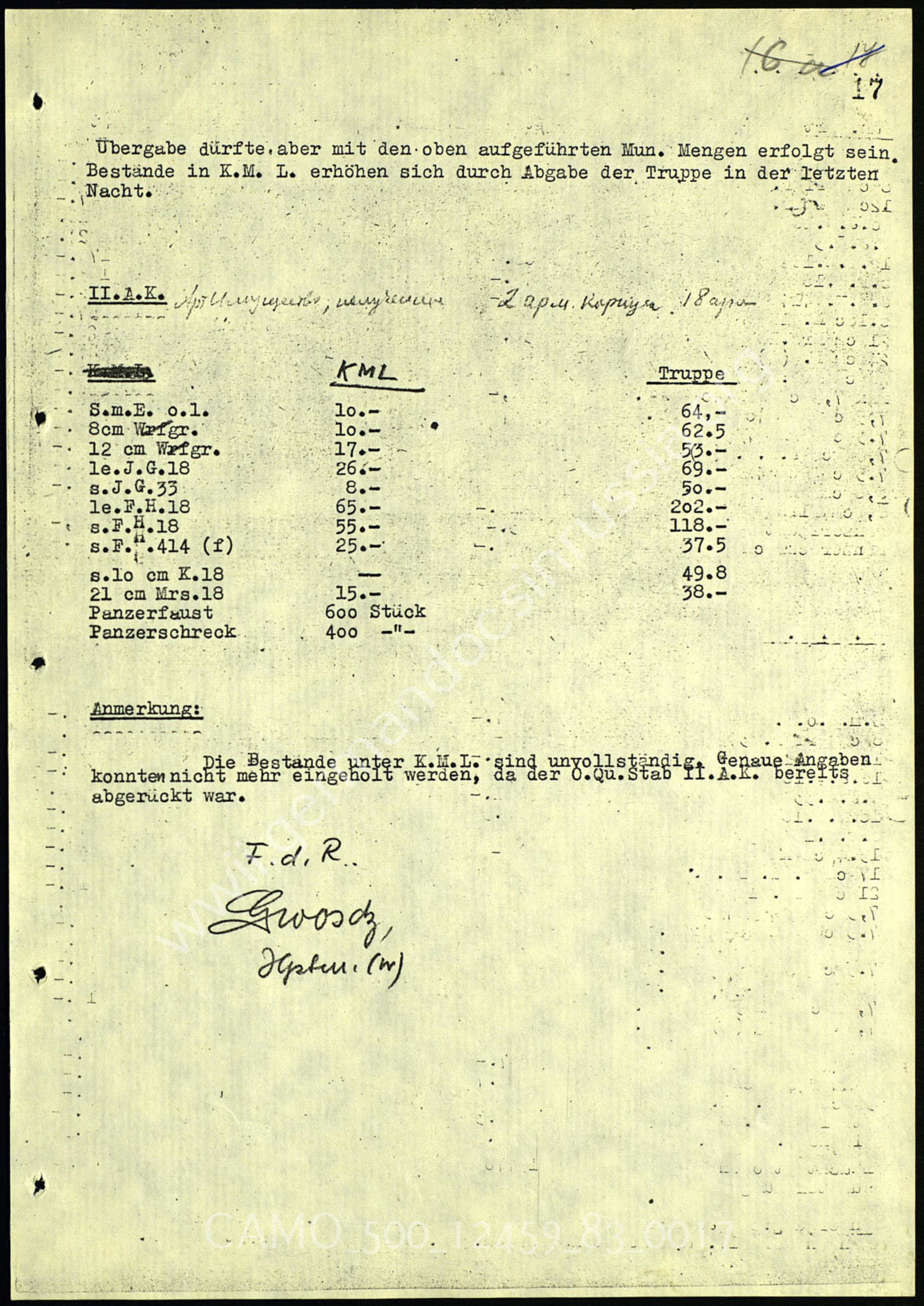
Given Flak gun tubes and beech mechanisms have a much lower useful life than other parts of a gun, they are standardise part made in factory. The 85/88 Flak gun tube put on T-34-88 are most likely made in Germany instead of converted from pre-existing Soviet gun tube.
Flak 88 Rated maximum powder pressure 33000 lb per sq in kg cm2≈ 2320.13 kg/cm²
TM E9-369A, German 88 mm Antiaircraft Gun Materiel p. 5
52-K : Максимальное давление пороховых газов в канале ствола 2550 кг/см2 ( 1. 85-мм зенитная пушка обр. 1939 г. - Руководство службы / Под наблюдением редактора инженер-майора Чернова В.П. Технический редактор Коновалова Е.К. Корректор Смирнова З.В… — М.: 2-я типография имени К.Е. Ворошилова Управления Военного Издательства Военного Министерства Союза ССР, 1952. — 399 с.)
Согласно советским наставлениям пушки Д5-С85, Д5-С85А, Д5-Т85 и ЗИС-С53 имеют тот же ствол, что и 85-мм зенитная пушка обр. 1939 г., но без дульного тормоза. Баллистика этих пушек одинакова.
English:
According to Soviet manuals, the D5-S85, D5-S85A, D5-T85, and ZIS-S53 guns have the same barrel as the 85mm anti-aircraft gun mod. 1939, but without a muzzle brake. The ballistics of these guns are identical.
The ammo of 52-K, D5-T and ZiS-S are also interchangeable.
The maximum pressure of D5-T is higher than the margin of its usual working pressure.
2 Likes