Would you like to see this T-18 in-game?
- Yes, as a Tech-Tree Vehicle
- Yes, as a Premium/Squadron/Event Vehicle
- No, I do not want to see this tank in-game.
0
voters
T-18 (MS-1): Upgunned with the 45 mm 20-K Cannon

Introduction
The T-18, also known as the MS-1 (Malyi Soprovozhdeniya, or Small Infantry-Support Tank), was a Soviet light tank developed during the 1920s and introduced into Red Army service in July 1927. It was designed to provide direct fire support to infantry and was the first domestically developed Soviet tank manufactured in substantial numbers. Approximately 960 serial-production vehicles were completed between 1928 and 1931, although published production totals vary slightly. The original T-18 was armed with a short-barreled 37 mm cannon and machine guns. By the early 1930s, its limited speed, thin armor and inadequate armament had reduced its effectiveness as a front-line fighting vehicle. The introduction of the T-26 light tank led to the gradual withdrawal of the T-18 from active combat formations. Surviving vehicles continued to serve in training establishments, reserve units and fortified regions.
In 1938, the Red Army began a program to convert obsolete T-18 tanks into armored defensive positions. Many vehicles had already exhausted their mechanical service lives, while others had lost their original weapons. A portion of the available tanks was rearmed with the Soviet 45 mm Model 1932 tank gun, factory designation 20-K. This weapon was already widely used on Soviet T-26 and BT tanks and offered considerably greater anti-armor performance than the T-18’s original 37 mm cannon. The conversions included stationary armored firing positions and a smaller number of vehicles that retained their running gear and engines. When Germany invaded the Soviet Union in June 1941, examples of both types remained in Soviet service.
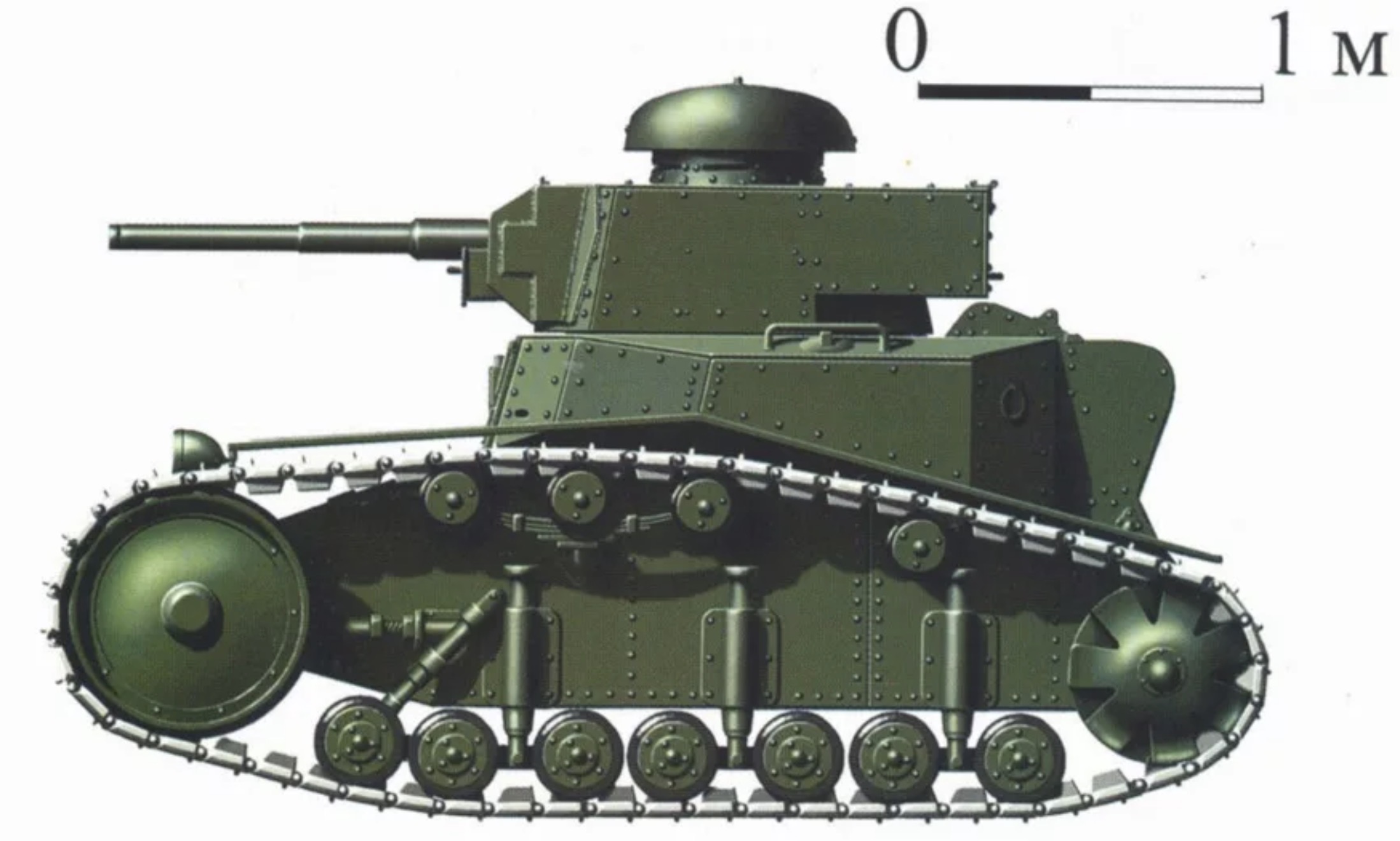
For War Thunder, this is probably the only version of the MS-1 that could be reasonably playable. Its performance would be comparable to that of a T-26 (-1 crew member) stuck in second gear, with slightly poorer armor protection and equivalent firepower. I nevertheless believe it deserves a place in the game due to its historical significance. As the first mass-produced Soviet tank (that also fought in WW2), the MS-1 played an important role in the development of Soviet armored warfare and laid the groundwork for the tanks that followed.
Development of the Original T-18
Spoiler
Development of the T-18 began in the mid-1920s under the direction of Sergei Shukalov. Soviet engineers examined the French Renault FT and the Italian Fiat 3000 when establishing the requirements for a new infantry-support tank. The first experimental Soviet vehicle, the T-16, was assembled in 1927. Initial testing revealed problems with the suspension, engine and general mobility. The design was subsequently modified with an extended chassis, improved suspension assemblies and changes to the engine installation. The resulting T-18 underwent acceptance trials in June 1927 and was formally adopted on 6 July. Serial production began at the Bolshevik Factory in Leningrad in 1928, with additional manufacturing undertaken at the Motovilikha Machine-Building Factory in Perm.
The Original Armament
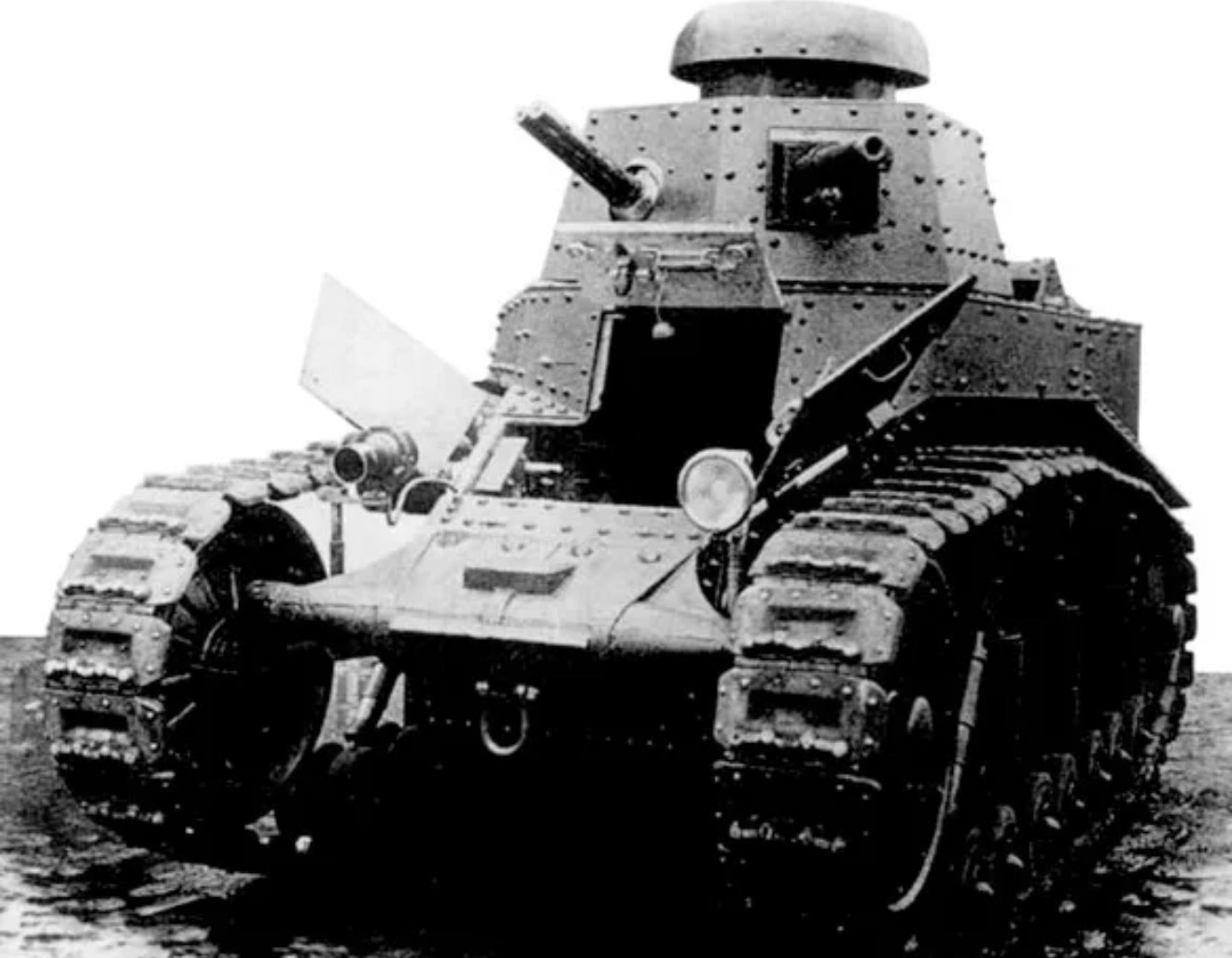
The tank’s driver sat in the front of the hull, the commander occupied a rotating turret in the center, and the engine and transmission were installed at the rear. The entire fighting crew consisted of two men. The early production vehicles had a 35 hp gasoline engine, a three-speed gearbox and a manually operated turret armed with a 37 mm Hotchkiss-type cannon. Later production improvements increased engine output to approximately 40 hp, introduced a four-speed transmission and modified the turret, suspension and tracks. The T-18 underwent several production revisions between 1928 and 1931. The most recognizable later version featured an enlarged turret with a rear bustle and modified running gear.
The final production batches formed the main source of hulls used for the subsequent 45 mm conversion program. By that stage, these vehicles had generally accumulated considerable mechanical wear. The T-18 was replaced in production by the T-26, whose more powerful engine, greater speed and potential for improved armament made it more suitable for the Red Army’s expanding mechanized forces.
Differences Between the T-18 Variants
The T-18 underwent several changes during its production history and later military service.
| Feature | Early T-18 | Late T-18 | T-18M Prototype | 45 mm T-18 Conversion |
|---|---|---|---|---|
| Period | 1928–1929 | 1930–1931 | 1938 | 1938–1941 |
| Main gun | 37 mm Hotchkiss-type | 37 mm Hotchkiss-PS | Armament disputed | 45 mm 20-K |
| Engine | 35 hp | 40 hp | GAZ-M1 type, approximately 50 hp | Original engine or none |
| Transmission | Three-speed | Improved four-speed | Modified T-38-derived components | Original or removed |
| Turret | Early riveted type | Later type with rear bustle | Modified, lightened turret | Existing turret with modified gun installation |
| Production status | Serial production | Serial production | One experimental prototype | Conversion of existing vehicles |
The 1938 Rearmament Program
Spoiler
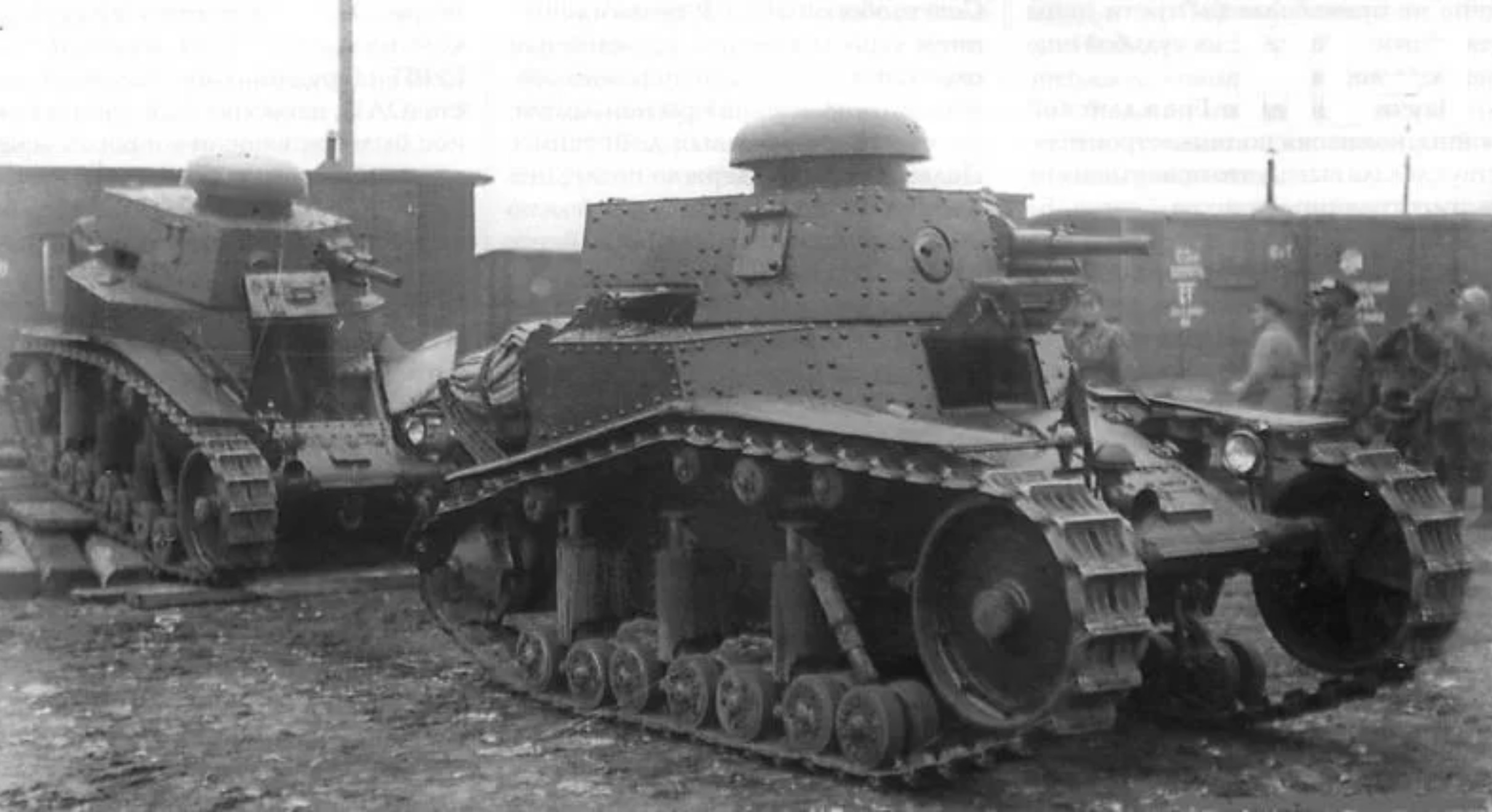
By the beginning of 1938, Soviet military records listed approximately 862 surviving T-18 tanks. This figure included vehicles in military units, training establishments, storage and fortified regions. Many were unserviceable, and a number had already been stripped of guns or mechanical components. Between 1934 and 1937, approximately 160 T-18s had been transferred for defensive use in the Leningrad Military District. Their worn-out engines made them suitable for conversion into permanent firing installations. On 2 March 1938, a further 700 T-18 tanks were designated for transfer to fortified regions. The proposed armament for these installations included twin DT machine guns, DA-2 machine-gun mounts and 45 mm tank cannons. The program was reinforced by Decree No. 180ss of the Soviet Defense Committee, issued on 1 August 1938, concerning the disposal and reuse of obsolete tank types. Two T-18s were reserved for the NIBT proving-ground museum, while the remaining vehicles were intended for defensive purposes.
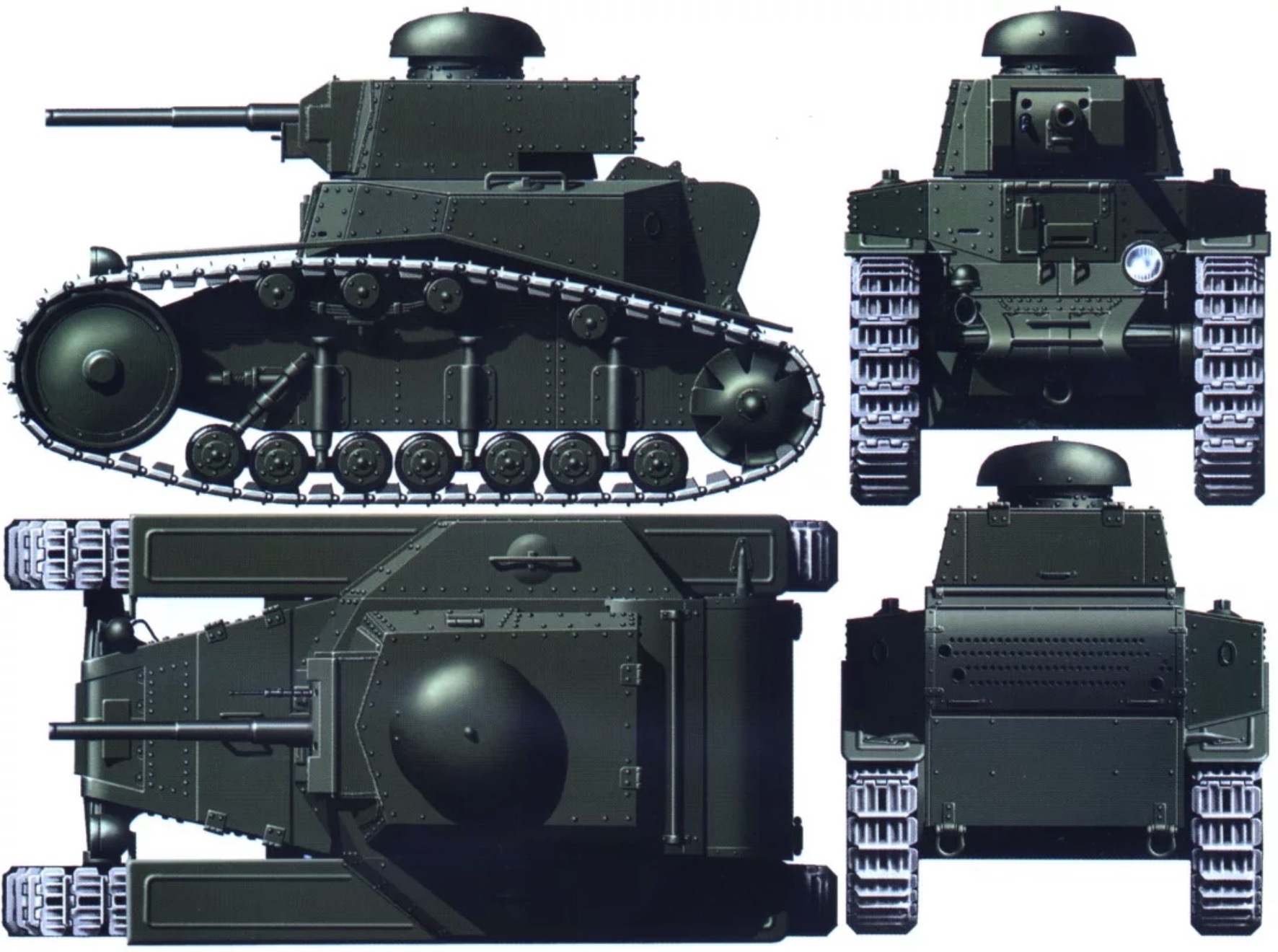
70 T-18s were rearmed with 45 mm tank guns. Approximately 68–75 serviceable vehicles were in fortified-region inventories during 1939. Obsolete tanks could still be used to protect strategic crossings, roads and defensive approaches. Their hulls and turrets provided existing armored structures, while the installation of the 45 mm gun gave the old vehicles a weapon capable of engaging contemporary armored targets. The shortage of suitable 37 mm ammunition was another consideration. The 45 mm gun used ammunition already manufactured in large quantities for more modern Soviet tanks and anti-tank weapons.
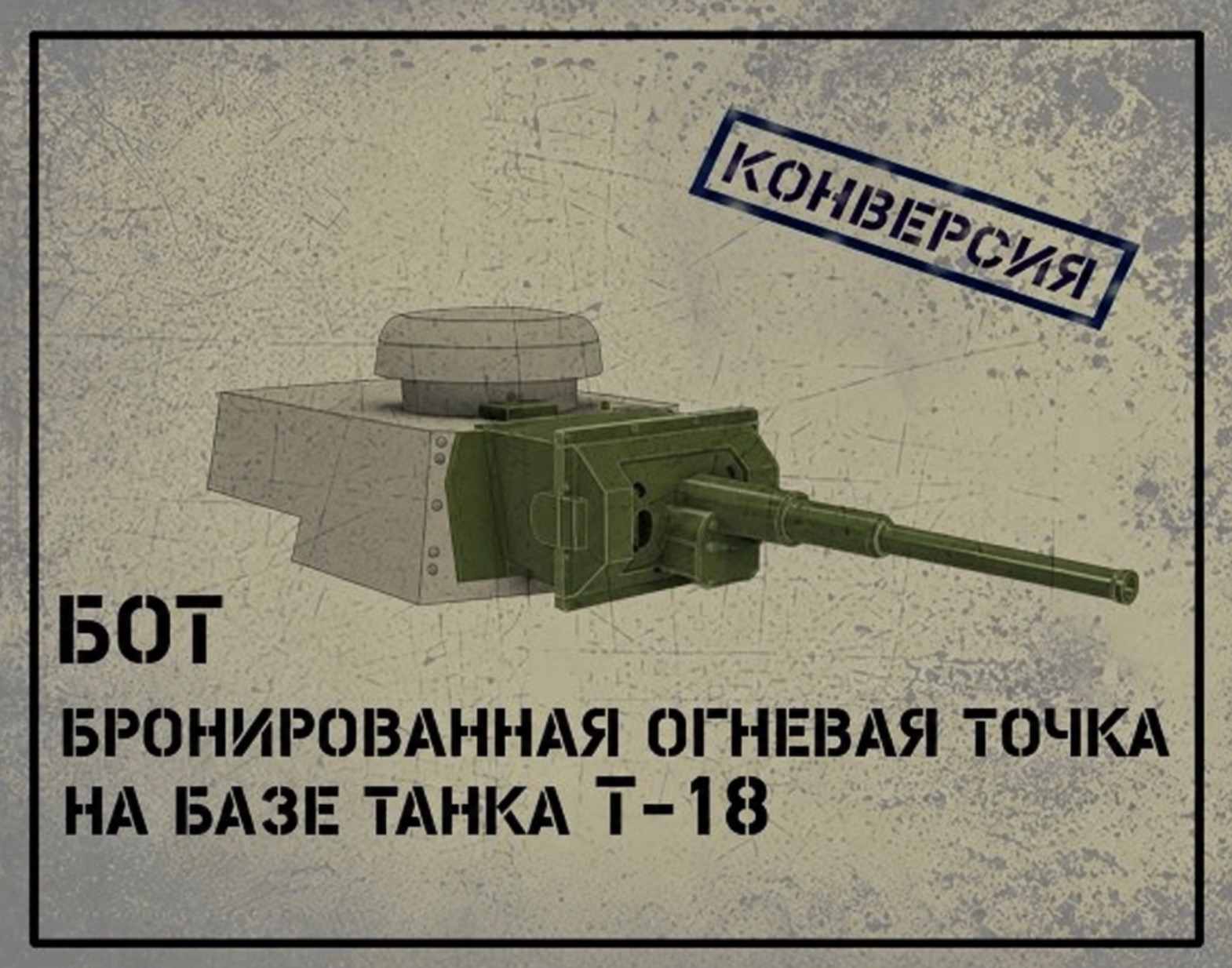
Conversions continued during the period preceding the German invasion. Not every T-18 assigned to a fortified region received a new cannon. Some were equipped exclusively with machine guns, while others remained incomplete or unarmed.
Combat History of T-18 (20-K)
Spoiler
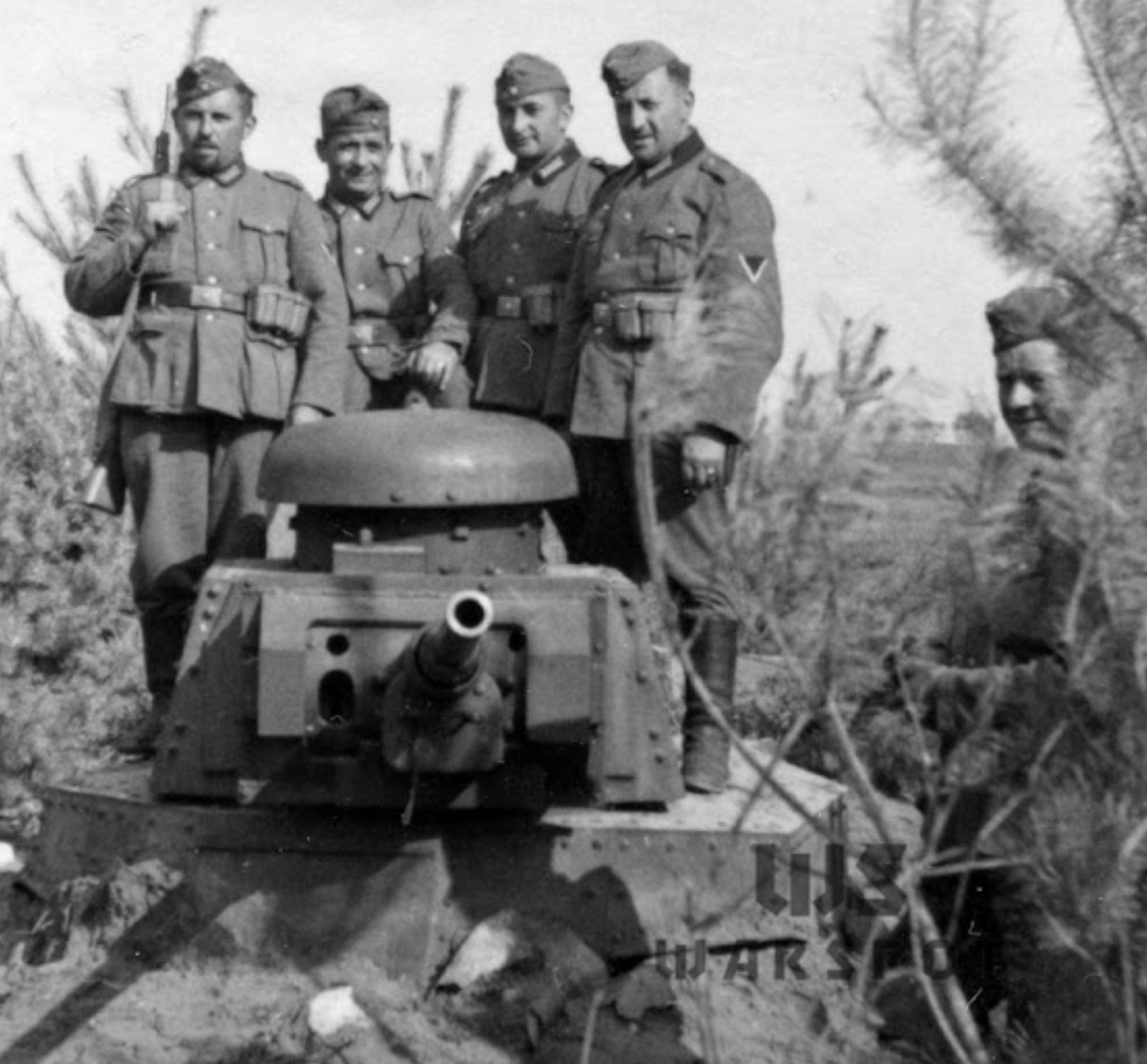
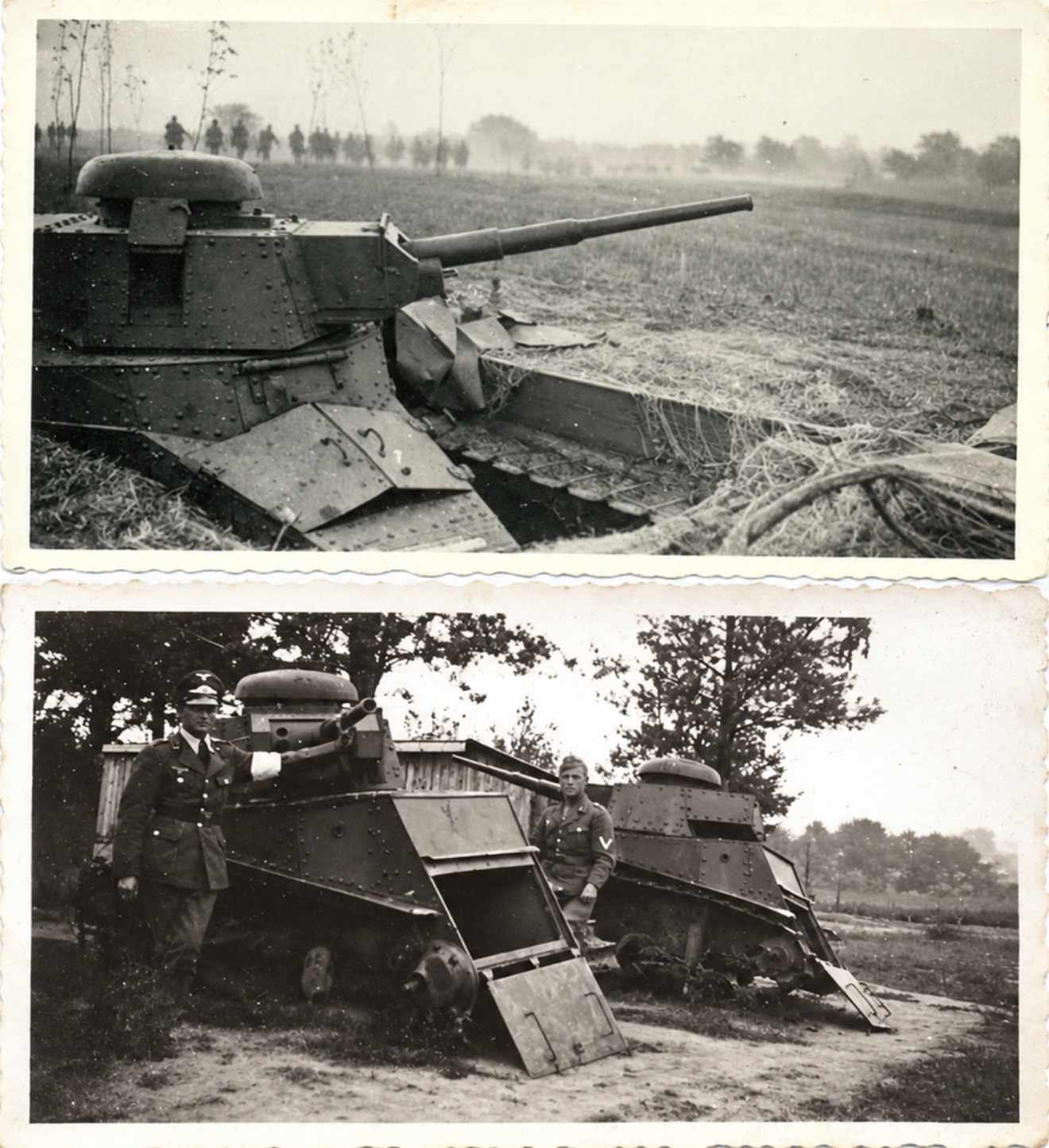
The 45 mm-armed T-18 (MS-1) saw its documented wartime service during the German invasion of the Soviet Union in June 1941. Approximately 70 T-18s had been rearmed with the 45 mm Model 1932 (20-K) cannon under a modernization program begun in 1938, with many converted into stationary armored firing positions along the Soviet frontier. During the opening days of Operation Barbarossa, T-18s were employed in defensive operations, particularly in the Osowiec Fortified Region, which possessed 36 armored turret installations armed with 45 mm guns, incorporating equipment from both T-18 and T-26 tanks. Soviet accounts describe T-18 units engaging German light tanks, armored cars and armored personnel carriers in this region during June 1941, although enemy losses remain unconfirmed. Some T-18s were still mobile in 1941, retaining functioning engines and running gear. On 29 June, the Soviet 9th Mechanized Corps received 14 T-18s and a T-26 command tank as reinforcements during the fighting around Dubno and Rovno. By 2 July, only two T-18s remained on its strength, one unserviceable. Before the Second World War, the original T-18 had participated in the 1929 Sino-Soviet conflict over the Chinese Eastern Railway, when nine operational tanks supported Soviet infantry against Chinese positions in Manchuria. These vehicles carried the original 37 mm cannon. There is no confirmed combat use of the 45 mm-armed T-18 before 1941, including during the 1938 Lake Khasan conflict or the 1939–1940 Winter War.
T-18 (20-K) In-Depth
Spoiler
The 45 mm conversion was based on existing T-18 hulls, mainly from later production batches. There was no newly manufactured hull specifically designed for the program. The original riveted construction was retained, together with the existing armor protection and turret structure, although the gun installation required modification. The principal change was the removal of the original 37 mm cannon and installation of the 45 mm 20-K. The replacement weapon had a substantially longer barrel, larger breech assembly and greater recoil forces. The gun mounting and armored mantlet had to be adapted to accommodate the weapon. Externally, converted vehicles could be identified by their longer gun barrel. The turret remained extremely restricted in size. The commander continued to serve as gunner and loader, and the larger ammunition increased the difficulty of operating the weapon inside the compartment.

Armor Protection
The original T-18 hull consisted of riveted armor plates attached to a supporting framework. Maximum armor thickness was approximately 16 mm, while thinner armor was used on the roof, floor and certain other surfaces. The turret was similarly constructed from riveted armored plates. The frontal and side armor provided protection against rifle-caliber small-arms fire and some fragments.
The installation of the 45 mm gun did not include a general increase in hull or turret armor thickness. Consequently, mobile 45 mm-armed T-18s remained vulnerable to contemporary German tank guns, anti-tank weapons and artillery.
Crew Arrangement
The tank had a crew of two. The driver occupied the front hull and operated the vehicle through mechanical controls and steering levers. His visibility was provided by narrow armored observation openings. The commander occupied the turret and was responsible for target observation, weapon operation, loading, firing and communication with the driver. The 45 mm conversion retained this basic arrangement in mobile vehicles. The larger cannon and its ammunition added to the commander’s workload.
Engine, Transmission and Running Gear
Later T-18 tanks were equipped with a four-cylinder, air-cooled gasoline engine producing approximately 40 hp. The engine was mounted transversely at the rear and connected to a mechanical transmission. The final production version used a four-speed gearbox. Steering was accomplished through a differential arrangement and track brakes. The suspension employed sprung bogies, relatively small road wheels and upper track-support rollers. The tank used a front idler and rear drive sprocket. The tank’s came with a rear trench-crossing tail. A standardized combat weight for all 45 mm conversions cannot be established. The original production T-18 weighed approximately 5.3–5.9 tonns, depending on its configuration.
The 45 mm Model 1932 Tank Gun (20-K)
The 45 mm 20-K was developed at Soviet Factory No. 8 from the 45 mm Model 1932 anti-tank gun, designated 19-K. The tank version entered production in 1932 and became one of the standard weapons fitted to Soviet light tanks and armored cars during the 1930s. It was used on numerous vehicles, including the T-26, BT-5, BT-7 and BA-10 armored car.
The gun had a caliber of 45 mm and a barrel length of approximately 46 calibers. Its armor-piercing projectile generally left the barrel at approximately 760 m/s, depending on ammunition type. The 20-K used a vertical sliding-wedge breech and a recoil system consisting of a hydraulic recoil brake and spring recuperator. The gun was equipped with a semi-automatic breech mechanism. Early production examples experienced difficulties with reliable semi-automatic operation, particularly when different ammunition types were fired. Changes to the mechanism were introduced in 1934 and subsequent production years. By 1935, more reliable semi-automatic operation had been achieved. The 1938 version introduced additional improvements, including an electric firing system. The documentation concerning T-18 conversions normally specifies the 45 mm Model 1932 gun.
20-K has a practical rate of fire of approximately 7–12 rounds per minute. This figure concerns the gun in general. The restricted compartment of the T-18 and the duties performed by a single turret crewman would likely have reduced the rate achievable in sustained combat.
Stationary Armored Firing Positions

A large part of the 1938 program involved converting T-18 tanks into stationary defensive weapons. These installations were classified as armored firing points, abbreviated BOT from the Russian Bronirovannaya Ognevaya Tochka. The conversion process generally began with the removal of worn-out or unusable mechanical equipment. The engine, transmission and running gear could be taken out, leaving the armored hull and turret available for defensive installation. The remaining structure was positioned in a prepared excavation. Depending on the terrain and local construction arrangements, the hull could be buried almost to turret level or installed as part of a more substantial defensive work. The turret was left with a field of fire covering the intended approach. Positions were established near roads, bridges, crossings and other locations where enemy vehicles were expected to pass. Some installations incorporated concrete construction, while others used earthworks and locally prepared positions. The 45 mm cannon provided direct-fire capability against armored vehicles and infantry. It was particularly useful when positioned to fire across a narrow approach or at vehicles passing through a restricted area.
Performance Against Armor
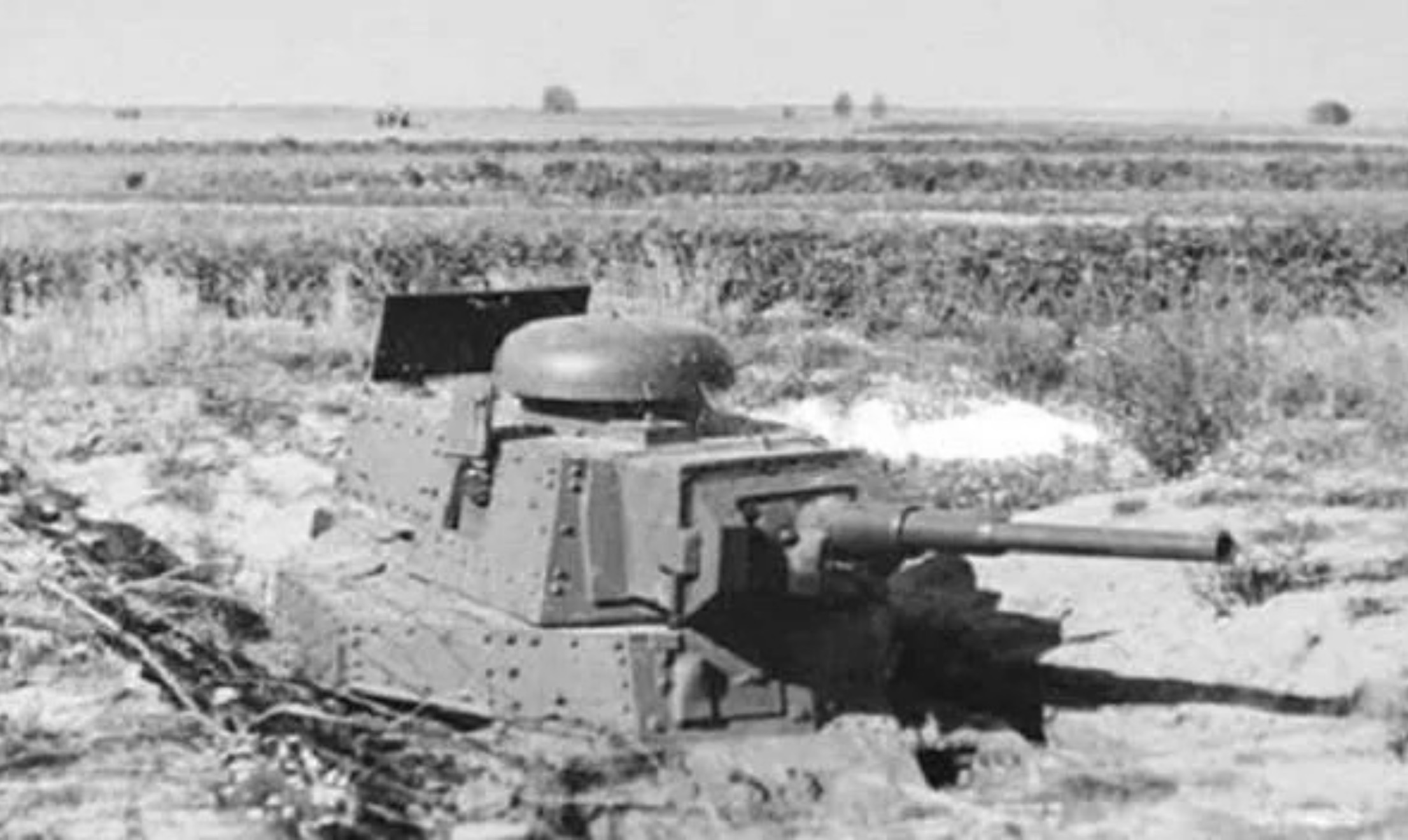
The 20-K provided significantly improved armor penetration compared with the original 37 mm Hotchkiss-derived weapon. The standard 1.43 kg armor-piercing projectile had a muzzle velocity of approximately 760 m/s. In 1941, this made the 45 mm gun dangerous to German armored cars, Panzer I tanks and Panzer II light tanks. It could also penetrate vulnerable areas of the Panzer III and Panzer IV. The 45 mm weapon was less effective against later German tanks equipped with additional frontal armor.
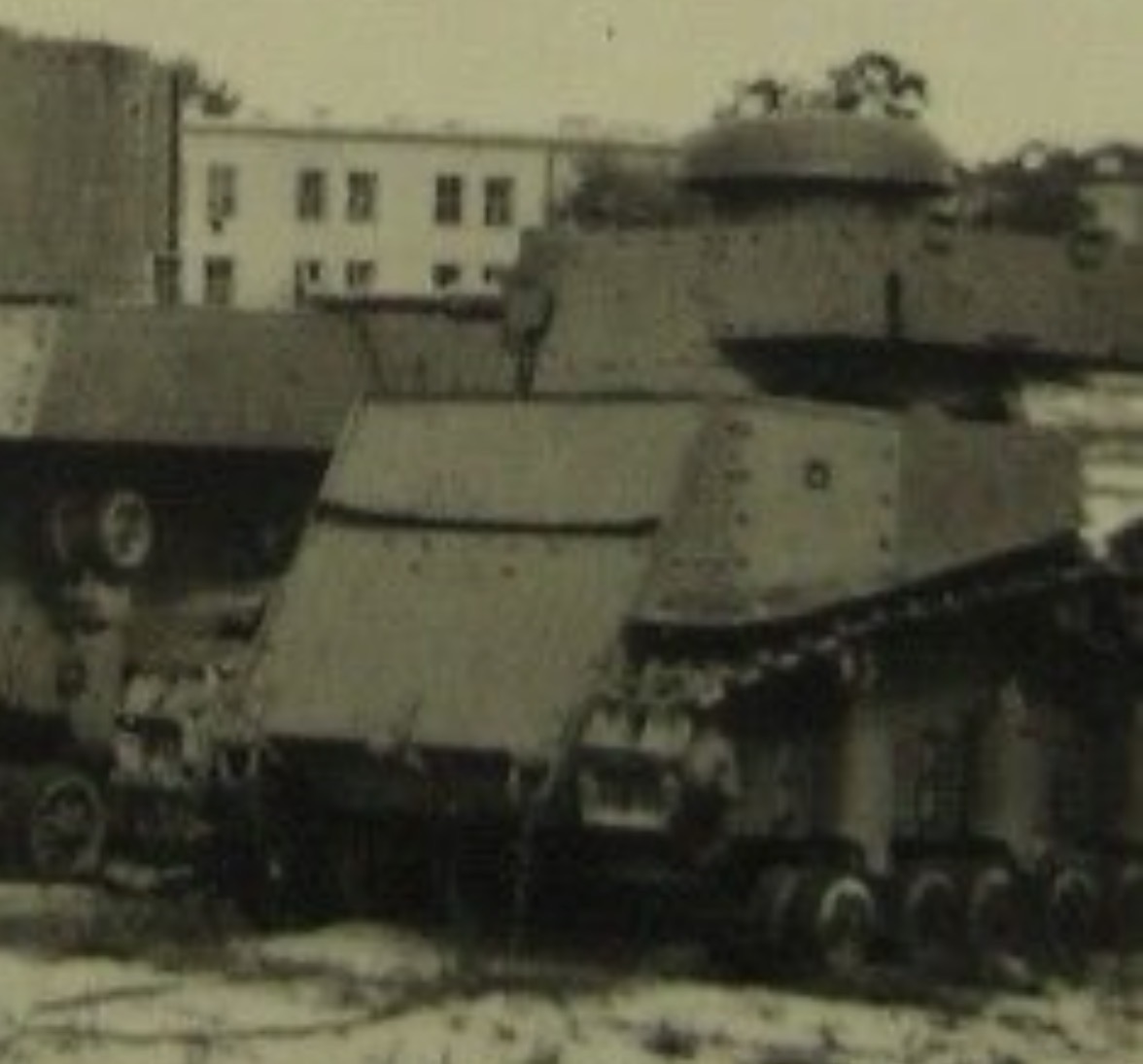
Ammunition for the 45 mm 20-K
Spoiler
The 20-K used fixed ammunition, with the projectile and propellant contained in a single complete cartridge. Several projectile types were available during the war. The principal categories were armor-piercing, fragmentation and canister ammunition.
BR-240 Armor-Piercing Projectile
The BR-240 was an armor-piercing projectile intended for use against armored targets. Its projectile weight was approximately 1.43 kg, and the muzzle velocity was around 760 m/s. The projectile was designed to penetrate armor through kinetic impact. Certain versions included a small explosive bursting charge intended to function after penetration. The corresponding complete cartridge was designated UBR-243. This ammunition was suitable for engaging enemy tanks, armored cars and other protected vehicles.

According to one source, the BR-240SP armor-piercing shell was not adopted until 1942. Therefore, the MS-1 should not have access to this round, giving it another disadvantage compared to the in-game T-26 in terms of available ammunition and overall firepower.
O-240 Fragmentation Projectile
The O-240 fragmentation projectile was intended for use against infantry, gun crews, unarmored equipment and field positions. Its projectile weight was approximately 2.1–2.15 kg, depending on the specific version. It had an explosive filling of approximately 118 grams. The projectile could be fired in a complete cartridge designated UO-243. Compared with the original 37 mm shell, the 45 mm fragmentation projectile carried substantially more explosive material and produced a greater fragmentation effect.
Shch-240 Canister Projectile
The Shch-240 canister projectile was intended for use against personnel at short range. It contained multiple metal balls that spread after discharge, creating a wide pattern of projectiles. Canister ammunition was primarily suited to close-range defense against exposed infantry. Its usefulness against armored vehicles was negligible.
Ammunition Capacity
Original production T-18s carried approximately 96 or 104 rounds of 37 mm ammunition, depending on production version. The T-18 (20-K) exact ammunition capacity is unknown at the time of writing. The T-18M may also have been equipped with a 45 mm cannon, with one source listing an ammunition capacity of 112 rounds. However, the accuracy of this information remains disputed, as other sources provide conflicting details regarding the prototype’s armament.
Specifications
Spoiler
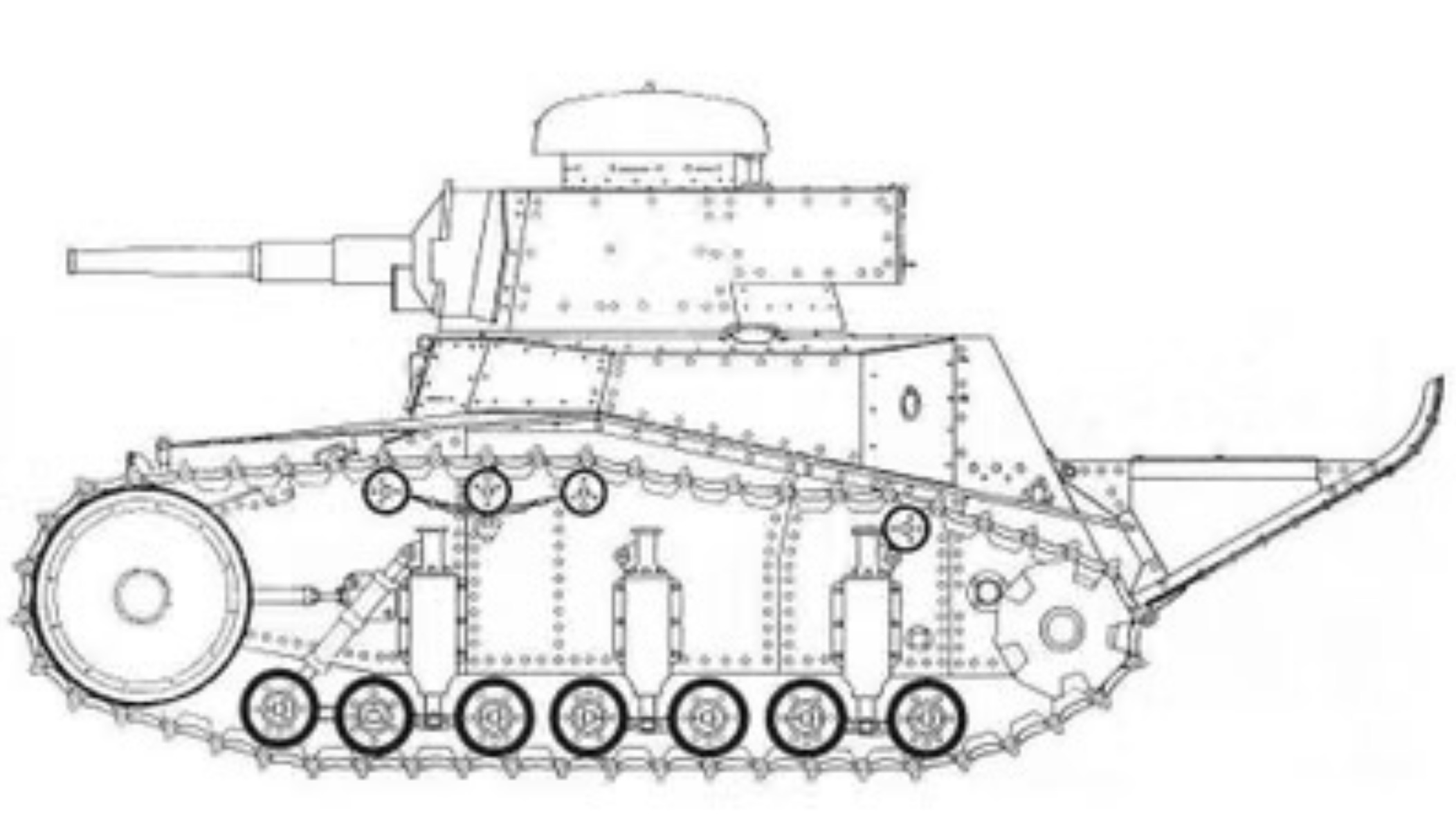
General characteristics and dimensions
| Specification | Value |
|---|---|
| Country | Soviet Union |
| Conversion period | From 1938 |
| Crew | 2 |
| Combat weight | Unknown after conversion; original late T-18 approximately 5.68–5.9 tonnes |
| Hull length | 3.45 m |
| Overall length with tail | 4.35 m, excluding any forward gun projection |
| Width | 1.76 m |
| Height | 2.12 m |
| Ground clearance | 315 mm |
| Armor construction | Riveted steel plates |
| Hull front armor | 16 mm |
| Hull side armor | 16 mm |
| Hull rear armor | 16 mm |
| Turret armor | Approximately 16 mm |
| Roof and floor | Approximately 8 mm |
| Crew positions | Driver in hull, commander/gunner/loader in turret |
Mobility and mechanical specifications
| Specification | Value |
|---|---|
| Engine | Mikulin-designed four-cylinder gasoline engine |
| Engine output | 40 hp (late production) |
| Cooling | Air-cooled |
| Transmission | Mechanical, four forward speeds |
| Maximum road speed | Approximately 17.5 km/h, original chassis |
| Operational range | Approximately 100–120 km, original chassis |
| Fuel capacity | 110 liters |
| Suspension | Spring-suspended bogie assemblies |
| Track width | 300 mm |
| Track gauge | 1,460 mm |
| Ground pressure | Approximately 0.375 kg/cm², original chassis |
| Maximum gradient | Approximately 35–40°, original chassis |
| Trench crossing | Approximately 1.7 m |
| Vertical obstacle | Approximately 0.55 m |
| Fording depth | Approximately 0.8 m |
| Radio | No standard radio installation |
Main armament — 45 mm 20-K
| Designation | 45 mm Model 1932, 20-K |
|---|---|
| Weapon type | Rifled tank cannon |
| Caliber | 45 mm |
| Barrel length | 46 calibers, approximately 2.07 m |
| Breech | Vertical sliding-wedge |
| Ammunition loading | Fixed cartridge |
| AP muzzle velocity | Approximately 757–760 m/s |
| HE/fragmentation velocity | Approximately 335 m/s |
| Standard gun rate of fire | 7–12 rounds/minute |
| Gun elevation (standard mounting) | −6° to +22° |
| Turret traverse | 360°, manually operated |
| Main gun ammunition carried | Unconfirmed (maybe 112 cannon rounds and 1,449 DT cartridges) |
| Secondary armament | Original late T-18 had a 7.62 mm DT machine gun |
Ammunition types
| Projectile | Type | Projectile mass | Muzzle velocity |
|---|---|---|---|
| BR-240 | Armor-piercing | 1.43 kg | ~760 m/s |
| BR-240SP | Solid armor-piercing | 1.43 kg | ~757 m/s |
| O-240 | Fragmentation | ~2.14 kg | ~335 m/s |
| Shch-240 | Canister | Varies | Depends on cartridge |