- Yes, as a tech tree vehicle.
- Yes, as an event vehicle.
- Yes, as a squadron vehicle.
- No
- Unified Korea (Vietnam Subtree).
- Soviet.
- China.
- Japan (ASEAN Subtree).
- I said no.
Updated: 17/11/2026.
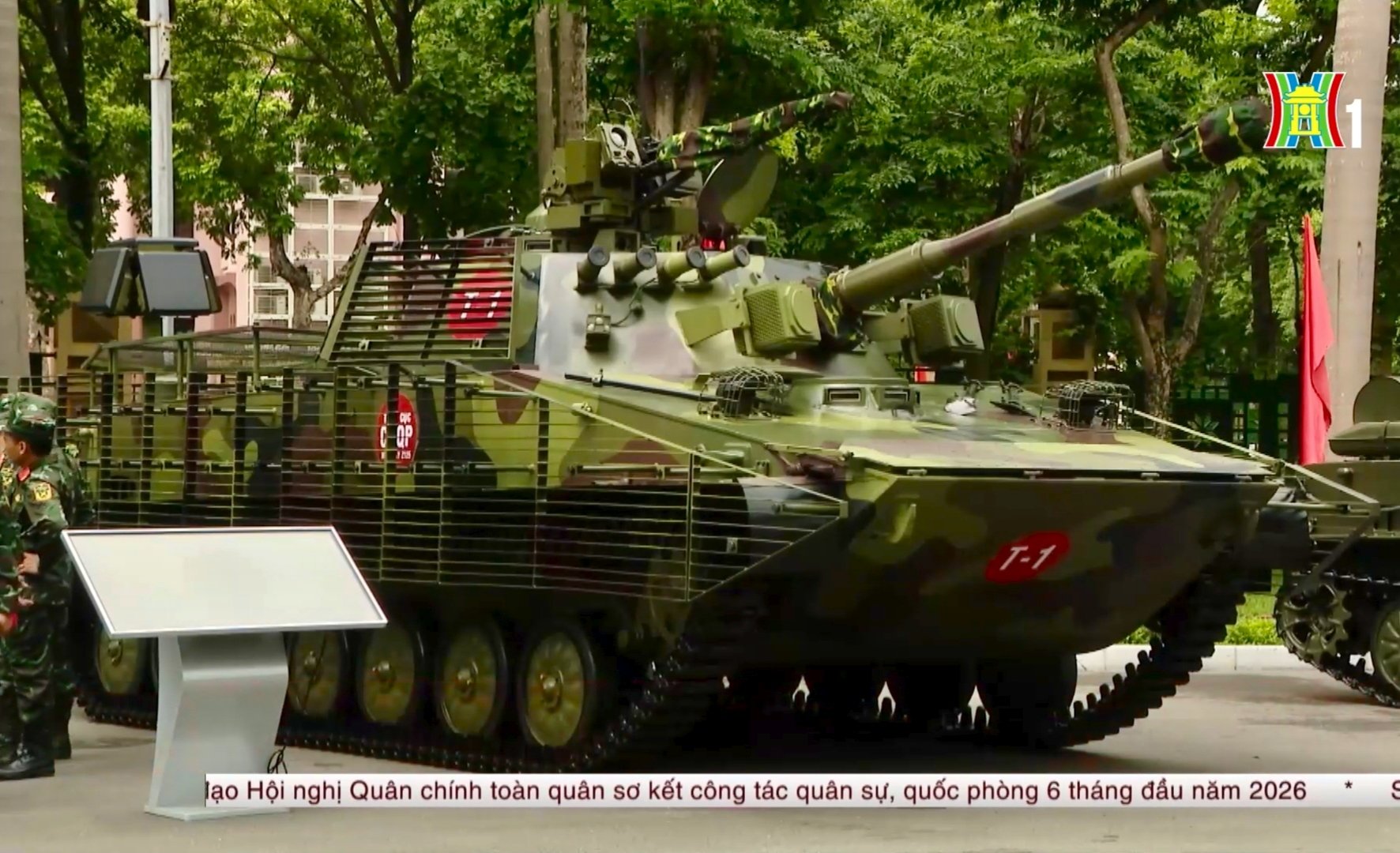
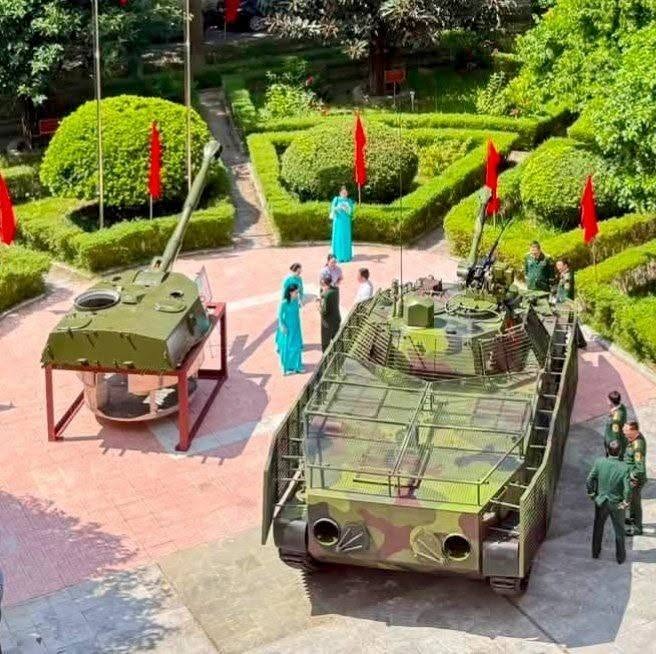
The T-1 is Vietnam’s first amphibious light tank designed and built in the country. It is meant to replace the aging PT-76B and Type 63 in VPA service. It builds on the PT-76 with a longer hull with seven road wheels per side, a 470 hp turbocharged diesel engine, a new two man welded turret with a two plane stabilized 76.2 mm gun and a ready rack autoloader, modern gunner and commander optics with a panoramic sight and fire control override, and IRCM / LWS.
History
Spoiler
The T-1 (Xe tăng hạng nhẹ T-1, or T-1 Light Tank) was assigned to Factory Z125 by the GDDI in early 2024. In late September 2025 the GDDI finished the Ministry of Defense program paperwork for it and told Z125 to build a prototype by March 31, 2026. Z125 worked with 12 military units and research institutes, including the Military Technical Academy. Deputy Defense Minister Sr. Lt. Gen. Phạm Hoài Nam chaired the armored vehicle steering committee overseeing the work. When he inspected the factory on April 24, 2026, a few weeks after the March target, the first prototype was essentially assembled. He ordered testing to be done in May 2026.
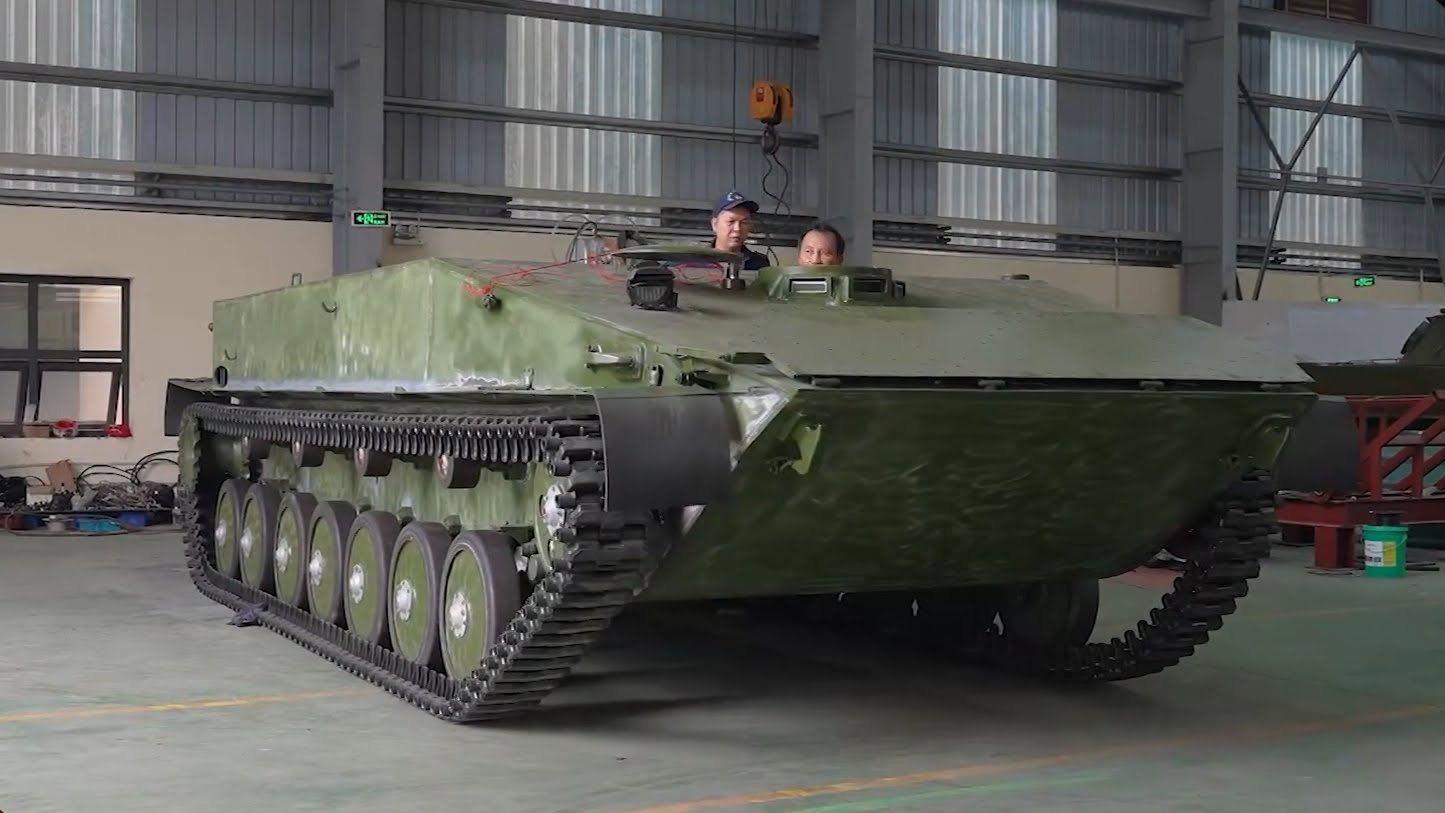
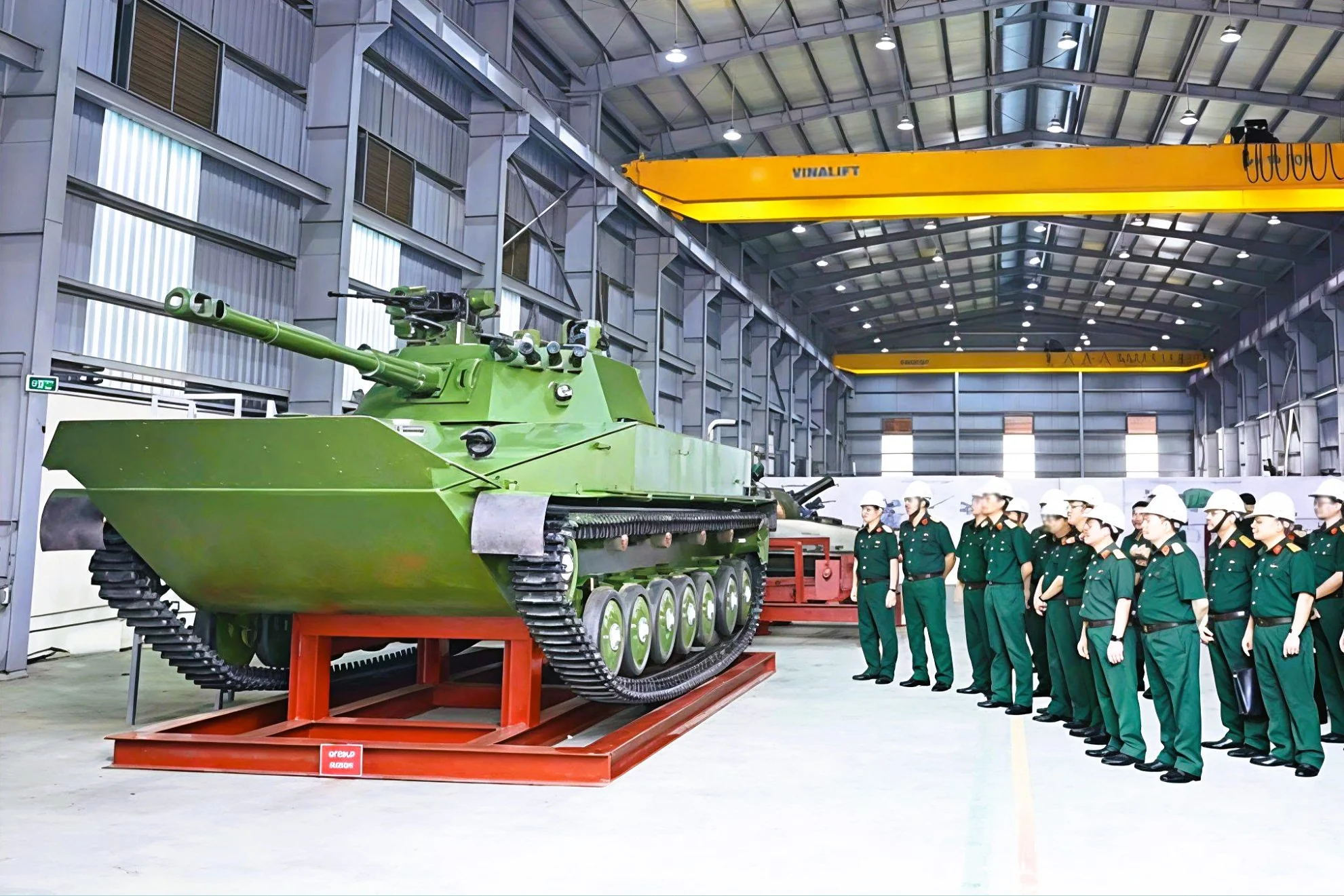
The main goal is to gradually replace Vietnam’s aging PT-76 and Type 63 fleets with a domestic tank suited to the country’s river networks, canals, coastal deltas and flooded terrain where heavier MBTs cannot cross. It is also meant to swim ashore from landing ships. The T-1 has an open, modular design for different weapons and equipment modules to be swapped or upgraded later. The driver sits at the front, the fighting compartment is in the center, and the engine and transmission are at the rear.
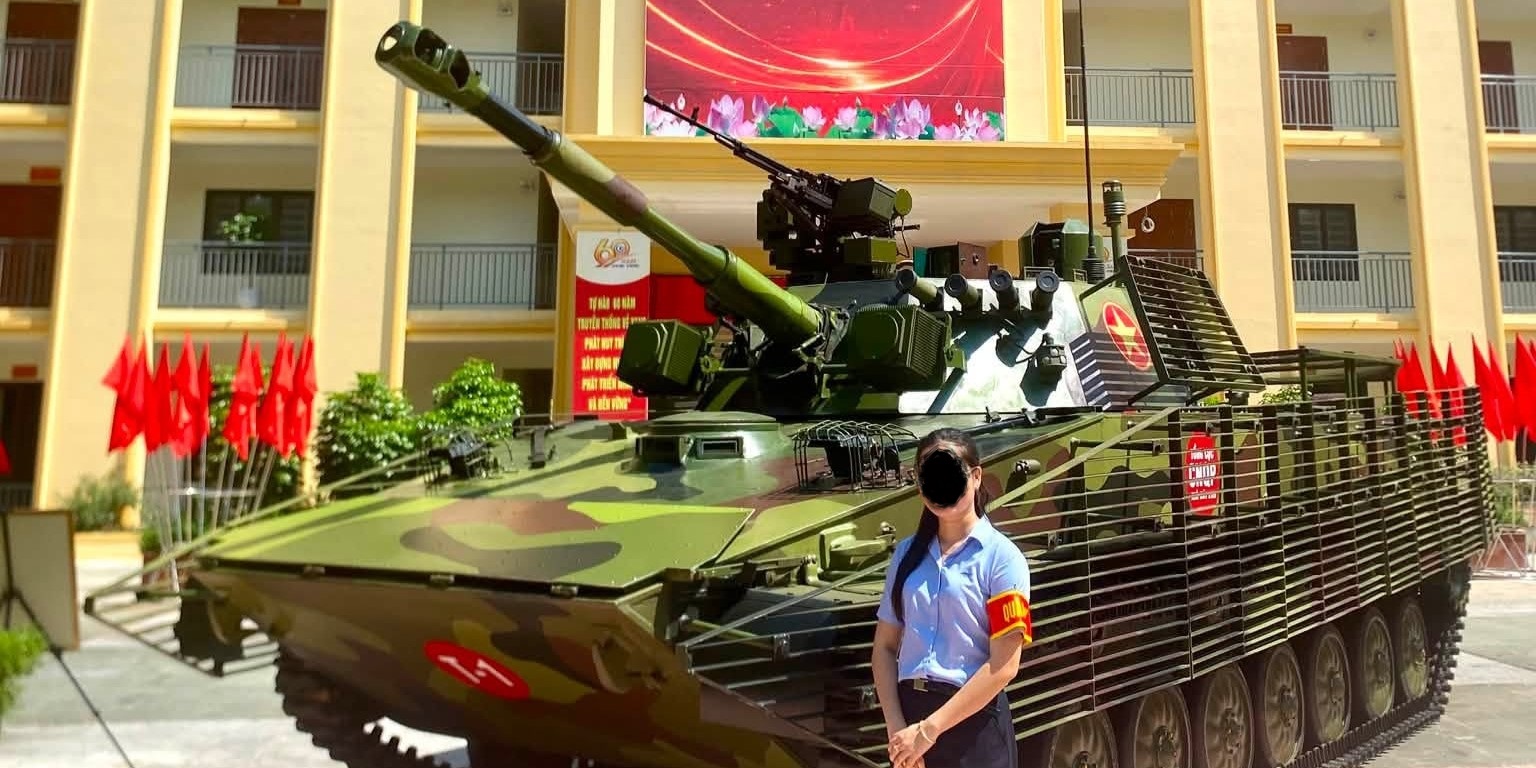
The main gun is the two plane stabilized 76.2 mm D-56TS from the PT-76B, with 40 rounds in total, 15 of which are stored in a vertical carousel autoloader. It works much like the BMP-1’s semi-autoloader, lifting each round and rotating it 90 degrees into the breech. The remaining rounds can still be loaded by hand.
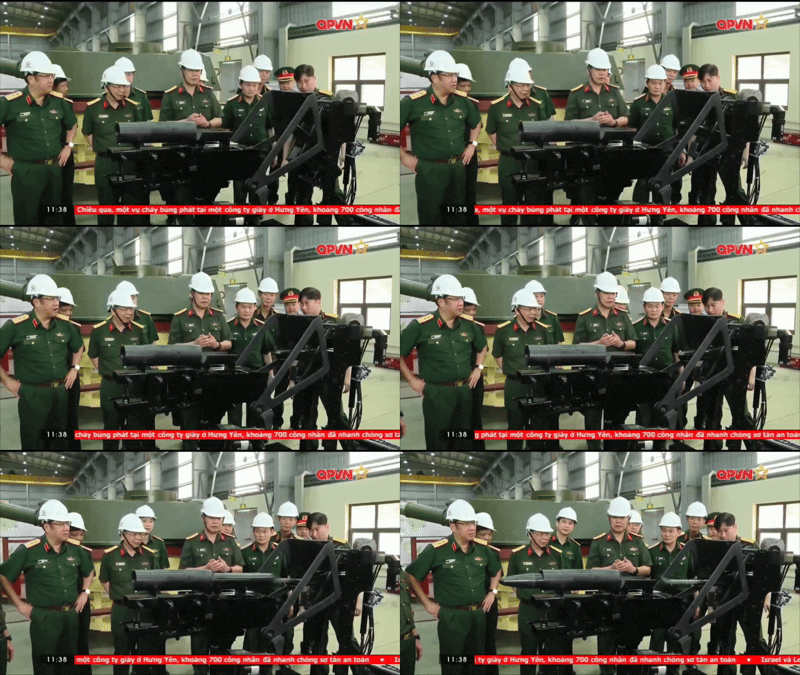
The crew is three: driver, gunner and commander. The driver sits in the middle of the front hull with day periscopes, a night driving sight and a periscope for driving in water. The commander (turret left) and gunner (turret right) sit in the turret with separate hatches.
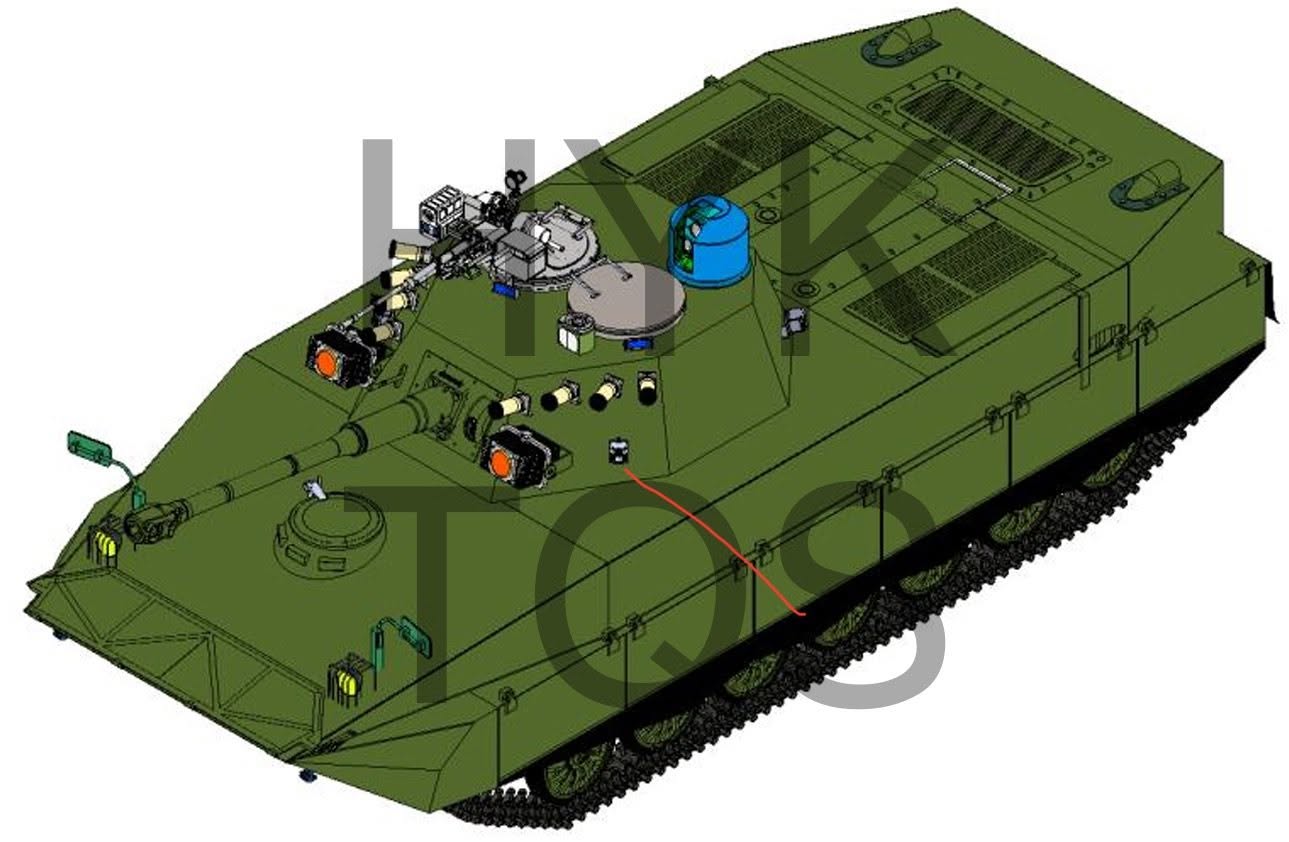
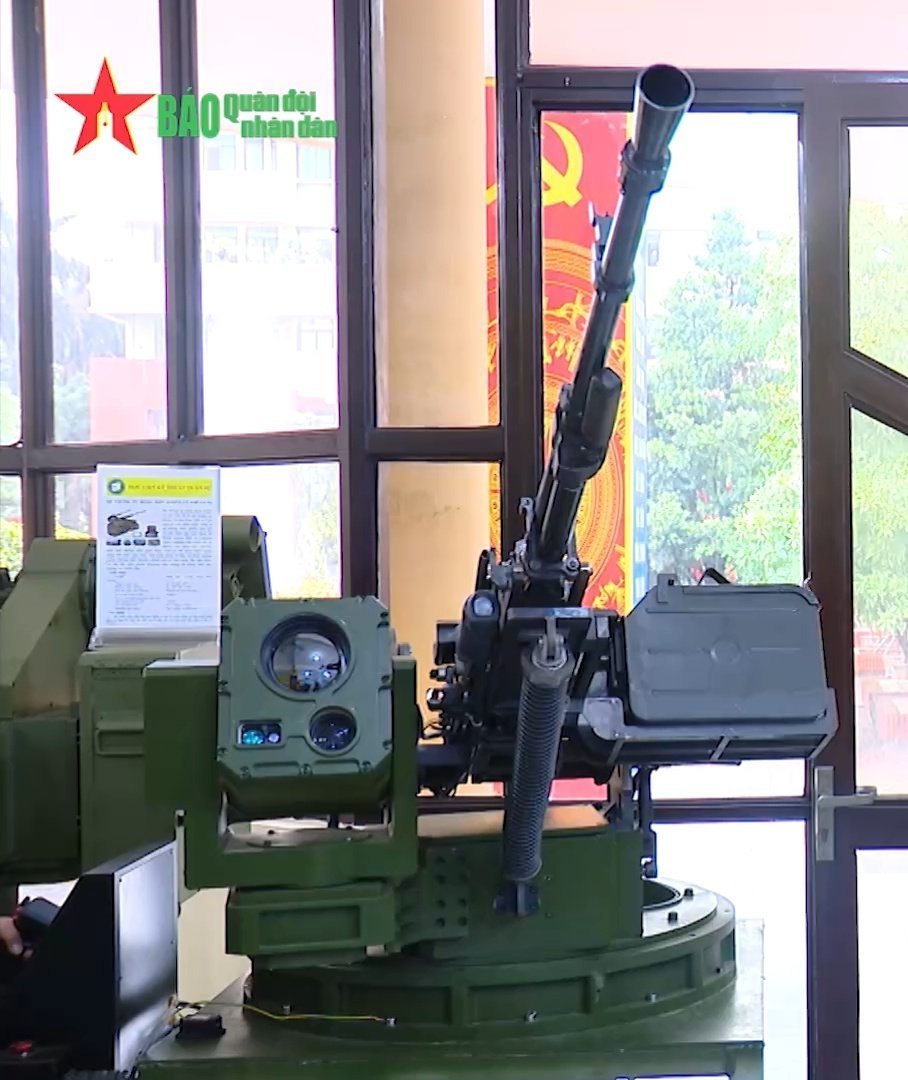
The fire control has been modernized. It has an automatic ballistic computer, day and night gunner optics, an LRF, and optical target tracking so the tank can fire on the move by day or night. It is not yet officially confirmed whether the night channel is thermal imaging or NVD, which may become clear at VDE 2026. The commander has an independent panoramic commander sight with hunter killer target designation. He can also take full fire control override when needed. Secondary armament is a coaxial 7.62 mm PKT and a roof mounted 12.7 mm NSV RCWS operated by the commander. The NSV also sits on a pintle mount so the crew can fire it manually in an emergency.
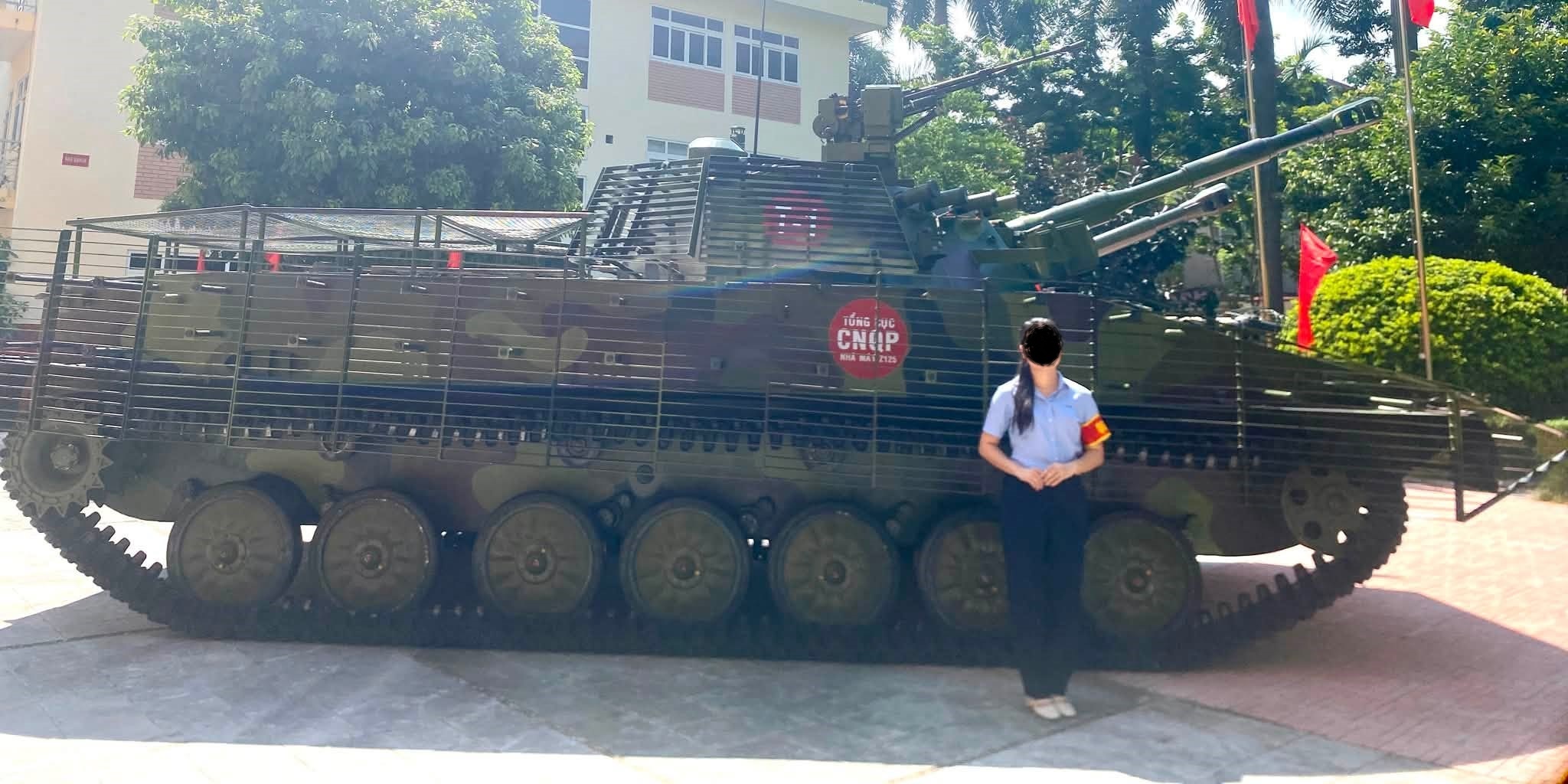
Mobility is much improved over the PT-76B. To fit the larger engine and keep enough buoyancy, the hull was lengthened to 7.92 m. That is the overall length with the gun forward, with a 4.67 m track contact length and a 2.92 m track gauge. It has seven pairs of rubberized road wheels shared with the PTH-01 (Vietnam’s domestically made 2S1), four return rollers per side on torsion bar suspension, and rubber padded tracks.
The engine is a longitudinally mounted TMZ 8424.10-03 turbocharged V8 diesel making 470 hp (345.5 kW) at 2,100 rpm and 1,864 Nm of torque at 1,400 rpm. It is paired with the MT-LB’s 6 speed transmission (6 forward, 1 reverse) and an extra rear step up gearbox which lifts the top speed from the base 65.94 km/h to meet the 70 km/h requirement, with a calculated peak of about 79 km/h. Power to weight is at least 24 hp/t, which works out to about 25.7 hp/t at the design combat weight of 18.3 tons. Road range is at least 500 km.
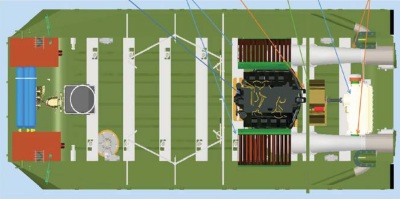
For swimming, power is taken off after the main clutch to drive hydraulic pumps, which power hydraulic motors on twin pump jets with stainless steel impellers. The T-1 swims at 11.5 km/h forward (the requirement was 11 km/h) and at least 3 km/h in reverse, with electric bilge pumps on board.
The T-1 has STANAG 4569 Level 4 ballistic protection and STANAG 4569 Level 2 mine protection. For survivability, an LWS is linked to two banks of 81 mm smoke grenades (8 in total). There is also an IRCM dazzler similar to the Shtora-1, automatic fire suppression, NBC protection, and a rear mounted anti drone jammer. The commander operates these protection systems. Detachable slat armor can be fitted around the rear of the turret, the hull sides and the engine deck. Z125 renders also show a third configuration that adds an overhead cope cage.
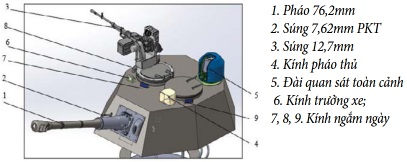
Inside are digital crew displays, air conditioning (24,000 BTU), a Viettel VRU-812/S 50W frequency hopping radio, and a vehicle intercom system (VIS).
The T-1 was shown at the July 2, 2026 Military-Political Conference and again at the 60th anniversary of Factory Z125. It is due to be displayed at Vietnam Defence Expo 2026 (VDE 2026) from December 10 to 13, 2026, at Gia Lâm Airport, Hanoi. As of the October 20, 2026 steering committee meeting, officials were still finalizing the production design and configuration.
Specification
Spoiler
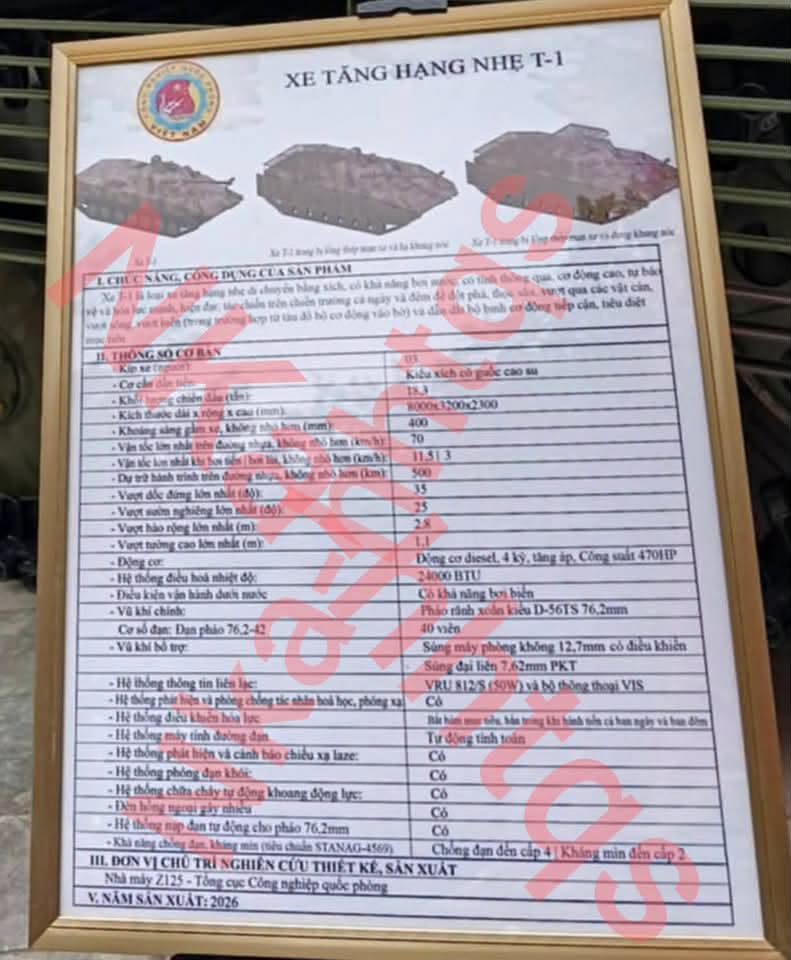
Length: 7.92 m (hull and overall with gun forward; 4.67 m track contact length)
Height: 2.3 m (without 12.7 mm MG; 3.0 m with 12.7 mm MG)
Width: 3.2 m (2.92 m track gauge)
Ground Clearance: 400 mm
Combat Weight: 18.3 tons
Crew: 3 (Driver, Gunner, Commander)
Engine: TMZ 8424.10-03 4-stroke V8 turbocharged diesel, 470 hp (345.5 kW) @ 2,100 rpm, 1,864 N·m @ 1,400 rpm, + MT-LB 6-speed transmission (6F/1R) with rear step-up gearbox
Top speed: 70 km/h ( ~79 km/h calculated theoretical max with step-up gearbox)
Amphibious speed: 11.5 km/h forward / ≥3 km/h reverse
Range: 500 km
Slope / Side Slope / Trench / Vertical Obstacle: 30° (35° on exhibition placard; 30° max water-entry slope) / 25° / 2.8 m / 1.1 m
Protection: STANAG 4569 Level 4 (ballistic) / Level 2 (mine) + optional slat armor / roof cage
Armament
Spoiler
1x 76.2 mm D-56TS two-plane stabilized (40 rounds total; 15-round ready-rack autoloader + manual reload)
1x 7.62 mm PKT Coaxial
1x 12.7 mm NSV Roof mounted RCWS (commander-operated, with manual pintle backup)
8x 81 mm smoke grenades (2 banks) + IRCM (soft-kill APS) + LWS
In game
This would be an interesting 6.7–7.0 light tank. Because it uses the same 76.2 mm gun found on the 5.3 PT-76B, its firepower would struggle. However, the two-plane stabilizer, 15-round ready-rack autoloader, high mobility (≥24 hp/t), STANAG Level 4 armor (immune to .50 cal / 14.5 mm), LRF, LWS + IRCM (situational at that BR, mostly useful against early SACLOS ATGMs in uptiers), and modern gunner/commander optics with panoramic sight and commander fire control override mean it can still operate as a fast stabilized flanker and scout. (Keep in mind that thermal imaging is not yet officially confirmed. We will likely know for sure once the full spec is shown at VDE 2026. If thermals are confirmed, 7.0 fits. If it only gets NVD, 6.3 to 6.7 would be better.)
Following Gaijin’s plans for a standalone unified Korean research tree, the T-1 could be a strong fit there as part of a future Vietnamese subtree. Alternatively, it could fit in the Soviet tech tree (following the PT-76B / Object 906), the China tech tree, or within a broader Japanese ASEAN subtree.
The slat armor (and optional overhead roof cage) could be introduced as a researchable modification to add extra protection against chemical rounds.
Photos

Sources
Nghiên cứu thiết kế bố trí chung xe tăng hạng nhẹ T-1 (Tạp chí Công nghiệp quốc phòng và Kinh tế, Tập 215, Số 5 - 2026, tr. 82–84)
Tuyển tập công trình Hội nghị Khoa học các nhà nghiên cứu trẻ lần thứ XXI - Năm 2026, Tập 3 (NXB Quân đội nhân dân, ISBN 978-632-06-0210-0): “Tính toán các thông số làm việc của cơ cấu bơi kiểu bơm luồng phụt…” (Hoàng Khoái & Nguyễn Minh Tân, tr. 2629–2638) & “Tính toán, lựa chọn động cơ…” (Nguyễn Văn Liêm & Cù Xuân Phong, tr. 2648–2654)
T-1 (xe tăng hạng nhẹ) (Wikipedia Vietnamese)
Đẩy nhanh nghiên cứu, chế tạo xe tăng hạng nhẹ T-1 (Báo Nhân Dân, Apr 2026)
Việt Nam chuẩn bị ra mắt xe tăng lội nước T-1 và thiết giáp XTC-03 tại VDE-2026 (Báo Nghệ An, Oct 2026)
Note: most sources are in Vietnamese.