Swedish tanks that will sadly never enter war thunder

Sweden has had its fair share of interesting armoured vehicle concepts that, despite looking promising on paper, never made it to the prototype stage or entered service.

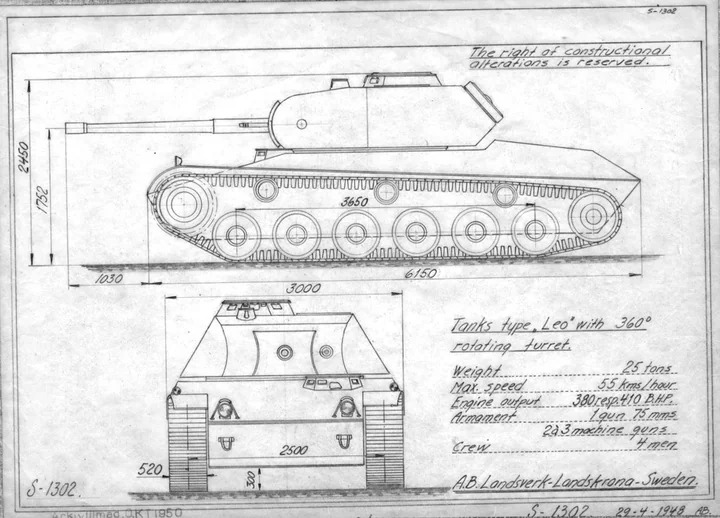
This post showcases some of these forgotten projects, including the Landsverk Lansen, Landsverk Leo in different types. Designs that, for various reasons, remained concepts, mockups, or paper projects rather than becoming actual fighting vehicles.

While some of these vehicles could have been interesting additions to War Thunder, their lack of a physical prototype makes their chances of being added rather unlikely.

Still, it’s interesting to explore what Swedish engineers envisioned and what might have been, even if these vehicles will most likely remain confined to the drawing board.


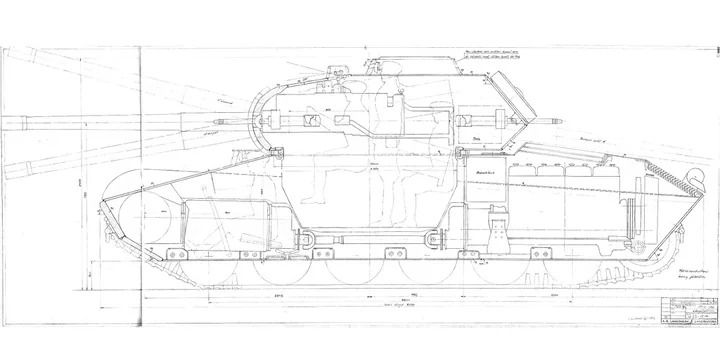
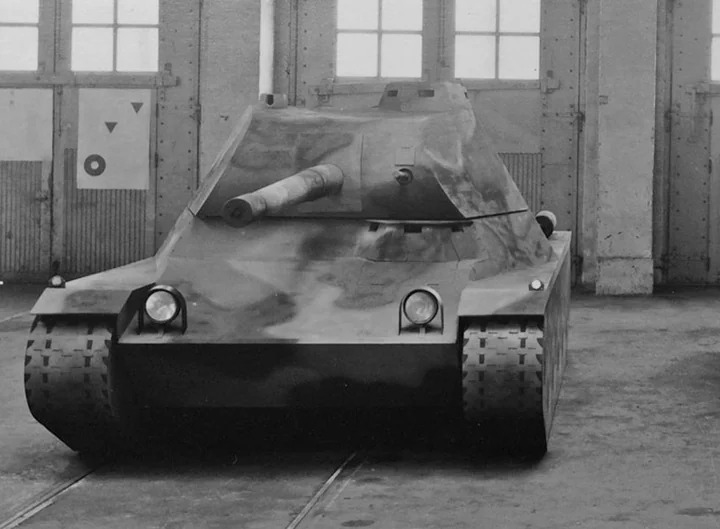
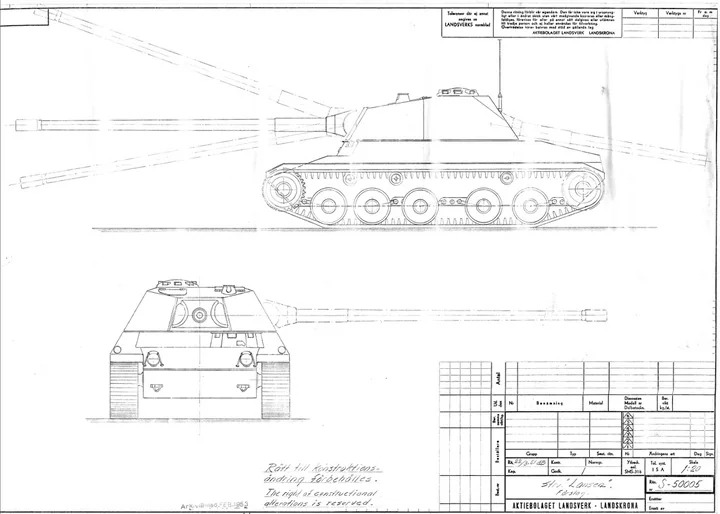
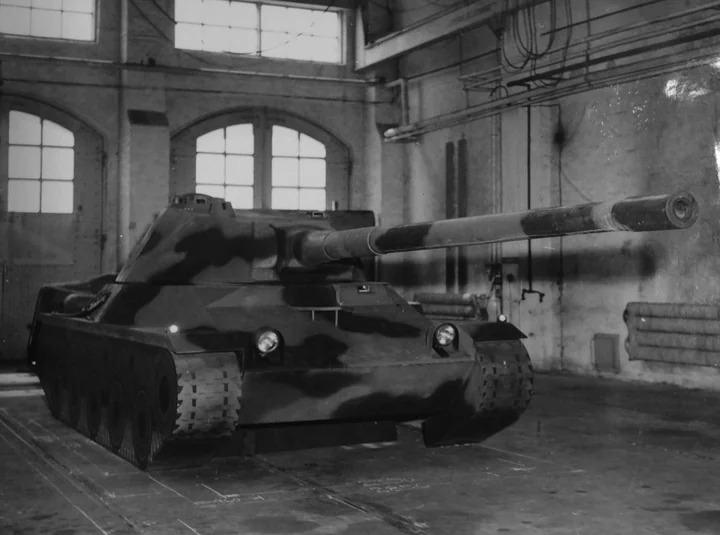
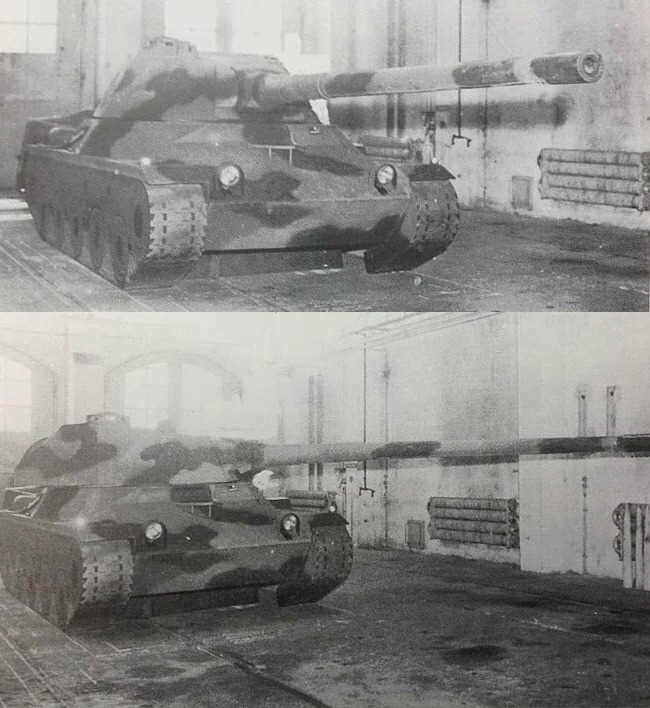
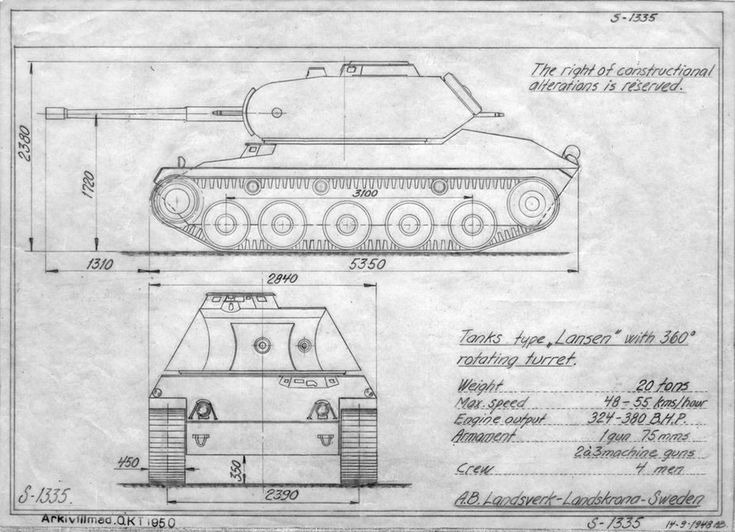
Landsverk “Heavy” tank Lansen

image

Landsverk “Heavy” tank Leo Type-I

image

image

image

Landsverk “Heavy” tank Leo Type-II

image

image

image


You are always welcome to share more designs if i forgot them.

No i have not forgotten the Kranvagn/Emil But that got a hull atleast.

6 Likes

image

Lvkv m/42 II

The Lvkv m/42 S-II was the second prototype of Sweden’s early Cold War self-propelled anti-aircraft gun, originally designated Lvkv fm/49 . Developed by Bofors under the project designation VAK 40 S/49, the vehicle was intended to provide mobile air defence for Swedish armoured formations using a 40 mm Bofors Lvakan m/48 automatic cannon.

The original project envisioned the gun vehicles operating alongside a dedicated radar-equipped fire-control vehicle, which would calculate firing solutions against aircraft and relay the necessary information to the guns. However, the planned fire-control vehicle was postponed while the first two gun prototypes underwent testing. The prototypes also ended up considerably heavier than originally intended, raising concerns about their mobility and ground pressure.

By 1953, the experimental designation Lvkv fm/49 had been replaced by Lvkv 42. Despite continued investigations into suitable fire-control systems, the project never progressed to serial production and was eventually cancelled around 1959, as Sweden’s efforts to develop more advanced anti-aircraft systems continued.
image

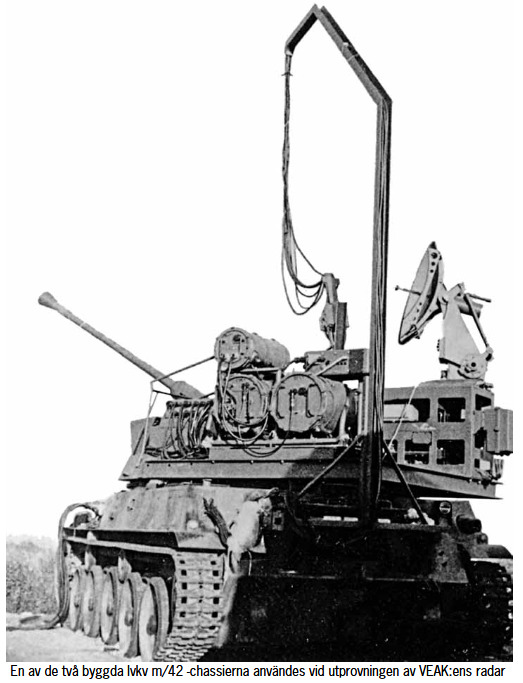
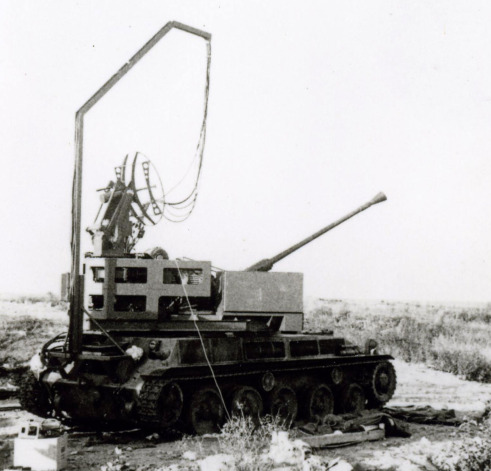
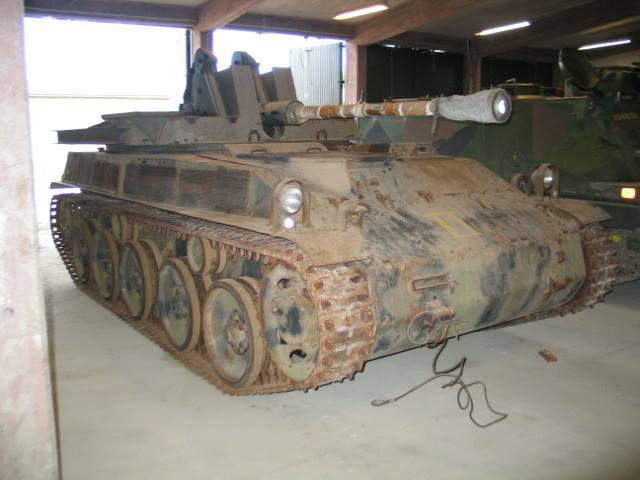
Following the cancellation, the two prototypes went their separate ways. The second prototype, Lvkv m/42 S-II, was converted into a radar test vehicle , contributing to the continued development of Swedish radar-directed anti-aircraft systems. Its later fate remains unclear, but it appears to have been abandoned and ultimately lost. The first prototype, meanwhile, survived and was eventually preserved at Försvarsfordonsmuseet Arsenalen in Strängnäs.
image

Although the S-II never became a production vehicle, its later use as a radar test platform represents an interesting continuation of the original project’s emphasis on radar-assisted anti-aircraft fire. It serves as a reminder that even cancelled Swedish armoured vehicle projects could contribute to the development of later military technology. (VEAK 40)

Although the Lvkv m/42 S-II was a real, physically built prototype, its later conversion into a radar test vehicle makes it an unlikely candidate for War Thunder. The radar equipment required an external source to operate, meaning the vehicle was not a self-contained radar-directed anti-aircraft system.

Its later configuration was intended for testing radar equipment rather than combat service, and there is limited justification for implementing it as a playable combat vehicle in this form. While the original Lvkv m/42 prototypes were genuine anti-aircraft vehicle designs, the S-II’s conversion into an externally supported test platform makes its suitability for War Thunder questionable.
2 Likes

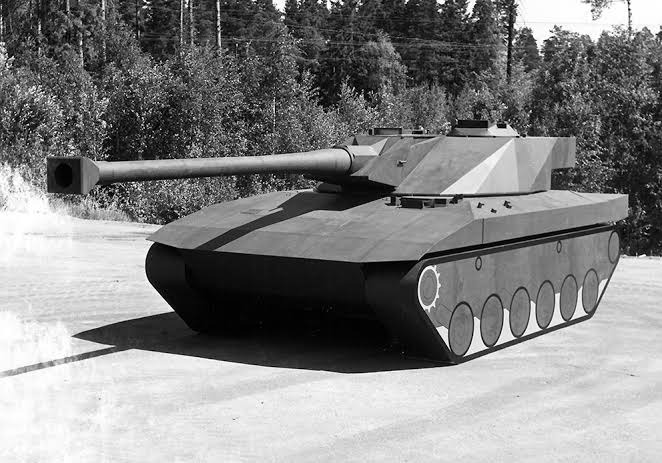
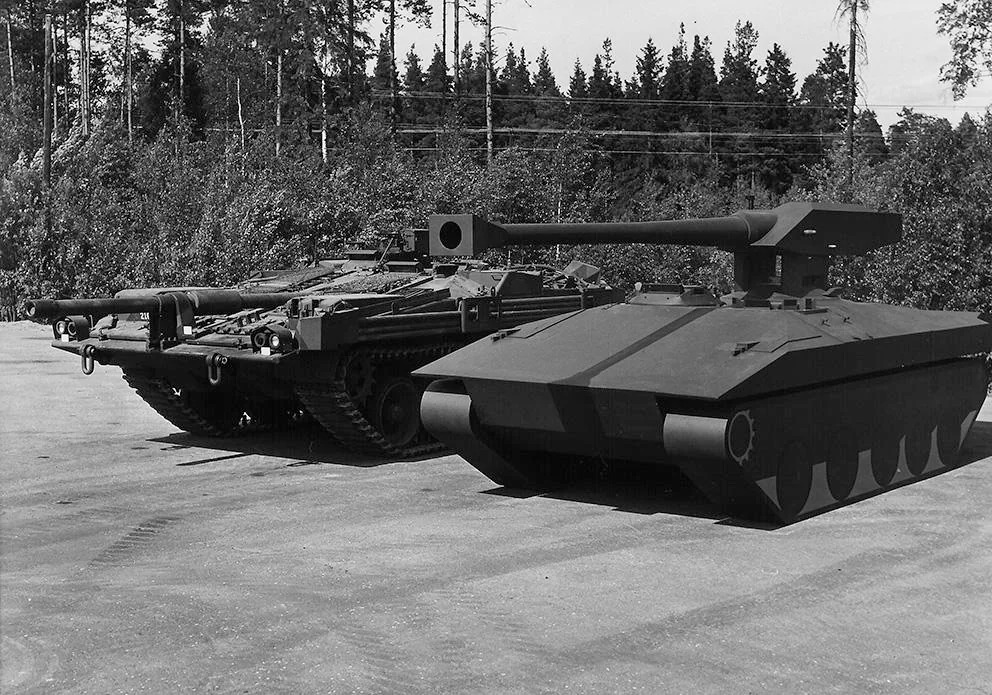
Strv 2000

UDES 15/16

image

UDES 19

image

just to name a few

3 Likes

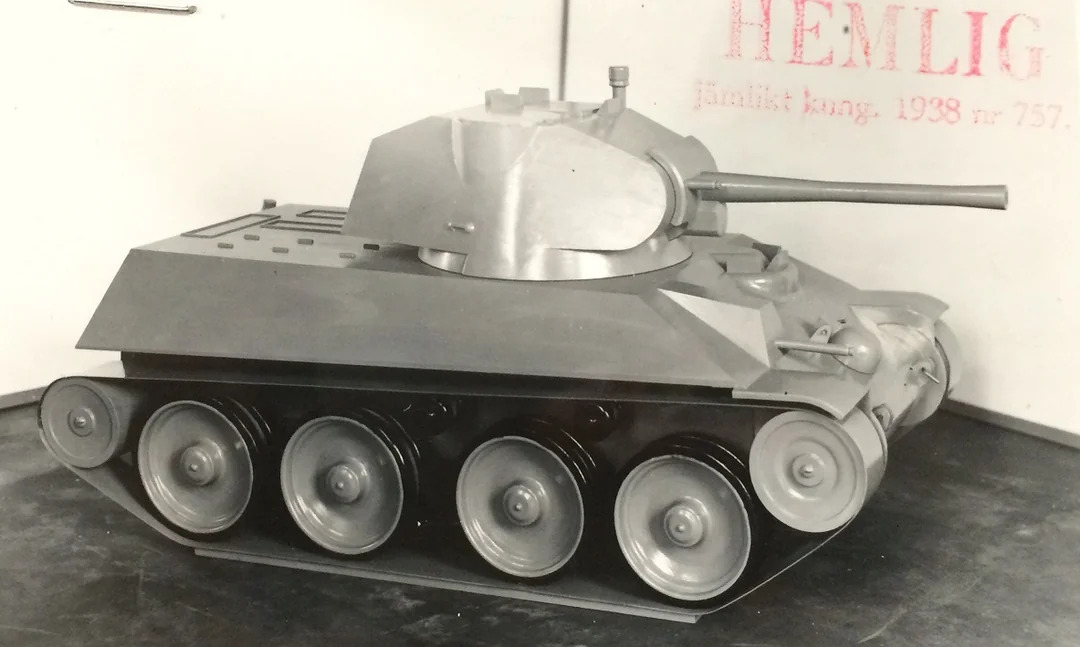
Strv m/41 S-III Alt. 2 Torn B

A proposed upgrade to the Strv m/41 series of tanks to feature more effective protection, Never went anywhere sadly.

1 Like

Welll–

Close enough

3 Likes

Does the Strv 103D count? I know it never went past the prototype stage but also the Strv 103 chassis was real.

I’m probably wrong but wasn’t the prototype functioning?

Not only was it a fully functional prototype. It was put through the same trials as the Leopard 2A4 before the latter being chosen. And it’s still in full running order at Arsenalen in Sweden

1 Like

image
Very real afaik

Aweee, it’s so cuteeee, it looks like a 5 year olds drawing of a tank

1 Like

I have been trying to suggest it for over a year, Gaijin doesnt trust any source about it, 3 rejected suggestions

1 Like

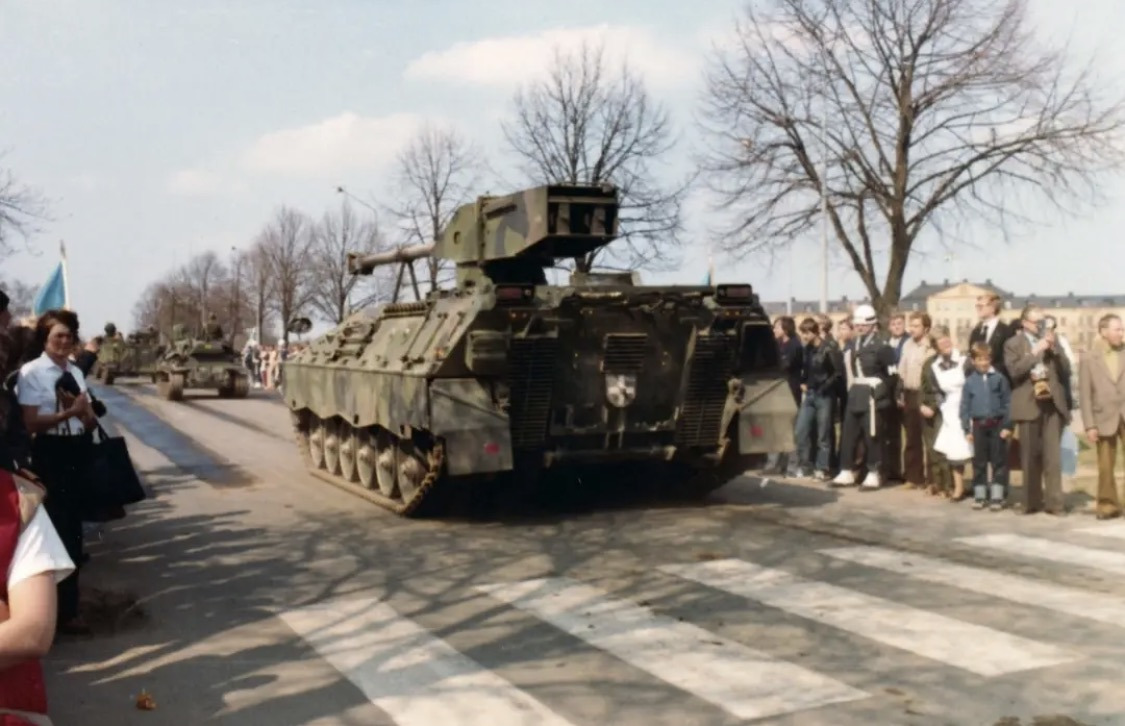
IS THAT A MARDER?

UDES 19 Experimental Vehicle, Skaraborg Regiment (P4) 350th Anniversary, 1981

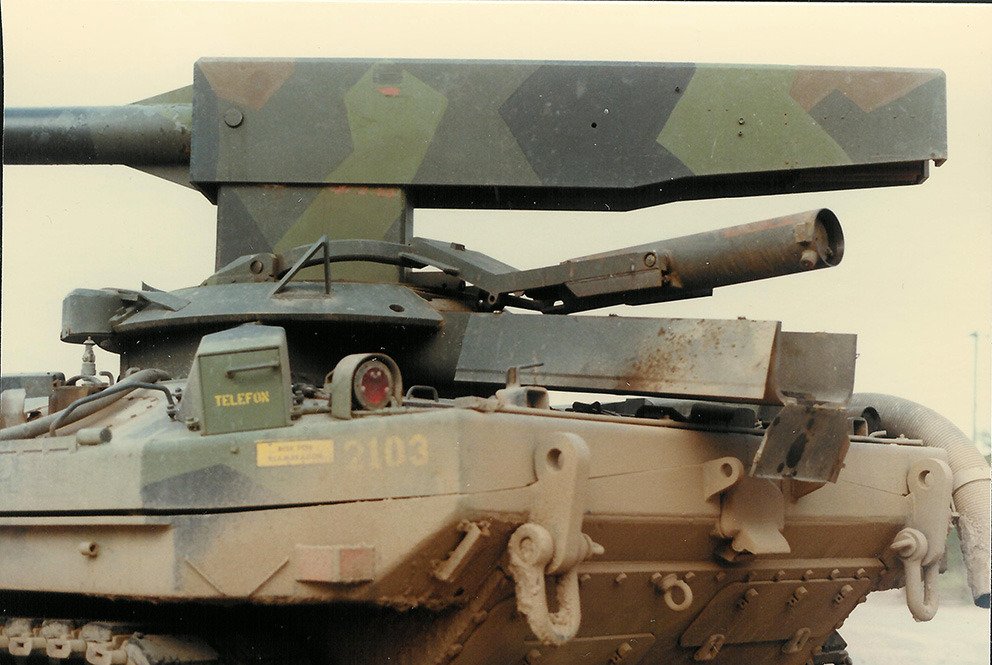
A combined driving and firing test rig was developed under the UDES 19 project. The rig was based on the chassis of the German Marder infantry fighting vehicle. This chassis had been in Sweden since autumn 1976, when it was leased from West Germany along with a Leopard 1 main battle tank and a Marder-based mortar carrier for one year of trials.

UDES 19 test rig

A 10.5 cm gun was mounted on top of the Marder chassis in a single-man turret. The UDES 19 rig was used for a variety of trials, including driving and firing tests.

In fact, two rigs were built for UDES 19. In addition to the driving and firing rig, a separate loading rig was also constructed. These were used for driving, firing, observation, and loading trials. The loading rig tested the principle of using a loading arm that rotated around the same axis as the gun to transfer individual rounds from the magazine to the gun.

The design proved effective and robust. Neither snow nor the branches used during testing, which were up to 5 cm thick, prevented the mechanism from functioning. However, there was a risk of debris being carried into the gun along with the ammunition. The system’s vulnerability to enemy fire was not tested.

Firing trials confirmed that the gun could be brought onto target more quickly, as its mass was lower than that of a conventional turret. However, the rig suffered from long engagement times due to an inadequate fine-aiming system.

In parallel, the same concept of a gun mounted above the chassis was also tested on a Strv 103 chassis.

image

So yes. A marder

If added it would likely be added to germany and sweden

2 Likes

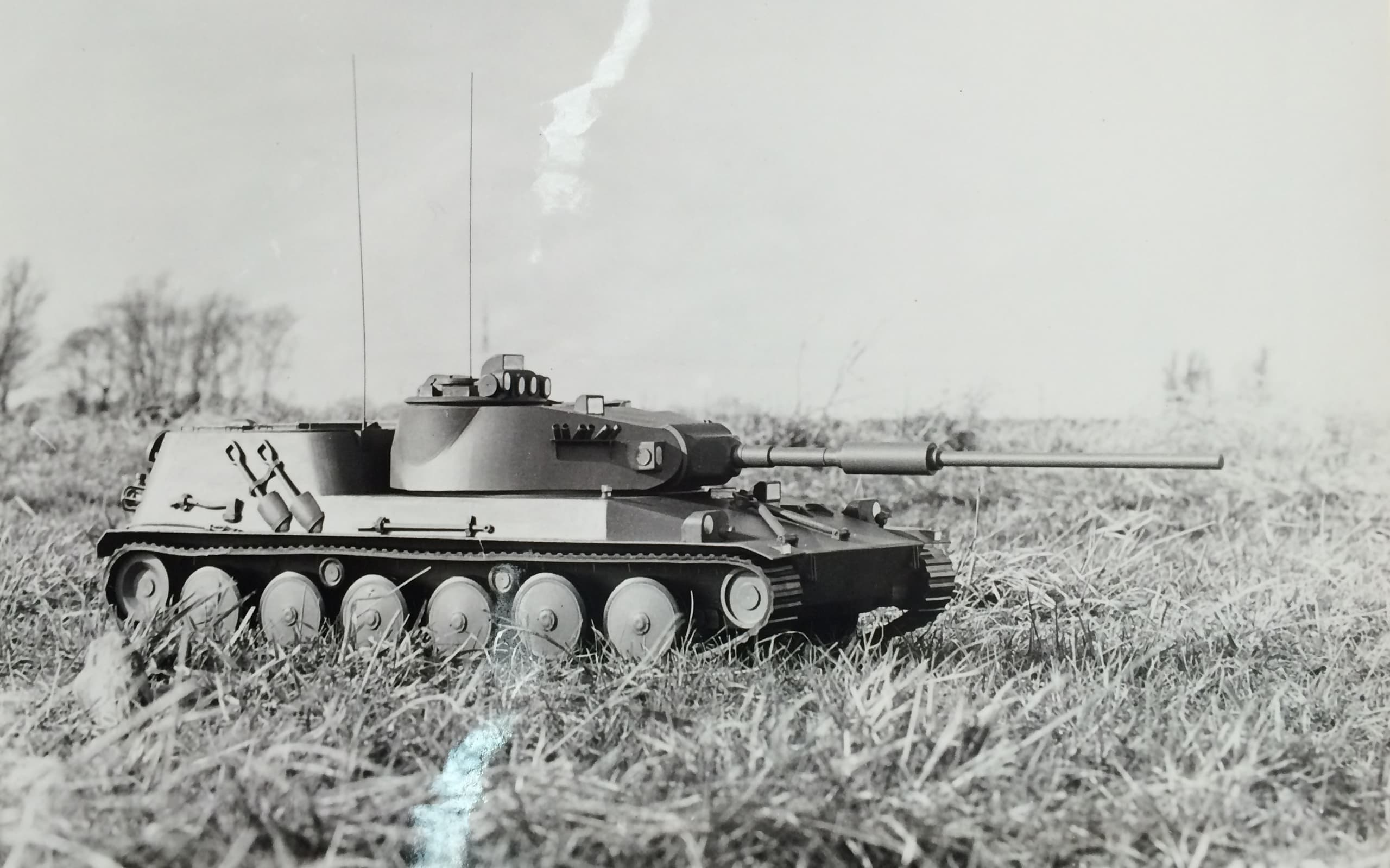
I am a real sucker for the UDES 05 final version. I just think it looks so interesting.
image

But Landsverk’s proposal for the Ikv 90 program is a shame it never got to the prototype stage.

Yeah, I guess that’s one way to describe it…

The second picture you added is of VTS-1, a unrelated project/prototype which was made to test whether a 105mm stabilized, externally mounted gun could be used on a marder chassis (Together with Versuchsträger Frontantrieb [VTF] used for testing the viability of the Leopard 3 SL [Scheitellafette] concept).

UDES Marder test rig on the other hand was not stabilized, nor had proper gun-drives (fully manual, unassisted cranks at best) or optics, it was made to test the effect of recoil-forces of such cannons on lighter weight chassis’ aswell as visibility (src.: sp15).

Despite their similar external appearences, they have nothing to do with each other development-wise.

VTS-1 was built to a significantly more functional state, actually being stabilized in both axis with remote sights and displays for operational testing, aswell as capable of firing the 105mm gun from inside the vehicle.

Automatic loading principles were developed but afaik none mounted. Though that’s debatle as far as my research goes as KPz Leopard 3 SL documents from MaK & Thyssen Henschel (Same companies that developed & built VTS-1) do state that tests with VTS-1 resulted in the conclusion that automatic loading via 12’O Clock index-position (which VTS-1 had; The 12’O clock loading position at the very least that is) was no longer necessary and loading-systems working at any azimuth position were proven to be possible.

3 Likes