History
The first combat variant powered by the Griffon engine was the Supermarine Spitfire Mk XII. It was based on a modified Mk V airframe with distinct external and internal differences. Earlier development traced back to the Mk IV prototype DP485, which was fitted with a single-stage supercharged Griffon IIB driving a four-blade propeller and completed flight testing on November 27, 1941. The aircraft had been brought up to Mk XX standard as early as 1942. Its handling and power were highly praised, especially at low altitude, where the additional engine power was most effective. However, due to the lower engine RPM compared to Merlin-powered Spitfires, throttle operation during takeoff required greater care. The Mk IV/XX concept was further refined into the Mk XII, which featured the standard Spitfire armament and clipped wings. Low-level testing confirmed that the Spitfire Mk XII could outperform both the Hawker Typhoon and captured Focke-Wulf Fw 190s during comparative speed trials. It fulfilled the RAF requirement for an interceptor primarily intended to counter Luftwaffe hit-and-run raids against British coastal targets.
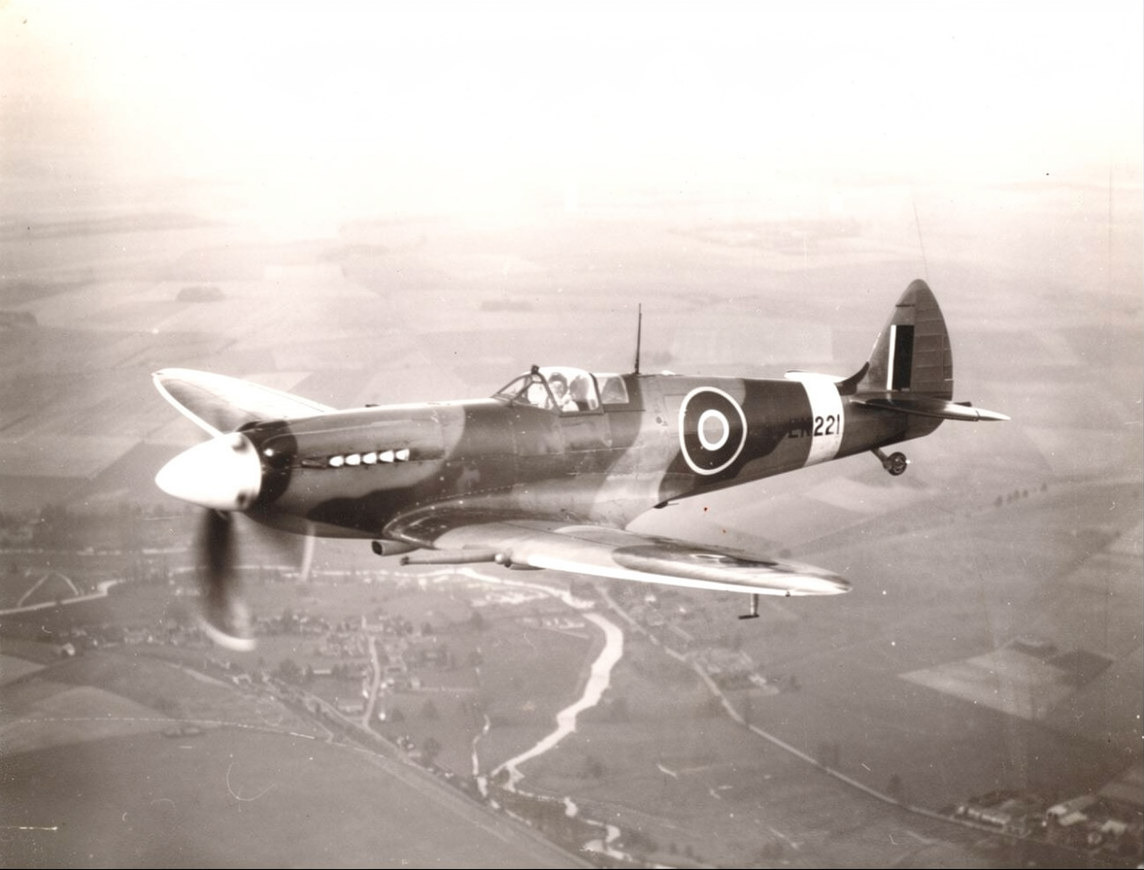
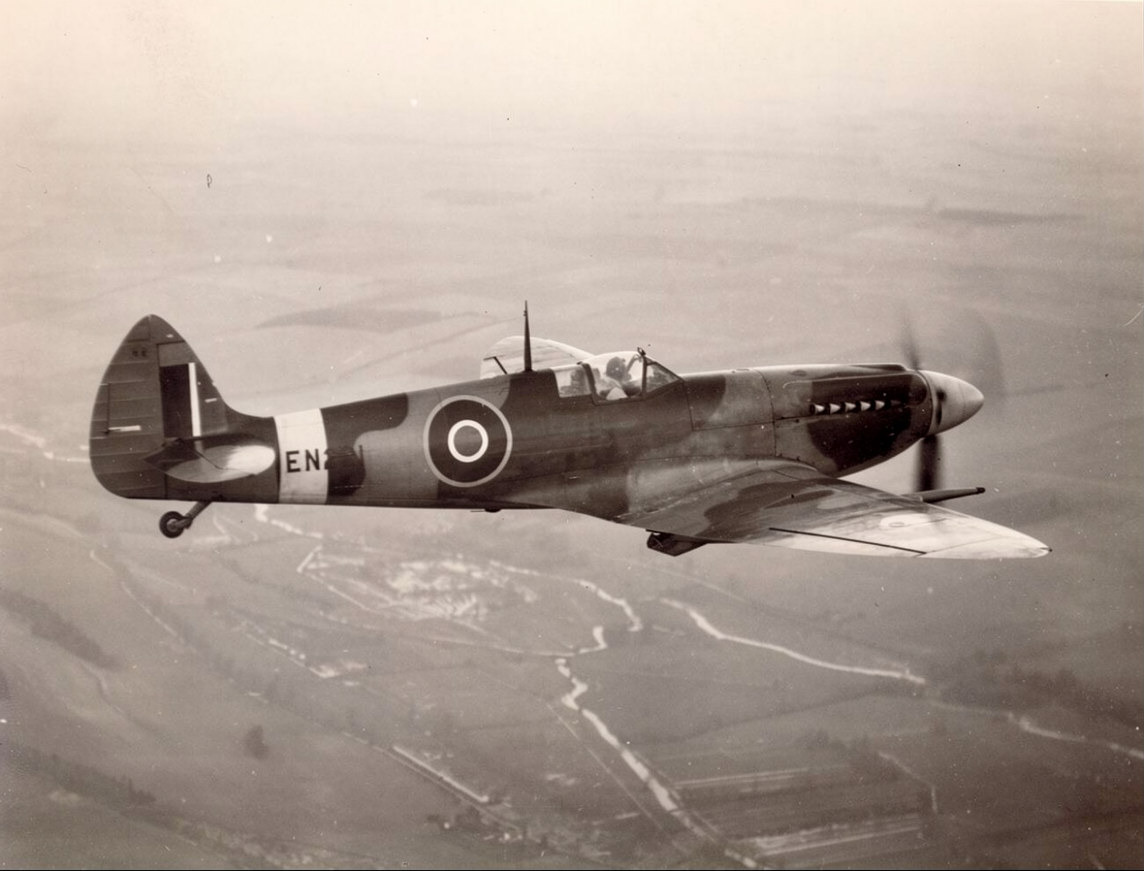
A total of 100 production Mk XIIs were converted from Mk Vc, Mk IX, and Mk VIII contracts, all fitted with clipped wings. The first half of the production batch used Mk Vc airframes with fixed tailwheels, while the remainder used the stronger and more adaptable Mk VIII airframes with retractable tailwheels. All aircraft featured the broad-chord rudder introduced on the Mk VIII. The supercharged Griffon engine was mounted ten inches farther forward than the Merlin. Unlike Merlin-powered Spitfires, the Griffon-powered propeller rotated clockwise when viewed head-on. Armament consisted of two cannons and four machine guns in the standard Spitfire arrangement. The wing remained largely similar to the Mk V design, complete with a semi-circular oil cooler and a slightly enlarged box-shaped radiator. However, these changes did not fully solve the engine overheating problems that affected the Mk XII throughout its service life.
Several modifications were introduced during the Mk XII’s operational career. These included replacement of the IFF tailplane-to-fuselage aerial with a rod aerial beneath the starboard wing, substitution of four-spoke wheels in place of five-spoke examples, enlarged elevator horn balances, and removal of the upper wing bulges. The latter change became possible through the adoption of bulged undercarriage doors, allowing the wheels to sit lower in their wells when retracted. Link-type oleo landing gear legs were also introduced.
The majority of Spitfire XIIs were powered by the Griffon III engine, while the final 15 aircraft, delivered in July and August 1943, received the Griffon IV engine with improved climb performance. Testing demonstrated that the Griffon IV significantly improved climb rate over the Griffon III, increasing performance by roughly 600 ft/min and reducing the climb to 10,000 feet by approximately 30 seconds. However, as predicted, the Griffon IV lost performance at higher altitudes, making it less suitable for high-altitude combat. The aircraft’s climb performance remained roughly equal to that of the standard Supermarine Spitfire Mk IX up to 4,000 feet, after which it became noticeably inferior.
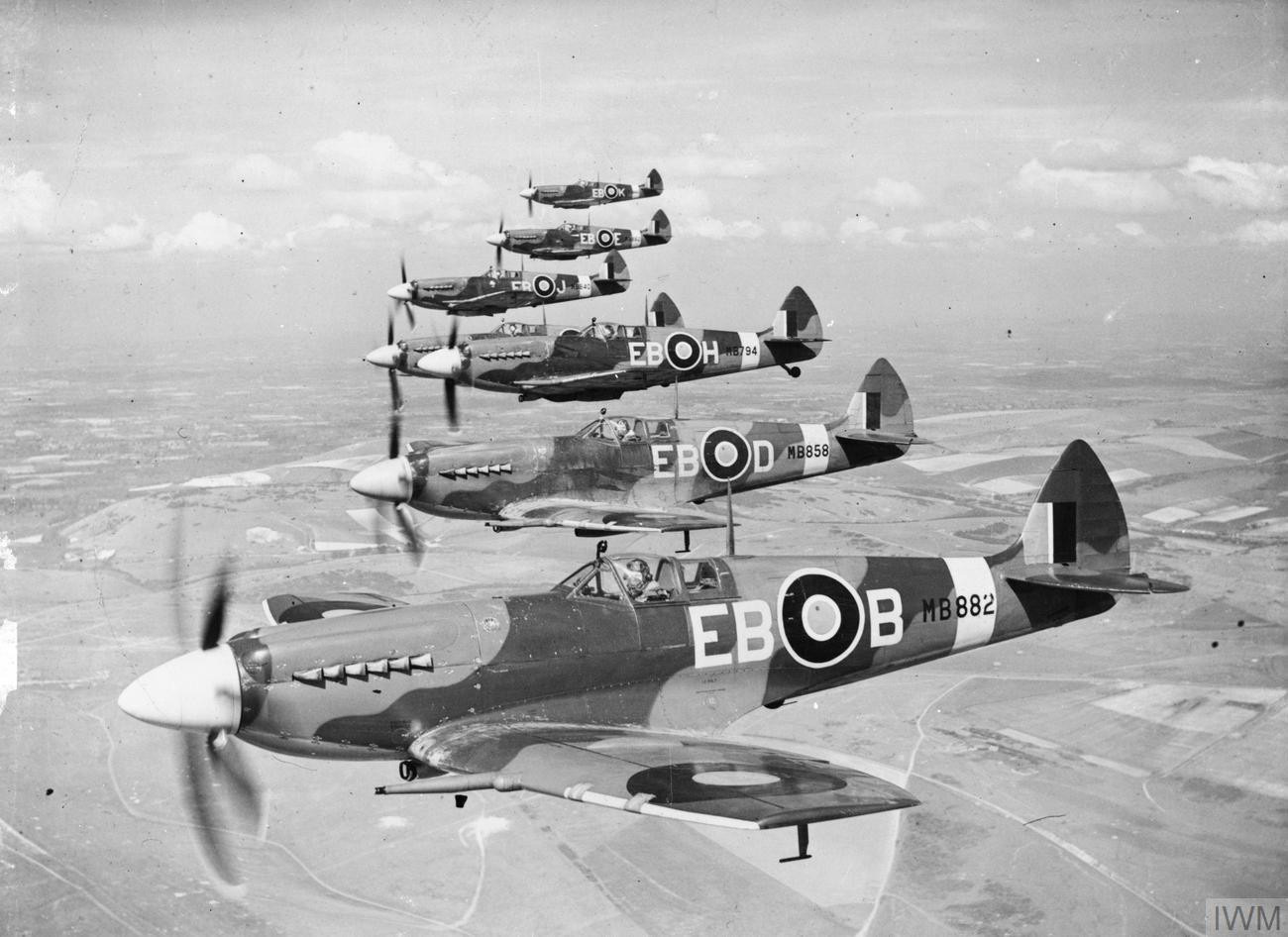
The Mk XII entered service only with Nos. 41 and 91 Squadrons, beginning in January and June 1943, respectively, primarily for home defense duties. The single-stage Griffon III and IV engines gave the aircraft exceptional low- and medium-altitude performance, although effectiveness declined considerably at higher altitudes. German pilots flying Fw 190s understood that the Mk XII and other Spitfire types held a decisive speed advantage below 20,000 feet and were often reluctant to engage in low-level combat. As a result, RAF pilots sometimes found it difficult to fully exploit the aircraft’s strengths. Nevertheless, when Messerschmitt Bf 109Gs or Fw 190s were encountered at lower altitudes, they could quickly fall victim to the Mk XII. Although capable of maintaining performance up to approximately 18,000 feet, the Mk XII aircraft spent most of its operational life flying at around 1,800 feet, where its speed provided a clear position advantage.
The Mk XII also became an important RAF asset during the campaign against the V-1 flying bomb, being credited with 82.5 V-1 kills. This suited well with its intended role as part of the Air Defence of Great Britain, intercepting low-level raiders and fast-moving targets. Additional trials were conducted in September 1943 when at least one Mk XII was fitted with a centerline pylon capable of carrying a 500-pound bomb, allowing the RAF to experiment with offensive hit-and-run operations over Europe for a brief time.
The Spitfire Mk XII remained combat-capable until the summer of 1944. In July of that year, No. 41 Squadron, based at Lympne in Kent, began replacing its aircraft with the improved Griffon-powered Spitfire Mk XIV, followed soon after by No. 91 Squadron. The Mk XII’s frontline service ultimately ended with No. 595 Squadron, whose flights operated from several locations in West Wales while patrolling the Irish Sea. This service continued from December 1944 until the squadron’s disbandment in July 1945.
Although the Spitfire Mk XII achieved only partial success within its specialized air defense role, it paved the way for later Griffon-powered Spitfire developments and demonstrated that the Griffon engine was a highly viable powerplant worthy of continued development in the Spitfire family.