- Yes, as a Tech Tree vehicle
- Yes, as a Event Vehicle
- Yes, as a Premium Vehicle
- Yes, as a Squadron Vehicle
- No.
Even though the deal fell through and it never enter TNI-AU service, the Su-30KI is still a cool piece of Flanker history, especially since it bridged the gap between the basic Su-27SK and later multirole Flankers. In War Thunder, I think it would be a great addition for players who want a single-seat Flanker with upgraded avionics and active radar missiles without the extra weight from a two-seat airframe.
Sukhoi Su-30KI
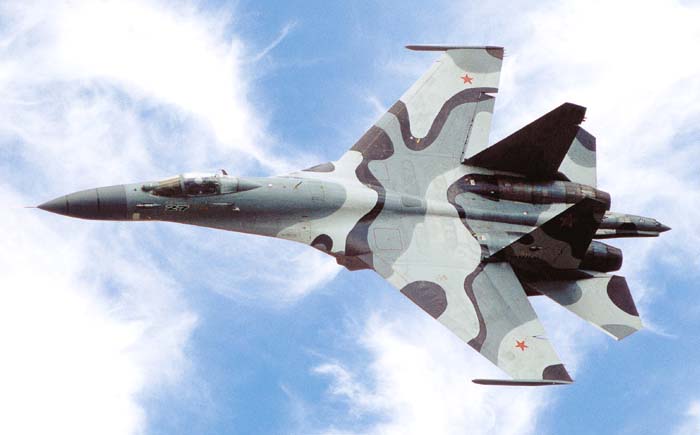
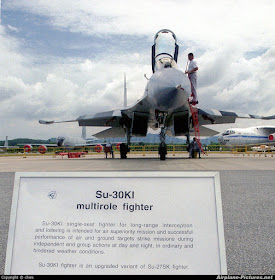
Developed by Sukhoi and KnAAPO in the late 1990s, the Su-30KI was basically a single-seat multirole upgrade of the Su-27SK. Unlike the more familiar two-seat Su-30 variants, it kept the single-seat cockpit while adding several upgrades to improve its combat capability and range, most notably an in-flight refueling probe, upgraded radar and avionics, and compatibility with the R-77 (RVV-AE) air-to-air missile.
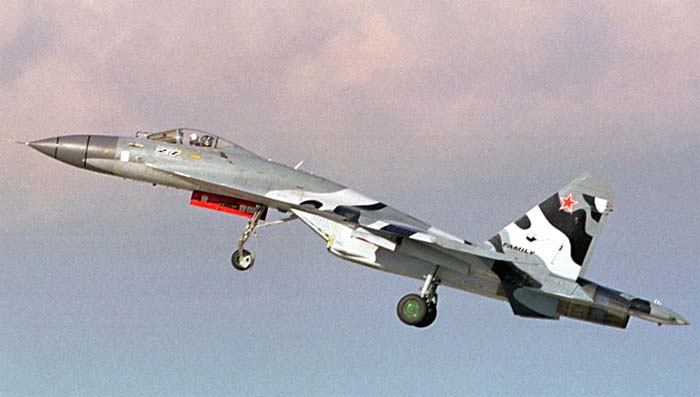
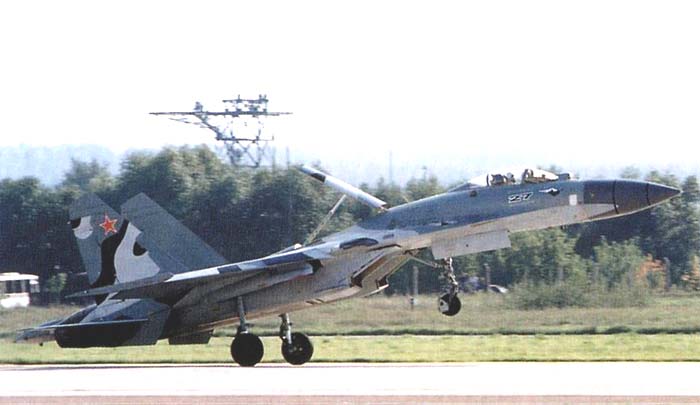
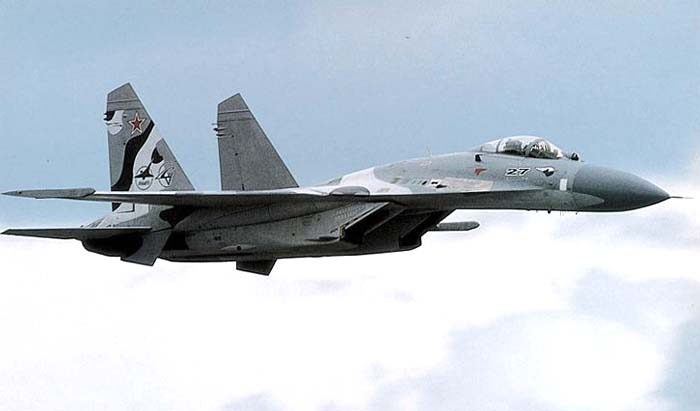
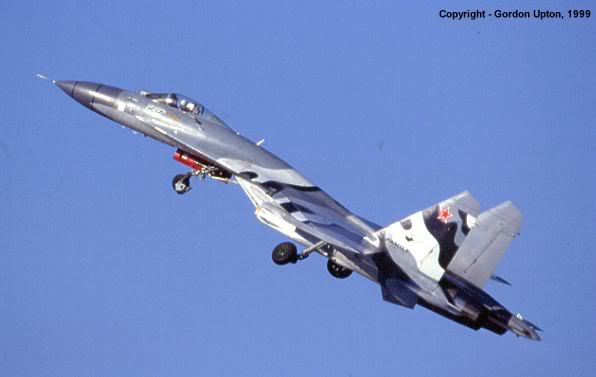
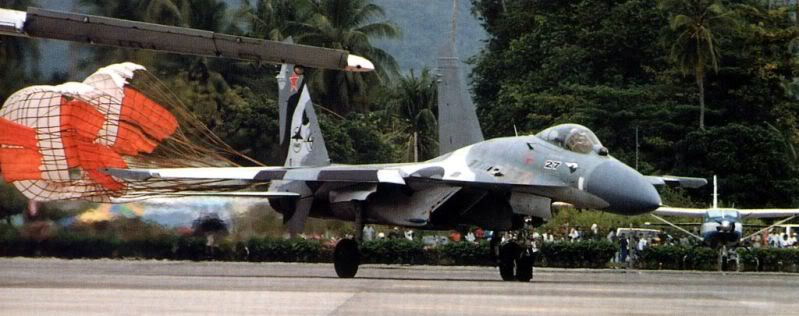
Indonesia was the main target for this export variant, however the 1997 Asian financial crisis eventually derailed the deal before any production aircraft could be delivered. Because of that, the Su-30KI ended up as a one-off demonstrator (blue bort 27) and a largely overlooked variant in the Flanker family.
For War Thunder, it offers a neat middle ground because you get the lighter, more agile single-seat Su-27 airframe paired with Fox-3 BVR capability.
Before we take a closer look at this aircraft, what does 'KI' actually stand for?
KI stands for Kommercheskiy Indoneziyskiy (Коммерческий Индонезийский), which translates to “Commercial Indonesian” in English.
The designation reflects the aircraft’s intended export market, as the Su-30KI was developed and promoted with Indonesia as one of its potential customers.
Also, which designation is actually correct for this aircraft? Su-27KI or Su-30KI? I’ve seen some people call it the Su-27KI, while others refer to it as the Su-30KI.
Well…the correct one is Su-30KI!.
History
The TPFI Program and Early Flanker Development
To see where the Su-30KI airframe came from, we have to go back to 1969 when the USSR learned about the USAF F-X program (which later became the F-15 Eagle). At first, the Soviet Air Force (VVS) started the PFI (Perspektivnyy Frontovoy Istrebitel, or Advanced Frontline Fighter) program to build one heavy fighter capable to match the F-15.
However, just like the US settled on a high-low mix with the F-15 and F-16, TsAGI and Soviet planners realized that building thousands of expensive heavy interceptors for every role would cost too much. So in 1971, they split the PFI requirement into two projects.
LPFI (Lyogkiy Perspektivnyy Frontovoy Istrebitel - Light Tactical Fighter): A lightweight, cheaper tactical fighter designed to replace the MiG-21 and MiG-23 over the immediate frontline. This requirement birthed the MiG-29.
TPFI (Tyazholyi Perspektivnyy Frontovoy Istrebitel - Heavy Tactical Fighter): A heavy, long-range interceptor and air-superiority fighter meant to escort deep-strike packages, hunt NATO bombers, and comfortably go toe-to-toe with the upcoming F-15.
The Sukhoi Design Bureau, under the leadership of Pavel Sukhoi (and later Yevgeny Ivanov), took on the TPFI challenge.
The T-10 Prototype and Its Early Issues
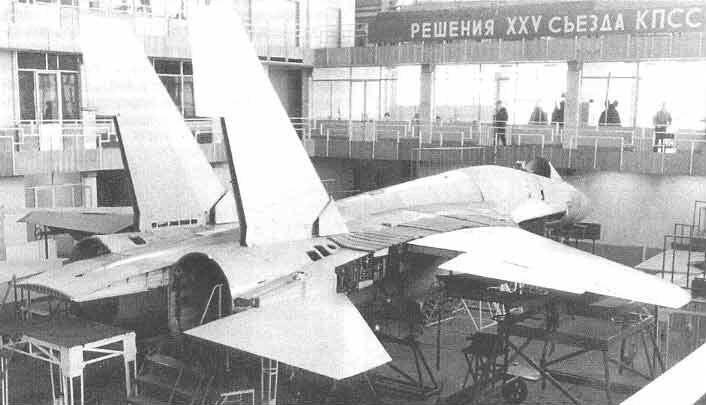
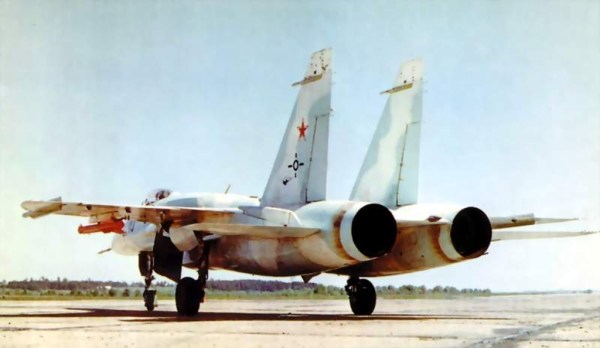
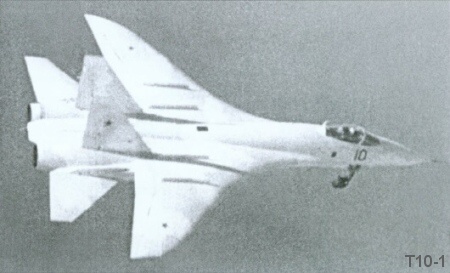
Sukhoi’s first design for the TPFI was the T-10, and the first prototype (T-10-1) flew in May 1977. Compared to the production Flanker, the T-10 looked quite different. It had curved ogival wings, engines placed very close together, and vertical tails mounted right on top of the engine nacelles. Because the intended AL-31F engines were not ready yet, it flew using older AL-21F-3 turbojets.Western intelligence spotted it on satellite photos at Ramenskoye and gave it the reporting name “Ram-K”. During flight testing, Sukhoi compared the T-10 data against the newly revealed specs of the F-15 and found several problems. The T-10 had high transonic drag, shorter range than required, and lower maneuverability than TsAGI calculated. In short, it was heavier, slower, and less agile than the Eagle.
Lead designer Mikhail Simonov concluded that putting the T-10 into production would give the VVS an inferior fighter. He convinced the Ministry of Aviation Industry to pause the program and let Sukhoi redesign the airframe.
The redesigned prototype was the T-10S (S for Seriynyy, or Serial), which first flew in April 1981. Almost every major part of the airframe was changed from the original T-10.
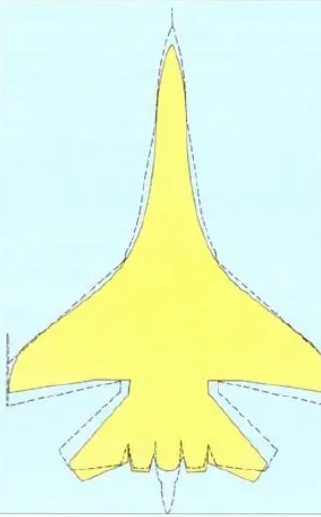
Wing Design, the curved ogival wings were replaced with straight-edged trapezoidal wings fitted with leading-edge slats and flaperons for better lift and maneuverability.
Engine Placement, the accessory gearboxes were moved from the bottom of the engines to the top, which reduced the aircraft frontal cross-section and drag.
Empennage, the vertical stabilizers were moved outboard of the engines onto boom extensions to improve high-AoA (Angle of Attack) stability.
Engines, it finally received the Lyulka AL-31F turbofans, giving it much higher thrust and better resistance to compressor stalls at high angles of attack.
Avionics and Canopy, the cockpit was raised for better visibility, and the aircraft was fitted with a quad-redundant analog fly-by-wire (FBW) system.
However, the T-10S testing phase was far from smooth. During high-G flight trials, the airframe suffered severe structural stress that led to two major accidents. In September 1981, the first redesigned prototype, T-10S-1 (T-10-7), crashed after a fuel system failure, though test pilot Vladimir Ilyushin managed to eject safely. A few months later in December 1981, the T-10S-2 (T-10-12) broke apart in mid-air during a high-speed low-altitude test, which killed test pilot Aleksandr Komarov. Because of these crashes, so Sukhoi engineers had to heavily reinforce the airframe and strengthen its titanium load-bearing structures before clearing it for production.
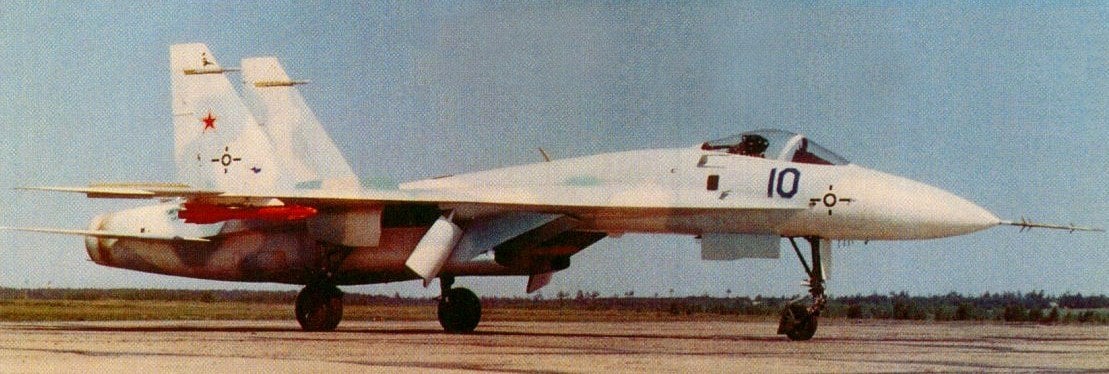
One of the first prototype of T-10SAfter years of testing, structural reinforcements, and aerodynamic tweaks to the T-10S, the definitive production variant finally rolled off the assembly line as the Su-27S. It began entering service with VVS frontline fighter regiments in 1985, though its weapons and avionics systems were so complex so the aircraft did not officially pass all State Acceptance Trials until 1990. Once the single-seat Su-27S platform matured, Sukhoi and KnAAPO used its export version, the Su-27SK, as the direct foundation to develop the Su-30KI in the late 1990s.
Even with its compromises, the Su-27S was a very capable fighter for its time. Because Phazotron ran into delays with the original planned radar, the aircraft had to be fitted with the heavier N001 Myech radar, which was basically a scaled-up version of the MiG-29 N019. To make up for the radar weight and its early limitations, the Su-27S relied heavily on the OLS-27 IRST (Infrared Search and Track) system and the Shchel-3UM Helmet-Mounted Sight (HMS). This setup allowed pilots to track targets passively without triggering enemy RWR warnings, and slave the R-73 high-off-boresight missiles just by looking at the target. Later on, this exact sensor and radar layout became the baseline that KnAAPO upgraded when developing the Su-30KI.
The Su-27SK Export Variant
After the Soviet Union collapsed in 1991, the Russian Air Force defense budget dropped sharply. Because of that, the Sukhoi Design Bureau and the KnAAPO manufacturing plant in Komsomolsk-on-Amur ran into serious financial trouble, since they still had half-built Flankers on the production lines and thousands of workers to pay without domestic orders. To keep the factories running through the 1990s economic crisis and bring in foreign currency, Sukhoi developed a dedicated export variant called the Su-27SK (Seriynyy Kommercheskiy, or Serial Commercial).However, exporting the Su-27 was not that simple because Sukhoi faced two main issues. First, foreign buyers with smaller defense budgets rarely wanted a pure air-superiority interceptor, they wanted a multirole fighter that could also do ground attack missions. Second, the Russian Ministry of Defense strictly prohibited Sukhoi from exporting sensitive domestic avionics and electronic warfare systems.
To solve the first issue, Sukhoi modified the Flanker so it could handle heavy ground-attack loads. They reinforced the airframe and strengthened the landing gear, which increased the aircraft Maximum Take-Off Weight (MTOW) up to 33,000 kg. With these structural changes, the Su-27SK could carry up to 8,000 kg of air-to-ground ordnance across its 10 hardpoints. Even though it still lacked guided air-to-ground munitions and relied on unguided weapons, a fully loaded Su-27SK could carry up to 28 FAB-250 bombs, S-25 heavy rockets, or RBK cluster bombs.
To solve the second issue, Sukhoi downgraded several classified systems for export. The domestic N001 radar was replaced with the export N001E version, which kept similar tracking range against fighter-sized targets, but had reduced ECCM (Electronic Counter-Countermeasures) capability and modified operating frequencies. Besides that, the domestic IFF (Identification Friend or Foe) and the SPO-15 Beryoza RWR (Radar Warning Receiver) were also replaced with standard export versions.
The Su-27SK quickly found buyers on the export market and helped keep Sukhoi running. In 1992, China ordered an initial batch of 24 aircraft for the PLAAF, then bought more batches and later acquired the production license to assemble them locally at Shenyang as the J-11. After the success of the Su-27SK, Sukhoi and KnAAPO used this exact reinforced airframe as the starting point to develop an upgraded export version for Indonesia, which became the Su-30KI.
Now, here is where the Flanker family tree gets wonderfully weird, bringing us to the exact star of this suggestion: the Su-30KI (Kommercheskiy Indoneziyskiy).
In 1997, Indonesia was looking to modernize the TNI-AU (Indonesian Air Force). Because Indonesia is an archipelago with more than 17,000 islands spread across thousands of kilometers, long operational range was a key requirement. Indonesia was interested in buying the Flanker, however the standard Su-27SK did not have an in-flight refueling system. At the same time, TNI-AU preferred a single-seat fighter for air-superiority missions instead of the heavier two-seat Su-30MK variants. Because of those requirements, they asked Sukhoi for a single-seat Flanker equipped with the in-flight refueling probe and upgraded avionics from the Su-30 series.
Sukhoi and the KnAAPO plant responded to that request by developing the Su-30KI. Even though it carries the Su-30 designation, it is actually a single-seat fighter.
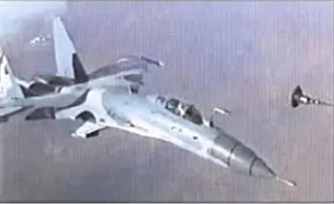
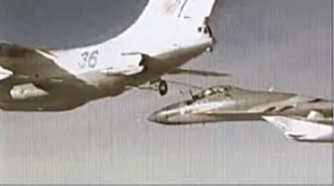
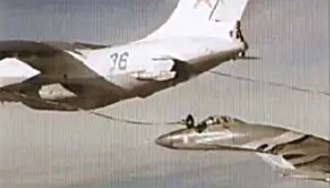
To build the Su-30KI, engineers at KnAAPO used the reinforced single-seat airframe of the Su-27SK as the baseline, then integrated long-range equipment and avionics upgrades from the Su-30 program, including the retractable in-flight refueling probe on the left side of the nose and the upgraded N001E radar system for R-77 compatibility.
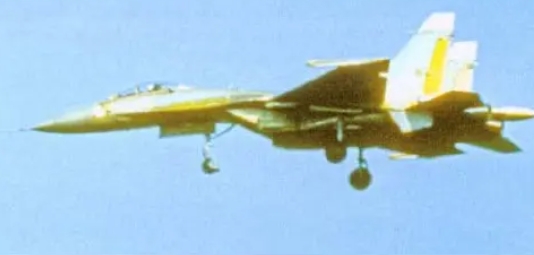
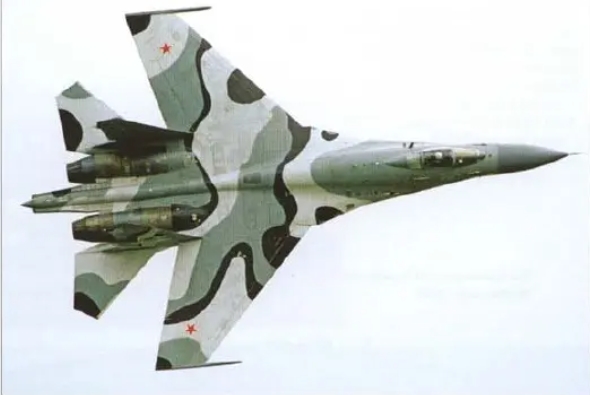
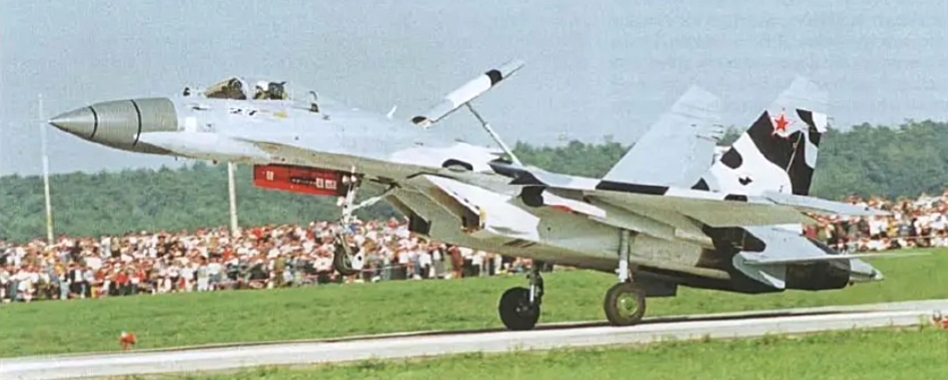
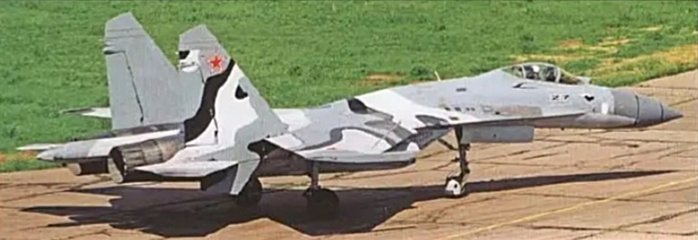
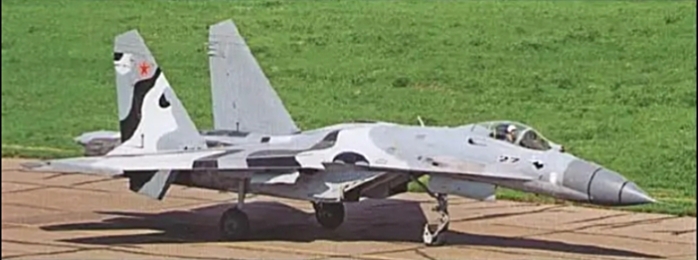
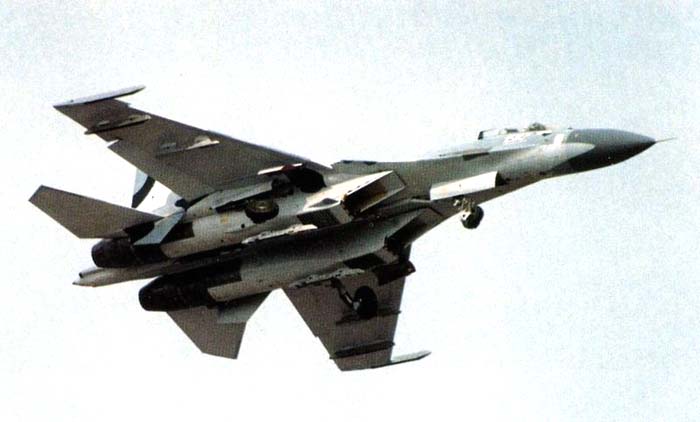
Visually, the main external difference on the Su-30KI is on the forward fuselage. Beside the retractable In-Flight Refueling (IFR) probe on the port (left) side of the nose, engineers also added the internal fuel plumbing and a small pop-out floodlight for night refueling. Unlike later Flanker H variants (Or even Flanker G family), the Su-30KI kept the standard single-seat Su-27SK airframe without foreplane canards or thrust-vectoring nozzles (Which used by Flanker H families such as MKI,MKM or SM), which helped keep its weight and aerodynamic drag low.
Internally, the Su-30KI avionics suite was updated for long-range overwater patrols and better interoperability. Sukhoi fitted the avionics bay with Western-compatible navigation systems, including ILS, VOR and TACAN. Also TNI-AU pilots could navigate accurately over open waters and operate smoothly during joint international exercises.
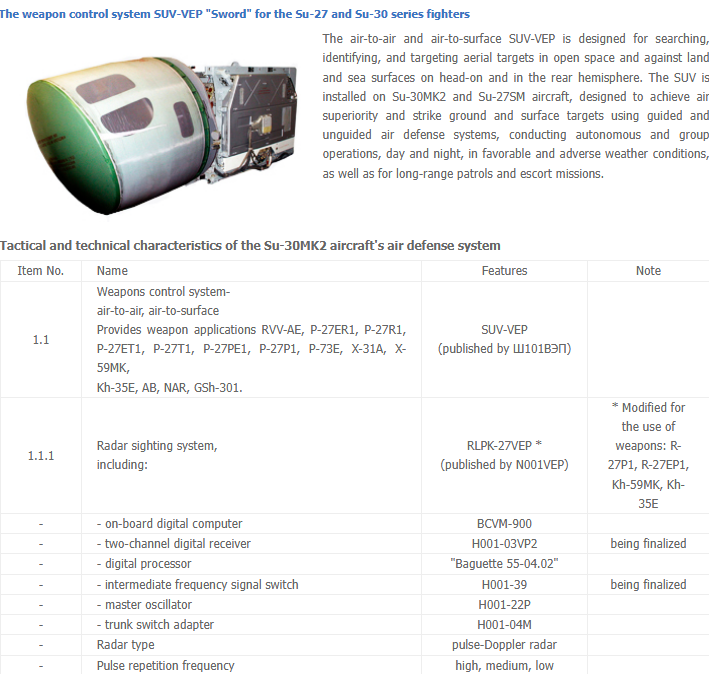
For weapons integration, Sukhoi upgraded the fire control system to the SUV-27E and updated the N001E radar channels to support active radar-homing RVV-AE (R-77) missiles. This gave the single-seat airframe proper Fox-3 BVR capability, alongside its existing loadout of R-27ER/ET missiles and helmet-slaved R-73s. Because it kept the reinforced Su-27SK airframe, landing gear, and 33,000 kg MTOW, the Su-30KI could still carry up to 8,000 kg of ordnance across its 10 hardpoints, turning it into a capable single-seat Flanker.
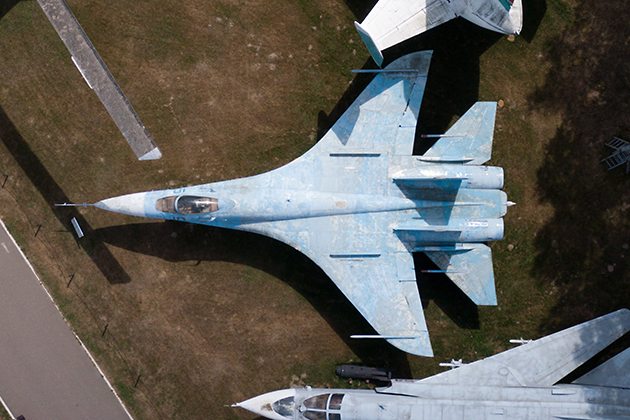
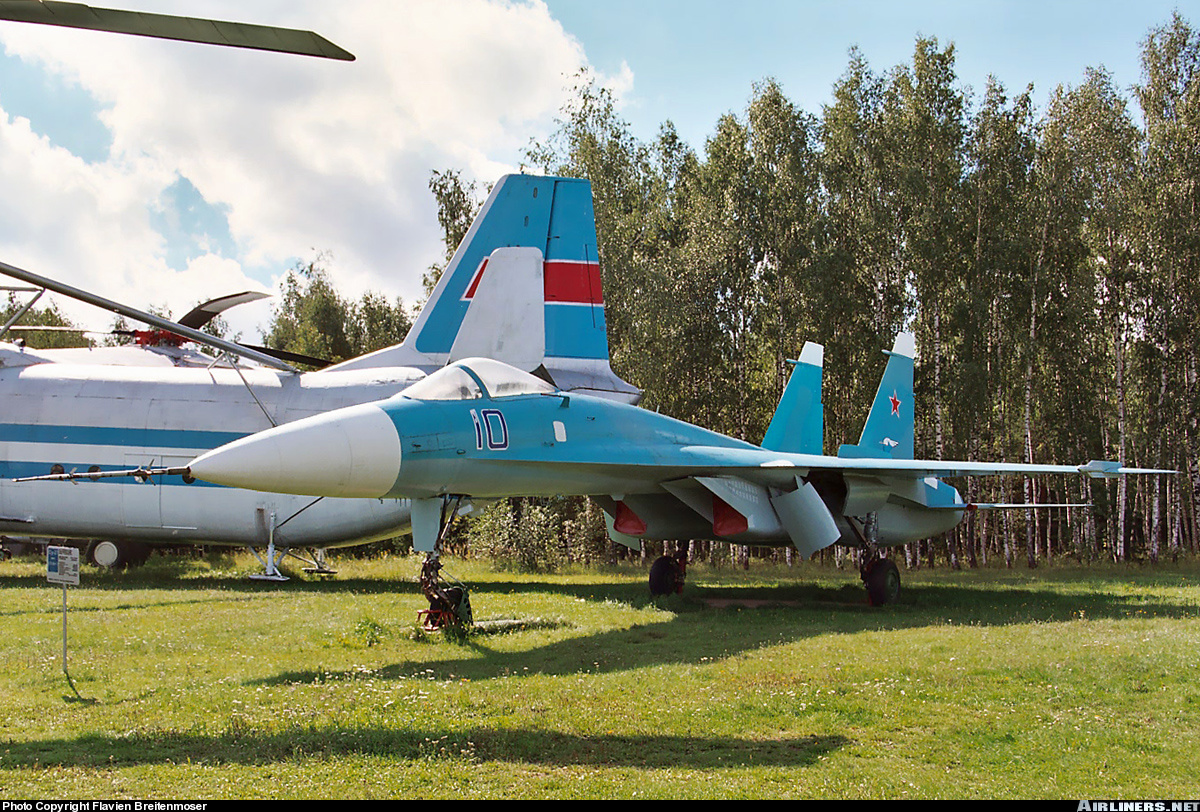
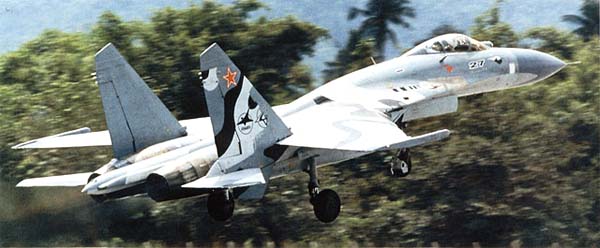
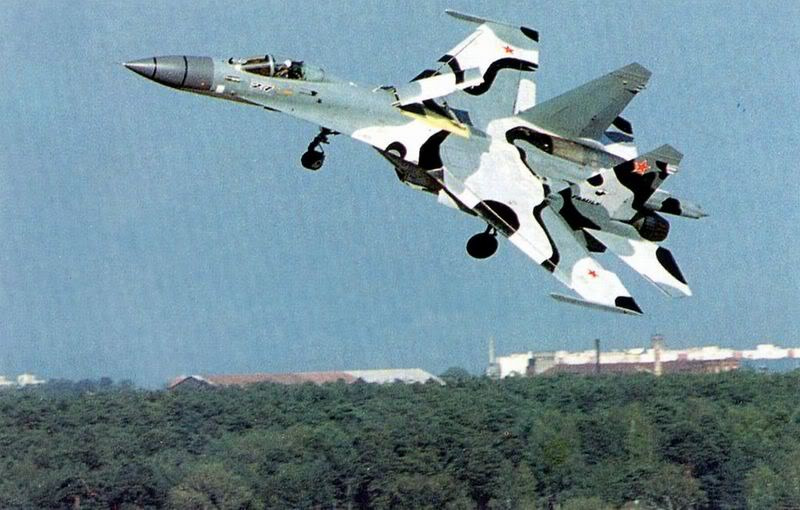
In 1997, an agreement was signed for Indonesia to purchase 12 Su-30KI fighters. To support the program, KnAAPO converted an Su-27SK airframe into a single-seat demonstrator for the TNI-AU. The aircraft was painted in a blue-and-grey splinter sea camouflage scheme and carried the blue bort number 27.
However, the deal fell apart when the 1997 Asian Financial Crisis hit the region. Indonesia’s economy was severely affected, the Rupiah value dropped sharply, and the country went through major political changes. Because of the crisis, the defense procurement budget was cut, forcing Indonesia to cancel the order in 1998. Even though the Su-30KI contract was canceled, Indonesia still bought Flankers a few years later in 2003 (starting with two Su-27SKs and two two-seat Su-30MKs), while the sole Su-30KI prototype itself continued to be used for testing.
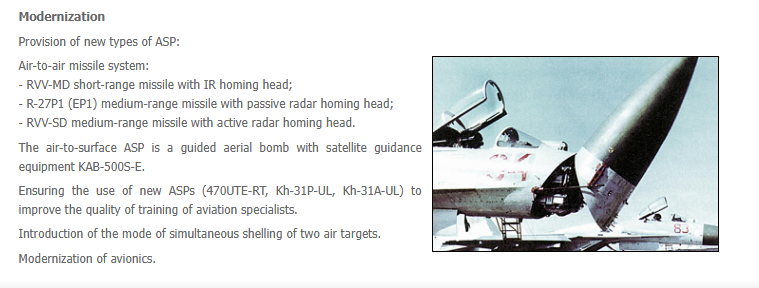
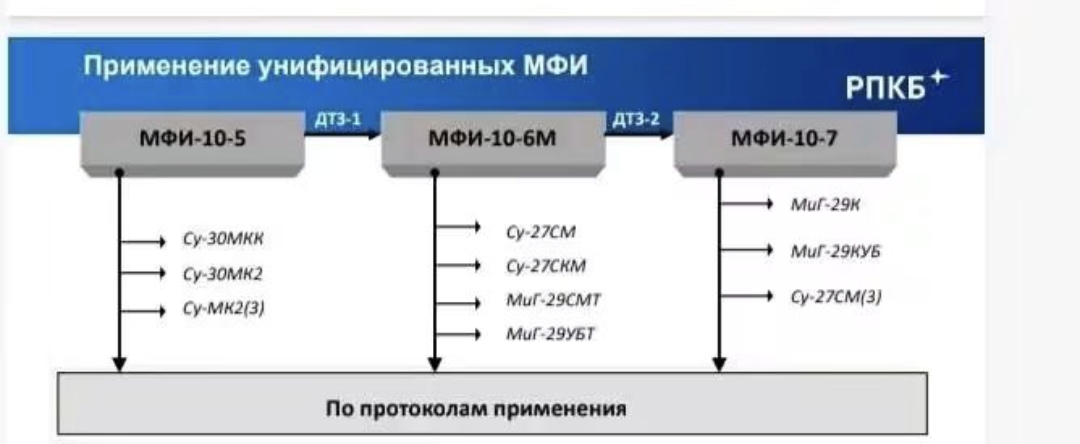
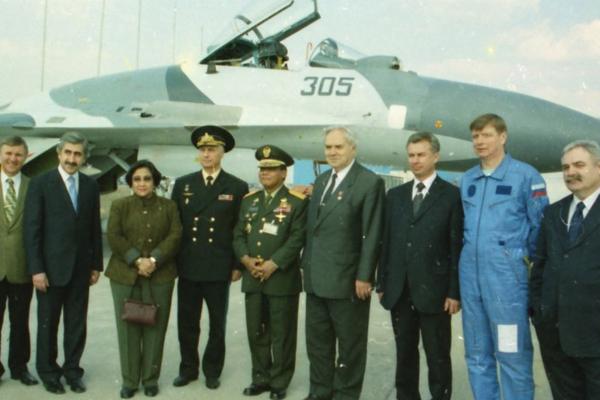
Instead of leaving the sole Su-30KI prototype unused, Sukhoi repurposed the airframe for further development. KnAAPO converted it into the demonstrator for their single-seat export modernization program, re-designating and repainting the aircraft as blue bort 305 (Su-27SKM). In this new role, the former Indonesian demonstrator served as the testbed for upgraded single-seat systems, including a glass cockpit with MFI-10-6M color LCD displays, an updated fire control system, full RVV-AE (R-77) capability, and compatibility with precision-guided air-to-ground weapons such as Kh-29T/L missiles, Kh-31A/P missiles, and KAB-500 guided bombs.
Photo of President Megawati Soekarnoputri near Su-27SKM bort 305
Ironically, Indonesia still ended up buying Flankers a few years later. In April 2003, during a state visit to Moscow under President Megawati Soekarnoputri, Indonesia signed a counter-trade agreement that used commodities like crude palm oil and rubber to help pay for Russian military equipment. That initial deal delivered two single-seat Su-27SKs and two twin-seat Su-30MKs in late 2003, which were assigned to Skadron Udara 11 at Sultan Hasanuddin Air Base.
Years later, when TNI-AU ordered additional Flankers to expand its fleet, they purchased three single-seat Su-27SKM fighters, which basically put the upgrade package tested on the converted Su-30KI (bort 27) prototype into service with Indonesia.

Specification
General Characteristics
- Crew: 1 (Single-seat)
- Manufacturer: Sukhoi Design Bureau / KnAAPO — (Komsomolsk-on- Amur Aircraft Production Association)
- Development status: Prototype / Flight demonstrator — (1 unit built, Bort 27)Dimensions (According to Su-27SK product specifications)
- Length: 21.9 m (including pitot tube)
- Wingspan: 14.7 m
- Height: 5.93 m
- Wing area: 62.0 m²Powerplant
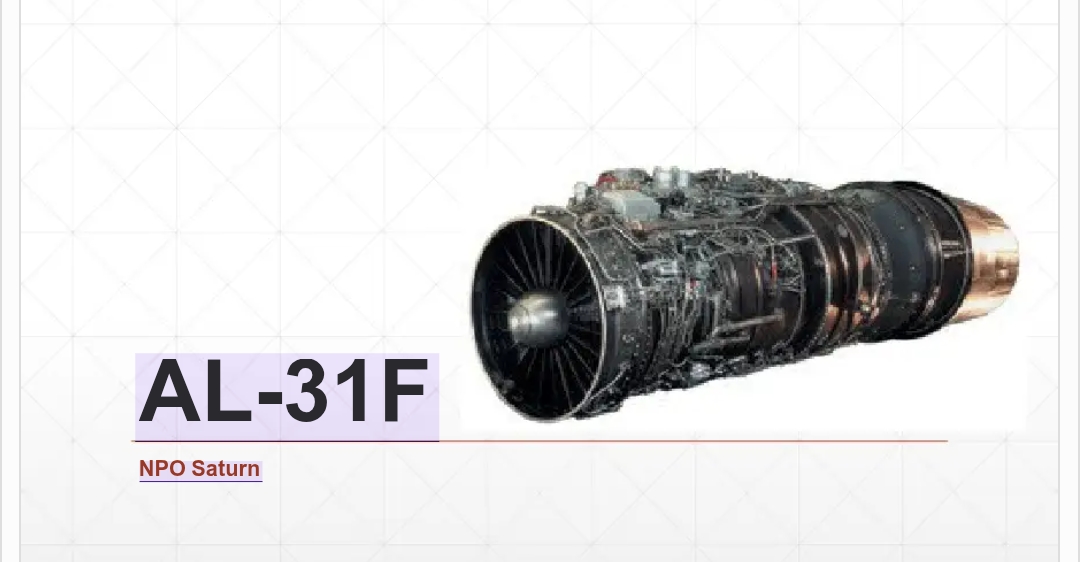
- Engine: 2 × Saturn/Lyulka AL-31F
- Type: Afterburning turbofan
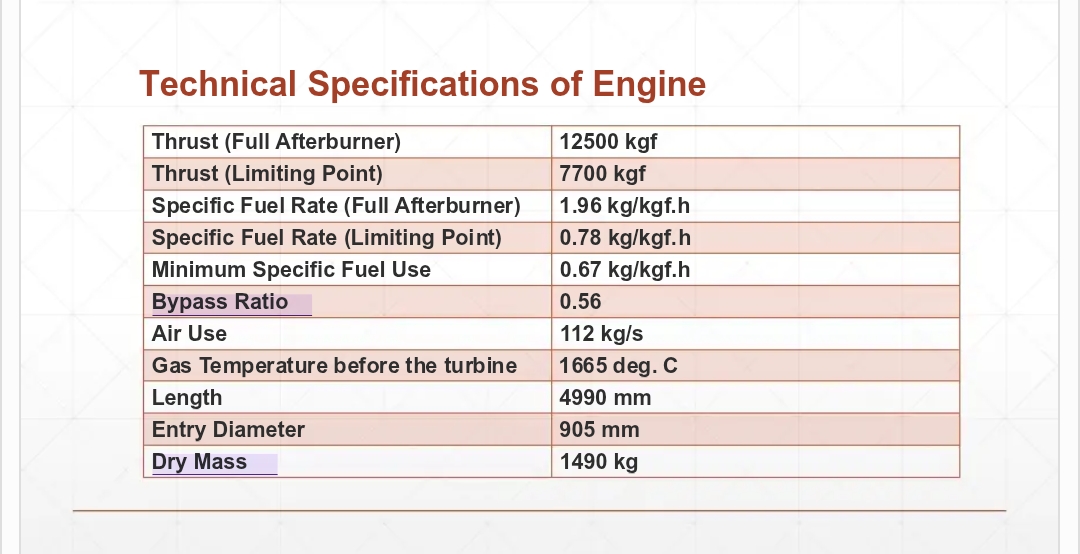
- Maximum dry thrust: Approximately 16,975 lbf (75.5 kN / 7,700 kgf) each
- Maximum afterburning thrust: Approximately 27,560 lbf (122.6 kN / 12,500 kgf) each
Weight
- Empty weight: Approximately 16,380 kg or 36,112 lbs (Baseline Su-27SK single-seat airframe reference)
- Maximum takeoff weight (MTOW): 33,000 kg (72,752 lbs)
- Normal takeoff weight: 23,430 kg (51,654 lbs)Flight Performance
- Maximum speed:
- At altitude (11,000 m+): Mach 2.35 (2,500 km/h / 1,550 mph / 1,350 knots)
- At sea level: Mach 1.13 (1,400 km/h / 870 mph / 755 knots)
- Cruising speed: Mach 0.95 (1,000 km/h / 620 mph)
- Service ceiling: 18,500 m (60,700 ft)
- Maximum load factor (G-limits): +9.0G / -3.0G — Airframe design limitAvionics and Electronics
- Radar: Phazotron N001E Pulse-Doppler Radar
- Radar Warning Receiver: SPO-15LM
- Infrared Search and Track: OLS-27
- Countermeasures Dispenser System: APP-50Helmet-Mounted Cueing System
-Shchel-3UM HMSSpoiler
- Armament
- Internal gun:
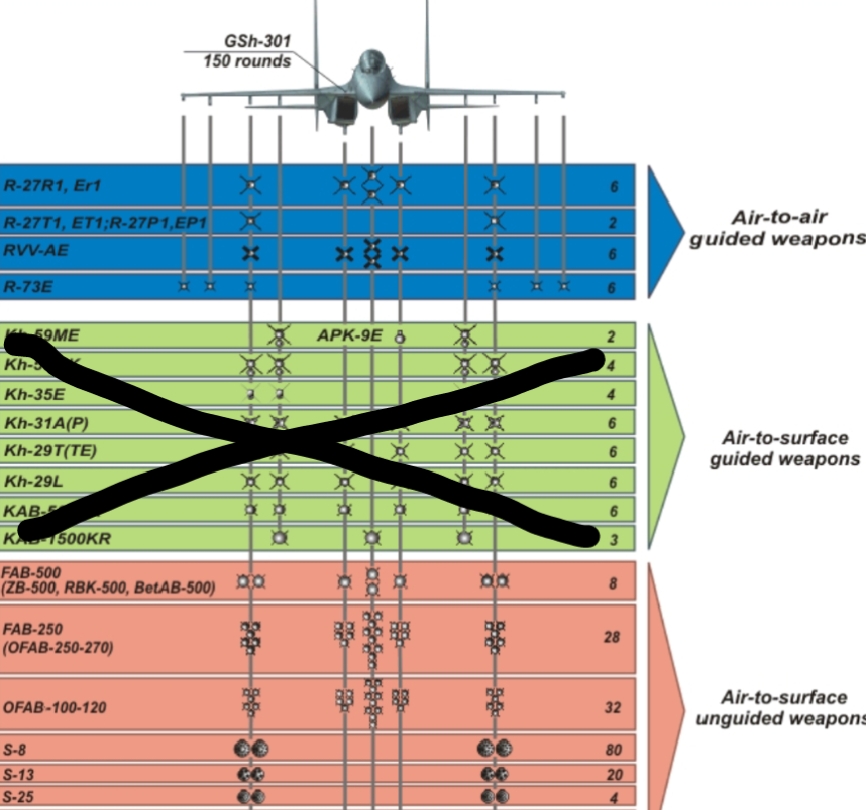
- 1 × 30 mm Gryazev-Shipunov GSh-30-1 (9A-4071K) autocannon (150 rounds)
- Air-to-air missiles:
- RVV-AE
- R-27R1/ER1
- R-27T1/ET1
- R-73E- Air-to-ground weapons:
- FAB-100 / FAB-250 / FAB-500
- S-8 series
- S-13 series
- S-25 series
Images and video
Source
Book: Su-27 Famous Russian Aircraft by Yefim Gordon
Su-30KI Multipurpose fighter
WEAPONS TECHNOLOGY: Sukhoi Su 30 KI Impian TNI AU Yang Gagal Karena Krisis Moneter
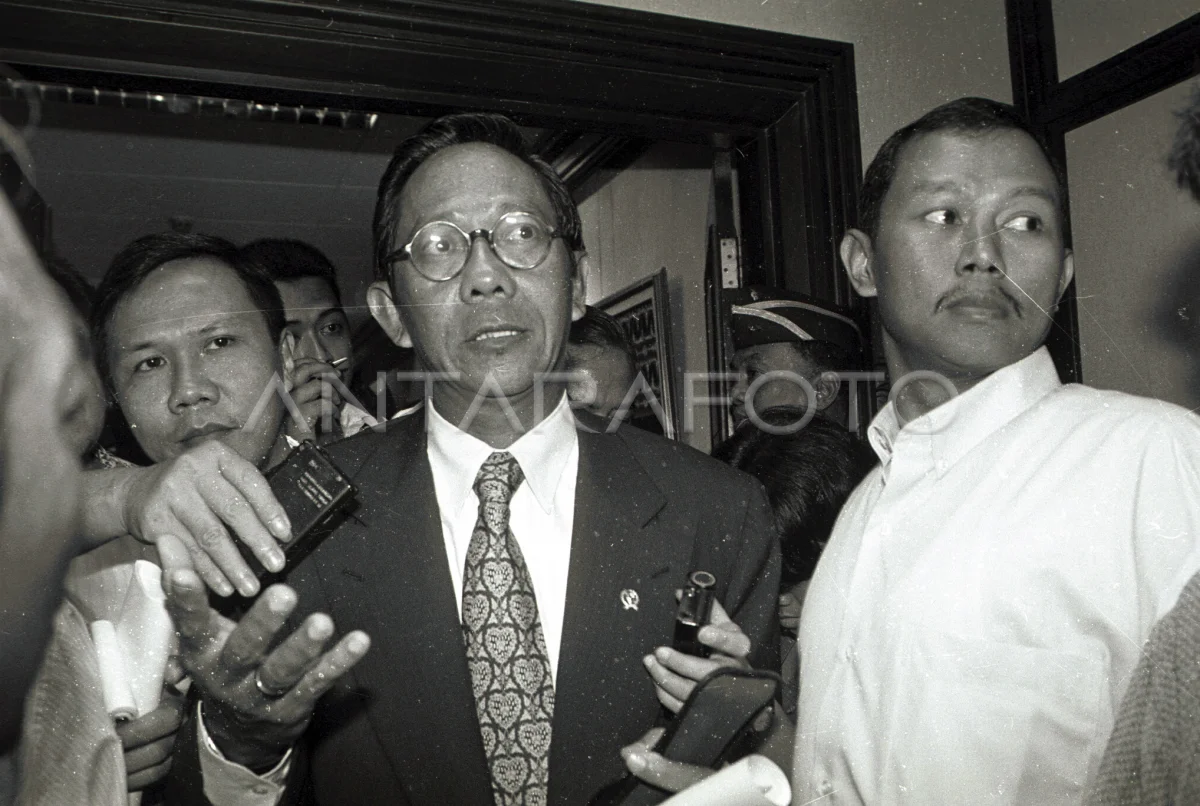
INDONESIA BELI PESAWAT TEMPUR SHUKOI SU-30K | ANTARA Foto
Sukhoi Flankers - The Shifting Balance of Regional Air Power
MILAVIA Aircraft - Sukhoi Su-27 Flanker Historical Events & Key Dates
MILAVIA Aircraft - Sukhoi Su-30 Multi-Role Flankers
https://www.ausairpower.net/PDF-A/TE-Flankers-Aug03.pdf
Sukhoi Su-30 story in colours. Sukhoi Su-30 fighter worldwide camouflage and painting schemes. Prototypes, experimental planes, variants, serial and licensed production, deliveries, units, numbers. Russia, India, China, Malaysia, Venezuela, Belarus, Ukraine, Algeria, Vietnam, Eritrea, Angola, Uganda
Client Challenge
Sukhoi Su-30 story in colours. Sukhoi Su-30 fighter worldwide camouflage and painting schemes. Prototypes, experimental planes, variants, serial and licensed production, deliveries, units, numbers. Russia, India, China, Malaysia, Venezuela, Belarus, Ukraine, Algeria, Vietnam, Eritrea, Angola, Uganda
So, wrapping all of that up and honestly, the Su-30KI would fit right in as a solid contender at 13.3. The reasoning is pretty straightforward, compared to the Chinese J-11A MLU, the lack of MAWS definitely holds it back a bit. Meanwhile, pitting it against the Su-30MK2 or MKK wouldn’t make much sense either, given how big the gap is in overall specs. 13.3 just makes the most sense balance-wise.
Anyway, that’s just my personal opinion—take it with a grain of salt, since BR compression is always a thing, soo…feel free to disagree!