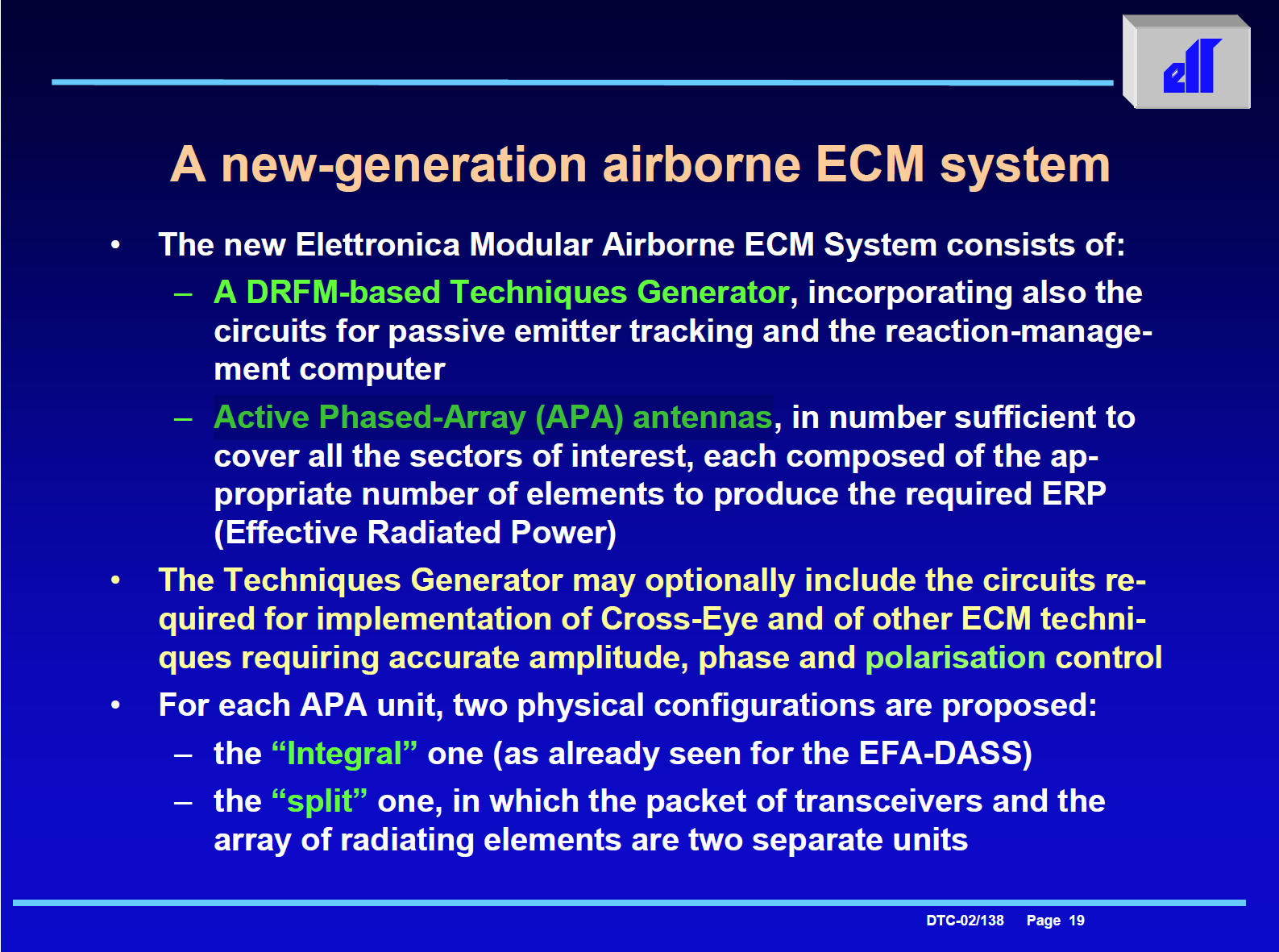
Not to my knowledge, EF did not have AESA ECM in the 2001-2002. The ESM part relies on on 8 receivers that work based on amplitude modulation and the ECM works on phassed array but not active phased array. We know that digitalisation , with digital multi channel receivers and DRFM ( which is what feeds the ECM antennas ) only came with Praetorian Evo on trache 4-5 EF in the 2020s. So trully AESA EW came much later than early 2000s.
Interestingly in the early 90-2000s the industry talked about active phased array because that was technically accurate but that did not mean the AESA we are familiar with nowaday. This could also explain why the Russian 2009 brochure also talks about active phased array while the 2021 paper makes the disctinction about digital multi channel transmitter and receiver module and employs the term AFAR which is the distintive term for AESA.
The reason why phased array were once called “active phased arrays” stems from a collision with classical antenna theory rather than radar-specific classifications. In fundamental electromagnetic engineering, an “active array” is defined as any antenna array where all radiating elements are fully driven meaning they are fed directly with radio frequency (RF) power. This is contrasted against a “passive” or parasitic array, which relies on elements that are merely excited by mutual coupling without a direct power feed .
Because phased array like a PESA directly drives all of its phase-shifted elements with RF power generated by a central transmitter, it technically qualifies as an “active array” under this older, foundational definition.
It was only when radar engineers needed a way to market and classify the new Transmit/Receive (T/R) module architecture that the definition of “active” was redefined within the aerospace industry to mean amplification at the element level (AESA), retroactively pushing PESA into the “passive” category.
They are certainly getting DL from the Irbis which is why i emphasised Irbis role.
But the reason i find it surprising that the seeker on R-77 or more speficially R-77-1 ( which is what we see on the video ) can lock low RCS is because we have documents for next generation seekers ( presumably R-77M ) providing public estimates on range against low RCS .
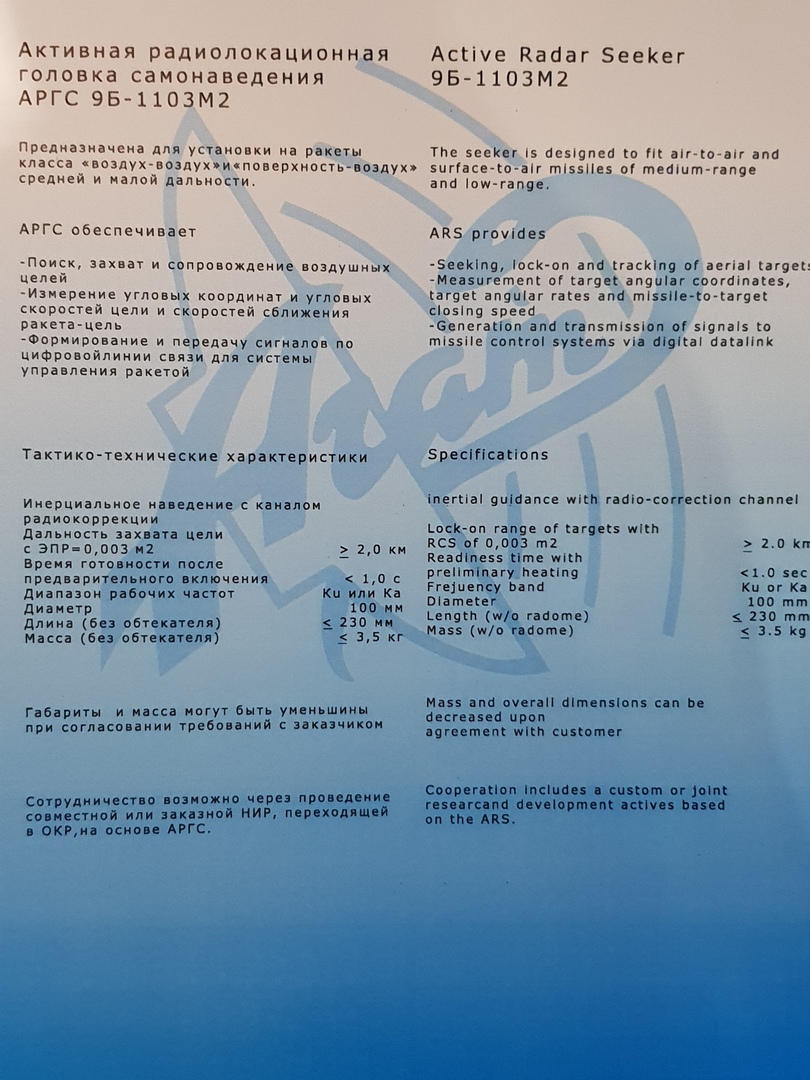
For instance as you can see here 9B-1103M2 is rated for around 2km lock range against 0.003m^2 targets. Considering thats quite a short range, it’s natural to question the capability of older seekers to lock such targets since they would lock at such short range that they would practically become SARH.
Of course there are other possibilities such as public domain numbers being understated or realistic RCS values for stated targets being order of magnitude higher. Im afraid we will not have the answer in the public domain for a long long time .
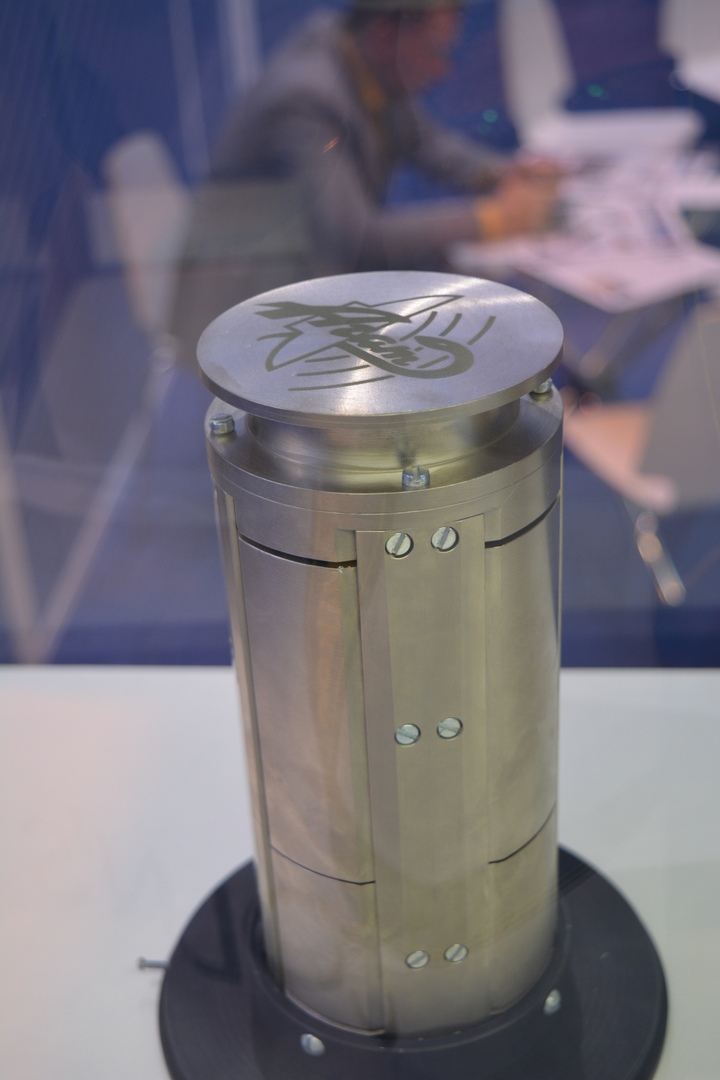
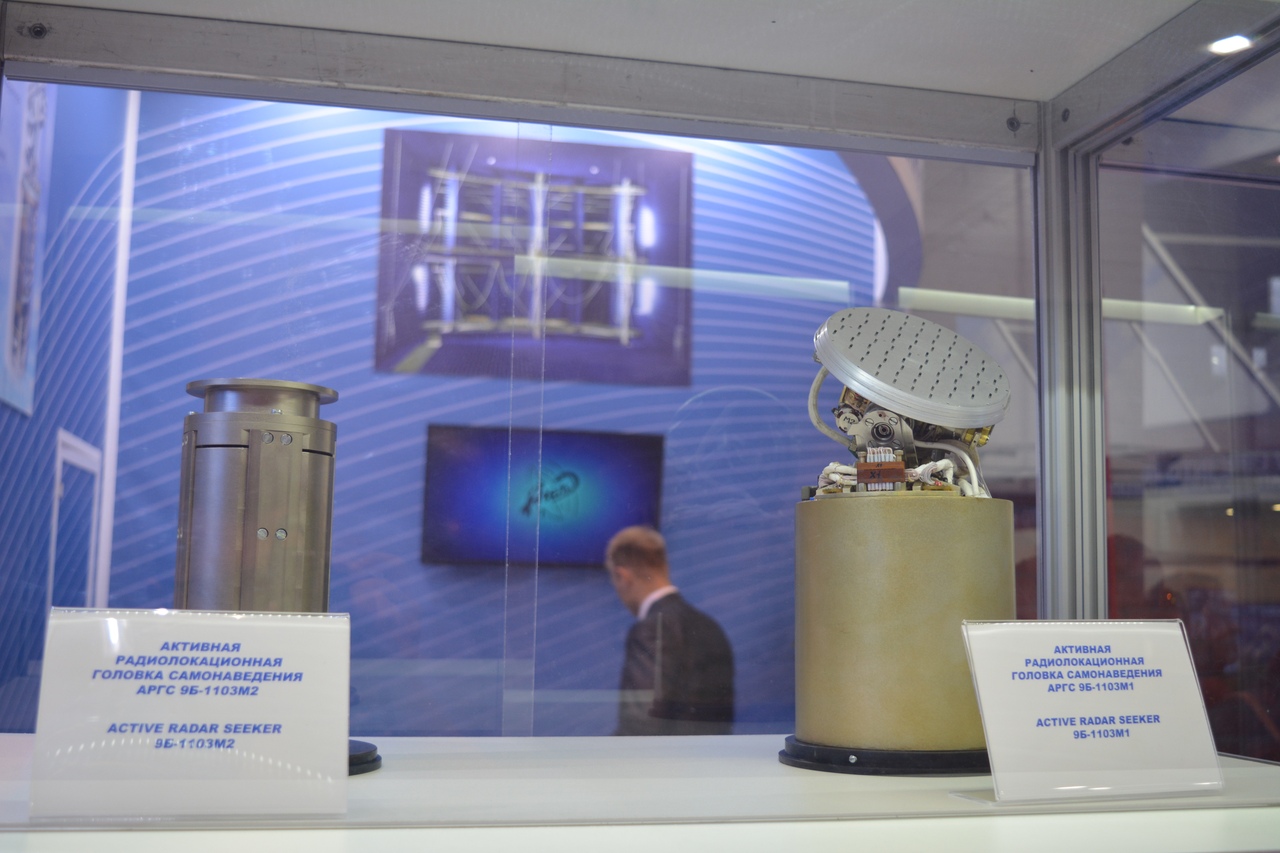
That isn’t even the full scale seeker, if you notice the diameter its only 100mm
And i remember that i did some maths, the normal mechanical seeker on R-77-1 fairs better iirc (mainly because the seeker mentioned here has quite a small in size)