What makes you think that I treat RCS as a constant?
Because all you said was 0.3m^2. Nothing about aspect, angles or wavelength. Just 0.3m^2. Real engineer over here.
1 Like
Not me. That was said by Alexander Davidenko: “The F-22 has an RCS of 0.3-0.4 m2. We have similar low-observability requirements.”
Not just an engineer, but the chief designer of the T-50. That should give you an idea of the level of expertise behind this thing.
I guess you agree with this point lol. RCS values are useless without knowing the necessary conditions.
Not anymore. Mikhail Stelets has been the chief designer for over 10 years now. The T-50 has changed significantly since 2014.
Not to mention that it’s best to take these statements with a grain of salt when you don’t know the context. The current chief of design also calls the Su-57 the most advanced 5th generation fighter. Of course you would only agree with statements that fit your narrative. Manufacturers mess up in their statements from time to time. One of Saab’s spokesmen and test pilot stated that the IRST on the Gripen E has 500km of range against targets for example. This is of course not the case…
3 Likes
This is a Russian RAM that is said to be used in several areas within the Russian military to reduce radar emissions.
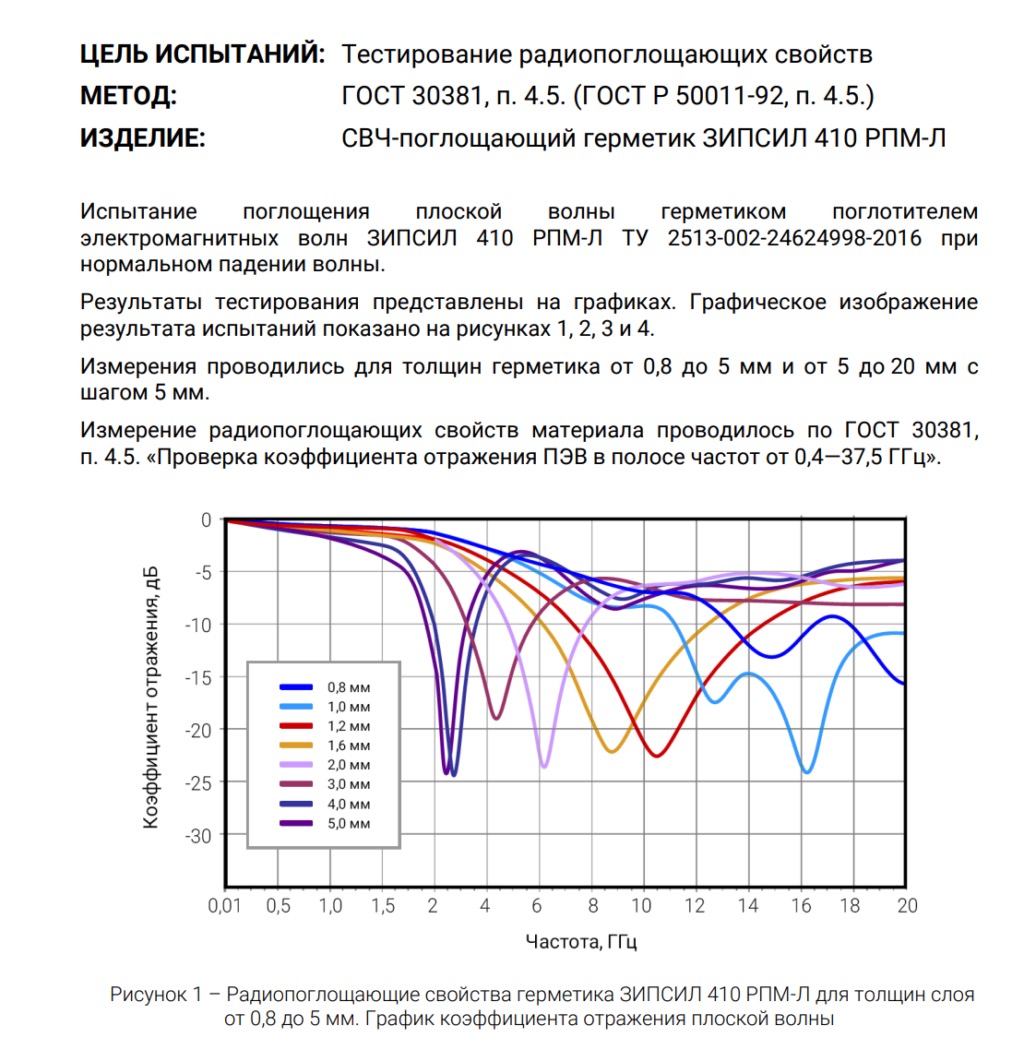
-20dB at 8GHz is over 15 times more effective than MnZn.
As I’ve said, MnZn is far from ideal and gives a misleading look at that the Su-57’s RCS realistically could be. If it would have been treated with something like this, the RCS would be significantly reduced, even if you let the outer surfaces stay fully conductive.
In the simulation that treats the Su-57’s outer surfaces as fully conductive and inlets with MnZn, we can see that the majority of the signature comes from the intakes.
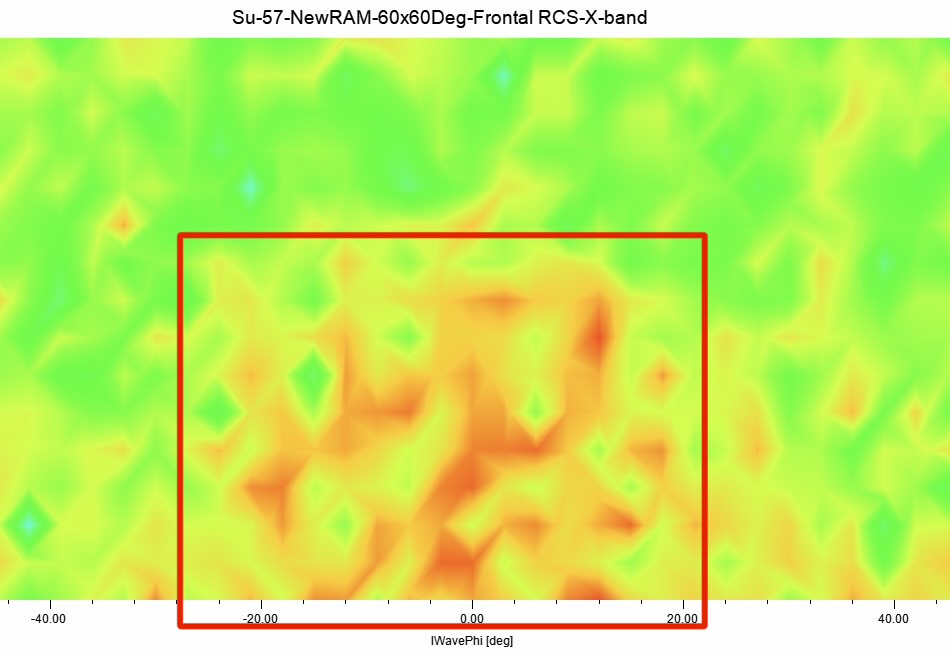
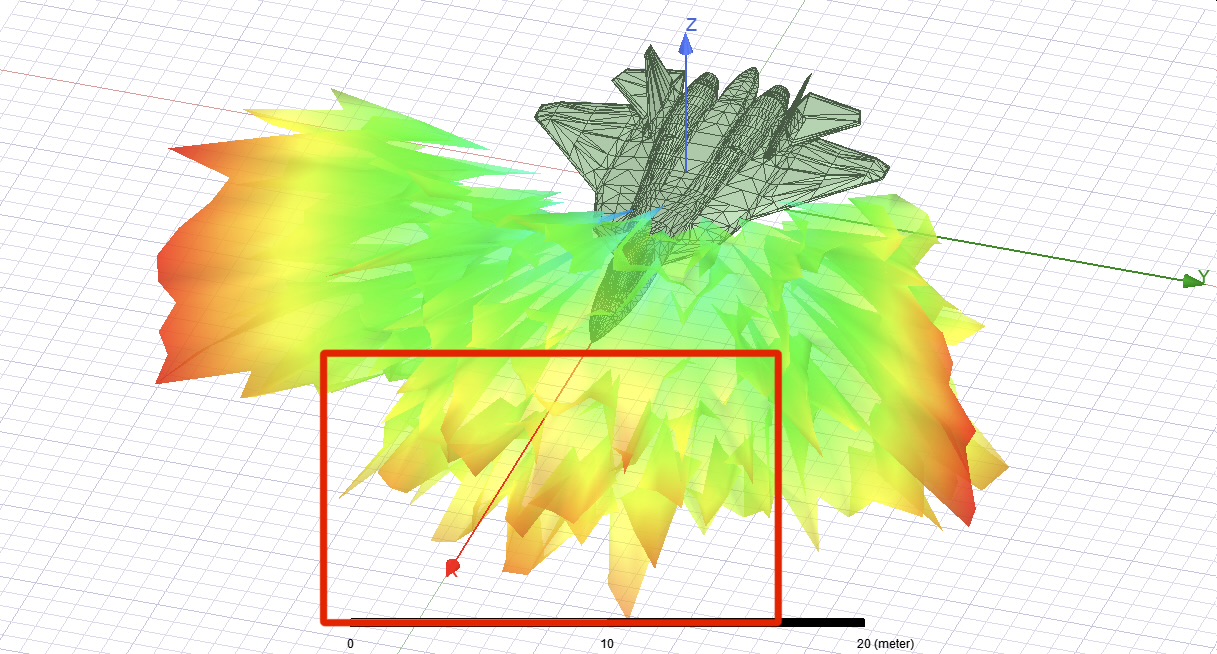
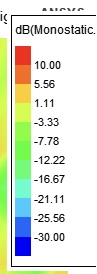
This is why the mean and the average values are so
different (0.5 vs 1m^2). If it would have been treated with a better RAM as the one lister above, we would see a significantly lower average value.
Another spike is seen at ±45 degrees.
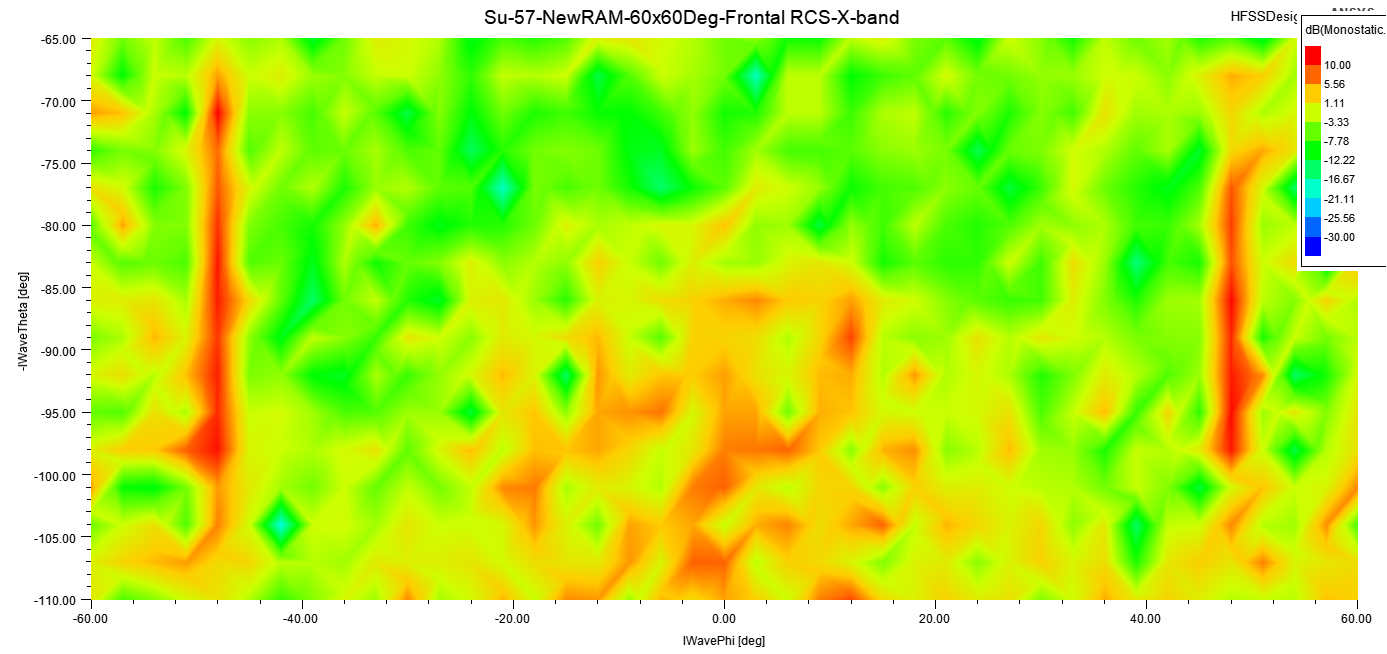
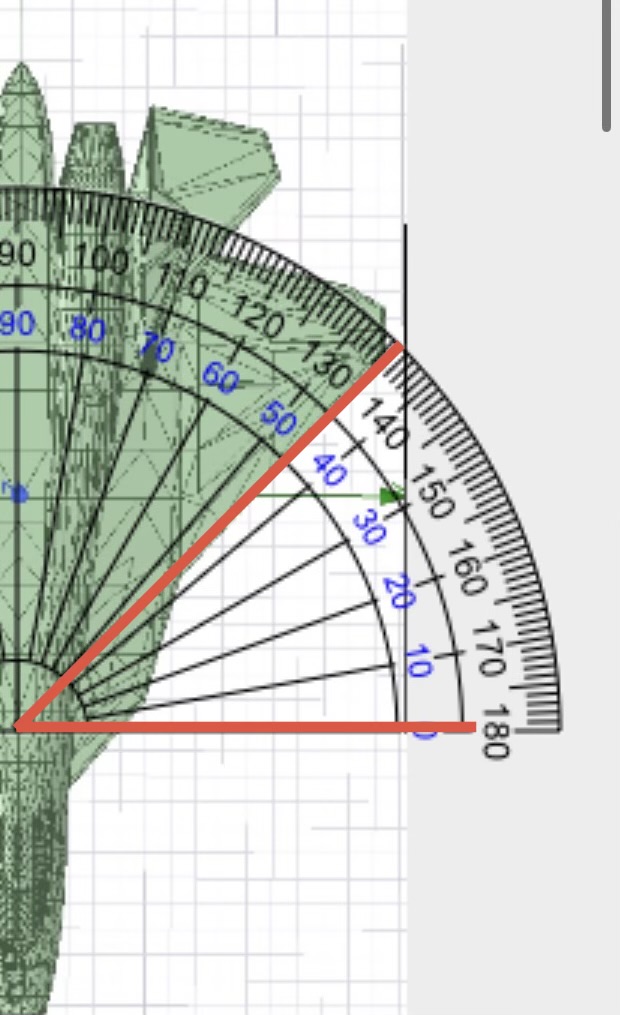
The high reflection is mainly from the wings, and some other surfaces that are angled at 45 degrees. With the help of RAM and inner structure, it can be greatly reduced.
(I’ll try to find a image of the Su-57’s wing edge when I’m finished with work for the day.)
If you look at at the areas where the intakes aren’t in ”LOS”, we see significantly lower values, around -8 to -10dB (0.15-0.1m^2). These values are without RAM, which suggests that the Su-57 actually has decent geometry.
I’m just a enthusiast with limited knowledge so don’t take everything I say at face value please.
6 Likes
No. It simply reflects the level of competence of the people who designed it, which happens to align quite well with the final result.
And without modeling the skin details, which would undoubtedly increase the RCS.
But thanks for the detailed explanation. It was interesting and informative.
This is a very important point for the META defining
Gaijin would make plane with fewer missiles to be more agile while making the more missiles plane to be like a bus i guess
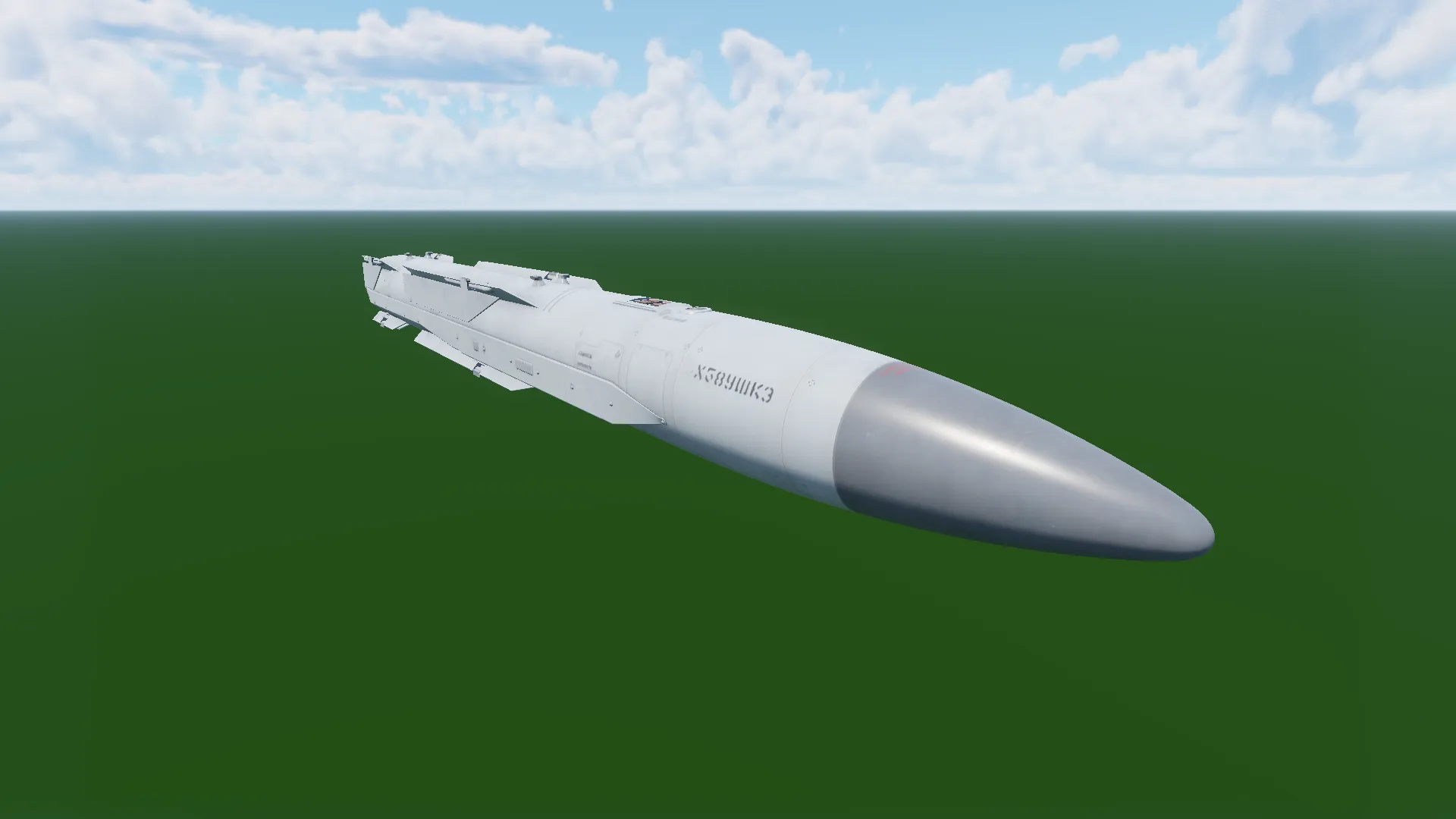
Weird to see the Felons weapon bay Kh-58 in the files.
1 Like
1 Like