History
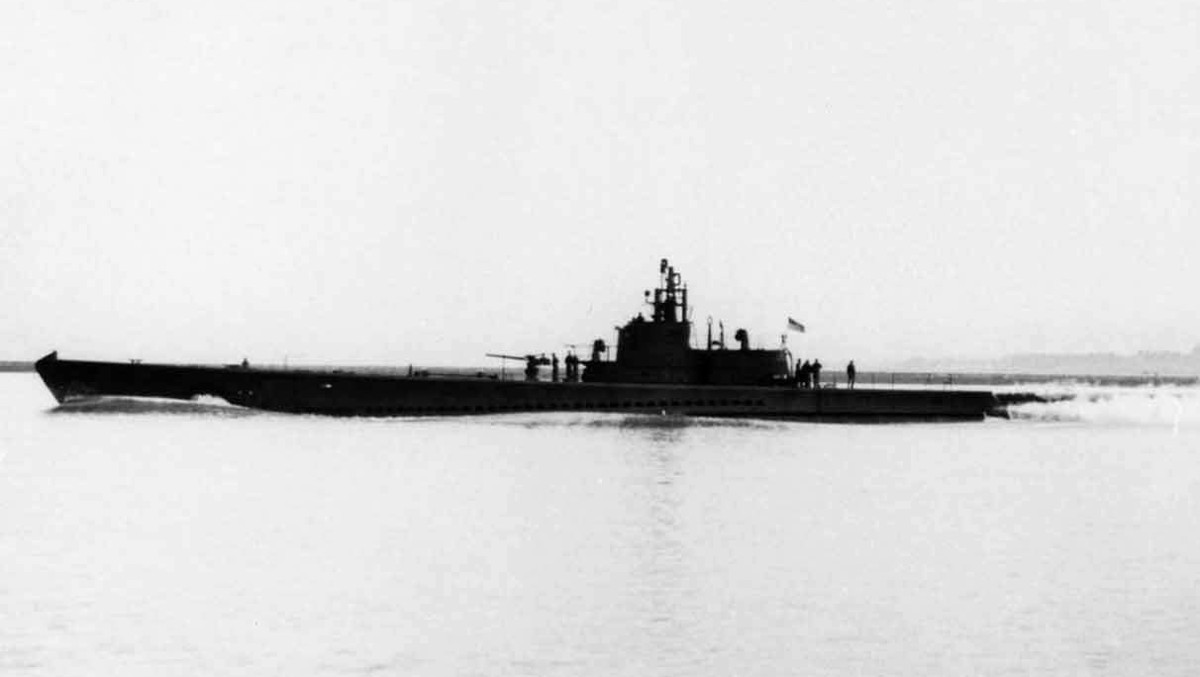
The USS Seawolf was a Sargo-class submarine laid down on September 27th, 1938. She served until October 3rd, 1944, when she and her crew were the victims of an unfortunate friendly fire incident with the USS Rowell (DE-403). USS Seawolf was laid down on September 27th, 1938, by the Portsmouth Navy Yard in New Hampshire and was launched on August 15, 1939. She was sponsored by Mrs. Edward C. Kalbfus and was commissioned on December 1, 1939. She first set sail with Lt. Frederick B. Warder in command.
Seawolf departed Portsmouth on April 12, 1940, after fitting out to set out on her initial shakedown cruise, which lasted until June 21st and took her as far south as the Panama Canal Zone. Seawolf was next assigned to the Pacific Fleet with her home port, San Diego. In the autumn of 1940, she sailed to Manila Bay and operated from the Cavite Navy Yard. When war with Japan began, she set sail on her first wartime patrol on December 8th, the day after War was officially declared.
The Seawolf began its combat operations in December 1941 by hunting Japanese shipping near the San Bernardino Strait. During an attack at Port San Vicente on December 14, she fired on a supply ship and successfully endured her first depth charge counterattack without taking damage. By January 1942, the submarine shifted to a logistical role, transporting 30 to 40 tons of antiaircraft ammunition from Australia to American forces on Corregidor. Despite sighting a significant Japanese task force on January 21, she evaded detection and delivered the supplies before moving to Java.
Throughout early 1942, the Seawolf patrolled the Java Sea and Lombok Strait, where she engaged several freighter-transports and a Jintsu-class cruiser. The attack on the cruiser resulted in a grueling seven-and-a-half-hour depth charge assault by the enemy, which the submarine survived before arriving in Fremantle in April. Her success continued in the Philippines and the Sulu and Celebes seas later that year, where she was credited with sinking the gunboat Nampo Maru and the vessels Hachigen Maru and Showa Maru. By late 1942, she had added the Gifu Maru, Sagami Maru, and Keiko Maru to her tally before heading to the West Coast for an overhaul.
After returning to service in early 1943, the Seawolf patrolled the Bonin Islands, eventually exhausting her entire torpedo supply on enemy shipping. During this period, she sank the Kaihei Maru, the old destroyer Patrol Boat No. 39, and used her deck gun to destroy two small sampans. Her final recorded operations in this period took place in the East China Sea during June 1943, where she tracked large convoys. Despite a dud torpedo hitting one target, she successfully sank the troopship Shojin Maru in under ten minutes before returning to Pearl Harbor in July.
The Seawolf conducted a patrol in the East China Sea from August 14 to September 15, 1943, which was cut short when all torpedoes were expended. This mission resulted in the destruction of 12,996 tons of enemy shipping, not including two small sampans sunk by gunfire. During this time, the crew engaged a convoy for three days before surfacing to finish off the Fusei Maru with their deck gun. On her 11th patrol in the South China Sea, the submarine sank the Wuhu Maru and Kaifuku Maru and damaged a 10,000-ton cargo vessel. Her most successful patrol began on December 22, 1943, during which she sank three ships totaling 19,710 tons in a single night in January 1944.
After using her final torpedoes to sink the Yamatsuru Maru, the Seawolf tracked a convoy and radioed its position to the submarine Whale, which subsequently sank the Denmark Maru. Following a major overhaul in San Francisco, the Seawolf returned to the Pacific to photograph Peleliu Island between June and July 1944 despite constant enemy air surveillance. She later performed a special mission to Tawi Tawi, coming within 700 yards of the shore to extract a “Captain Young”. Her final patrol began on September 21, 1944, and involved transporting Army personnel and supplies to Samar.
The submarine’s service ended tragically on October 3, 1944, due to a likely friendly fire incident. After a Japanese submarine attacked a Seventh Fleet group, an American plane bombed a submerged vessel despite it being inside a recognized safety zone for U.S. submarines. The destroyer escort Rowell then targeted the area with “hedgehogs,” resulting in underwater explosions and debris. Because the Seawolf was known to be in that specific area at the time, she was never heard from again and was officially struck from the Navy list in January 1945.
Stats
Surface Speed: 39kph
Submerged Speed: 16kph
Range: 11000 nm @ 19kph
Endurance: 48hours @ 3.7kph
Test Depth: 76m
Crew: 64
Weaponry:
torpedoes: MK-14
4x 21in torpedo tubes fwd
4x 21in torpedo tubes aft
INFO
This text will be hidden
1x fwd MK-22 3in/50.0 caliber gun
INFO
Traverse: 360 degrees
Angle limits: -10/+15
Muzzle velocity: 820 m/s
ROF: 15 rounds per min
Ammo:
AP Mark 29 Mods 1
HC Mark 27 Mod 1
AA VT Mark 31 Mod 1
2x 20mm Oerlikon
INFO
Angle limits:
Muzzle velocity:
Ammo:
Propulsion:
Engine:
4x GM model 16-248 V16
4x High speed GE electric motors
Batteries: 2x 126 cell 270v battery’s
Other:
(Surface) 5400 shp
(Submerged) 2740 shp
More images
This text will be hidden
Final crew
Sources
https://www.history.navy.mil/research/histories/ship-histories/danfs/s/seawolf-i.html
Submarine Photo Index
3-inch/50-caliber gun - Wikipedia
USS Seawolf (SS-197) - Wikipedia
USA 3"/50 (7.62 cm) Mark 10, 17, 18, 19, 20, 21 and 22 - NavWeaps
- Yes
- No