- Yes
- No
 SU-75 (StuG III Ausf B) - Stalin’s Adopted Stallions
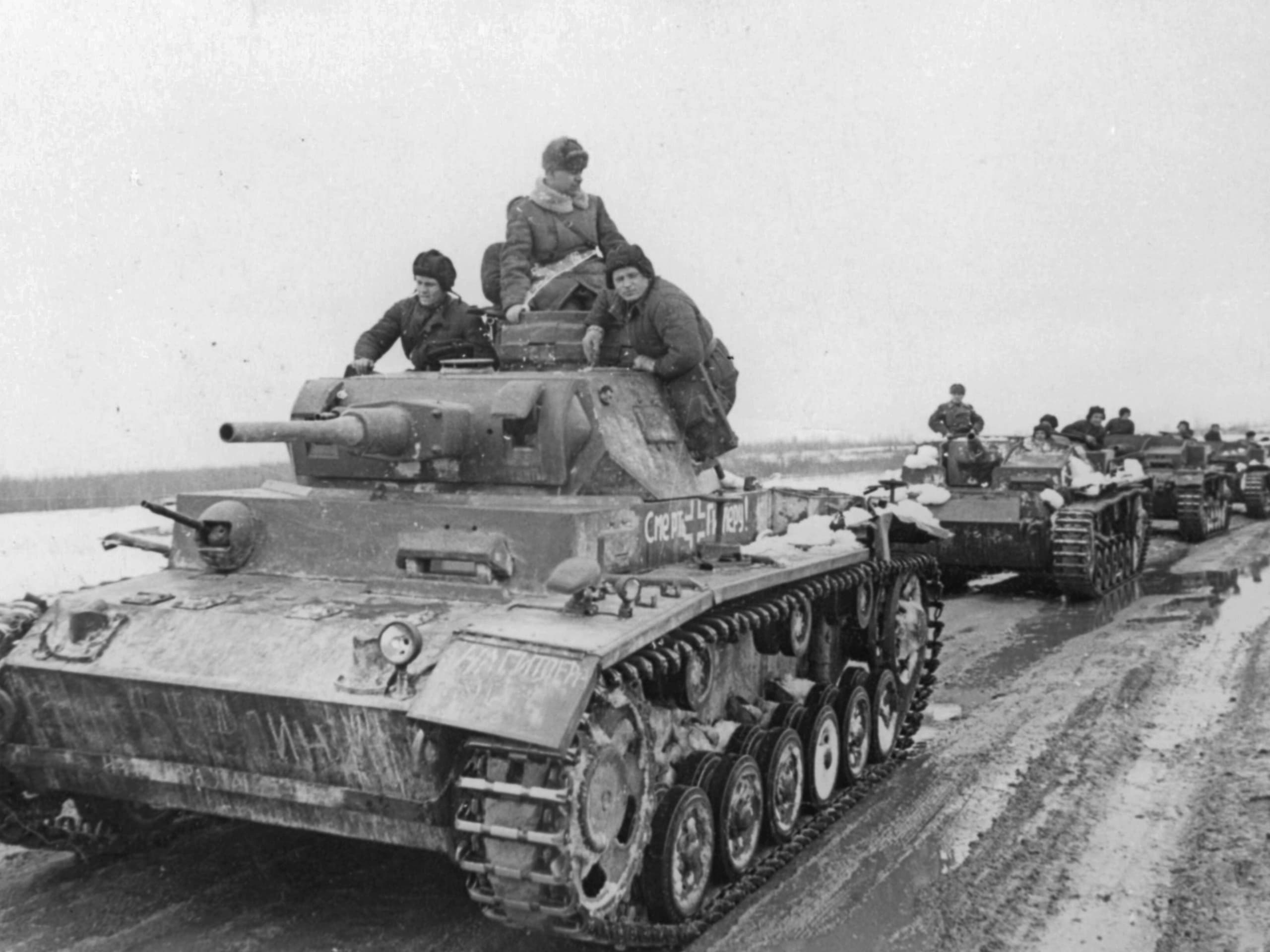
A column of captured combat vehicles (a Pz. III tank and three StuG IIIs) on the Western Front, March 1942. The inscription “Death to Hitler!” is written on the side of the tank
History
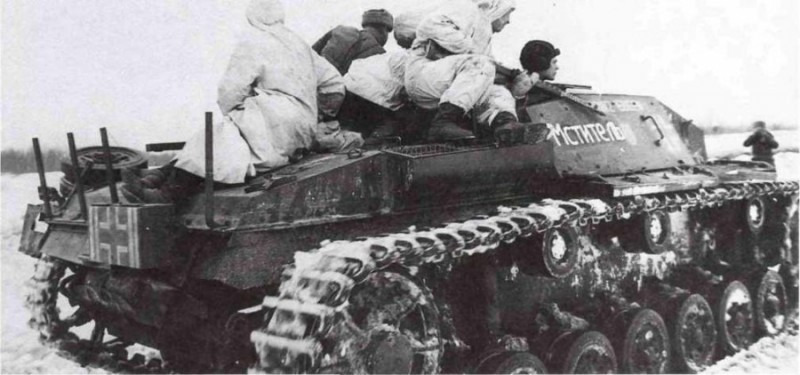
In combat, captured Sturmgeschütz IIIs were used sporadically and out of pure necessity rather than long-term tactical planning. Across the Eastern Front, seeing a Soviet crew operate an original, unmodified StuG III was an exception, not the rule.
The actual frequency of their combat deployment peaked between late 1941 and early 1943. During the defensive panics of 1941 and the subsequent winter counteroffensives around Moscow, Rzhev, and Stalingrad, Red Army units captured German vehicles in various states of repair. If a StuG was in drivable condition, a frontline unit would put it to work immediately. However, these engagements were almost always brief. A unit might use one or two captured StuGs for a single tactical objective such as clearing a fortified village, breaking an infantry line, or acting as a mobile pillbox before the vehicle was abandoned.
Several hard operational realities kept their usage low and short-lived. Captured StuGs required 75mm German ammunition and specific fuels and lubricants. Once the captured supply ran out, the vehicle became useless as an assault gun. German mechanical components, especially Maybach engines and complex transmissions, couldn’t be easily replaced by Soviet field workshops, meaning minor mechanical failures often resulted in the crew simply abandoning the vehicle. Furthermore, despite painted Red Stars, white tactical stripes, or large Russian slogans emblazoned across the hull, a StuG still looked and sounded like a German vehicle, causing Soviet antitank crews and infantry to routinely fire on their own captured armor in the fog of war.
Because of these issues, the Red Army rarely formed dedicated, long-standing units composed entirely of captured German vehicles. When they did, such as small trophy detachments during late 1942, they were treated as disposable fire-support assets to be used until they broke down.
Specifications
General
- Origin: Germany
- Crew: 4
Dimensions & Weight
- Combat Weight: 20.2 metric tons
- Length: 5.40 meters
- Width: 2.93 meters
- Height: 1.98 meters
Armor Protection
- Superstructure Front: 50mm
- Superstructure Sides & Rear: 30mm
- Hull Front: 50mm
- Hull Sides & Rear: 30mm
- Superstructure Roof / Bottom: 17mm / 11mm
- Hull Roof / Bottom: 16mm
- Gun Mantlet: 50mm
Armament & Ammunition
- Main Gun: 7.5 cm StuK 37 L/24
- Gun Traverse & Elevation: 20° total traverse (10° left and right); -10° to +20° elevation
- Ammunition Loadout: 44 rounds of main gun ammunition
- Secondary Armament: None standard on early Ausf. B variants (machine gun mounts were added later or retrofitted)
Mobility & Performance
- Engine: Maybach HL 120 TRM, 12-cylinder, liquid-cooled petrol engine producing 300 horsepower at 3,000 rpm
- Transmission: Maybach Variorex 100-DRG transmission with 6 forward speeds and 1 reverse speed
- Suspension: Modified Panzer III type featuring wider 40 cm tracks (introduced on the Ausf. B to reduce ground pressure compared to the Ausf. A’s 36 cm tracks)
- Max Road Speed: 40 km/h
- Operational Range: Approximately 160 km on roads
- Fuel Capacity: 320 liters
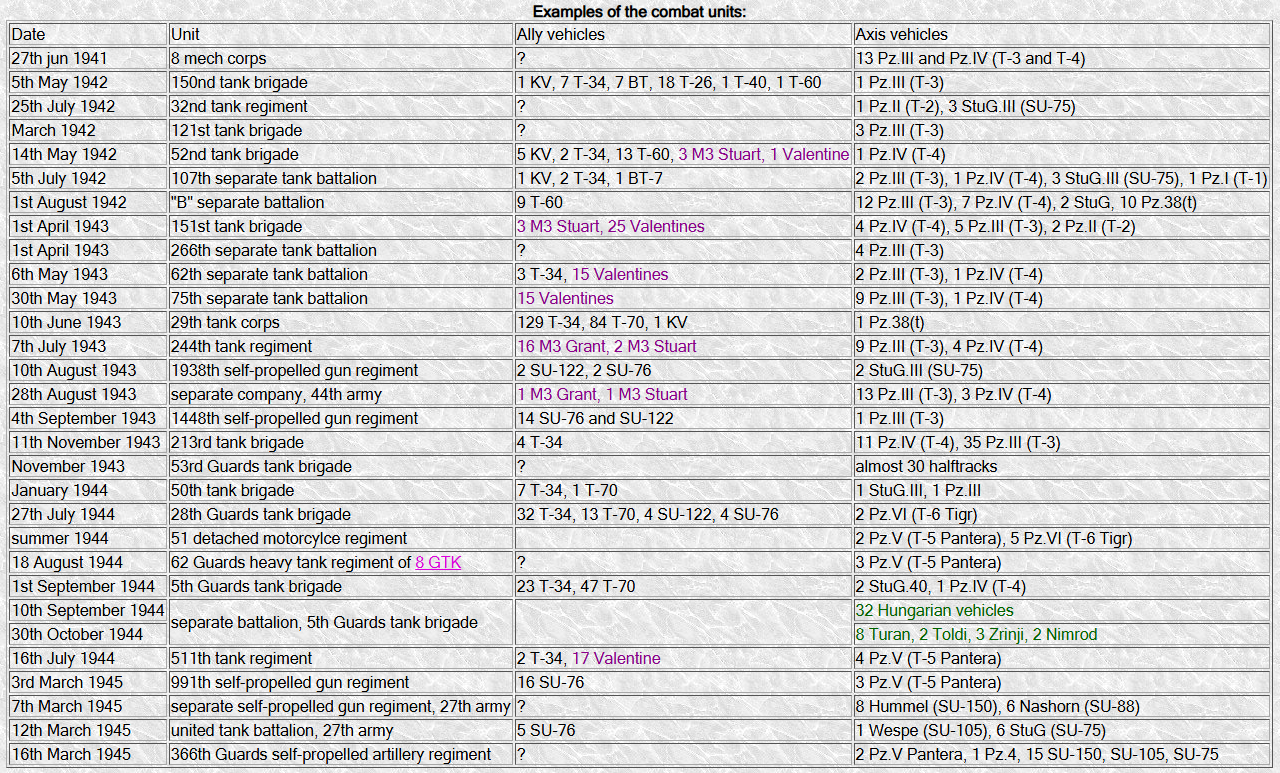
List of example combat units and their ally and captured units
Sources
Трофейные танки в РККА
Трофейные танки Красной Армии / Назад в СССР / Back in USSR
Sturmgeschütz III - Wikipedia
[Ace tanker] Nikolai I Baryshev뉴스 - War Thunder
Трофейные танки Красной Армии. На «тиграх» на Берлин !: masterok — LiveJournal
Tank Archives: StuG in the USSR
Броня Круппа на службе РККА.: amonov — LiveJournal