- Yes
- No
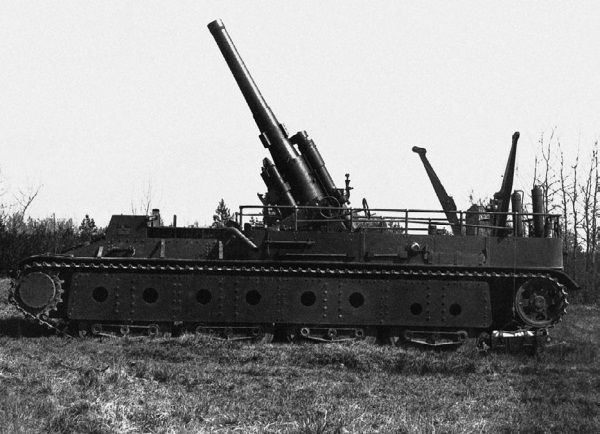
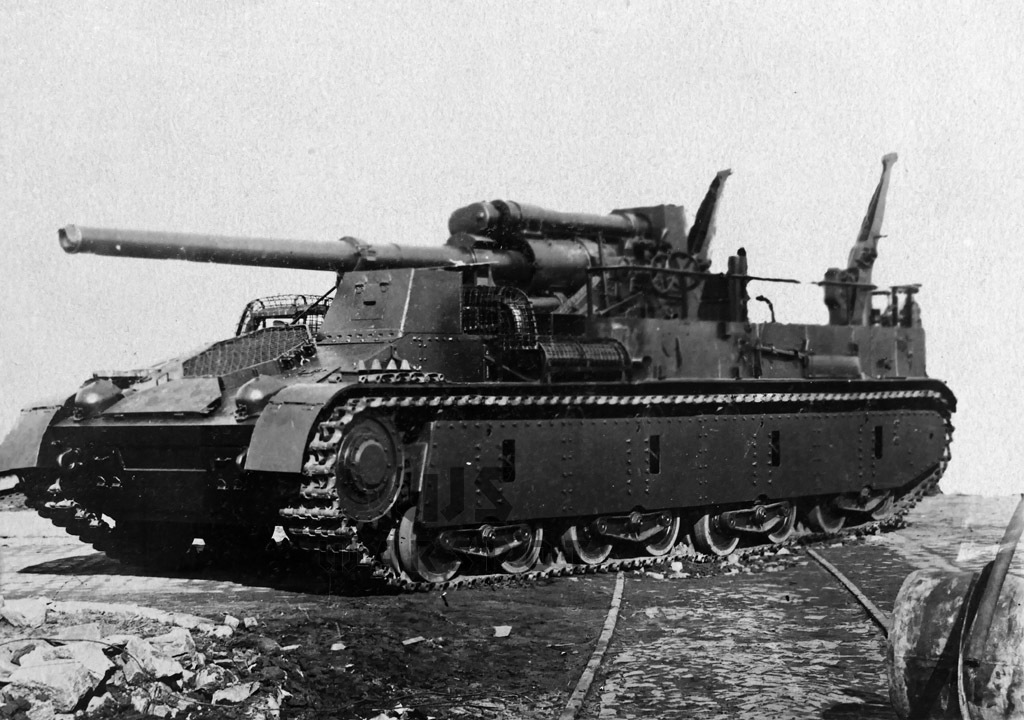
Here I have a suggestion for an early model of the SU-14-1, a large SPG based on the T-35 chassis armed with a 203mm gun. I wanted to suggest its earlier prototype, the SU-14, but as the SU-14-1 would be developed in an attempt to correct its flaws, I thought this version should be suggested too.
(Note: A later version of the same vehicle, the SU-14-1 (1940), has already been suggested. The suggestion in this topic is for an earlier version which was armed with a different weapon, and lacked the armored superstructure. It should also be noted the vehicle in this suggestion is slightly different from the earlier SU-14, as it is based on a different chassis with different mobility.)
History:
Spoiler
The initial SU-14 was developed starting in 1932 by Spetsmashtrest, with the Red Army wanting a vehicle that would be able to equip one of three large guns. It would ultimately use a 203mm B-4 gun, as this was the only one available at the time. This version was based on a T-28 chassis modified using components from the T-35. The prototype would be built in 1934, but initially had significant mechanical issues. By 1935 it would be refined into a form that was able to drive with good performance, but due to a number of issues it had, it was decided it would be best to develop a new version based on the T-35 chassis itself. This version would be the SU-14-1.
The SU-14-1 would retain many of the same attributes as the original SU-14. The gun was the same, as well as the amount of stored ammunition (aside from the stored ammo for the DT machine guns, which was reduced from 2268 rounds to 2196 rounds). The armor was also mostly the same, but the side armor over the tracks was reduced from 10 mm to 6 mm. The SU-14-1 was slightly heavier than the SU-14 at 48.5 tons, but it also had a more powerful engine and a slightly higher top speed. The SU-14-1 would be tested in 1936, but curiously, it had already been accepted into service before its trials, in June of 1935. This decision was made based on the SU-14’s trials and because the army was in need of heavy SPGs.
This decision would turn out to be a bad one. Though it was successfully able to be driven 800 km in total, other results of its tests were not promising. In its 1936 trials, 167 defects were found, and it still shared one of the critical problems of the SU-14: its extremely low rate of fire of one shot per 5-7 minutes. Because of these issues, it was decided then that the SU-14-1 couldn’t be accepted for military trials or production. Worse yet, this failure likely played a part in the project manager and chief designer, P. I. Syachintov, being arrested and executed for supposed sabotage. This would ultimately be the end of the early versions of the SU-14s.
Despite this, this would not truly be the end for the SU-14-1 as a whole. Both vehicles were still around even after the demise of their project, and they both would receive an armored casemate and a 152mm gun in an attempt to convert them into bunker busters to use against the Finnish. While they would arrive a little late for this purpose, they would still be used in the defense of Moscow in 1941.
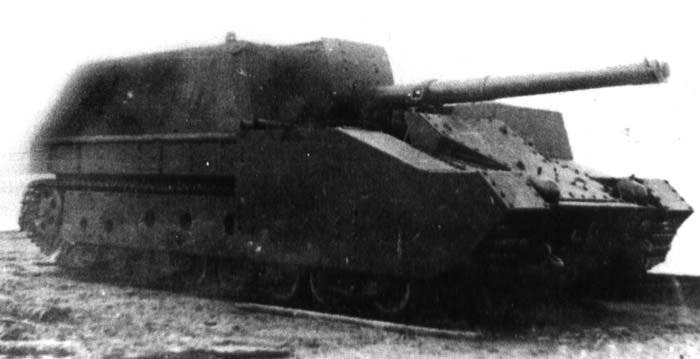
The SU-14-1 in its later form
SU-14 vs. SU-14-1:
Spoiler
SU-14:
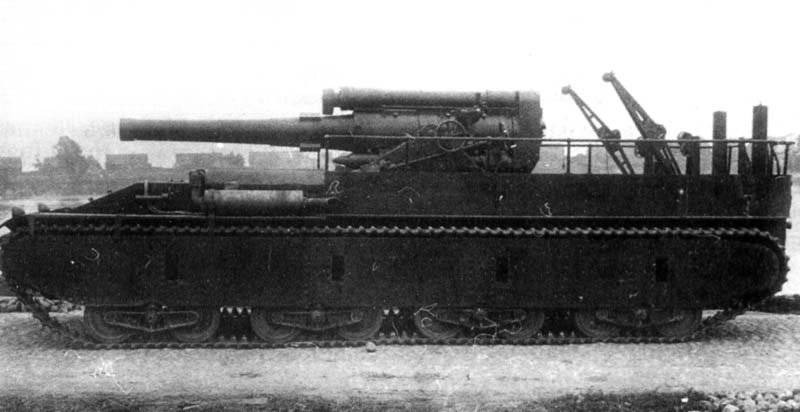
SU-14-1:
Notice the holes on the sides of the tank over the suspension, the SU-14 had rectangular holes while the SU-14-1 had circular holes.
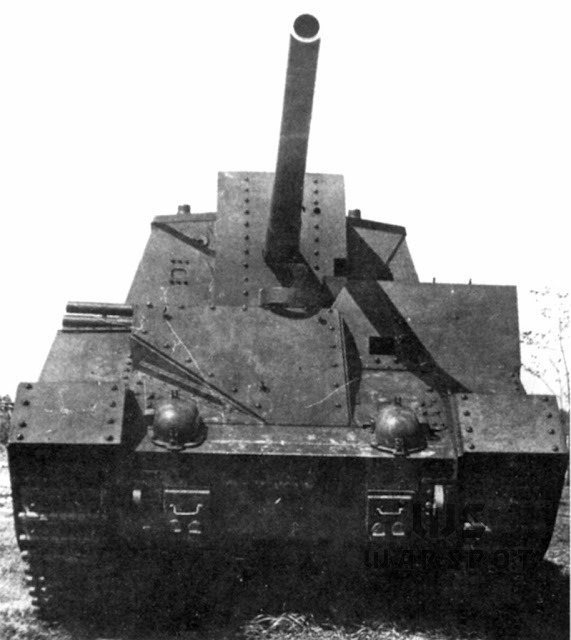
Late SU-14:
Late SU-14-1:
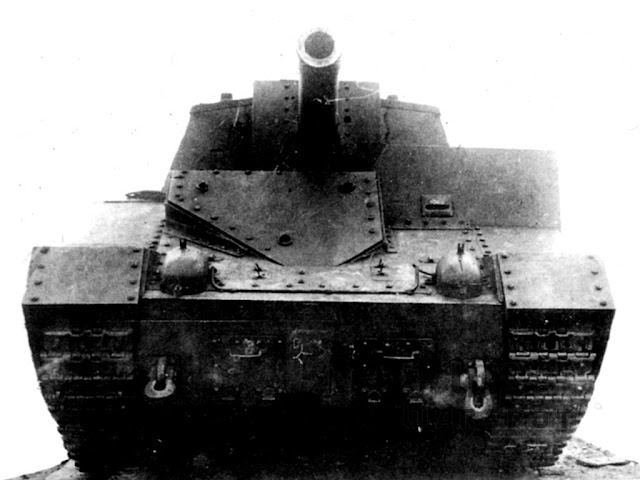
These last two images are of later versions of both SU-14 with a 152mm gun and armored superstructure, but they help to illustrate how these were not the same vehicle despite looking similar.
Specifications:
Spoiler
Armor: 6-20mm
Crew: 7
Weight: 48.5 tons
Armament: 203.2mm B-4 Howitzer (8 rounds stored in the vehicle)
3x DT machine guns, to be used in ball mounts in the sides and rear of the hull
1x DT machine gun in an anti-air mount
(2196 rounds of DT ammunition stored in the vehicle)
Engine: M-17T, 680 hp
Top speed: 31.5 kph
Fire rate: 1 shot per 5-7 minutes (this would very likely be adjusted in game for balance purposes)
The gun had 8 degrees of horizontal traverse and vertical traverse limits of 0 degrees to +60 degrees. I’m not sure the full list of shells it had access to, but the gun did have access at least to general HE shells that weighed 220 lbs., and the gun had a muzzle velocity of 606 m/s.
Photos:
Spoiler
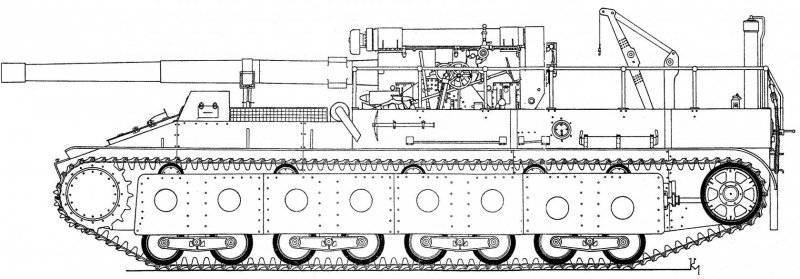
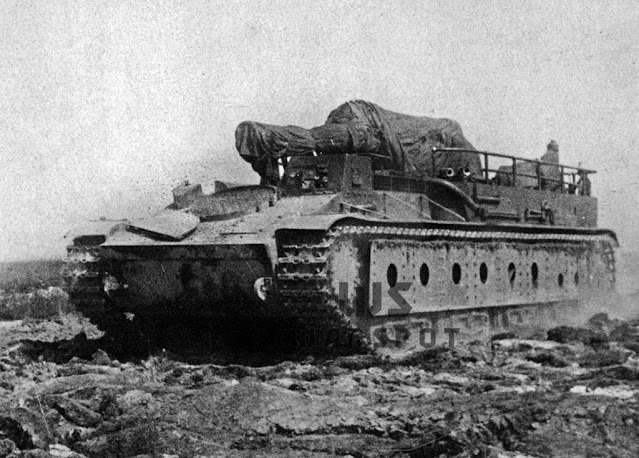
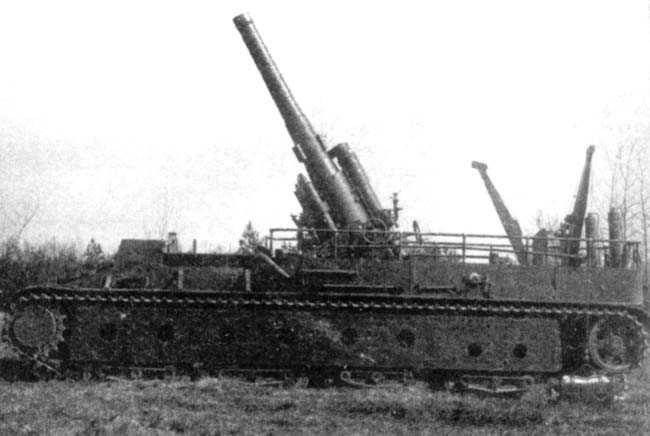
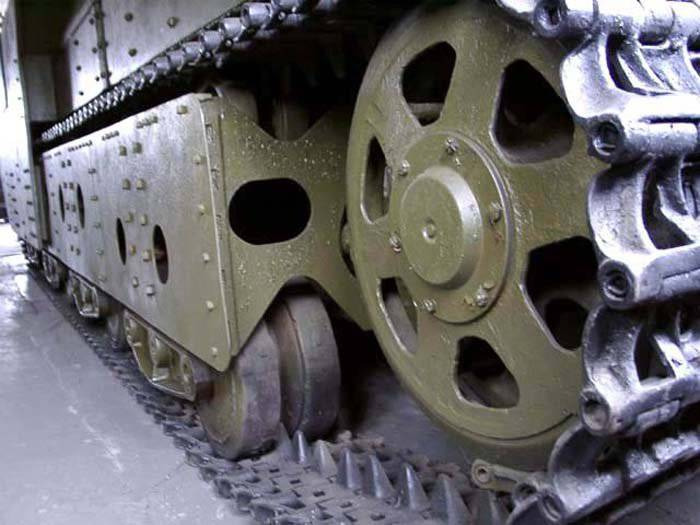
The main feature of the early SU-14-1 is the massive main gun, which might be considered similar to the main gun on the M55. Unlike the M55, though, this vehicle has a large open platform. Despite the improvements to the mobility over the SU-14, the SU-14-1 is still rather slow. This SPG is very large, which may play to its advantage for crew spacing, but the upper crew would be exposed to MG fire and the armor of the hull is thin anyway, so you would best off avoiding being hit. The ammo capacity is lackluster, but the reload would be long, which would make it difficult to use up all the ammo (as an SPG, it would be able to construct ammo boxes anyway). This monster vehicle with a monster gun would be a very intimidating presence on the battlefield, and could serve as large caliber artillery for low to mid rank in the USSR tree.
Thank you for reading my suggestion.
Sources:
Spoiler
Heavy self-propelled SU-14
Self-propelled howitzers of the Second World War. Part of 14. Soviet SAU
Triplex TAON, SU-14
Uralmash-1 - SU-14 / SU-102
Tank Archives: A Second Life for Obsolete Chassis
https://parkpatriot.ru/o-parke/tekhnika-parka/tyazhelaya-samokhodnaya-artilleriyskaya-ustanovka-su-14-1/
SU-14 SPG: Soviet Firepower Unleashed in the 1930s
B-4 (Model 1931) 203mm Self-Propelled Heavy Howitzer / Towed Artillery (Howitzer info)
203 mm Howitzer M1931 (B-4) Field Gun | World War II Database (Howitzer info)