- Yes
- No
 Studebaker US6 6x6 with Flak 38
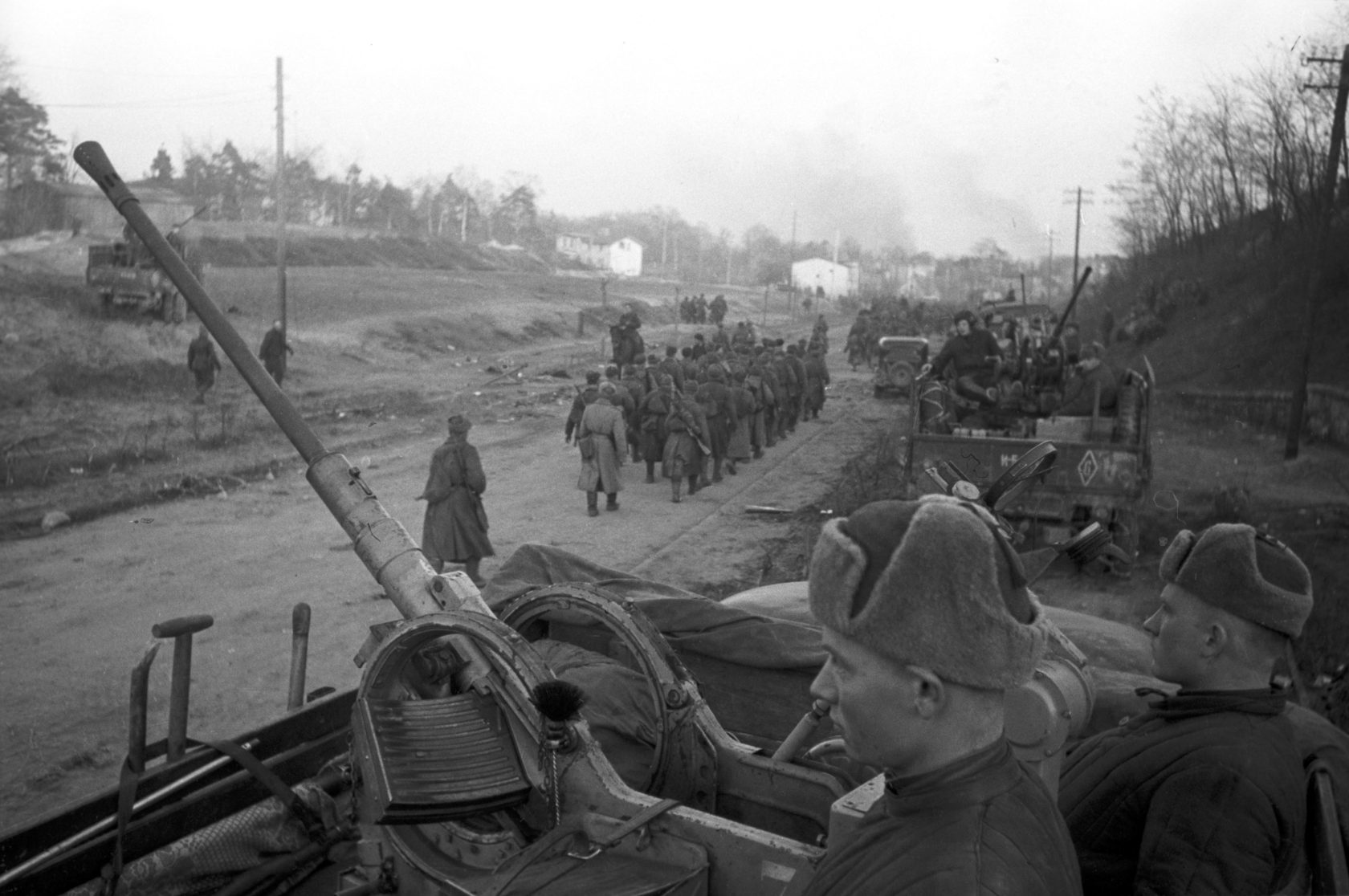
A column of Soviet trucks (American-made) carrying captured German 20mm Flak 38 anti-aircraft guns on the move in Donbas.
History of the Studebaker US6 6x6
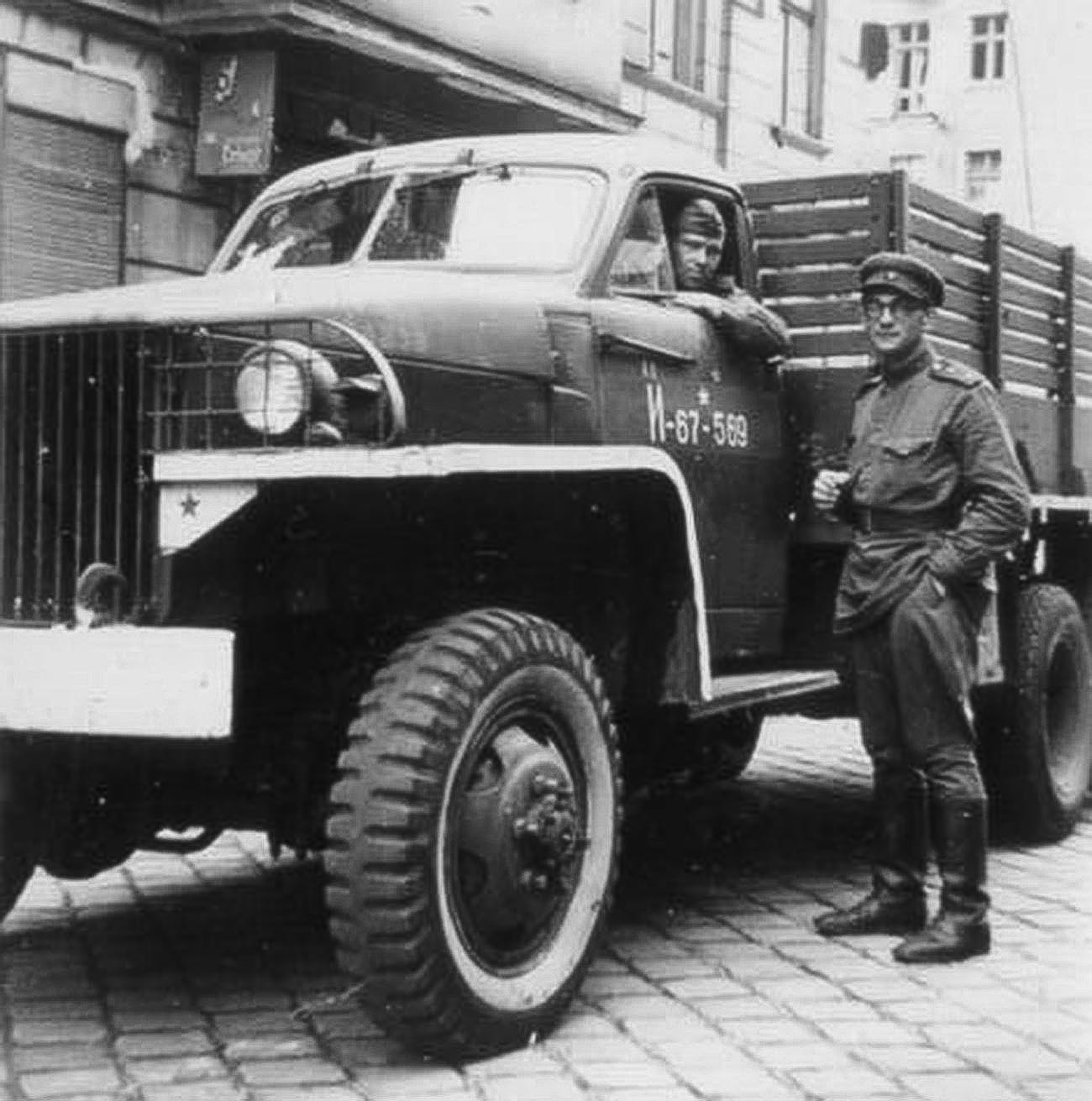
The Studebaker US6 was a 2½-ton 6×6 cargo truck built in the United States between 1941 and 1945. Even though it was made for military use, it wasn’t the U.S. Army’s main truck of choice. Because of that, most of them ended up being sent overseas through the Lend-Lease program instead of staying in American service.
The “Stude” on the Eastern Front
- Kursk (1943): This was the Studebaker’s real “welcome to the war” moment. While the tanks were clashing in the distance, these trucks were the ones keeping the whole operation alive. They were absolute beasts in the Russian steppe, hauling heavy artillery and fresh troops through thick dust and waist-deep mud that would have bogged down almost anything else.
- Operation Bagration (1944): When the Soviets pushed to liberate Belarus, they needed to move faster than the Germans could run away. This is where the US6 really outshined the local Soviet ZIS-5 trucks. Because the Studebakers had such good off-road grip, the Red Army didn’t have to wait for engineers to fix the main roads-they just drove right through the fields and woods to outflank the retreating Germans.
- The Vistula-Oder Offensive (1945): As the Soviet “steamroller” headed for Berlin, the Studebakers were the unsung heroes of the supply line. Tanks are useless without fuel and shells, and it was the US6 that kept the spearheads supplied while they were hundreds of miles ahead of their bases.
- The Fall of Berlin (1945): By the time the Red Army actually hit the streets of Berlin, their motor pools were dominated by American steel. If you look at old photos of the columns rolling past the Reichstag, the US6 is everywhere-it basically drove the Red Army all the way from the Russian border to the heart of the Third Reich.
Roles
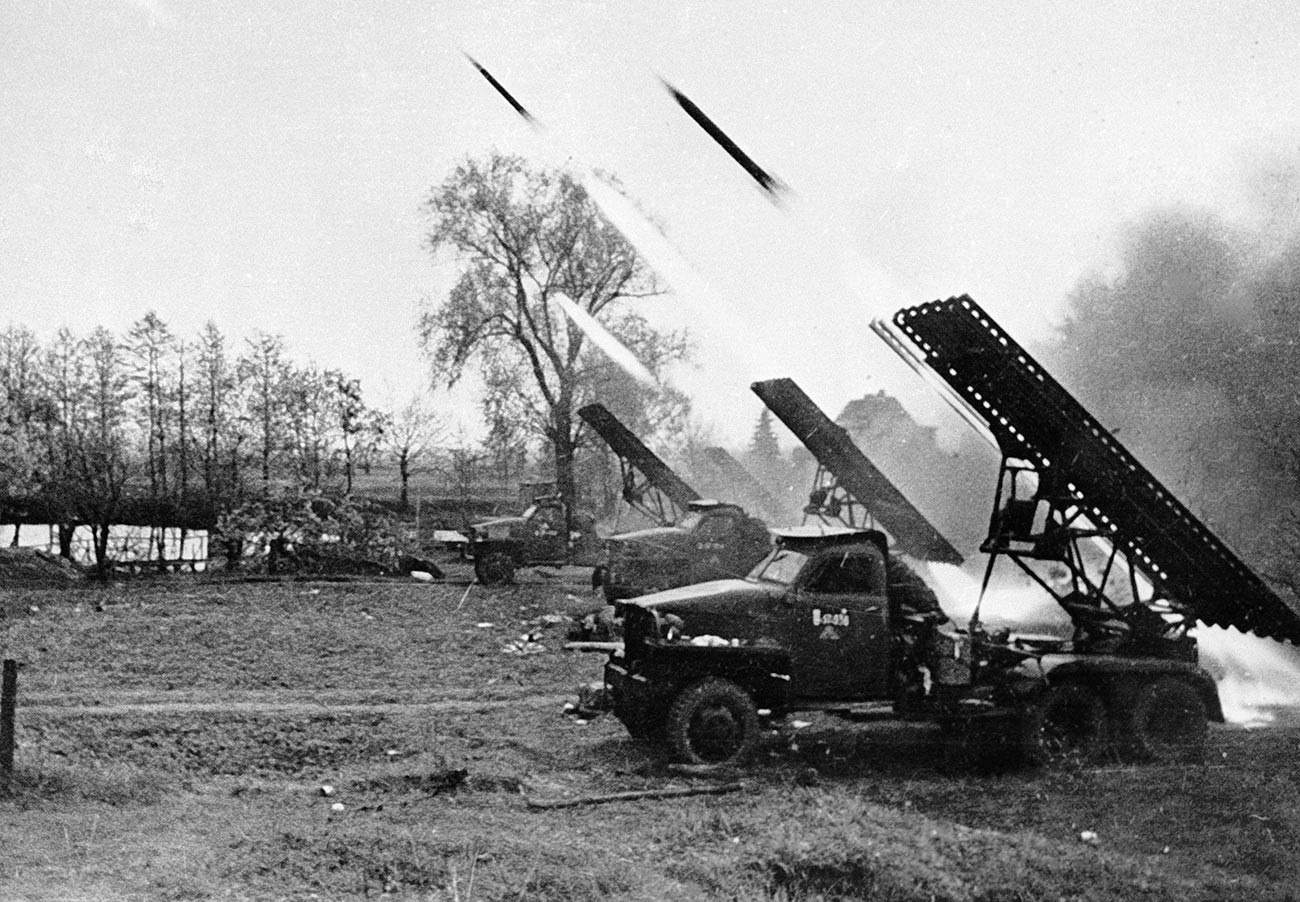
1. The “Katyusha” Rocket Launcher
Perhaps its most iconic role was as the primary platform for the BM-13 Katyusha multiple rocket launcher. Earlier trucks were too unstable or lacked the traction to handle the recoil and the terrain. The US6 6x6 chassis was so perfect for the “Stalin’s Organ” that it became the standard mount for the rest of the war.
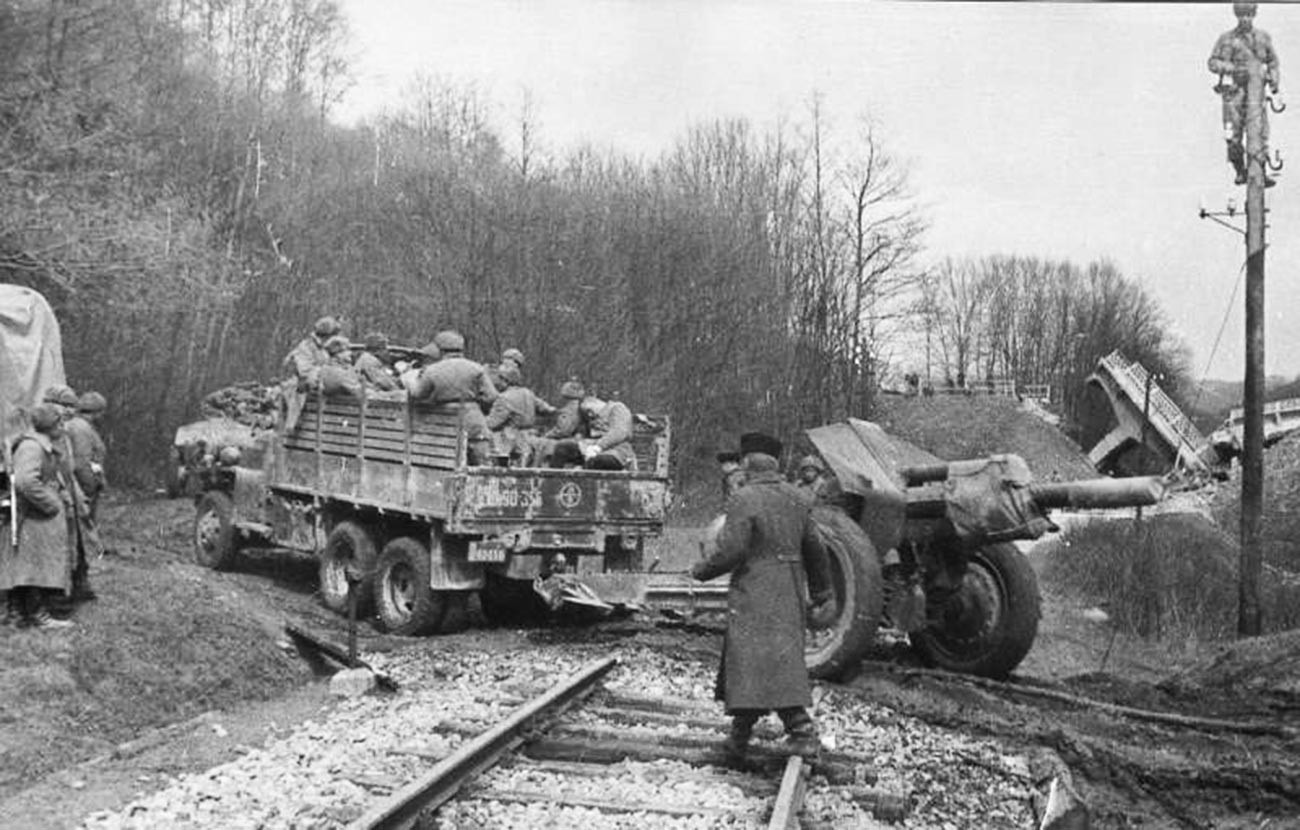
2. Heavy Artillery Tractor
Before the US6, the Red Army relied heavily on slow agricultural tractors or horses to move heavy guns. The Studebaker’s high torque and six-wheel drive allowed it to tow the 152mm howitzer-gun M1937 (ML-20) and other towed artillery at high speeds, allowing artillery to keep pace with advancing tanks.
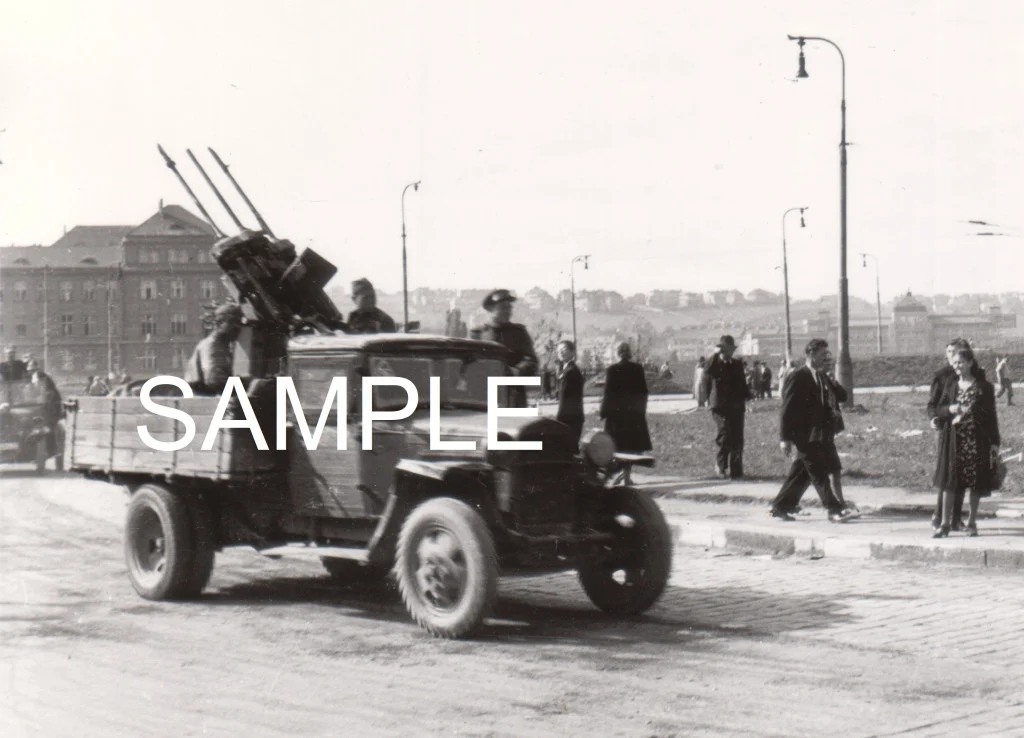
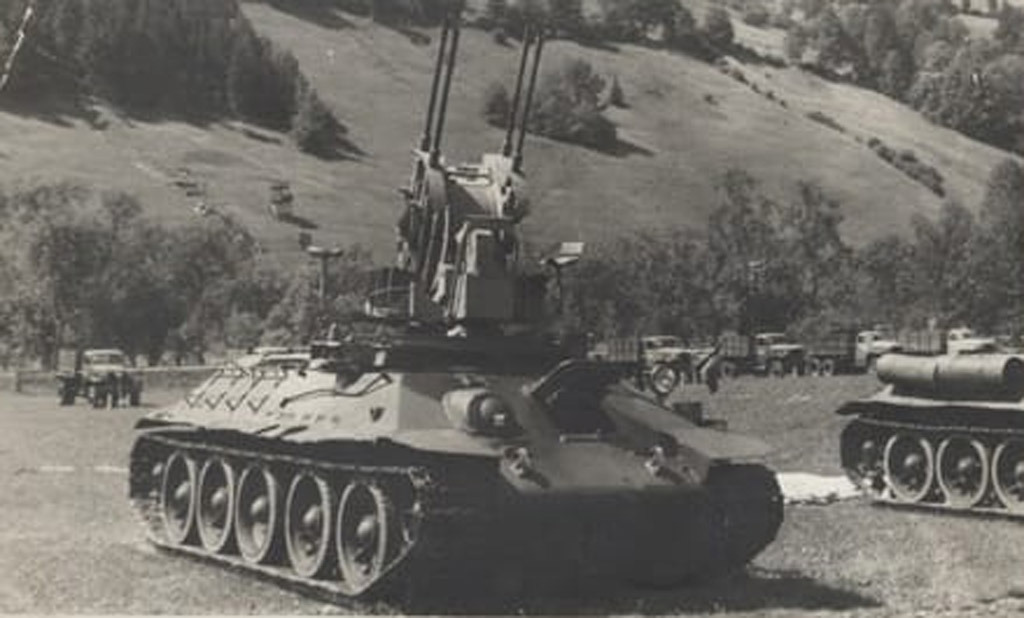
3. Anti-Aircraft
(lessor known Frankenstein US6’s only confirmed through images)
(Image at the top)
3. The “General Purpose” Workhorse
- Troop Transport: Moving entire divisions of infantry to prevent exhaustion before they reached the front lines.
- Logistics: Carrying “the beans and the bullets.” Its 2.5-ton rating was often ignored by Soviet crews, who frequently loaded it with up to 5 tons of cargo.
- Tank Recovery: While not a dedicated recovery vehicle, its winches and power were often used to pull bogged-down light tanks out of the notorious Russian “Rasputitsa” (mud season).
Specifications
Mobility
- Engine: Hercules JXD 6-cylinder Gasoline (86 hp 2800 rpm)
- Transmission: Warner T-93 (5 forward, 1 reverse) + 2-speed transfer case (High/Low)
- Drivetrain: 6x6 full-wheel drive
- Max Speed: 72 km/h (45 mph) on roads
- Weight: 4,500 kg (Empty) + 500 kg (Gun/Ammo/Crew)
- Power-to-Weight: 17.2 hp/ton
Armament
- Main Weapon: 1x 20mm FlaK 38 (Captured)
- Mounting: Flatbed “Portee” mount with 360° traverse
- Ammo Count: 20-round detachable box magazines (Soviets typically stocked large quantities of captured German ammo)
- Elevation/Depression: -10° / +90°
- Rate of Fire: 450 RPM (Cyclic)
Armor
- Cab: 1.5mm - 2mm Mild Steel (Structural only)
- Chassis: Truck frame (No armor)