- Yes
- No
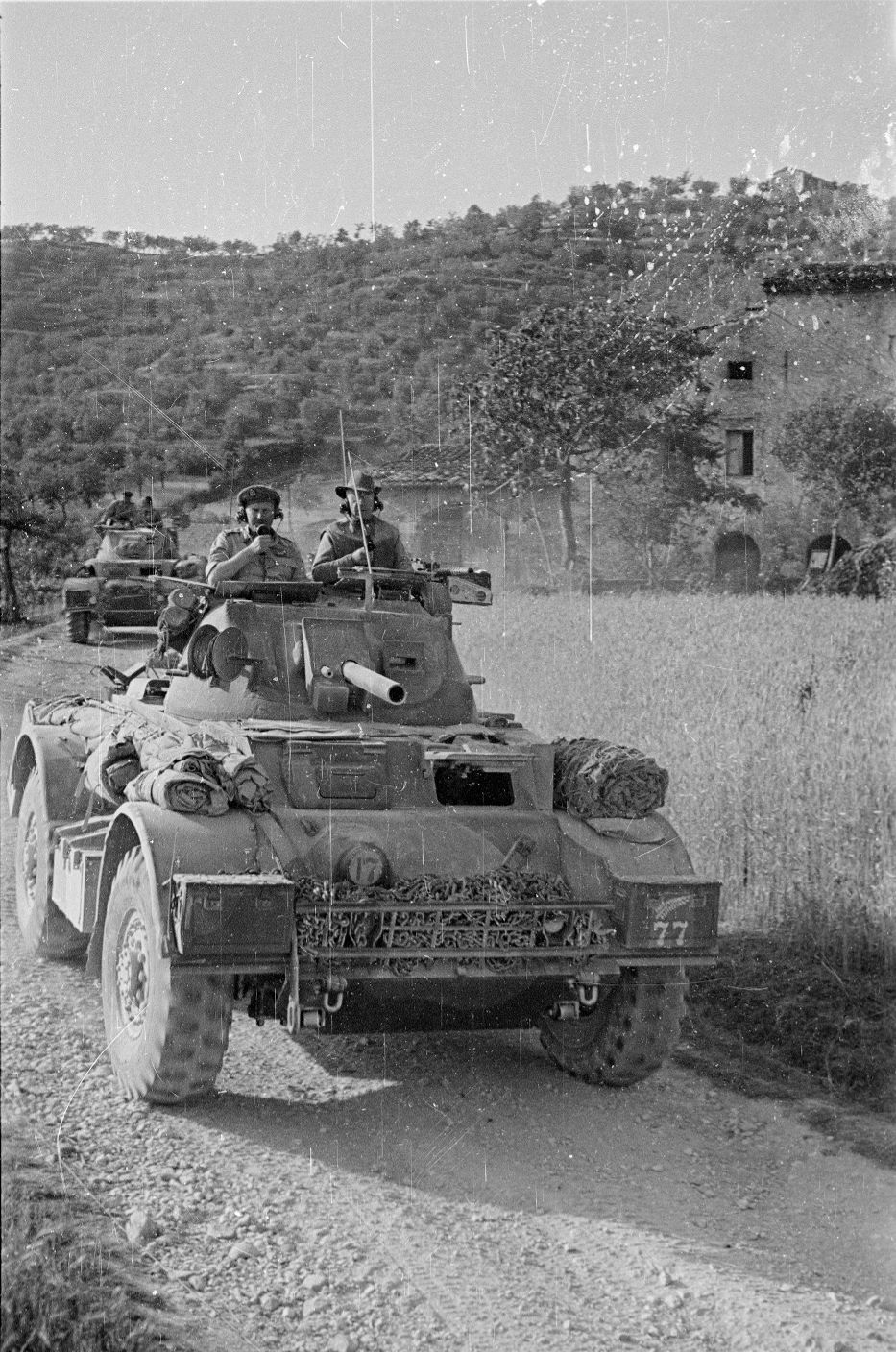
New Zealand Prime Minister Peter Fraser and General Freyberg in a Staghound armoured car at 5th New Zealand Infantry Brigade headquarters, near Sora, Italy, 31 May, 1944. - NZ National Library DA-06039-F
History
The T17E1 came about from a British specification for medium and heavy (T17 and T18 programs respectively) armoured cars for use in the fighting throughout North Africa. Ford and Chrysler both submitted designs with the former being a 6x6 and the latter being a 4x4 with both designs sharing the same turret developed by Rock Island Arsenal.
Ford’s vehicle received the designation of T17 and eventually the name ‘Deerhound’. The T17 proved unsatisfactory but the 250 that Ford had been authorised to build were still intended to be shipped to Britain. In the end these were retained by the US Army without their 37mm guns and were given the designation of M5 and assigned to military police units.
Chrysler’s design received the designation of T17E1 and the name ‘Staghound’ and, despite some initial teething troubles and a slow start to production was of great interest to the British, including all of the features that they had been pushing for during the design process. In British/Commonwealth service it was the Staghound Mk. I.
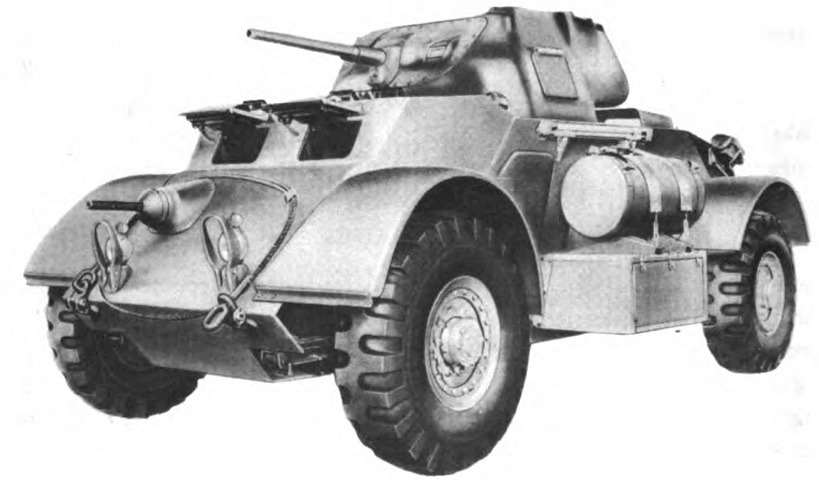
The Staghound Mk. II was a conversion of the Mk. I in which the 37mm M6 was replaced with the British 3in Howitzer Mk. I. In late 1943, the Divisional Cavalry Regiment of New Zealand 2nd Division were refitting after the North African Campaign and had started receiving Staghounds. There was concern about the inadequacy of the 37mm in dealing with AT guns and fixed positions and so two Lieutenants proposed swapping the 37mm out for the 3-inch. A conversion was carried out and demonstrated to the Division’s Commander who approved and promoted it to General Headquarters Mediterranean Expeditionary Force which also approved the design for general use.
A program was initiated in Egypt to carry out the conversions in full, with the aim of at least re-equipping each Troop with one 3in Staghound.
Aside from the obvious swapping of guns, other modifications were the attachment of counterweights on the underside of the mantlet to balance the breach, the removal of the internal 2in bomb thrower and fitting of two external 4in smoke dischargers, and the removal of the co-driver’s position for use as additional ammunition stowage along with the blanking off of the hull MG.
Further modifications, which were general and not exclusive to the Mk. II, included: mounting a .30cal on a pintle on the turret roof or on the commander’s side of the turret, removing the side hinges of the commander’s hatch and refitting them on the front edge so that it would open forwards for use as a map board, and cutting holes in the mudguards to mount 25pdr ammunition boxes as additional stowage (usually for the tire chains).
The exact number converted is unknown but it had to have been enough to equip all of the Staghound units within the Mediterranean Theatre and have spares to replace losses so I’d estimate at least 100.
Service
The Staghound appeared too late for use in North Africa and the British deemed it too bulky for general Recce use in the Italian and North-West European Campaigns compared to the smaller Daimler and Humber Armoured Cars while also not matching the firepower of the similarly sized AEC Mk. IIs and IIIs. For example, the history of the 11th Hussars ‘The Eleventh at War’ by Brigadier Dudley Clarke stated:
“The Staghound was an American product intended to replace the Daimlers at the squadron and regimental headquarters. It was a huge vehicle, 8 feet broad and 13 tons in weight carrying a crew of five with a 37mm gun and a .3 Browning machine gun. The 11th Hussars found it unwieldy and it never earned their affection.”
The Staghound was also used by Canadian, NZ, Polish, and Belgian forces and, among the Canadians and New Zealanders especially, it seems to have had a much better reputation.
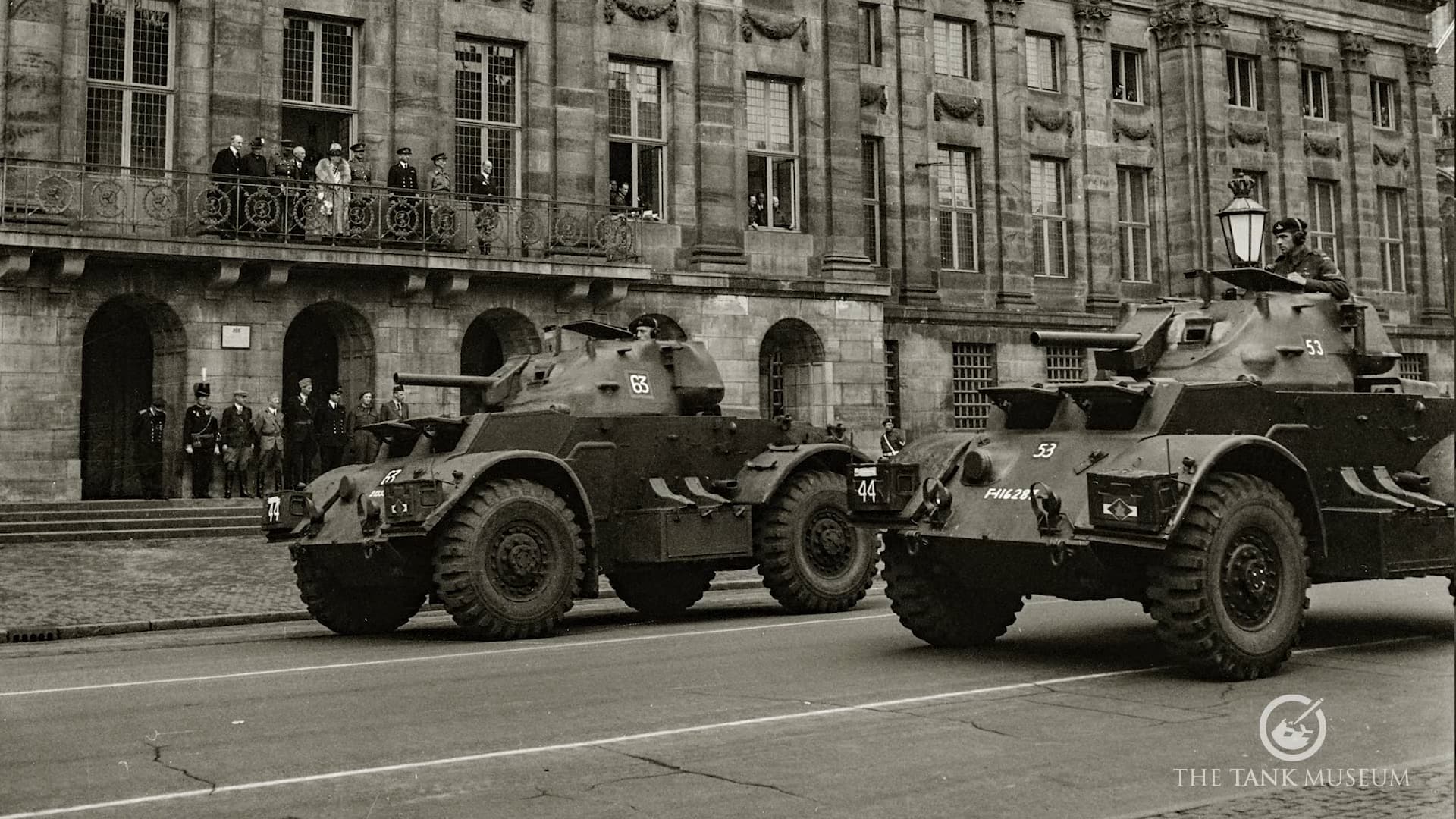
A pair of Canadian-operated Mk. IIs.
The Mk. IIs role was much like that of its tracked CS counterparts in that it was meant to provide fast and immediate smoke and HE support for its standard brethren by creating smoke screens and clearing fixed positions. They were typically assigned to Troop Leaders and HQ positions within higher command where there was a much clearer view of where and how to provide the support.
The Mk. II was almost exclusively used in the Italian Campaign but a handful (5 + 6 in base depots) did see use in North-West Europe when I Canadian Corps was transferred over to join the rest of 1st Canadian Army, bringing their Staghounds with them.
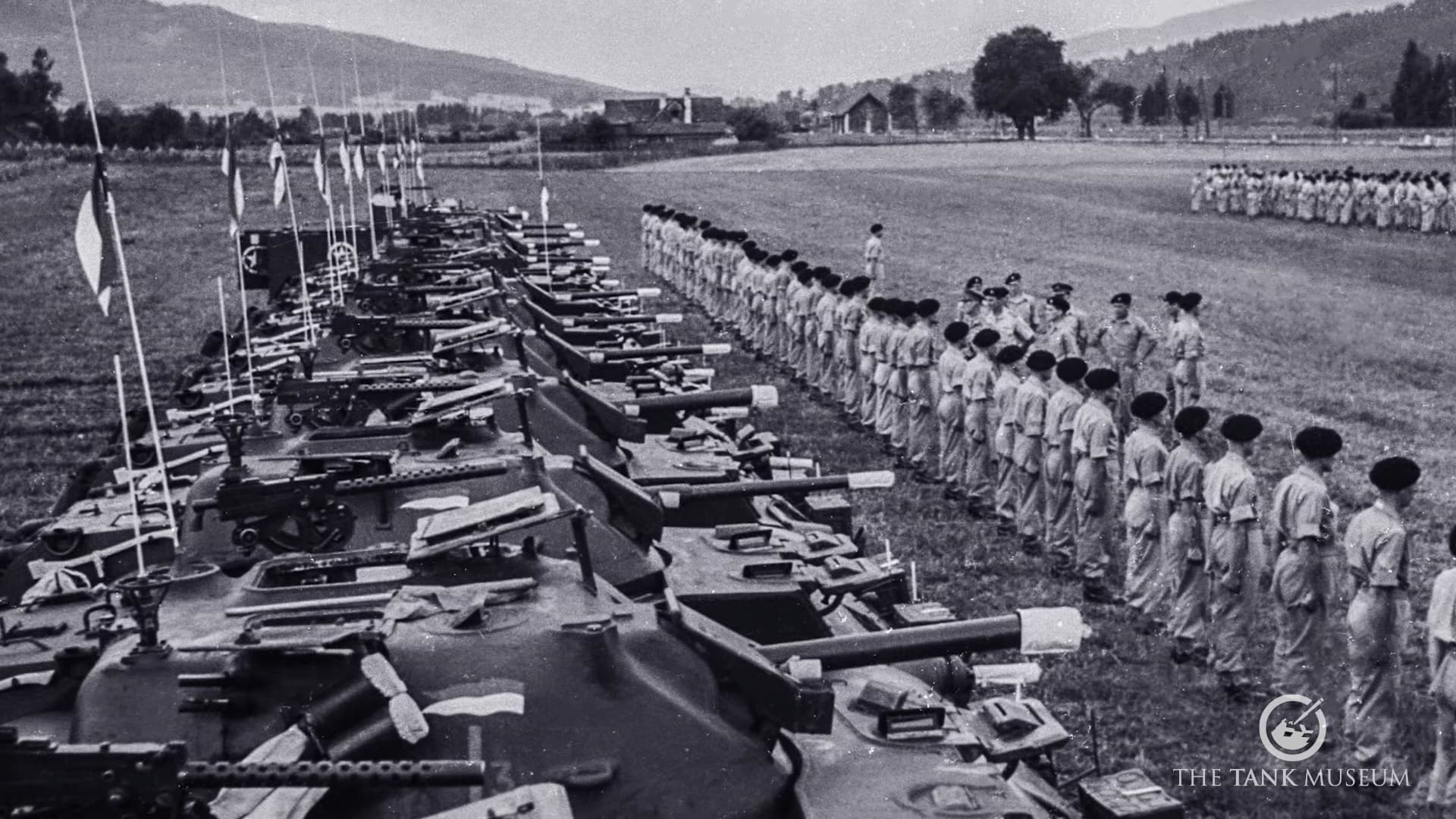
Lieut. General McCreery inspects men of the 27th Lancers lined up in front of their armoured cars. - IWM (NA 26003)
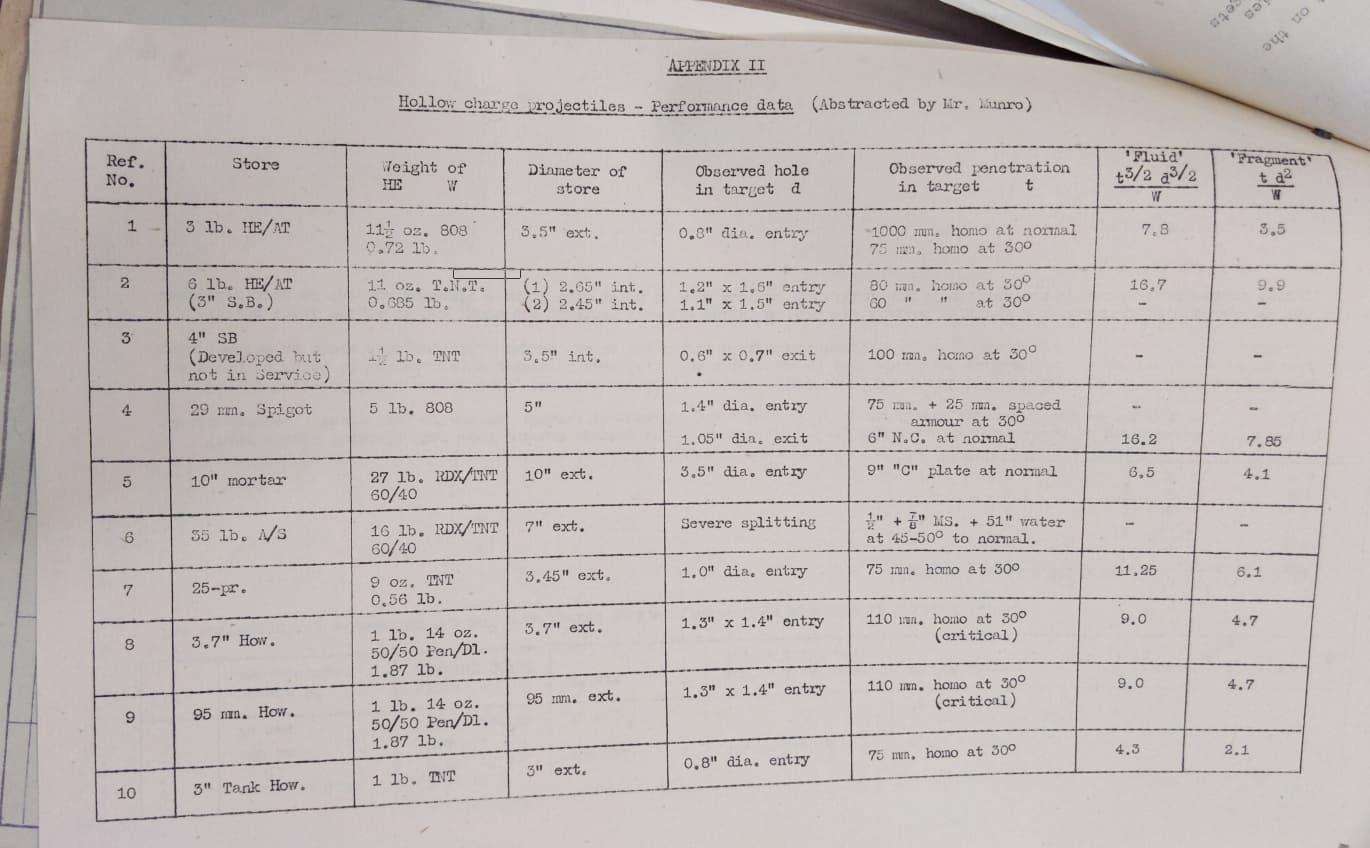
In order for the 3"-armed Mk. II to be viable in-game, a semi-ahistorical (no evidence of it being issued) HEAT shell would need to be made available for it. Documentation shows that one was designed and tested, achieving similar penetration figures to the 2pdr.
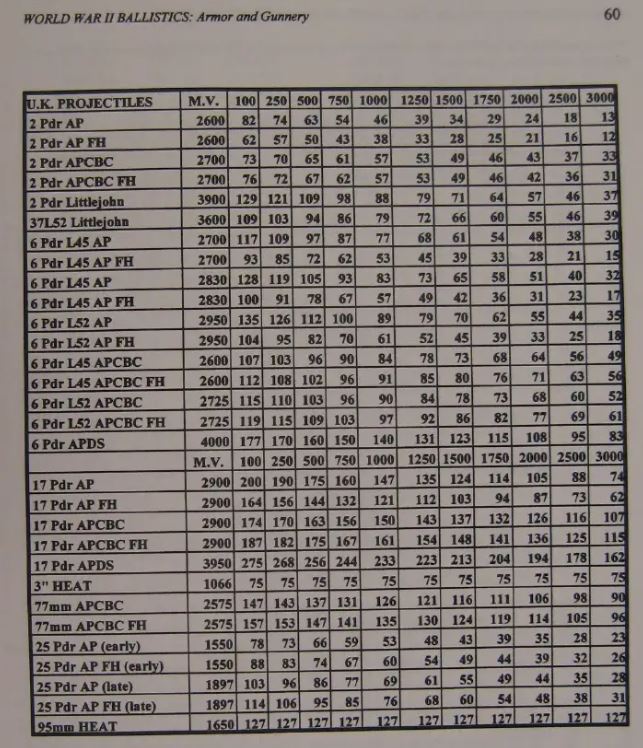
As this document shows, it used 1lb. (453.6g) of TNT and was capable of penetrating 75mm of armour at 30° from normal. At 0° it would be capable of penetrating roughly 87mm of armour. In ‘WWII Ballistics: Armor and Gunnery’ by Lorrin Rexford Bird and Robert D. Livingston, a muzzle velocity of 1066 ft/sec (325 m/sec) is given which is about what I’d expect based on the HE shell’s velocity and when comparing it to the velocities of the QF 95mm HE and HEAT shells.
In-game
The Staghound II could be placed after the SARC Mk. IV at a BR of roughly 1.7-2.0 and potentially be foldered with the Staghound Mk. I.
It would be a fast but large target, with poorer ballistics than the 37mm but no penetration drop-off over long distance and a decent HE shell for use against lightly armoured and open-topped vehicles.
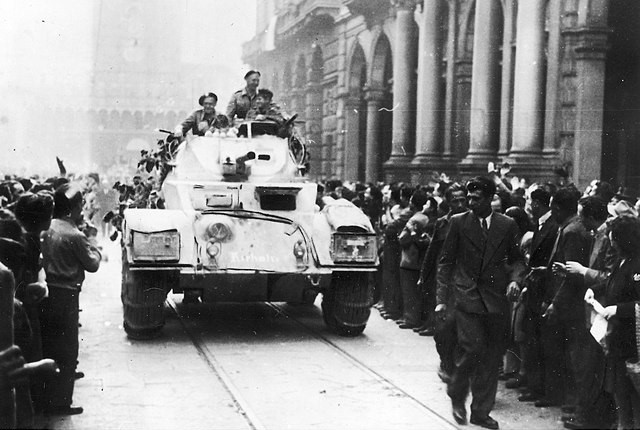
Mk. II belonging to II Polish Corps photographed in April 1945.
Specifications
Crew - 4
Weight - 14t
Engine - 2 × GMC 270 (97hp each)
Max speed - 55mph

Armament
QF 3-inch Tank Howitzer Mk. I - Ammo: 60-70 (guesstimate based on 103 for the 37mm)
1-2x .30cal MG - Ammo: 5250
2 x 4-inch No. 2 Smoke Discharger
Max elevation/depression - +40/-7
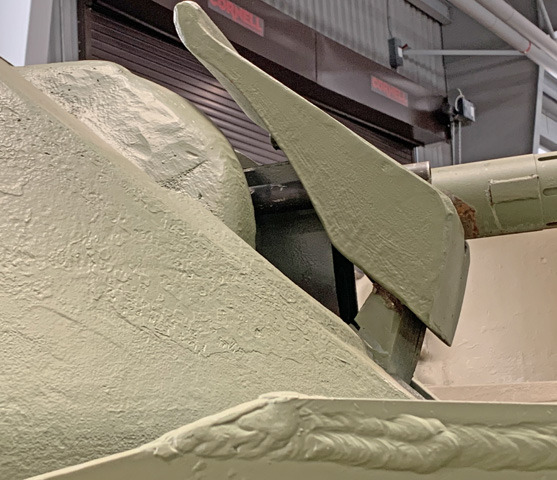
Side view of the gun shield for the M24A1 combination gun mount.
Ammunition
3-inch Mk. II - High Explosive - 689 ft/sec (210 m/sec)
Shell SE Mk. I - Smoke - 689 ft/sec (210 m/sec)
HEAT - 1066 ft/sec (325 m/sec)
I don’t know the designation of this currently but it’s likely similar to that of the 95mm H.E./A.T. Mk. I.
Internal stowage for the standard Staghound Mk. I.
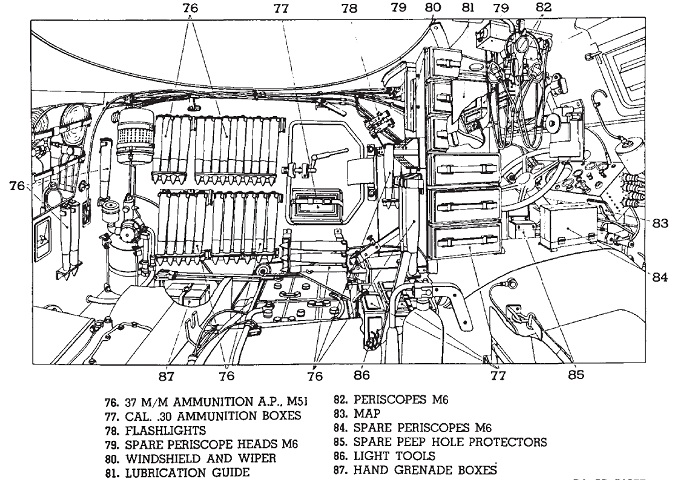
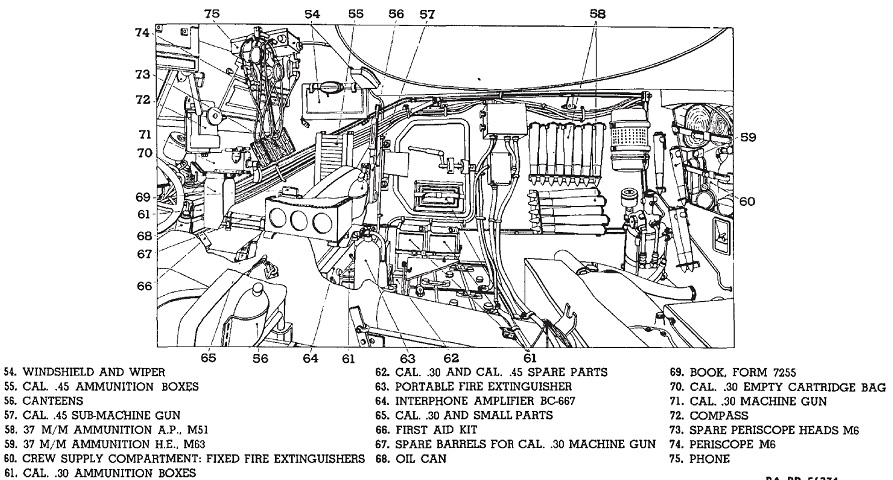
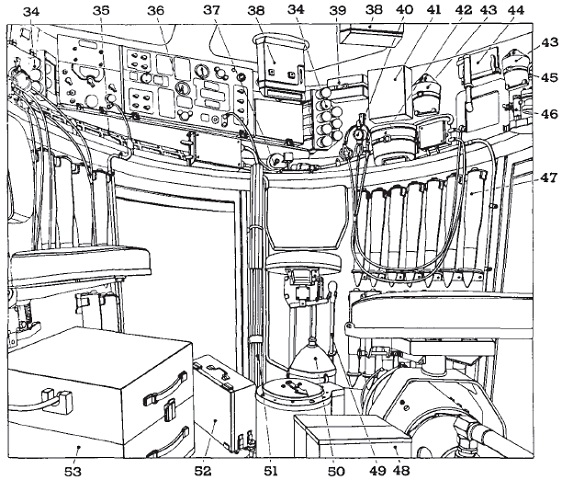
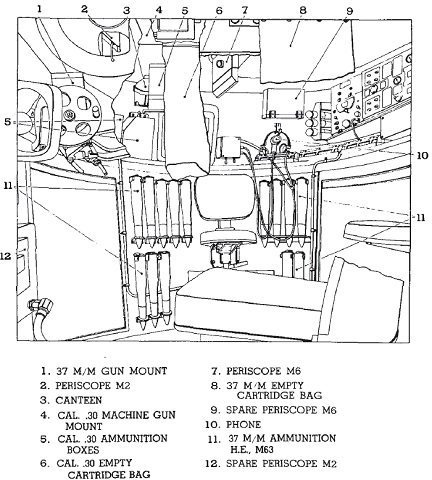
Armour
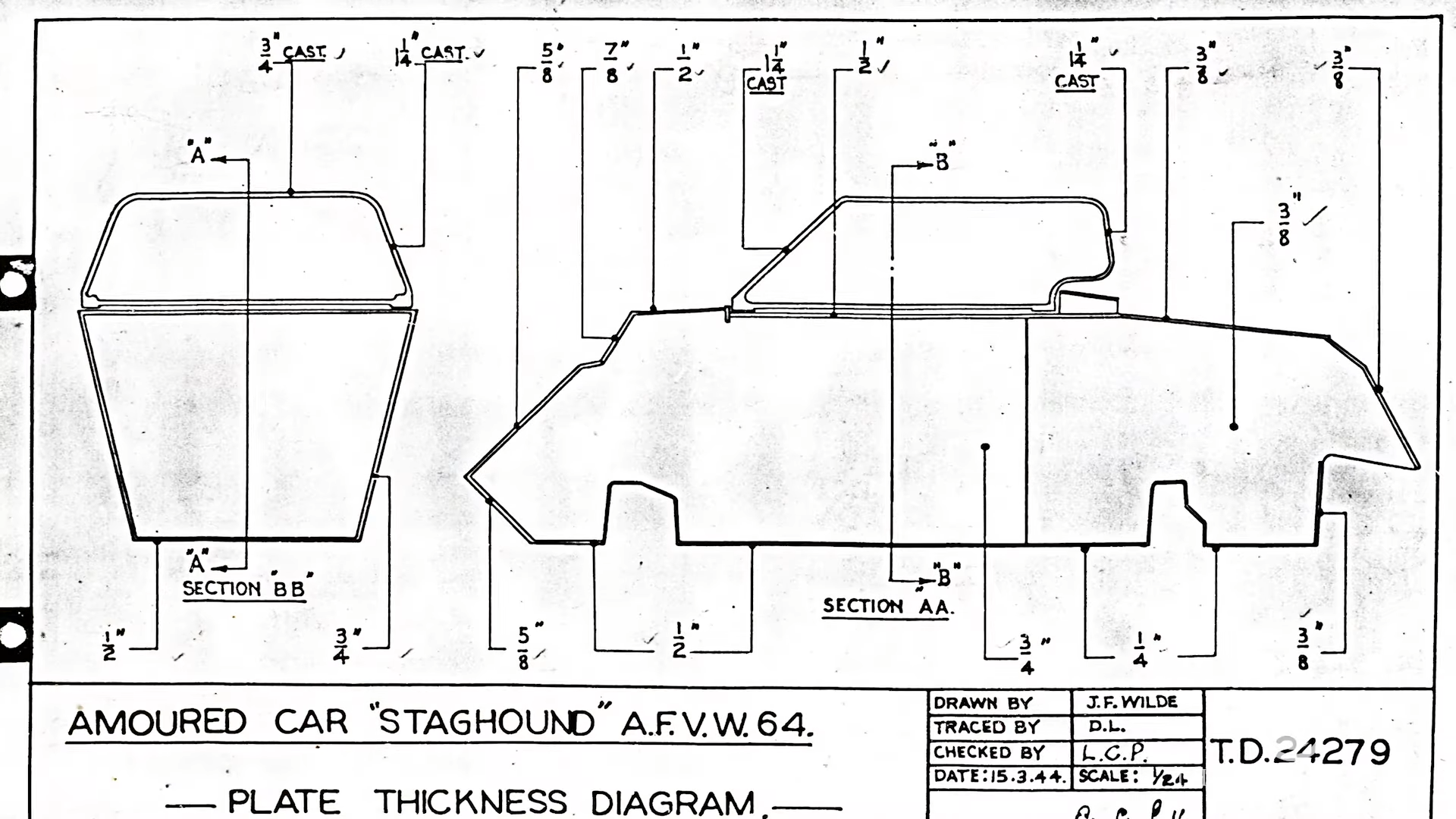
Upper Hull Front - 22.2mm
Hull Nose - 15.8mm
Lower Hull Nose - 15.8mm
Hull Sides Front - 19.05mm
Hull Sides Rear - 9.5mm
Hull Rear - 9.5mm
Hull Roof - 12.7mm
Engine Deck - 9.5mm
Gun Shield - 25.4mm
Mantlet - 44.45mm
Turret Front - 31.75mm
Turret Sides - 31.75mm
Turret Rear - 31.75mm
Turret Roof - 19.05mm
Images
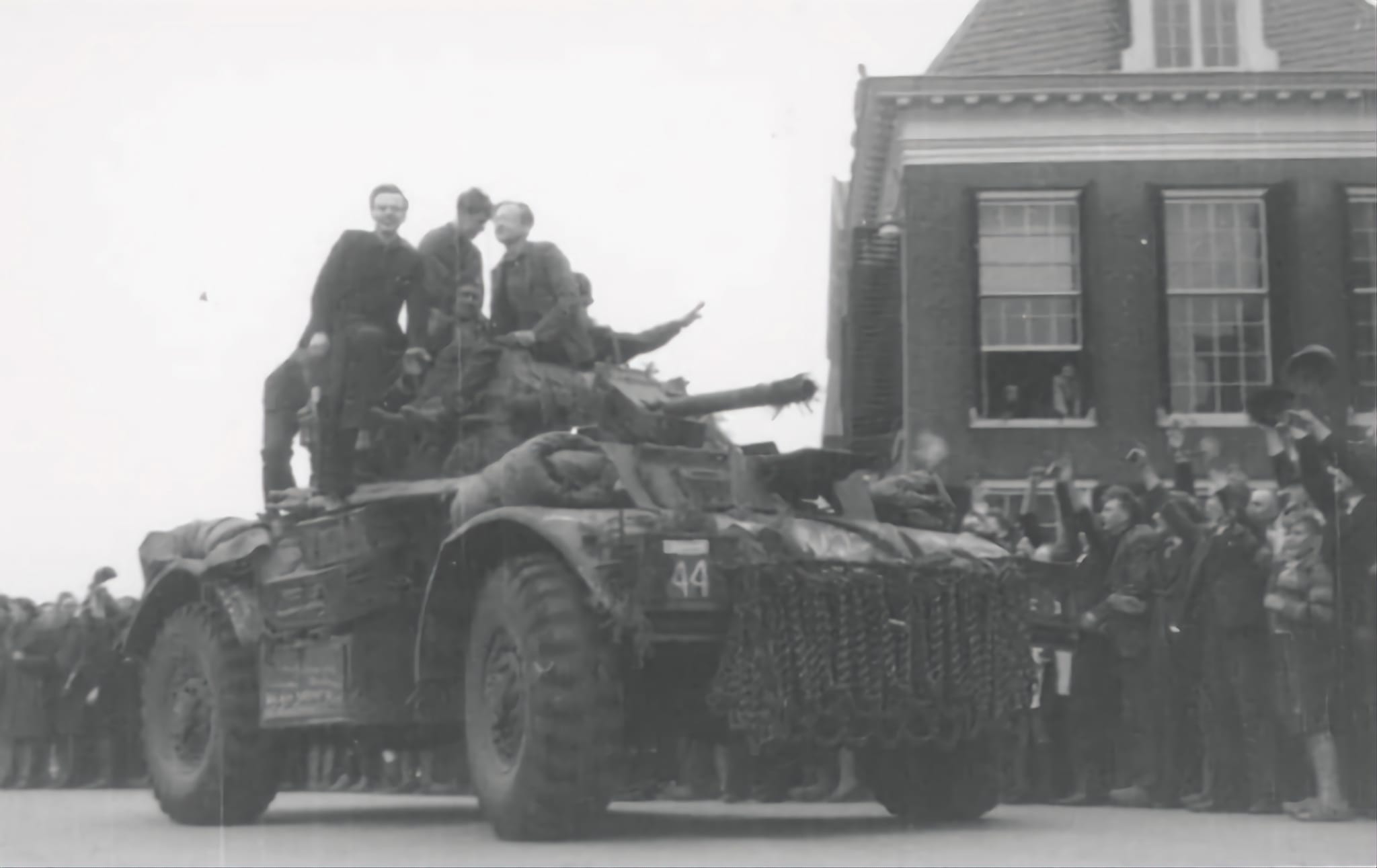
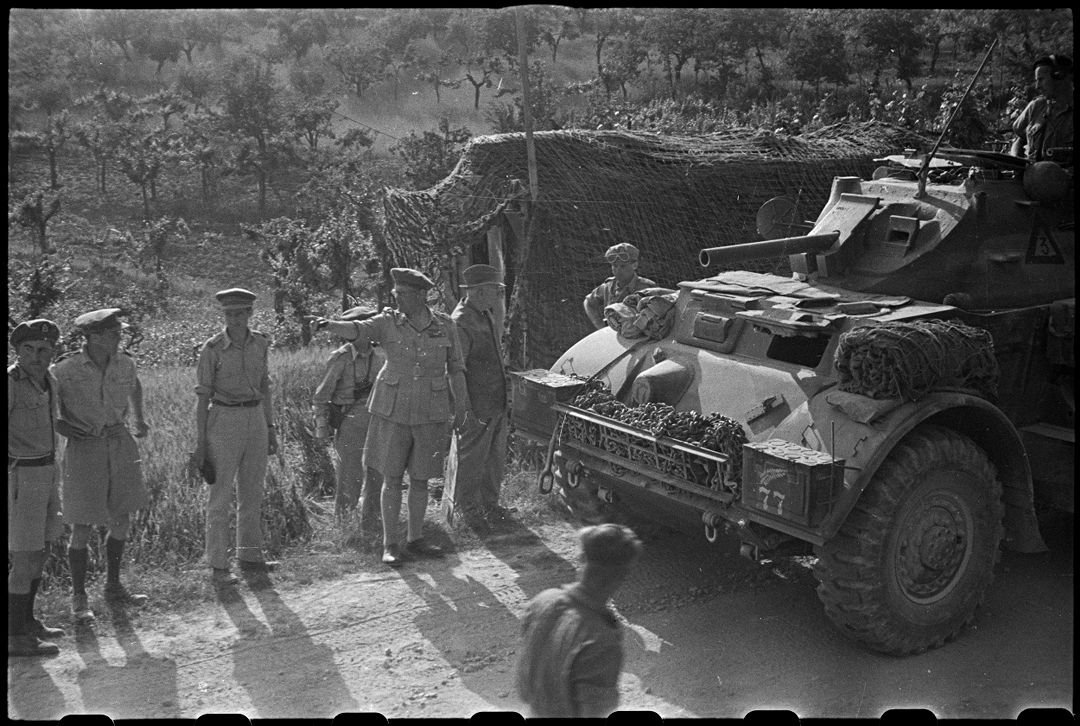
Prime Minister Peter Fraser and party at 5 New Zealand Infantry Brigade Headquarters near Sora, Italy, during Mr Fraser’s visit to the Italian Front, 31 May 1944. - NZ National Library DA-06043-F
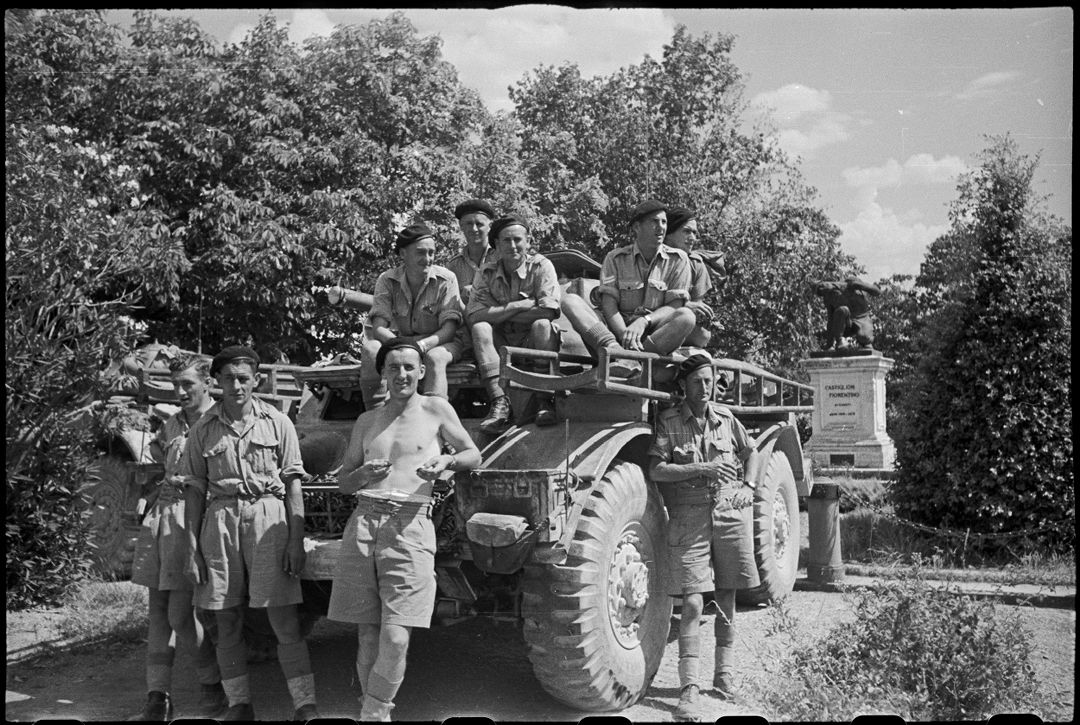
New Zealand Divisional Cavalry members and their Staghound in the front line town of Castiglione in Italy, 16 July 1944. - NZ National Library DA-06397-F
Sources
British Battle Tanks: American-Made World War II Tanks - David Fletcher & Steven J. Zaloga
Tank Chats #144 | Staghound | The Tank Museum - https://youtu.be/gQhURrGOGsA?si=zhcGCx9AqHLtA9GN
Medium Armored Car T17E1 Staghound I
Weapons Series 1 - American Armoured Cars (1940-1945) - Chris Ellis, Peter Chamberlain
T17E1 Staghound - Wikipedia
WWII Ballistics: Armor and Gunnery - Lorrin Rexford Bird and Robert D. Livingston
Ordnance QF 3-inch howitzer - Wikipedia