I’m planning to make some sort of suggestion for this, but I’m trying to get information on it, first.
Currently, SPAAs jump in capability of eyeball-directed leading to radar-directed leading. This results in a lot of “big-gun” non-radar SPAA, which relied on an intermediate form of leading, suffering from poor accuracy due to lower RoF and velocities relative to smaller caliber SPAA. As an example, SPAA like the M19A1 and the M42, while they should be far more accurate than the M13 and the M16 due to their computer-assisted sights and their dedicated spotters, are less accurate on average due to neither of those being modeled, while the faster RoF and velocity of the Browning allows the guns to correct for lead far more easily. However, if the M19A1 and the M42 were given lead indicators, modeling the computer-assisted sights, then they could be aimed far more easily.
Though, not every sight was built equally. I’ve divided them into three “tiers” which I think would be the best way to represent them in-game, with each having a delay in how long it takes the lead indicator to appear.
- Mono-Manual: Manual systems required all inputs to be done manually. Often times, these were supported in anti-aircraft batteries by rangefinders and spotters who could give both the range of aircraft and more easily identify them with telescopes that the anti-aircraft gunner might not have access to on his vehicle. Due the lack of such assistance when these vehicles were alone, the lead indicator generated by one-person manuals should have a large margin of error, relative to the other systems, and should take the longest to generate. They should also not change when the gun is firing, with a short delay after the gun stops firing before the lead indicator adjusts.
- Manual: As above, but with a dedicated spotter or a commander who did the manual inputs. While the large margin of error should still be present, it should have a shorter delay and it should still be adjusted while the gun is firing.
- Semi-Automatic: Semi-automatic systems are supported by a computer that did part of the lead calculations. However, they still required some form of manual input for the calculations to be complete. These should be either almost instantaneous, making them effectively indistinguishable from radar lead indicators aside from error probabilities, or have a very short delay.
All of them should have maximum ranges, which should be historical and determined by the specific sighting system and the range of the gun that the vehicle has.
The margin of error and the delay should also be affected by the rangefinding crew skill.
I’ve made a short list of vehicles in-game I could find which would be affected by this, though I need help fleshing out the details as, for a lot of them, I can only find confirmation that they had sighting systems, but not what their capabilities were.
USA
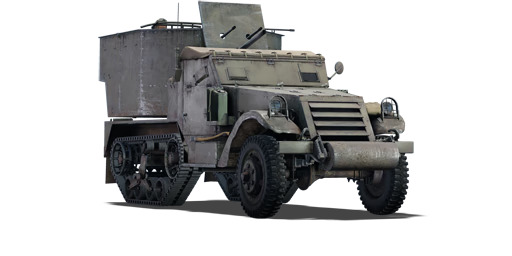
The M15 MGMC is actually missing two crew members in-game. What is the “Loader” and the “Machine Gunner” are actually “gun pointers,” with the left gun pointer controlling the horizontal traverse and the right gun pointer controlling the vertical traverse. Instead, the two loaders were seated in front of the turret, but for the same reasons a lot of crew members are left off of SPAA related to issues with clipping into the turrets, or the guns clipping into them, they aren’t present in-game.
The duties of weapon control were divided between three crew members. These included the prior-mentioned two, of which the right gun pointer also had ultimate control over firing the weapons, and also what is the in-game gunner. This person was the second-in-command and controlled the sighting system, making the inputs into it and adjusting lead based on tracers.
Based on his inputs, the gun pointers would then direct the turret and the right gun pointer would then fire the weapons as commanded.
The sighting system M6 was composed of a single handle that was connected to two telescopes. Azimuth (horizontal) deflection was sighted through the left telescope M7 while elevation (vertical) deflection was sighted through the right telescope M64. Both of these has no zoom with 11° FoV. Telescope M7 was composed of a simple reticle while telescope M64 had four mil lines for ranges of 400, 800, 1300, and 1700 yards with the velocity of M59 APC-T being used for it. The lead setter set the lead for the azimuth by turning the handle right and left and set the lead for the elevation by turning the handle up and down.
While I’m still unclear on if this either set deflection by changing the direction of the sights themselves, or by moving the vertical crosshair for the M7 sight and the horizontal crosshair for the M64 sight, in either case it allowed the gun pointers to easily aim the gun without having to eyeball it based on the reticle. However, it was still a manual system that required the lead setter to input it manually and to guesstimate based on assumed range, his knowledge of what type of aircraft it is and probable speed based on that, and probable direction. Part of this could normally be done through an external rangefinder and in either case it’s likely that the lead setter would’ve used a binocular set since he lacked a telescope himself.
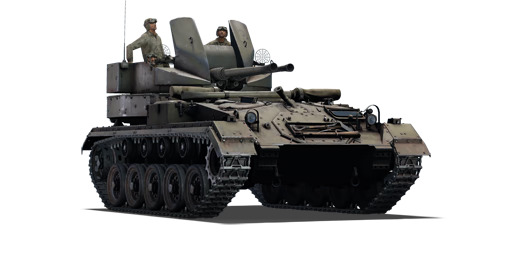
The M19A1 used either a computing sight M13 or M13A1. The difference between the two is in the sights that they used, but both of them operated the same way otherwise. The squad leader, who is the commander in-game, input both the target’s estimated speed, which could be set as high as 500 mph (805 km/h) in 25 mph (40 km/h) intervals, and the target’s estimated heading. Both of these were input with handwheels, with the current estimated speed shown through a dial and the current estimated course shown through an arrow. The computing sight then took these inputs and compared them to the guns’ bores and automatically moved the reflex sights to their correct deflections, assuming that the inputs were correct. From there, the gun pointer and the squad leader would simply have to put the crosses of their reticles atop the target.
With the computing sight M13, this would be done independently by both the gun pointer and the squad leader. The gun pointer would have the reflex sight M24 with for elevation with two crosses: a large one, intended to be aimed directly on target after calculations are complete, and a smaller one, intended for boresighting. The squad leader would have the reflex sight M23 which had a singular vertical line, which was supposed to be aimed directly on target after calculations are complete. Targeting could either be done manually by both, or through the drive controller where the squad leader would direct the gun pointer in azimuth.
With the computing sight M13A1, the gun pointer could do this alone. Reflex sight M24C combined the functions of both the previous M23 and M24 into a singular sight for both azimuth and elevation. The gun pointer could also control both azimuth and elevation, whereas the squad leader could only control azimuth, by using the drive controller. On the M19, this was the drive controller M9, while the M19A1 used the M12. I am unclear on what the differences between the two were. The usage of the M24C sight made the squad leader either manually changing azimuth, or directing the gun pointer in how much to change azimuth, unnecessary, thus freeing him to update lead without worrying about targeting.
Shy of any human error, this gave the gun pointer an accurate lead that required him only to point the reticle on target. The only thing I’m unclear on is how range is accounted for, as its neither an input in the computing sight nor is it eyeballed through either the reflex sights M23 or M24C.
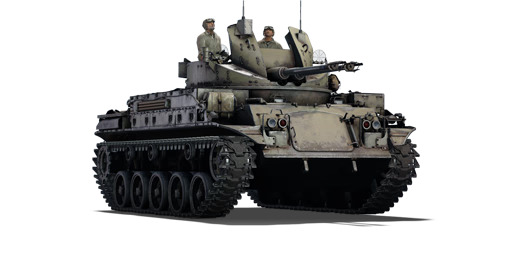
The M42 was a direct improvement over the M19A1 in about every way, and this included the computing sight. While the computing sight still used the reticle sight M24C, the computer was improved. The squad leader, who is the commander in-game, input the target’s estimated speed, which could be set as high as 700 mph (1,127 km/h) in 20 mph (32 km/h) intervals, the target’s angle of flight, which could be set anywhere from -85° to +60°, and the target’s angle of approach, which could be set in intervals of 800 mils. The estimated speed and angle of approach were both input via knobs, and the angle of approach was input via a handwheel, with the current estimated course shown through an arrow. The computing sight then took these inputs and compared them to the guns’ bores and automatically moved the reflex sights to their correct deflections, assuming that the inputs were correct. From there, the gun pointer would simply have to put the crosses of the reticle atop the target.
To aid with targeting, the gun pointer also had a foldable peep sight with the reflex sight that could be used to get the gun within the general area of the target, before using the reflex sight for precise shooting.
Shy of any human error, this gave the gun pointer an accurate lead that required him only to point the reticle on target. The only thing I’m unclear on is how range is accounted for, as its neither an input in the computing sight nor is it eyeballed through the reflex sight.

Information on what sights the T77E1 uses was hard to find and I’m not at all sure on any details, beyond what the name might be. The presence of a computing sight wouldn’t be too odd, as it was a competitor against the M19 GMC as a replacement for both the M15 and the M16 MGMCs. It likely performed similar to the computing sight M13 used by the M19 GMC.

I am unclear on what sighting system the Skink actually uses. From what little I can find, it uses a modified Mk. IX naval sight tied to a Teleflex AA detector for firing corrections. However, I am unsure if lead could actually be input into that sight or if the claim about the Teleflex AA detector is even true in the first place.
Germany
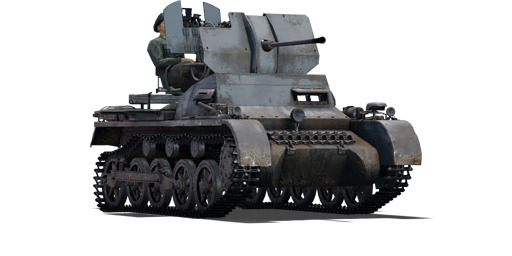
Flakvisier 38
Semi-Automatic
Like the Flak. Pz. 38, the “Flakpanzer I” is actually missing two crew members in-game. Alongside the gunner in the open fighting compartment, there should also be a loader and a commander who stood alongside the gun. In-game this is partially modeled and why the gun has a seemingly absurd reloading rate for what appears to be a one-man gun crew.
While a commander is present to direct the gun fire, I haven’t been able to find information on whether he also made the inputs into the Flakvisier 38 (lit. “Anti-Aircraft Sight 38”) or not. Given the already cramped platform and the proximity of the sight to the gunner, I’m assuming that the gunner made any inputs.
The sight was the most advanced 2 cm sight of the war and a rare example of a semi-automatic German sight. While it still took the basic inputs of speed, course, and range that all German automated sights did, the speed and course of a target was automatically calculated by the computer. This was done through the gunner keeping the reticle of the sight on the target for a period of time, during which the computer would record how quickly the turret alters its azimuth and elevation through a tachometer-dynamo. Range is then manually input by the gunner, with the resulting calculations combining all three and outputting it automatically to the sight by altering its deflection appropriately. If all inputs are correct, then the gunner only has to put the reticle over the target to hit it.
Normally, as part of an anti-aircraft battalion, ranging would be done with a Entfernungsmesser 1 m R 36 (lit. “Rangefinder 1 m R 36”), but this would have to be guesstimated without it.
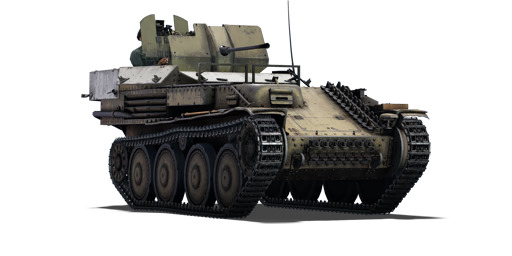
Like the “Flakpanzer I,” the Flak. Pz. 38 is actually missing two crew members in-game. Alongside the gunner in the open fighting compartment, there should also be a loader and a commander who stood alongside the gun. In-game this is partially modeled and why the gun has a seemingly absurd reloading rate for what appears to be a one-man gun crew.
While a commander is present to direct the gun fire, I haven’t been able to find information on whether he also made the inputs into the Flakvisier 38 (lit. “Anti-Aircraft Sight 38”) or not. Given the already cramped platform and the proximity of the sight to the gunner, I’m assuming that the gunner made any inputs.
The sight was the most advanced 2 cm sight of the war and a rare example of a semi-automatic German sight. While it still took the basic inputs of speed, course, and range that all German automated sights did, the speed and course of a target was automatically calculated by the computer. This was done through the gunner keeping the reticle of the sight on the target for a period of time, during which the computer would record how quickly the turret alters its azimuth and elevation through a tachometer-dynamo. Range is then manually input by the gunner, with the resulting calculations combining all three and outputting it automatically to the sight by altering its deflection appropriately. If all inputs are correct, then the gunner only has to put the reticle over the target to hit it.
Normally, as part of an anti-aircraft battalion, ranging would be done with a Entfernungsmesser 1 m R 36 (lit. “Rangefinder 1 m R 36”), but this would have to be guesstimated without it.
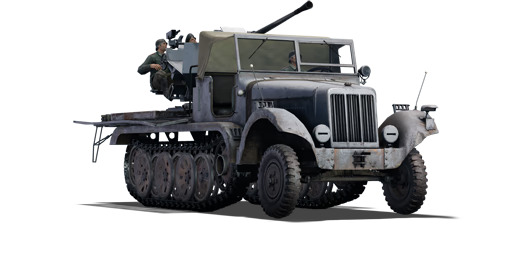
I have had a hard time trying to find a description of how this sight works. Most of it is conjecture, based off descriptions of the Flakvisier 35, which this is supposed to be using the same form of computing from, and from what I can see on the model. Any clarification on how exactly it functions would be appreciated.
Flakvisier 33 (lit. “Anti-Aircraft Sight 33”) used a mirror sight in conjunction with a basic computing mechanism that outputs the probable firing solution once the target’s speed, course, and range is inputted. Once done so, the reticle of the mirror sight is appropriately deflected that, if the inputs are correct, then the gunner only has to put the reticle over the target in order to hit it.
Inputs were done by commander through a series of knobs. Normally, as part of an anti-aircraft battalion, ranging would be done with a Entfernungsmesser 1 m R 36 (lit. “Rangefinder 1 m R 36”), but this would have to be guesstimated without it.
The gunner, alongside the mirror sight, also has access to a telescope sight for longer range identification.
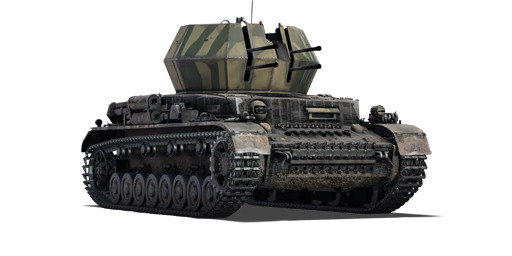
As the war dragged on, German anti-aircraft sights regressed and the Wirbelwind is an example of that. Instead of using the Flakvisier 40 (lit. “Anti-Aircraft Sight 40”), a variation of the Flakvisier 38 intended for the 2 cm Flakvierling, it used a simplified Linealvisier 21 (lit. “Linear Sight 21”).
No computers were used in this sight. Rather, it was effectively a ring sight with several moving parts that allowed it to have lead “input.” The ring foresight included a single horizontal bar that ranged from 0 to 1,600 meters, with the range able to be set with a hand nut attached to the foresight. The entire foresight could also be rotated which allowed for the target’s course to be input, accounting for both heading and dive/climb, and this could be set from 11 m/s (25 mph or 40 km/h) to 150 m/s (336 mph or 540 km/h). The gunner looked through a mirror backsight into the foresight and also had a Zielfernrohr (lit. “Target Scope”) available to him. All “inputs” were done solely by the gunner, making the system inefficient compared to the earlier Flakvisier.
Normally, as part of an anti-aircraft battalion, ranging would be done with a Entfernungsmesser 1 m R 36 (lit. “Rangefinder 1 m R 36”), but this would have to be guesstimated without it.
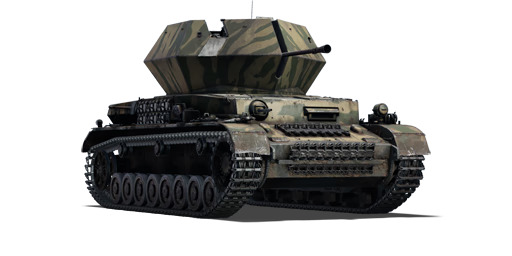
Flakvisier 43 (lit. “Anti-Aircraft Sight 43”) was the most advanced 3,7 cm sight of the war and a rare example of a semi-automatic German sight. While it still took the basic inputs of speed, course, and range that all German automated sights did, the speed and course of a target was automatically calculated by the computer. This was done through the gunner keeping the reticle of the sight on the target for a period of time, during which the computer would record how quickly the turret alters its azimuth and elevation through a clock-work motor. Range is then manually input by the gunner, with the resulting calculations combining all three and outputting it automatically to the sight by altering its deflection appropriately. If all inputs are correct, then the gunner only has to put the reticle over the target to hit it.
Normally, as part of an anti-aircraft battalion, ranging would be done with a Entfernungsmesser 1 m R 36 (lit. “Rangefinder 1 m R 36”), but this would have to be guesstimated without it.
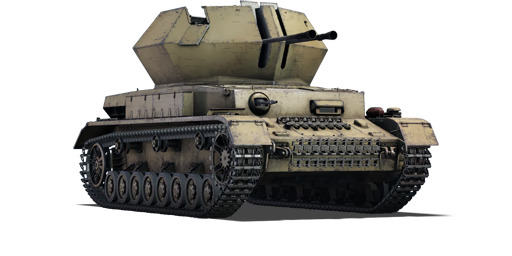
While the Ostwind II is pretty much a fictional vehicle, we can see the sight that’s modeled in-game. It isn’t any different from the regular Ostwind in this regard since it shares the Flakvisier 43.
Flakvisier 43 (lit. “Anti-Aircraft Sight 43”) was the most advanced 3,7 cm sight of the war and a rare example of a semi-automatic German sight. While it still took the basic inputs of speed, course, and range that all German automated sights did, the speed and course of a target was automatically calculated by the computer. This was done through the gunner keeping the reticle of the sight on the target for a period of time, during which the computer would record how quickly the turret alters its azimuth and elevation through a clock-work motor. Range is then manually input by the gunner, with the resulting calculations combining all three and outputting it automatically to the sight by altering its deflection appropriately. If all inputs are correct, then the gunner only has to put the reticle over the target to hit it.
Normally, as part of an anti-aircraft battalion, ranging would be done with a Entfernungsmesser 1 m R 36 (lit. “Rangefinder 1 m R 36”), but this would have to be guesstimated without it.
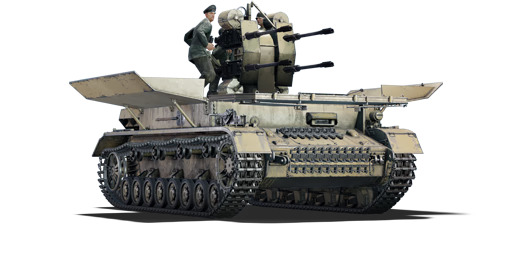
Linealvisier 21 (lit. “Linear Sight 21”) was effectively a ring sight with several moving parts that allowed it to have lead “input.” The ring foresight included a single horizontal bar that ranged from 0 to 1,600 meters, with the range able to be set with a hand nut attached to the foresight. The entire foresight could also be rotated which allowed for the target’s course to be input, accounting for both heading and dive/climb, and this could be set from 11 m/s (25 mph or 40 km/h) to 150 m/s (336 mph or 540 km/h). The gunner looked through a mirror backsight into the foresight and also had a Zielfernrohr (lit. “Target Scope”) available to him. All “inputs” were done solely by the gunner, making the system inefficient compared to the earlier Flakvisier.
Normally, as part of an anti-aircraft battalion, ranging would be done with a Entfernungsmesser 1 m R 36 (lit. “Rangefinder 1 m R 36”), but this would have to be guesstimated without it.
USSR
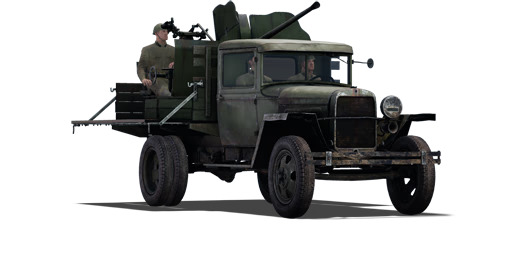
I am unclear on how the K8-T actually performs. From what I can tell, there were three versions: the initial 1940 version, which functioned as a normal sight, and the pre-1943 version and the post-1943 versions, which converted it into an “automated gun sight.” I believe the in-game GAZ-MM uses the pre-1943 version while the in-game ZIS-12 uses the post-1943 version, but I’m not confident in either.
All calculations were input manually. This included the target’s speed, their range, their course, and their angle of attack. The target’s speed can be input as fast as 200 m/s (447 mph or 720 km/h) while the maximum range is 2,400 meters. The angles of attack that can be input range from -90° to +60°. All inputs were done by the gunner, though the commander would optimally provide his input and rangefinding would normally be done by an external rangefinder.
Assuming the inputs are correct, they are then output to the sights and all the gunner has to do is aim his reticle on the target to hit it.
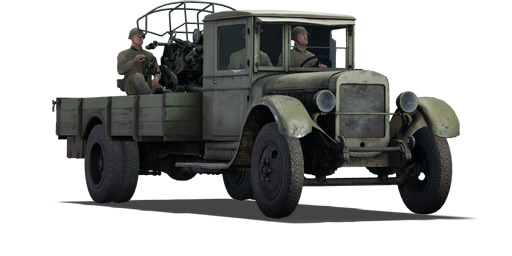
I am unclear on how the K8-T actually performs. From what I can tell, there were three versions: the initial 1940 version, which functioned as a normal sight, and the pre-1943 version and the post-1943 versions, which converted it into an “automated gun sight.” I believe the in-game GAZ-MM uses the pre-1943 version while the in-game ZIS-12 uses the post-1943 version, but I’m not confident in either.
All calculations were input manually. This included the target’s speed, their range, their course, and their angle of attack. The target’s speed can be input as fast as 200 m/s (447 mph or 720 km/h) while the maximum range is 2,400 meters. The angles of attack that can be input range from -90° to +60°. All inputs were done by the gunner, though the commander would optimally provide his input and rangefinding would normally be done by an external rangefinder.
Assuming the inputs are correct, they are then output to the sights and all the gunner has to do is aim his reticle on the target to hit it.
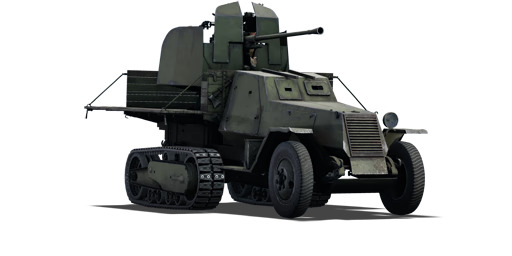
AZP-37-1 was the standard issue automatic anti-aircraft sight for 37-mm guns. The target’s speed, range, course, and angle of attack were all manually input. The target’s speed can be input as between 1.6 m/s to 140 m/s (4 mph or 6 km/h to 313 mph or 504 km/h) up to a range of 4,000 meters. The angles of attack that can be input range from -70° to +70°. All of the inputs were input using knobs, with control for the course and angle of attack being input by the gunner on the left side while the speed and range is input by the gunner on the right side. All inputs were done by the gunners, though the commander would optimally provide his input and rangefinding would normally be done by an external rangefinder. Since there’s no dedicated loader, unlike in later vehicles equipped with the AZP-37-1, this is more accurately a mono-manual rather than a manual.
Assuming the inputs are correct, they are then output to the sights and all the gunner has to do is aim his reticle on the target to hit it.
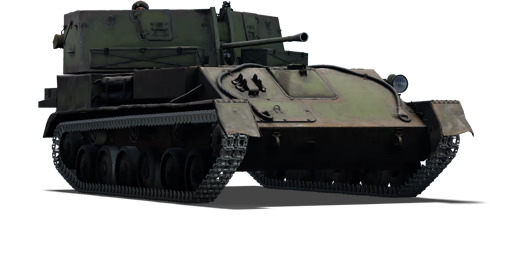
AZP-37-1 was the standard issue automatic anti-aircraft sight for 37-mm guns. The target’s speed, range, course, and angle of attack were all manually input. The target’s speed can be input as between 1.6 m/s to 140 m/s (4 mph or 6 km/h to 313 mph or 504 km/h) up to a range of 4,000 meters. The angles of attack that can be input range from -70° to +70°. All of the inputs were input using knobs, with control for the course and angle of attack being input by the gunner on the left side while the speed and range is input by the gunner on the right side. All inputs were done by the gunners, though the commander would optimally provide his input and rangefinding would normally be done by an external rangefinder.
Assuming the inputs are correct, they are then output to the sights and all the gunner has to do is aim his reticle on the target to hit it.
I’ve seen claims of the ZSU-37 had an onboard stereoscopic rangefinder. I’m aware that the in-game ZSU-37 is actually the SU-11, but I have not seen where this rangefinder would be located even in diagrams or surviving photographs of the ZSU-37.
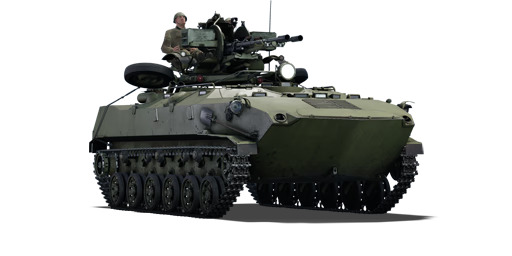
ZAP-23 was the standard issue sight for the ZU-23-2. The target’s speed, range, course, and angle of attack were all manually input. The target’s speed can be input as up to 300 m/s (671 mph or 1,080 km/h) up to a range of 2,000 meters. The angles of attack that can be input range from -90° to +60°. All of the inputs were using knobs with the controls divided between the left and right gunners. All inputs were done by the gunners, though the commander would optimally provide his input and rangefinding would normally be done by an external rangefinder.
Assuming the inputs are correct, they are then output to the OM 8 sight and all the gunner has to do is aim his reticle on the target to hit it.
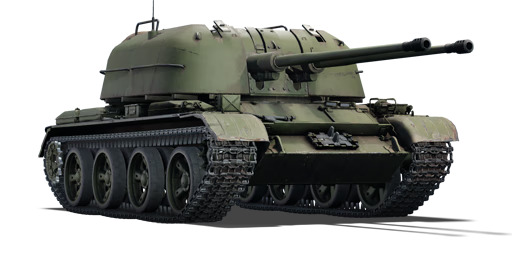
I can’t find the name of the sight complex, but I can find its function.
It operated the same as the other automatic anti-aircraft sights. The target’s speed, range, course, and angle of attack were all manually input with the controls divided between the gunner and the sight setter. Input was made by the commander as needed. Rangefinding would normally be done by an external rangefinder, but could be estimated, too.
Assuming the inputs are correct, they are then output to the VK-3 sights and all the gunner has to do is aim his reticle on the target to hit it.
Great Britain
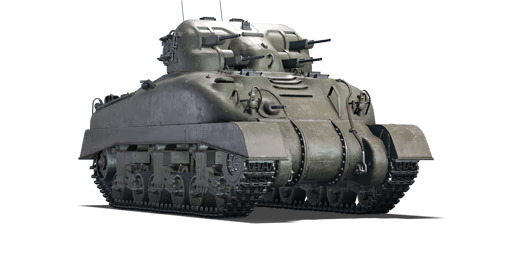
I am unclear on what sighting system the Skink actually uses. From what little I can find, it uses a modified Mk. IX naval sight tied to a Teleflex AA detector for firing corrections. However, I am unsure if lead could actually be input into that sight or if the claim about the Teleflex AA detector is even true in the first place.
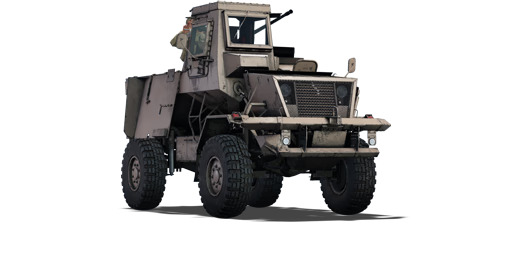
I am unclear on how this sight actually operates. Apparently, it is able to account for lead on targets up to 900 km/h (559 mph), but I cannot find how this is input or if the other variables required to calculate lead are even included.
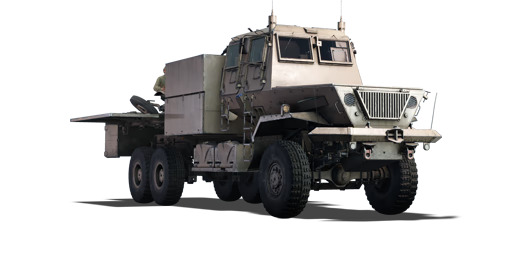
ZAP-23 was the standard issue sight for the ZU-23-2. The target’s speed, range, course, and angle of attack were all manually input. The target’s speed can be input as up to 300 m/s (671 mph or 1,080 km/h) up to a range of 2,000 meters. The angles of attack that can be input range from -90° to +60°. All of the inputs were using knobs with the controls divided between the left and right gunners. All inputs were done by the gunners, though the commander would optimally provide his input and rangefinding would normally be done by an external rangefinder.
Assuming the inputs are correct, they are then output to the OM 8 sight and all the gunner has to do is aim his reticle on the target to hit it.
Japan
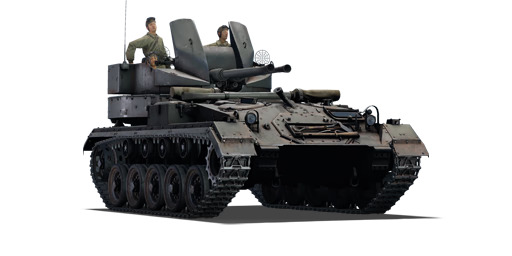
The M19A1 used either a computing sight M13 or M13A1. The difference between the two is in the sights that they used, but both of them operated the same way otherwise. The squad leader, who is the commander in-game, input both the target’s estimated speed, which could be set as high as 500 mph (805 km/h) in 25 mph (40 km/h) intervals, and the target’s estimated heading. Both of these were input with handwheels, with the current estimated speed shown through a dial and the current estimated course shown through an arrow. The computing sight then took these inputs and compared them to the guns’ bores and automatically moved the reflex sights to their correct deflections, assuming that the inputs were correct. From there, the gun pointer and the squad leader would simply have to put the crosses of their reticles atop the target.
With the computing sight M13, this would be done independently by both the gun pointer and the squad leader. The gun pointer would have the reflex sight M24 with for elevation with two crosses: a large one, intended to be aimed directly on target after calculations are complete, and a smaller one, intended for boresighting. The squad leader would have the reflex sight M23 which had a singular vertical line, which was supposed to be aimed directly on target after calculations are complete. Targeting could either be done manually by both, or through the drive controller where the squad leader would direct the gun pointer in azimuth.
With the computing sight M13A1, the gun pointer could do this alone. Reflex sight M24C combined the functions of both the previous M23 and M24 into a singular sight for both azimuth and elevation. The gun pointer could also control both azimuth and elevation, whereas the squad leader could only control azimuth, by using the drive controller. On the M19, this was the drive controller M9, while the M19A1 used the M12. I am unclear on what the differences between the two were. The usage of the M24C sight made the squad leader either manually changing azimuth, or directing the gun pointer in how much to change azimuth, unnecessary, thus freeing him to update lead without worrying about targeting.
Shy of any human error, this gave the gun pointer an accurate lead that required him only to point the reticle on target. The only thing I’m unclear on is how range is accounted for, as its neither an input in the computing sight nor is it eyeballed through either the reflex sights M23 or M24C.
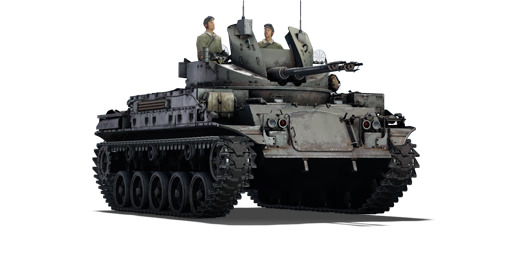
The M42 was a direct improvement over the M19A1 in about every way, and this included the computing sight. While the computing sight still used the reticle sight M24C, the computer was improved. The squad leader, who is the commander in-game, input the target’s estimated speed, which could be set as high as 700 mph (1,127 km/h) in 20 mph (32 km/h) intervals, the target’s angle of flight, which could be set anywhere from -85° to +60°, and the target’s angle of approach, which could be set in intervals of 800 mils. The estimated speed and angle of approach were both input via knobs, and the angle of approach was input via a handwheel, with the current estimated course shown through an arrow. The computing sight then took these inputs and compared them to the guns’ bores and automatically moved the reflex sights to their correct deflections, assuming that the inputs were correct. From there, the gun pointer would simply have to put the crosses of the reticle atop the target.
To aid with targeting, the gun pointer also had a foldable peep sight with the reflex sight that could be used to get the gun within the general area of the target, before using the reflex sight for precise shooting.
Shy of any human error, this gave the gun pointer an accurate lead that required him only to point the reticle on target. The only thing I’m unclear on is how range is accounted for, as its neither an input in the computing sight nor is it eyeballed through the reflex sight.
China
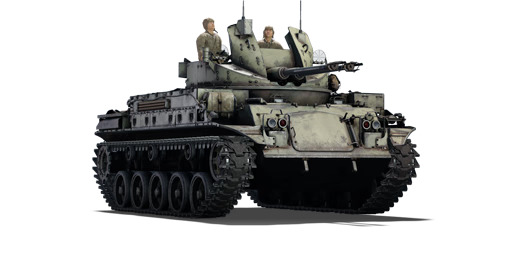
The M42 was a direct improvement over the M19A1 in about every way, and this included the computing sight. While the computing sight still used the reticle sight M24C, the computer was improved. The squad leader, who is the commander in-game, input the target’s estimated speed, which could be set as high as 700 mph (1,127 km/h) in 20 mph (32 km/h) intervals, the target’s angle of flight, which could be set anywhere from -85° to +60°, and the target’s angle of approach, which could be set in intervals of 800 mils. The estimated speed and angle of approach were both input via knobs, and the angle of approach was input via a handwheel, with the current estimated course shown through an arrow. The computing sight then took these inputs and compared them to the guns’ bores and automatically moved the reflex sights to their correct deflections, assuming that the inputs were correct. From there, the gun pointer would simply have to put the crosses of the reticle atop the target.
To aid with targeting, the gun pointer also had a foldable peep sight with the reflex sight that could be used to get the gun within the general area of the target, before using the reflex sight for precise shooting.
Shy of any human error, this gave the gun pointer an accurate lead that required him only to point the reticle on target. The only thing I’m unclear on is how range is accounted for, as its neither an input in the computing sight nor is it eyeballed through the reflex sight.
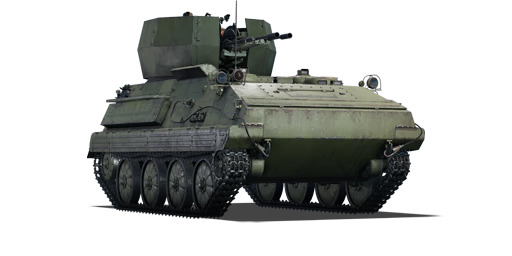
I am unclear on what the sight used by the ZSD1963 is actually capable of. What few references I’ve found to it claim it as an “infrared sight” and that it does account for lead, somehow. From the in-game model, it’s clear that the inputs are done manually and outputted to the two sights, but that is just my guesstimation of its capability.
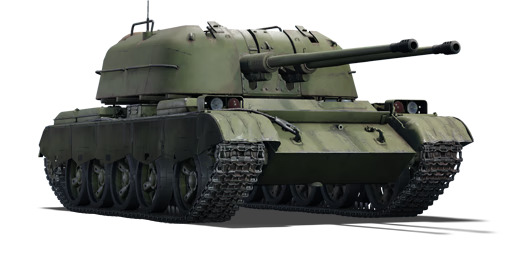
The PGZ1980 is heavily based off of the ZSU-57-2 and seems to share the sighting system.
It likely operated the same as the ZSU-57-2. The target’s speed, range, course, and angle of attack were all manually input with the controls divided between the gunner and the sight setter. Input was made by the commander as needed. Rangefinding would normally be done by an external rangefinder, but could be estimated, too.
Assuming the inputs are correct, they are then output to the sights and all the gunner has to do is aim his reticle on the target to hit it.
Italy
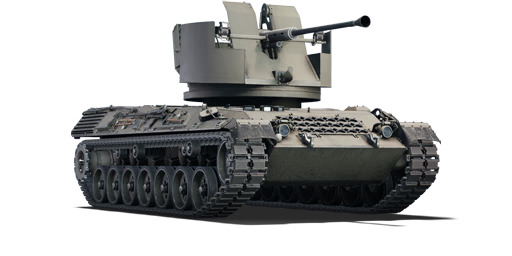
I can’t find the name or the specifics of the sights, but they appear to be computing sights similar to the ones that Bofors had been using since the 1940s. It likely functions in more or less the same way, with partial manual inputs while the computer automates the other part of the process, with the outputs altering the deflection of the sights so that the gunner only needs to put his reticle atop the target to hit it.
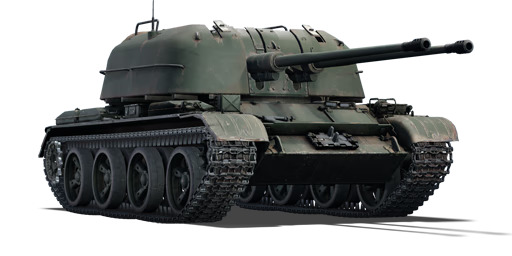
I can’t find the name of the sight complex, but I can find its function.
It operated the same as the other automatic anti-aircraft sights. The target’s speed, range, course, and angle of attack were all manually input with the controls divided between the gunner and the sight setter. Input was made by the commander as needed. Rangefinding would normally be done by an external rangefinder, but could be estimated, too.
Assuming the inputs are correct, they are then output to the VK-3 sights and all the gunner has to do is aim his reticle on the target to hit it.
France
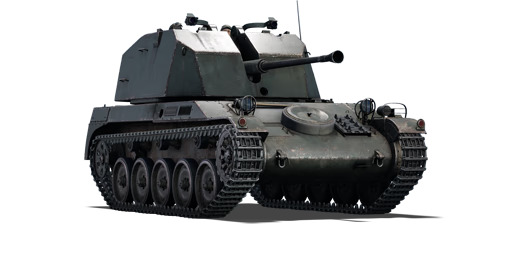
I am unable to find any information at all about the gun sight used by the DCA, but I can assume that it isn’t too dissimilar to the other computing sights used during the 1950s.
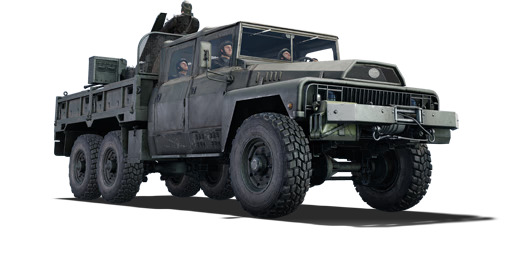
From the sole brief description of the sight I’ve been able to find, the Galileo P56 is inputted with the range and speed of the target before outputting deflection corrections to the sight. However, it is still unclear to me if this qualifies it as semi-automatic or not as just the range and speed seem incomplete without course, and I cannot find anything about if course is input or not.
Sweden
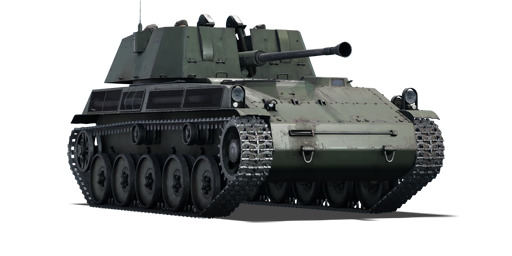
Currently, the in-game Lvkv 42 lacks its gun sights. While I can’t find their specific model, they seem to be standard Bofors computing sights that were found on Bofors guns. Control of it was divided between the gunner and the commander, likely with manual inputs for speed, course, and range required for the computing sight to operate.
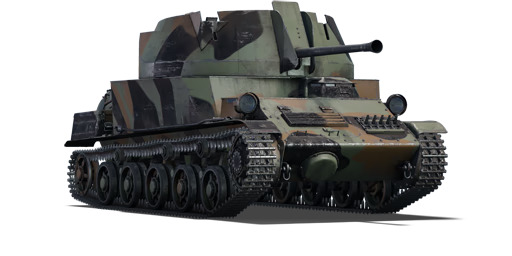
The ItPsv 41 is missing a crew member in-game. What is the “Loader” is actually the left gunner, whereas a loader would be positioned standing behind him, instead.
The Bofors device required the gunners to input the estimated speed, course, and range of the aircraft. The device then compared this to the current azimuth and elevation of the guns before outputting the correct deflection into the reticles of the sights. From there, the gunners would just need to aim the reticle over the target to hit it. While the inputs were made by the gunners, it was usually up to the commander/spotter to actually make the estimates.
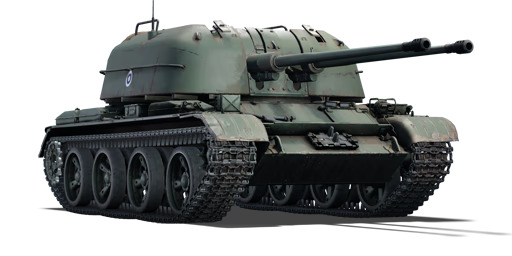
I can’t find the name of the sight complex, but I can find its function.
It operated the same as the other automatic anti-aircraft sights. The target’s speed, range, course, and angle of attack were all manually input with the controls divided between the gunner and the sight setter. Input was made by the commander as needed. Rangefinding would normally be done by an external rangefinder, but could be estimated, too.
Assuming the inputs are correct, they are then output to the VK-3 sights and all the gunner has to do is aim his reticle on the target to hit it.
Israel
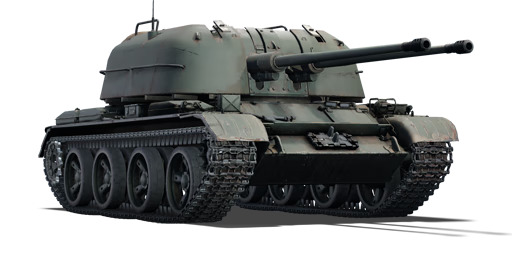
I can’t find the name of the sight complex, but I can find its function.
It operated the same as the other automatic anti-aircraft sights. The target’s speed, range, course, and angle of attack were all manually input with the controls divided between the gunner and the sight setter. Input was made by the commander as needed. Rangefinding would normally be done by an external rangefinder, but could be estimated, too.
Assuming the inputs are correct, they are then output to the VK-3 sights and all the gunner has to do is aim his reticle on the target to hit it.