History
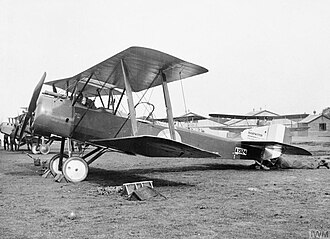
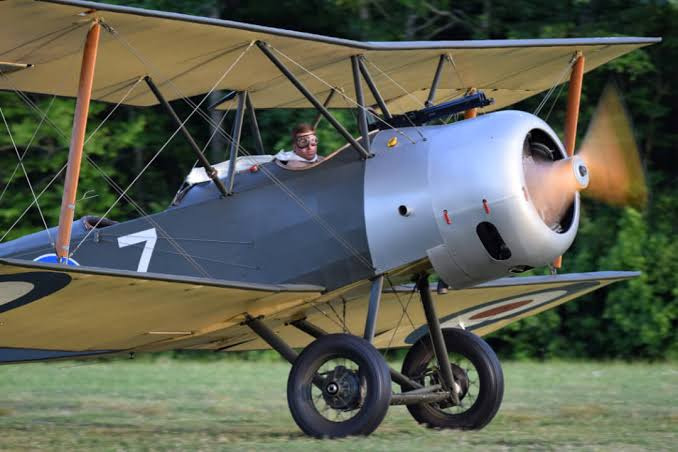
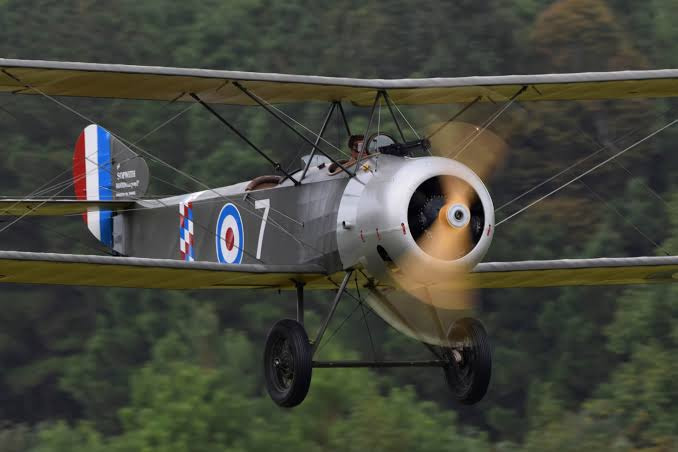
After the success of the prototype twin-seat biplane known as the “Sigrist Bus”, The Sopwith Aviation Company decided to build a new design based on the Sigrist Bus. This new fighter was named the Sopwith LCT (Land Clerget Tractor), it was to feature the larger 110hp Clerget engine for which it was named for. This new design feature reworked struts that connected the top wing, these “half” struts formed a “W” when viewed from the front which led to a new name of the 1½ Strutter.
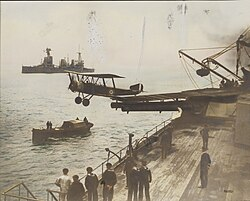
The 1½ Strutter took it’s first flight in late December 1915 with official testing starting in January. It was fitted with a pair of manually controlled airbrakes which helped to reduce it’s landing distance. As production started the Vickers-Challenger synchronisation gear for units ordered by the Royal Flying Corps and the Scarff-Dibovski gear for Royal Navy Air Service units however due to shortages in manufacturing these later units were fitted with either Ross or Sopwith-Kauper gears. Scarff rings were installed to allow for a 7.7mm Lewis gun to be installed and fired from within the observers cockpit, bomb racks were also fitted underneath the wings to carry either four 11kg cooper bombs or two 29kg bombs,
Upon entering service the 1½ Strutter was used to escort bombers during their missions across the Western Front. Due to a shortage of the type most 1½ Strutter’s wouldn’t reach frontline squadrons until August 1916. The delay led to a large number of units being transferred to make a full squadron in time for it to serve in the skies above the Battle of the Somme. The 1½ Strutter held strong against the German fighters of the time but only until the new Albatros fighters started to reach the front in October. By January 1917 the 1½ Strutter was considered outclassed and the decision to put in a new Clerget 9b 130hp engine was made but by then it was too late. The type suffered massive losses during April 1917, also known as “Bloody April” where it was decided that the 1½ Strutter was to be replaced with the new Sopwith Camel. The last left service in October of 1917.
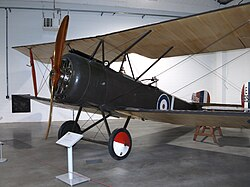
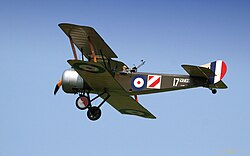
There are 3 original examples preserved in museums, one example was from Belgian service and two from France one of which remains airworthy. Replica examples also exist with one being kept at the Great War Flying Museum in Ontario, Canada and one in the United Kingdom which is airworthy and has flown at various airshows.
Specifications
Size
- Length: 25 ft 3 in (7.70 m)
- Wingspan: 33 ft 6 in (10.21 m)
- Height: 10 ft 3 in (3.12 m)
Weight
- Empty weight: 1,305 lb (592 kg)
- Gross weight: 2,149 lb (975 kg)
Powerplant
- 1 x Clerget 9B 9-cylinder air-cooled rotary piston engine, 130hp
Performance
- Maximum speed: 100 mph (160 km/h, 87 kn) at 6,500 ft (1,981 m)
- Endurance: 3 hours 45 minutes
- Service ceiling: 15,500 ft (4,700 m)
- Time to altitude: 6,500 ft (1,981 m) in 9 minutes 10 seconds
Armament
-
Guns:
- 1 x forward firing 7.7mm Vickers machine gun
- 1 x rear mounted 7.7mm Vickers machine gun
-
Bombs:
- 4 x 11kg Cooper Bombs
- 2 x 29kg bombs
Pictures
- Yes
- No