- Yes
- No
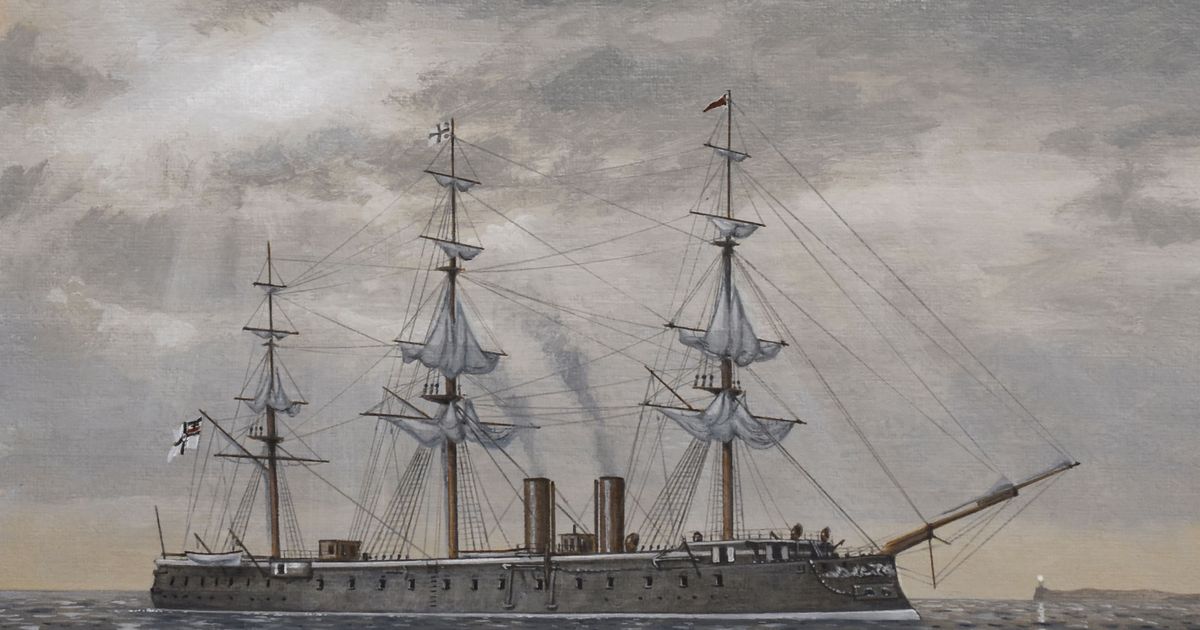
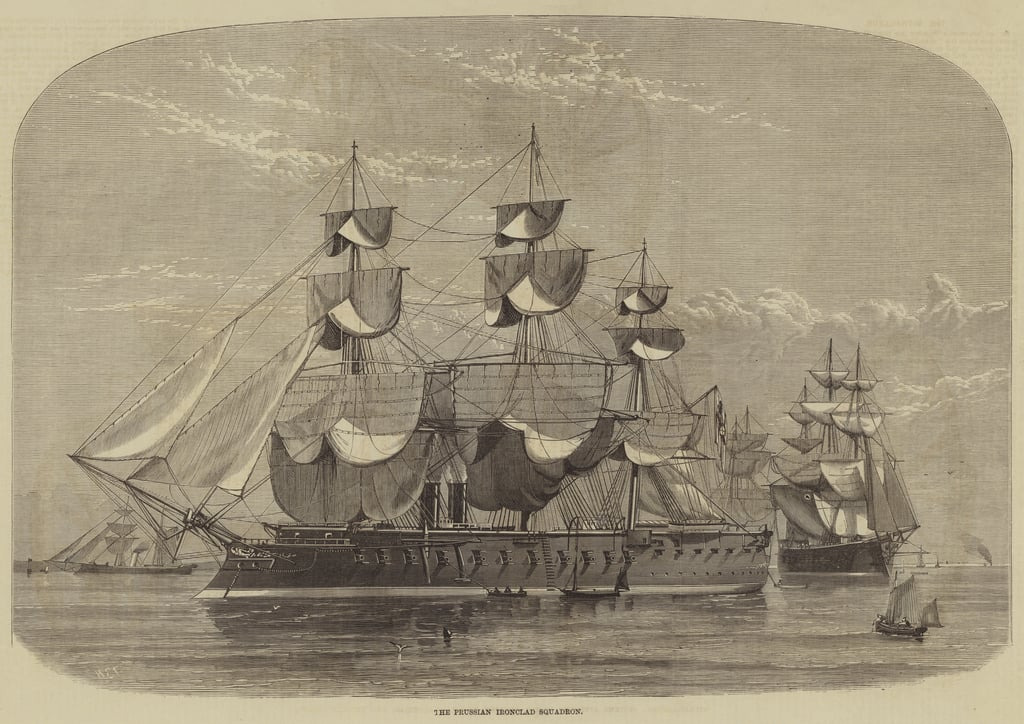
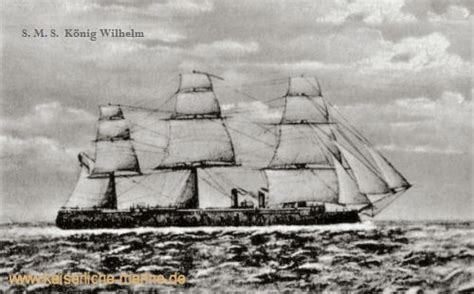
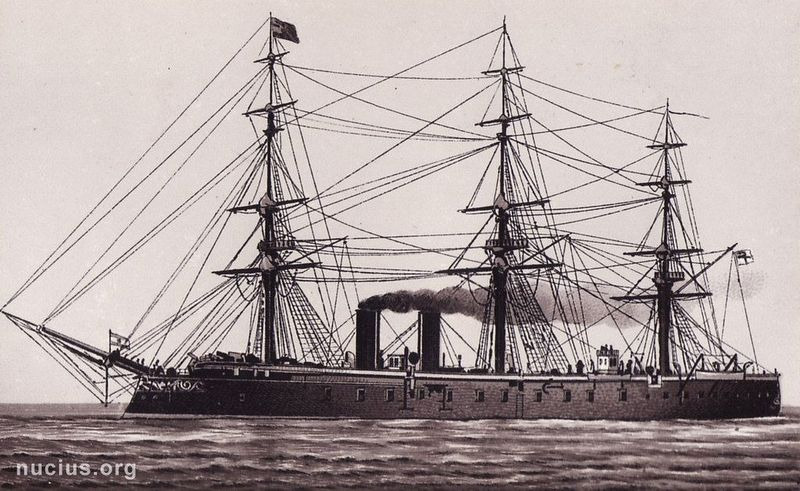
The SMS König Wilhelm (transl. His Majesty’s Ship King William) was a British built ironclad, designed by Edward Reed, and the lead ship of the Prussian navy during the Franco-Prussian war of 1871. The ship was originally ordered by the Ottoman Empire from the Thames Ironworks and Shipbuilding Company in London under the initial name “Fatikh”, however, following the inability of the Turks to pay for her while construction was already underway, the shipbuilding company set her up for open market sale.
Prussia would end up purchasing the vessel, which was launched in 1868. Upon arriving in Prussia, the British armament of 33x 72 pounder rifled muzzle-loaders was replaced with a loadout of 18x 240mm, and 5x 210mm rifled Krupp breech-loading cannons.
She was commissioned on the 20th February 1869 as the SMS König Wilhelm, her namesake being King Wilhelm I of Prussia, also known as King William I. Her size, armor, and armament made her the most powerful ship in the Prussian navy, and she became the lead ship of the Prussian navy during the War of German Unification.
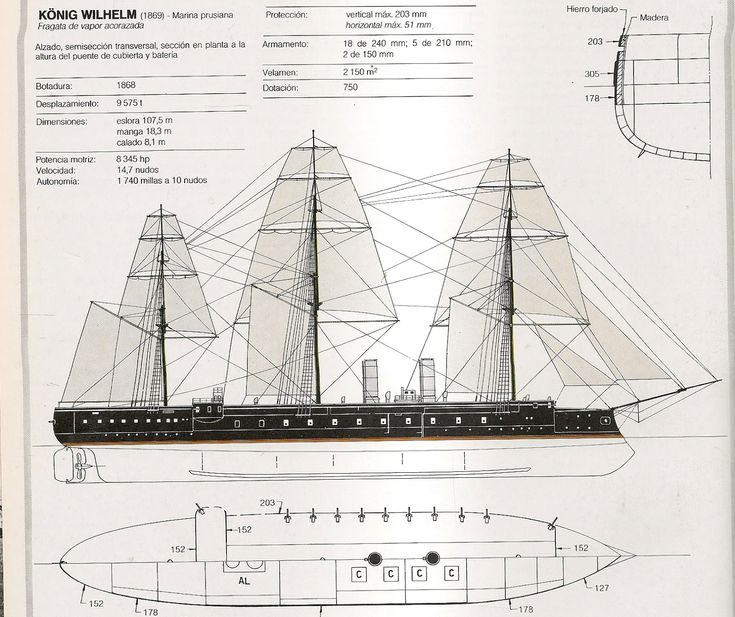
The ship features wrought iron armor with a maximum belt thickness of 305mm, a single-expansion steam engine, and three-masts in a full ship layout.
The sails were primarily meant to support the steam-engine, rather than allowing the ship to sail on wind alone, as the König Wilhelm was a very heavy ship for the amount of sail-footage available to her. This means under sails alone, she would have most likely struggled to attain any forward motion at all, or if very favourable wind would be blowing, the ship would most likely only move in the low single-digit knot range.
This is supported by all sources I have found not even mentioning her sail speeds, while her speed on the steam-engine was well documented. An informed estimate of top-speed under sail, using HMS Warrior as a reference (similar displacement, but almost double the sail-area), the SMS König Wilhelm’s estimated top-speed under sail in favourable winds could have been around 5–8 knots (9,2 - 14,8 kmh).
König Wilhelm would remain Germany’s largest warship until the introduction of the Brandenburg Class in 1891.
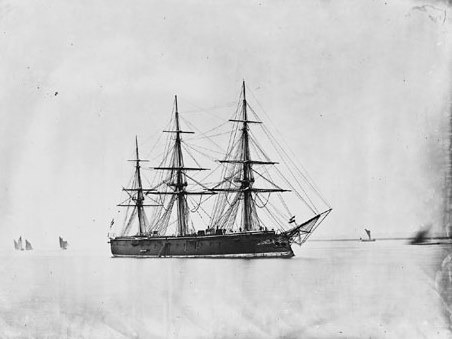
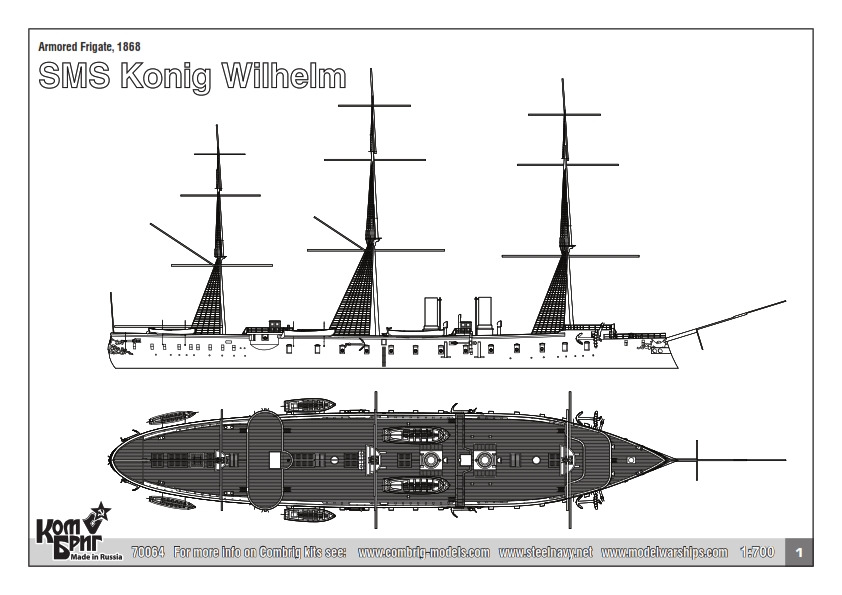
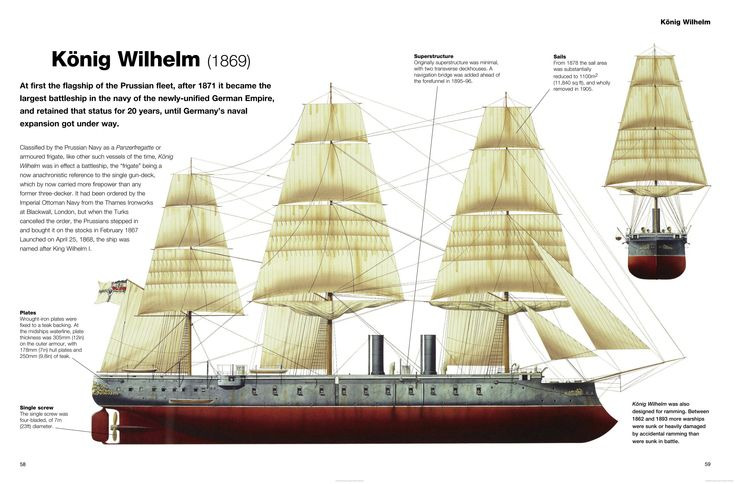
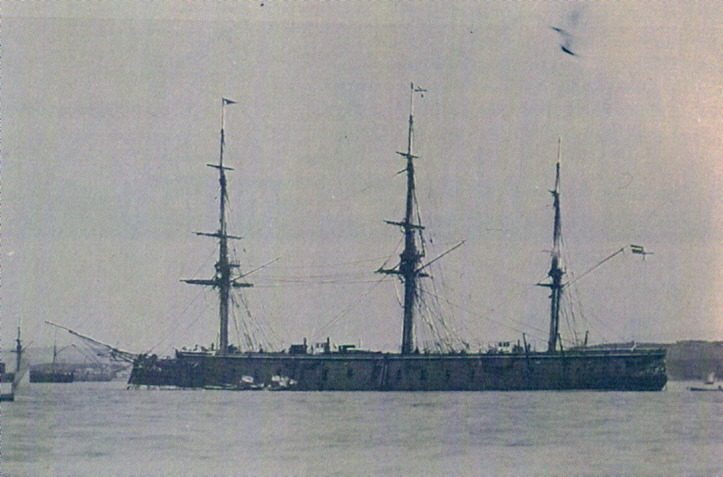
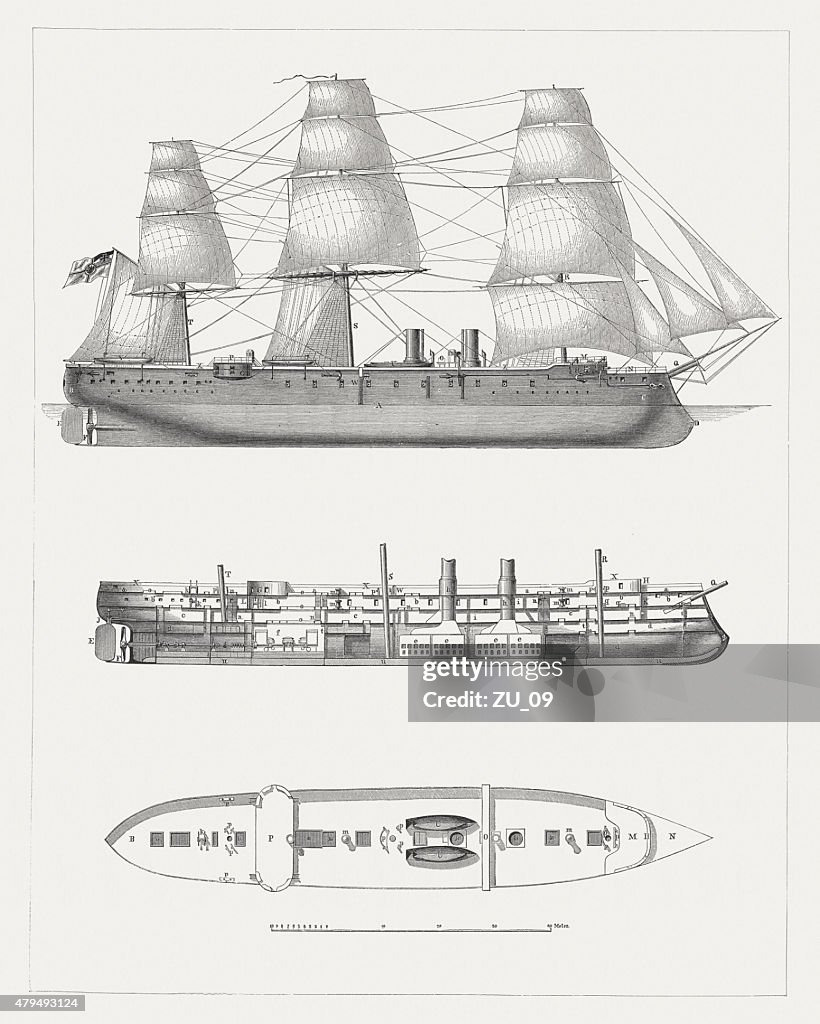

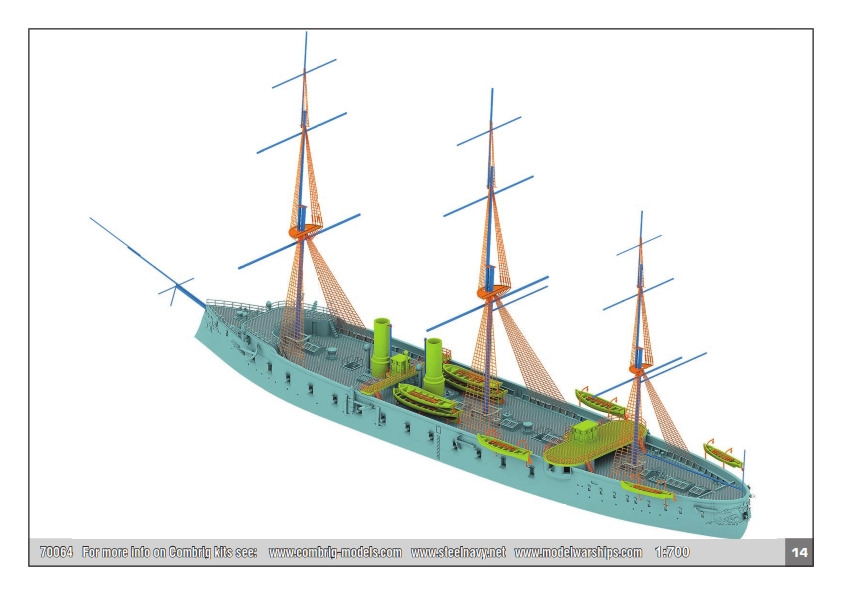
Specifications:
- Displacement: 9757 tons (standard load) / 10761 tons (full load)
- Length: 112,2m
- Beam: 18,3m
- Draft: 8,56m
- Propulsion: 3x Masts (2600m² full ship rig), 1x Maudslay, Son & Field single-expansion steam engine (1x four-winged screw-propeller ⌀ 7m, 8x J Penn & Sons of Greenwich boilers, 8440 HP)
- Top Speed: 14,7 knots - 27,2 kph (powered + fair winds)
- Steam-powered range: 1300 nmi / 2400 km on 750 tons of coal
- Crew: 36 officers, 694 enlisted men (730)
- Armament: 18x 240mm RK L/20 (1440 shells), 5x 210mm RK L/22 cannons
- Armour (wrought iron and teak):
Upper waterline: 305mm + 250mm teak
Lower waterline: 178mm + 250mm teak
Upper belt: 152mm
Lower belt: 127mm + 90mm teak
Central battery: 150mm - 203mm, bow and stern 150mm
Main conning tower: 100mm (30mm roof)
Aft conning tower: 50mm (30mm roof)
I can see this ship being a great low BR battleship, with the 305mm belt being a pretty decent protection even against modern destroyer guns, she would probably have to be around BR 1.0-1.7.
Her 240mm broadside guns fire shells with explosive filler, with a range of around 5km, making her somewhat competitive against early rank destroyers, though she lacks any and all AA armament, and torpedo boats might give her a hard time.