- Yes
- No

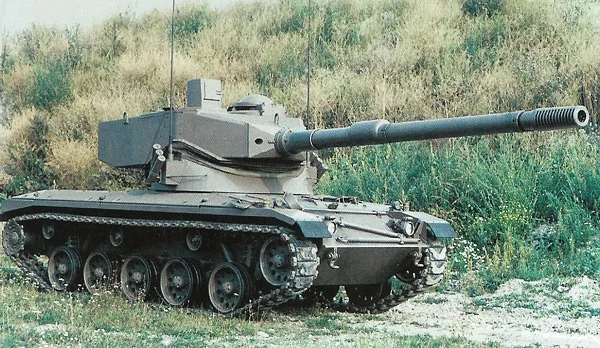
TL;DR: A prototype upgrade of the Austrian SK-105 Kürassier, equipped with a stabiliser, a new L7 cannon, and an improved FCS, including thermal sights
History
Following WW2, Austria was occupied by the Allies. Austria was forbidden from having an official military, although it was permitted to retain its Gendarmerie, and to establish a paramilitary branch in 1949. This formed the basis for the Austrian Army — the Bundesheer — which was established in 1955, as Austria gained its independence. The Bundesheer was initially armed with leftover US and Soviet equipment, including vehicles like the M41 (42 delivered between 1958–1960) and T-34-85 (37 leftover from Soviet occupation). In 1955, Austria ordered 72 AMX-13s from France, which were delivered from 1956–1957.
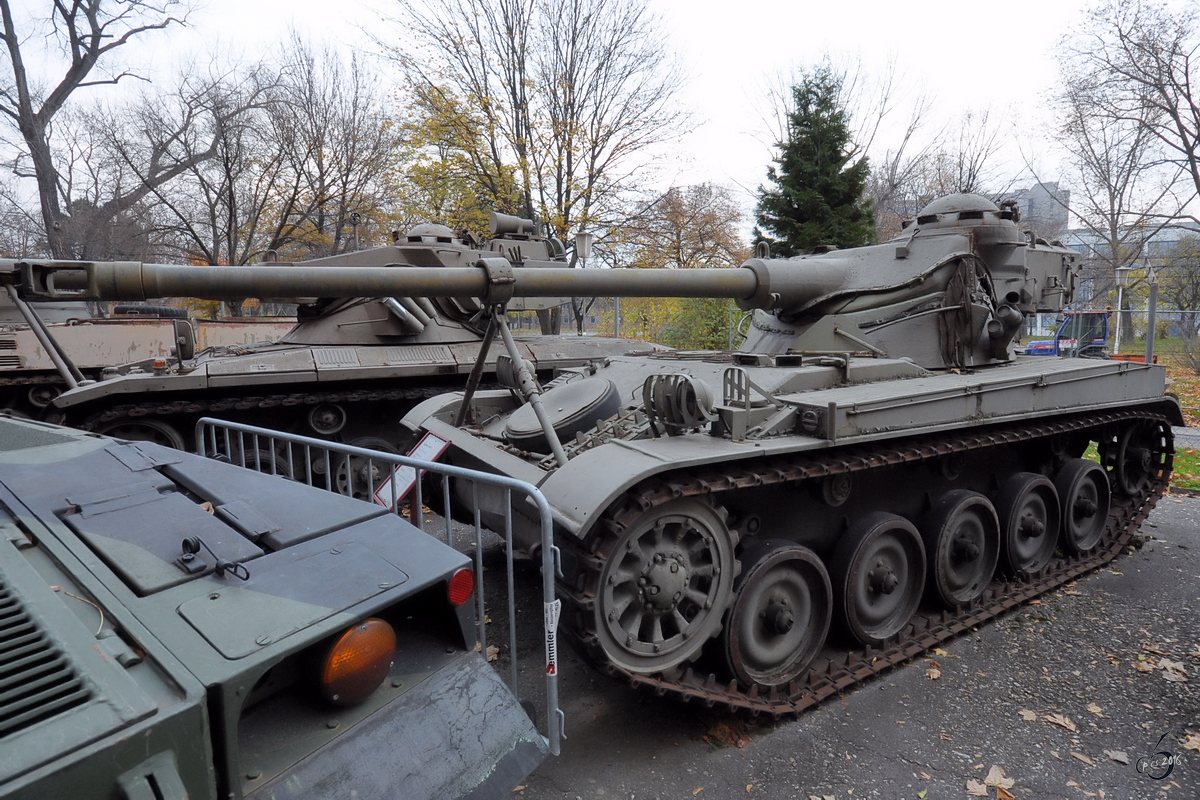
Austrian AMX-13 in storage at a museum
In 1962, Austria ordered 120 M60A1s from the US, which were delivered by 1963. This massively helped Austria’s move towards a modernised armoured force. Domestic vehicle production had already begun by this time, with the first prototypes of the Saurer APC produced in the late 1950s, and entering full-scale production in 1961. In 1965, Saurer-Werk (Steyr Daimler Puch) began development of a tank destroyer based on the chassis of the Saurer APC. The first prototype of this vehicle — the SK-105 Kürassier — was built in 1967. Serial production began in 1971, and an estimated 600–700 were built in total until production ended in 2001.
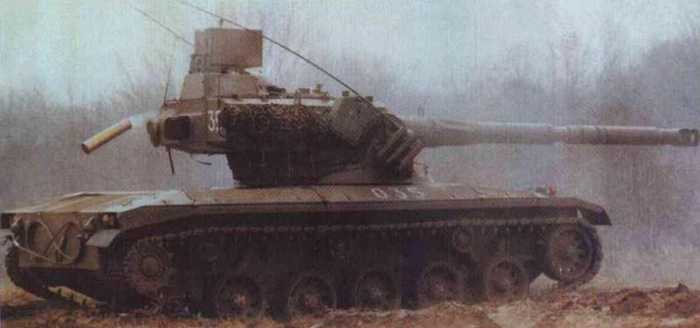
An early production SK-105
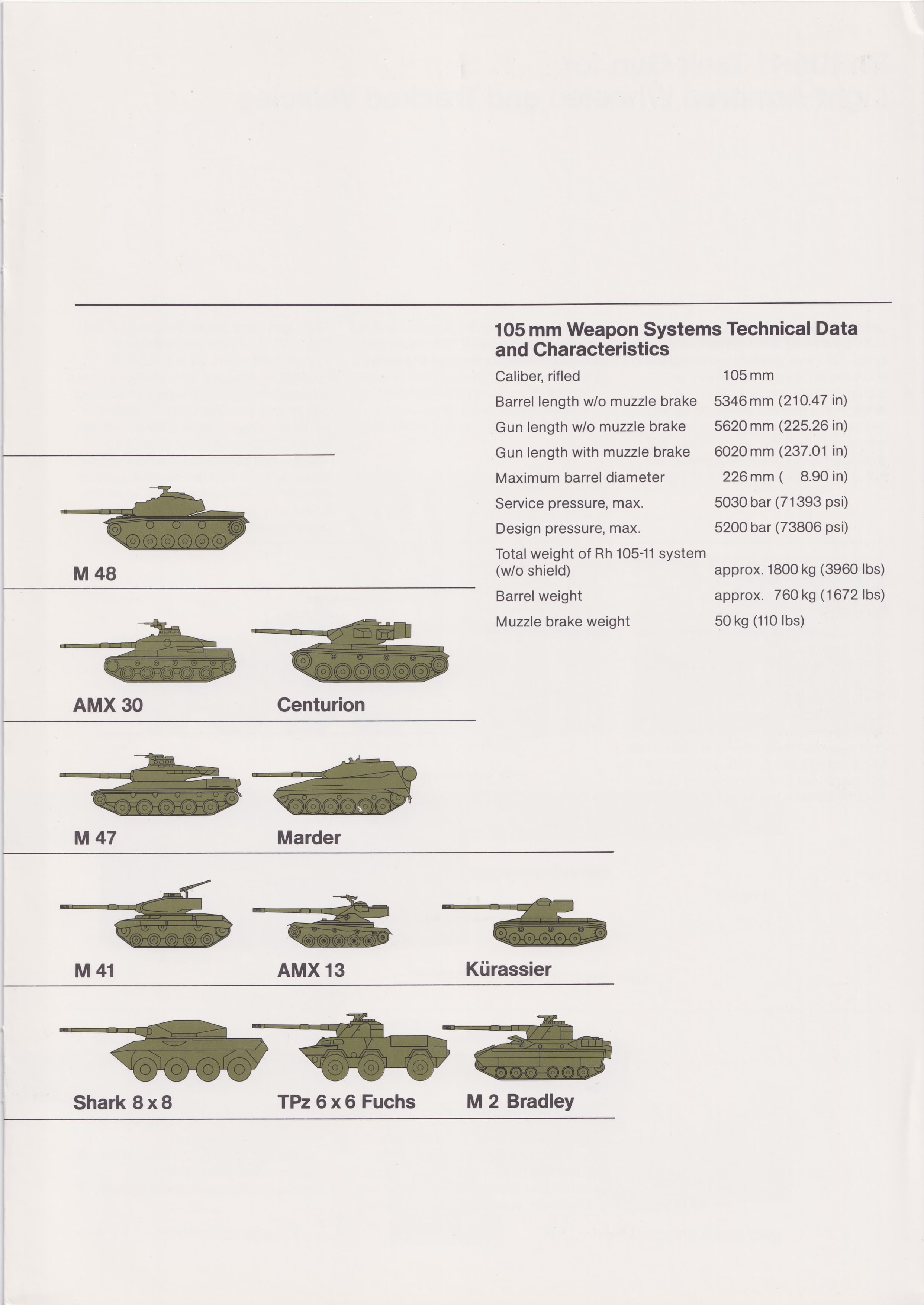
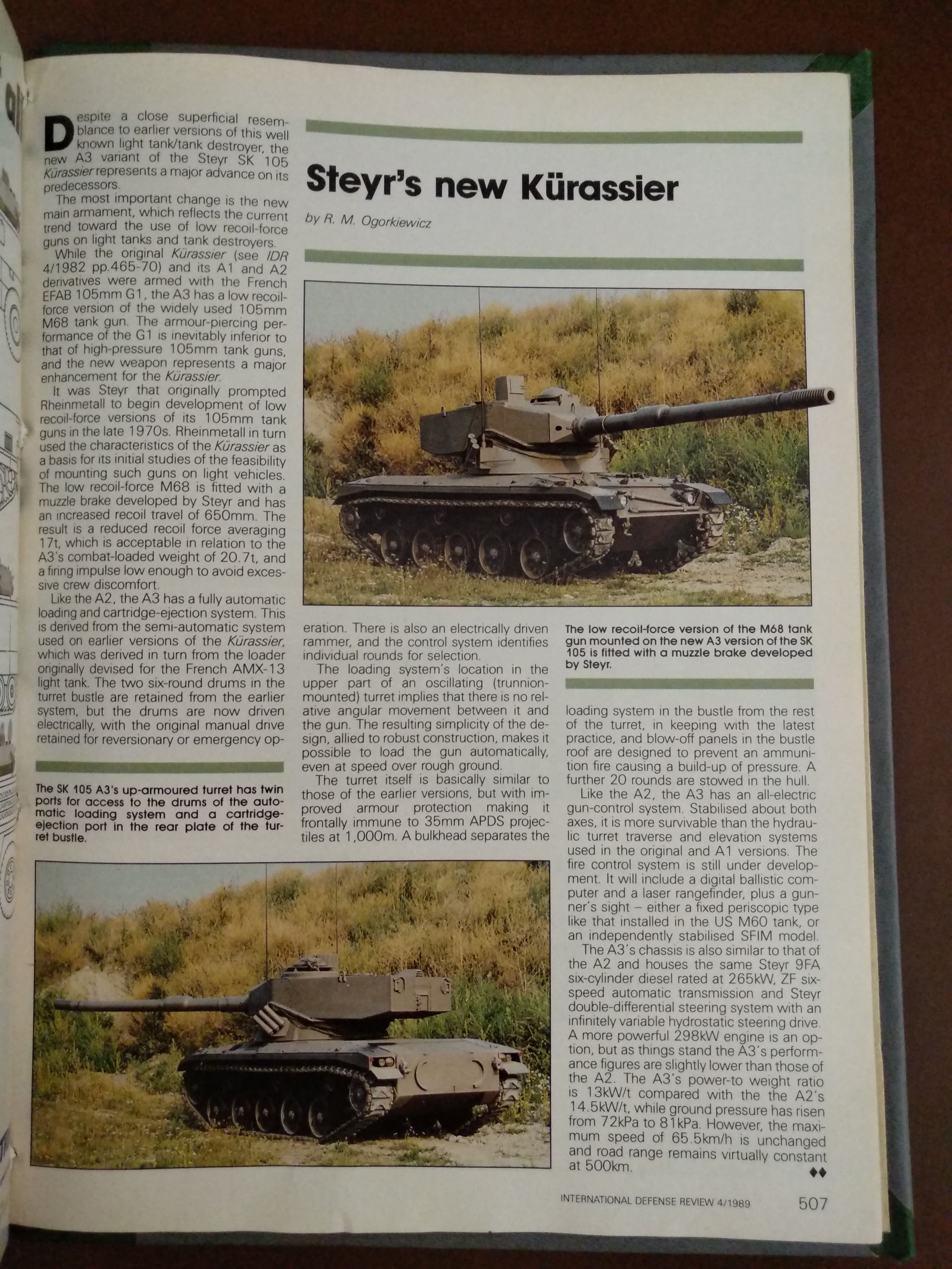
The SK-105 was based heavily on the AMX-13, although retained a number of distinct features. It features a centrally-mounted oscillating turret, housing a French 105mm CN-105-57 cannon (the same as on the AMX-13-105). The SK-105 was designated a tank destroyer by Austria, although is often referred to as a light tank. A number of variants of the vehicle were produced, namely the SK-105A2, which featured, among other upgrades, an enhanced FCS. There are also two well-known prototype upgrades of the SK-105, although they are very frequently referred to by incorrect names. These are often both referred to as Super Kürassier, although this name is only correct for the earlier variant.
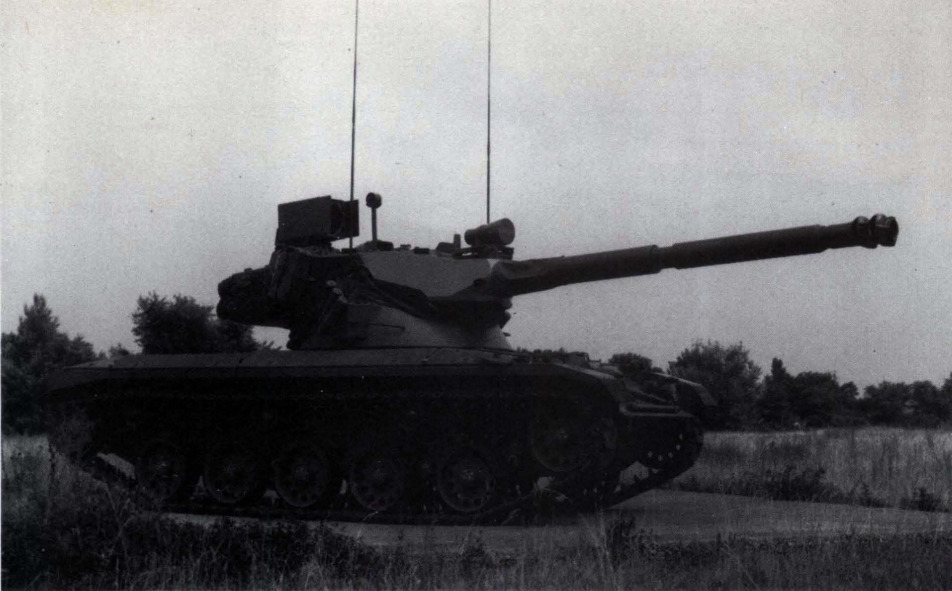
The Super Kürassier was designed in the early-to-mid 1980s — two prototypes were constructed in 1985. The upgrade program centred on upgrading the fire control system. It saw a new upper turret, very similar to that of the earlier Kürassier II upgrade, fitted with Leopard 2 FCS components, alongside an electronic turret drive and stabilisation for the main gun, although this was only fitted to the 2nd prototype. The vehicle also featured a new single-stage muzzlebrake that permitted the firing of APFSDS rounds (along with the improved FCS). That vehicle then underwent trials with the Bundesheer. However, despite promising results, the program was shelved due to the high costs. The SK-105A2 was developed afterwards (and as such, the Super Kürassier has sometimes been referred to as a prototype of the SK-105A2, although this isn’t really true). The second Super Kürassier prototype is now on display at the Heeresgeschichtliches Museum in Austria.
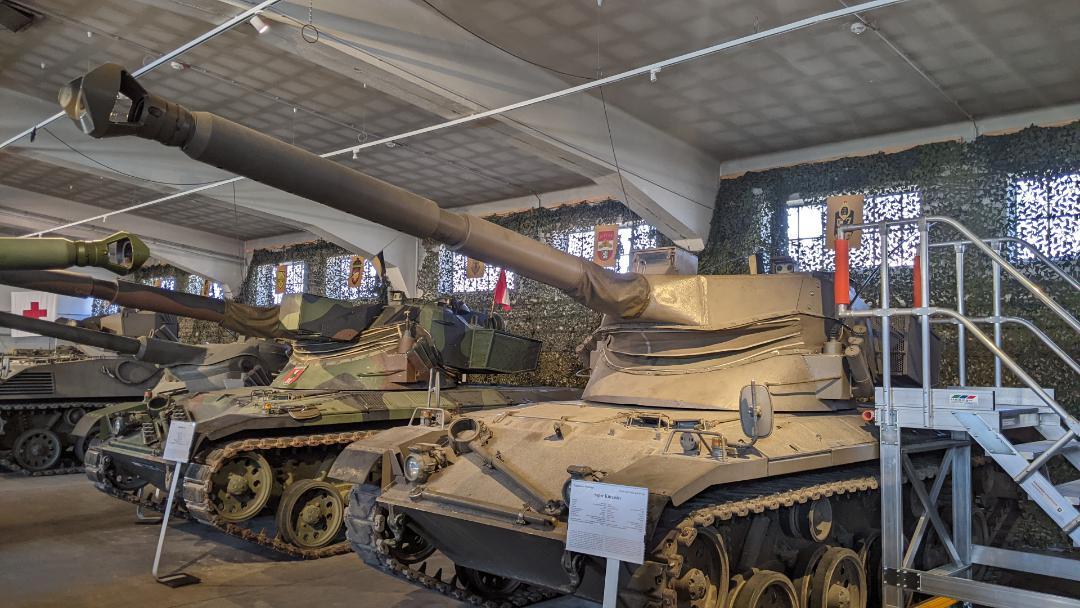
The Super Kürassier at HGM
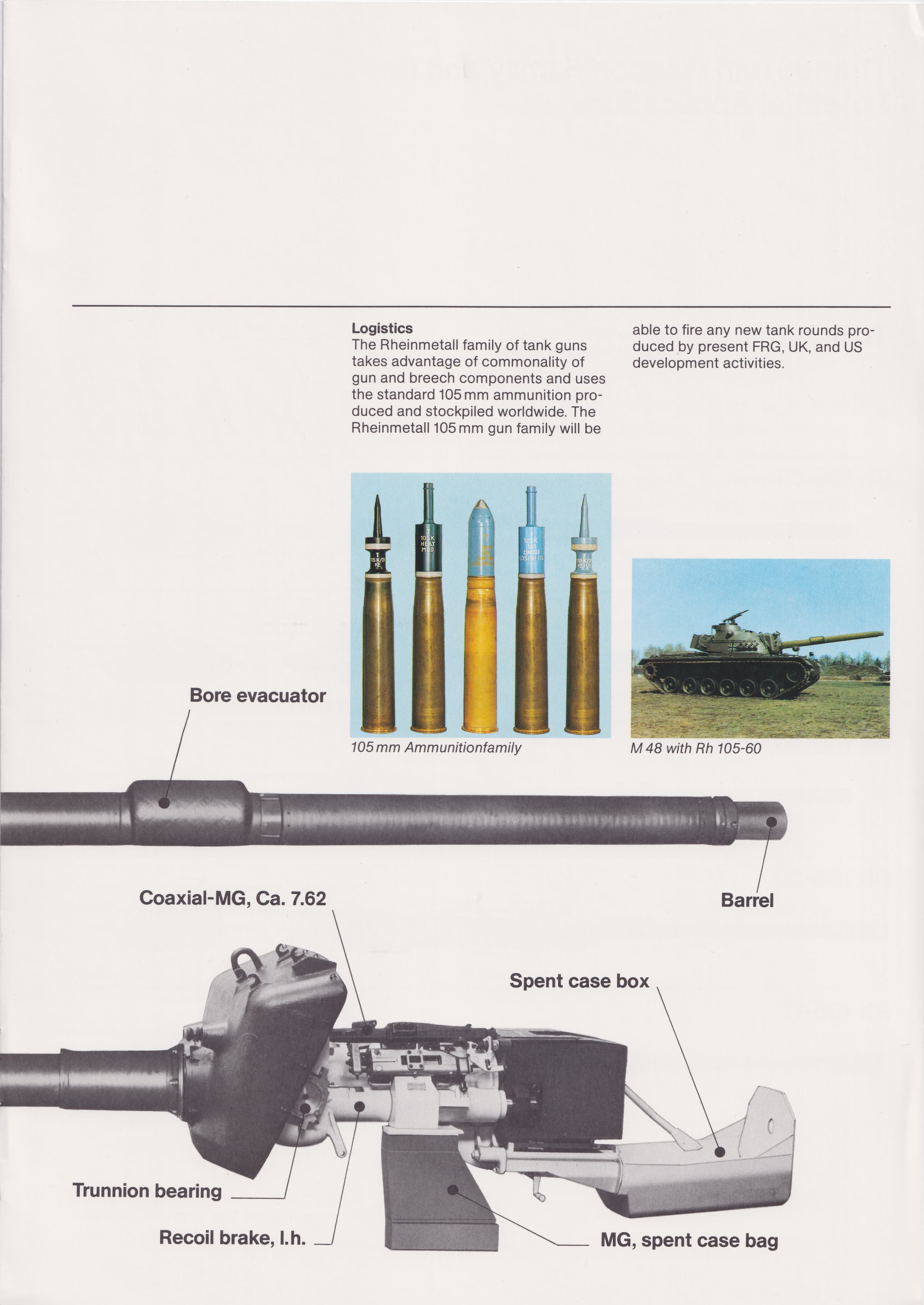
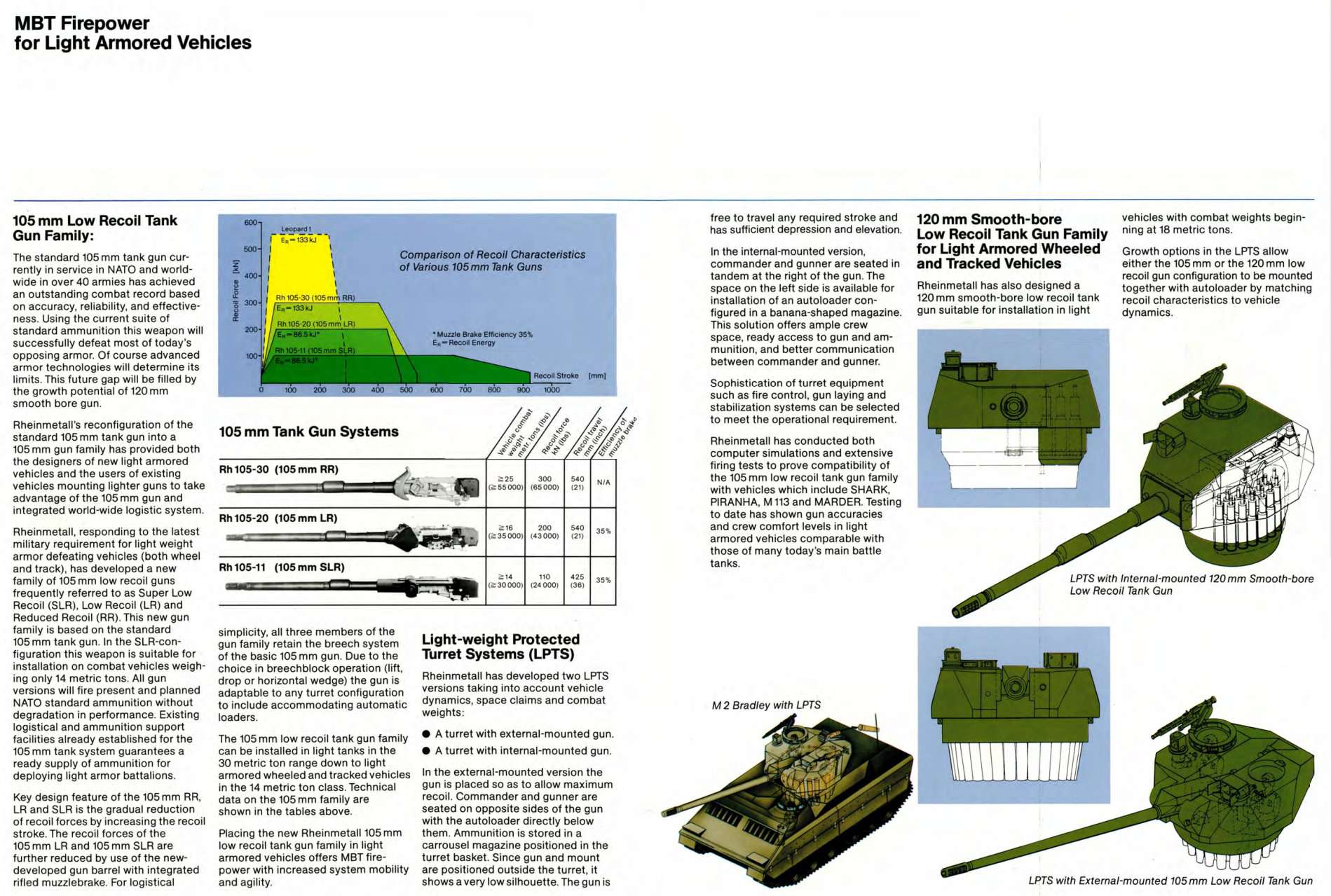
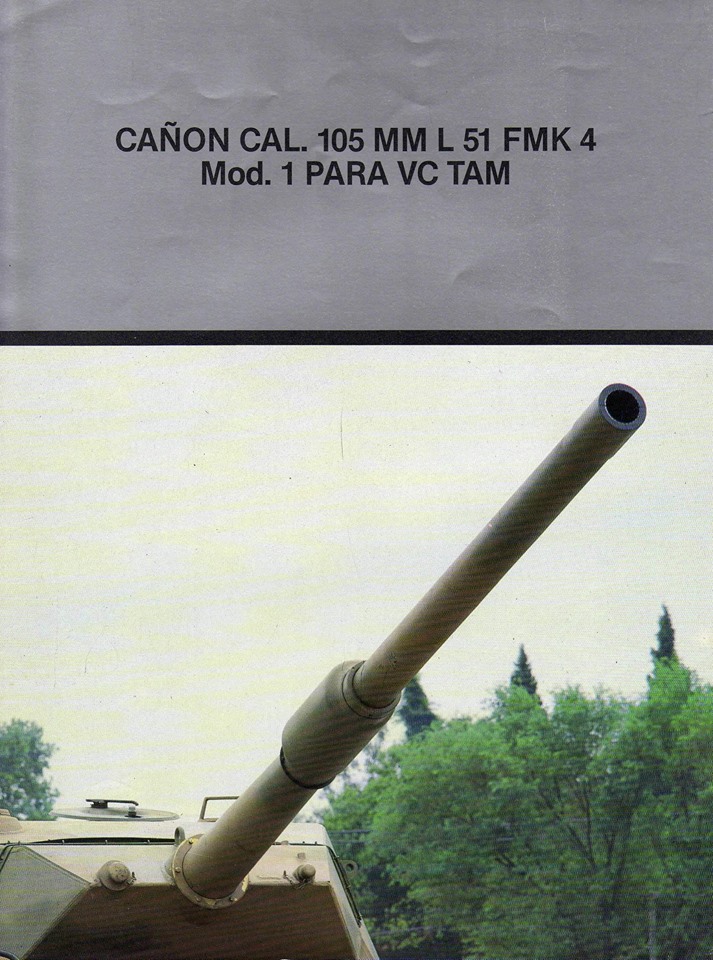
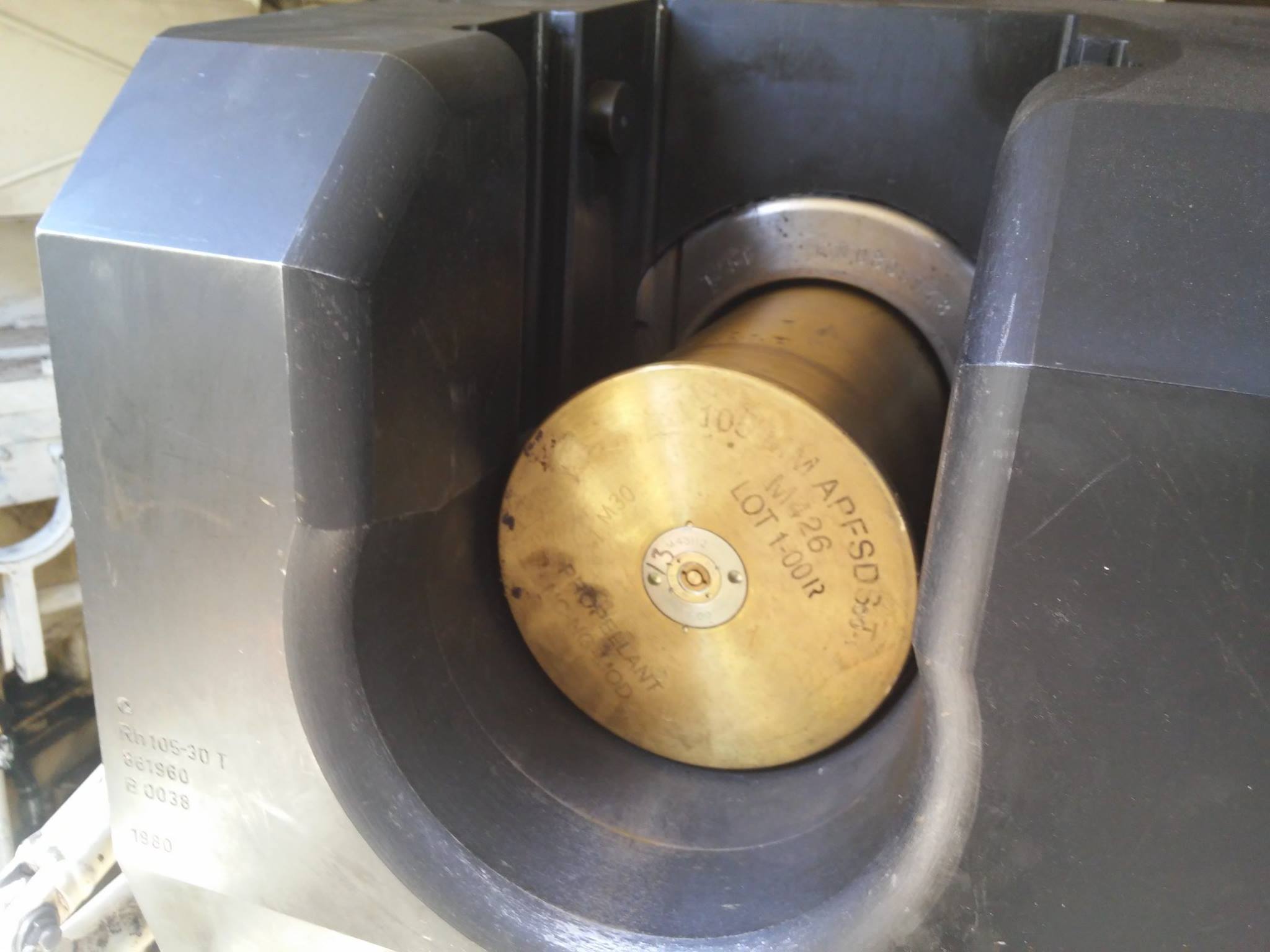
However, the idea of a stabilised SK-105 didn’t die with the Super Kürassier. In the late 1980s, Argentina was looking for an upgrade to their SK-105s. Namely, they wanted to simplify ammunition logistics and improve the firepower of the SK-105 by fitting it with the same L7-derived gun (FMK.4 Modelo 1L) as the TAM. However, given the higher recoil and larger ammunition, this would require a substantially new turret. This request was made to Austria, which also had a similar desire, given their usage of the M60 (which used the L7-derived M68 105mm).
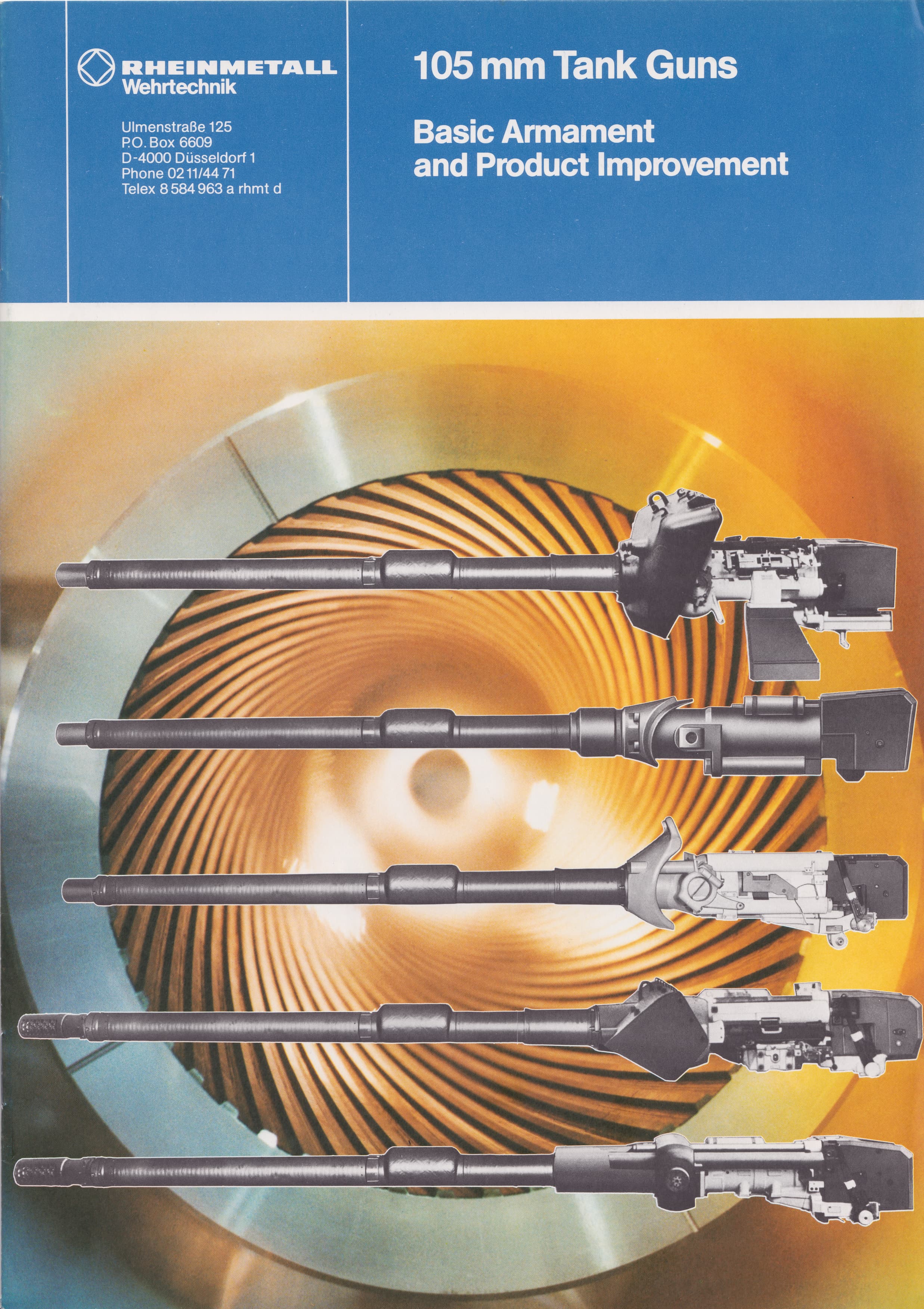
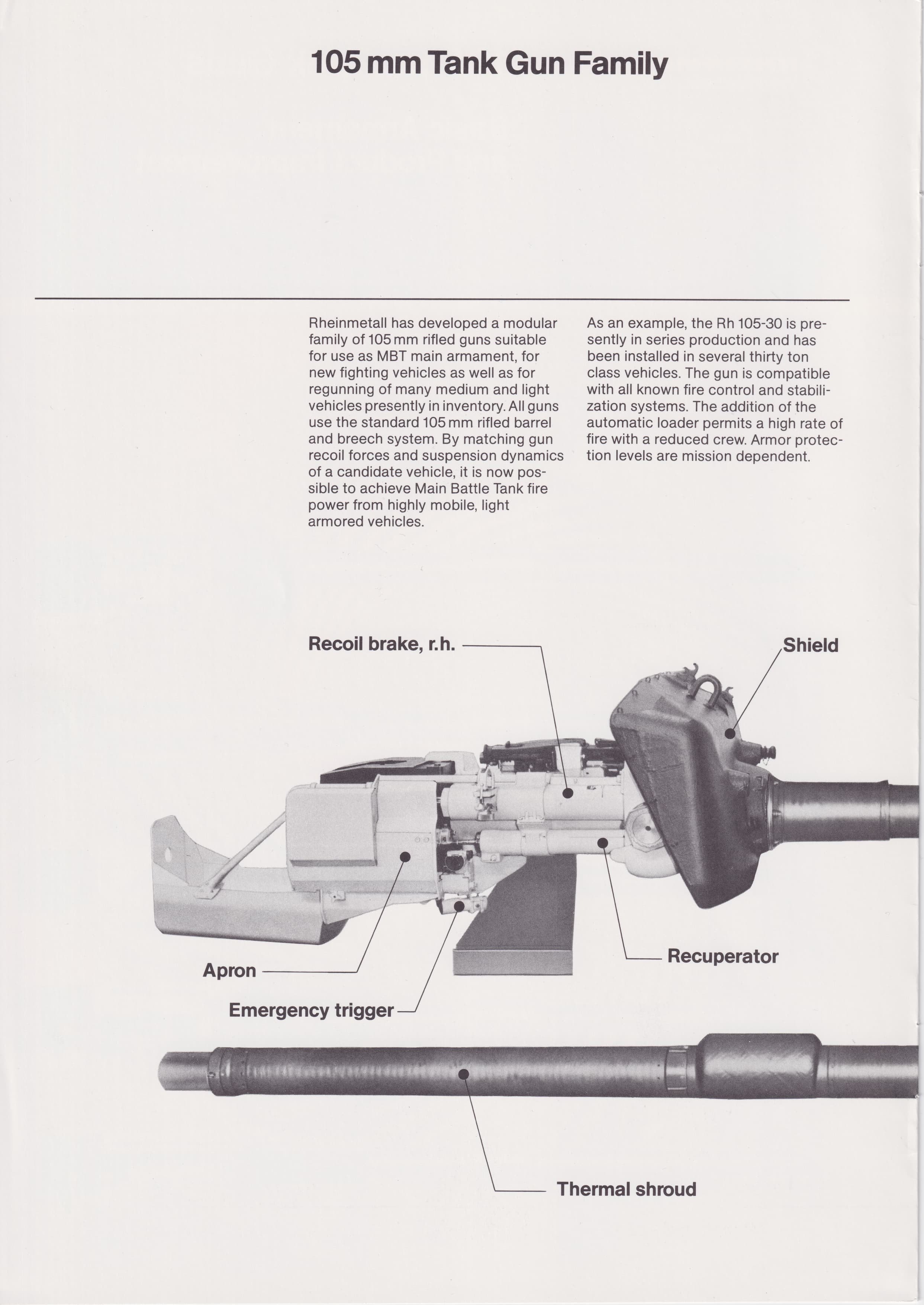
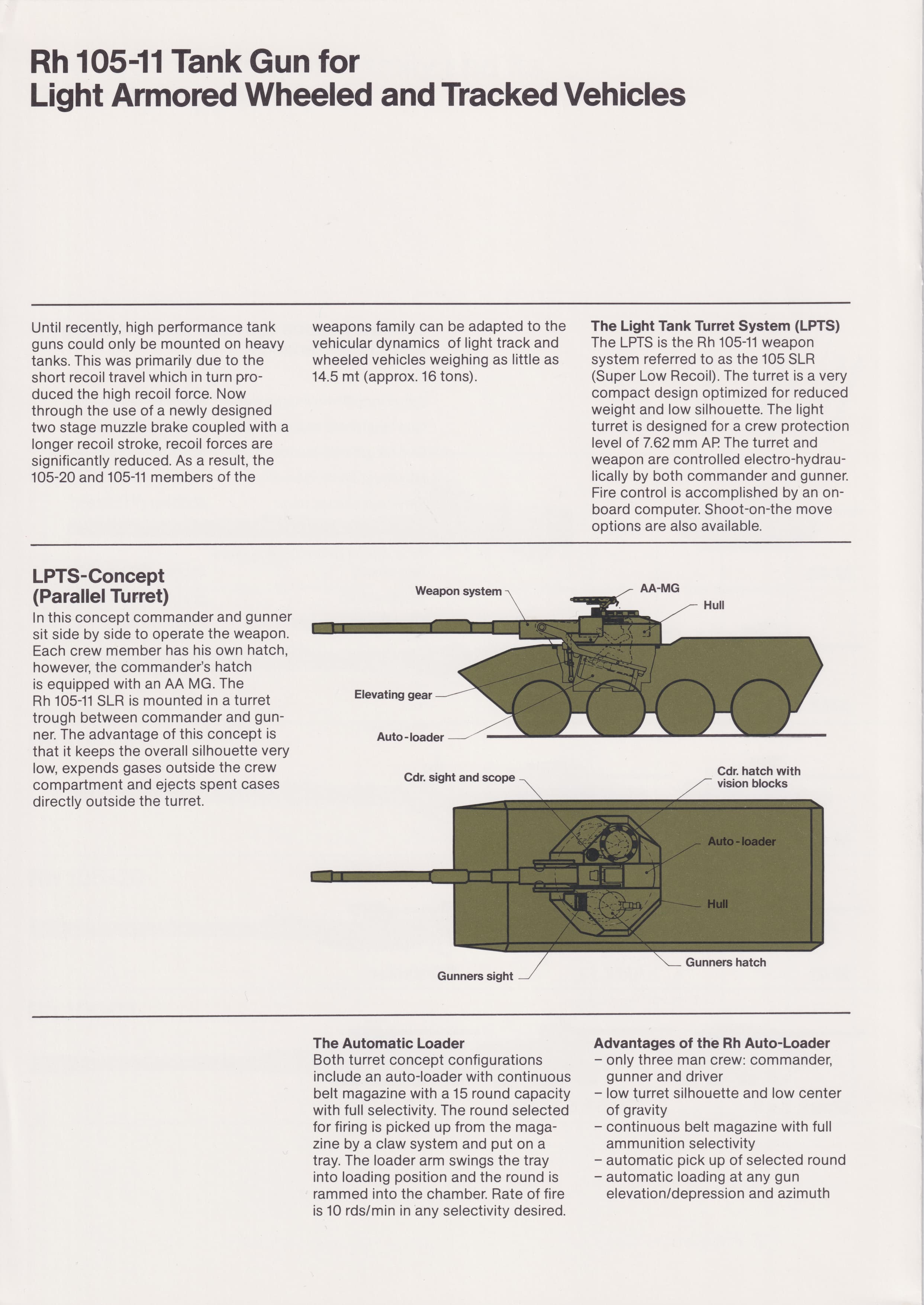
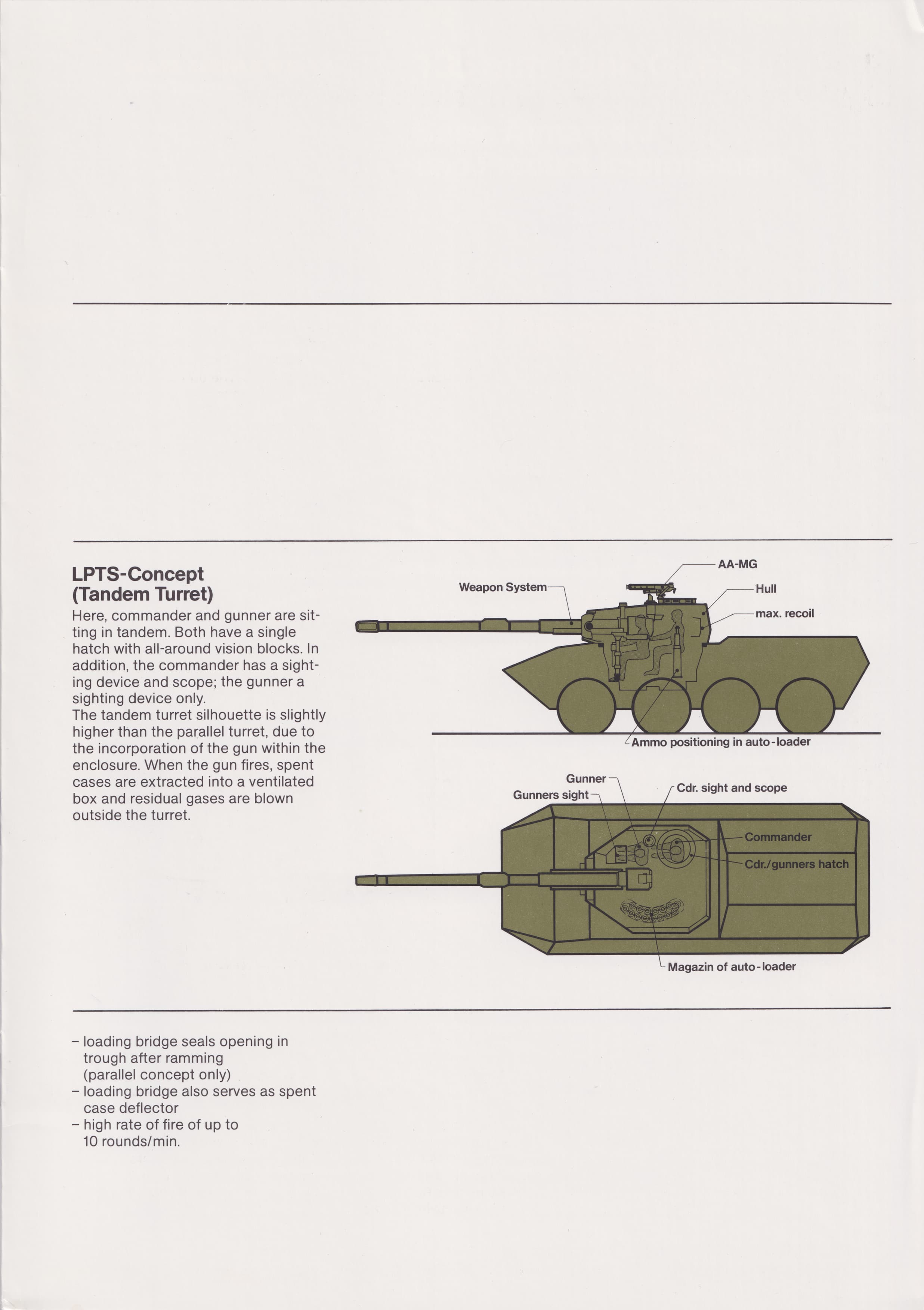
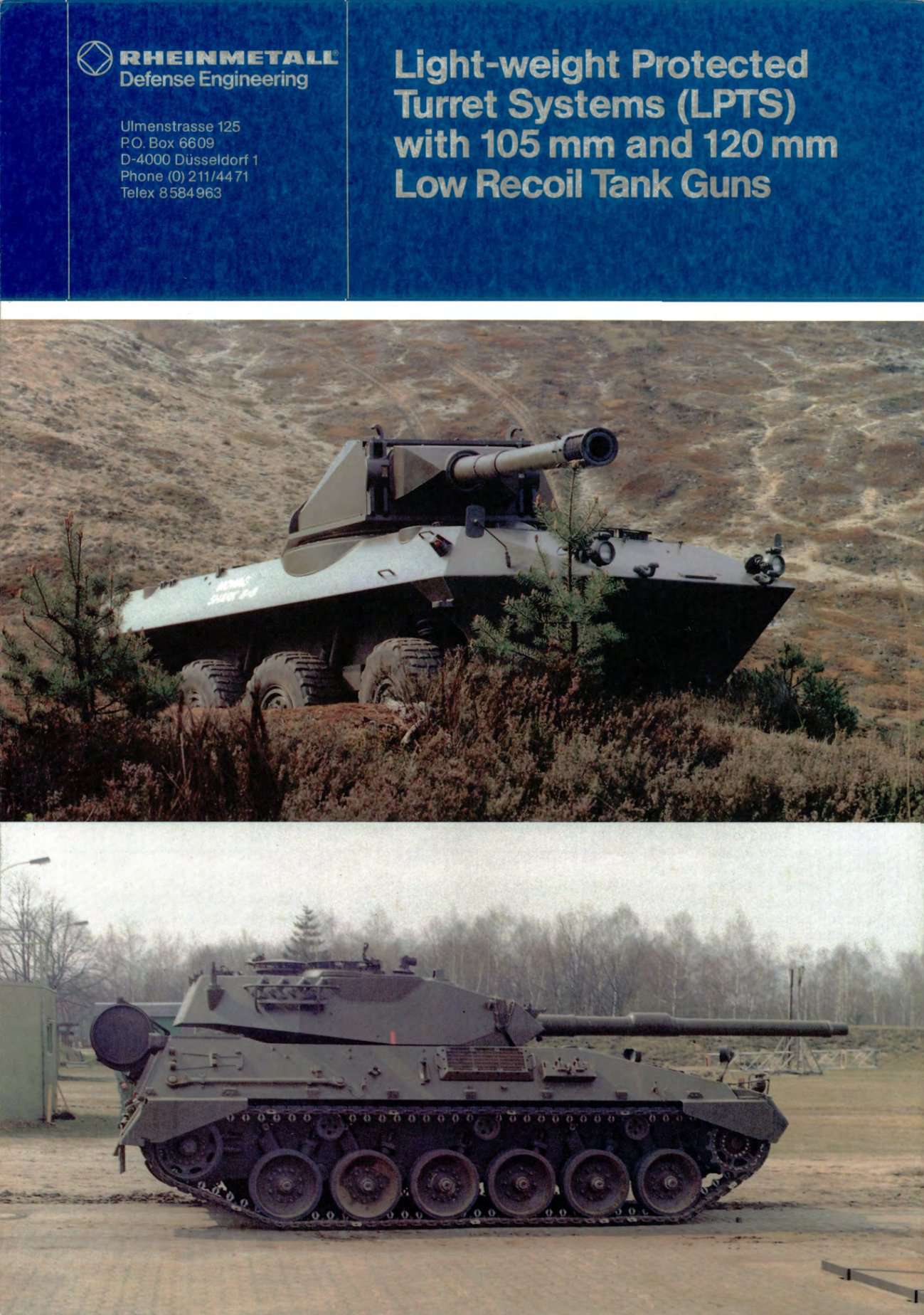
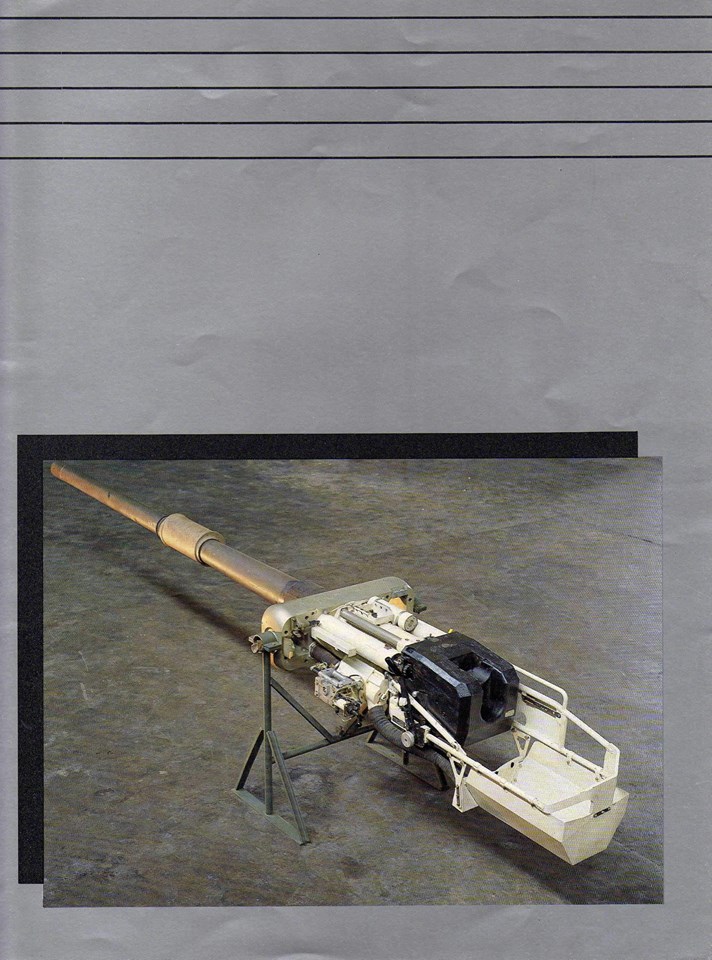
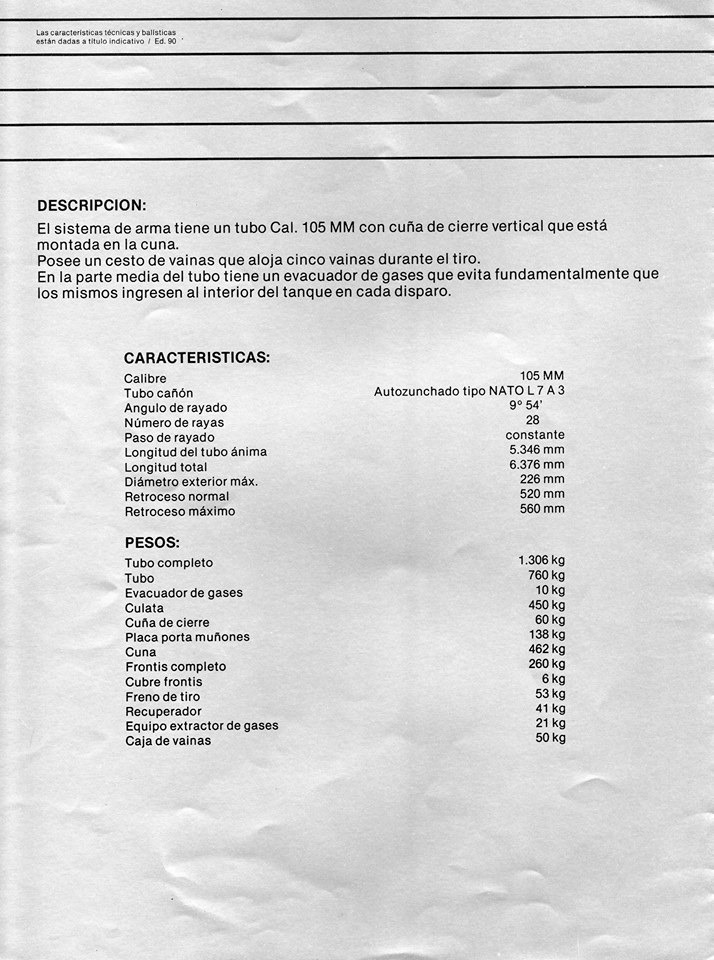
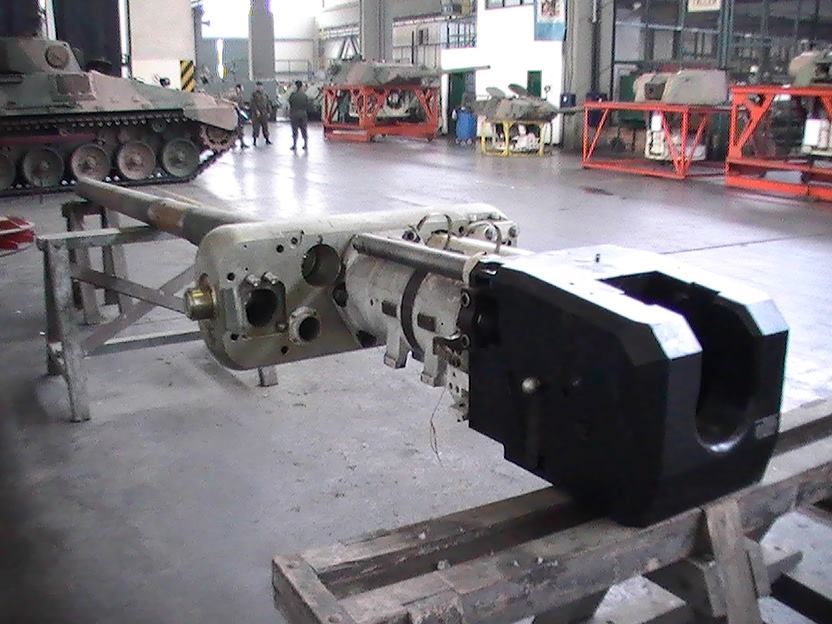
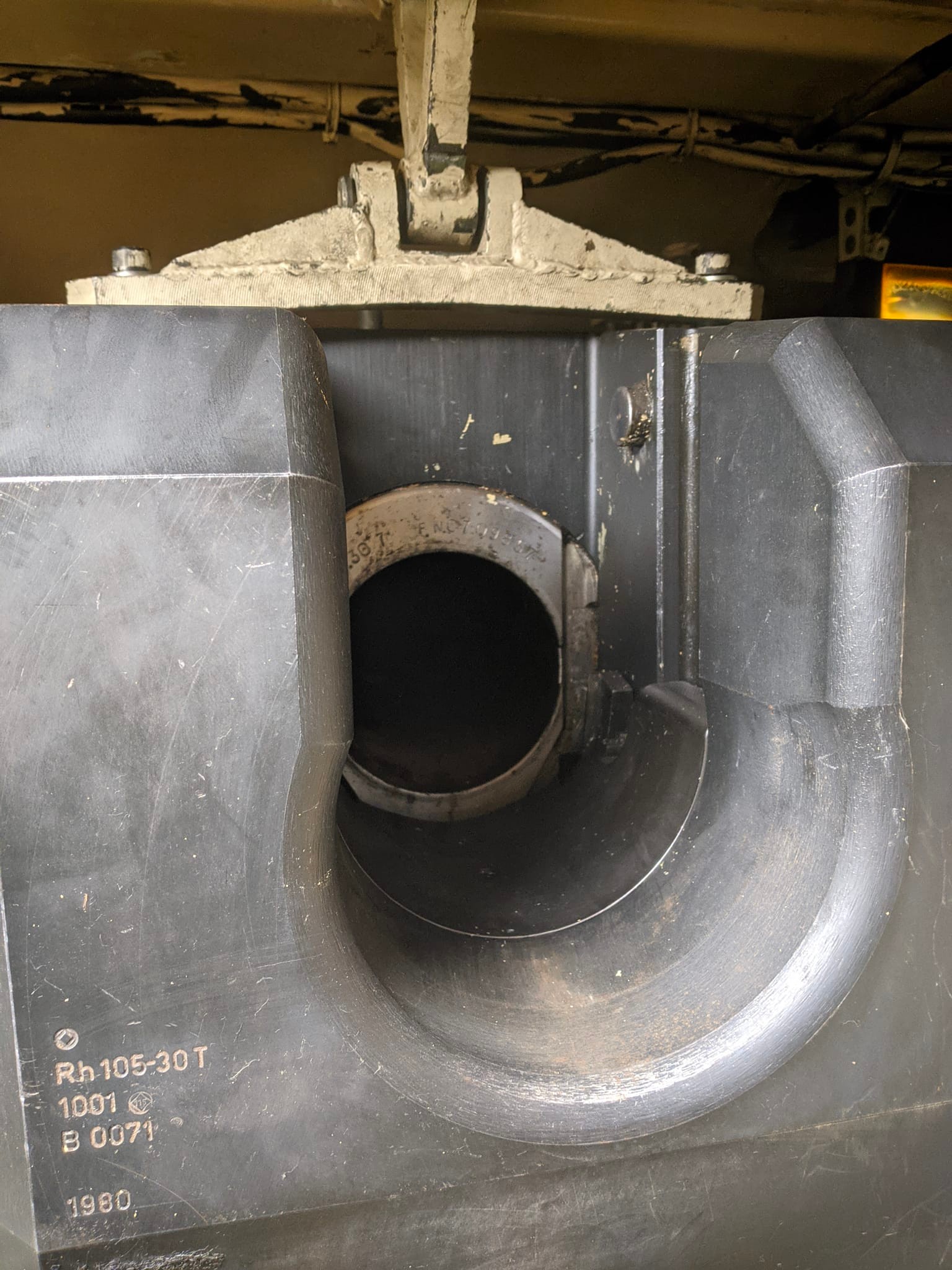
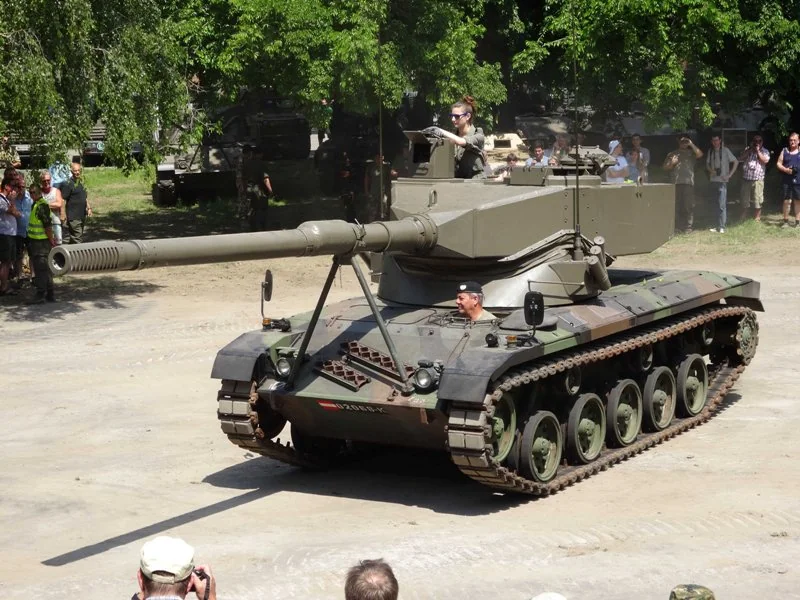
Construction then began of a prototype of such a turret, using an FMK.4 Modelo 1L delivered by Argentina (unlike what is commonly claimed, that it used the M68). The new turret was clearly inspired by the earlier turret design of the Kürassier II and Super Kürassier prototypes, but was even bigger, to accommodate the new cannon and larger ammunition. The original Austrian SK-105 turret is known as the JT1, and the museum sign for this upgrade calls it the Kürassier JT11, likely referring to the name of the new turret. It featured the same Leopard 2-derived FCS as the Super Kürassier, but also integrated a new thermal sight for the gunner and commander. The gun was also fitted with a distinctive muzzlebrake from Rheinmetall.
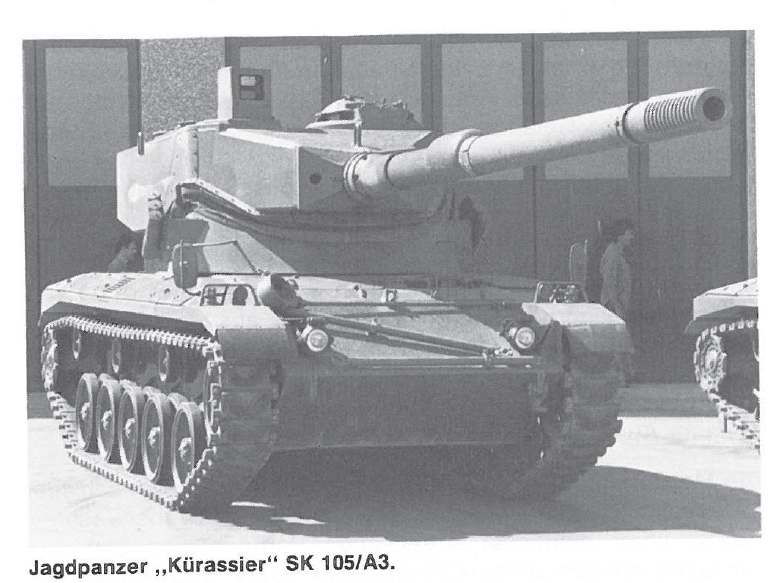
The turret was fitted to a standard production SK-105 hull for testing in 1987. The new gun overwhelmed the hull, likely due to insufficient recoil dampening. The project was subsequently cancelled, and the prototype eventually sent to the Heeresgeschichtliches Museum. It should be noted that this vehicle was developed in the late 1980s, prior to the SK-105A2 in the mid-to-late 1990s, and as such the designation “SK-105A3” is entirely inaccurate.
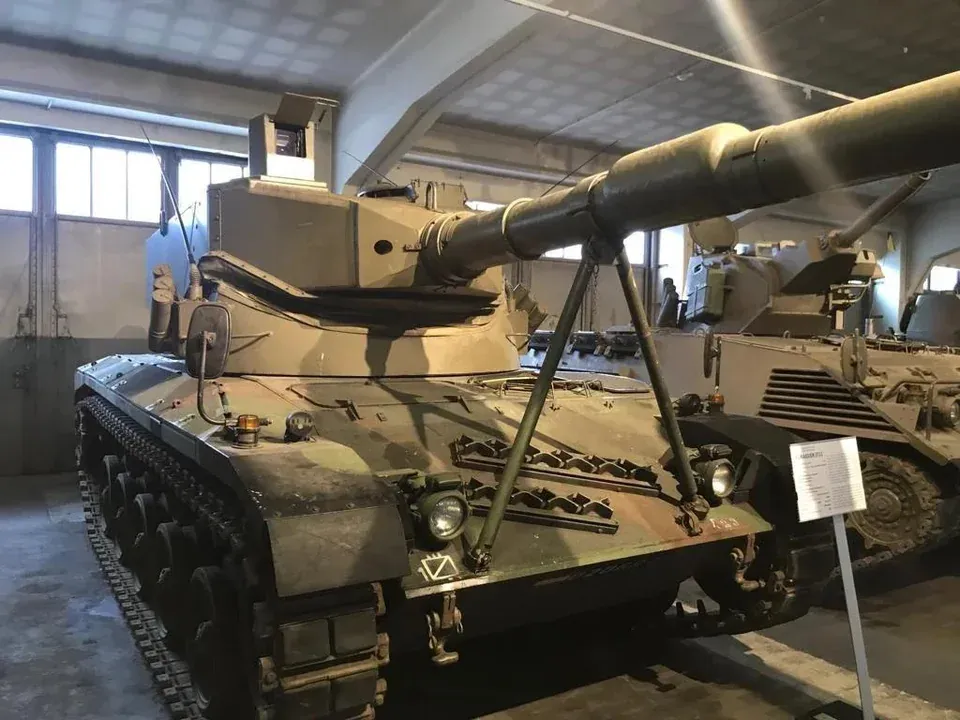
The Kürassier (JT11) at HGM
Characteristics
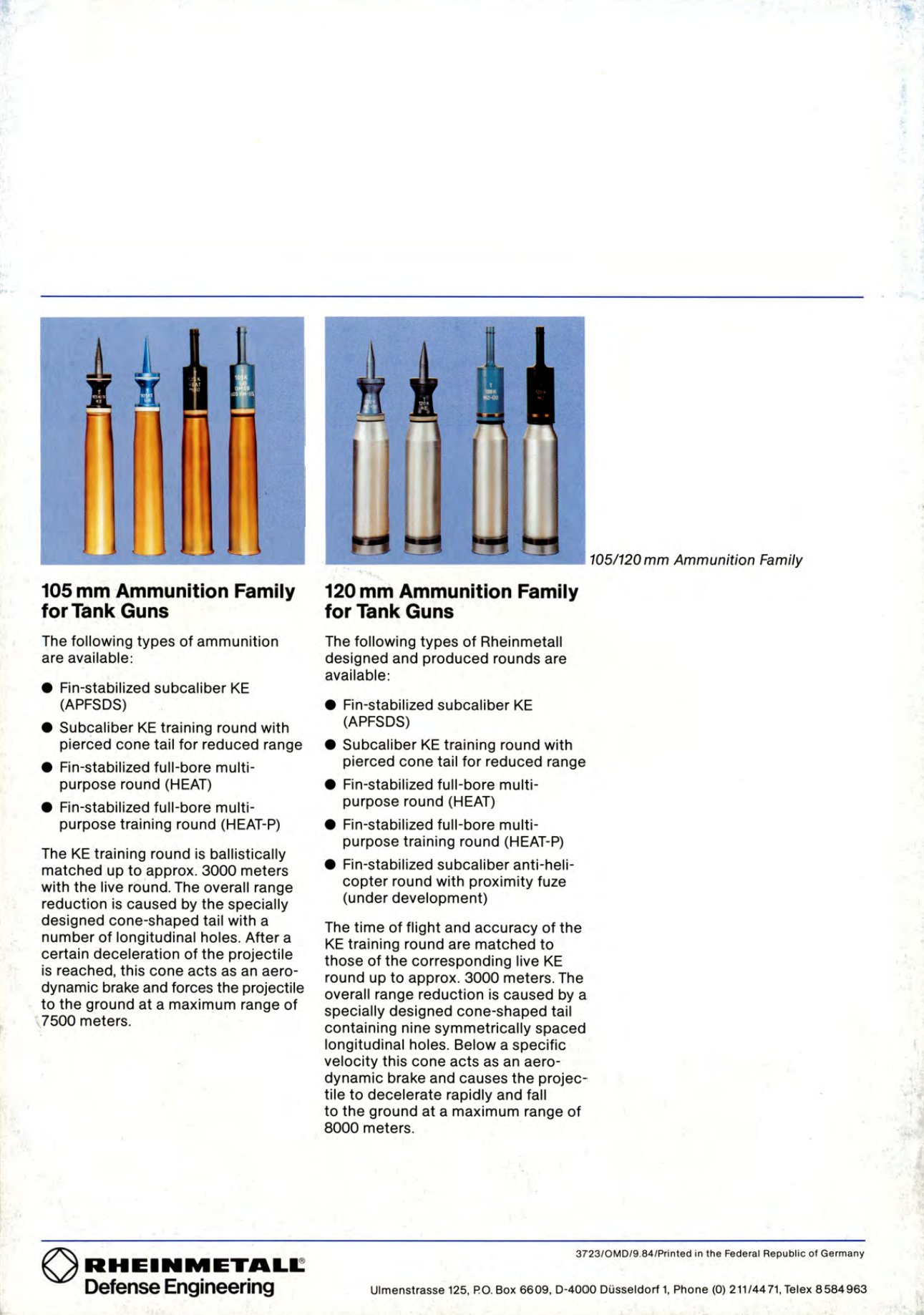
The Kürassier (JT11) was armed with an autoloaded 105mm FMK.4 Modelo 1L cannon fitted in a fully-stabilised newly-designed oscillating turret. This cannon could fire all NATO standard 105mm rounds. Austria developed the NP 105 and NP 105A2 APFSDS rounds in the 1980s — according to some figures, NP 105 is capable of penetrating 473mm @ 0° @ 1000m, although this is likely exaggerated / based on non-standard testing. It would also be able to fire rounds like DM12 HEAT-FS, penetrating 400mm @ 0° @ 10m. 30 rounds could be carried total. A coaxial 7.62mm MG 74 was mounted to the left of the main gun.
The Kürassier (JT11) featured a modified Leopard 2 FCS, including a laser rangefinder. It also had a new thermal sight, linked to both the commander and gunner. The vehicle also had two sets of three smoke grenade launchers on either side of the lower turret, as standard on production SK-105s.
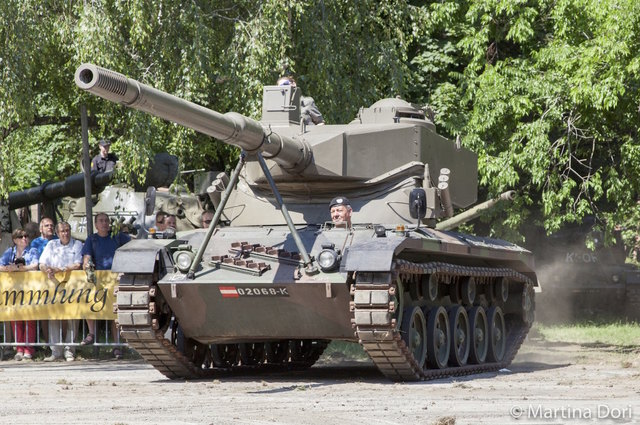
Kürassier (JT11) on display
The new upper turret was more thickly armoured than the original 25mm-thick design, although to what extent is unknown. Some sources claim the turret was armoured to the same level as the M60, but this is clearly not the case. The lower turret likely remained the same, as did the turret sides (20mm) and rear (20mm). The hull was also the same as the production SK-105, with the UFP at 25mm @ 62°, the LFP at 25mm @ 49°. The hull sides were 15mm @ 0°, and the rear 15mm @ 1°.
The Kürassier (JT11) also retained the same automotive characteristics as the production SK-105s, with a Steyr 7FA diesel engine producing 320hp, connected to a ZF6 transmission with six forward gears and one reverse. The vehicle had a fairly significant increase in weight to 19t, giving it a power-to-weight ratio of 16.8hp/t (compared to 17.7t / 18.1hp/t for the production SK-105A2). It had a maximum top speed of 68km/h.
Conclusion
The Kürassier (JT11) would be an excellent addition to the game, as the most advanced variant of the SK-105. Depending on ammunition, it could be placed at a BR of around 9.7, or potentially higher, (10.0) when looking at analogues like the CCVL (10.0 with significantly better mobility but worse APFSDS and 1s longer reload). It would likely go in the French tree, given the pre-existing SK-105A2, and the fact Switzerland is now a subtree for Germany (preventing any future standalone Alpine tree with Austria).
Specifications
Armament
- 105mm FMK.4 Modelo 1L
- Two-plane stabiliser
- Ammunition
- 30 rounds
- All NATO standard 105x617mm rounds
- NP 105 APFSDS
- 473mm at 0° at 1000m (claimed)
- DM33 APFSDS
- 421mm at 0° at 10m
- DM12 HEAT-FS
- 400mm at 0° at 10m
- DM512 HESH
- 127mm at 0° at 10m
- Coaxial 7.62mm MG 74
- Laser rangefinder
- Thermals / NVDs
Armour
- Hull
- UFP: 25mm @ 62°
- LFP: 25mm @ 49°
- Sides: 15mm @ 0°
- Rear: 15mm @ 1°
- Turret
- Upper Front: Unknown, >25 mm
- Lower Front: 40mm @ 42°
- Sides: 20mm @ 8°
- Rear: 20mm @ 0°
Mobility
- Speed
- 68km/h
- Weight
- 19t
- Engine power
- 320hp, 16.8hp/t
Other
- Crew
- 3
- Smoke grenades
- 6 launchers
Images
Spoiler
Sources