It does surprise me that only the I’s and V’s were converted to firefly. Especially since we had more III’s than I’s and II’s.
Well since they put the turret on a composite hull I just don’t fully Understand it myself.
It does surprise me that only the I’s and V’s were converted to firefly. Especially since we had more III’s than I’s and II’s.
Well since they put the turret on a composite hull I just don’t fully Understand it myself.
All I can guess is that, with the amount of Is and especially Vs that were going to be available, it was deemed to be enough to complete the order without adding a third model of Sherman into the equation.
With the requirements for conversion being fairly strict too, there might not’ve been enough suitable IIs to replace any Firefly losses while also ensuring there were enough to replace lost 75mm tanks. But that’s all just pure conjecture on my part.
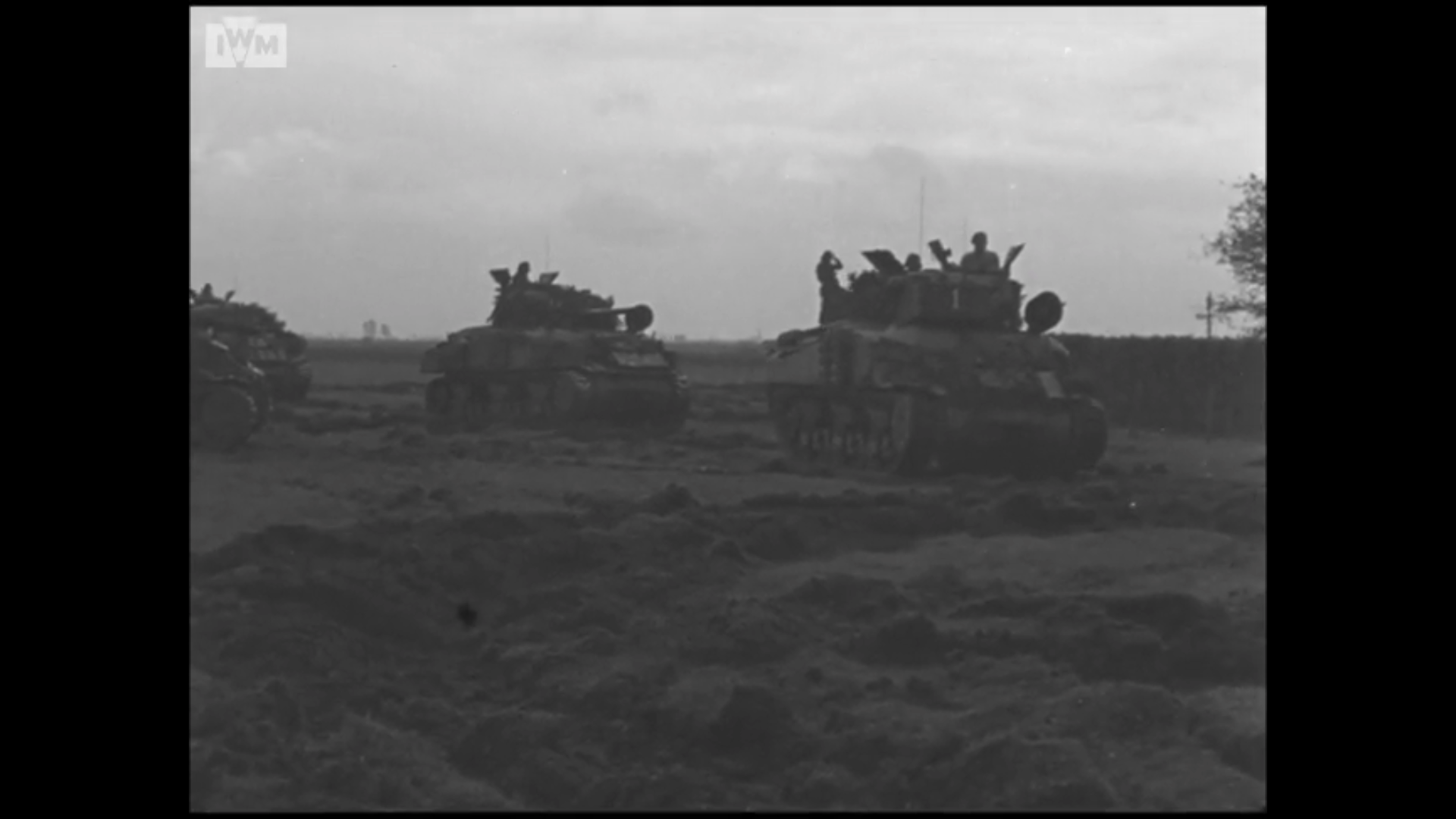
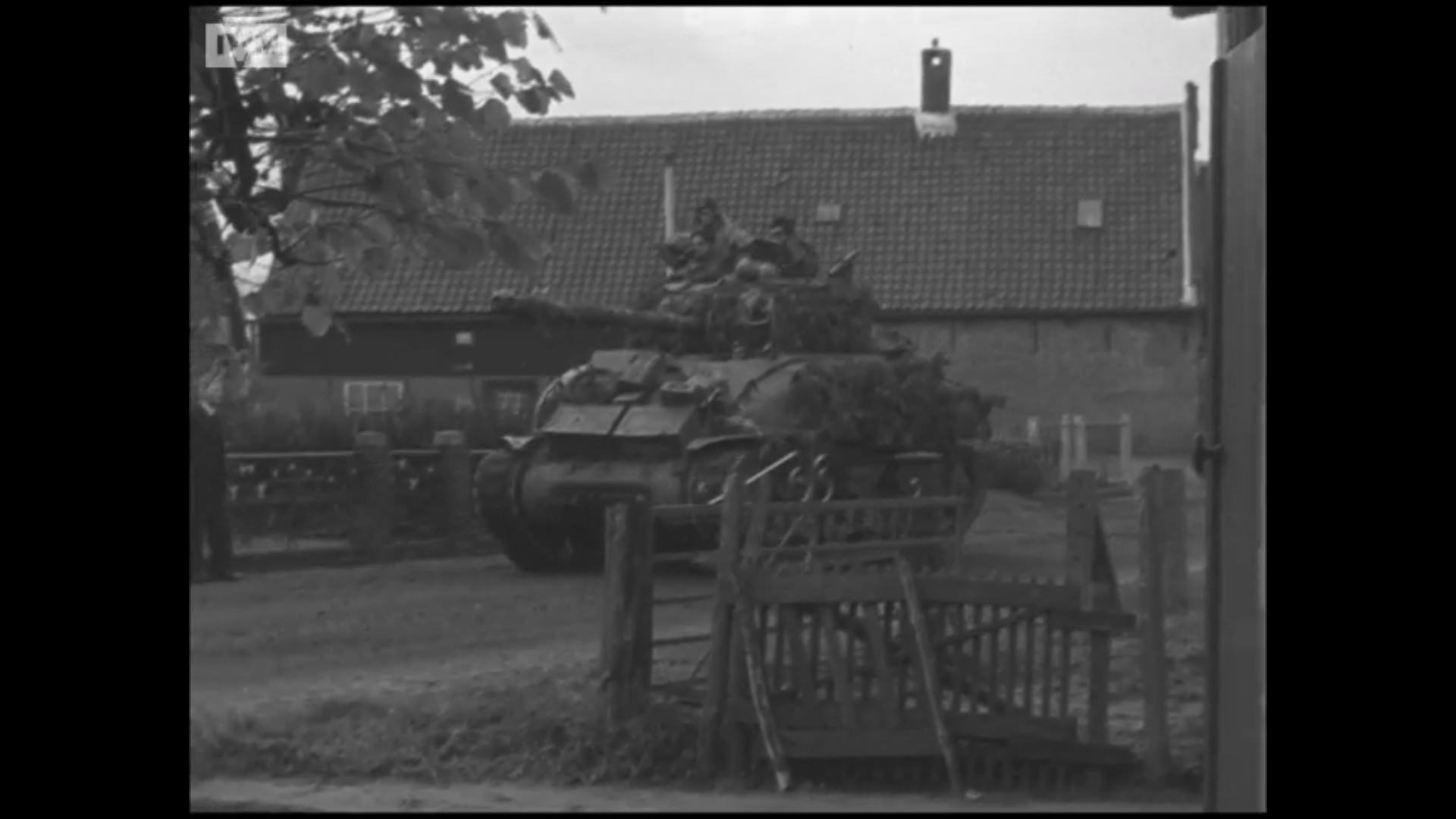
Units serving with the 7th Armoured division follow up the German retreat beyond Aunay-sur-Odon. - IWM (A70 113-14)
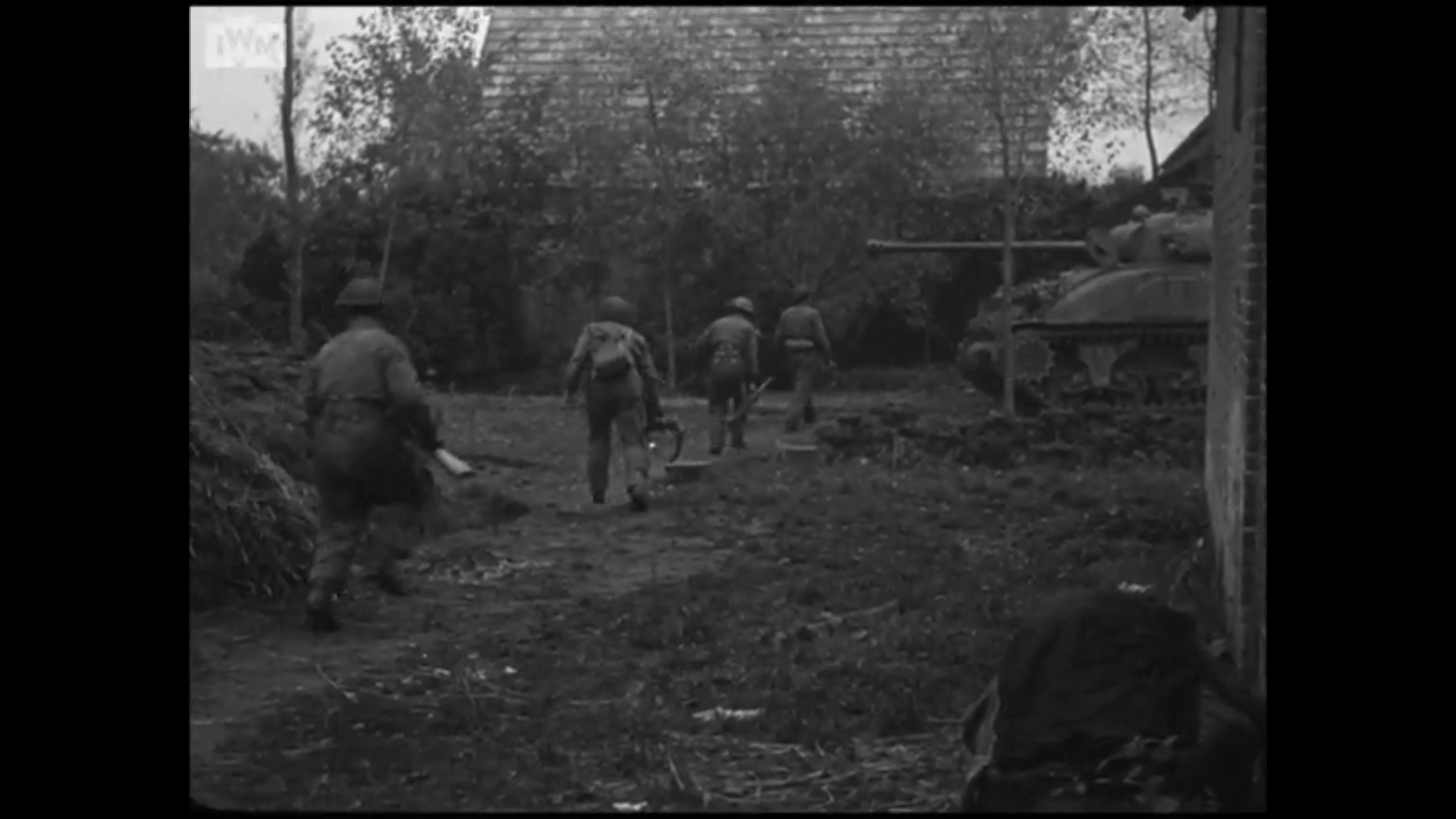
The 51st (Highland) Division encounters light opposition on the St Oedenrode-Vught road on the southern flank of 12th Corps’ push on s’Hertogenbosch. - IWM (A70 182-5)
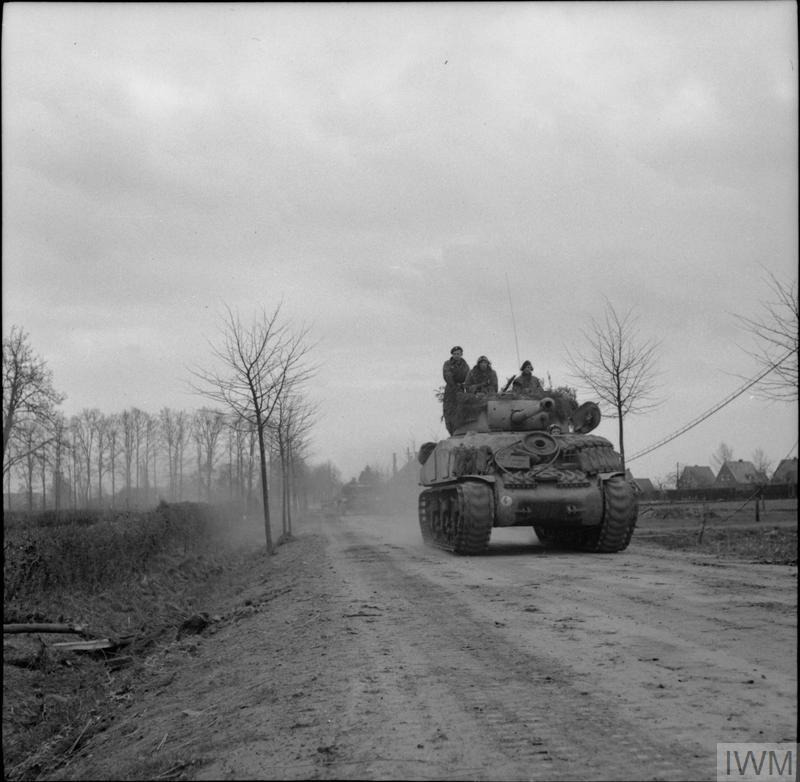
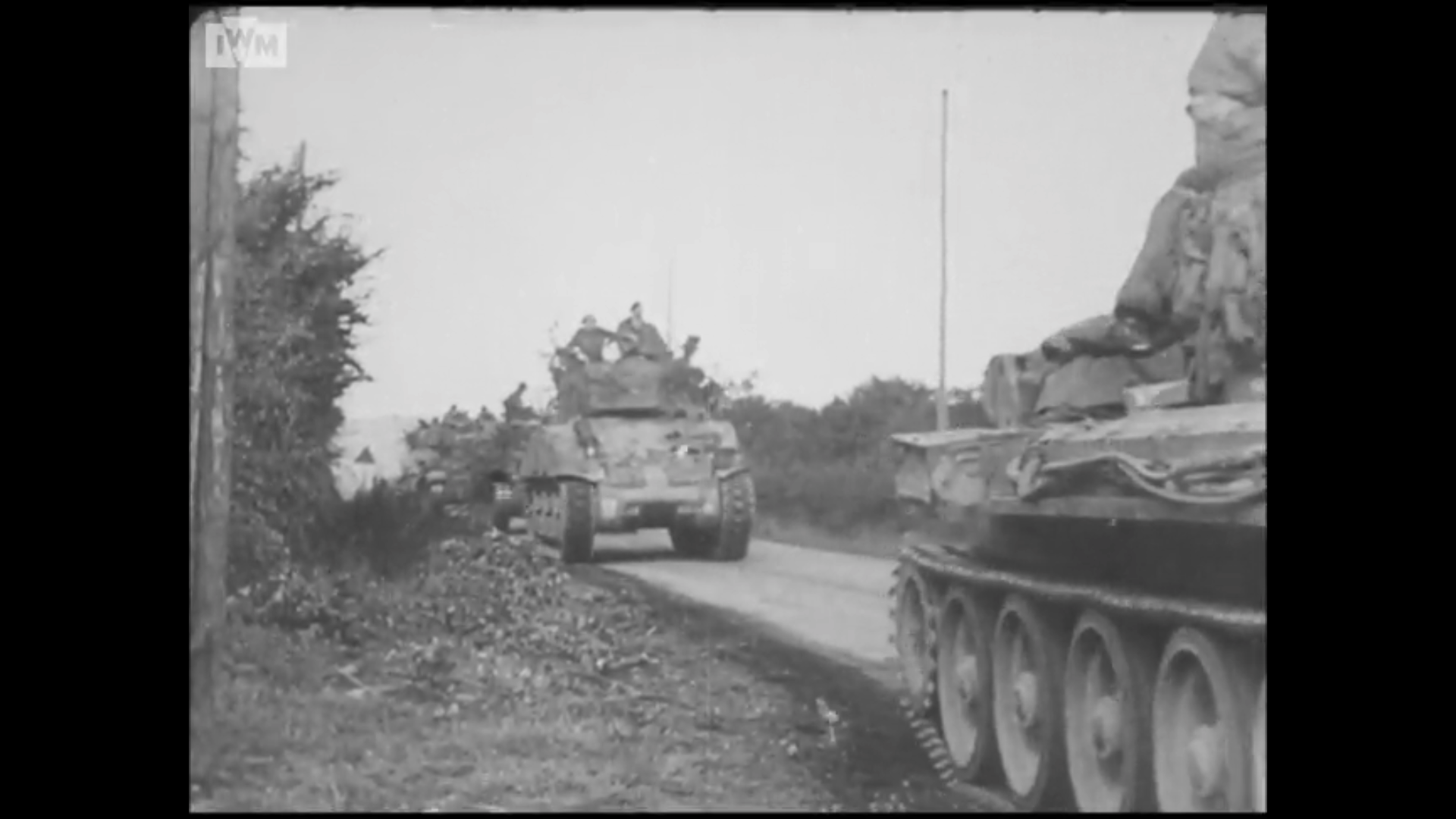
Cromwells and Shermans of 5th Royal Tank Regiment, 22nd Armoured Brigade, 7th Armoured Division drive along a road in Northern France. - IWM (WPN 176) 5:30
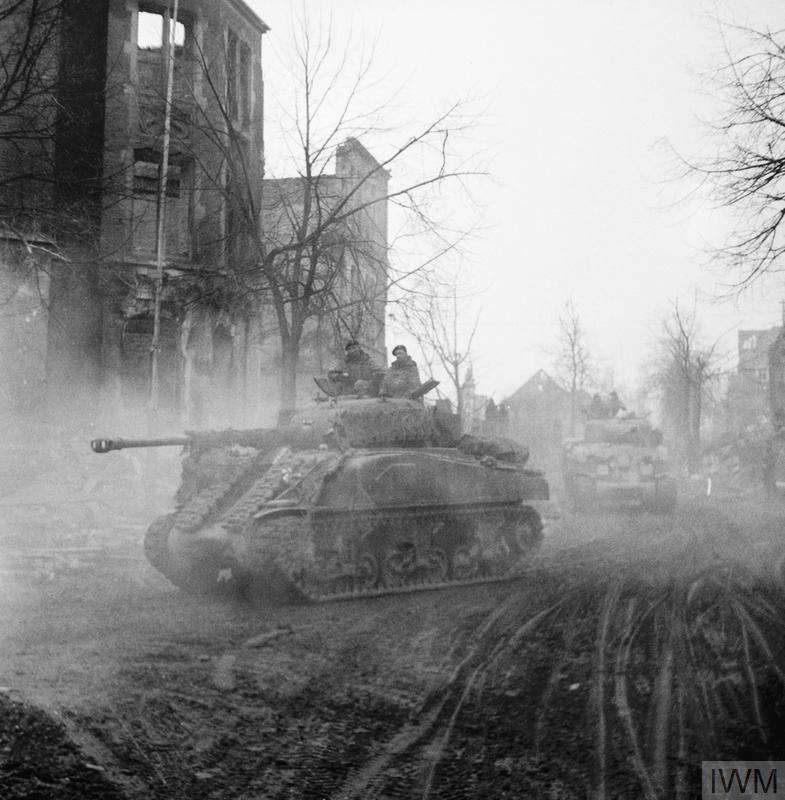
Sherman Firefly tanks move through the ruins of Kleve on their way to support the attack on Goch, 16 February 1945. - IWM (B 14666)
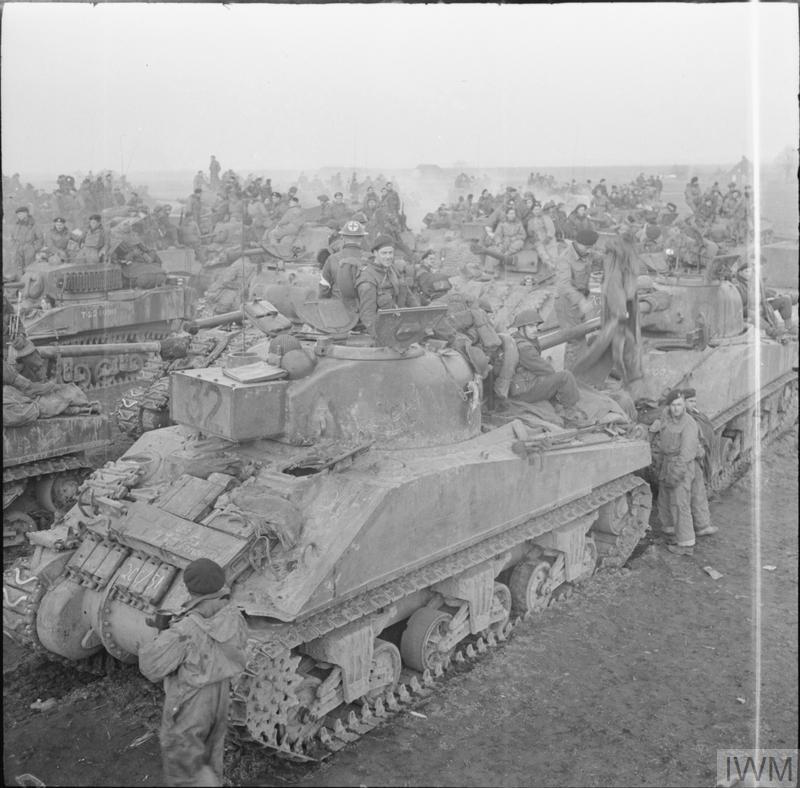
Sherman tanks of 10th Canadian Armoured Regiment (Fort Garry Horse) with infantry of the Royal Regiment of Canada massing in preparation for the assault on Goch, 17 February 1945. - IWM (B 14680)
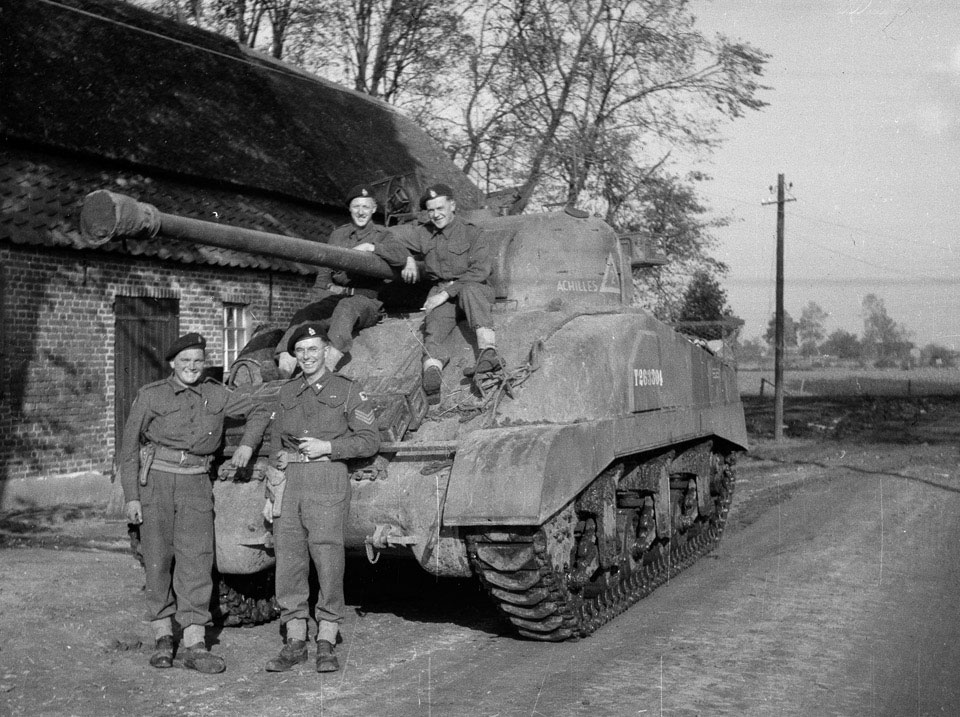
Trooper Brooks, Sergeant Maxwell, Trooper Bower and Trooper Ward sit on their Sherman Firefly, 1944. A Sherman Mk. IC of 2 Troop, A Squadron, 3rd/4th County of London Yeomanry (Sharpshooters), nicknamed ‘Achilles’, commanded by Sergeant Maxwell. - NAM. 1975-03-63-20-153
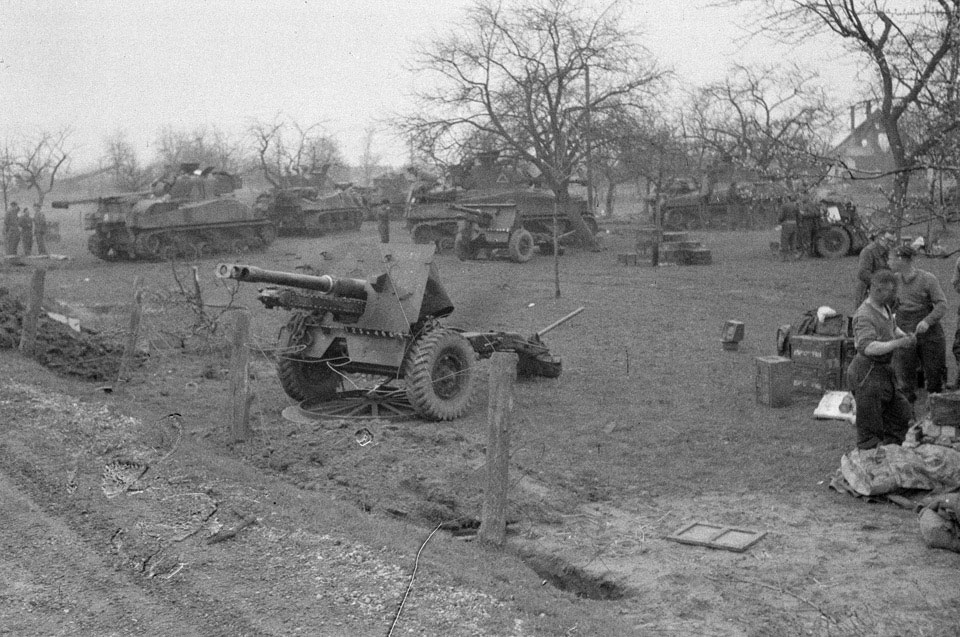
Sherman tanks of A Squadron, 3rd/4th County of London Yeomanry (Sharpshooters) and 25pdr field guns near Hamminkeln, Germany, 1945. A Squadron were involved in fighting around Hamminkeln on the 26 March 1945. According to the unit diary, 200 German prisoners were taken and several vehicles and an 88 mm gun destroyed. - NAM. 1975-03-63-21-207
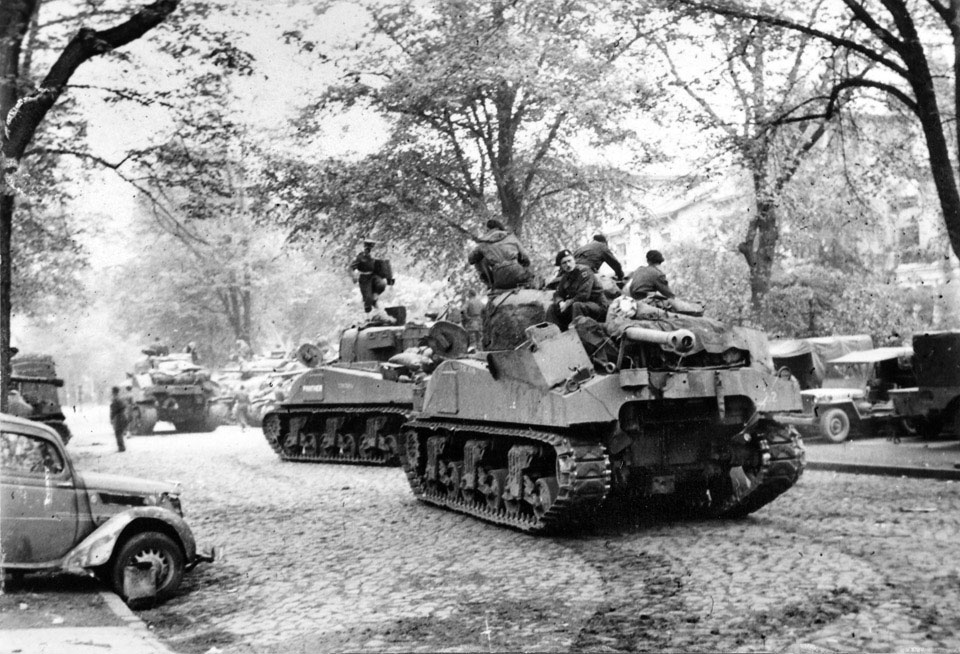
B Squadron moving from Hamburg to Pinnenburg, 9 May 1945 - NAM. 1975-03-63-22-184
I think I’d prefer the VC with APDS and this without over the inverse but +1 ofc
With APDS and that large hatch 63.5mm plate I think it’d be a decent 5.0.
Gaijin could make an easy 5.0 premium version by adding 2 RP-3 rockets to the turret.
My only problem with that, and the Italian Vc (though admittedly I haven’t used it), is that the drivers’ hoods are much more prominent weakspots on the VC compared to the IC with the applique plates or the Hybrid with them moulded into the glacis. I know they’re hardly the pinnacle of good armour regardless but I think one of the ICs would be the better candidate for APDS. Maybe the standard IC with the turret and hull applique plates?
The VC just feels much more like the ‘entry’ Firefly to me but that’s just my opinion.
I reckon we will see a Tulip eventually but I’m fully expecting it to be an A4/Mk. V (and the only A4 75mm that Britain ever receives).
I’m really hoping we get:
I’d like a Sherman III (late) at 3.7 in the tree and a Sherman IV as a premium/event at 4.0.
Funny. I’d actually prefer an early M4A2 (Sherman III). For some reason it just seems more iconic to me.
As widespread as the A4 was in British use, I think the small-hatch A2 might actually be the better choice overall. With the US one being a large-hatch and China/France already having A4s in their trees, it’d at least be a bit more unique for those who dislike the copy-paste.
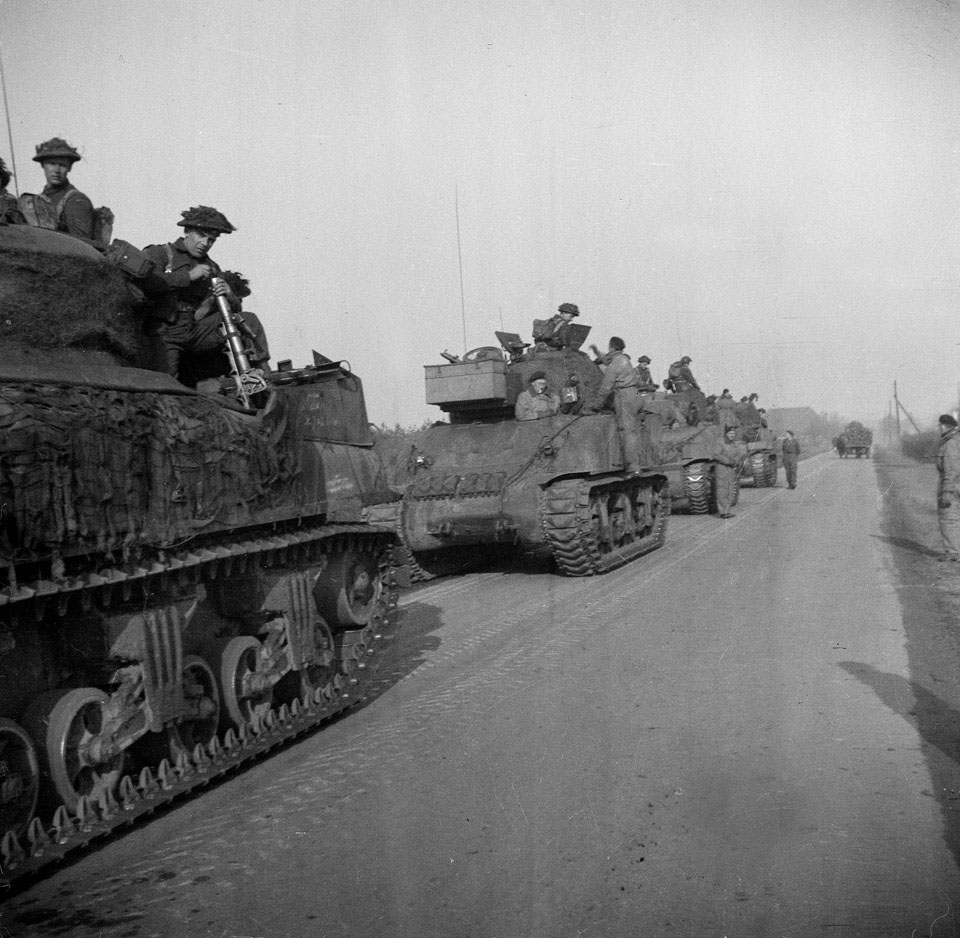
C Squadron and infantry co-operation in the Tilburg area during a practice before the battles of the Reichswald Forest, 1945 - NAM. 1975-03-63-21-134
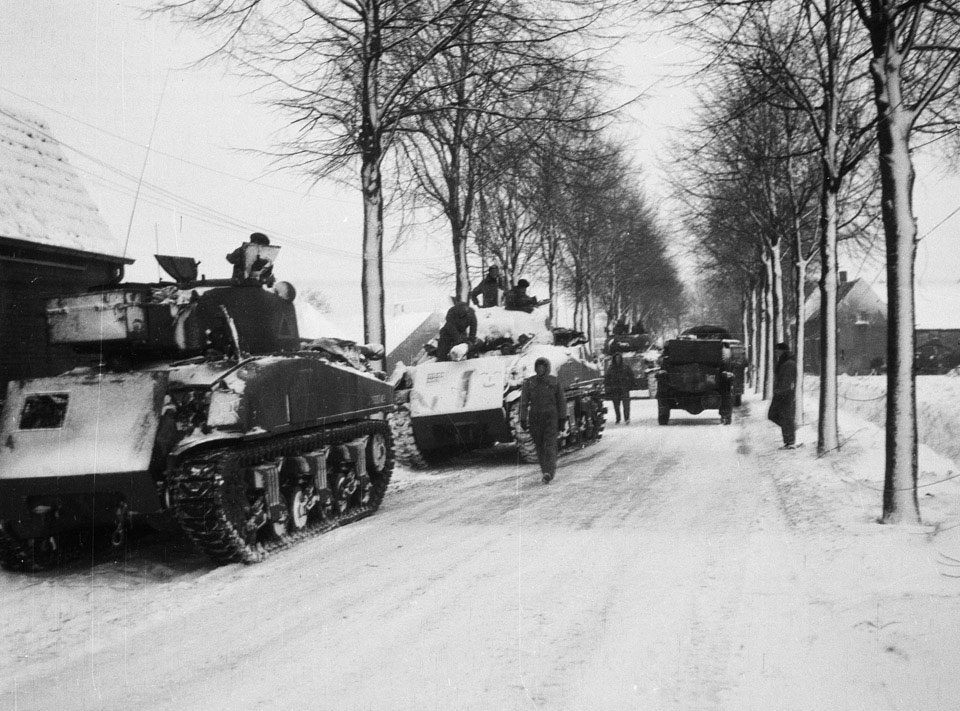
Tanks forming up at Venraij, prior to their return to Asten, January 1945 - NAM. 1975-03-63-21-101
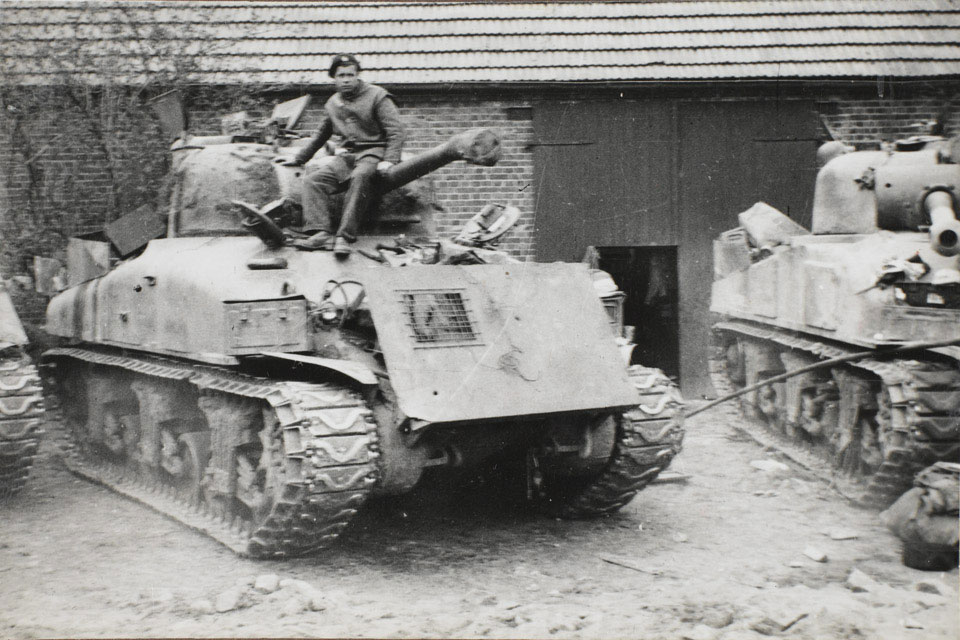
A Sherman tank of 3rd/4th County of London Yeomanry at Asendorf in Germany. Note the additional steel plating on the front of the tank to protect against panzerfaust attack. The unit arrived at Asendorf on 10 April 1945. - NAM. 1975-03-63-22-48
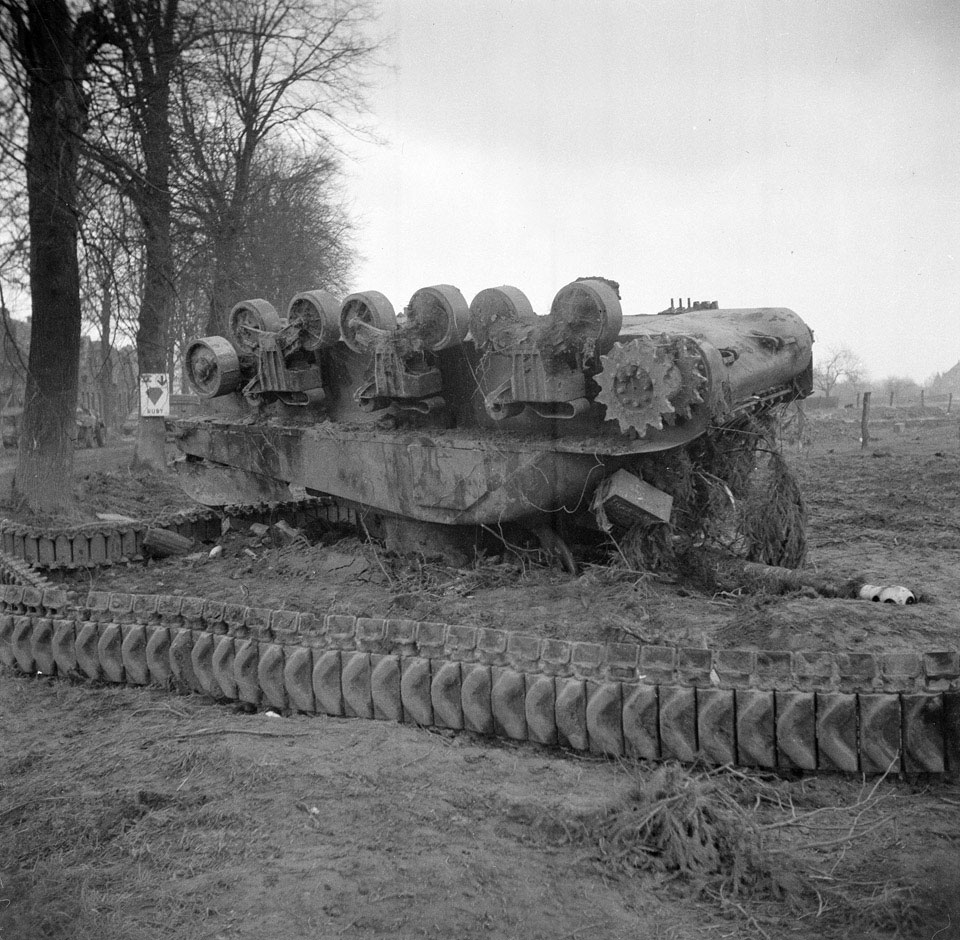
Sergeant Frost’s ‘C’ Squadron tank having been pulled off the road near Uedem, February 1945 - NAM. 1975-03-63-21-139
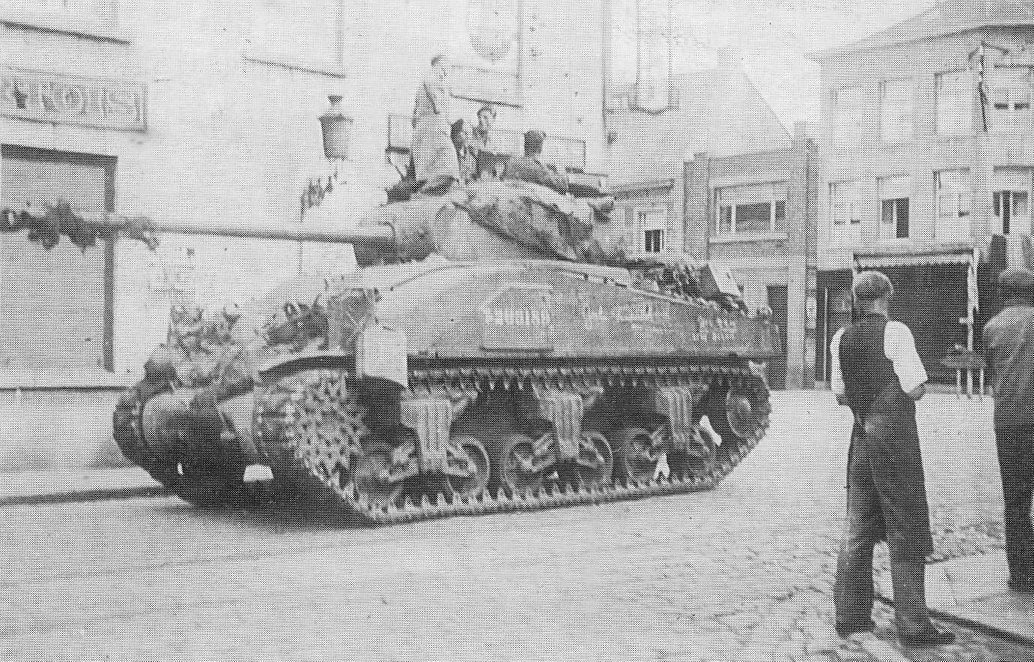
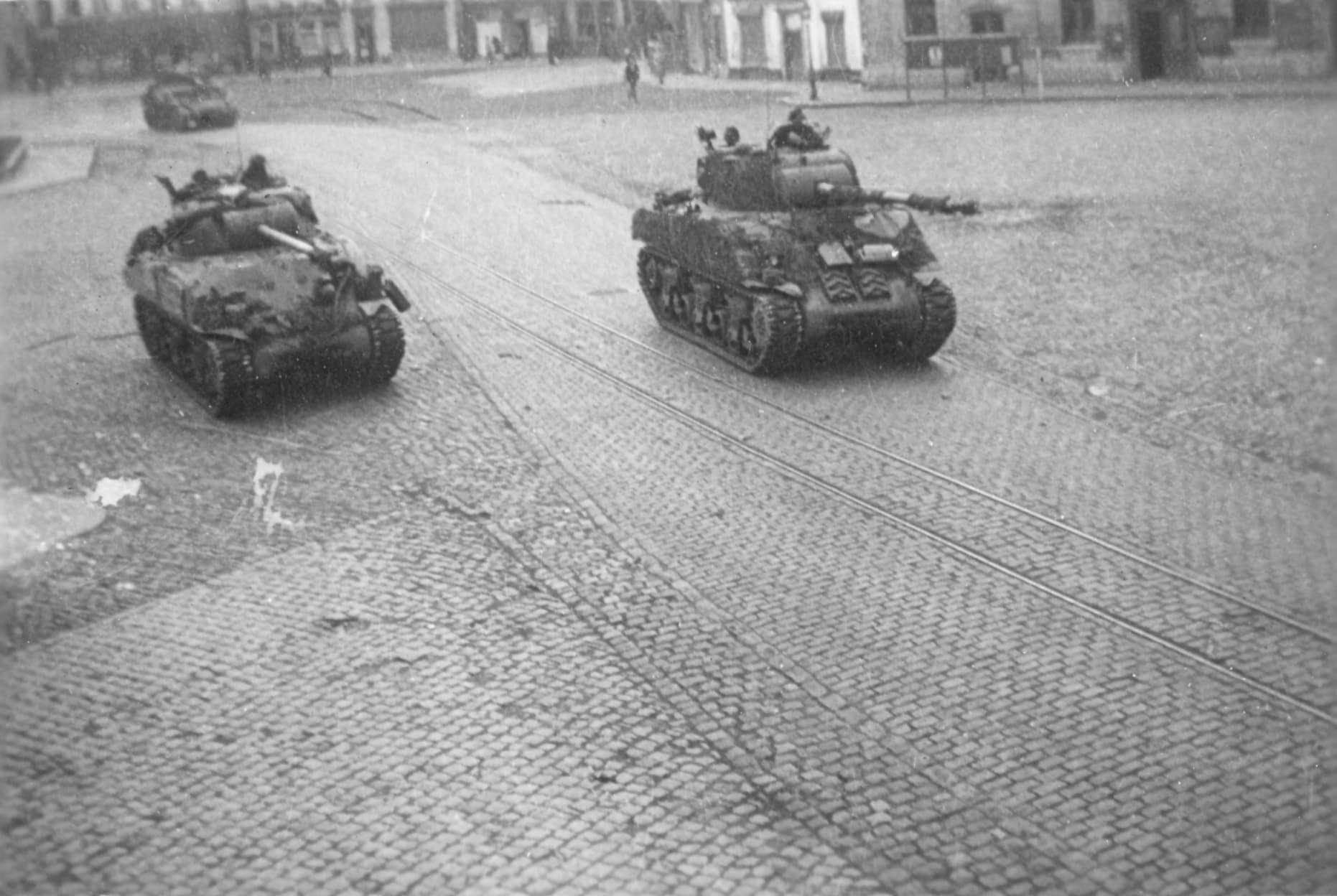
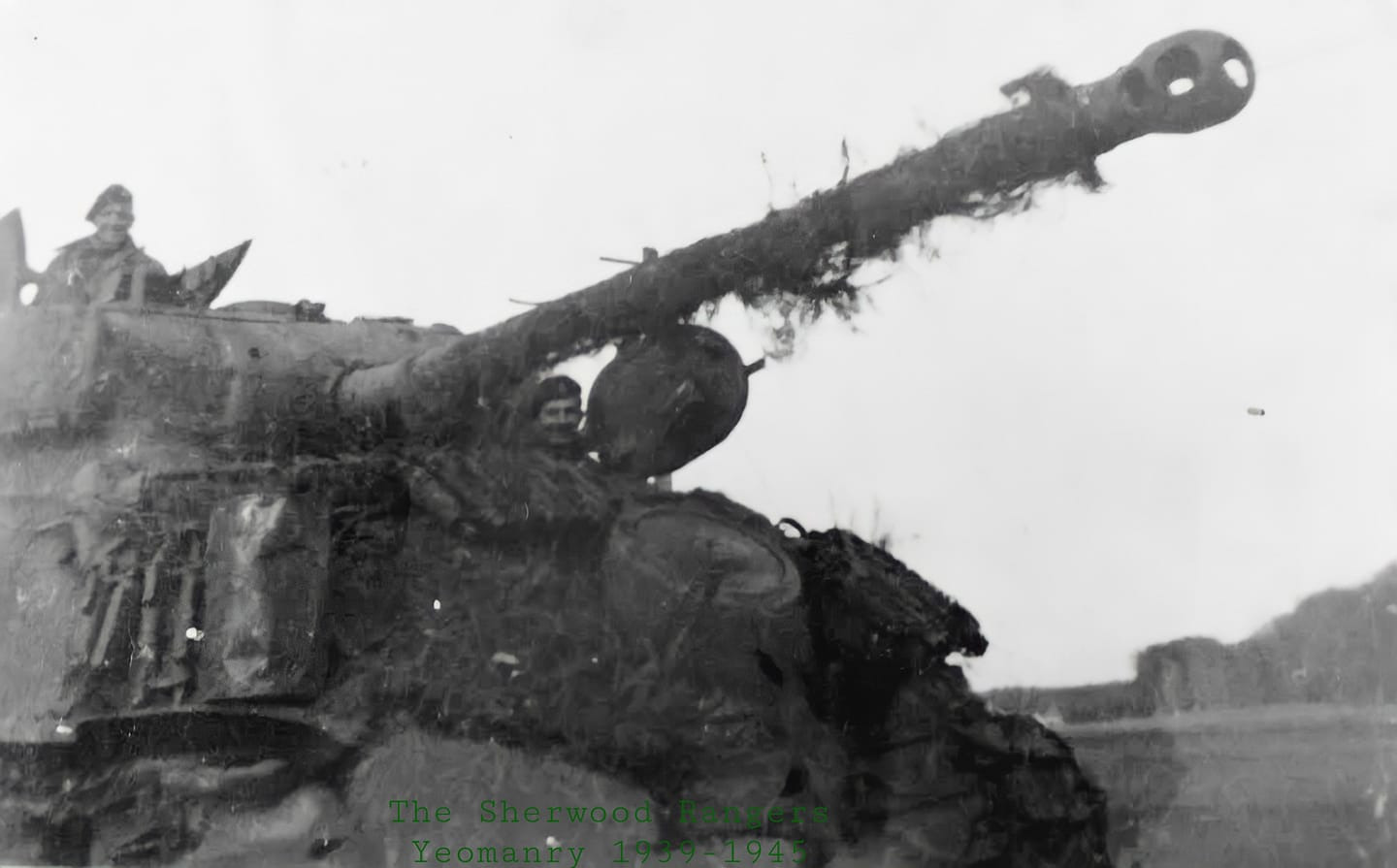
Corporal Cyril Burnet’s tank of C Squadron, Sherwood Rangers Yeomanry, 8th Armoured Brigade, pictured at various points throughout Geel, Belgium. He and his crew were responsible for knocking out a Jagdpanther in the market square.
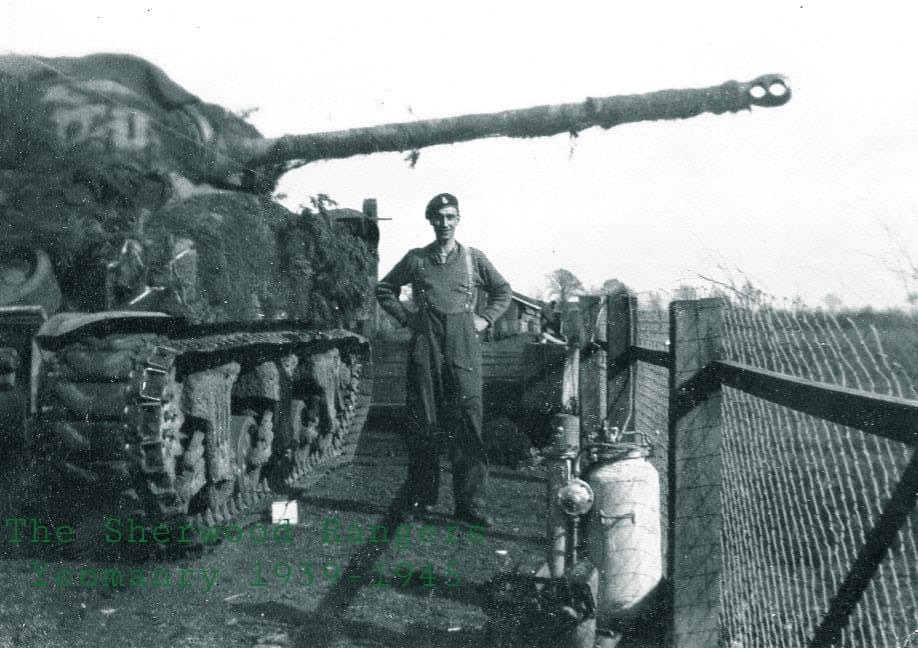
There’s not much left of the camouflage on it other than the tattered remains of some netting but it was probably once as wrapped up as Sgt. Nesling’s Firefly.
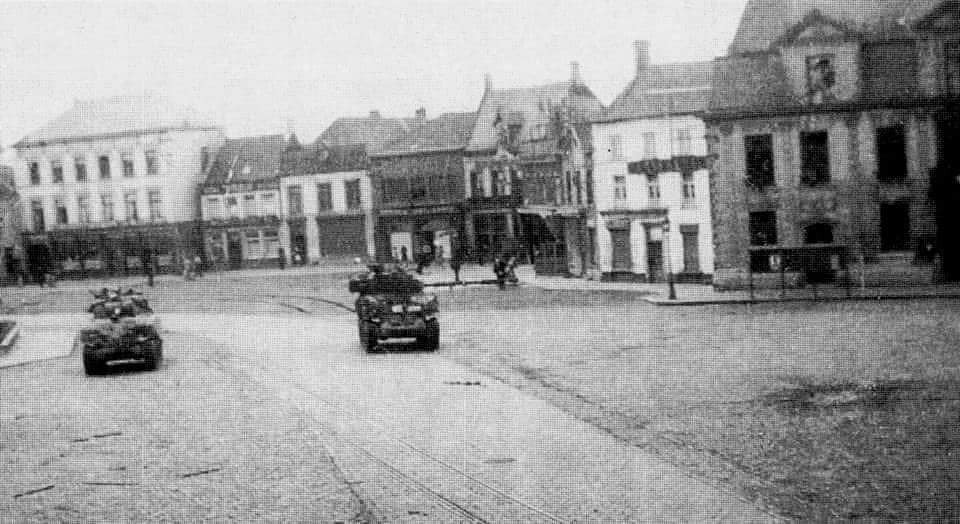
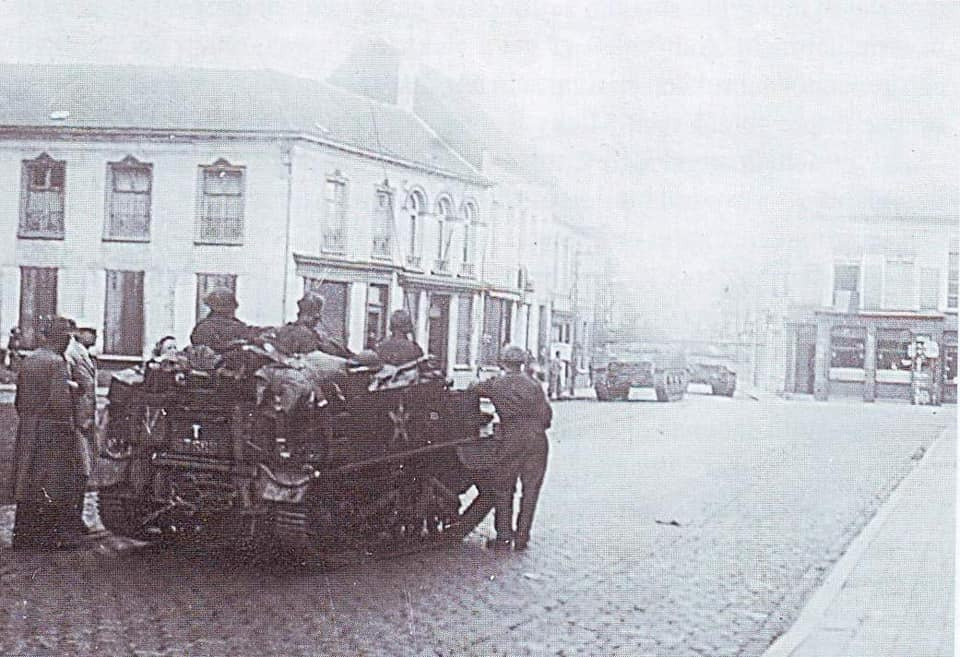
Source: Redirecting...
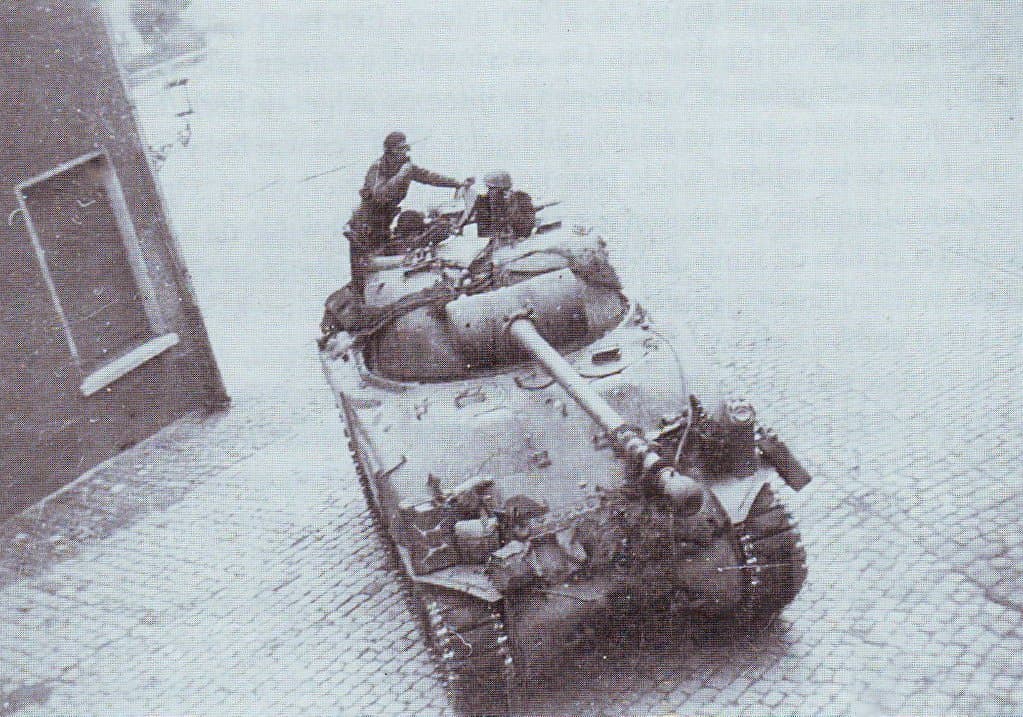
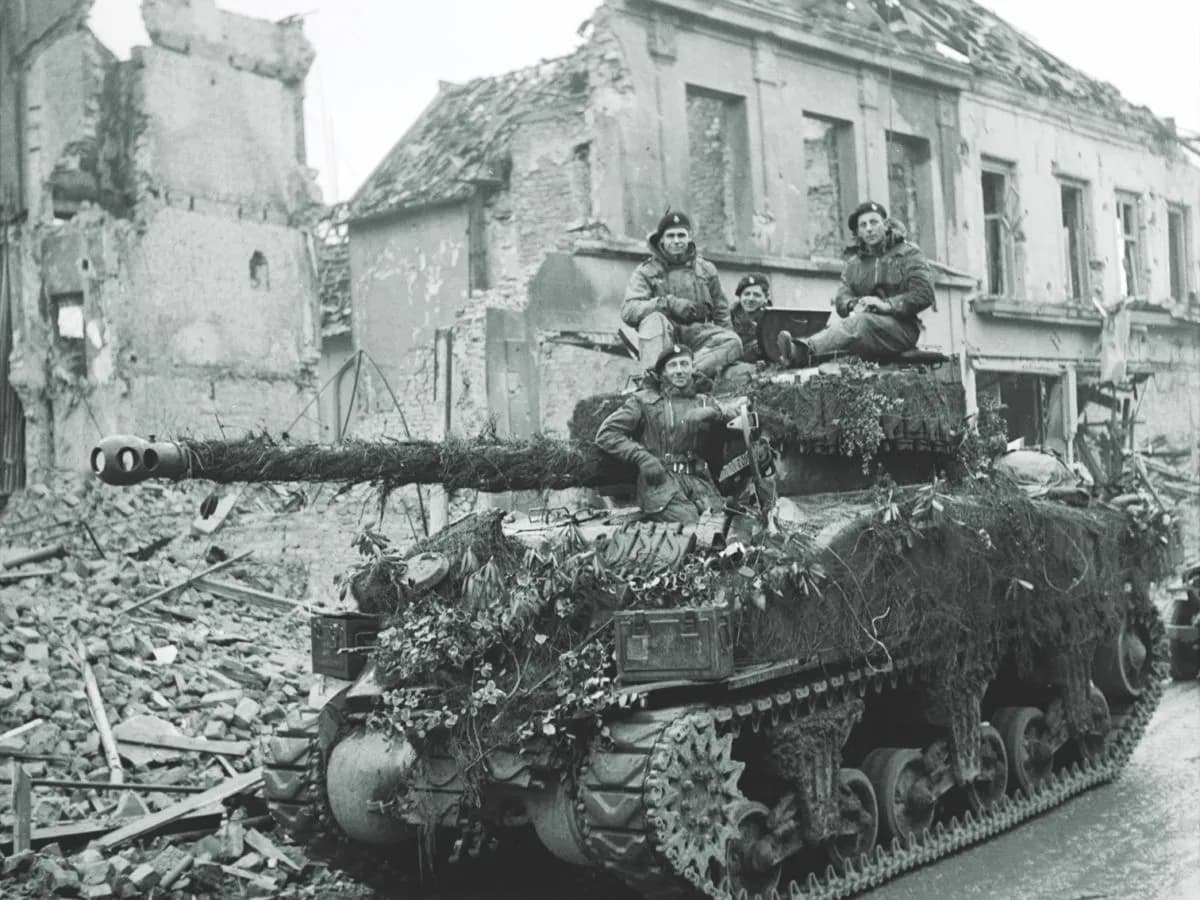
Corporal John Taylor’s heavily camouflaged tank in Issum, Germany. 3 Troop, B Squadron, Sherwood Rangers Yeomanry, 8th Armoured Brigade.
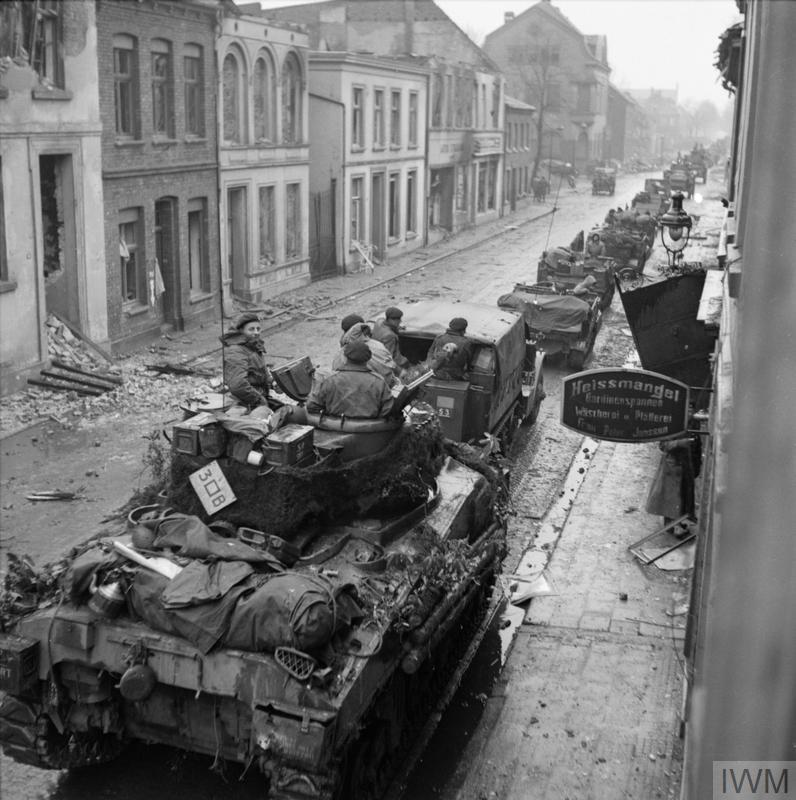
IWM (B 15230)
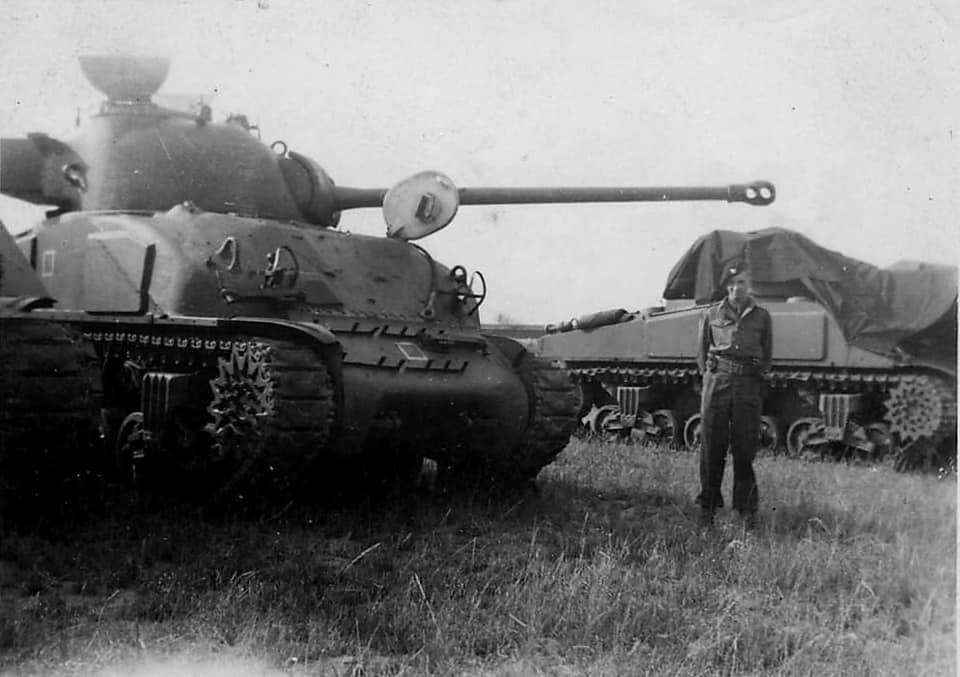
The same tank, now looking much cleaner, with the gunner William ‘Bill’ Ashton stood next to it.
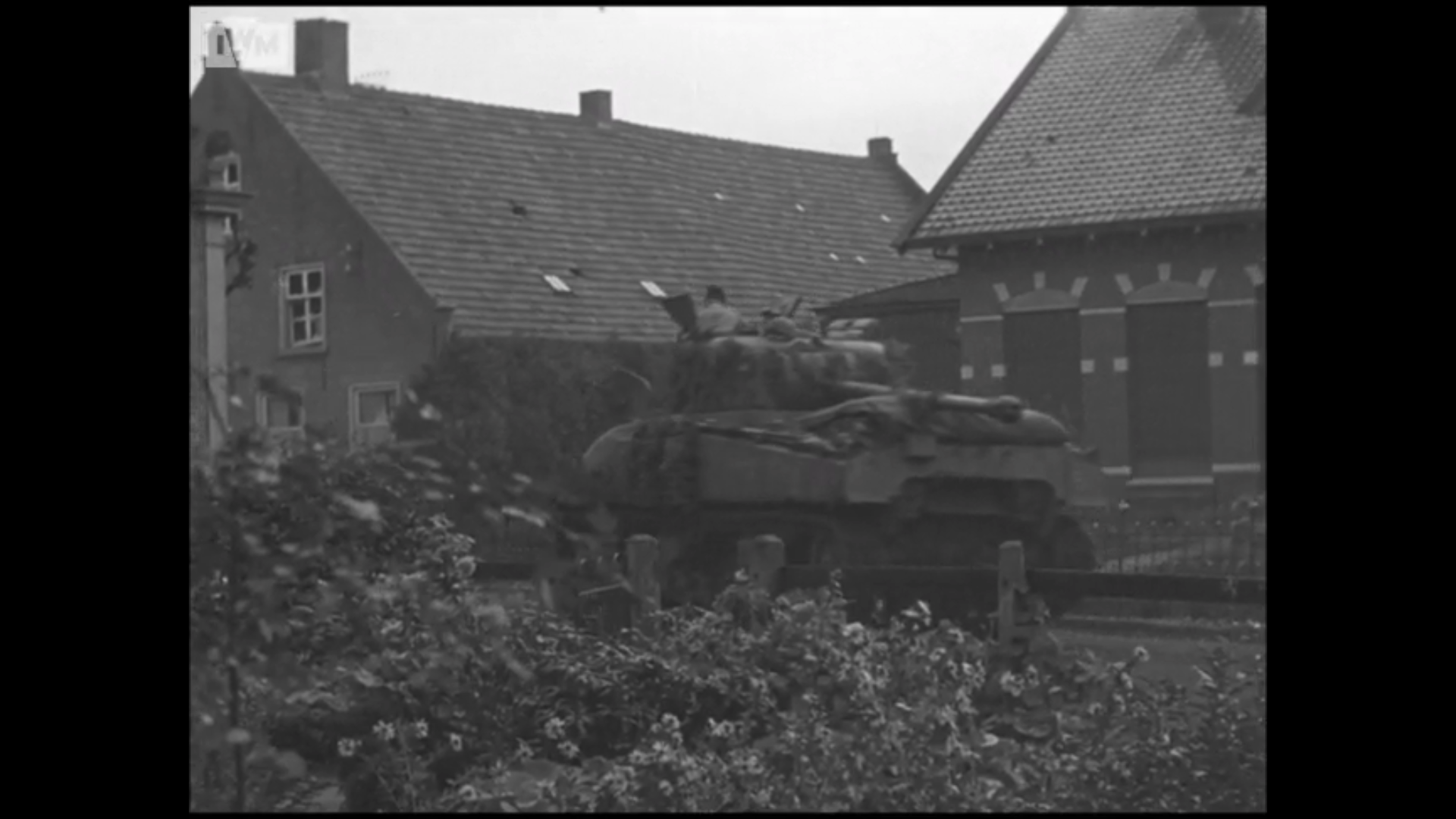
An A Squadron Firefly somewhere in Germany or the Netherlands in early 1945.
Trooper James Chorley poses with his A Squadron Firefly, Hengelo, The Netherlands, April 1945.
Source: Redirecting...
It’d be cool to get more camouflage options like this on tanks especially as a lot of the groundwork was introduced with things like the Overlord pack.
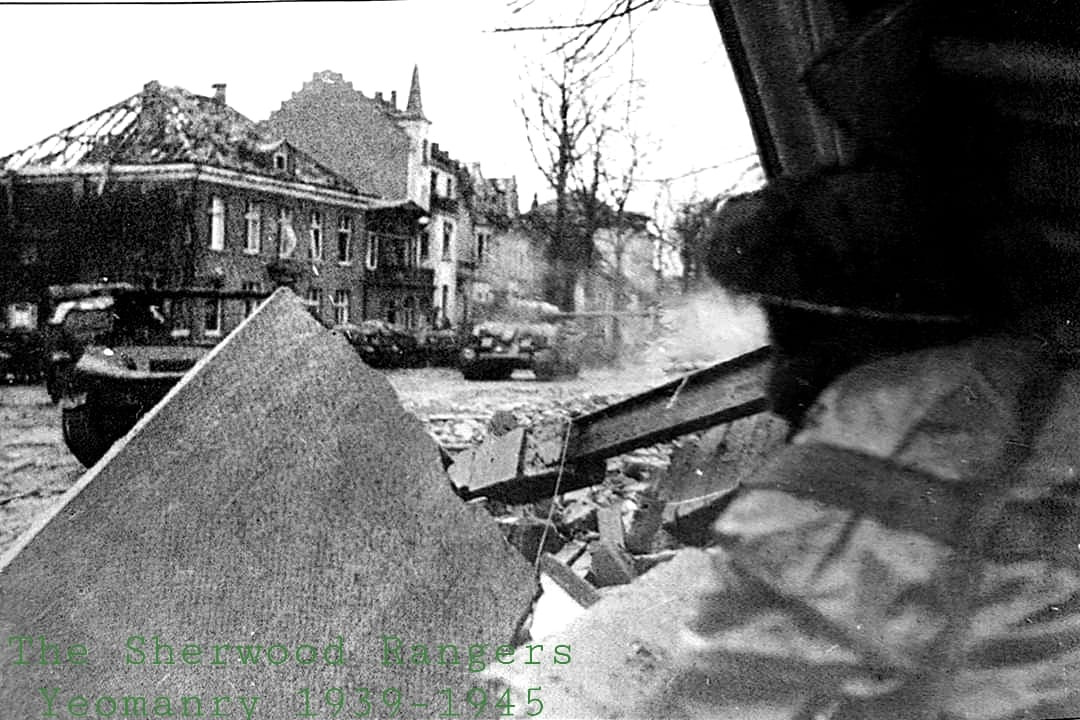
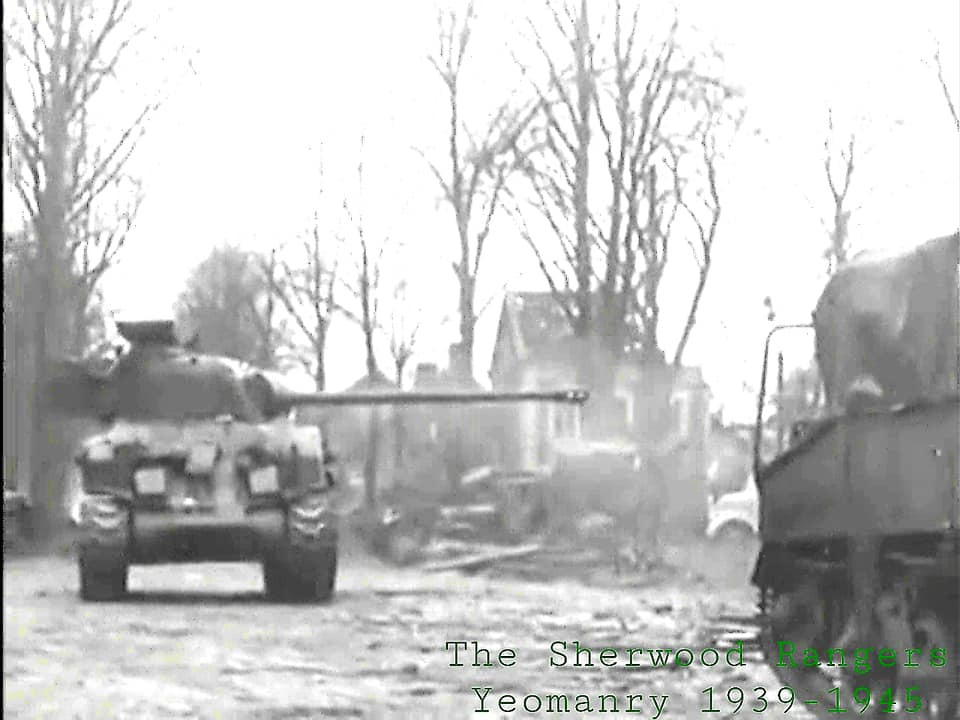
Lt. Ray Geigers B Squadron Firefly firing on German snipers in the German town of Kleve on 9th February 1945.
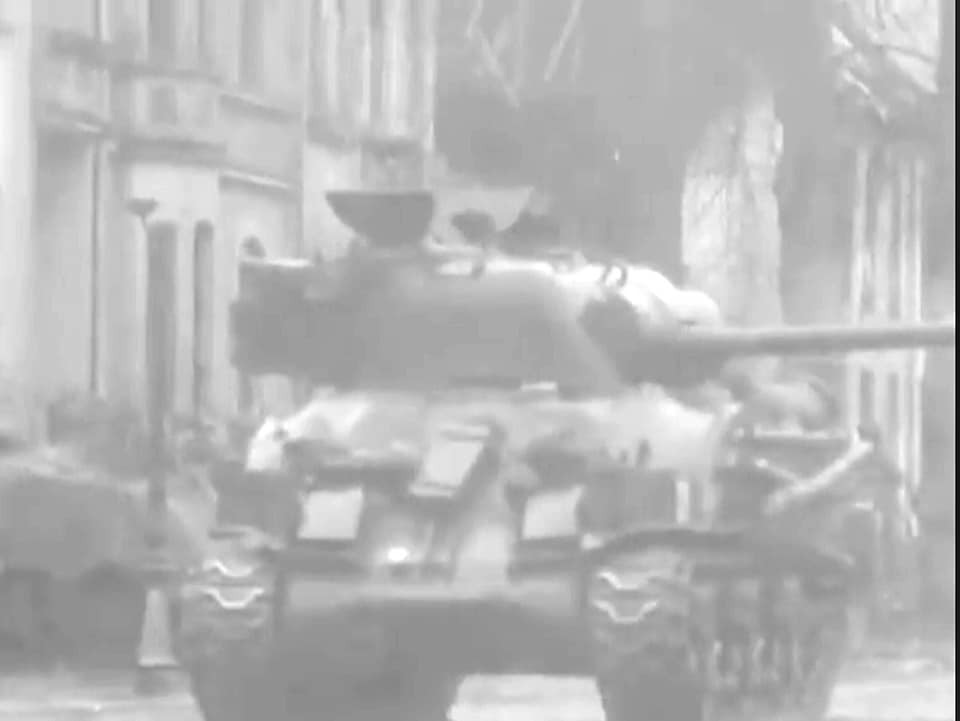
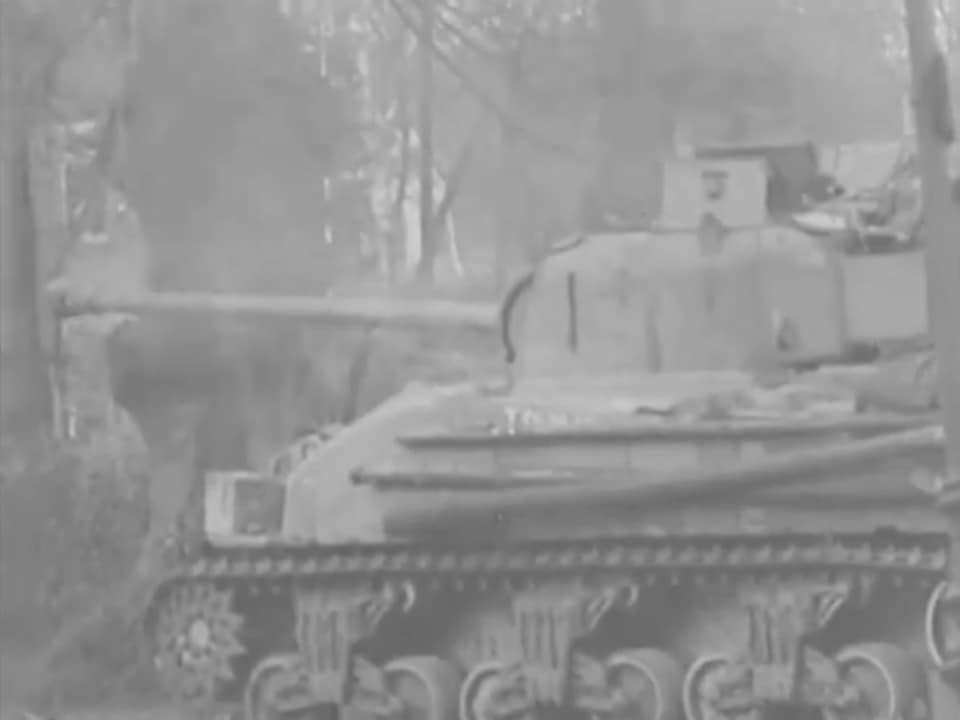
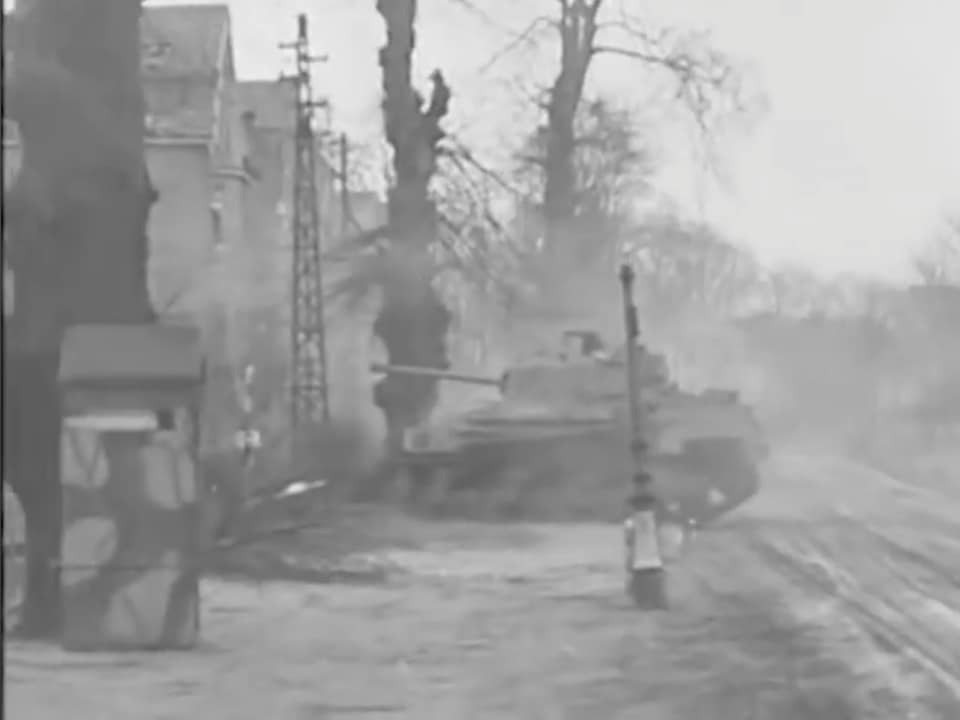
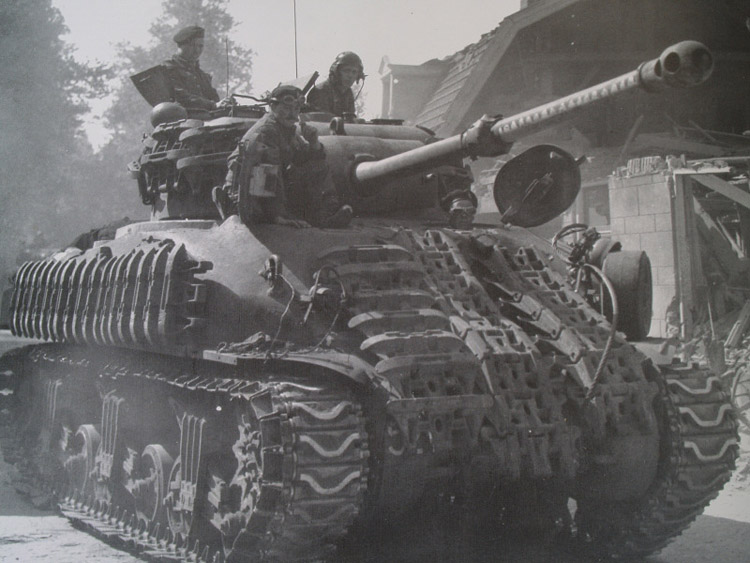
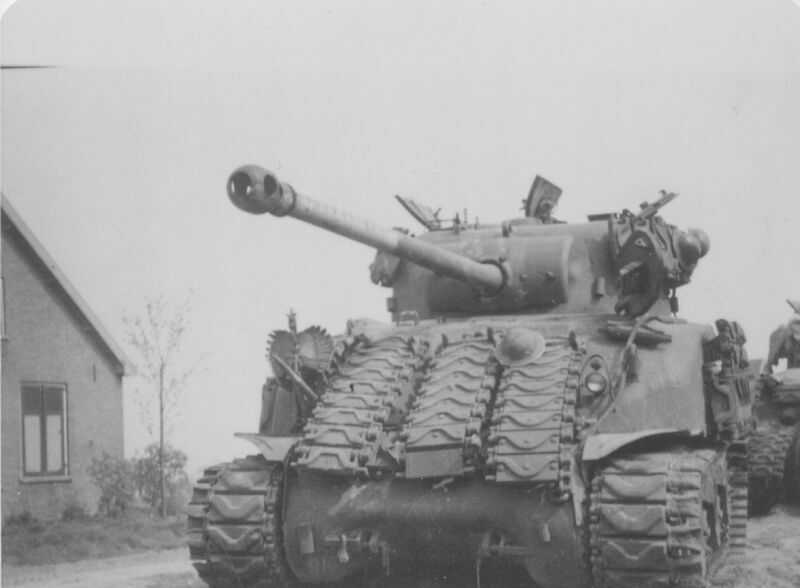
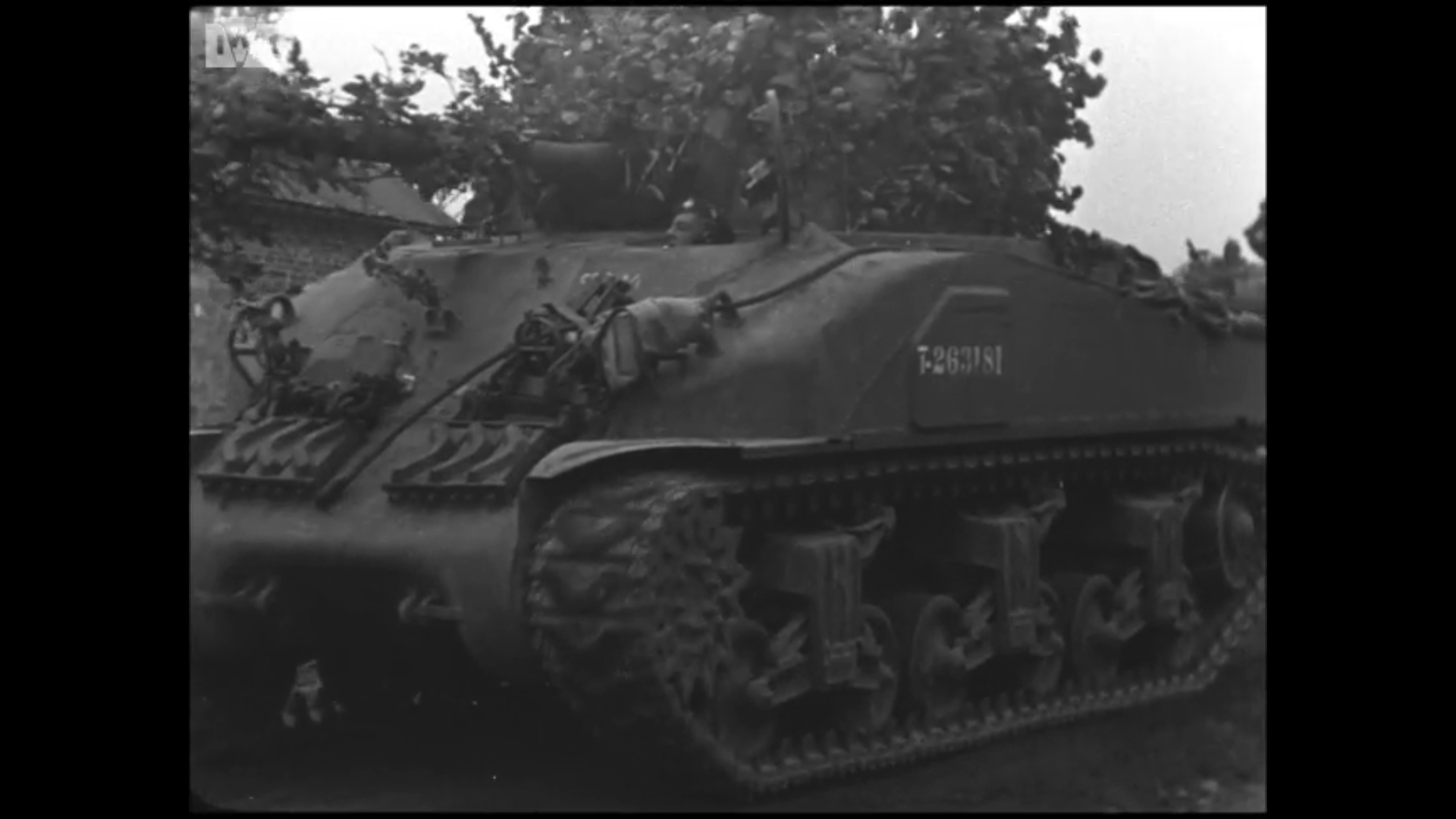
Normally I’m not a fan of the way extra track armour looks when it’s all piled up like that but I do think these look pretty good when they curve the links around the contours of the casting like this one.