- Yes
- No
Hello, I’d like to suggest the other Sherman Firefly used by Canadians in Europe.
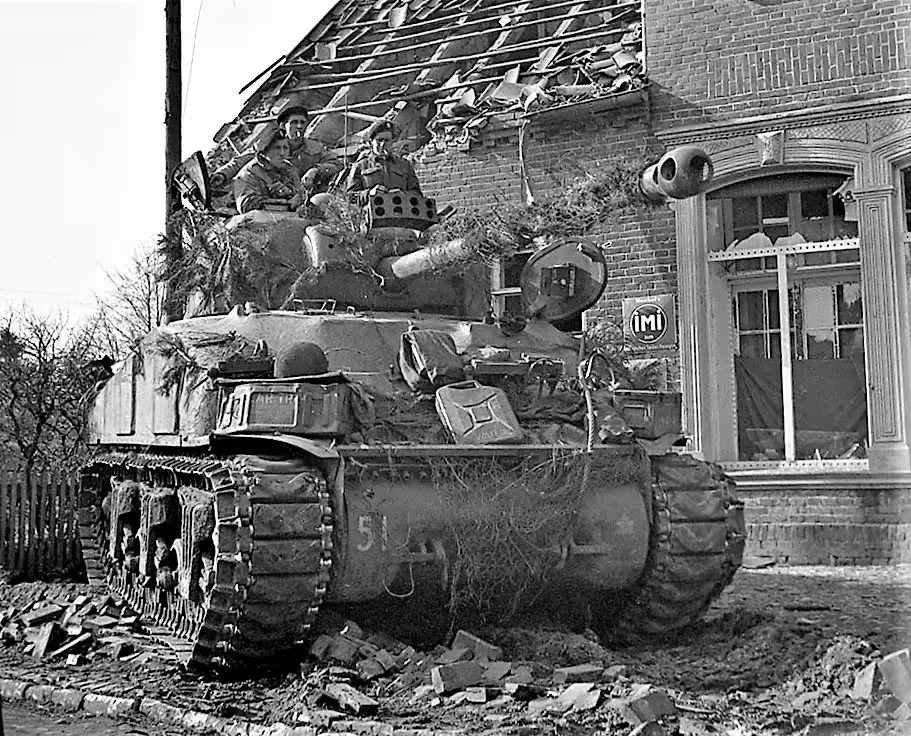
History:
At the time, Canadian Armoured Corps units were training with a mix of equipment, including US-built FT-17s and the Ram tank. At the same time, the British themselves were learning of the use of the 75mm gun. Which would lead the forces to be equipped with tanks with that type of gun, and most of these would be the Sherman tank. In 1943, Canadian units stationed in the UK would start to receive Sherman tanks. The first units to be fully equipped with Sherman V tanks would be the 1st Canadian Tank Brigade(1 CATB). Its first 18 Shermans would be received on the 4th of May 1943, where they’d join the training at Hoddon Castle in Scotland. In July of 1943, the 1 CATB would leave the UK to go take part in Operation Husky. Well, other units would receive their Sherman tanks here and there in small numbers. The 6th Canadian Armoured Regiment would receive its first 5 Shermans in September of 1943, although they’d still have a number of Ram tanks by April of 1944. The 6 CAR would be made into the 2nd Canadian Armoured Brigade(2 CAB), where it would be joined by the 10th and 27th Canadian Armoured Regiment, where it would field Sherman IIIs. Various other regiments and groups of the Canadian army would receive Shermans to train with in the UK and would abandon their Shermans in the UK when going to Italy and have theirs be replaced by the ones in British depots.
In preparation for the invasions of North West Europe, an upgunned version of the Sherman would be made using the 17 pdr, to counter the stronger armour of the Axis that was showing up. The UK would have the Royal Ordinance run a rush job that would allow the armoured regiments of both the Canadian and British armies 12 Fireflies by D-Day. The new fireflies would make their mark almost immediately, as only a couple of days after D-Day, Fireflies of the 1st Hussars would take out a number of Panthers, with one shot each, well the 75mm Sherman would tie down the Germans with HE shells. By late war, a few Canadian units would receive Shermans with the 105mm gun known as the IB.
It didn’t take long for Canadian units to begin mounting things onto their Shermans for extra armour. The British Columbia Dragoons would start doing this in Italy during March of 1944, and the South Alberta Regiment would mount Tiger tracks they got their hands on in August of 1944. Whether or not these attempts were effective is up for debate. The Shermans would face other threats like mines and handheld anti-tank weapons. Despite this, as long as the Sherman didn’t catch on fire or lose its gun, its crew was ordered to fight until it had no ammo left. By the end of the war, Canadian forces would lose over 351 Sherman tanks, even so the Shermans pushed on in every battlefield they saw. The Sherman would make up a large number of the now-skilled and powerful Armoured Corps, which had started as a group of enthusiasts with outdated equipment, and by the end of the war, King George VI would grant the Canadian Armoured Corps, the name Royal Canadian Armoured Corps.
More photos
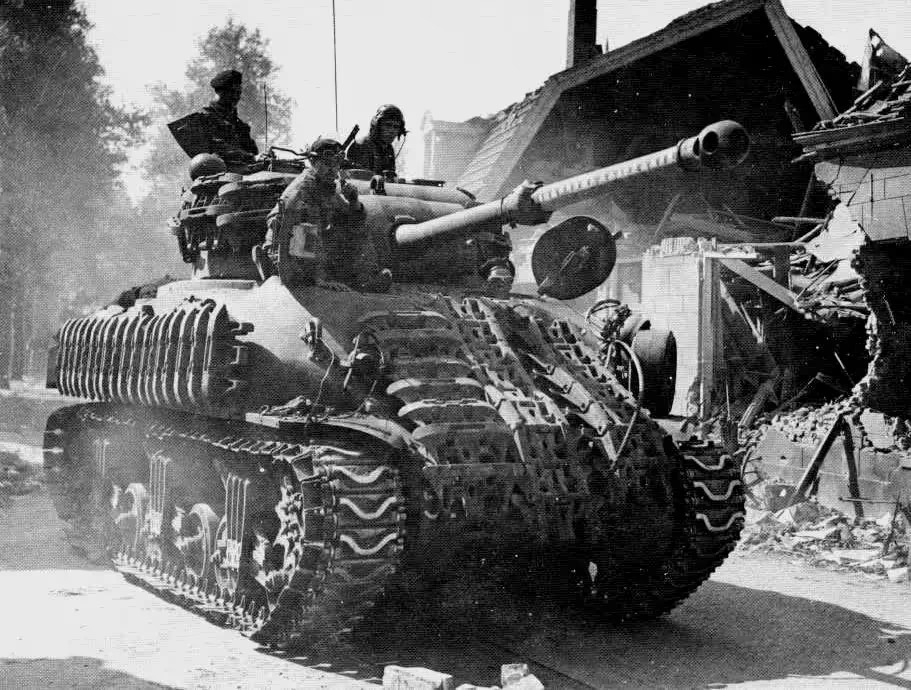
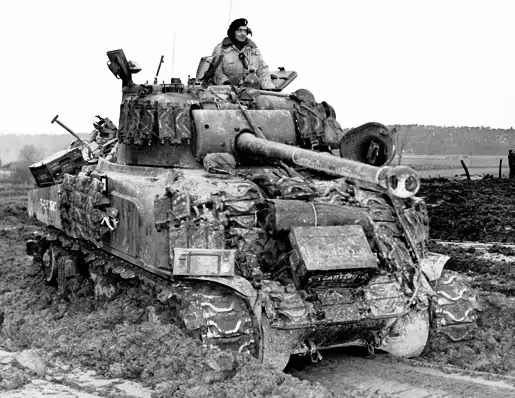
Specs:
Dimensions: L/W/H: 5,89 m / 3,05 m / 2,62 m
Weight: 31,5 tons
Powerplant: Chrysler A57 multibank engine
Engine horsepower: 370 hp
Max speed: 40 km/h
Range: 193 km
Crew: 4 (Driver, Loader, Gunner, Commander)
Armour:
Front: 50.8 mm at 56°
Sides: 38.1 mm at 0°
Rear: 38.1 mm at 10°
Roof: 25.4 mm
Armament
Gun 76,2 mm QF 17 pounder Mk.V
Ammunition 80
Protection system 2 x 6 76 mm smoke grenades
Coax 7.62 mm L3A1 (5000 rounds)
Possible mod: 8 “barrel” Smoke projector, mounted above the gun.
Spoiler
The Sherman in Canadian Service by Steve Guthrie
Armour in Canada: Sherman Firefly tanks in service with Canadian armour units during the Second World War. - SilverHawkAuthor Website Military History Materials
www.canadiansoldiers.com
Sherman Firefly - Wikipedia
Multiple SMOKE grenade projector: Sherman, Wasp carrier? - MLU FORUM
