- Yes
- No

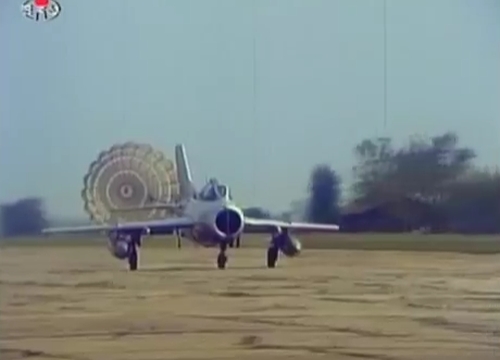
TL;DR: The Chinese F-6C, a license-produced and upgraded MiG-19, in service with North Korea, upgraded locally with additional fuselage hardpoints for bombs, racks for 122mm rockets, as well as two R-3S / PL-2 air-to-air missiles
History
The Mikoyan-Gurevich MiG-19 is a Soviet fighter jet developed in the 1950s, designed as a replacement for the older MiG-17 and MiG-15, both of which were incapable of reaching supersonic speeds. The MiG-19 featured new, more powerful engines and afterburners, as well as a redesigned airframe and improved swept wings. It entered service in 1955, and was produced in large numbers — over 2000 were built in the Soviet Union alone. The MiG-19 was also exported widely to Soviet allies during the Cold War, including Czechoslovakia, Poland, and Iraq.
On October 15th 1957, the USSR and China signed an agreement, in which the USSR agreed to provide China with the production license for the MiG-19. The first two prototype aircraft were built in November and December 1958 by Factory 112. After 26 test flights (10 hours flight time), mass production was approved. The aircraft was designated J-6 (歼-6), with the first variant receiving the designation J-6A. The J-6A was plagued with technical difficulties, and production ended in Factory 112 in 1960 after only 83 aircraft had been built.
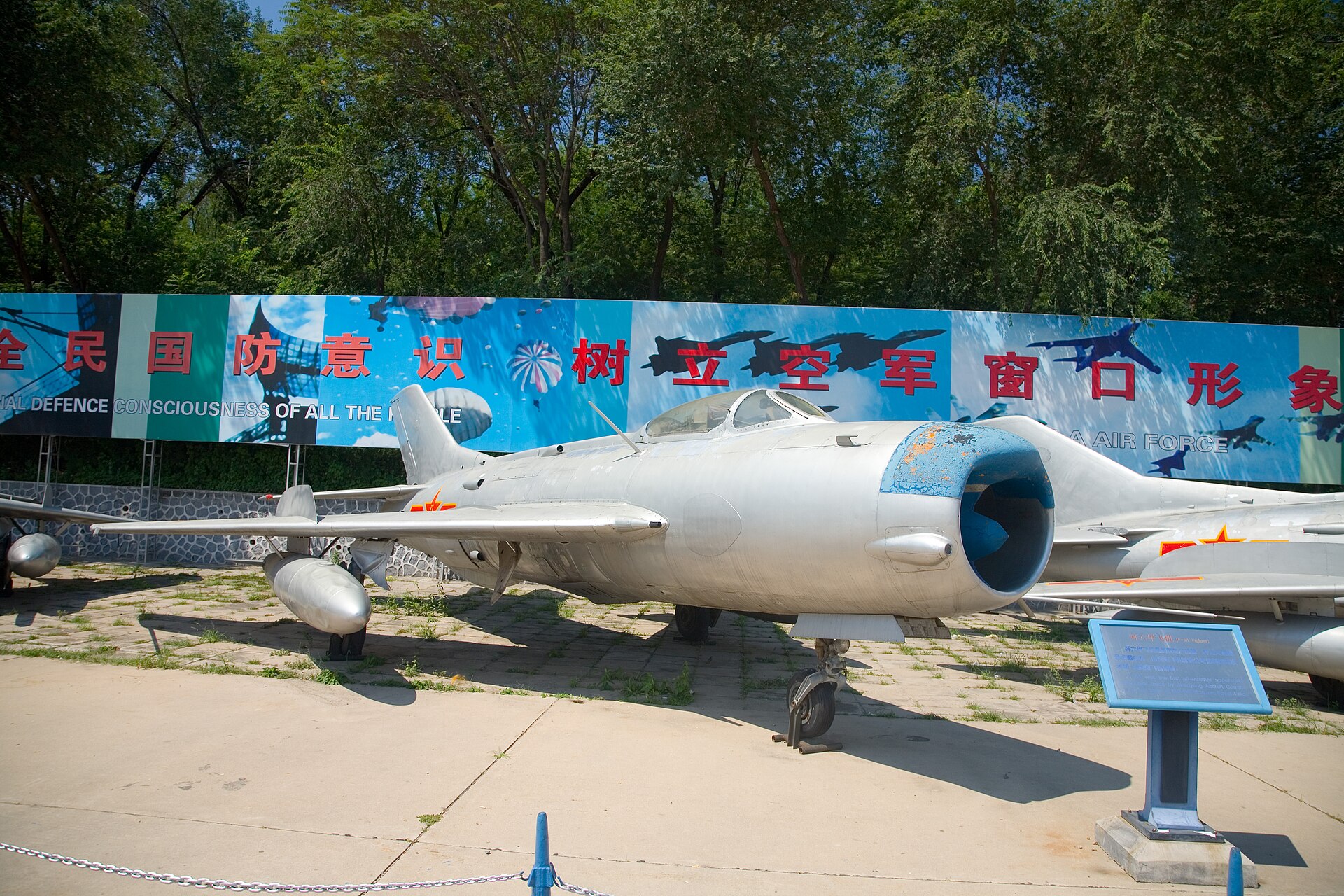
The J-6A was, confusingly, followed by the J-6, which was based on the MiG-19S. It entered mass production in 1964, and 3562 aircraft were built (split into multiple variants). License production of the missile-capable MiG-19PM began in 1958, and was later named J-6B. Only 19 aircraft were built in the first instance, followed by a second attempt in 1974. The J-6B introduced a modification to the original Soviet design, in which the brake parachute was moved to the base of the tail fin.
On August 6th 1969, the J-6C had its first test flight. This was an improved variant of the J-6, incorporating the same relocated brake parachute as the J-6B, alongside improved WP-6a engines, new hydraulic systems, and more powerful control surface actuators. A large number were built; it was also the primary export variant (under the designation F-6C).

In the 1950s and early 1960s, the Korean People’s Army Air Force (KPAAF) was primarily equipped with hundreds of Soviet MiG-15 and MiG-15bis fighter jets. These were first received during the Korean War. They were supplemented by smaller numbers of much weaker, WW2-era aircraft, such as the Il-10 and Yak-9. North Korea received their first MiG-17s from the USSR in the late 1950s. Up to 225 MiG-17s were delivered, alongside a small batch of MiG-17PFs in the mid 1960s (evidence for deliveries of the F-5 is dubious at best).
North Korea reportedly received around 20 MiG-19s from the USSR in the mid-1960s. However, this claim is difficult to verify. What is clear, however, is that the vast majority of MiG-19s in KPAAF service are the Chinese-produced J-6. North Korea received their first J-6s, exported under the name F-6, in 1964. Eight were delivered, marking the first time the plane was exported. They supplemented the KPAAF’s MiG-21F-13s, which had been delivered from the USSR a few years prior. In 1971, an additional 50 aircraft were delivered, followed by another 40 in 1972.
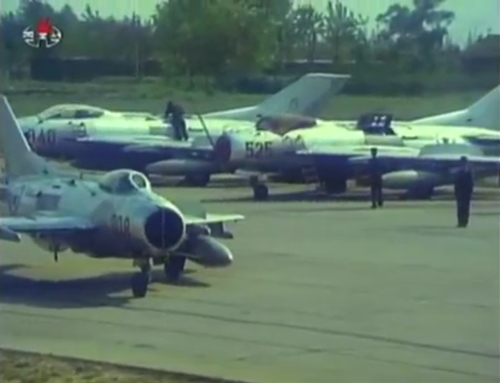
In 1974, North Korea and China signed an agreement, in which China pledged to assist the DPRK in creating a factory for the repair and overhaul of the F-6 and its WP-6a engine (stated to be able to repair 50 aircraft and 400 engines per year). This project, named ‘Project 196’ in China, was delayed significantly, and only completed in 1987 (other sources say 1984–85). In 1978, 30 more F-6s were delivered. This gives a total of around 128, plus an unknown number of FT-6 (also known as JJ-6) trainers. It is unknown in what numbers each F-6 variant was delivered, but North Korea is known to have received the base F-6 variant, as well as the upgraded F-6C.

It didn’t take long for North Korea to begin domestically upgrading the F-6s, alongside upgrades for the MiG-15 and MiG-17. The first of such upgrades began in the late 1960s, and focused on adding new hardpoints, primarily for small bombs. The MiG-15s were fitted with additional hardpoints under the fuselage (usually four) for carrying small bombs, as well as two additional wing hardpoints. The MiG-17s were fitted with either two or four additional hardpoints under the fuselage. Later, beginning in the early 1980s (or potentially late 1970s), they were fitted with two R-3S (K-13A) (or the Chinese variant, the PL-2) missile pylons under the wing. This increased the firepower of these antiquated airframes, particularly in the 21st century, in a relatively cheap fashion.
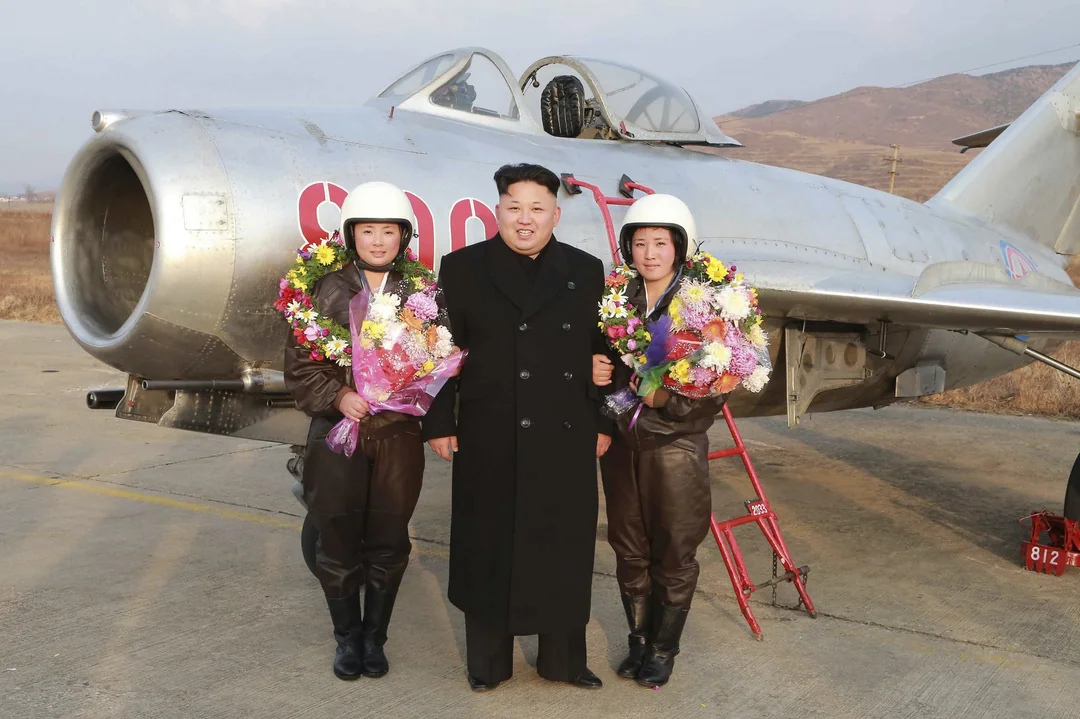
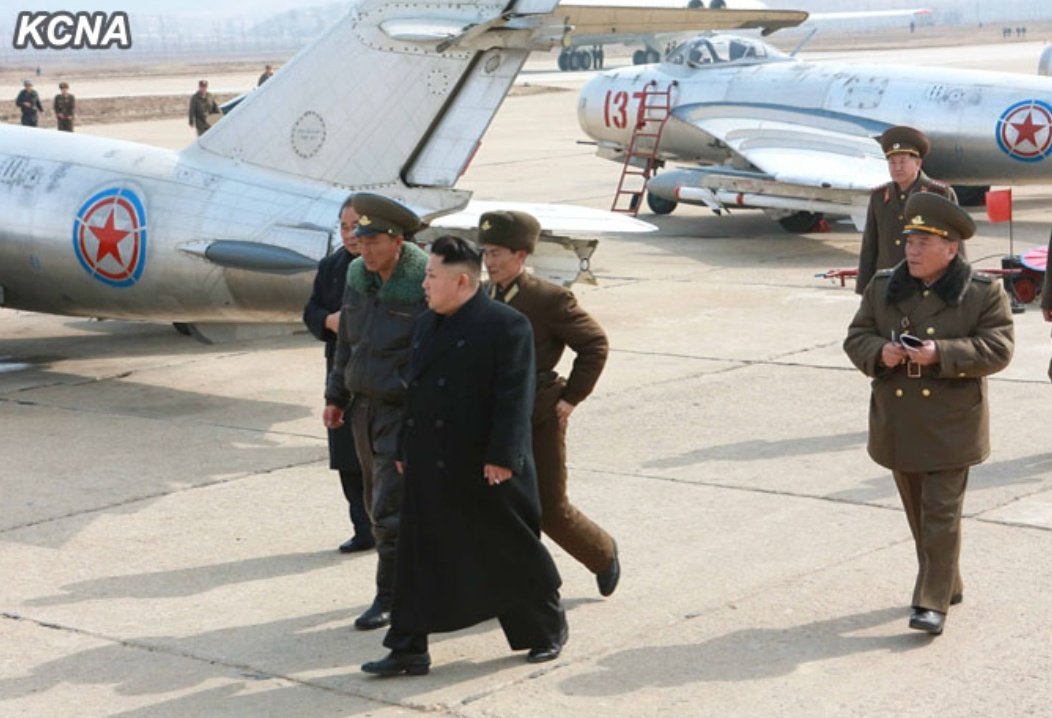
The F-6s received a similar upgrade: they were fitted with four additional hardpoints for small bombs under the fuselage, alongside two additional wing hardpoints, either for bombs, additional 57mm rocket pods, domestic 122mm rockets (3 per hardpoint), or the R-3S (or PL-2) missile. This upgrade appears to have been carried out on all serviceable F-6s. It should be noted, however, that the F-6s appear to have received fuselage hardpoints later than being fitted with missiles, having first been definitively seen with them in the early 2010s.
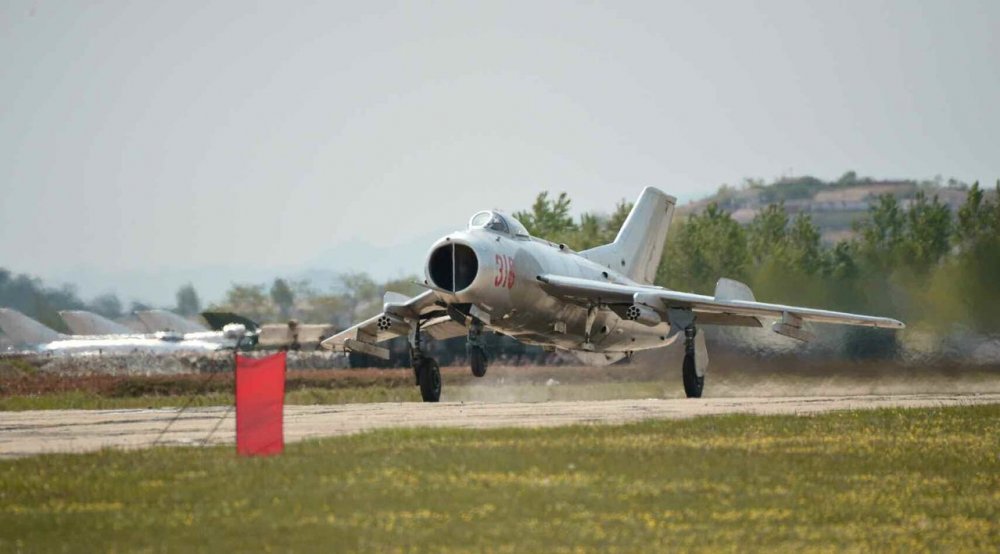
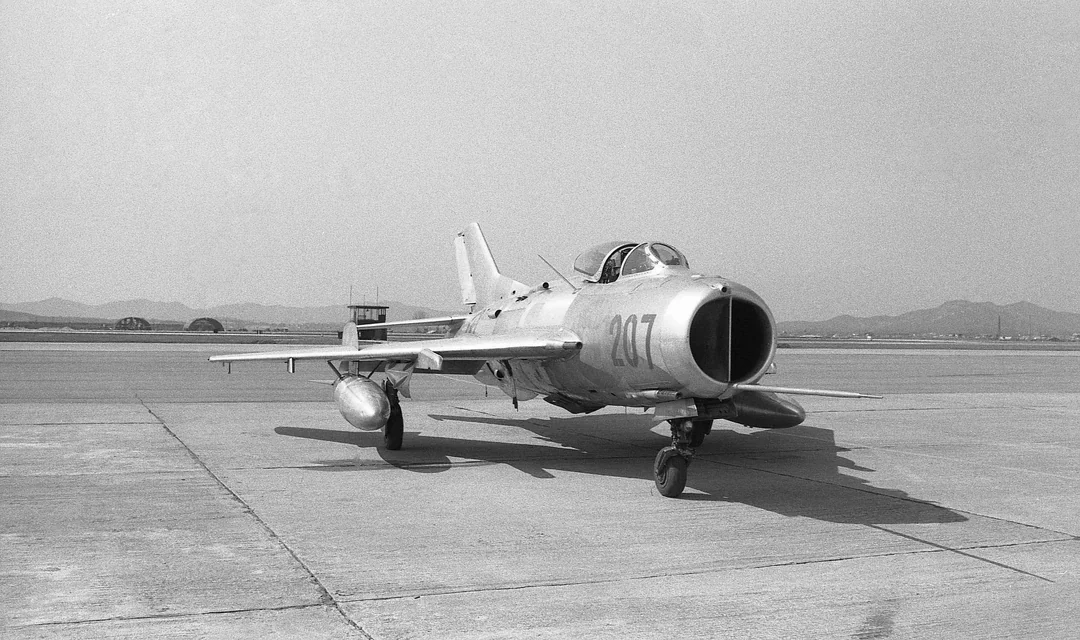
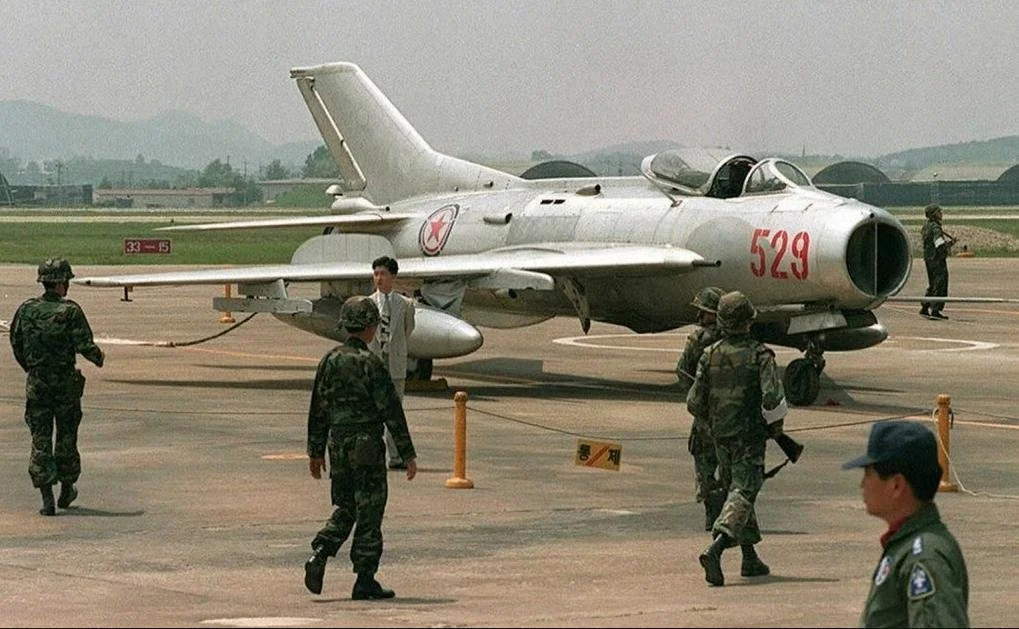
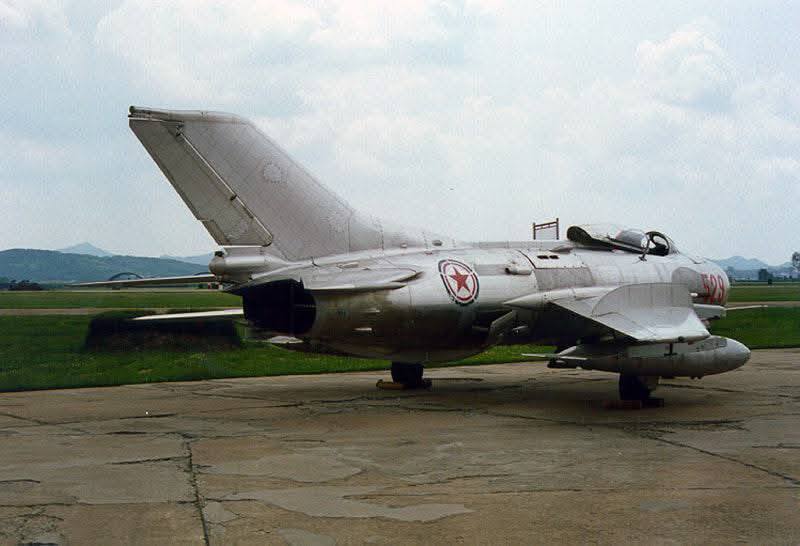
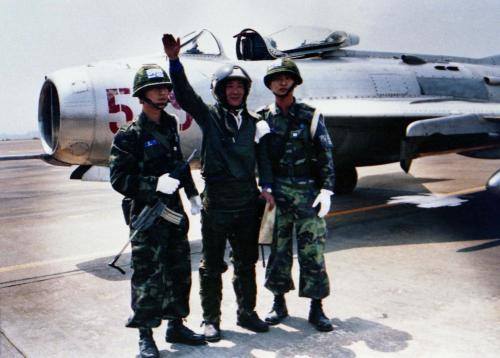
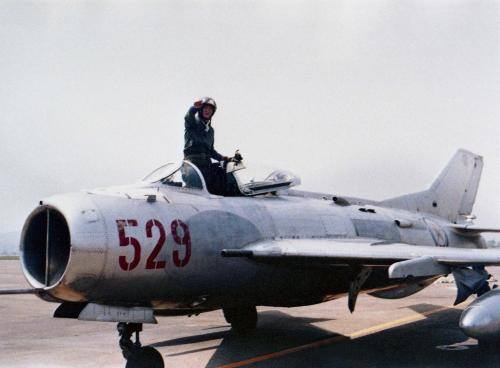
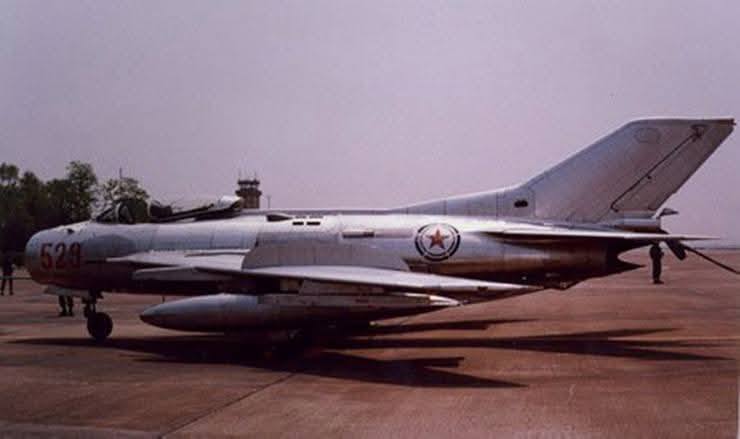
Two F-6 pilots, along with their aircraft, have defected from North Korea. The first aircraft, piloted by Captain Lee Ung-pyong, defected on February 25th 1983. The 28-year old captain defected from a training exercise taking place at Haeju air base, and flew his F-6, numbered 207, along the west coast, before landing in South Korea. His aircraft is now on public display at the War Memorial of Korea in Seoul. The second was by Captain Lee Chul-su on May 23rd 1996. He also defected during a training exercise, flying an F-6C numbered 529, from Onchon to Suwon, just south of Seoul. In both cases, the aircraft were fitted with the wing pylons for the R-3S/PL-2 missiles.
The F-6 remains in service in the KPAAF in relatively large numbers. However, the upgrades carried out do little to improve its combat performance, and they — alongside the hundreds of MiG-15s and MiG-17s — are likely to be little more than cannon fodder in a future conflict on the Korean peninsula. The F-6s can nonetheless hope to perform slightly better than the older MiG-15/-17s, due to their improved bomb-carrying capacity.
Characteristics
The F-6C is armed with three 30mm Type 30-1 (NR-30) cannons — two in the wing roots and one under the nose on the right-hand side —, each with 70 rounds of ammunition (210 rounds total). They can fire HEF-I and APHE rounds, the latter of which penetrates 40mm @ 0° @ 10m. Three belts are available: a mixed HEF-I/HEFI-T/APHE belt, a ground HEF-I/APHE/APHE/APHE belt, and an air HEF-I/HEFI-T/HEFI-T belt. These cannons have a rate of fire of 850 rpm.
In North Korean service, the F-6C is fitted with two underwing hardpoints for the R-3S air-to-air missile (or alternatively, its Chinese copy, the PL-2). The R-3S / PL-2 is a short-range, IR-guided, rear-aspect missile reverse-engineered from the AIM-9. It has a maximum lock range of 3.5km, a maximum speed of Mach 1.7 (2099km/h; 583m/s), and a maximum overload of 10G.
The F-6C has an additional four underwing hardpoints, which can be fitted with either:
- ORO-57K rocket pods, or;
- domestic 122mm rocket racks, or;
- 100kg bombs, or;
- 250kg bombs, or;
- 760l fuel tanks (limited to the primary two underwing hardpoints only)
Additionally, in North Korean service, the F-6C has been fitted with four fuselage hardpoints, exclusively for bombs (100kg or 250kg).
The ORO-57K rocket pod houses eight 57mm S-5 rockets. The S-5 comes in a number of variants: the S-5K has a HEAT warhead capable of penetrating 150mm @ 0°, and the S-5KP has an improved HEAT warhead capable of penetrating 250mm @ 0°. Other variants have HE warheads instead. Up to four rocket pods can be carried, although usually only two are, on the inboard underwing hardpoint. North Korea have produced a rack for domestic 122mm rockets, which has only been seen fitted to the F-6. The rockets themselves appear to be 122mm in calibre (or potentially even 132mm, based on the M-13), although no details are known. They are also typically seen fitted just to the inboard underwing hardpoint.
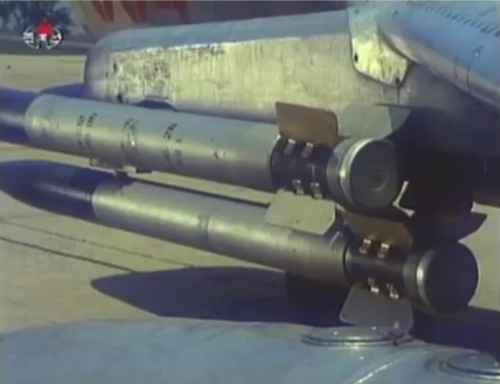
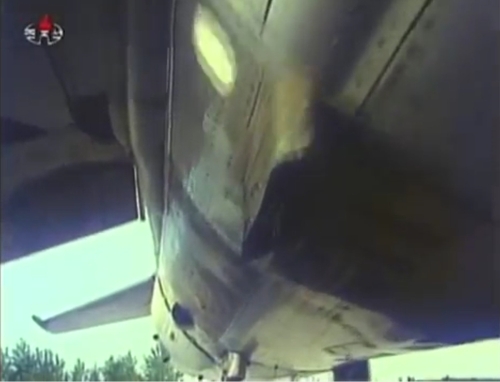
Bombs can be carried on all six hardpoints. They are either 100kg or 250kg bombs (50kg bombs can likely also be fitted) — North Korea has a large number of Soviet dumb bombs, including the 250kg OFAB-250-270, for example, which has been seen fitted to the F-6. Much like the Soviet MiG-19 and Chinese J/F-6s, the F-6C in North Korean service can be (and often is) fitted with two 760l fuel tanks, mounted on the primary underwing hardpoint.
The F-6C does not have any radar, and is limited to the semi-directional SPO-2 radar warning receiver.
The F-6C is fitted with two WP-6a engines, producing a maximum 2300kgf thrust (up to 3250kgf when using the afterburner). It has a maximum speed (at 10,000m) of around 1,436 km/h, and a rate of climb of 180m/s.
Comparison table with other MiG-19 variants in-game
| Aircraft | MiG-19PT | MiG-19S | J-6A | F-6C | F-6C (KPAAF) |
|---|---|---|---|---|---|
| Tree (Operator) | USSR | Germany (GDR) | China | China (Pakistan) | United Korea (presumed) |
| Primary Armament | 2x 30mm NR-30(e) (140rds) | 3x 30mm NR-30 (210rds) | 2x 30mm Type 30-1 (140rds) | 3x 30mm Type 30-1 (210rds) | 3x 30mm Type 30-1 (210rds) |
| Missile Armament | 2x R-3S missiles | No missiles | 2x PL-2 missiles | 2x AIM-9P-3 missiles | 2x R-3S / PL-2 missiles |
| Suspended Armament | 4x ORO-57K rocket pods; 2x 100kg OFAB-100 bombs; 2x 250kg OFAB-250sv bombs | 4x ORO-57K rocket pods; 2x 100kg OFAB-100 bombs; 2x 250kg OFAB-250sv bombs | 4x ORO-57K rocket pods; 2x 100kg OFAB-100 bombs; 2x 250kg OFAB-250sv bombs | 4x ORO-57K rocket pods; 2x 100kg OFAB-100 bombs; 2x 250kg OFAB-250sv bombs | 2x triple 122mm rocket racks; 4x ORO-57K rocket pods; 6x 100kg OFAB-100 bombs; 6x 250kg OFAB-250-270 bombs |
| Electronic Systems | Radar (RP-5), RWR (SPO-2) | Radar (SRD-1), RWR (SPO-2) | Radar (RP-5), RWR (SPO-2) | RWR (SPO-2) | RWR (SPO-2) |
| Engines | 2x RD-9B: 2300kgf (3250kgf afterburner) | 2x RD-9B: 2300kgf (3250kgf afterburner) | 2x WP-6a: 2300kgf (3250kgf afterburner) | 2x WP-6a: 2300kgf (3250kgf afterburner) | 2x WP-6a: 2300kgf (3250kgf afterburner) |
| Battle Rating (Air RB) | 9.3 | 9.3 | 9.3 | 9.7 | 9.7 (presumed) |
Conclusion
The F-6C would be an excellent addition to the future United Korean aviation tech tree. The domestic modifications turn it into more of a fighter-bomber, separating it slightly from the in-game MiG-19 variants. Compared to the missile-armed Soviet prototype MiG-19PT and Chinese J-6A in-game (both at 9.3), it would have an additional 30mm cannon and improved suspended armament. Compared to the newly-added Pakistani-operated F-6C (9.7), it would swap out the AIM-9s for the R-3S / PL-2, but have improved suspended armament. This likely means it would also be placed at BR 9.7 (Air RB).
Specifications
Dimensions
- Length
- 12.54m
- Wingspan
- 9.04m
- Height
- 3.885m
Armament
- Weaponry
- Primary Weaponry
- 3x Type 30-1 (NR-30) 30mm cannons
- 210 rounds (70 each)
- 850 rpm
- Ammunition
- HEF-I/HEFI-T/APHE belt
- 40mm @ 0° @ 10m
- HEF-I/APHE/APHE/APHE belt
- 40mm @ 0° @ 10m
- HEF-I/HEFI-T/HEFI-T belt
- 6mm @ 0° @ 10m
- 3x Type 30-1 (NR-30) 30mm cannons
- Suspended Weaponry
- Air-to-air missiles
- 2x R-3S / PL-2
- Guidance
- Infrared (IR)
- Aspect
- Rear-aspect
- Lock range
-3.5km - Launch range
- 9km
- Maximum speed
- Mach 1.7 (2099km/h; 583m/s)
- Maximum overload
- 10G
- Guidance time
- 21s
- Projectile mass
- 75.3kg
- Explosive mass
- 5.5kg (8.8kg TNTe)
- Guidance
- 2x R-3S / PL-2
- Rockets
- Up to 4x ORO-57K rocket pods (8x rockets each)
- 57mm S-5K
- Explosive mass
- 372g (465g TNTe)
- Penetration
- 150mm @ 0°
- Explosive mass
- 57mm S-5KP
- Explosive mass
- 440g (528g TNTe)
- Penetration
- 250mm @ 0°
- Explosive mass
- 57mm S-5M
- Explosive mass
- 285g (439g TNTe)
- Penetration
- 10mm @ 0°
- Explosive mass
- 57mm S-5K
- Up to 4x 122mm rocket racks (3x rockets each)
- Unknown 122mm rocket
- Up to 4x ORO-57K rocket pods (8x rockets each)
- Bombs
- Up to 6x 100kg bombs
- 100kg FAB-100M-43
- Explosive mass
- 49.9kg (TNT)
- Up to 6x 250kg bombs
- 250kg OFAB-250-270
- Explosive mass
- 97kg (TNT)
- Up to 6x 100kg bombs
- Air-to-air missiles
- Drop Tanks
- 2x 760l drop tanks
- Primary Weaponry
Mobility
- Weight
- Empty
- 5.5t
- Maximum takeoff weight
- 8.83t
- Empty
- Engines
- 2x WP-6a
- Thrust
- 2300kgf
- 3250kgf (afterburner)
- Maximum speed
- 1436km/h (Mach 1.2)
- Maximum rate of climb
- 180m/s
- Maximum altitude
- 17,200m
Other
- Crew
- 1
- Electronics
- Radar warning receiver
- SPO-2
- Band
- I
- Range
- 30km
- Band
- SPO-2
- Radar warning receiver
Images
Spoiler
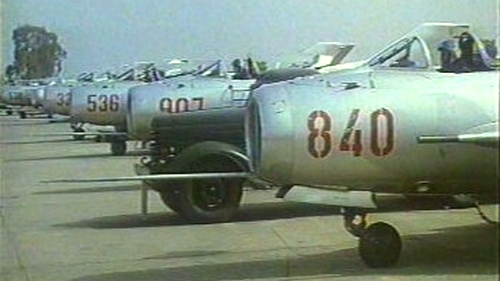
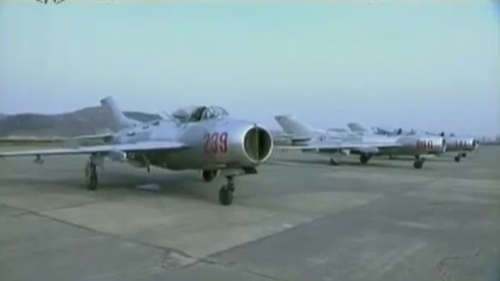
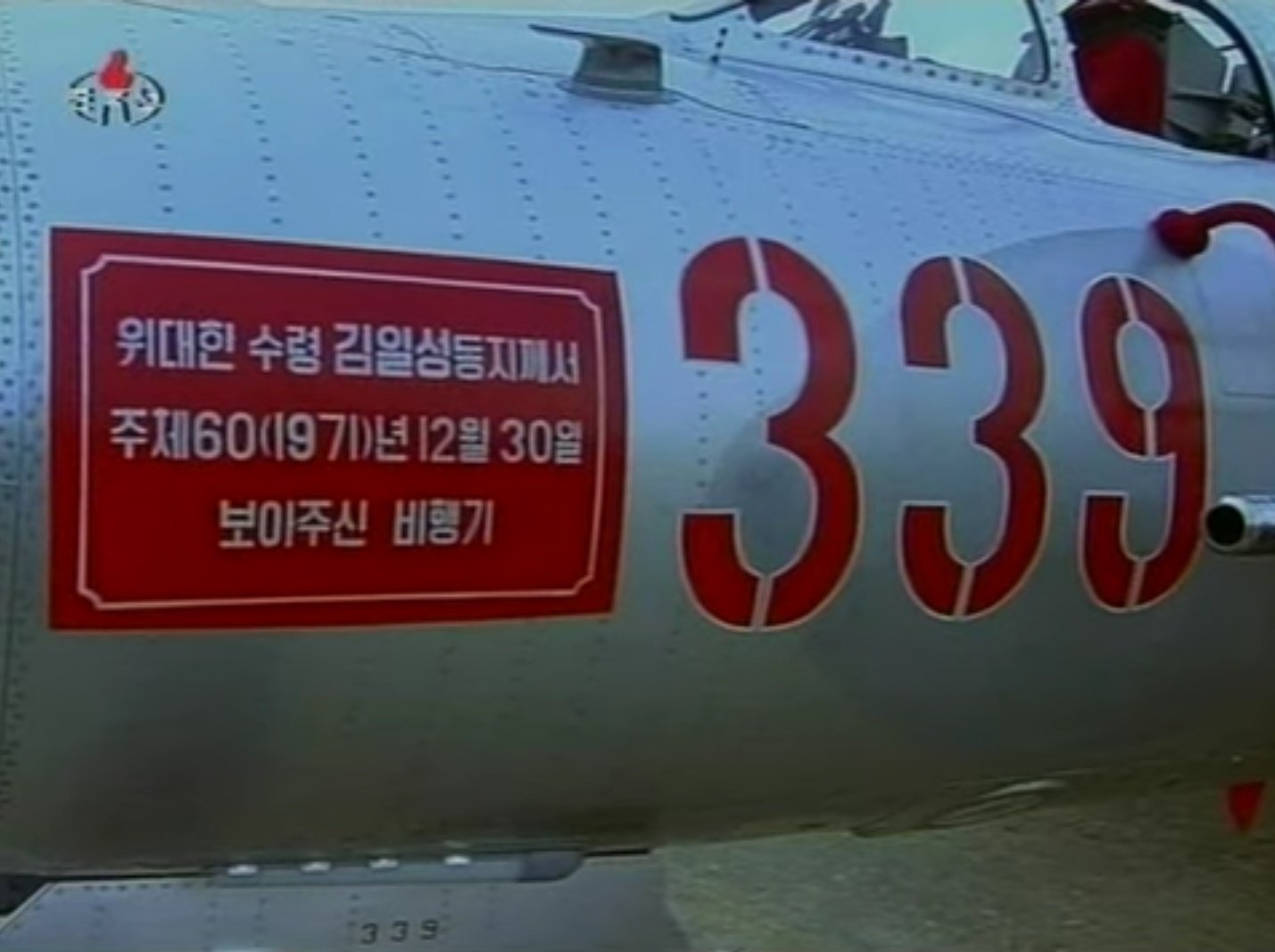
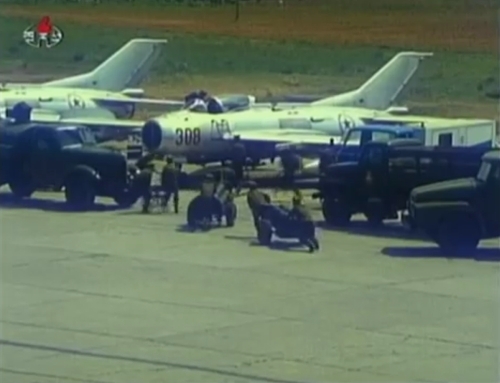
Some of these images are the standard F-6, and not the F-6C
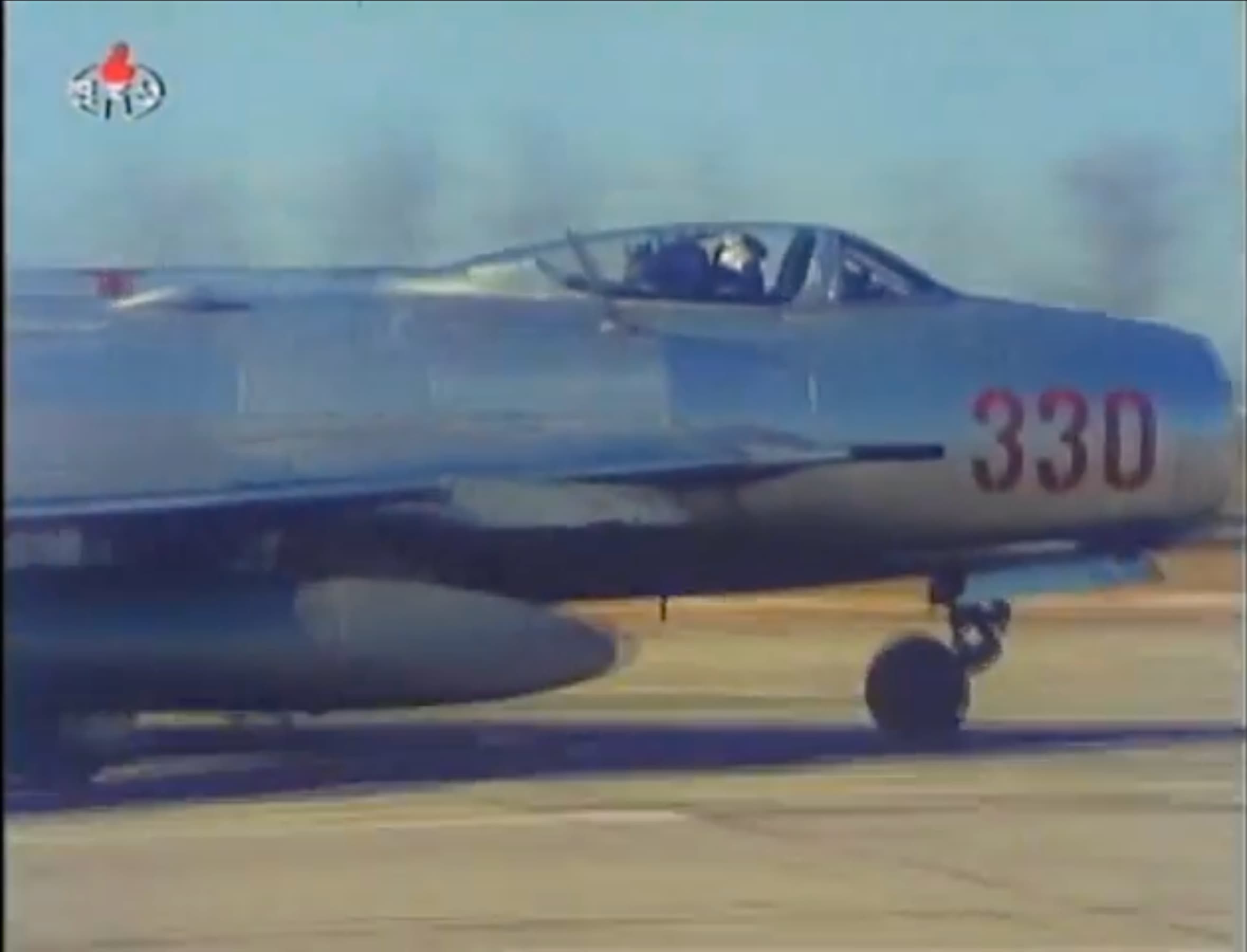
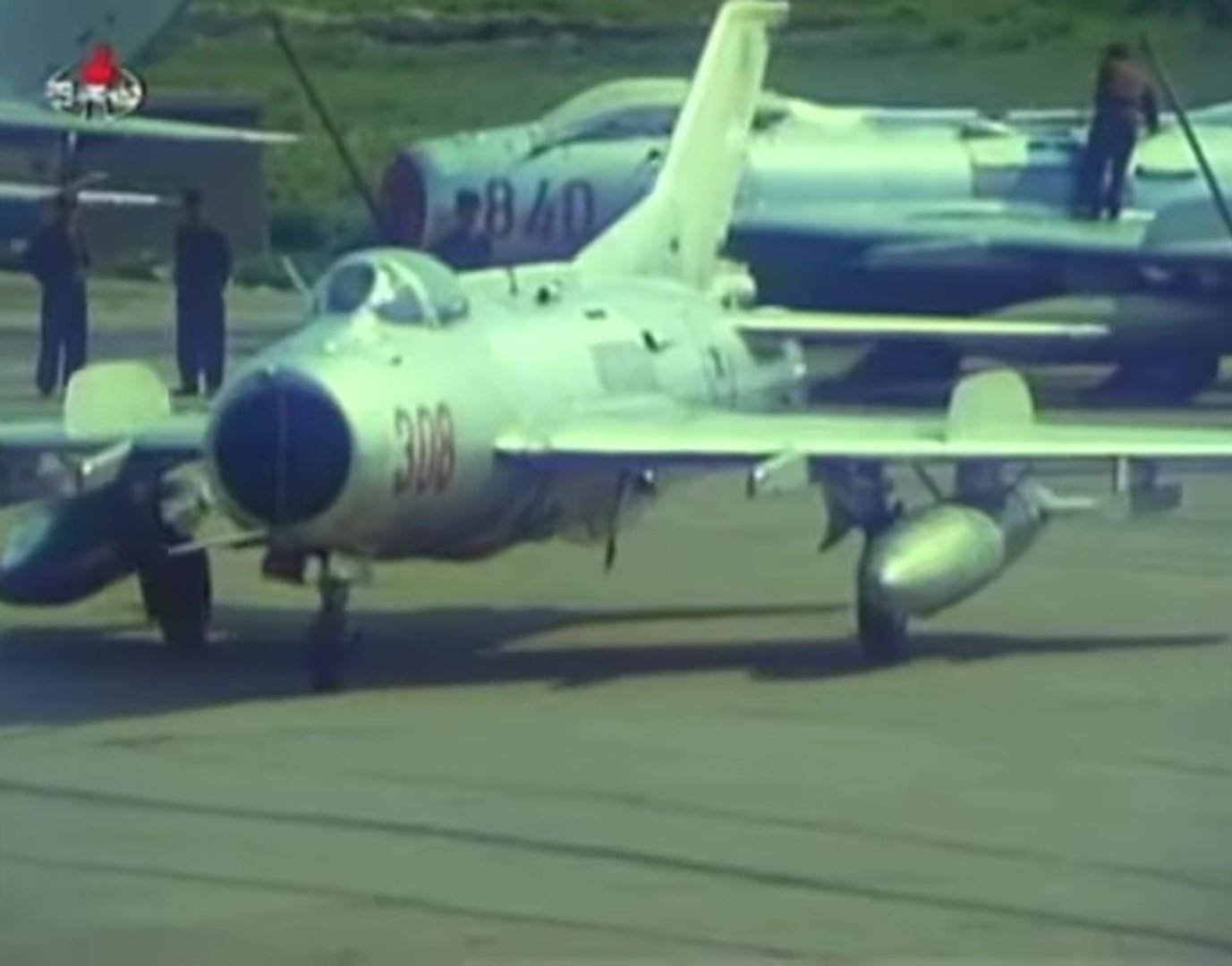
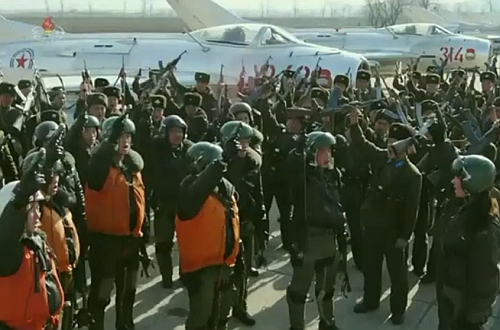
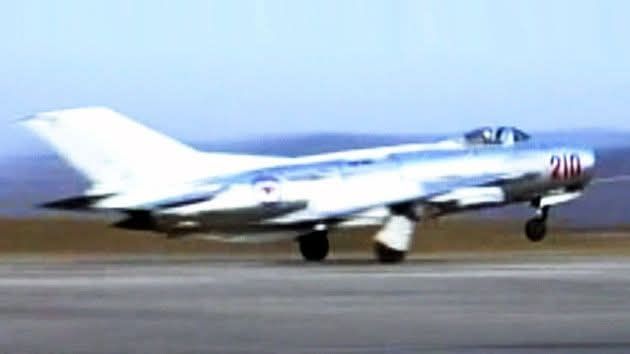
The following images are of F-6C no. 529 after defecting to South Korea
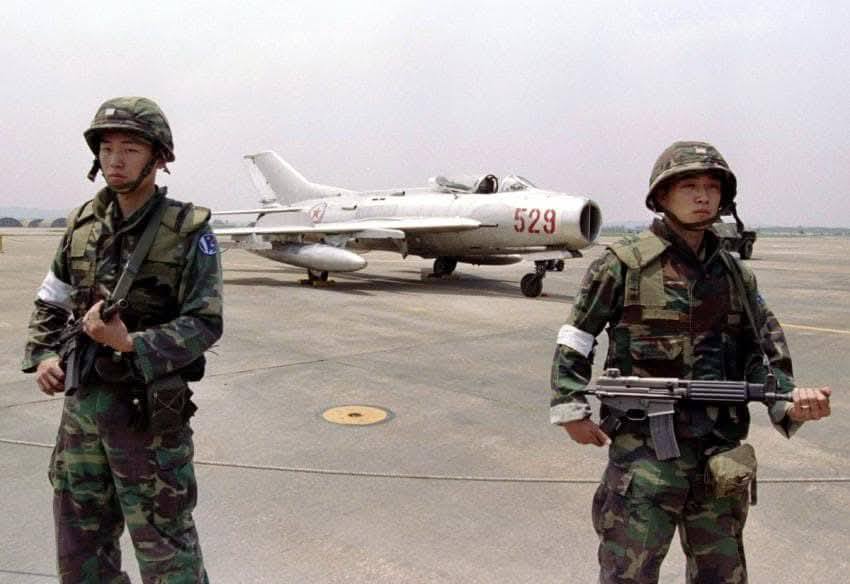
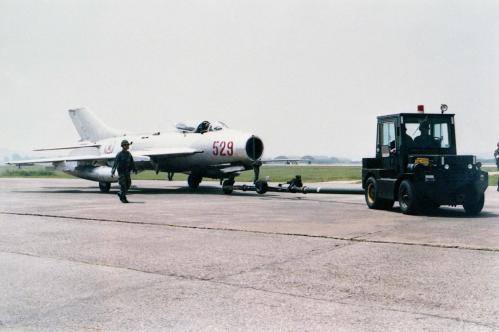

Sources
Spoiler
The Armed Forces of North Korea — On the Path of Songun (2020). Stijn Mitzer and Joost Oliemans.
中国飞机全书(第三卷) (2011). Wei Gang, Chen Yingming, and Zhang Wei.
North Korean MiG-19 - Shenyang F-6-19