- Yes
- No
Hello everyone and welcome to this new suggestion.
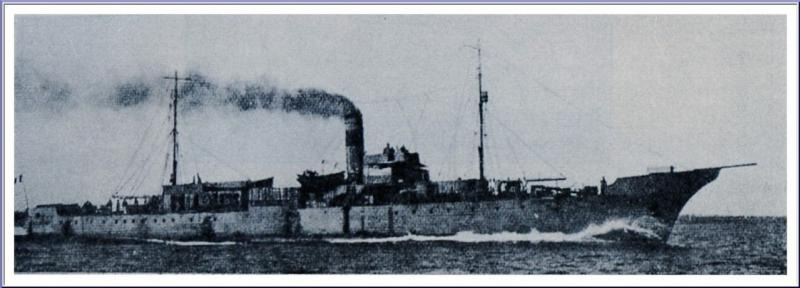
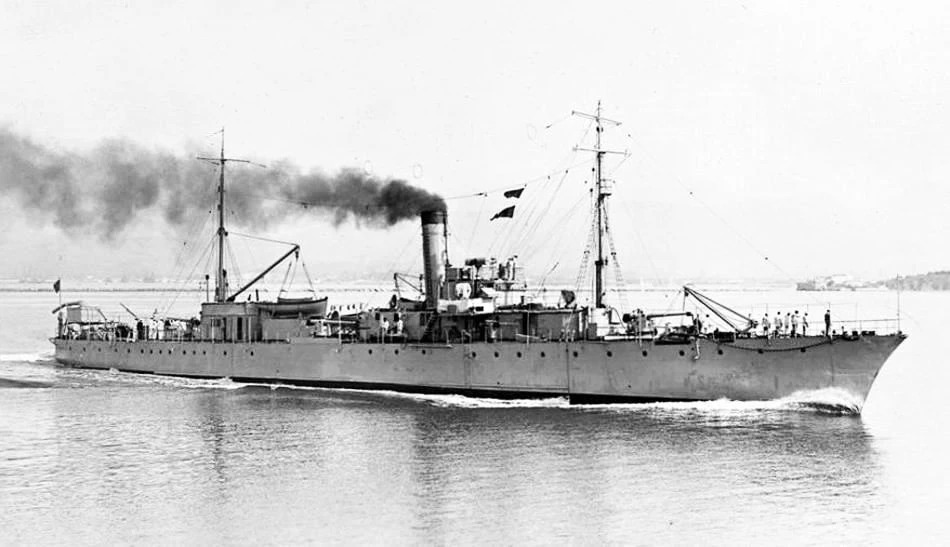
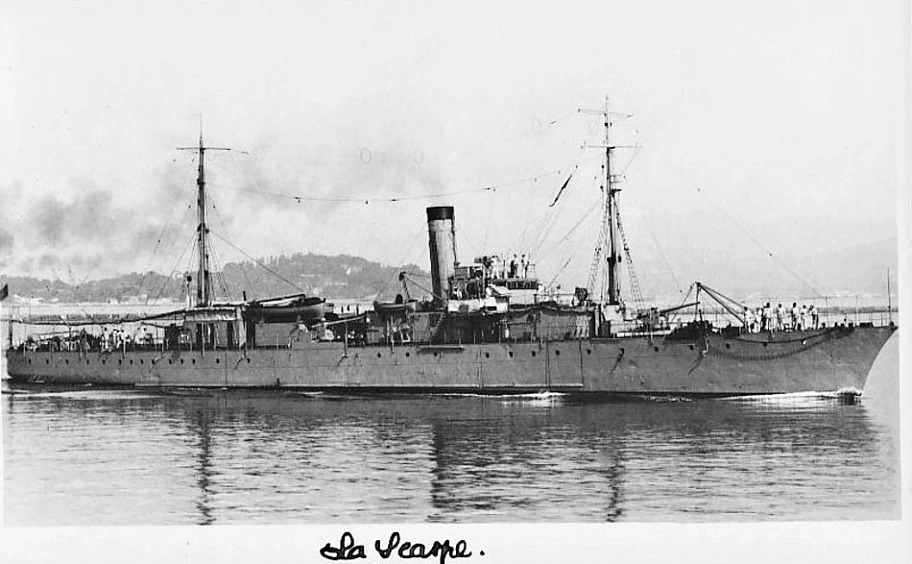
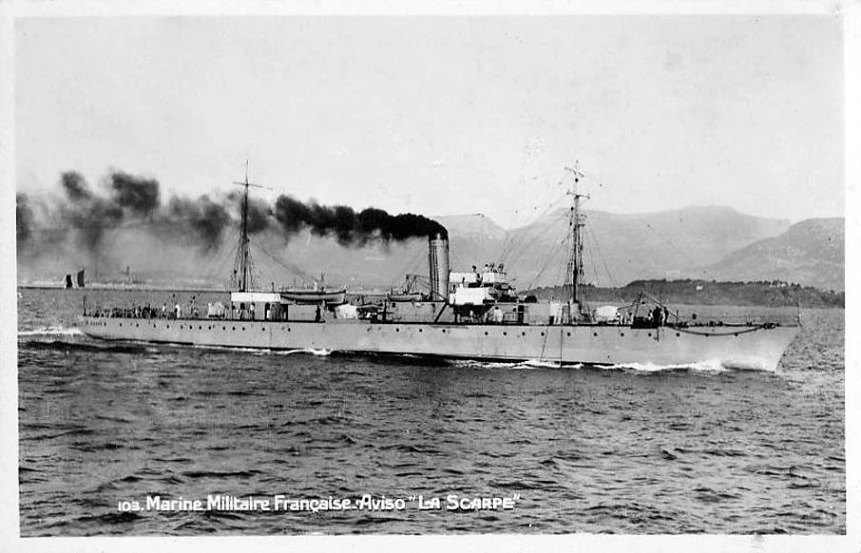
Today I’m presenting a new class of French gunboat, the Scarpe-class gunboats, and more specifically the first unit of this class, the Scarpe.
During the World War I, maritime trade and military supply routes were increasingly threatened by the growing number of German U-boat submarines operating in the Atlantic and the Channel. These submarines were capable of striking merchant vessels with little warning, causing significant losses to Allied shipping and severely disrupting the transport of troops, raw materials, and supplies.
As a result, the French naval command adopted two complementary solutions. On one hand, many civilian ships were requisitioned and converted into auxiliary escort vessels. On the other hand, new ships were ordered that were specifically designed to serve as convoy escort gunboats, capable of protecting merchant formations while remaining relatively inexpensive and quick to build. It was within this context that the Scarpe class was designed.
The Scarpe was laid down in 1916 and completed in 1918, becoming the first of three gunboats built in this class. These vessels were designed specifically for anti-submarine escort duties, with the primary mission of protecting merchant convoys from submarine attacks. However, like many ships built late in the war, the Scarpe entered service only in 1918, just as the conflict was coming to an end. As a result, the ship never participated in combat operations during the First World War.
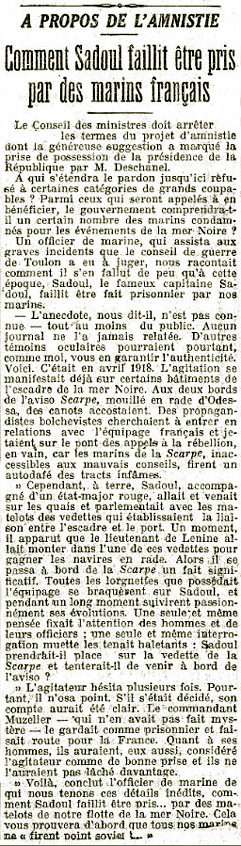
Following the end of the war, the Scarpe was assigned to patrol and surveillance missions in important maritime regions such as the North Atlantic Ocean and the English Channel. These patrols were intended to maintain naval presence, ensure maritime security, and protect commercial shipping routes that remained vital to the French economy. One of the ship’s first significant operational missions took place during the complex geopolitical situation that followed the collapse of the Russian Empire and the end of the war. The Scarpe took part in operations related to the evacuation of ports in the Sea of Azov, a region that had become unstable during the Russian Civil War. This mission brought the ship as far as Constantinople and into the Black Sea, where Allied naval forces were active during the postwar period.
In the following years, the Scarpe was assigned to the 5th Squadron of the French 3rd Squadron, where it served primarily as a training vessel. In this role, the ship helped train sailors and officers in seamanship, navigation, and naval operations.
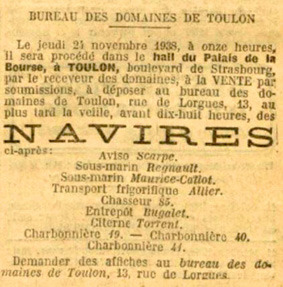
After more than two decades of service, the Scarpe was finally retired from active duty in 1938. Like many ships built during the First World War, it had become technologically outdated by the late 1930s, as naval warfare had evolved significantly in terms of speed, armament, and detection technologies.
Over the course of its career, the Scarpe underwent several small modifications. When originally built, the ship featured raised bulbs at the bow and stern designed to conceal its gun positions. This unusual design allowed the vessel to blend more easily into merchant convoys, giving it the outward appearance of a civilian ship while secretly carrying armament capable of engaging submarines. During the 1920s, these protective plates were eventually removed, improving the vessel’s navigation and overall maneuverability during peacetime service.
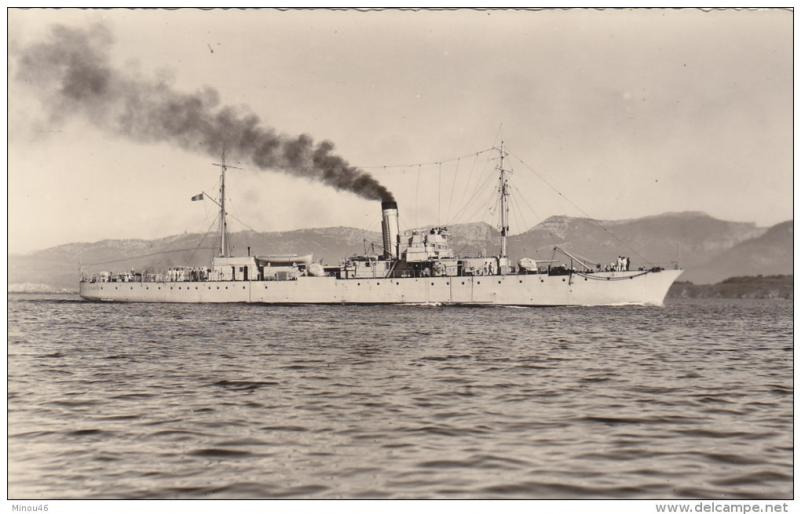
Characteristics
Length : 76.20 m
Width : 8.68 m
Draft : 3.27 m
Mass : 604 tons
The ship is powered by two Parson turbines fed by two oil-fired boilers (143 tonnes in reserve). Its maximum speed is 20 knots, a speed it can maintain for 107 hours. The ship’s estimated range is 4,000 nautical miles at a speed of 11 knots.
The crew is composed of 107 sailors.
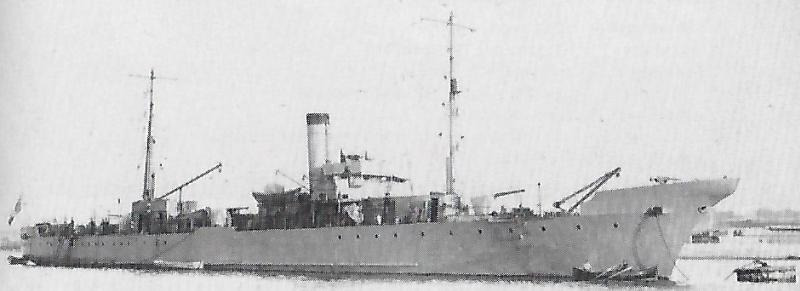
Weapons
Unlike many classes of ships designed for this role, the Scarpe received a particularly substantial armament, including :
Guns :
- 4 x 100mm canon
- 1 x 65 mm
Other :
- 2 x Thornycroft mortar
- Depth Charge
This ship would be a very interesting addition to the French tree, complementing other ships of the same role such as those of the Amien class and the Aisne class, thus completing the French coastal tree.
Pictures