- Yes
- No
- United Kingdom tech tree
- South African subtree (under UK)
- Independent South African naval tree
- Other
- No/negative
- WWII Destroyer configuration (4 × 1 4.7-inch QF Mk IX + 1 × 4 2-pdr + 4 × 2 20 mm Oerlikons + 2 × 4 21-inch Torpedoes)
- Cold War ASW Frigate (2 × 2 4-inch Mk 19 + 2 × 1 40L60 Bofors Mk 9 + 2 × 3 Mk 32 ASW Torpedoes + 2 × Westland Wasp HAS Mk 1)
- Both versions (as separate vessels)
- Premium/Event variant (for one or both of this class’ configurations)
- Other (please comment)
- No/negative
TL;DR: From WWII destroyers to Cold War helicopter frigates: a complete evolution of the South African Navy’s first major warships.
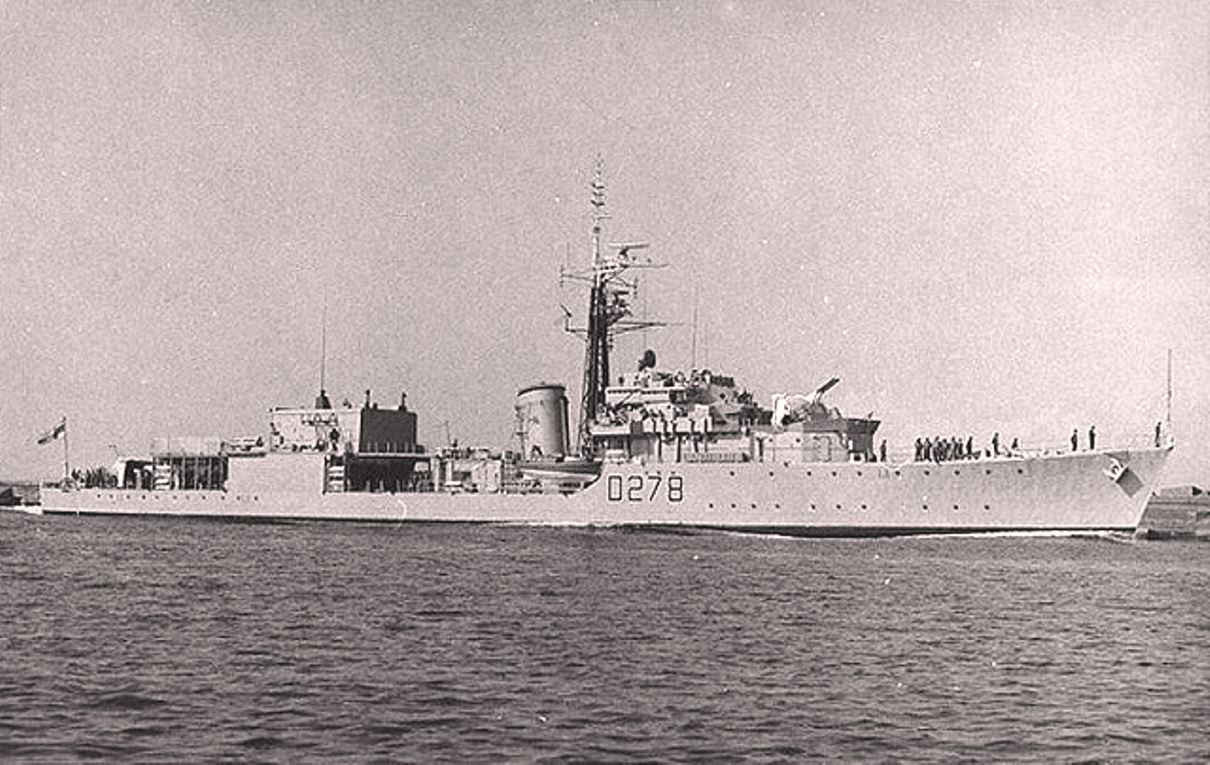
The modernised SAS Jan van Riebeeck in the late 1960s.
History
Spoiler
The Wager class began as part of the Royal Navy’s Emergency War Programme of 1942–43. These ships, designed for endurance, speed, and multi-role combat, filled a vital need during WWII. Two examples, HMS Wessex (R78) and HMS Whelp (R37), later became the cornerstones of South Africa’s modern navy.
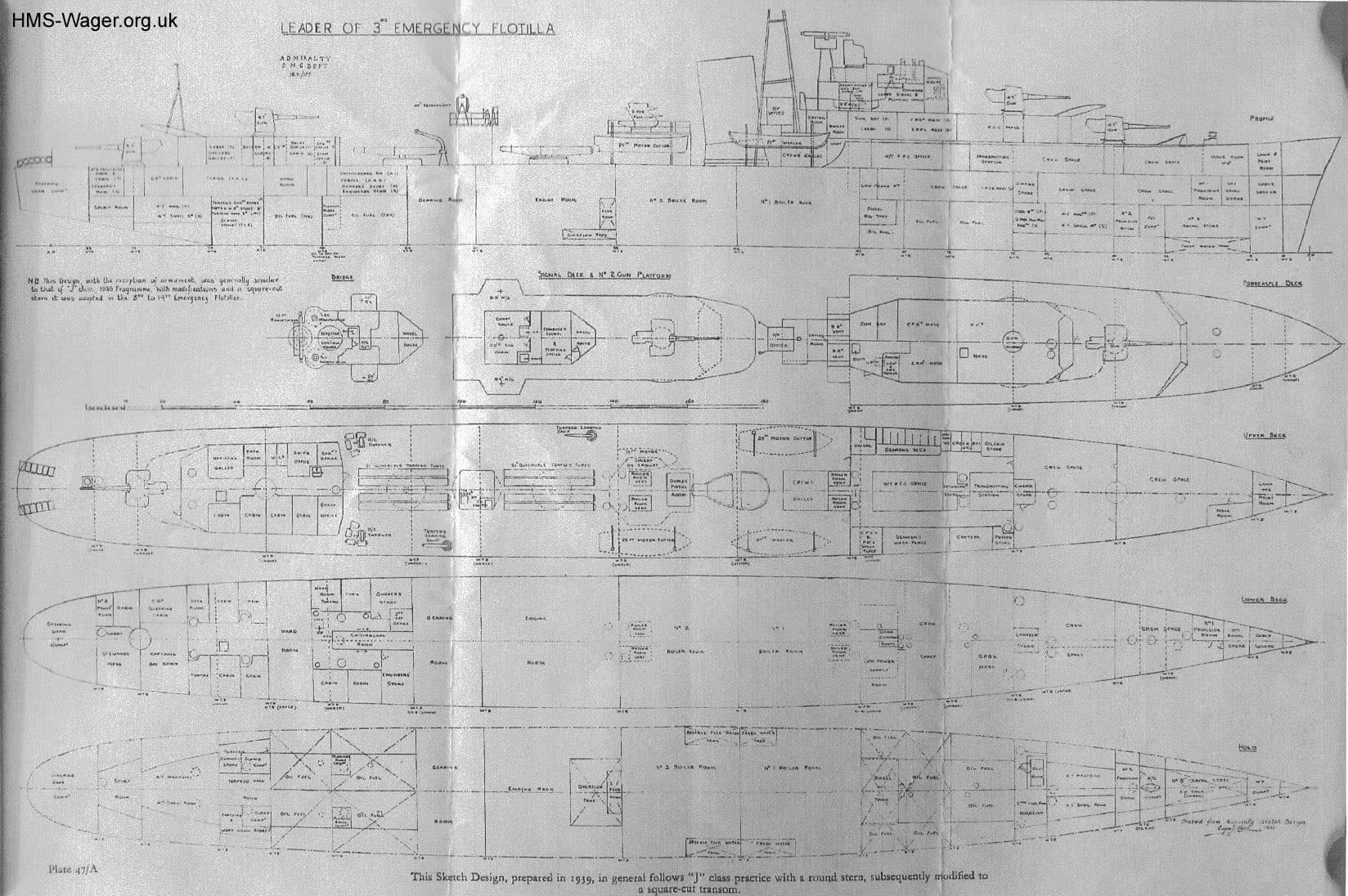
Blueprint of the Wager ClassHMS Whelp served with distinction under the command of Prince Philip, Duke of Edinburgh, in the Pacific Theatre, participating in operations off Japan and attending the formal Japanese surrender in Tokyo Bay in 1945. HMS Wessex, meanwhile, operated primarily in home waters before being placed in reserve post-war.
As Britain scaled back its fleet, surplus destroyers were offered to Commonwealth partners. South Africa, eager to establish itself as a regional naval power, acquired these vessels through an agreement with the Royal Navy. HMS Wessex was transferred in 1950 and became SAS Jan van Riebeeck, followed by HMS Whelp in 1953, renamed SAS Simon van der Stel.
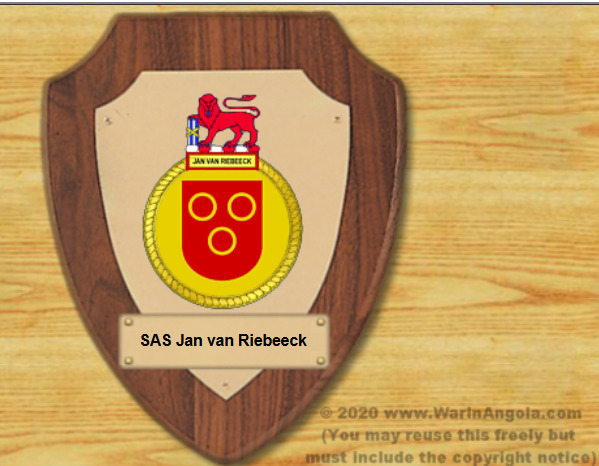
Shield of the SAS Jan van RiebeeckThroughout the 1950s, the destroyers served on long-distance training and goodwill cruises, representing South Africa abroad. Simon van der Stel’s 1954 voyage to Europe was a milestone, showcasing the SAN’s newfound operational reach. The ships were admired for their excellent seakeeping, robust design, and high speed — capable of 36.75 knots, powered by Parsons turbines producing 40,000 hp.
Their standard WWII armament included 4 × 4.7-inch QF Mk IX guns, a 4-barrel 2-pdr “pom-pom”, multiple 20 mm Oerlikons, torpedo launchers, and depth charges — making them formidable all-rounders for anti-surface, anti-air, and anti-submarine combat.
1950s Destroyer vs. 1960s Frigate Comparison
As-Built WWII Destroyer (circa 1943) Modernised ASW Frigate (1960s conversion) 4 × 4.7-inch QF Mk IX guns 2 × 2 4-inch Mk 19 dual-purpose turrets 2 × quadruple 21-inch torpedo tubes 2 × triple Mk 32 ASW torpedo launchers No aviation capability Hangar and flight deck for 2 × Westland Wasp HAS Mk 1 Speed: 36.75 knots Speed: 31 knots WWII-style radar and sonar Updated radar Type 293 and sonar systems Role: Fleet destroyer, convoy escort Role: Helicopter-equipped ASW frigate Crew: ~179 Crew: ~200 By the early 1960s, submarine warfare had advanced dramatically. The SAN recognized that its WWII destroyers, though reliable, could no longer meet the challenges posed by modern diesel-electric submarines. Lacking the resources for new ships, South Africa chose an innovative path: to convert the Wager-class destroyers into anti-submarine frigates, following the example of Britain’s Type 15 conversions but adapted locally at Simon’s Town Dockyard.
Schematic of the modernisation.SAS Simon van der Stel was modernised first (1962–1964), followed by SAS Jan van Riebeeck (1964–1966). The transformation was radical. The aft superstructure and torpedo launchers were removed to create a flight deck and hangar, allowing the operation of two Westland Wasp HAS Mk 1 helicopters — the SAN’s first shipborne aircraft. This capability expanded the ships’ ASW reach exponentially.
The ships received new armament: two twin 4-inch Mk 19 turrets, 40 mm Bofors AA guns, Mk 32 triple ASW torpedo tubes, and updated sensors, including Type 293 radar. Their speed reduced slightly to 31 knots, but their capabilities far outstripped their previous destroyer form.
During the 1960s, both ships operated extensively in training and patrol roles, forming the backbone of the SAN’s ASW fleet until replaced by the President-class in the 1970s. Simon van der Stel entered reserve in 1972, and Jan van Riebeeck followed later, being used as a target and sunk in 1980.
The Wager-class frigates symbolized a transition from colonial legacy to national innovation — ships that spanned the bridge between the gun-and-torpedo age and the helicopter-armed era of modern naval warfare.
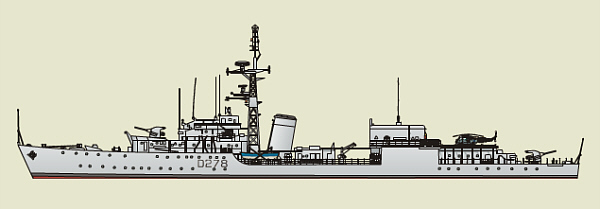
Specifications
As Built (Destroyer Configuration)
Specification Detail Displacement 1,710 t standard / 2,505 t full load Speed 36.75 knots Crew 179 Main Armament 4 × 1 4.7-inch QF Mk IX guns AA Armament 1 × 4 2-pdr, 4 × 2 20 mm Oerlikons Torpedoes 2 × 4 21-inch tubes ASW Depth charges (4 throwers, 2 rails) Modernised (Frigate Configuration)
Specification Detail Displacement 2,105 t standard / 2,750 t full load Speed 31.25 knots Crew 186–210 Main Battery 2 × 2 4-inch Mk 19 dual-purpose guns Anti-Air 2 × 1 40/60 Bofors Mk 9 ASW Torpedoes 2 × 3 Mk 32 launchers Aviation 2 × Westland Wasp HAS Mk 1 helicopters Electronics Radar Type 293
Place in War Thunder
The Wager class would bring a uniquely rich progression to South African naval forces.
- The WWII destroyer variant could fit around Rank III, offering strong firepower, good mobility, and balanced AA defenses.
- The Cold War ASW frigate would fit around Rank V or VI, trading raw firepower for technological sophistication, helicopter support, and ASW flexibility.
Together, these ships represent the evolution of Commonwealth destroyer design and could serve as the foundation for a South African subtree, under the Royal Navy tree, or even as premium/event ships highlighting SAN history.
Pictures
Images
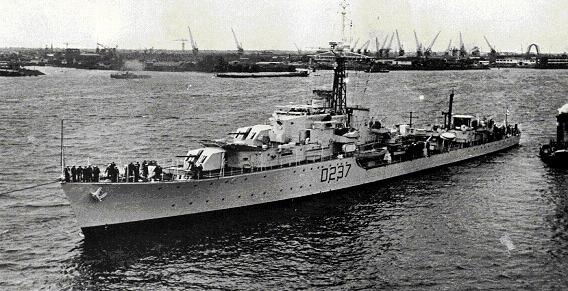
One of the rare foto’s of the early fit on the SAN Simon van der Stel in Rotterdam during her visit to the Netherlands. She was the first South African warship to visit The Netherlands.
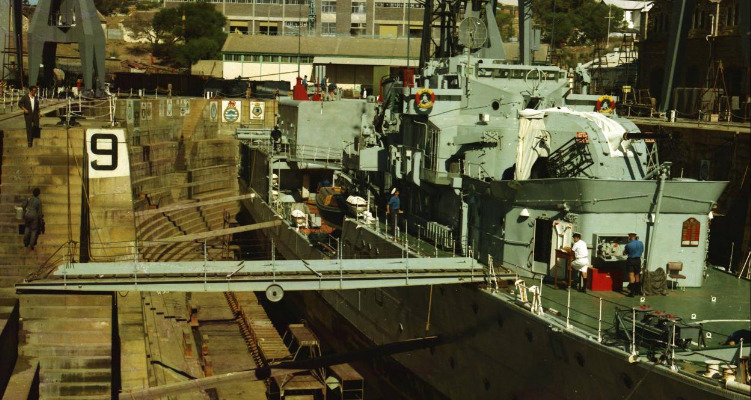
SAS Jan van Riebeeck at Simon’s Town Dockyard.
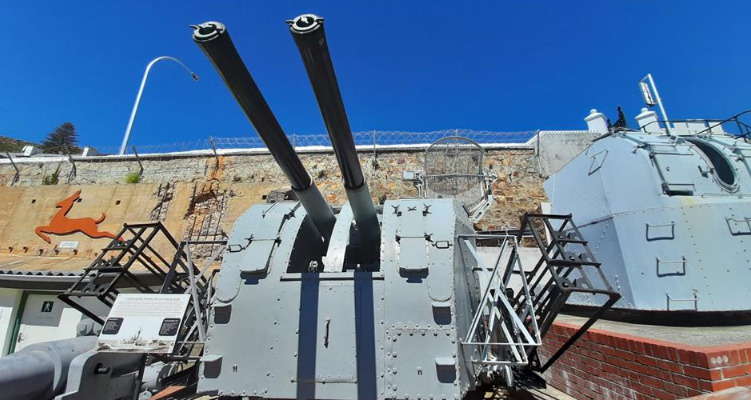
4-inch Mk 19 twin mountings preserved at the SA Naval Museum.
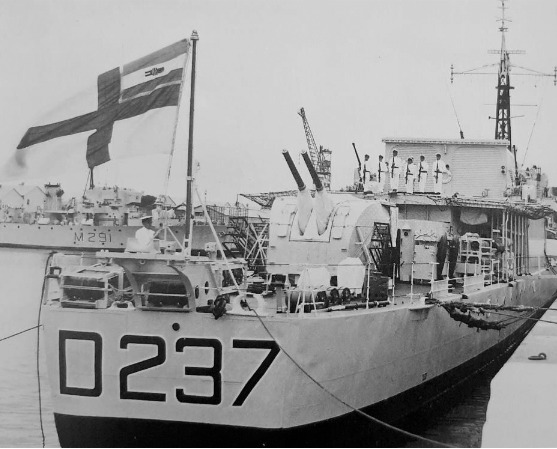
Stern of SAS Simon van der Stel post-refit.
Sources
Sources
- Naval-Encyclopedia. (2022, August 20). Wager class Destroyers (1950) – South African Navy. https://naval-encyclopedia.com/cold-war/south-africa/wager-class-destroyers.php
- Du Toit, A. D. (1992). South Africa’s Fighting Ships: Past and Present. Ashanti Publishers, pp. 193–200.
- Wessels, A. (2012). South Africa’s Naval Forces, 1922–2012. Scientia Militaria: South African Journal of Military Studies, 40(1), 268–287.
- South African Aviation Foundation Museum. (n.d.). Westland Wasp HAS Mk 1. https://saafmuseum.org.za/westland-wasp-has-mk-1/
- Wikipedia. (2023). W and Z-class destroyers. https://en.wikipedia.org/wiki/W_and_Z-class_destroyer