- Yes
- No

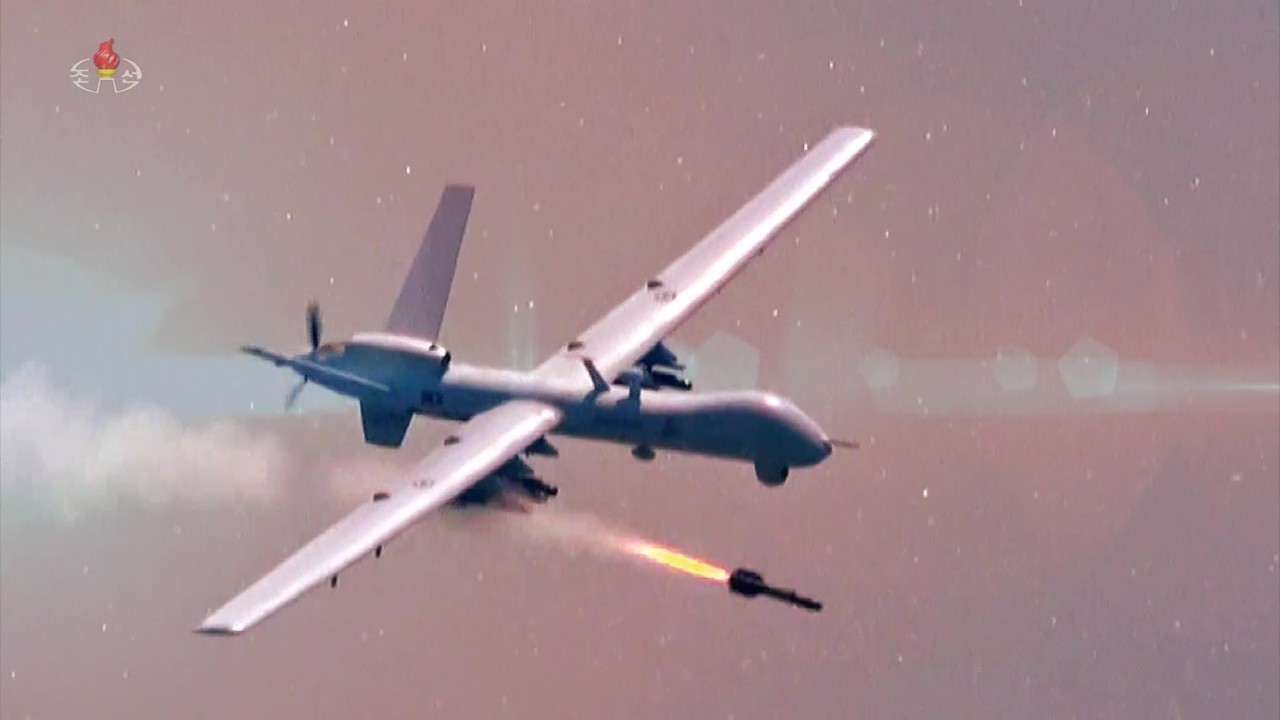
TL;DR: North Korean copy of the MQ-9 Reaper UCAV, armed with advanced air-to-ground missiles and glide bombs
History
The MQ-1 Predator was an American Unmanned Combat Aerial Vehicle (UCAV) in service from 1995–2018. It entered production in 1995, and could be equipped with two AGM-114 Hellfire missiles. It had a wingspan of 14.8m, a total weight of just over 1t, and one 115hp engine, giving it a top speed of 217km/h. In the early 2000s, General Atomics began development of the ‘Predator B’, a significantly improved design. The first prototype flew in early 2001 — it was heavily based on the Predator, but had an enlarged fuselage and increased wingspan (19.5m), as well as a significantly more powerful turboprop engine, providing 950hp. Later that year, the USAF purchased two Predator Bs for evaluation. The Predator B subsequently won the competition for the USAF’s next ‘Hunter-Killer’ UAV in 2004, and was designated MQ-9 Reaper. The MQ-9 Reaper entered service with the USAF in 2007. It has seen extensive use in combat in the Middle East, and has also been exported widely, including to the UK, Spain, Italy, and France.
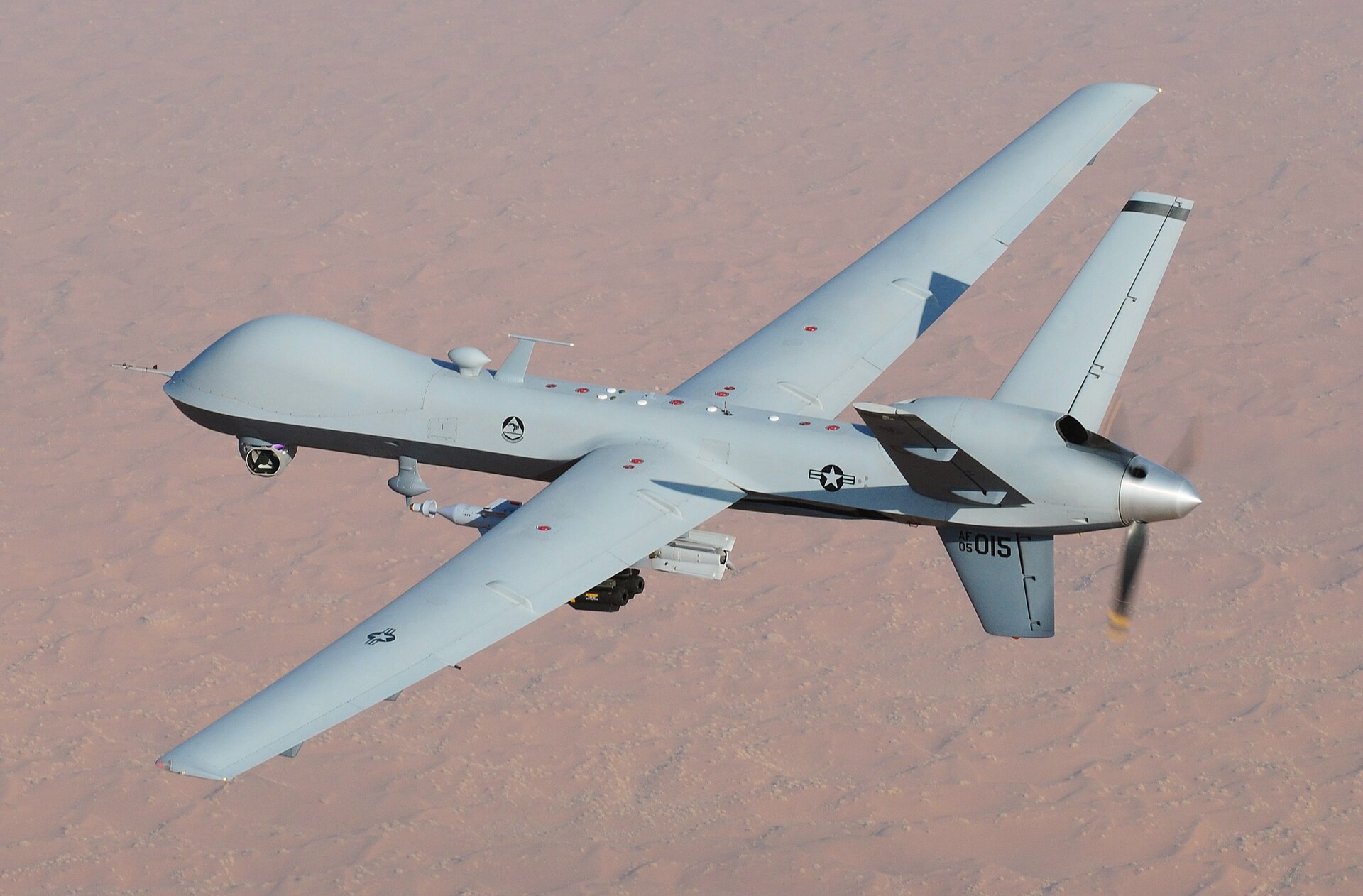
An MQ-9 Reaper over southern Afghanistan, 2008
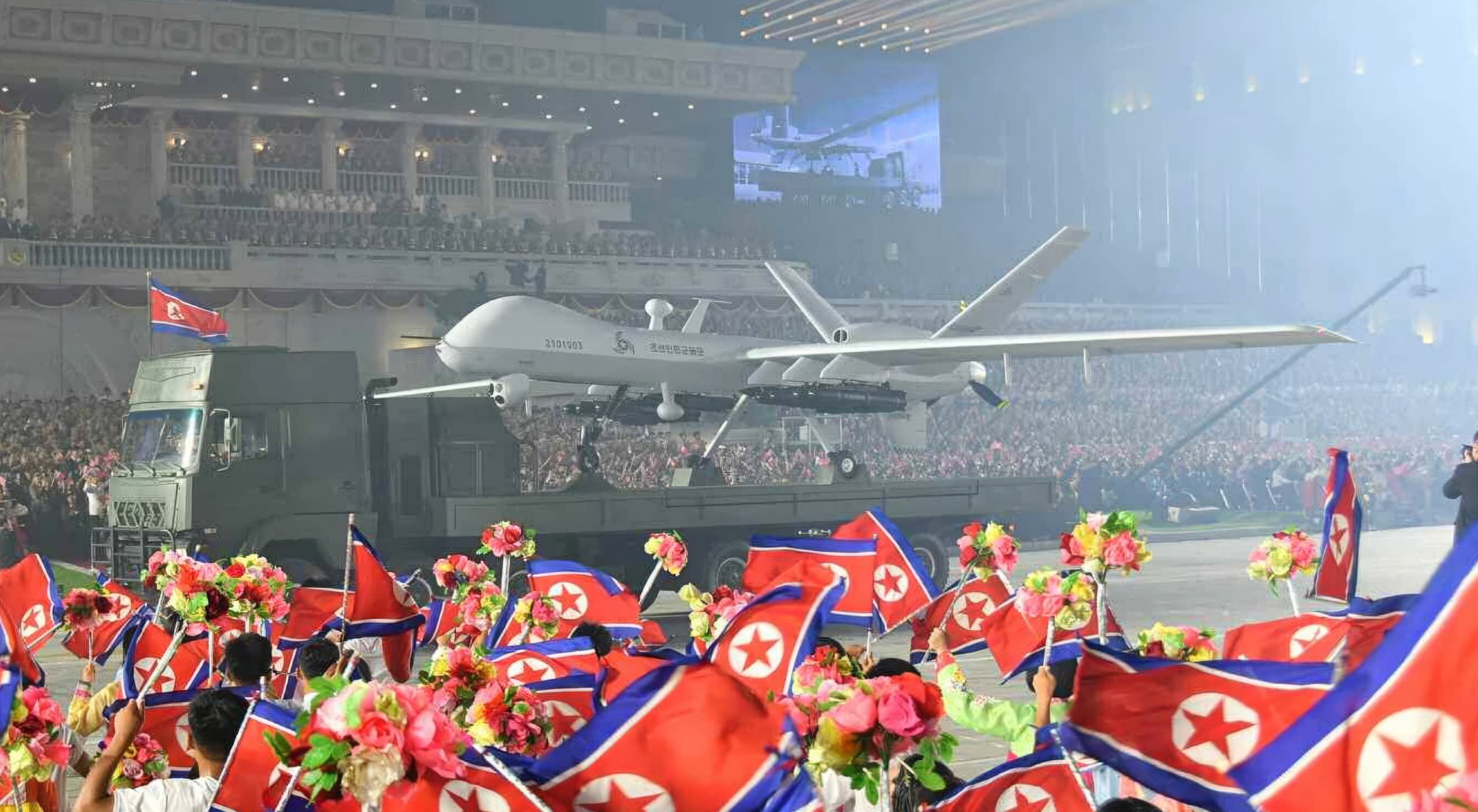
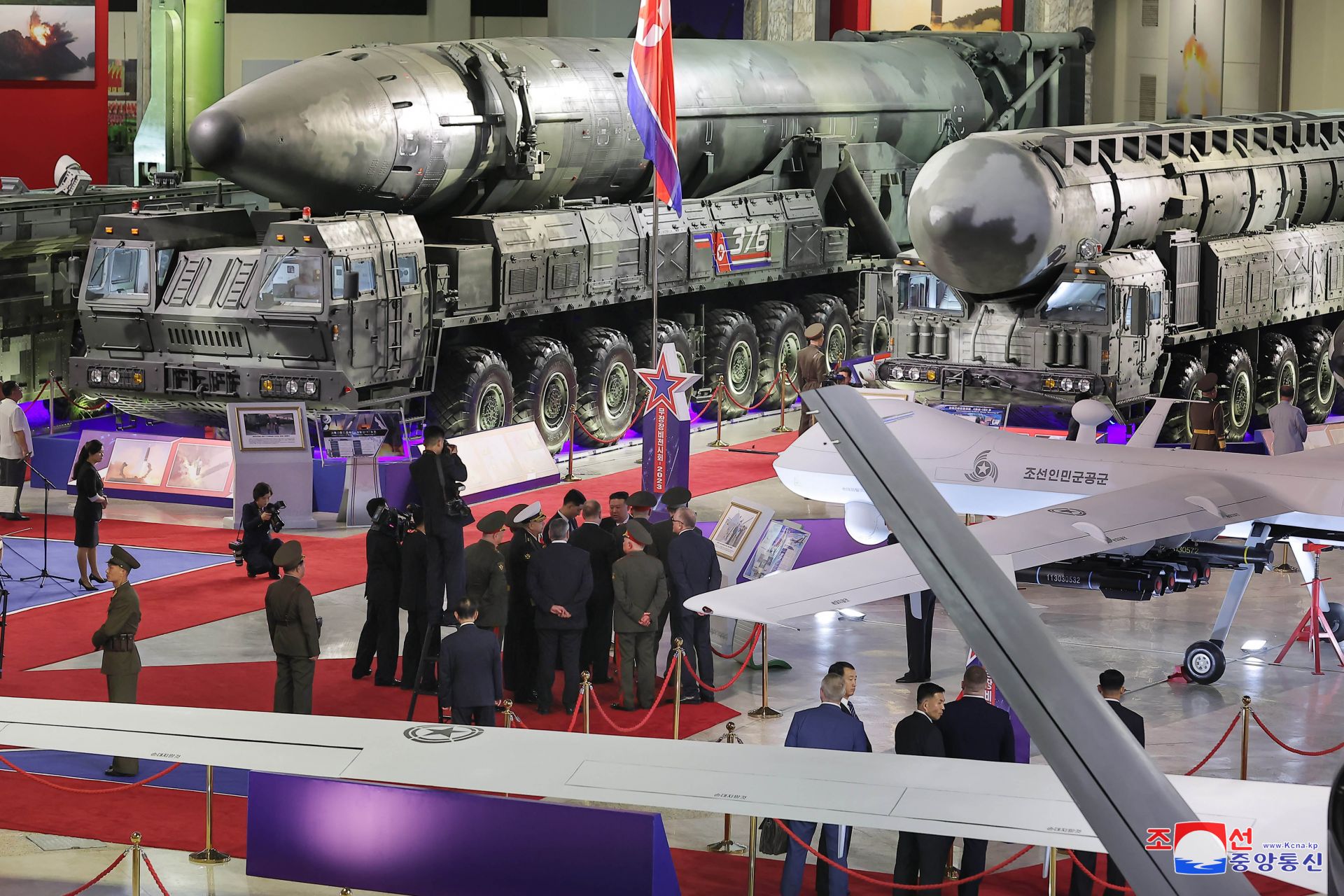
In January 2021, North Korea announced the Five-Year Plan for National Defense at the 8th Congress of the Worker’s Party of Korea. One of the objectives set was to further develop unmanned strike capabilites. On the 26th July 2023, during the Armed Equipment Exhibition 2023, North Korea unveiled two UAVs, designated Saetpyŏl-4 [샛별-4] and Saetpyŏl-9 [샛별-9] (n.b. this is more commonly romanised as Saetbyol or Saebyeol; Saetpyŏl is the proper romanisation following North Korea’s system). The former was described by state media as a “strategic reconnaissance drone” and the latter as a “multi-purpose attack drone”. They were then displayed on 27th July 2023 at the parade celebrating the 70th Anniversary of the Day of Victory in the Great Fatherland Liberation War.
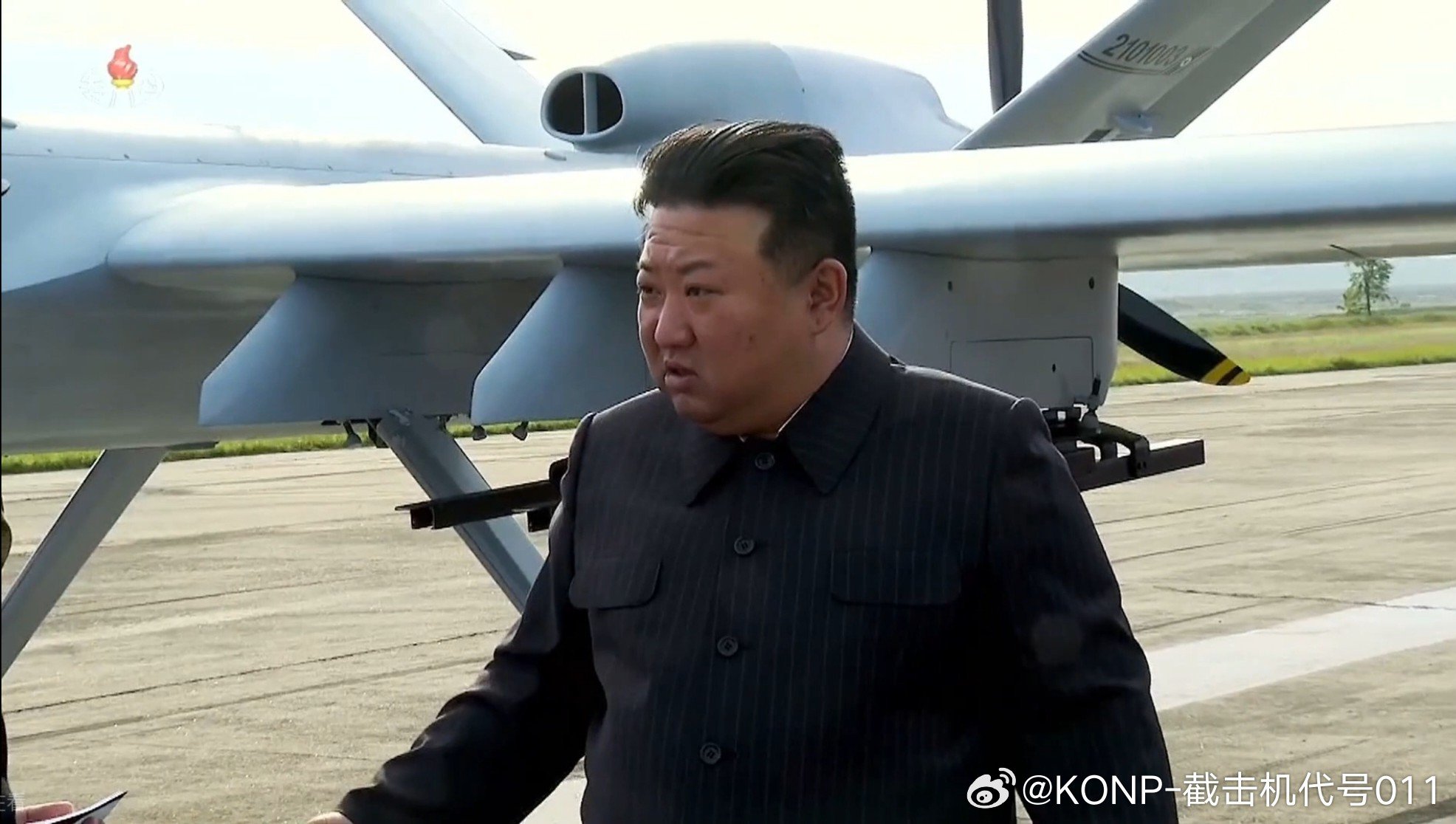
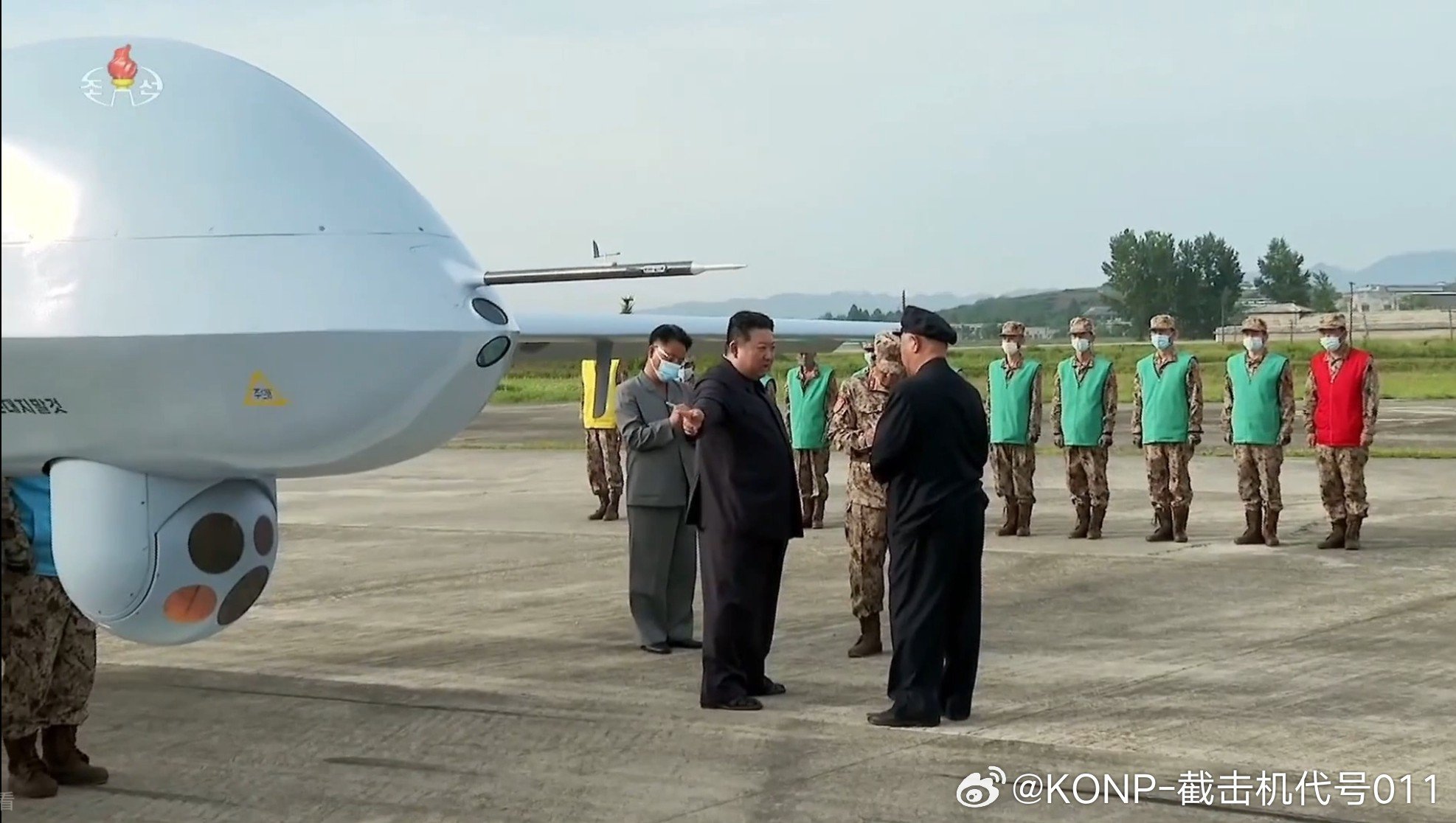
The Saetpyŏl-4 and Saetpyŏl-9 take heavy inspiration from the US-built RQ-4 Global Hawk and MQ-9 Reaper respectively (including their names), although both are believed to be largely comprised of domestic (and Chinese) parts and electronics. The Saetpyŏl-4 in particular has a few notable differences, and it is likely that resemblance to the RQ-4 is mostly superficial. The Saetpyŏl-9 is much closer to the MQ-9 — it has been theorised that information about the MQ-9 was passed on to North Korea from Iran, who themselves obtained information and wreckages from the Houthis.
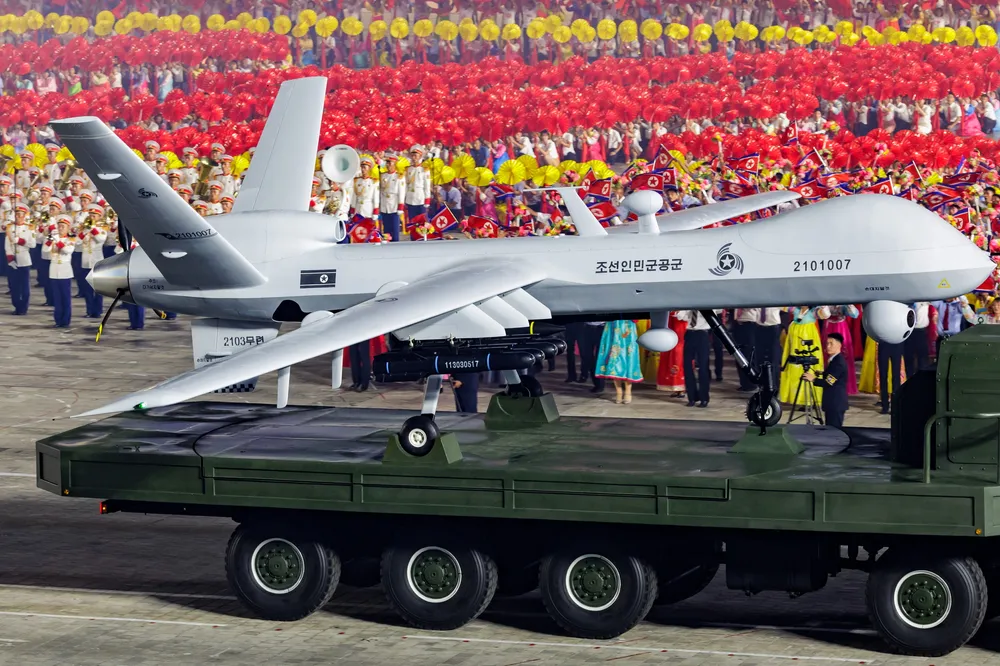
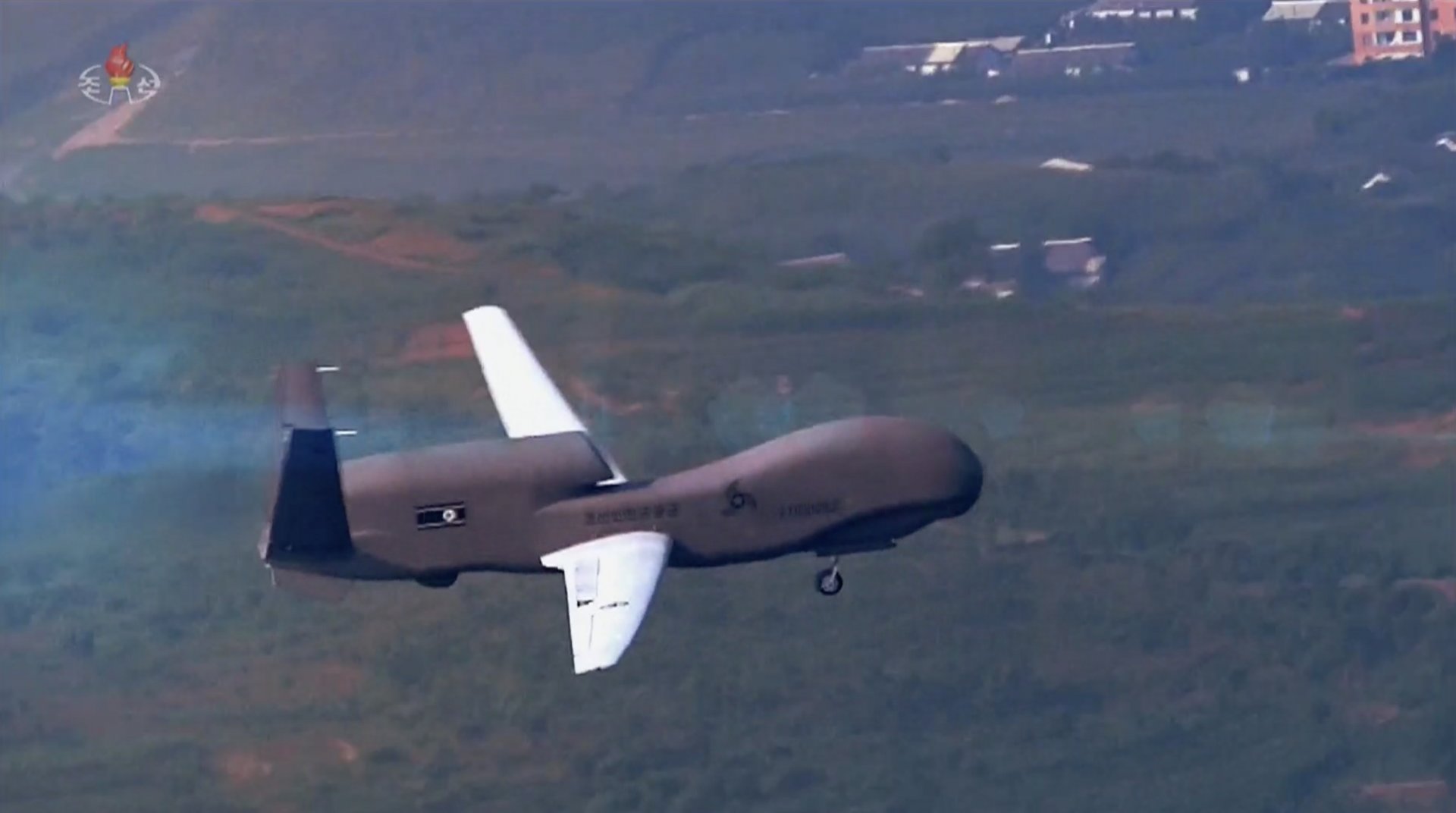
1. Saetpyŏl-9 during the July 2023 parade; 2. Saetpyŏl-4 in flight
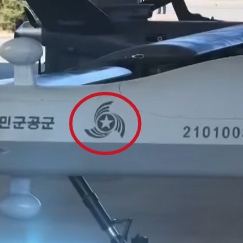
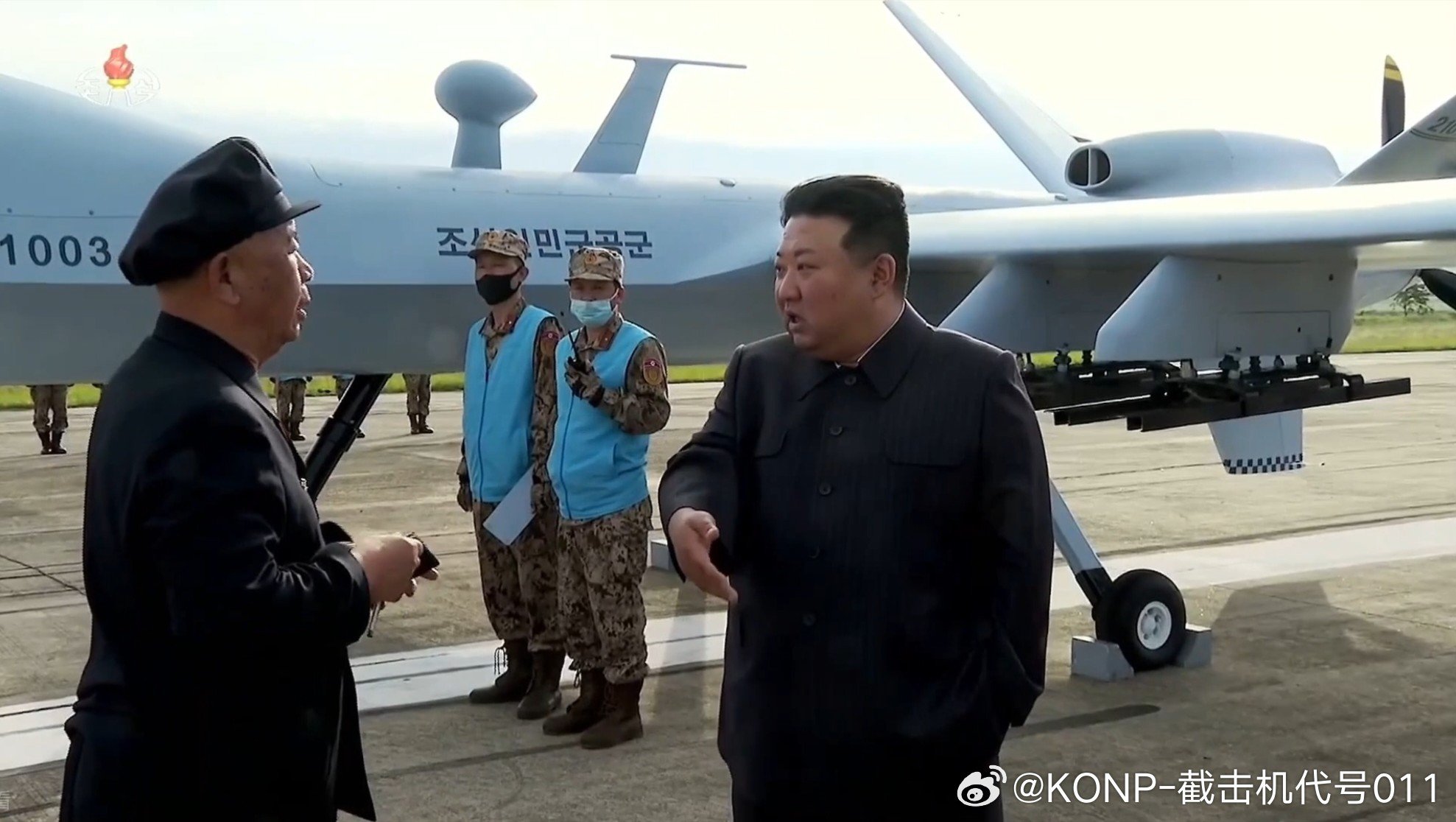
The Saetpyŏl-9 was first spotted in satellite imagery at Panghyon Airbase in September 2022, and subsequently in June 2023, although it was still subject to skepticism until its full reveal in July 2023. At the same time as the parade, footage was released of the Saetpyŏl-9 in flight and firing air-to-ground missiles. Analysts have compared the AGMs to the American AGM-114 Hellfire, or the Iranian copy, the Qaem-114. However, closer inspection reveals some differences to both, such as the lack of the cruciform stabilising nose fins and some similarities to the Chinese BA-11 (Blue Arrow 11). The BA-11 (or rather, a copy of it) was first seen in North Korea in 2021, alongside the copy of the Israeli Spike-NLOS (and / or Chinese HJ-10). In the footage, the Saetpyŏl-9 was fitted with eight AGMs (4x dual hardpoint). However, at the parade and the exhibition, it was shown with the four dual hardpoints, and an additional two hardpoints for glide bombs, closely resembling the American GBU-39.
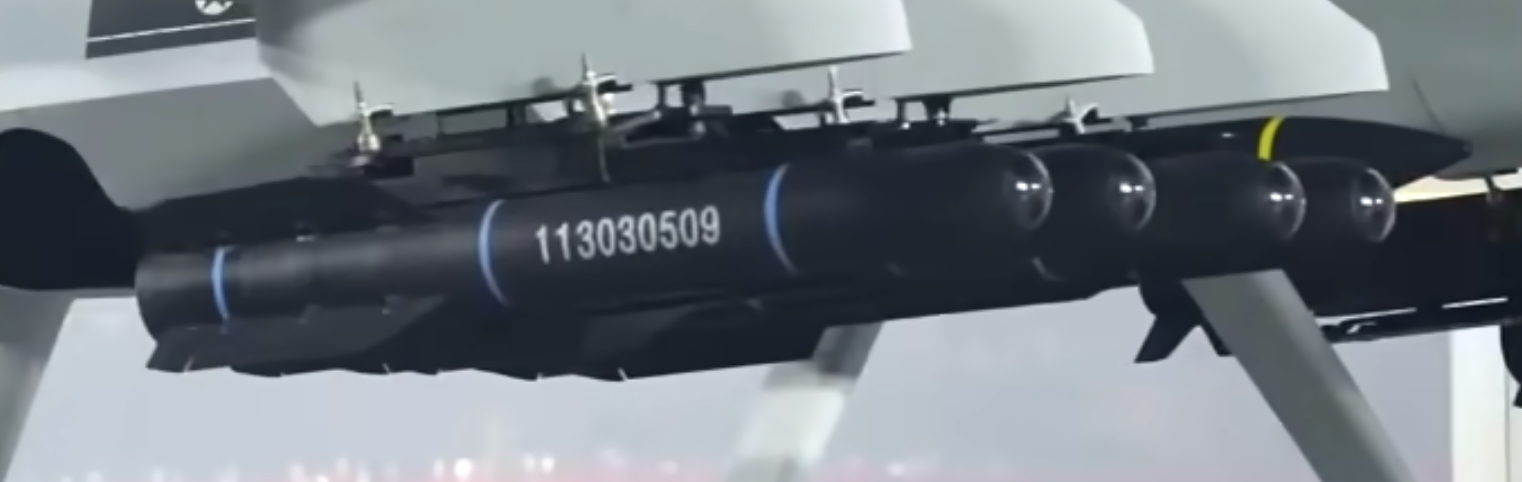
AGMs on the Saetpyŏl-9. Note the similarities to the AGM-114 Hellfire, but also the lack of nose fins
In November 2025, during the ceremony for the 80th anniversary of the Korean People’s Army Air Force (KPAAF), the Saetpyŏl-9 was displayed alongside a new variant. Whether this is also designated Saetpyŏl-9 is unknown. It features new wings, closer to the MQ-9B STOL or Mojave, as well as a few other notable changes. This variant was seen, along with the standard Saetpyŏl-9, armed with 10 new glide bombs that appear to be copies of the American GBU-53, albeit with a longer nose section.
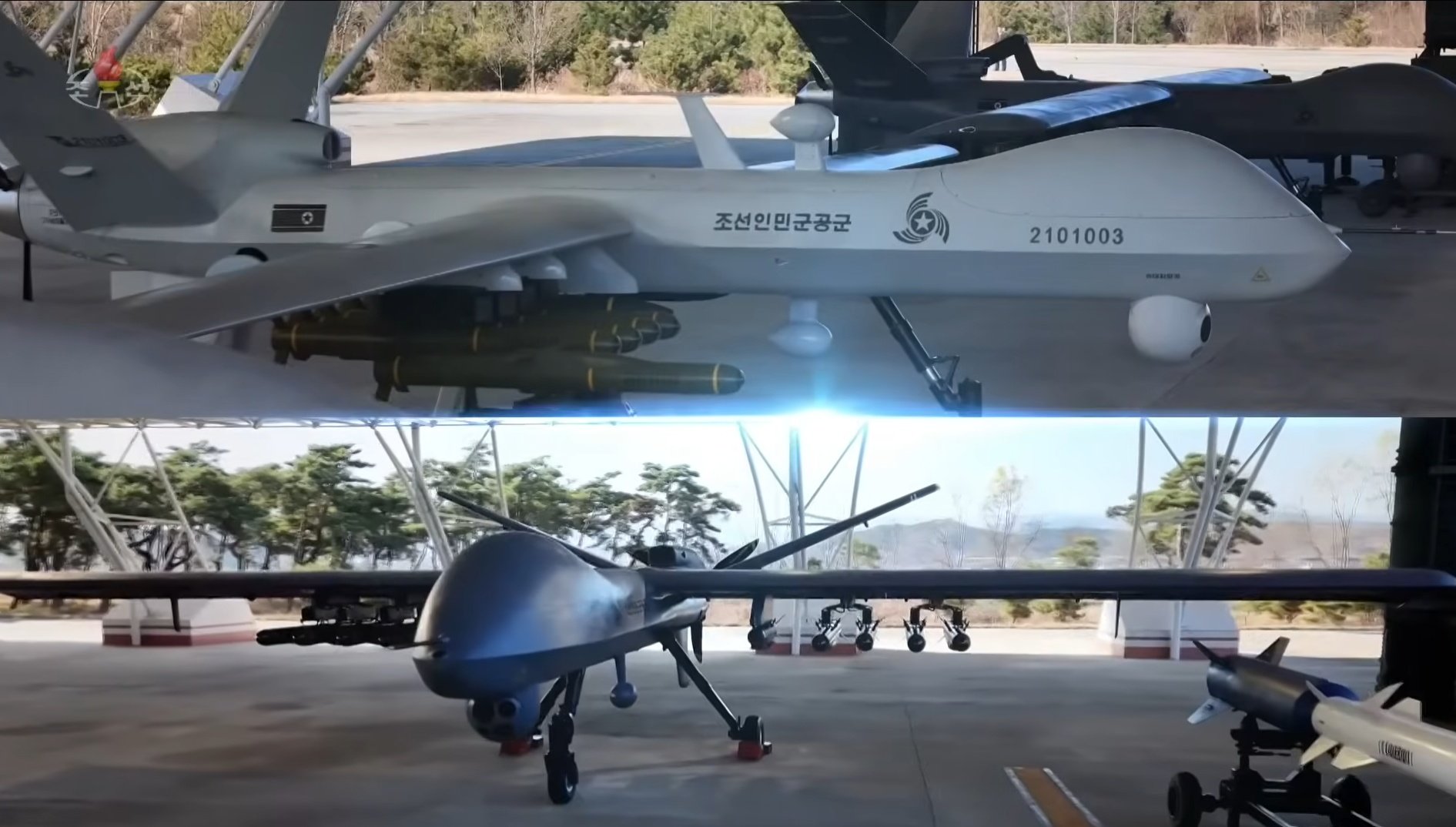
Top: Saetpyŏl-9 armed with what appear to be reverse-engineered and modified GBU-53s; Bottom: The new model of UCAV derived from the Saetpyŏl-9
Characteristics
The Saetpyŏl-9 has six hardpoints, for a limited but effective assortment of weapons. It is compatible with an air-to-ground missile that closely resembles the AGM-114 Hellfire, but also has similarities to the Blue Arrow 11 (BA-11). It can be assumed to have comparable, if slightly worse, characteristics to both of these. The AGM-114B is capable of penetrating 1100mm of armour, with an explosive mass of 8.02kg TNTe. It has a maximum speed of 475m/s, a guidance time of 45s, and a maximum range of 8km. The AGM-114K is capable of penetrating 1200mm of armour with a tandem warhead, and has an explosive mass of 9.4kg TNTe. It has a maximum speed of 475m/s, a guidance time of 45s, and a maximum range of 8km. The BA-11, on the other hand, is capable of penetrating 1400mm of armour with a tandem warhead, and has an explosive mass of 6.3kg TNTe. It has a maximum speed of 310m/s, a guidance time of 60s, and a maximum range of 16km.
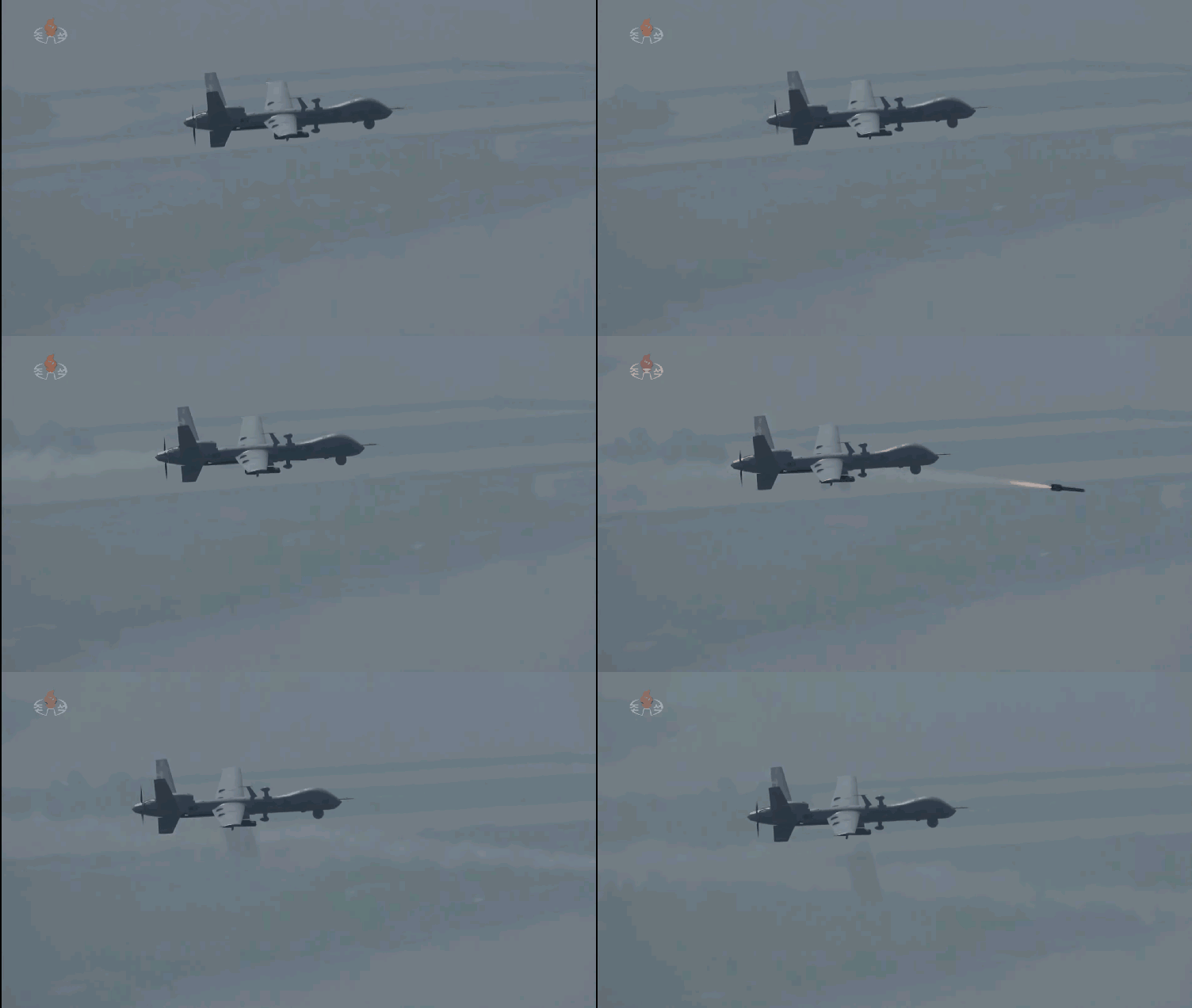
Saetpyŏl-9 firing an AGM
It can also be fitted with two different glide bombs, which appear to be copies of the GBU-39 (SDB I) and GBU-53. The GBU-39 has an explosive mass of 26.5kg TNTe and a guidance time of 700s. The GBU-53 has a 48kg warhead. Unlike the GBU-39, which uses GNSS guidance, the GBU-53 has a tri-mode seeker, capable of using IIR, MMW, and SALH. The North Korean copy does have some differences, however, such as a significantly longer nose section.
The Saetpyŏl-9 has been seen in the following two configurations:
- 8x AGM (4x dual hardpoints) + 2x GBU-39 copy (2x single hardpoints)
- 10x GBU-53 copy (4x dual hardpoints + 2x single hardpoints)
No characteristics of the Saetpyŏl-9 are known. However, given the near identical appearance to the MQ-9, it can be reasonably assumed to have roughly the same flight characteristics as the MQ-9. The MQ-9 uses a TPE331-10 turboprop engine, producing 900hp. It has a top speed of 482km/h, and a cruising speed of 313km/h. It has an empty weight of 2.2t, and a take-off weight of 4.8t.
Conclusion
The Saetpyŏl-9 would be an excellent choice for a top-tier strike UCAV for a future United Korea Ground Forces Tech Tree. It would ideally come alongside improved drones for other nations, like the MQ-9, and be usable in top-tier battles only.
Specifications
Armament
-
Weaponry
- Unknown air-to-ground missile (AGM)
- AGM-114 and/or BA-11 copy
- Penetration
- 1100–1400mm (est.)
- Maximum speed
- 310–475m/s (est.)
- Maximum range
- 8–16km (est.)
- Guidance time
- 45–60s (est.)
- Unknown glide bomb
- GBU-39 copy
- Explosive mass (TNTe)
- 26.5kg (est.)
- Guidance
- GNSS (assumed)
- Guidance time
- 700s (est.)
- Unknown glide bomb
- GBU-53 copy
- Explosive mass (TNTe)
- ?
- Guidance
- IIR / MMW / SALH (assumed)
- Guidance time
- ?
- Unknown air-to-ground missile (AGM)
-
Loadouts
- 8x AGM (4x dual hardpoints) + 2x GBU-39 copy (2x single hardpoints)
- 10x GBU-53 copy (4x dual hardpoints + 2x single hardpoints)
Mobility
- Engine
- TPE331-10 turboprop (assumed)
- 900hp (est.)
- TPE331-10 turboprop (assumed)
- Speed
- Cruise speed
- 313km/h (est.)
- Maximum speed
- 482km/h (est.)
- Cruise speed
- Weight
- Empty weight
- 2.2t (est.)
- Maximum takeoff weight
- 4.8t (est.)
- Empty weight
Images

Sources
Spoiler
Grand Military Parade Held to Celebrate 70th Anniversary of Great War Victory | KCNA Watch
North Korea has started testing new military drone, satellite imagery suggests | NK PRO
北朝鮮の無人航空機と思われる物体を撮影した衛星画像について|ユーリィ・イズムィコ
https://beyondparallel.csis.org/north-korean-strategic-uav-activity-at-panghyon-airbase/
North Korean UAVs | Secret Projects Forum
[한반도 신무기 대백과] 북 신형 무인기, 왜 ‘어메리칸 스타일’인가? – RFA 자유아시아방송
General Atomics MQ-9 Reaper - Wikipedia