- Yes
- No
SA-35

HISTORY
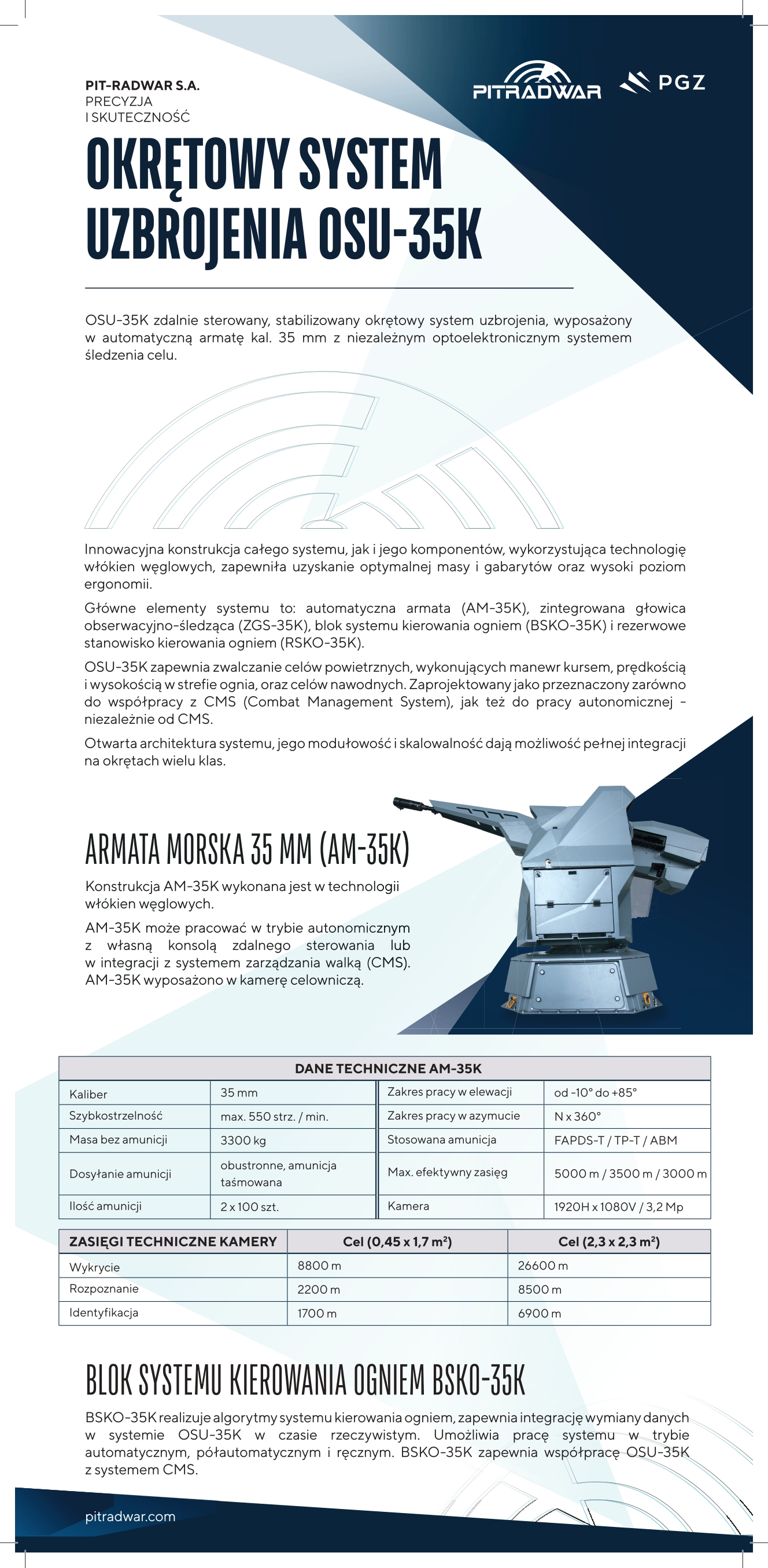
The SA-35 project was publicly unveiled for the first time as a scale model at the MSPO 2023 in Kielce, it was PIT-RADWAR’s proposal for the Pilica+ VSHORAD system. The core concept of this solution was to maximize the reuse of components developed under the OSU-35K program, which have already been successfully implemented on Polish Navy vessels such as ORP Albatros and ORP Mewa.
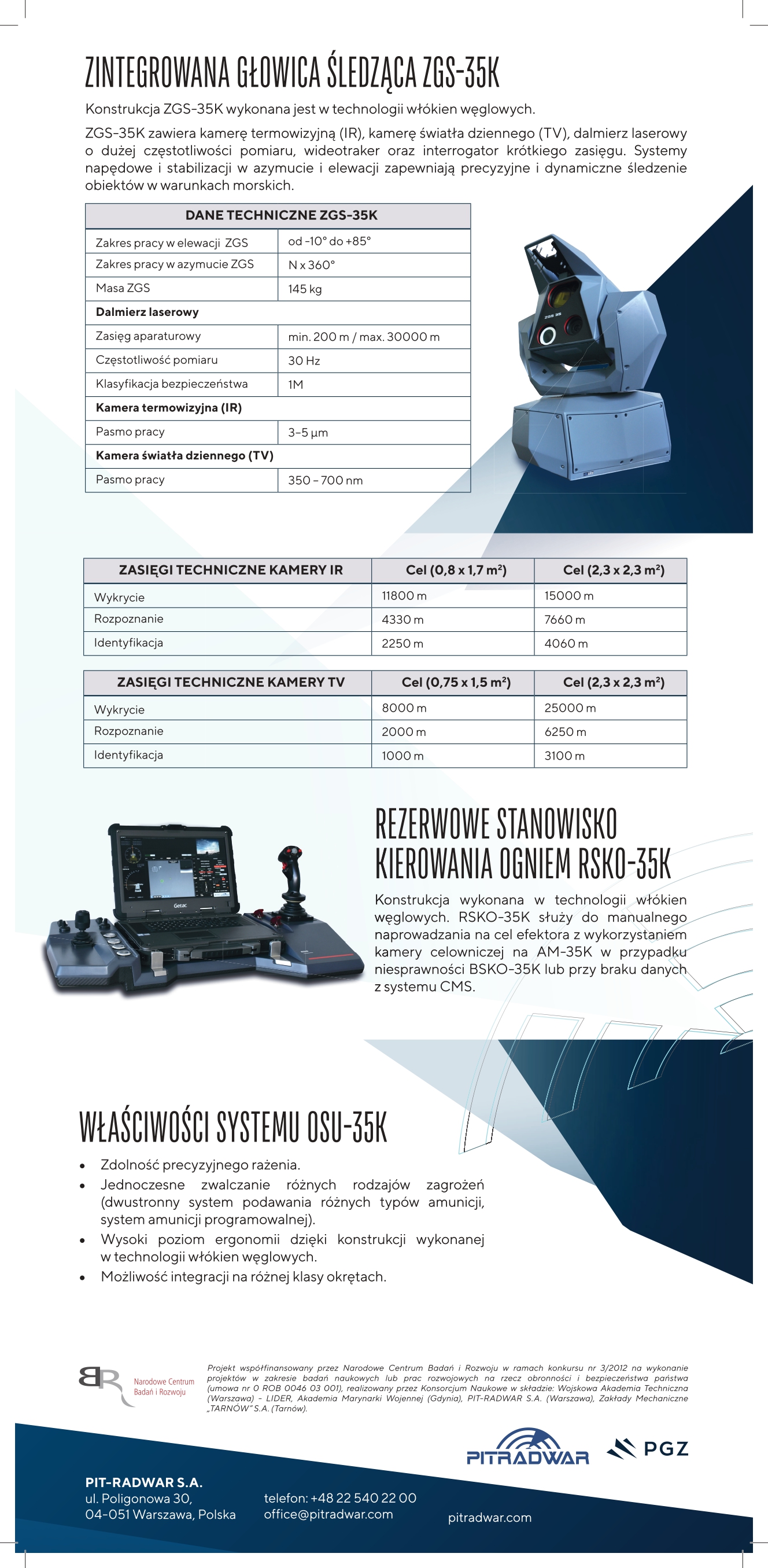
This approach significantly reduced both development time and costs, while minimizing technical risks. The 35 mm AM-35K automatic cannon and the ZGS-35K tracking/observation head can be adopted from the naval variant virtually unchanged. Furthermore, the BSKO-35K electronic blocks would be utilized, and the RSKO-35K backup fire control station would serve as the operator’s terminal.
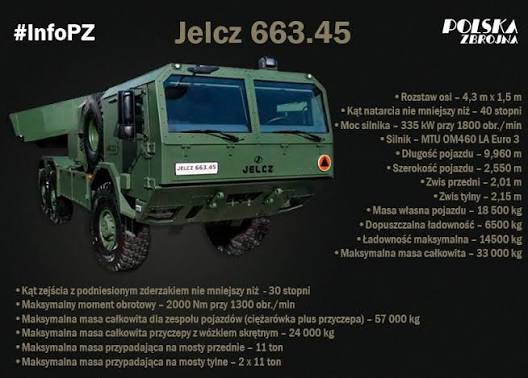
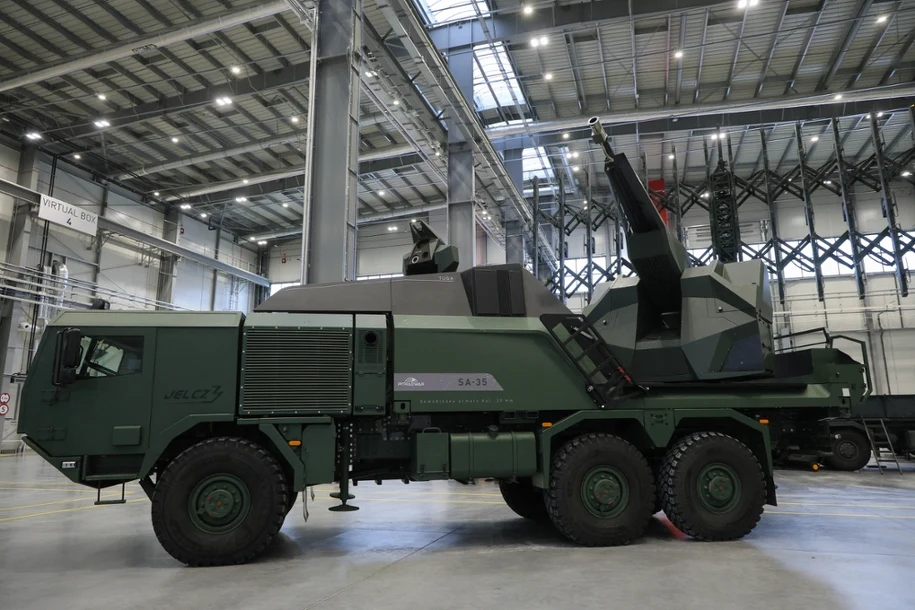
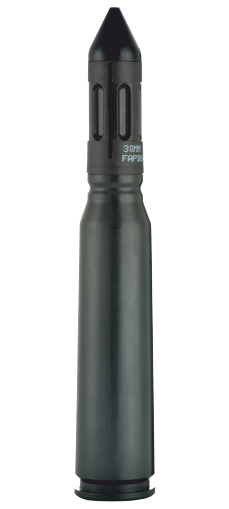
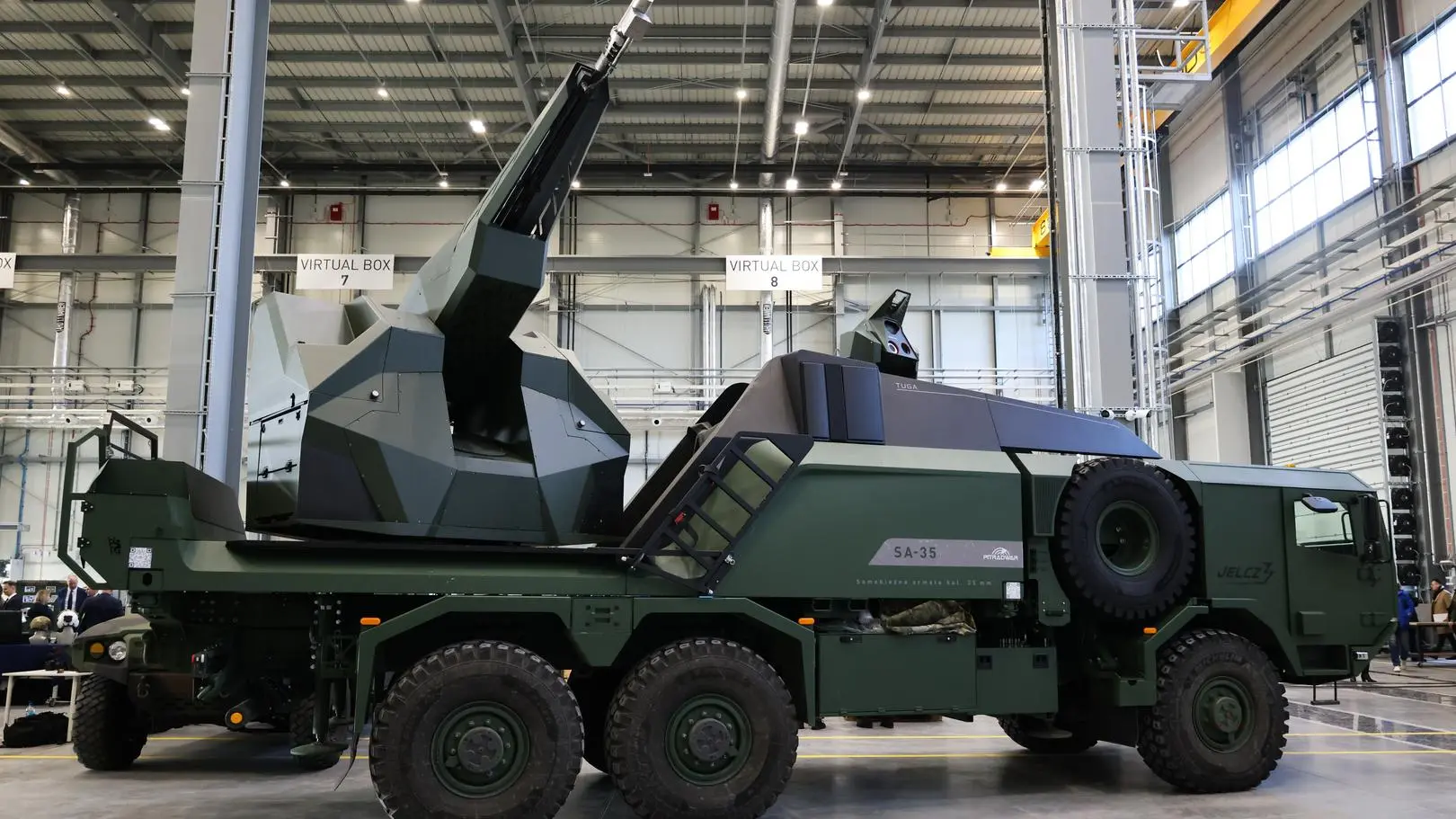
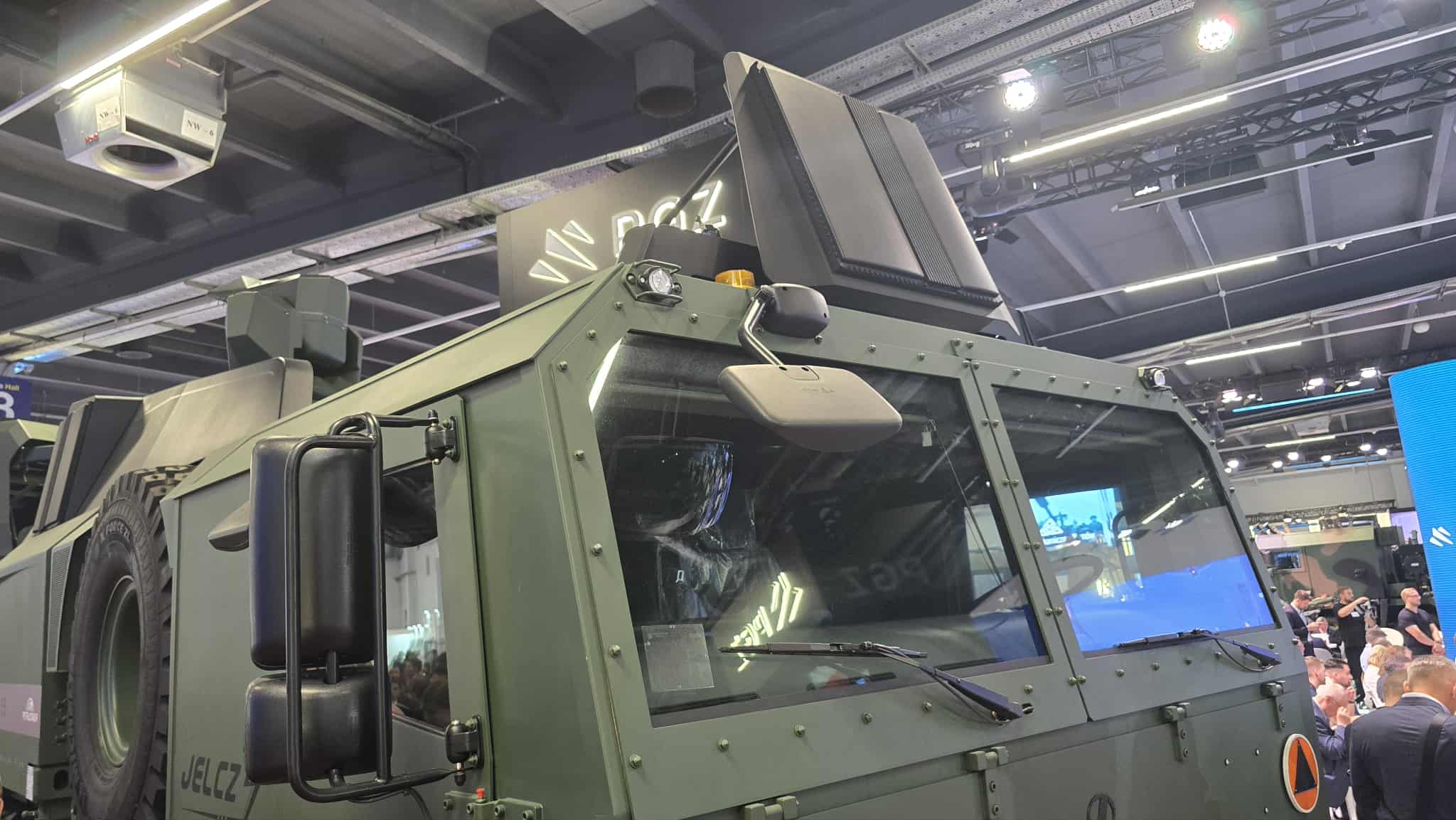
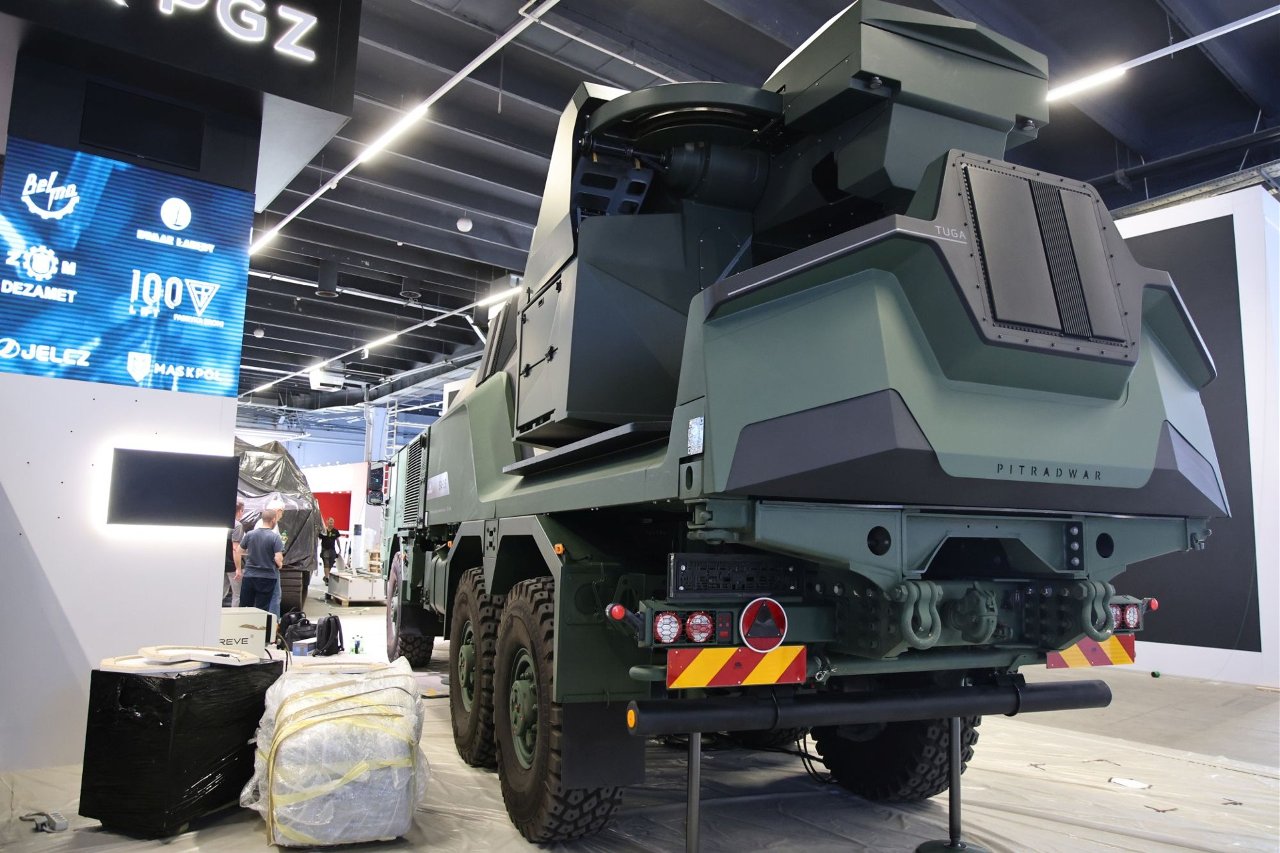
After its conceptual debut, PIT-RADWAR constructed a technology demonstrator, which made its premiere at MSPO 2024. The system utilized a 3rd-generation Jelcz 6x6 P663.45 T60 TS truck chassis prototype equipped with a low-profile, armored 3-person cabin with the engine positioned behind the cab in a powerpack configuration to optimize field maintenance. The drives and actuators of the SA-35 turret are strictly electric, except for the electrohydraulic gun reloading.
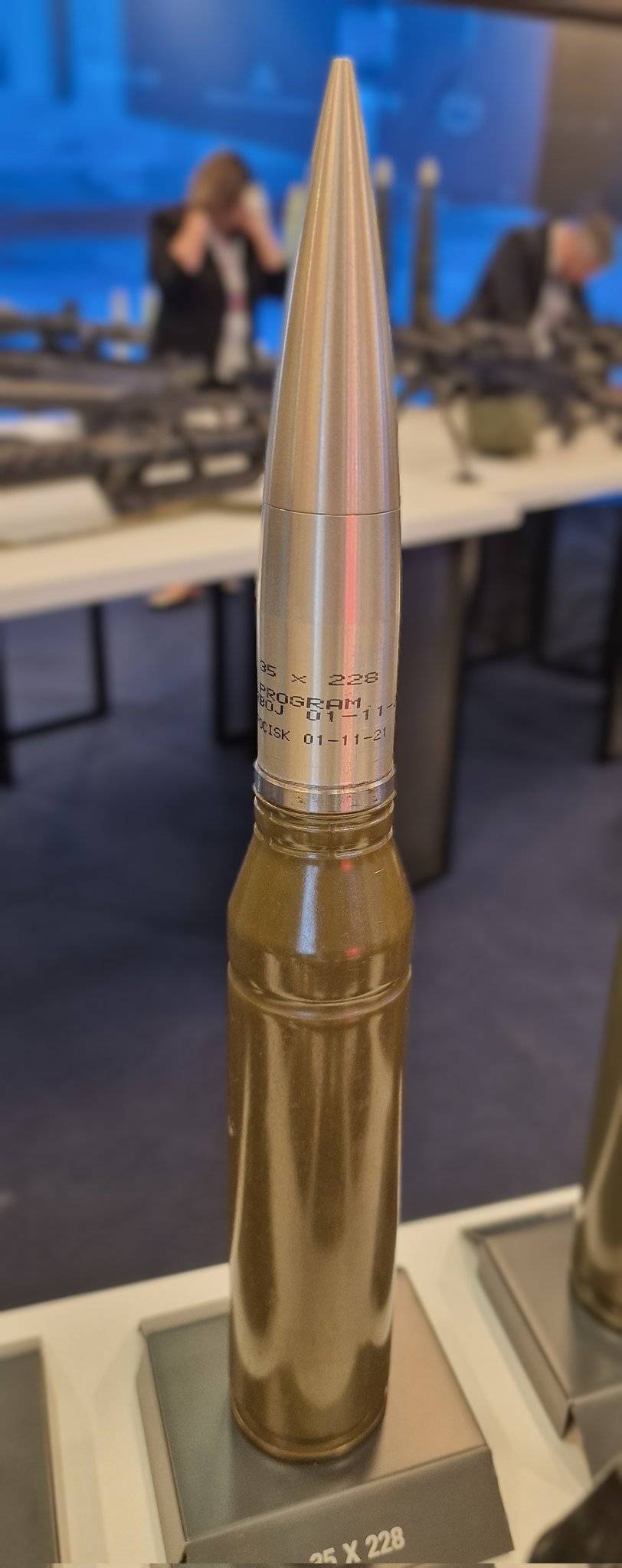
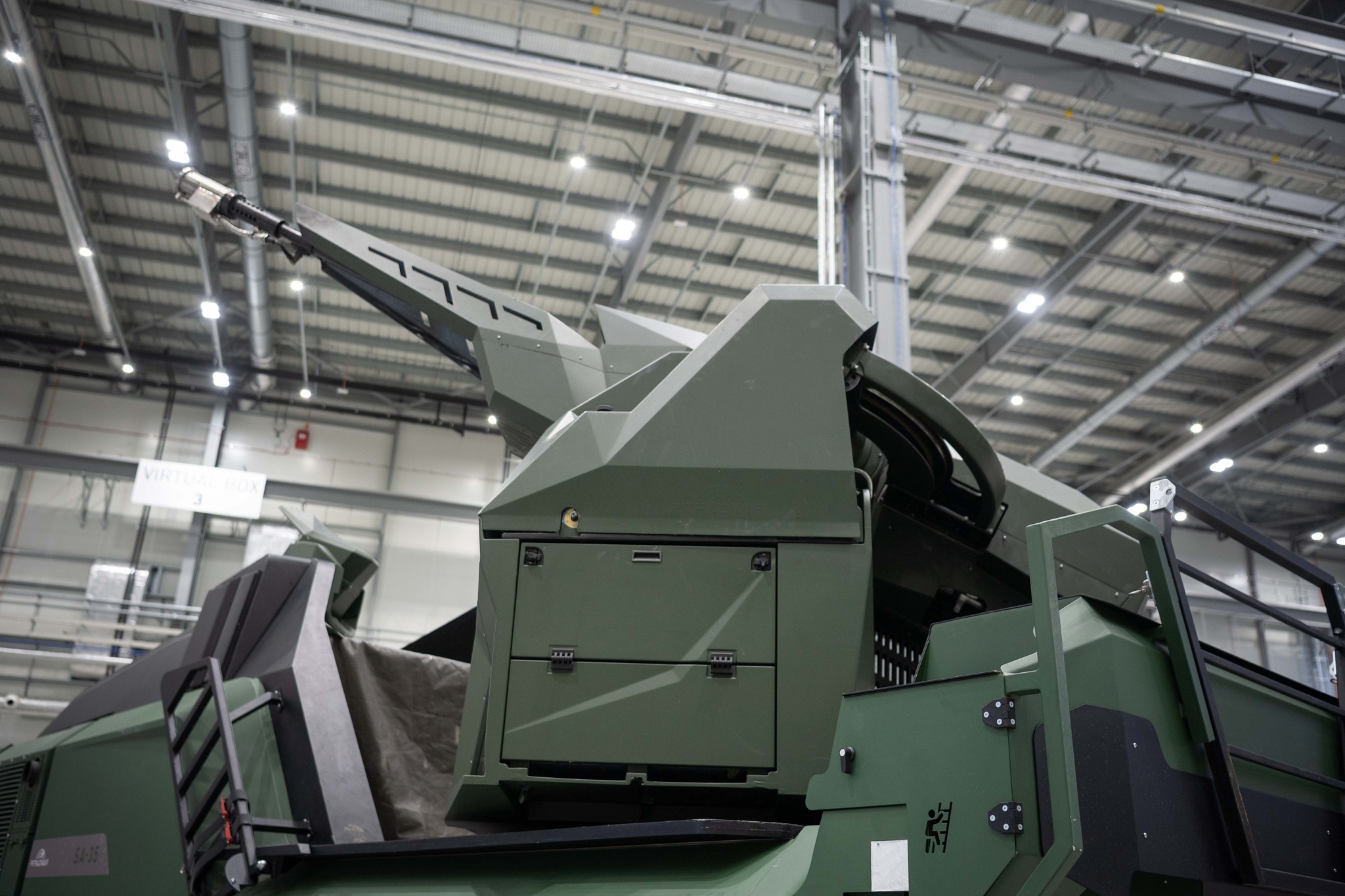
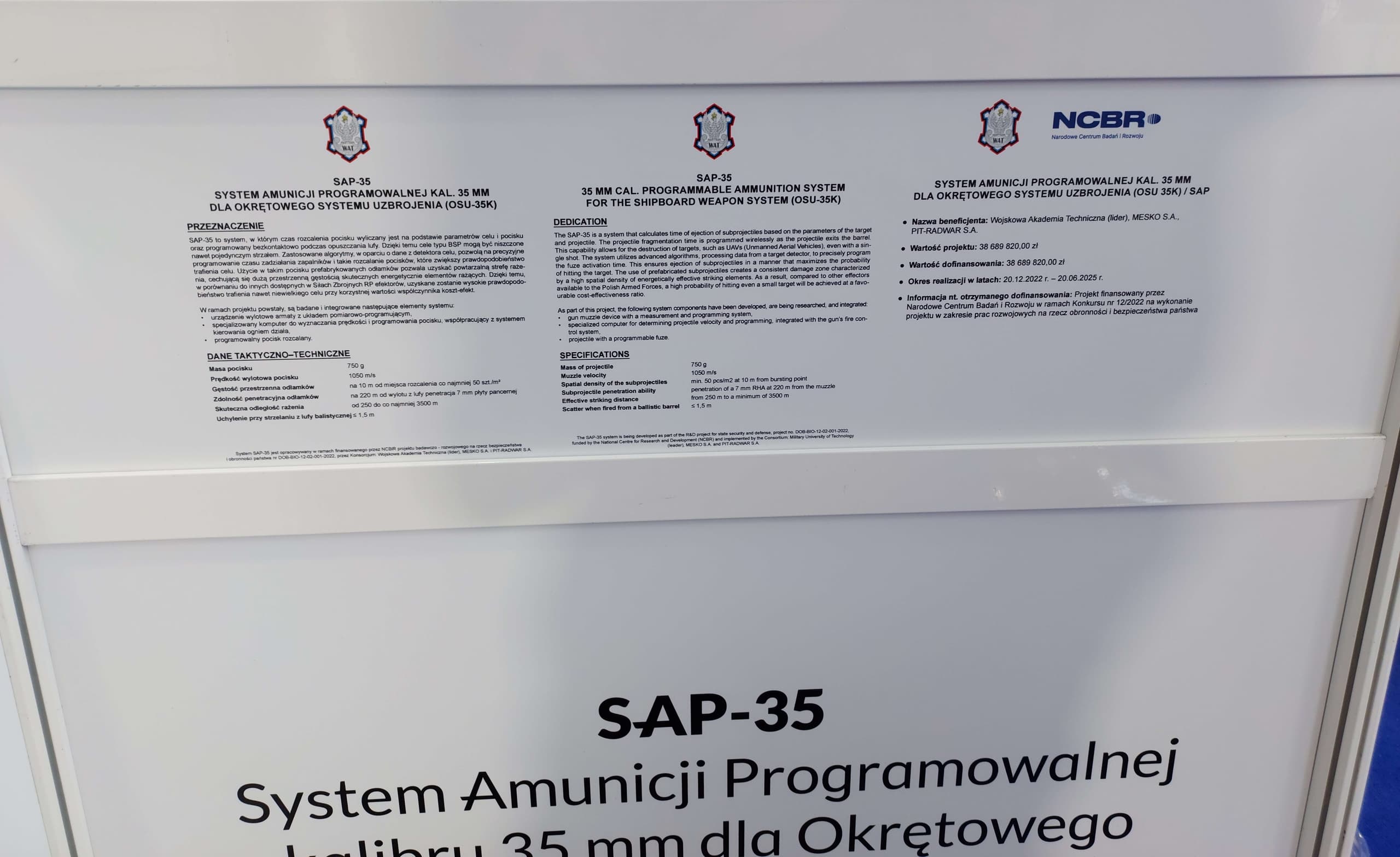
The ammunition for AM-35K cannon is supplied on the opposite sides of the gun by two belt tracks, each of the magazines containing 100 rounds. Such double-sided feeding allows for free selection of the ammunition, depending on the situation. The gun can fire both classic projectiles (full- and sub-caliber) and programmable ammunition (ABM) which is programmed contactlessly as it passes through the muzzle device mounted at the end of the barrel.
The OSU-35K is equipped with an integrated ZGS-35 tracking head with precise electric drives, which, together with a modern system for stabilizing the line of sight of the sensors and the system for stabilizing the line of sight of the gun barrel, ensure very high dynamics while maintaining high precision of guidance. The turret is equipped with its own aiming camera, which allows it to detect, track and engage targets if the tracking head is disabled.
After MSPO 2024, SA-35 was sent to the Central Air Force Training Ground in Ustka to validate the design assumptions through practical firing. Nearly 500 rounds were fired during the tests.
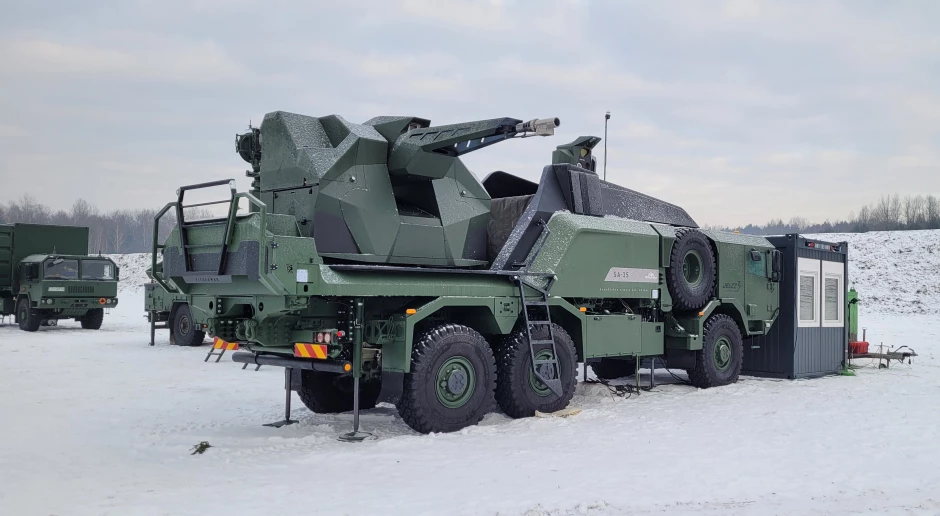
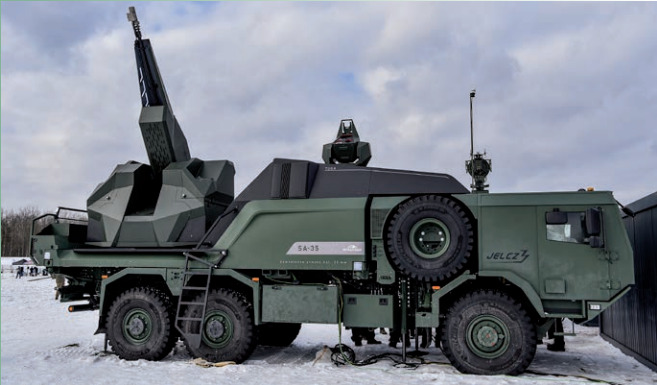
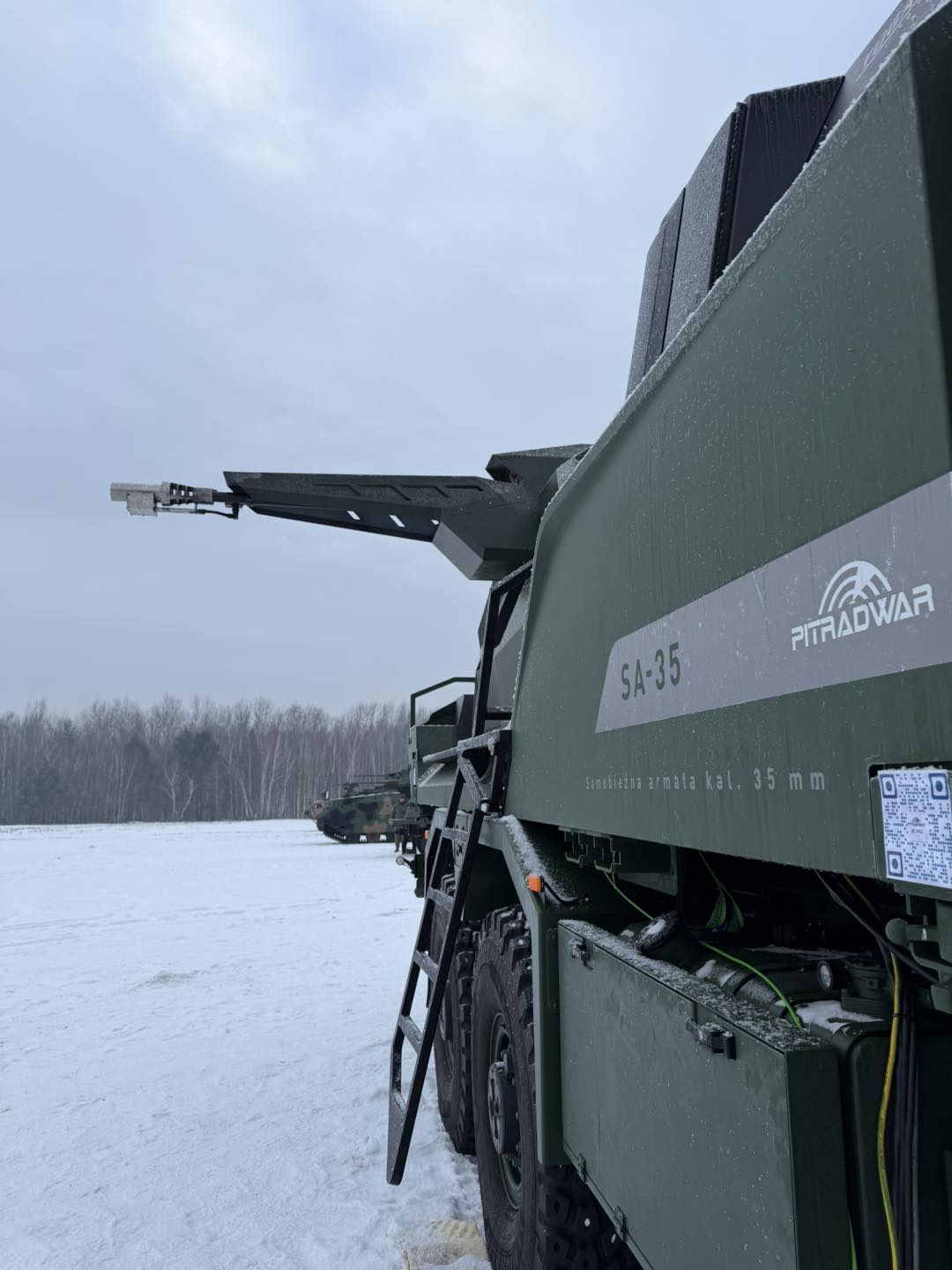
SA-35 at WITU training grounds in February 2026
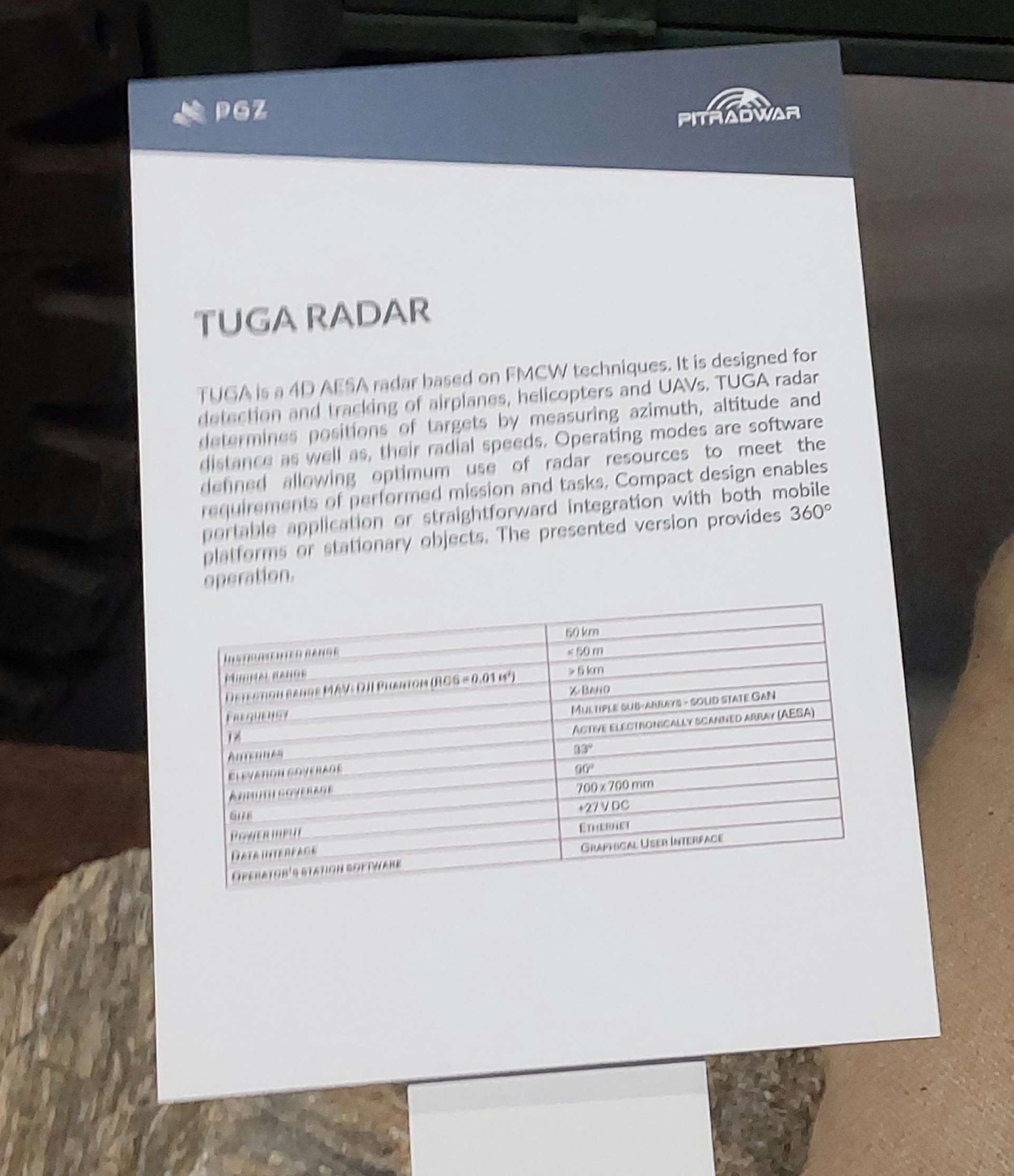
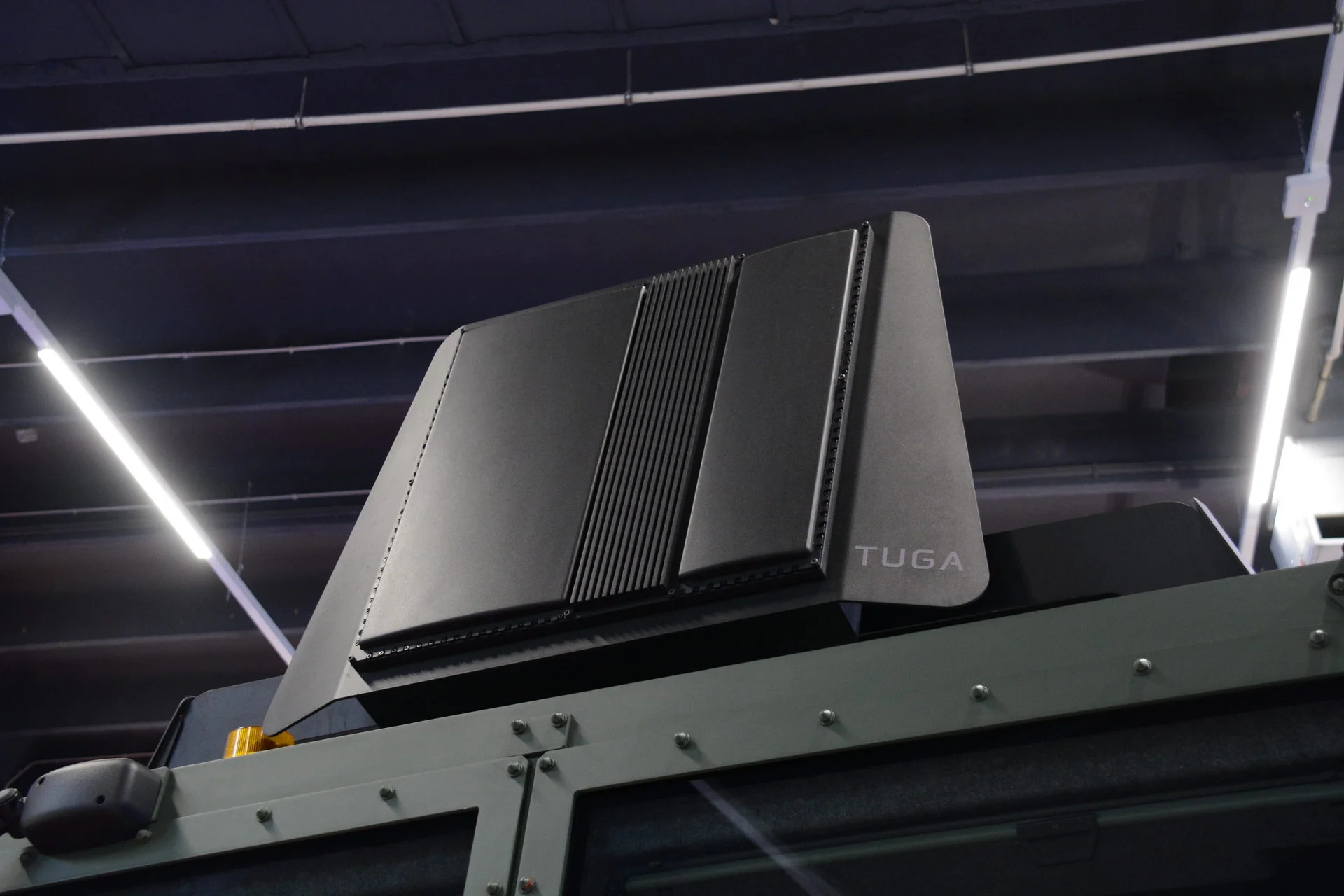
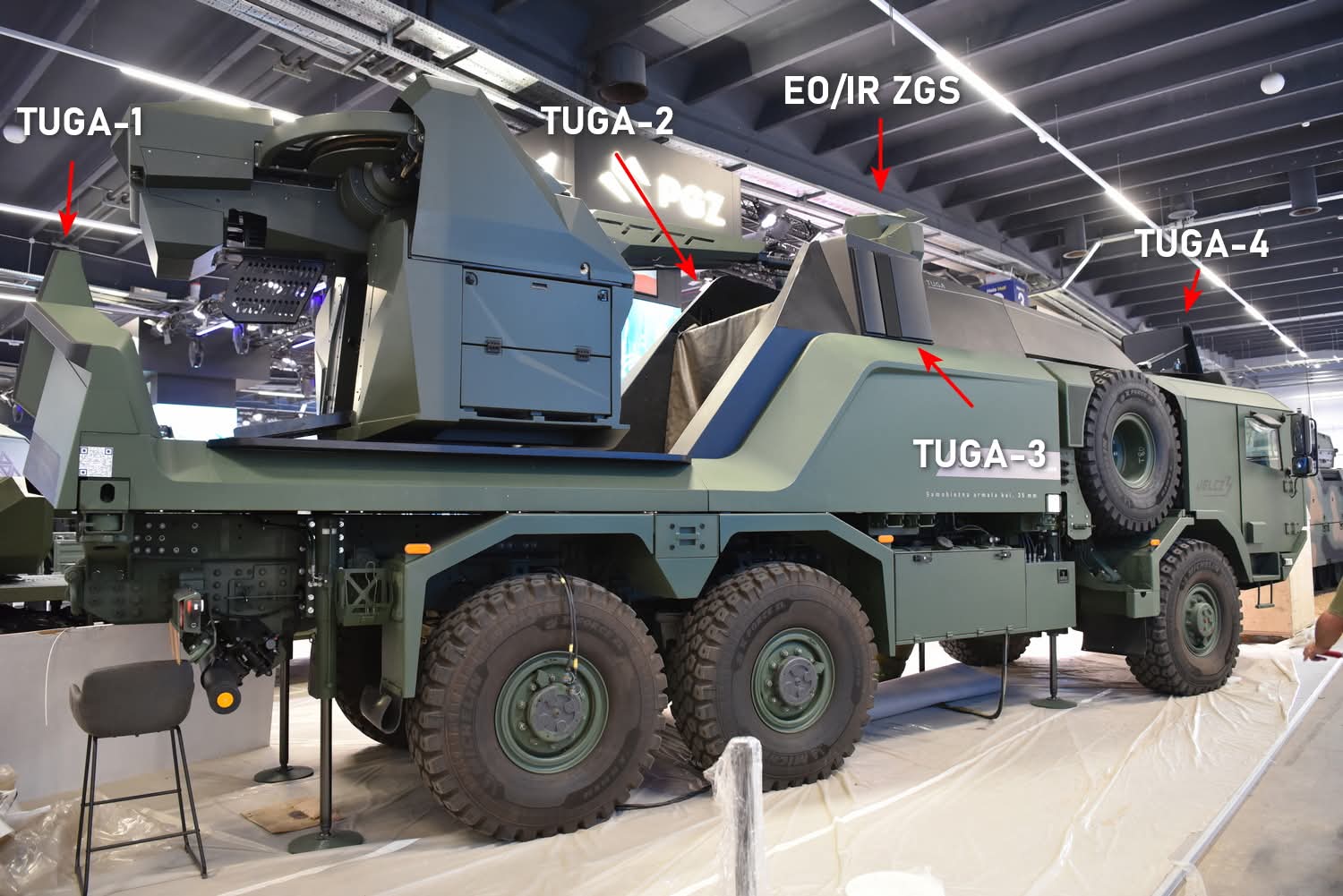
Year later at the next edition of MSPO, SA-35 was presented additionally with TUGA radars. It’s a 4D AESA radar based on FMCW techniques. It is designed for detection and tracking of airplanes, helicopters and UAVs. TUGA radar determines positions of targets by measuring azimuth, altitude and distance as well as, their radial speeds.
Development continued after the radar integration, with the prototype undergoing further firing trials in February 2026 at the Military Institute of Armament Technology (WITU) training grounds. The Polish Armament Agency selected the SA-35 to serve as the core artillery component for the fire modules of the newly ordered SAN anti-drone system. Deliveries will begin in 2026 and end in 2027.
CHARACTERISTICS
ARMAMENT
35 mm AM-35K
- Elevation: -10°/+85°
- Fire rate: 550 rds/m
- Two-plane stabilizer
- Ammo capacity: 2x100 rds
- Ammo feeding: dual feed
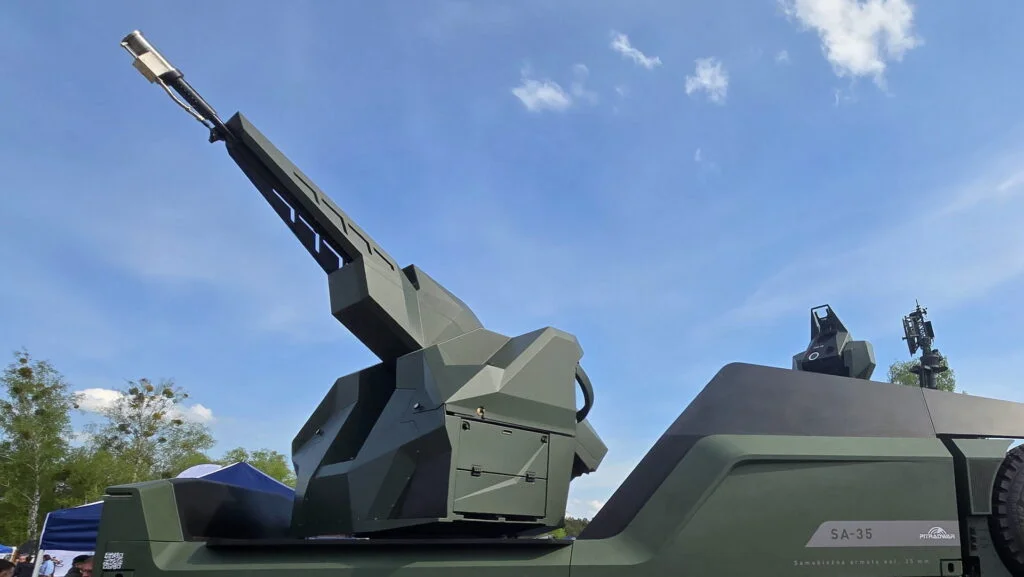
- Ammo:
FAPDS-T (domestic)
- Projectile weight: 380 g
- Cartridge weight: 1460 g
- Muzzle velocity: 1440 m/s
- Charge weight: ~376 g (5802,57 gr)
- Dispersion: ≤ 0.6 mils at 1000 m
- Penetration: 10 and 30 mm RHA 45° NATO at 2000 m within distance of 60mm to each other
ABM (SAP-35 - In development)
- Projectile weight: 750 g
- Muzzle velocity: 1050 m/s
- Subprojectile penetration: 7 mm RHA 0° NATO at 220 m
- Spatial density of the subprojectiles: min. 50 pcs/m² at 10 m from bursting point
MOBILITY
- Crew (2): Driver, Gunner/Commander
- Engine: MTU OM 460 LA Euro 3
- power: 355 kW / ≈455 PS @ 1800 rpm
- Max torque: 2000 Nm @ 1300 rpm
- Transmission: ZF
- Gears: 6 forward, 1 reverse
- Max speed: ?
- Weight: 22 - 25 000 kg
OPTICS, ELECTRONICS
4x 4D AESA TUGA radar
- Frequency band: NATO - I/J, IEEE - X
- Detection range: 50 km
- Azimuth coverage: 360° (90° Each)
- Elevation coverage: 33°
Gunner optic: ZGS-35K
- Elevation: -10°/+85°
- Two-plane stabilizer
- Thermal camera
- 3rd generation
- Range (Target size 0,8 x 1,7 m²)
Detection - 11800 m
Recognition - 4330 m
Identification - 2250 m- Daylight camera
- Video tracker
- IFF
- Laser rangefinder

DIMENSIONS
Overall length: 9960 mm
Overall width: 2550 mm
Height: ? mm
Summarized characteristics
- Crew (2)
- Driver, gunner/commander
- 35 mm AM-35K
- Ammo: FAPDS-T, ABM
- Elevation: -10°/+85°
- Fire rate: 550 rds/m
- Gunner sight
- Thermal camera
- 3rd generation
- Thermal camera
- Weight: 22 - 25 t
- Engine: MTU OM 460 LA Euro 3 355 kW / ≈455 PS @ 1800 rpm
- Max speed: ? km/h
- Length 9,9 m Width: 2,5 m Height: ? m


Sources
Armament
Dimensions, mobilty