- Yes - In the Tech Tree.
- Yes - Event/BP.
- Yes - Premium.
- No - I would not like to see the Defender-class in game.
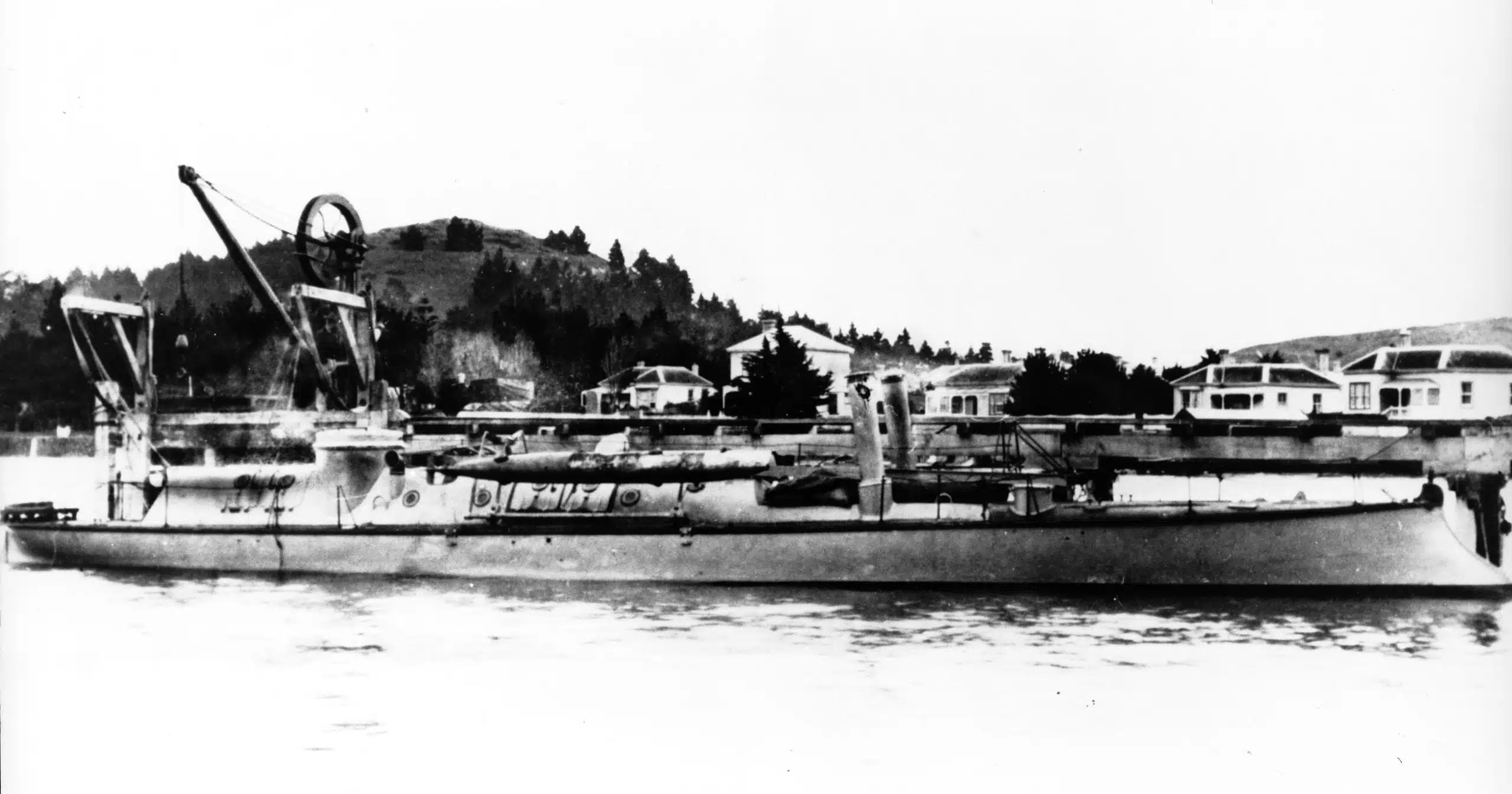
One of the class post 1886 refit, note dropping gear for 14" Whitehead torpedoes
Description:
This class of four vessels was acquired for use within the Colony of New Zealand as part of the naval build up around Australia and New Zealand during the Second Russian Scare of the 1880’s, caused by a perception of a potential invasion of the various Australian states pre federation and the colony of New Zealand by the Russian empire as that nation expanded into the Pacific.
Unlike most of their Australian counterparts, New Zealand’s vessels would not commission into any independent force, as New Zealand did not have self governance at the time. The vessels would instead commission directly into the Royal Navy’s Australia station, which at the time also encompassed New Zealand waters.
General arrangement of the class as built

History:
Ordered by 1882 and Laid down by John I. Thornycroft & Co by early 1883 at the Church Wharf, Chiswick on the River Thames. The class would comprise four vessels, HMS Defender, Taiaroa, Waitemata, and Poneke. The first vessel, HMS Defender, would launch on the 30th of July 1883, and commissioning in September. The rest of the class would also commission around this time, Taiaroa launching on the 10th of August, Waitemata on the 30th of August, and Poneke a day later on the 31st of August.
The first pair would be transported to New Zealand on the sailing vessel Lyttelton, leaving London on the 1st of February 1884 after completing trials, this pair of vessels would arrive at Port Chalmers on the 9th of May 1884, with the Defender then being then towed to Lyttelton by the steamer Stella, as this pair of boats would be based at Lyttleton and Dunedin with one vessel each.
The latter pair would be transported to New Zealand via the sailing vessel Peter Stewart. They would leave London on the 3rd of April, arriving at the Port of Wellington in August. Like the first pair of vessels, one ship would stay at Wellington, this being the Waitemata, with the second vessels, the Poneke being towed to Auckland by the NZGSS Hinemoa, the first vessel of the New Zealand Marine Department.
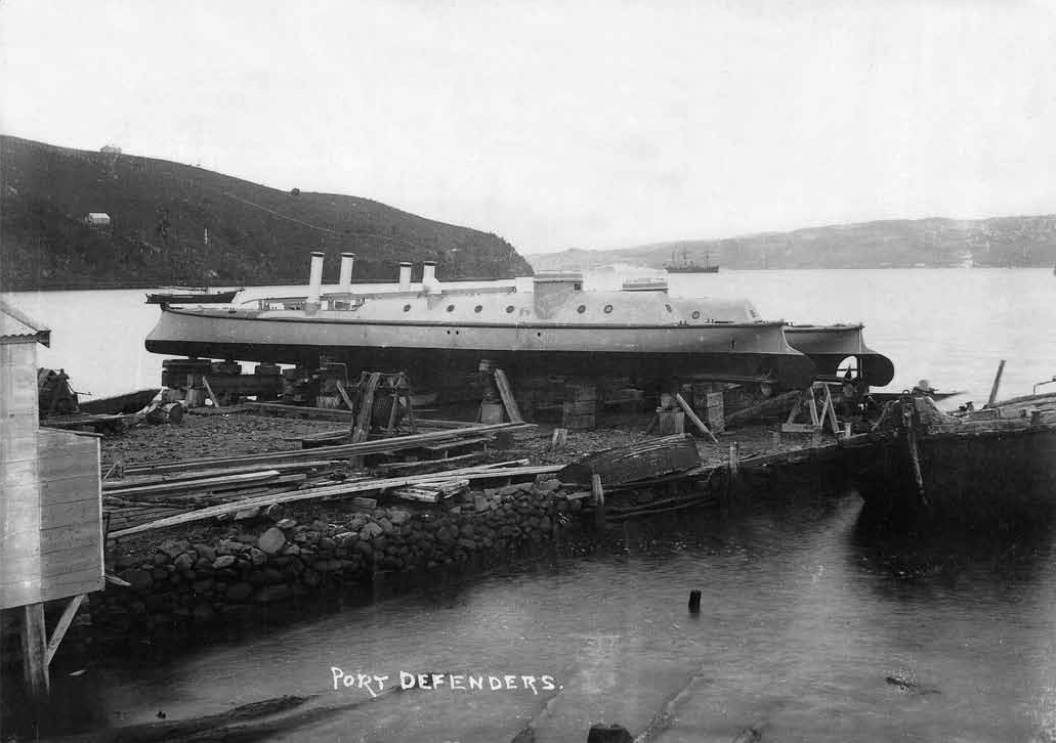
With the four vessels now spread around the Ports of Wellington, Auckland, Dunedin and Lyttelton, a shed and slip would be purpose built at each port for the maintenance and other duties. In New Zealand waters they would work up with crews from the Torpedo Corps units of the Permanent Militia, which had been established specifically for these boats.
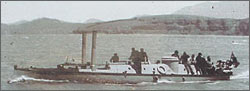
The first public appearance of one of these vessels was on the 1st of January 1885, when the HMS Defender appeared at the Lyttelton Regatta, sailing around the Harbour during New Years celebrations at top speed.
One of the class sitting at port, note spar torpedo retracted, (pre 1886)
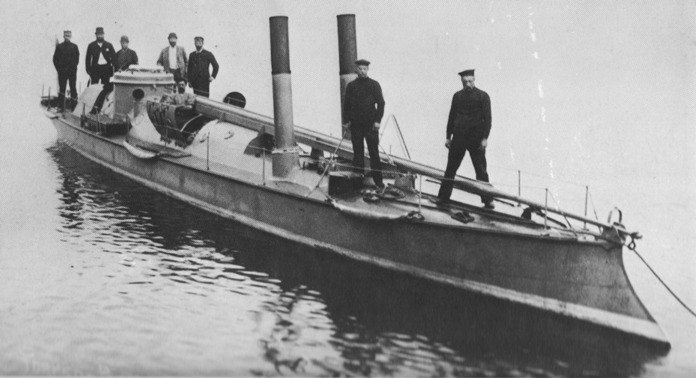
Although the boats themselves had arrived safely in New Zealand, there were a number of problems, namely the lack of any full time engineers to service them. This led to a critical failure during an inspection by Rear-Admiral R. A. E. Scott, in which the engine of the Defender was so rusted and corroded that she could only reach 12.5kt. This was due to the fact that no fresh water had been supplied, and she had to run her boiler off salt water. Furthermore Defender was often laid up inshore rusting, as the launch built for her was often dangerous, with conditions such that she was liable to break up when entering the water. Defender would accidentally ram her wharf in 1886.
The HMS Poneke faired better, being used as a for a demonstration of an attack on a ship by a torpedo boat in June 1885, June 1886, and June and October 1887. She was still beset by lack of use however, and also spent lots of her career laid up, as such she too suffered from poor maintenance, with holes in her hull plates being reported in January 1898.
In 1886 their armament would be supplemented by a pair of 14-inch Whitehead mobile torpedoes, one on either side, they would still however keep their spar torpedo. However due to the narrow beam they would have to be dropped simultaneously as if only one were dropped a heavy list would occur.
There were no plans to operate these ships together, instead each vessel would be used as a ‘one shot’ weapon integrated in greater plans for each individual ports defence. However as land based gun technology improved, and the spar torpedo became useless, they would mostly be used as tenders. The torpedo boat itself was declared obsolete in 1899.
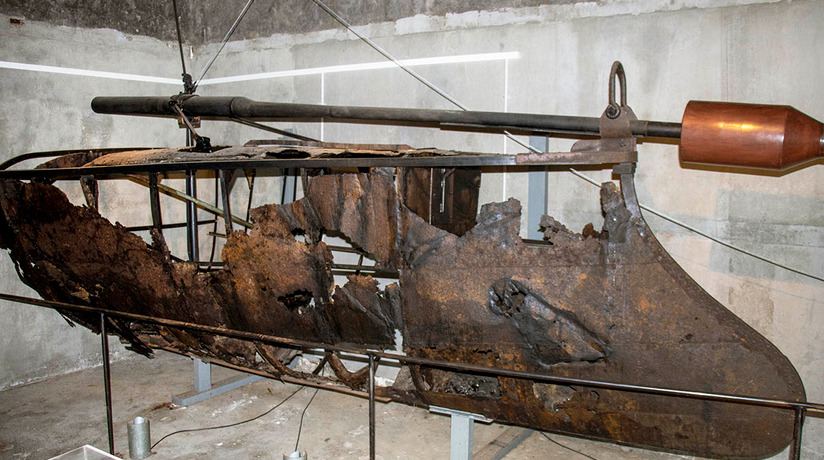
The class as a whole would be abandoned around 1900 with very little use and maintenance and left to rust on beaches across the ports in which they were based. Defender was stripped of her machinery and fittings in 1900, with her hull being left at Purau Beach. Here she would survive until 1909 when the council tried to pull her further up the beach with a tractor, but accidentally split her in two. The rest of the wreck was bulldozed into a pit after the Second World War. The rest of the class’s fate is unknown, however nothing remains of those vessels.
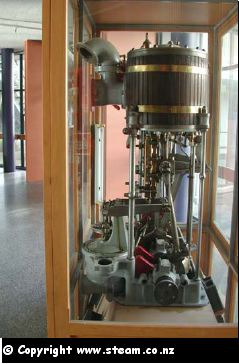
However the wreck of the Defender would be rediscovered and recovered in 1999. The reassembled remains are displayed at the Lyttelton Torpedo Boat Museum with one of her engines, which managed to survive in civilian service.
General characteristics as built:
| General Characteristics: | |||||
|---|---|---|---|---|---|
| Name: HMS Defender, Taiaroa, Waitemata, Poneke | |||||
| Country: New Zealand (British Empire) | |||||
| Type: 2nd Class Torpedo Boat | |||||
| Class name: Defender-class | |||||
| Year of commission: 1884 | |||||
| Refit: 1883 | |||||
| ----------------------------------------------------------------------------------------------------------------------------------------- | |||||
| Dimensions: | |||||
| Length: 62ft 10in (19.1m) | |||||
| Beam: 7ft 6in (2.3m) | |||||
| Draught: 3.25ft (0.9m) | |||||
| Displacement: | |||||
| ----------------------------------------------------------------------------------------------------------------------------------------- | |||||
| Propulsion: | |||||
| Powerplant: 1x coal fired 2x Reciprocating steam engine @ 173hp (129kW) two shafts | |||||
| Speed: 17.3kt | |||||
| Endurance: unknown | |||||
| ----------------------------------------------------------------------------------------------------------------------------------------- | |||||
| Armament & sensors: | |||||
| Compliment: 7 | |||||
| Primary armament: 1x2 1-inch Nordenfelt gun | |||||
| Secondary armament: 1x McEvoy spar torpedo | |||||
| Tertiary armament: -nil | |||||
| Radar: -nil | |||||
| Sonar: -nil |
General characteristics as of 1886:
| General Characteristics: | |||||
|---|---|---|---|---|---|
| Name: HMS Defender, Taiaroa, Waitemata, Poneke | |||||
| Country: New Zealand (British Empire) | |||||
| Type: 2nd Class Torpedo Boat | |||||
| Class name: Defender-class | |||||
| Year of commission: 1884 | |||||
| Refit: 1886 | |||||
| ----------------------------------------------------------------------------------------------------------------------------------------- | |||||
| Dimensions: | |||||
| Length: 62ft 10in (19.1m) | |||||
| Beam: 7ft 6in (2.3m) | |||||
| Draught: 3.25ft (0.9m) | |||||
| Displacement: | |||||
| ----------------------------------------------------------------------------------------------------------------------------------------- | |||||
| Propulsion: | |||||
| Powerplant: 1x coal fired 2x Reciprocating steam engine @ 173hp (129kW) two shafts | |||||
| Speed: 17.3kt | |||||
| Endurance: unknown | |||||
| ----------------------------------------------------------------------------------------------------------------------------------------- | |||||
| Armament & sensors: | |||||
| Compliment: 7 | |||||
| Primary armament: 1x2 1-inch Nordenfelt gun | |||||
| Secondary armament: 2x1 14 inch Whitehead Mk.V torpedo | |||||
| Tertiary armament: 1x McEvoy spar torpedo | |||||
| Radar: -nil | |||||
| Sonar: -nil |
- Original 1883 fit
- 1886 refit.
Remains of the HMS Defender at the Lyttelton Torpedo Boat Museum (2024)
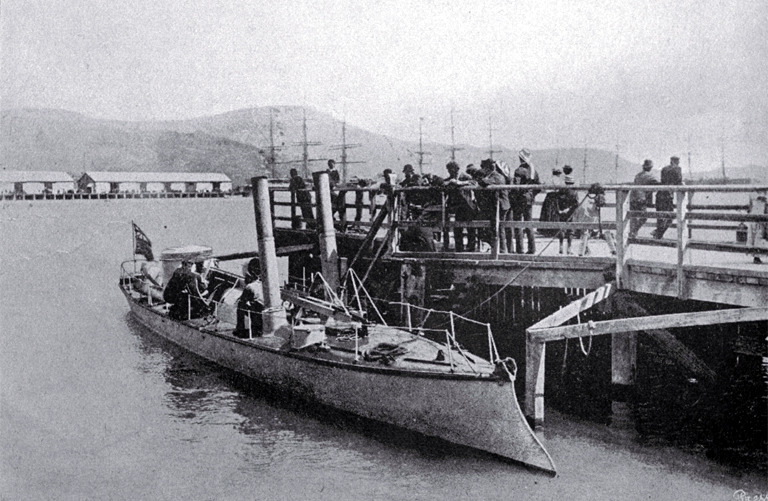
Extra Photos
Sources:
D.Lyon & R.Winfield (2004), The Sail and Steam Navy List: All the Ships of the Royal Navy 1815-1889 (p.316)
H.Williams (2017) Naval Point/Magazine Bay, Lyttelton: An Archaeological assessment (pp.14-15)
J.W.Hunter III (2009) The archaeology of military mismanagement: an example from New Zealand’s
colonial torpedo boat defences, 1884–1900
https://web.archive.org/web/20160311110958/http://nzmaritime.co.nz/thornycroft.htm
https://navymuseum.co.nz/explore/by-collections/ships/spar-torpedo-boats/
Defender-class torpedo boat - Wikipedia
A look at Lyttelton's 'best-kept secret' | Star News
Harbour Defences - Auckland 1885-1896 — National Museum of the Royal New Zealand Navy
https://www.dreadnoughtproject.org/tfs/index.php/14-in_Mark_V_Torpedo_(UK)